Garage Insulation Installation: Costs And Options
By Housey · Last reviewed 30th of May 2026
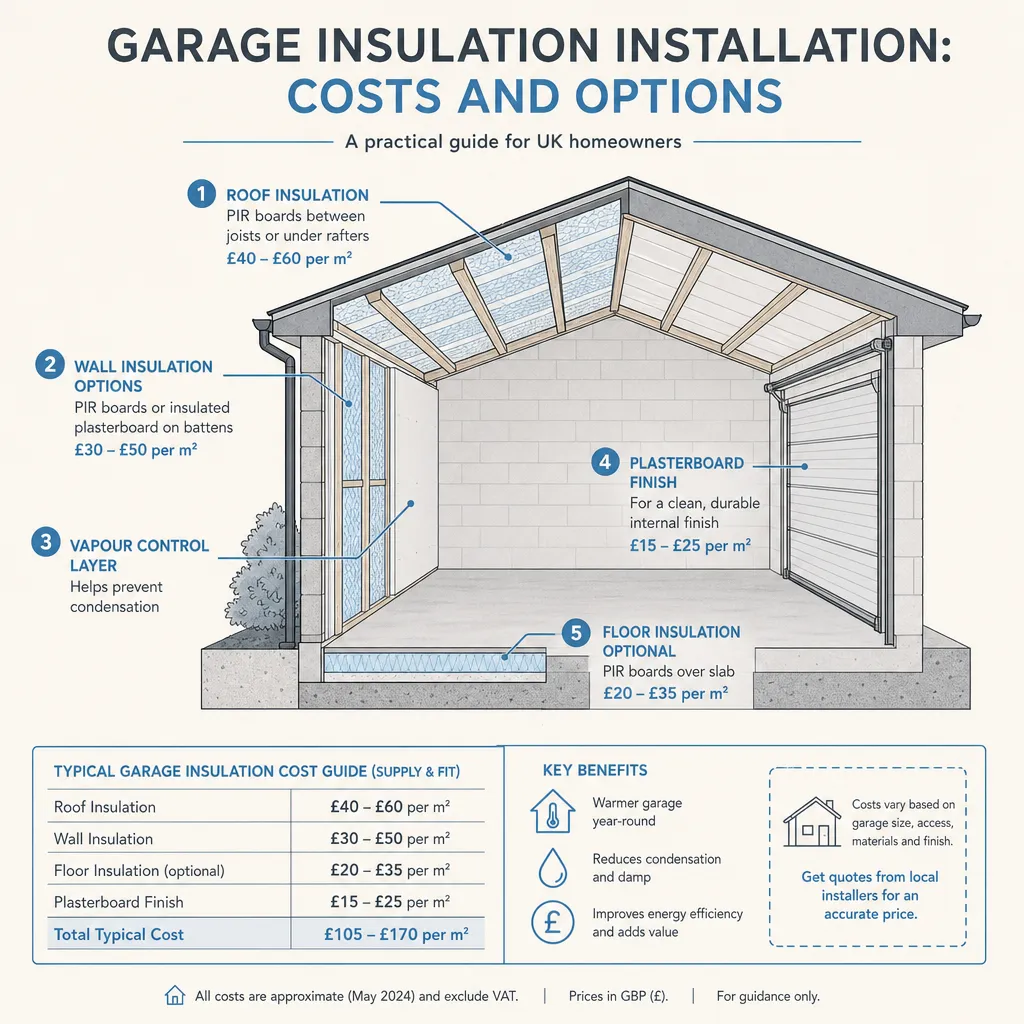
Garage Insulation Installation: Costs And Options
Garage insulation tends to come up at a specific moment: either you are converting the space into habitable accommodation and need to meet Building Regulations, or you are trying to make the garage usable as a workshop, home office, or gym without the expense of a full conversion. For homes where the garage is integral or attached, poor insulation also allows cold to bleed through into adjacent rooms — a problem particularly common in 1960s and 1970s semi-detached houses where the garage shares one or more walls with the main dwelling.
Key points
- Building Regulations Approved Document L requires converted garage spaces used as habitable rooms to meet minimum U-values: 0.28 W/m²K for walls, 0.16 W/m²K for roofs, and 0.22 W/m²K for floors.
- Rigid PIR (polyisocyanurate) boards achieve the highest thermal performance per millimetre — typically a lambda value of 0.022–0.028 W/mK — making them the standard choice where headroom or wall thickness is limited.
- Building Regulations approval is required for any garage conversion that creates habitable living space, regardless of whether planning permission is also needed.
- A full insulation project covering walls, roof, and floor for an integral garage of around 18 m² typically costs £1,500–£3,500 including materials and installation (Indicative UK costs, last reviewed 2026-05-30).
- Insulating only the shared wall between an attached garage and the main house can cost £300–£700 and meaningfully reduce heat loss from the adjoining room without requiring a full conversion.
What insulation options are available for garages?
Garages can be insulated using several product types, each with different thermal performance, thickness requirements, and cost profiles. The right choice depends on the intended use, the existing construction, and whether the space will be heated.
Insulation type | Thermal performance (lambda value) | Best application | Main limitation |
|---|---|---|---|
Rigid PIR or PUR board (e.g. Kingspan, Celotex) | 0.022–0.028 W/mK | Conversions and limited-space applications | Higher cost per m²; joints must be carefully taped to prevent thermal bridging |
Mineral wool batts (glass or rock wool) | 0.032–0.044 W/mK | Stud-wall and rafter infill | Greater thickness needed for the same performance |
Spray polyurethane foam | 0.024–0.040 W/mK | Irregular cavities and metal roofs | Can cause condensation problems; may affect mortgage eligibility on roof timbers |
Reflective foil insulation | Performance varies | Secondary layer in warm roof build-ups | Rarely sufficient as a standalone insulation layer |
Loose fill blown mineral wool | 0.034–0.040 W/mK | Accessible roof cavities | Requires professional equipment; settles over time |
For most garage applications, rigid PIR board or mineral wool batts within a timber framework are the most reliable and widely specified options.
How much does garage insulation cost in the UK?
Costs depend on the garage size, the number of elements treated (roof, walls, floor), the insulation specification, and whether secondary lining such as plasterboard or OSB boarding is included.
Indicative UK costs, last reviewed 2026-05-30. Always obtain at least three written quotes as regional prices and site conditions vary considerably.
Scope of work | Indicative cost range |
|---|---|
Shared wall only (attached garage, approx. 12–15 m²) | £300–£700 |
Roof insulation only (flat or pitched, approx. 18 m²) | £400–£900 |
Full walls, roof, and floor (integral garage, approx. 18 m²) | £1,500–£3,500 |
Full conversion to habitable room (insulation, lining, Building Regs) | £4,000–£15,000+ |
Spray foam may appear cheaper per m² upfront but can complicate future property sales and mortgage applications if applied to roof timbers — confirm with a qualified insulation assessor before specifying it.
Does garage insulation need Building Regulations approval?
This depends on how the garage will be used after insulation is installed:
- Non-habitable use (workshop, gym, storage): Insulating a garage that will remain a garage does not generally require Building Regulations approval. If you are adding fixed electrical circuits or a new heating system, those elements require separate notification to Building Control.
- Habitable conversion: Any conversion of a garage into living space — bedroom, office, or playroom — is a material change of use. This requires Building Regulations approval covering Part L (thermal performance), Part F (ventilation), Part B (fire safety), and potentially structural elements. The insulation specification must achieve the minimum U-values set out in Approved Document L.
- Improving an attached room: Insulating a shared wall to reduce heat loss from the main house typically falls within domestic Part L conservation measures and does not usually require a formal Building Regulations application.
Always check with your local Building Control body before starting any conversion project.
Which garage insulation approach suits your situation?
Use this guide to identify the right starting point — a qualified insulation assessment can advise on the correct specification for your garage type and intended use:
- Converting to habitable living space → Building Regulations approval required → specify PIR boards to meet Approved Document L U-values; engage your local Building Control body from the outset.
- Workshop or hobby room with background heating only → no Building Regulations required for the insulation → mineral wool or PIR within a timber frame with plywood or plasterboard lining is usually sufficient.
- Reducing cold transfer from an attached garage into adjacent rooms → insulate the shared party wall only → a cost-effective option with no planning or Building Regs implications.
- Insulating an up-and-over or roller-shutter door → specialist insulated door panel kits or full door replacement → garage doors are often the single largest source of heat loss in an uninsulated structure.
- Damp or moisture already present → resolve the source of moisture before insulating → trapping moisture behind insulation can lead to condensation damage and mould growth.
What to ask before accepting a quote
- Does the quote cover all elements (walls, roof, floor, and door) or only specific areas?
- What U-values will the specification achieve, and will they meet Approved Document L if a conversion is planned?
- Is a vapour control layer included on the warm side of the insulation?
- What installer accreditation does the company hold? TrustMark registration is a useful indicator for retrofit work.
- Is plasterboard or boarding included in the price, or supplied separately?
- Is VAT included in the quoted price?
- What happens if unexpected damp or structural issues are found during installation?
Homeowner checklist for garage insulation
When to get professional help
Most garage insulation projects benefit from professional installation to ensure correct U-values, vapour barriers, and ventilation. Always engage a qualified professional when:
- Converting the garage to habitable accommodation requiring Building Regulations sign-off
- The garage has a flat roof with any signs of existing water ingress or ponding
- Spray foam is under consideration — an insulation assessor should confirm suitability first
- The garage shares a party wall with a neighbour, where acoustic as well as thermal performance may need consideration
How Housey can help
Housey connects homeowners with vetted insulation installers who specialise in garage and domestic insulation projects. If you are unsure which specification suits your garage type, an insulation assessment can give you a clear baseline before you request installation quotes.
Frequently asked questions
How much does it cost to insulate a garage in the UK?
Insulating the walls and roof of a standard 18 m² integral garage typically costs £1,500–£3,500 including materials and installation (Indicative UK costs, last reviewed 2026-05-30). Insulating a single shared wall costs considerably less, typically £300–£700. A full conversion to habitable space adds further costs for lining, ventilation, and Building Regulations compliance.
Do I need Building Regulations approval to insulate a garage?
If the garage will remain a non-habitable space such as a workshop or storage area, Building Regulations approval is not generally required for insulation alone. If you are converting the garage to a habitable room, Building Regulations approval is required and insulation must achieve the U-values specified in Approved Document L. Always check with your local Building Control body first.
What is the best insulation for a garage roof?
Rigid PIR boards such as Kingspan or Celotex offer the best performance per millimetre and are well suited to both flat and pitched garage roofs where headroom is limited. Mineral wool batts between rafters are a lower-cost alternative but require greater thickness for equivalent performance. Avoid spray foam on timber roof structures unless a specialist assessor has confirmed suitability.
Can I insulate a garage myself?
For non-habitable use, a competent DIYer can install rigid boards or mineral wool within a timber frame, provided they understand vapour control layers and ventilation requirements. For habitable conversions, Building Regulations sign-off requires inspection and professional certification. Any electrical or heating work must be carried out by registered, qualified tradespeople regardless of the project scale.
Sources and further reading
- Approved Document L — Conservation of fuel and power — GOV.UK
- Planning Portal — Garage conversions — Planning Portal
- Energy Saving Trust — Insulation guidance — Energy Saving Trust
- TrustMark — Find a registered installer — TrustMark
Useful next reads
 Energy & Retrofit
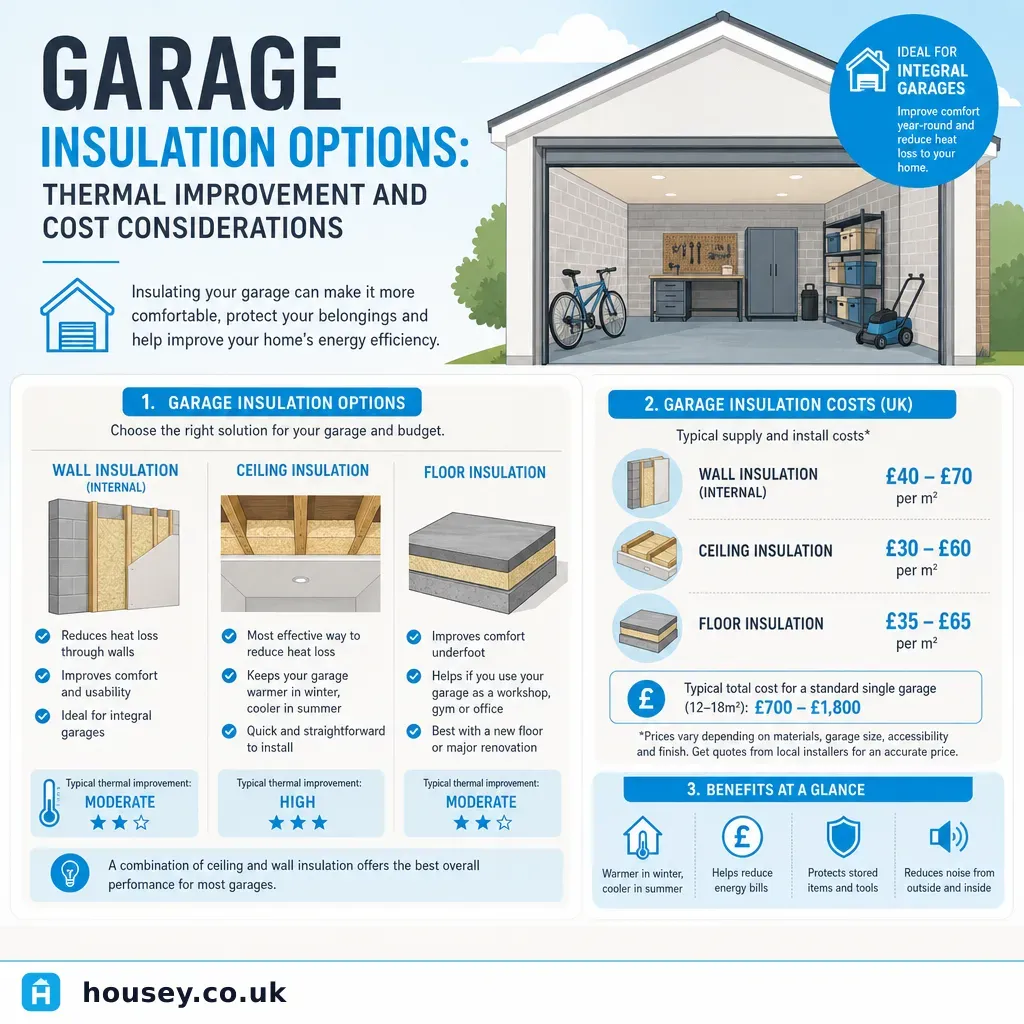
Garage Insulation Options: Thermal Improvement and Cost Considerations
Garage insulation options in the UK include mineral wool batts, rigid foam boards (PIR or EPS), and insulated garage doors.
 Energy & Retrofit
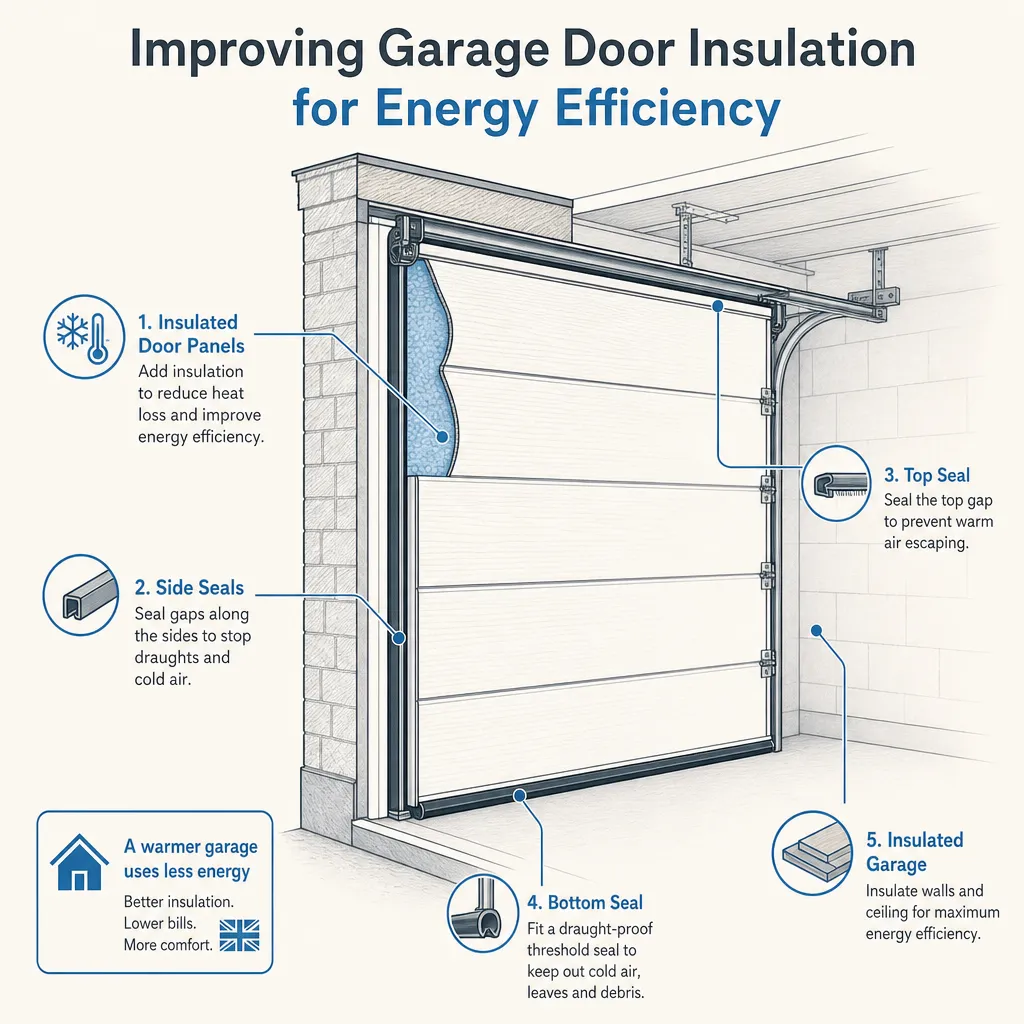
Improving Garage Door Insulation for Energy Efficiency
Improving garage door insulation typically involves fitting a retro-fit panel kit to an existing door, replacing a single-skin door with an insulated sectional model, or adding draught seals around the frame.
 Energy & Retrofit
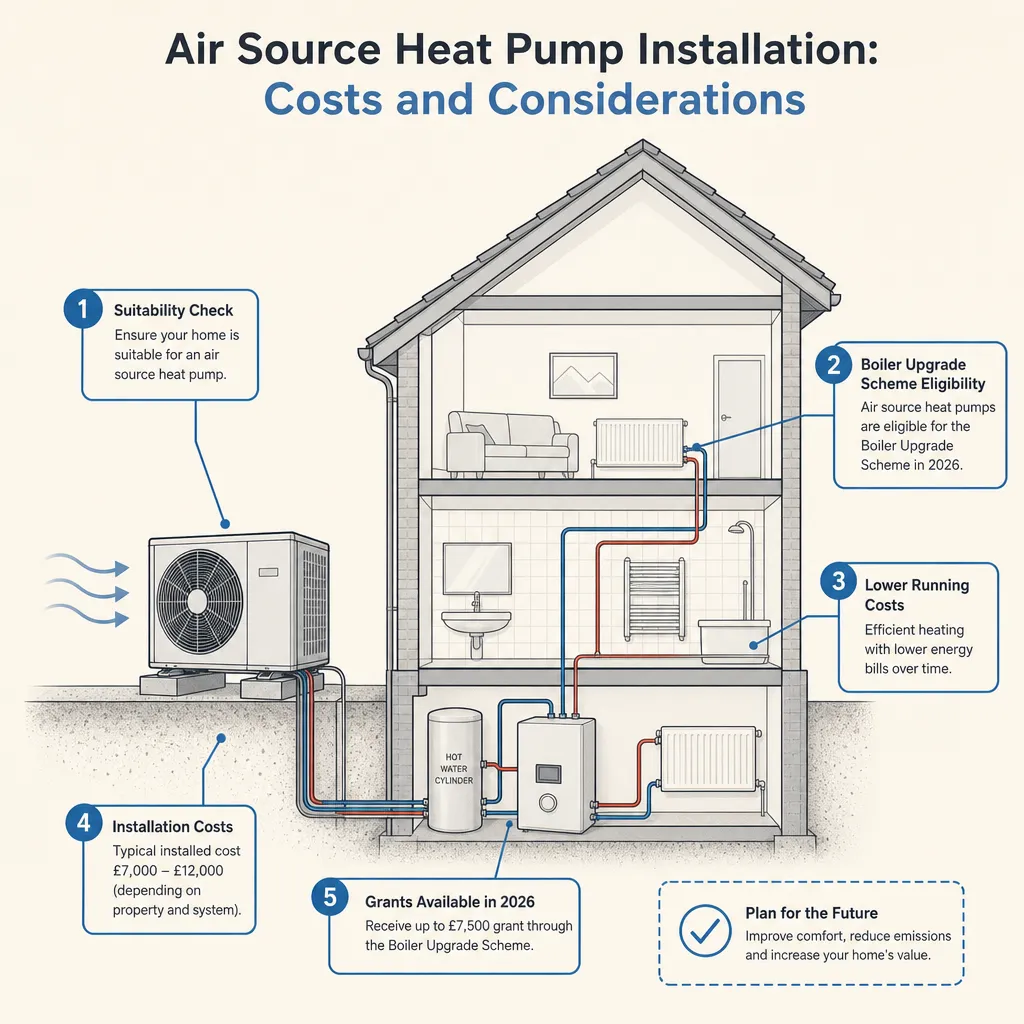
Air Source Heat Pump Installation: Costs and Considerations
Air source heat pump installation in the UK typically costs £8,000–£15,000 before the £7,500 Boiler Upgrade Scheme grant, available through MCS-certified installers in England and Wales.
 Energy & Retrofit
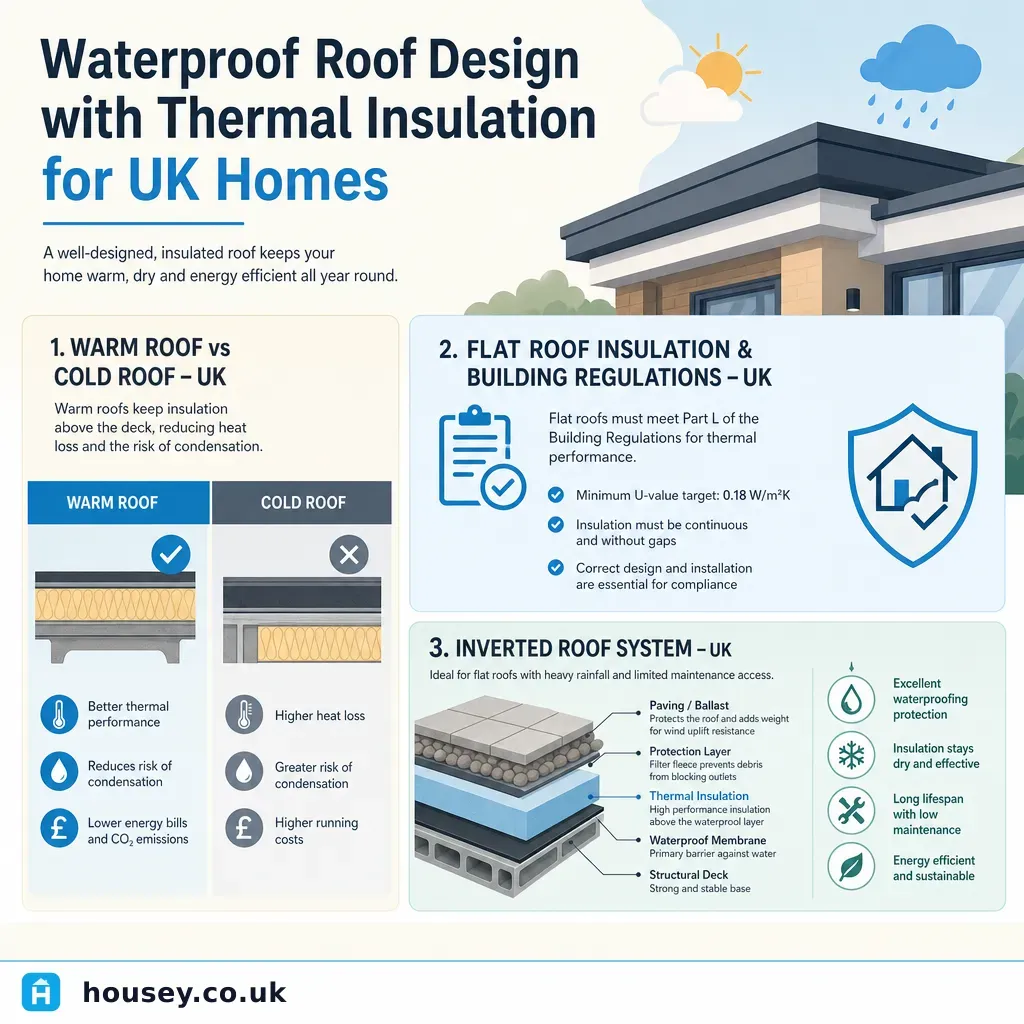
Waterproof Roof Design with Thermal Insulation for UK Homes
The two main approaches to combining waterproofing and thermal insulation in a roof are warm roof and cold roof construction.
 Energy & Retrofit
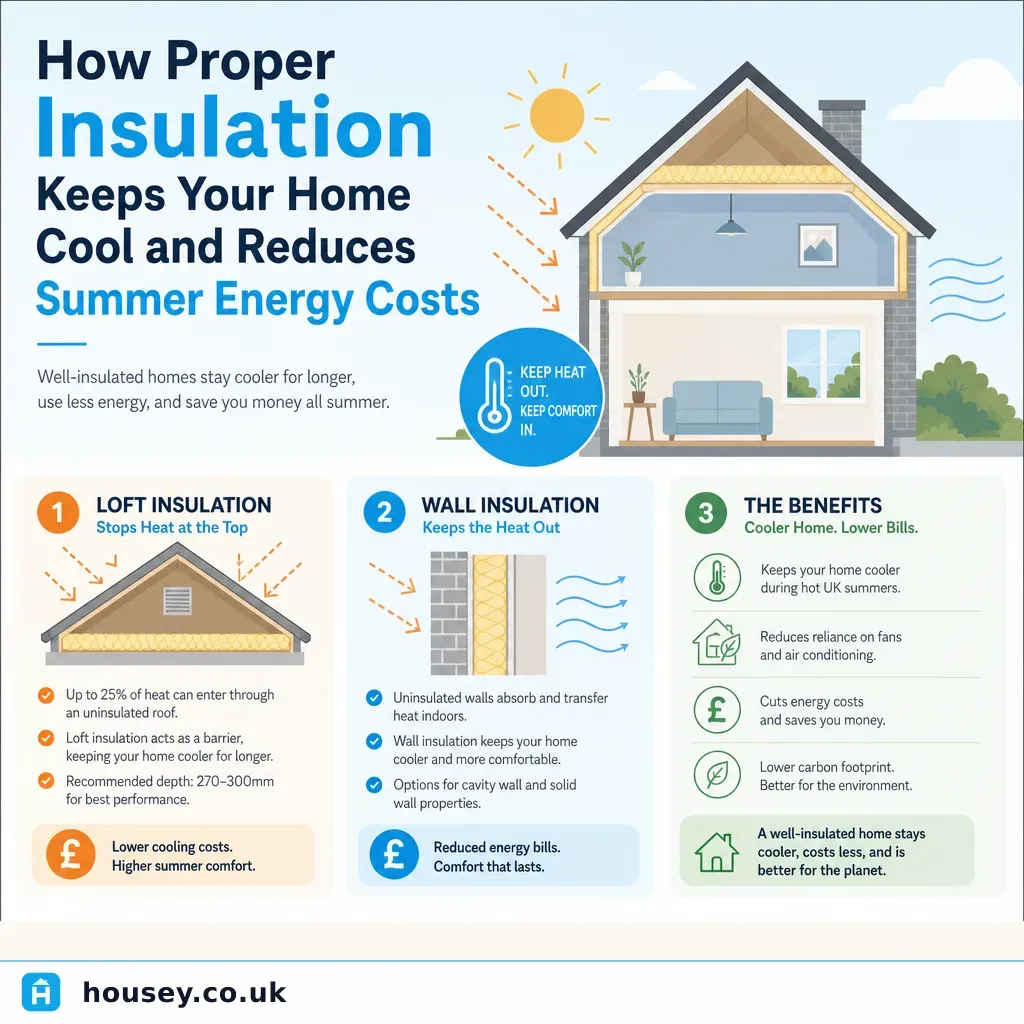
How Proper Insulation Keeps Your Home Cool and Reduces Summer Energy Costs
Insulation slows the flow of heat in both directions — in summer, it reduces how quickly outdoor heat enters your home.