How Proper Insulation Keeps Your Home Cool and Reduces Summer Energy Costs
By Housey · Last reviewed 1st of June 2026
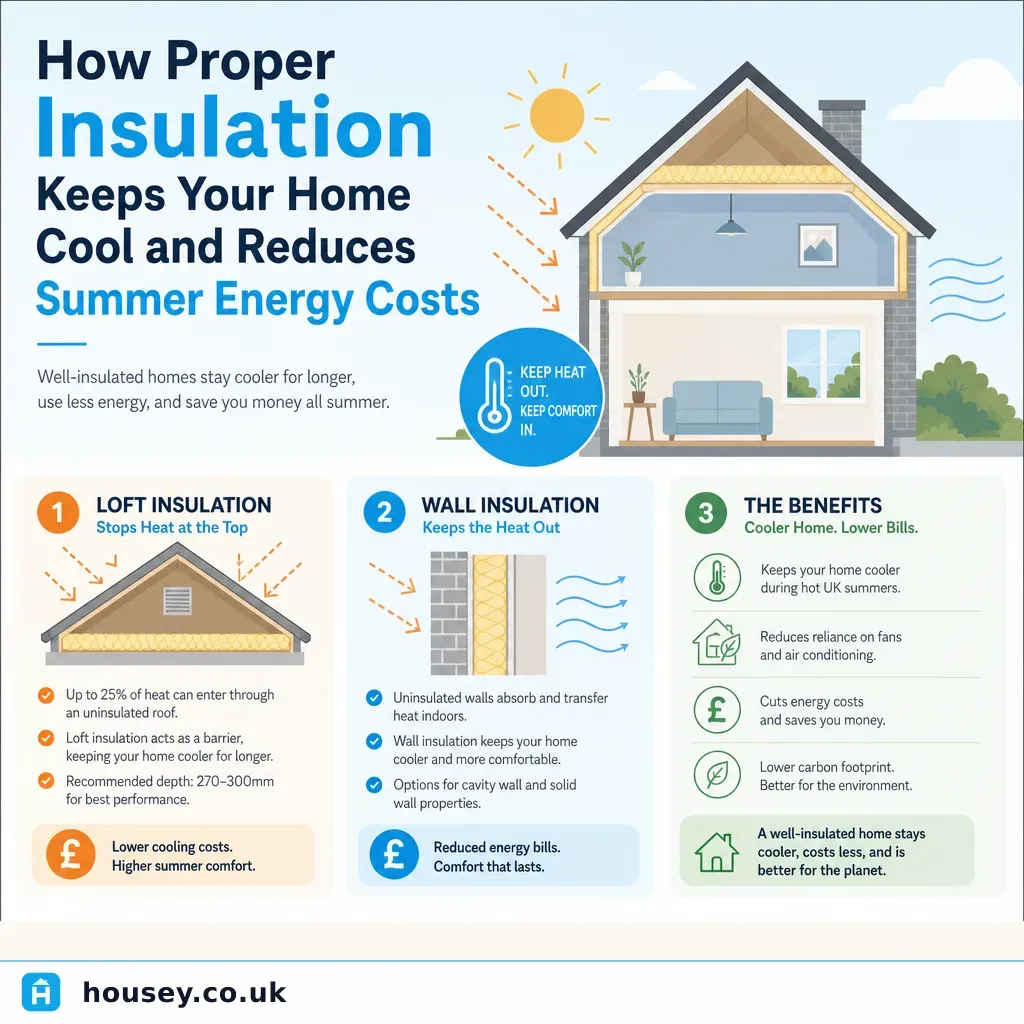
How Proper Insulation Keeps Your Home Cool and Reduces Summer Energy Costs
UK homes have historically been designed to retain warmth in winter, but rising summer temperatures are making overheating a growing concern — particularly in poorly insulated older properties that heat up quickly and struggle to cool down overnight. Whether you live in a Victorian terrace with solid brick walls or a 1970s semi with minimal loft insulation, the same thermal barrier that reduces your heating bills in January can significantly slow the heat entering your home in July. Understanding how insulation works in both seasons, which products perform best for summer comfort, and where moisture risk lies is essential before committing to any retrofit work.
Key points
- Loft insulation installed to the recommended 270mm depth (Energy Saving Trust guidance) significantly reduces heat gain through the roof — the primary pathway for solar heat gain in most UK homes during summer.
- Building Regulations Approved Document O (2022) introduced mandatory overheating mitigation requirements for new residential buildings in England, reflecting a policy shift in how summer comfort is treated in housing.
- Under PAS 2035:2023, any government-funded retrofit must begin with a Retrofit Assessment carried out by a TrustMark-registered Retrofit Assessor — skipping this step risks interstitial condensation and structural damage.
- Solid wall insulation applied without proper hygrothermal analysis can trap moisture in the wall fabric, causing damp, mould, and long-term structural deterioration in pre-1919 properties.
- A well-insulated cavity wall (approximately 0.18 W/m²K) slows heat transfer roughly eleven times more than an uninsulated solid brick wall (approximately 2.1 W/m²K), whether heat is moving inward in summer or outward in winter.
How insulation slows summer heat gain
Insulation works in both directions. In winter, it slows the transfer of heat from inside to outside. In summer, it slows the transfer of heat from outside to inside. The key measurement is the material's thermal resistance (R-value) and the overall U-value of the building element — the lower the U-value, the slower heat flows through it in either direction.
Thermal mass also influences summer comfort. Dense materials — brick, stone, concrete block — absorb heat during the day and release it slowly overnight. In a well-insulated home with significant thermal mass, daily temperature swings are buffered: the structure absorbs heat when outdoor temperatures peak and releases it gradually when outdoor temperatures fall. Lightweight construction without insulation offers neither buffer.
Roof insulation matters most in summer because the roof surface receives direct solar radiation for much of the day. An uninsulated loft space can reach internal temperatures above 50°C on a hot summer afternoon, radiating heat downward through the ceiling into the rooms below. Adequate loft insulation — 270mm of mineral wool or equivalent — dramatically reduces this effect.
Which insulation types work best for summer cooling
Different insulation measures and locations have different effects on summer comfort:
Insulation type | Location | Achievable U-value (approx.) | Summer cooling benefit | Moisture risk | Key notes |
|---|---|---|---|---|---|
Mineral wool (glass or rock) | Loft (between and over joists) | 0.10–0.13 W/m²K | High — directly reduces roof heat gain | Low in a well-ventilated cold loft | Most cost-effective retrofit measure for most UK homes |
Rigid PIR boards | Flat roof (warm deck) | 0.13–0.18 W/m²K | High — reduces heat gain through flat roof | Low if correctly specified and installed | Building Control notification may apply |
External wall insulation (EWI) | Solid wall exterior | 0.18–0.30 W/m²K | High — keeps wall fabric cooler and preserves thermal mass benefit | Medium — requires breathable render system and PAS 2035 assessment | May change exterior appearance; check planning requirements |
Internal wall insulation (IWI) | Solid wall interior | 0.18–0.35 W/m²K | Moderate — reduces heat gain but diminishes thermal mass effect | Higher — risk of interstitial condensation without hygrothermal assessment | Reduces room dimensions |
Cavity wall insulation | Post-1920s cavity walls | 0.30–0.45 W/m²K | Moderate | Low-medium — wall must be sound and not exposed to driving rain | Quick to install; wall condition assessment essential before injection |
Underfloor insulation | Ground floor (suspended timber) | 0.15–0.22 W/m²K | Low — floors are not a significant summer heat gain route | Low if correctly detailed with under-floor ventilation maintained | More relevant to winter comfort than summer cooling |
U-values are indicative; actual performance depends on product specification, installation quality, and existing building fabric. Indicative figures, last reviewed 2026-06-01.
Building Regulations Part O and the UK overheating problem
Approved Document O (Part O of the Building Regulations, England) came into effect in June 2022 for new residential buildings. It requires developers to demonstrate that homes will not overheat in summer, using either a simplified compliance method or dynamic thermal modelling (CIBSE TM59 methodology).
Part O does not apply directly to retrofit of existing homes, but it has shifted how overheating is considered in retrofit planning. Homes with large south-facing glazing, limited shading, and poor ventilation remain at risk of summer overheating even with good insulation. Insulation alone is not always sufficient — passive shading (external blinds, overhangs), controlled natural ventilation (night-time purge ventilation), and thermal mass all contribute. A whole-house approach produces the most reliable results.
Homeowner checklist: signs your home may lack adequate insulation
Use this checklist before commissioning an assessment:
Moisture risk and PAS 2035
Insulation retrofit — particularly for solid-wall properties built before 1919 — carries real moisture risk. Adding insulation changes the temperature and humidity profile within the wall fabric. If condensation forms within the construction (interstitial condensation), it can cause rot in timber elements, corrosion of metal wall ties, and progressive deterioration of masonry.
PAS 2035:2023 — the UK specification for domestic retrofit — requires that all government-funded retrofit work begins with a full Retrofit Assessment by a TrustMark-registered Retrofit Assessor. The assessment identifies:
- The property's heat loss profile and appropriate insulation measures
- Whether internal or external insulation is more suitable for the specific wall type and exposure
- Ventilation provisions required to manage post-retrofit humidity levels
- Any pre-existing moisture problems that must be remediated before insulation is installed
Even for privately funded insulation work, following PAS 2035 principles is strongly advisable. Injecting cavity wall insulation into walls with cracked pointing, visible defects, or high rain exposure can allow water to bridge the cavity — causing serious damp internally.
Important limitations
This article provides general information about insulation principles and summer heat management in UK homes. Insulation suitability, the appropriate specification, and the level of moisture risk depend on the specific construction of your property — its wall type, age, exposure, existing moisture levels, and ventilation strategy. Conditions vary significantly between a Victorian terrace, a 1960s concrete-frame flat, and a 1980s cavity-wall semi.
A qualified professional — ideally a TrustMark-registered Retrofit Assessor — should assess your property before any major insulation work is commissioned. This article does not constitute technical, structural, or legal advice and must not be used as the sole basis for specifying or commissioning retrofit insulation.
When this becomes urgent
Seek professional advice promptly if:
- You notice damp or mould in a room where wall insulation has already been installed
- Condensation is forming on internal wall faces during winter, particularly on outer walls
- A previous installer's insulation appears to have compressed, shifted, or caused visible staining
- You are applying for ECO4 or Great British Insulation Scheme funding and have not yet had a Retrofit Assessment — funding bodies require this step before works can proceed
- Your property shows signs of structural movement alongside suspected moisture accumulation — seek a chartered surveyor's assessment alongside any retrofit review
What to ask a qualified professional
Before commissioning an insulation assessment or installation:
- Are you TrustMark registered and do you hold a recognised PAS 2035 Retrofit Assessor qualification?
- Will you carry out a hygrothermal assessment of my wall construction type before specifying internal or external wall insulation?
- What ventilation provisions are included in the specification, and how will loft ventilation be maintained after insulation is installed?
- Is my property suitable for cavity wall insulation given its exposure classification and the condition of existing mortar joints?
- Will the insulation affect my EPC rating, and will a new EPC assessment be carried out after installation?
- Does the proposed system qualify for ECO4, the Great British Insulation Scheme, or any other current grant funding?
- What is the estimated payback period for this measure based on my actual energy usage?
When to get professional help
Always use a qualified, accredited installer for wall insulation — do not attempt solid wall insulation as a DIY project. For loft insulation, a qualified installer working to manufacturer instructions can carry out work without a full PAS 2035 assessment, but should confirm that existing eaves ventilation is maintained.
Contact a professional before proceeding if your property has existing damp, poorly fitted previous insulation, or a wall construction type not covered by standard product approvals — for example, unusual cavity widths, metal-frame construction, or mixed masonry types.
How Housey can help
Housey connects UK homeowners with qualified professionals for insulation assessments, insulation installation, and full retrofit assessments following PAS 2035 principles. Submit your job details and compare quotes from TrustMark-registered practitioners in your area before committing to any major works.
Frequently asked questions
Does loft insulation make rooms hotter in summer?
Correctly installed loft insulation reduces heat entering rooms from above — it does not trap heat within the living space. A cold loft with adequate eaves ventilation allows hot air to escape above the insulation layer rather than radiating downward through the ceiling. Concerns that loft insulation causes summer overheating are generally unfounded; most occupants report the opposite effect, with ceilings feeling noticeably cooler on hot days.
What insulation grants are available in the UK in 2026?
The ECO4 scheme (Energy Company Obligation 4) funds insulation and heating measures for eligible low-income households. The Great British Insulation Scheme (GBIS) offers support for single insulation measures for households in properties with lower EPC ratings. Eligibility criteria and available measures change periodically — check current GOV.UK guidance or contact your energy supplier directly for the latest position.
Can insulation replace air conditioning in a UK summer?
Insulation reduces heat gain but does not actively cool air — it has no refrigerant or cooling effect. In a well-insulated home with thermal mass, a night-time ventilation strategy and external shading, occupants can significantly reduce indoor temperatures without mechanical cooling. During sustained heat waves, or for vulnerable occupants, supplementary cooling may still be needed alongside good insulation.
How do I tell whether my walls are cavity or solid?
Cavity walls are typical in properties built after approximately 1920. A practical check: measure the wall thickness at a door or window reveal. Solid brick walls are generally 22–23cm thick; cavity walls are usually 27–30cm or more. Your property's EPC document or a retrofit assessor can confirm the construction type and whether any existing cavity fill is already present.
Sources and further reading
- Approved Document O: Overheating (2022) — GOV.UK
- PAS 2035:2023 — Retrofitting dwellings for improved energy efficiency — BSI Group
- Insulation guidance — Energy Saving Trust
- Find a TrustMark-registered retrofit professional — TrustMark
- ECO4 scheme guidance — GOV.UK
- TM59: Design methodology for the assessment of overheating risk in homes — CIBSE
Useful next reads
 Energy & Retrofit
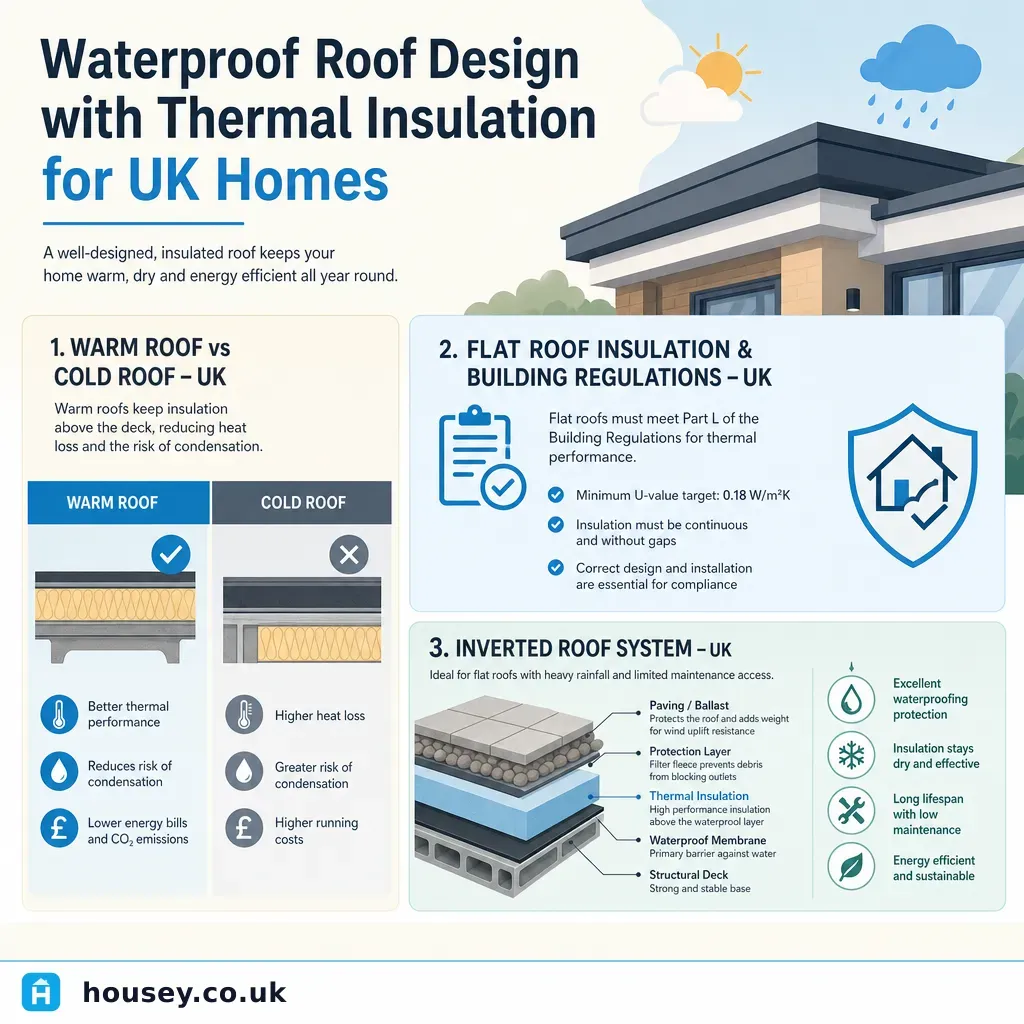
Waterproof Roof Design with Thermal Insulation for UK Homes
The two main approaches to combining waterproofing and thermal insulation in a roof are warm roof and cold roof construction.
 Energy & Retrofit
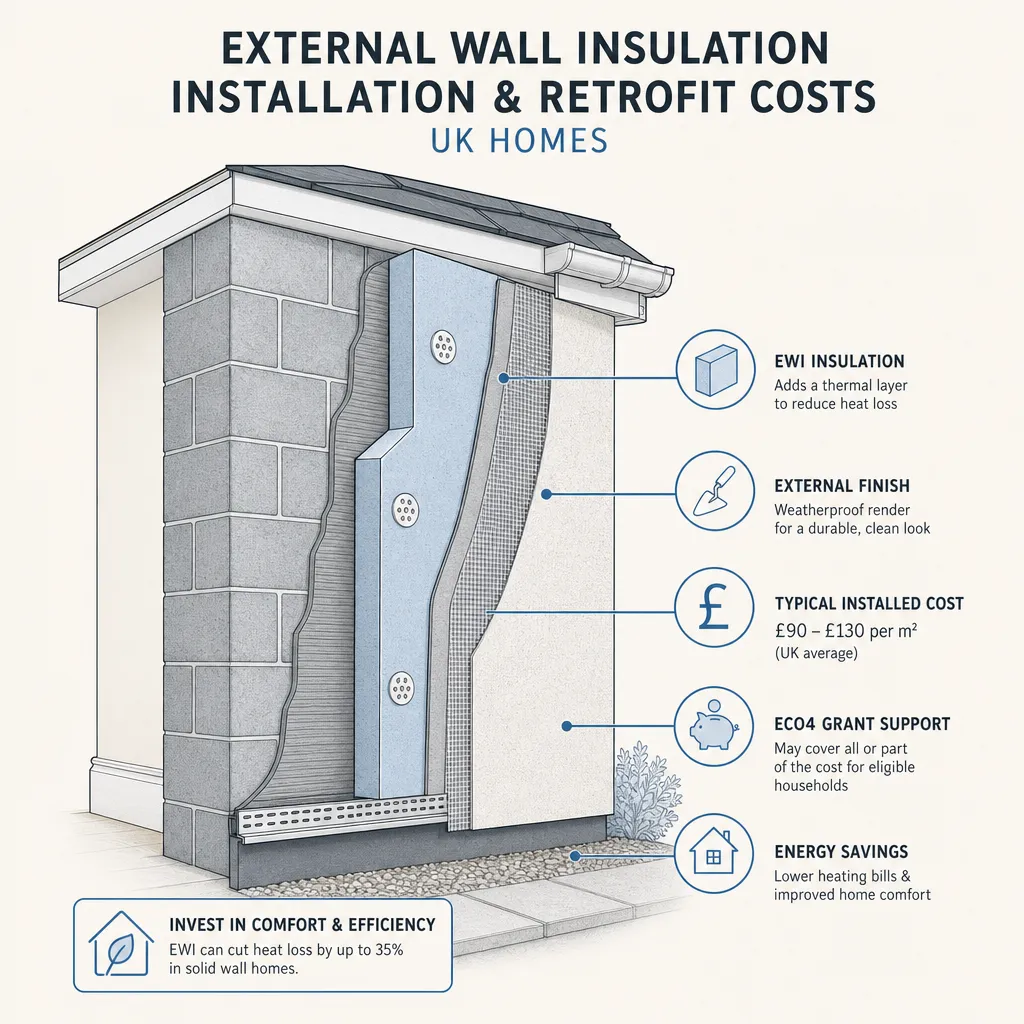
External Wall Insulation Installation and Retrofit Costs
External wall insulation (EWI) in the UK typically costs £8,000–£22,000 for a semi-detached home, depending on wall area, insulation type, and render finish.
 Energy & Retrofit
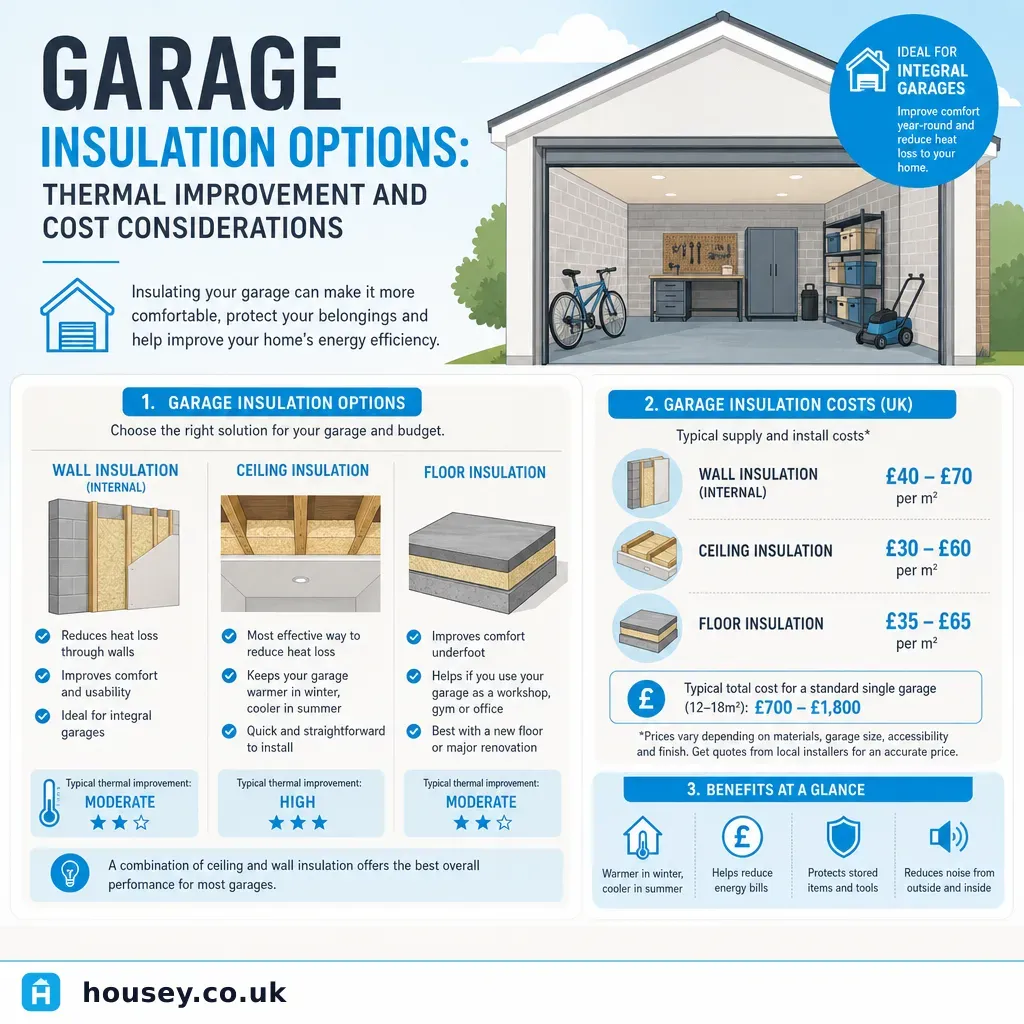
Garage Insulation Options: Thermal Improvement and Cost Considerations
Garage insulation options in the UK include mineral wool batts, rigid foam boards (PIR or EPS), and insulated garage doors.
 Energy & Retrofit
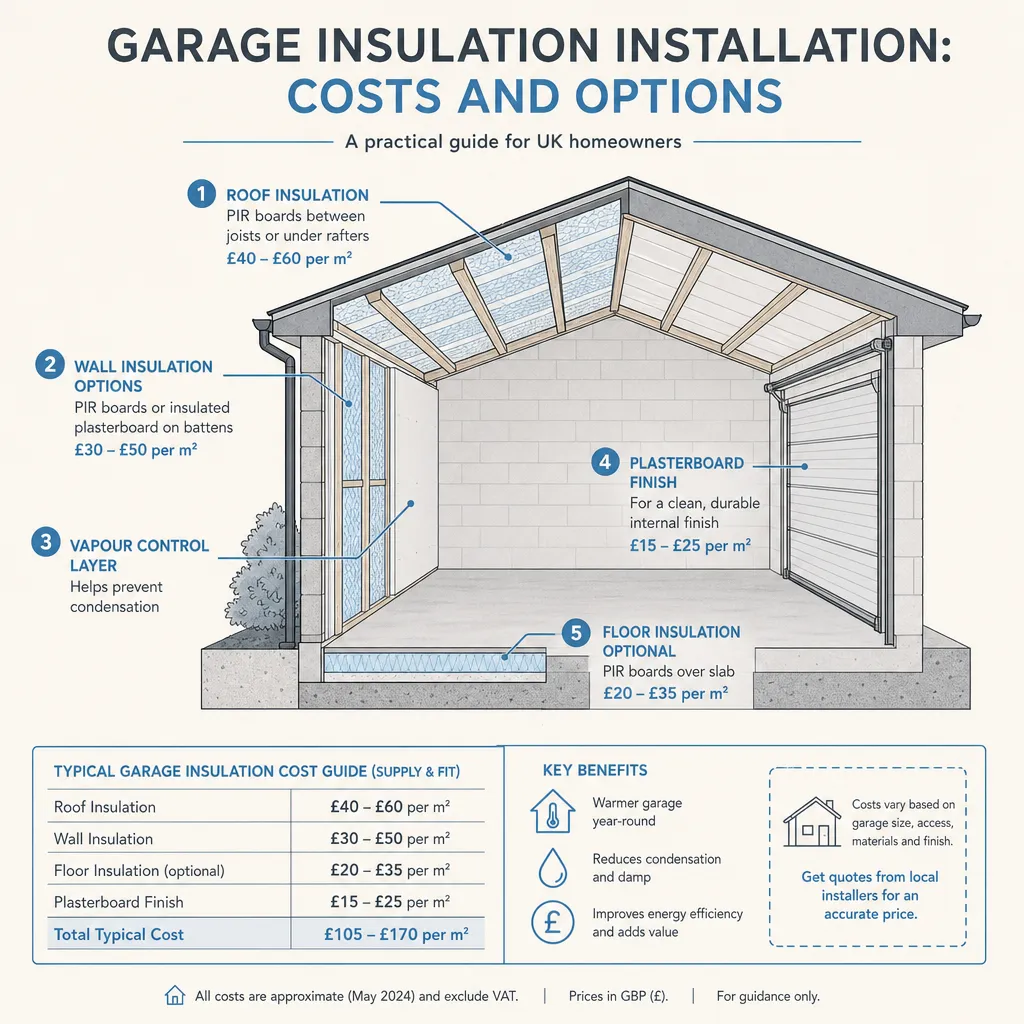
Garage Insulation Installation: Costs And Options
Garage insulation costs and methods depend on whether you are converting to habitable space or improving a working garage.
 Energy & Retrofit
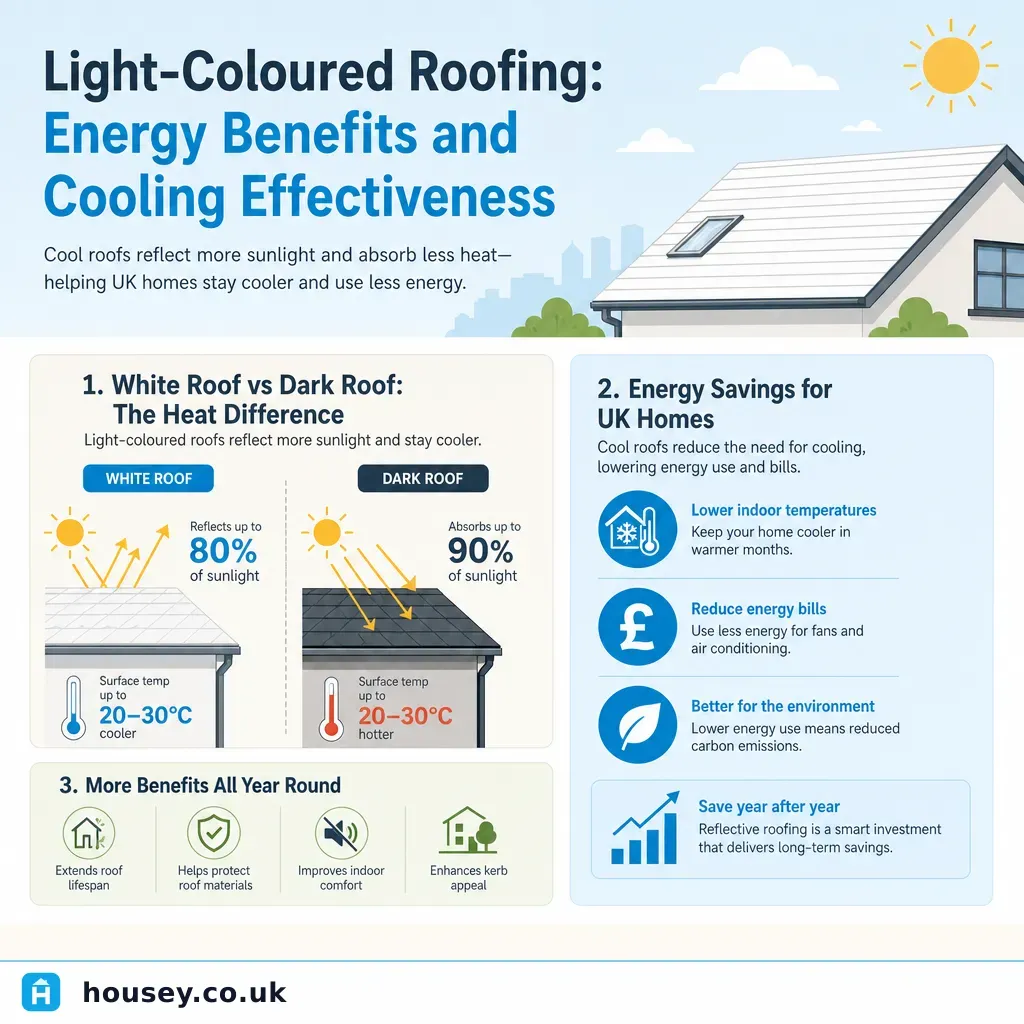
Light-Coloured Roofing: Energy Benefits and Cooling Effectiveness
Light-coloured or reflective roofing reduces the solar heat absorbed by a roof surface, lowering temperatures in the building below during summer.