Garage Insulation and Thermal Upgrade Costs
By Housey · Last reviewed 6th of May 2026
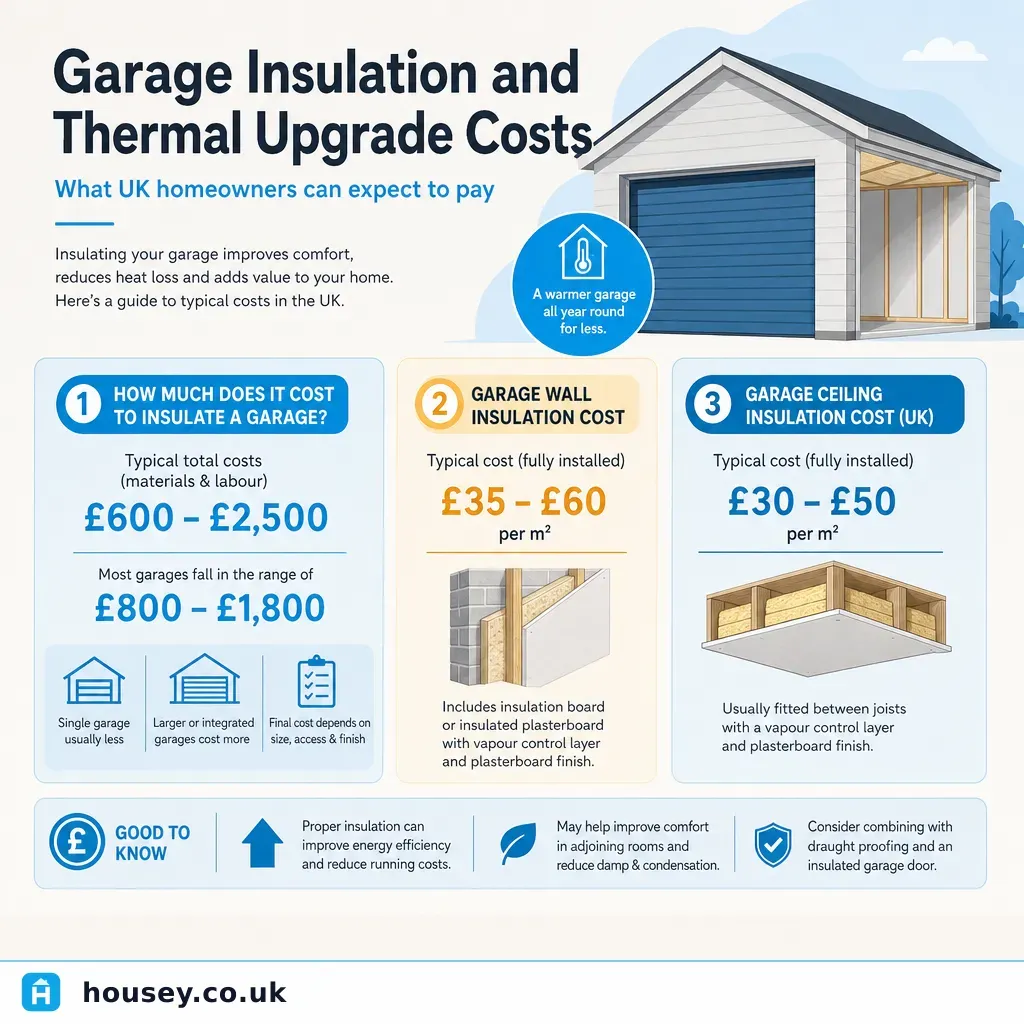
Garage Insulation and Thermal Upgrade Costs
Garages are often the least thermally efficient space in a UK home. An integral garage — common in 1950s to 1980s housing stock — can create a cold buffer zone next to living spaces and drive up heating bills year-round. Whether you are insulating to reduce energy costs, preparing for a garage conversion, or improving performance ahead of a heat pump installation, the costs and right approach depend on your garage type and how it relates to the rest of the dwelling.
Key points
- Garage wall insulation using stud wall and mineral wool typically costs £600–£1,500 for a single garage; rigid PIR board (e.g. Celotex, Kingspan) is £700–£1,800 (Indicative UK costs, last reviewed 2026-05-06).
- Ceiling or floor-above insulation is usually the highest-priority measure when a heated room sits directly above the garage.
- A fully insulated sectional garage door costs £800–£2,500 installed; DIY panel kits for an existing door cost £50–£300.
- Insulation funded by ECO4 or the Great British Insulation Scheme must follow PAS 2035:2023 and be overseen by a Retrofit Coordinator.
- Any garage conversion to habitable use must comply with Building Regulations Part L, which sets minimum U-values for walls, floors, roof, and openings.
How much does garage insulation cost?
Costs depend on the size of your garage, which elements you are insulating, the method chosen, and whether surface preparation or plastering is needed.
Element | Method | Indicative cost (single garage) |
|---|---|---|
Walls | Stud wall + mineral wool | £600–£1,500 |
Walls | Rigid PIR board (e.g. Celotex, Kingspan) | £700–£1,800 |
Ceiling / flat roof space | Rigid board between joists | £400–£900 |
Pitched roof (inside) | Mineral wool between rafters | £500–£1,200 |
Floor | 50mm PIR board + screed | £800–£1,600 |
Door — DIY panel kit | EPS or foam inserts | £50–£300 |
Door — full replacement | Insulated sectional or roller door | £800–£2,500 installed |
Indicative UK costs, last reviewed 2026-05-06. Costs vary by region, specification, and contractor. Obtain at least three quotes.
Which element should you prioritise?
- Choose ceiling or floor-above insulation first if a heated bedroom or living room sits directly above the garage — highest impact on warmth and energy bills.
- Choose the shared party wall first if the garage borders a heated hallway, kitchen, or living room — combined with the ceiling, this addresses the main heat-loss paths.
- Choose door replacement if the existing door is a single-skin metal up-and-over with visible draught gaps — an insulated sectional door reduces both heat loss and cold draughts.
- Ask a Retrofit Coordinator first if the work is part of a whole-home retrofit or funded via ECO4 or GBIS — PAS 2035 requires a whole-dwelling assessment to avoid moisture and ventilation problems.
- Check with building control if converting to habitable use — all elements must meet Part L minimum U-values and an inspection will be required.
Worked example: 1970s semi-detached with integral garage
A homeowner in the East Midlands has an integral single garage beneath a cold bedroom. An insulation installer identifies the following priority works:
Work | Specification | Estimated cost |
|---|---|---|
Ceiling (floor of bedroom above) | 100mm PIR rigid board between joists | £550 |
Party wall (shared with hallway) | 50mm PIR board, plasterboard finish | £400 |
Door replacement | Insulated sectional door, draught-sealed frame | £1,400 |
External cavity wall | Cavity injection insulation (if unfilled) | £300–£500 |
Total |
| £2,650–£2,850 |
The cavity wall element may qualify for an ECO4 grant if the household meets eligibility criteria, potentially reducing that cost to zero. The ceiling and party wall works alone should produce a noticeable improvement in the bedroom above.
What affects the price?
- Garage size: A double garage costs roughly 50–70% more than a single for wall and ceiling insulation.
- Finishing: Wet plaster or a dry-lining finish for habitable conversion adds £200–£600.
- Building control: A local authority building control application for a notifiable conversion typically costs £150–£500 depending on council and scope.
- VAT: Insulation installed by a registered contractor in England, Scotland, and Wales currently attracts 5% VAT (reduced rate) rather than the standard 20% — check current GOV.UK guidance for eligibility rules.
Grants and funding
- ECO4 (Energy Company Obligation 4): For eligible low-income or benefit-receiving households. Work must follow PAS 2035 and use a TrustMark-registered installer.
- Great British Insulation Scheme (GBIS): Targets homes with EPC ratings of D or below. Garage insulation may qualify as part of a whole-dwelling SAP assessment.
- Local authority schemes: Some councils offer grants under the Warm Homes Local Grant or successor programmes — check your council's website.
The Energy Saving Trust maintains up-to-date guidance on which schemes are currently open.
Homeowner checklist: before you request quotes
When to get professional help
Most garage insulation is straightforward for a competent installer. Seek specialist advice if:
- The garage has a flat roof with moisture ingress — insulating over a failing structure can cause condensation problems if ventilation is not managed correctly.
- You are planning a full habitable conversion — building control sign-off is required and an architect or architectural technologist can confirm the Part L specification.
- The property is listed or in a conservation area — permitted development rights and thermal upgrade requirements may differ.
- The project forms part of a PAS 2035-compliant retrofit — a qualified Retrofit Coordinator must oversee the whole-dwelling assessment.
How Housey can help
Housey connects homeowners with vetted insulation installers who can assess your garage and provide itemised quotes. For a whole-home energy view, our retrofit assessments service matches you with a PAS 2035-qualified Retrofit Assessor. Energy-efficiency consultants available through Housey can help you identify grant eligibility and prioritise measures before committing to any work.
Frequently asked questions
Does garage insulation add value to a property?
Thermal improvements that raise the EPC rating can support market value, particularly where insulating an integral garage ceiling directly improves a heated room above. A detached outbuilding is less likely to influence buyer interest. An EPC assessor can indicate the likely rating impact of specific measures before you commit.
Do I need planning permission to insulate my garage?
In most cases, no. Internal wall and ceiling insulation does not require planning permission. Replacing a garage door with an insulated version is generally permitted development. If the property is listed or in a conservation area, check with your local planning authority before making any external changes.
Can I insulate my garage myself?
Fitting panel kits to an existing door or laying PIR boards between existing joists is achievable for a competent DIYer. Work that forms part of a notifiable building conversion or is funded by ECO4 or GBIS must be carried out by an accredited installer. Poorly installed insulation can create cold bridges and condensation risks.
Will insulating my garage improve my EPC rating?
It may, if the garage forms part of the dwelling's assessed thermal envelope. If the garage is integral and shares walls or a floor with the house, improvements may feed into the SAP calculation. An EPC assessor can confirm whether specific measures would affect the current rating.
How long does garage insulation installation take?
A walls-and-ceiling job in a single integral garage typically takes one to two days. A full conversion to habitable use — including floor insulation, wall lining, roof insulation, and a new door — may take three to five days depending on specification and finishing required.
Sources and further reading
- Building Regulations Approved Document L: Conservation of fuel and power — GOV.UK
- ECO4 scheme guidance — GOV.UK
- Great British Insulation Scheme — GOV.UK
- VAT relief on energy-saving materials — HMRC / GOV.UK
- Home insulation guidance — Energy Saving Trust
Useful next reads
 Energy & Retrofit
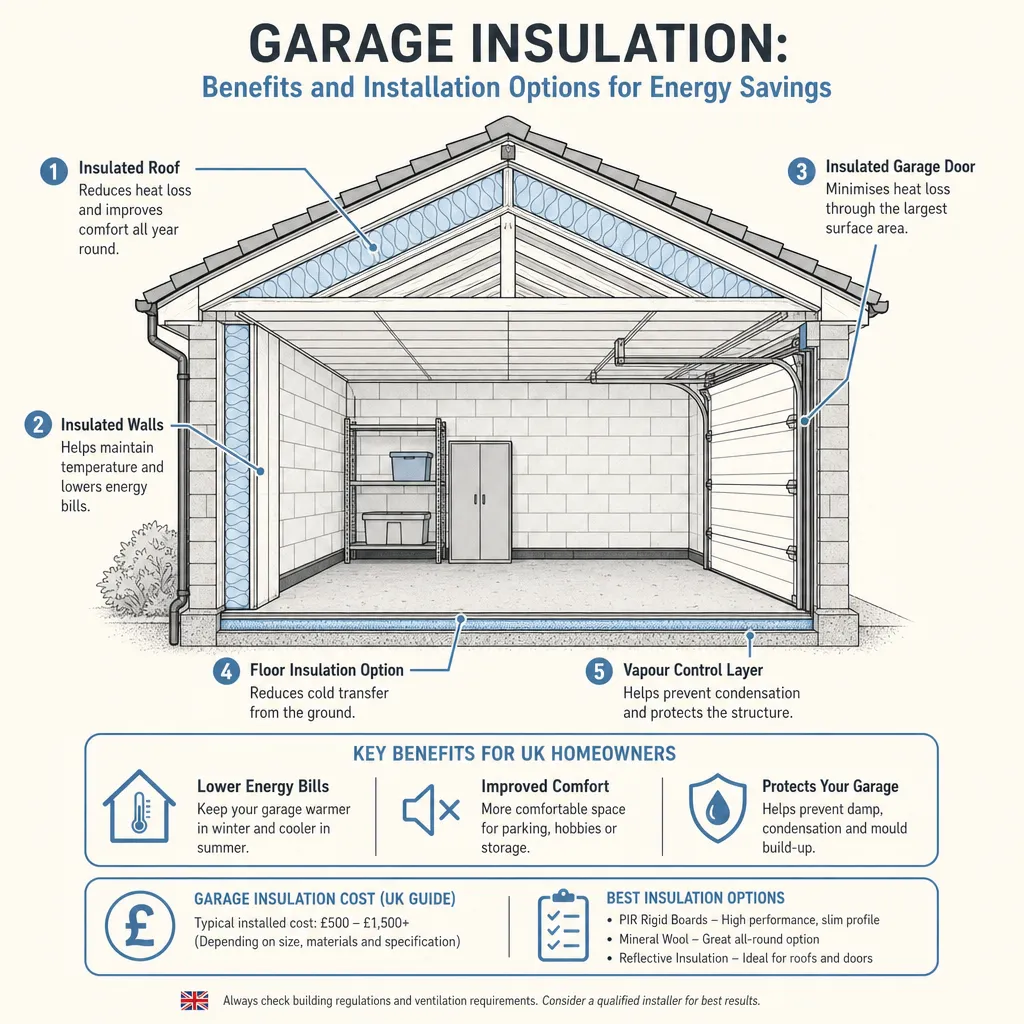
Garage Insulation: Benefits and Installation Options for Energy Savings
Insulating a garage reduces heat loss, lowers energy bills, and makes an attached garage more comfortable year-round.
 Energy & Retrofit
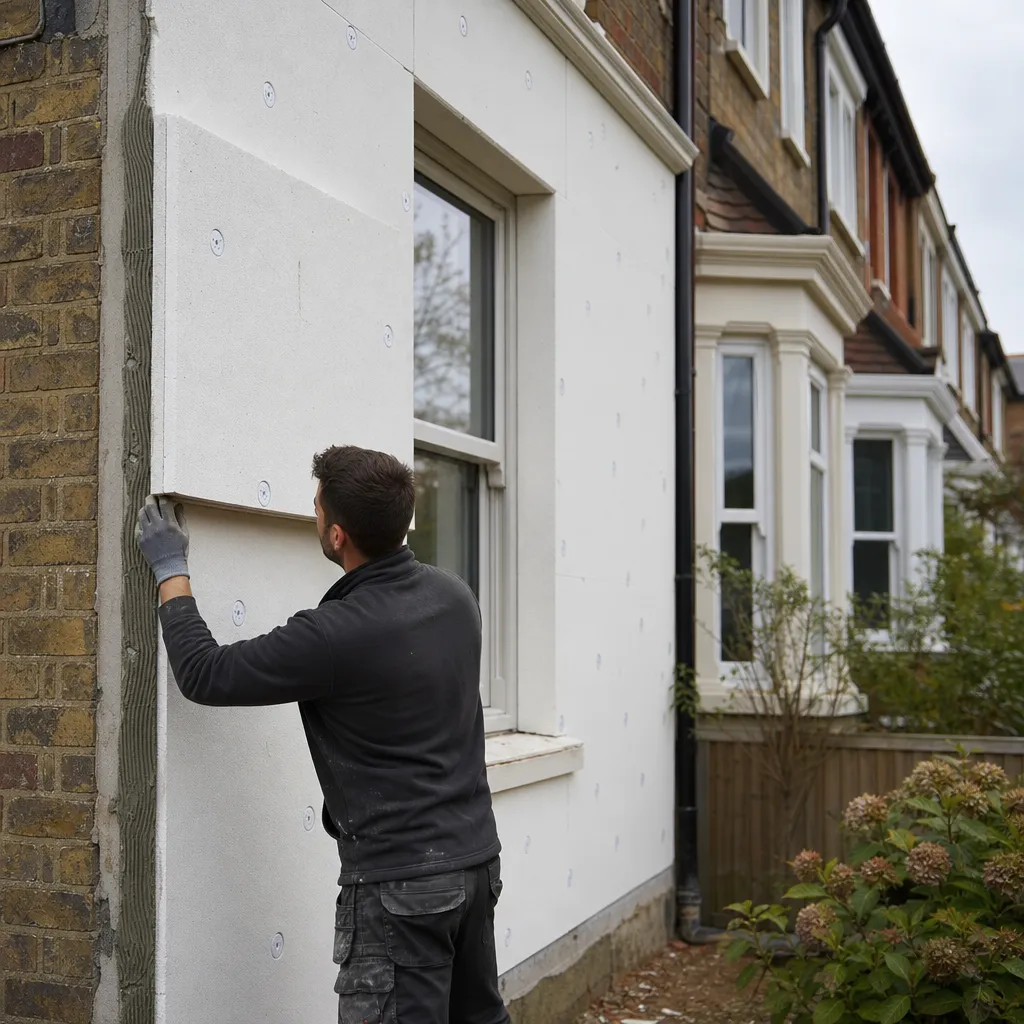
High-Performance Wall Insulation Systems for UK Homes
UK homes use three main wall insulation systems: external wall insulation (EWI), internal wall insulation (IWI), and cavity wall insulation (CWI).
 Energy & Retrofit
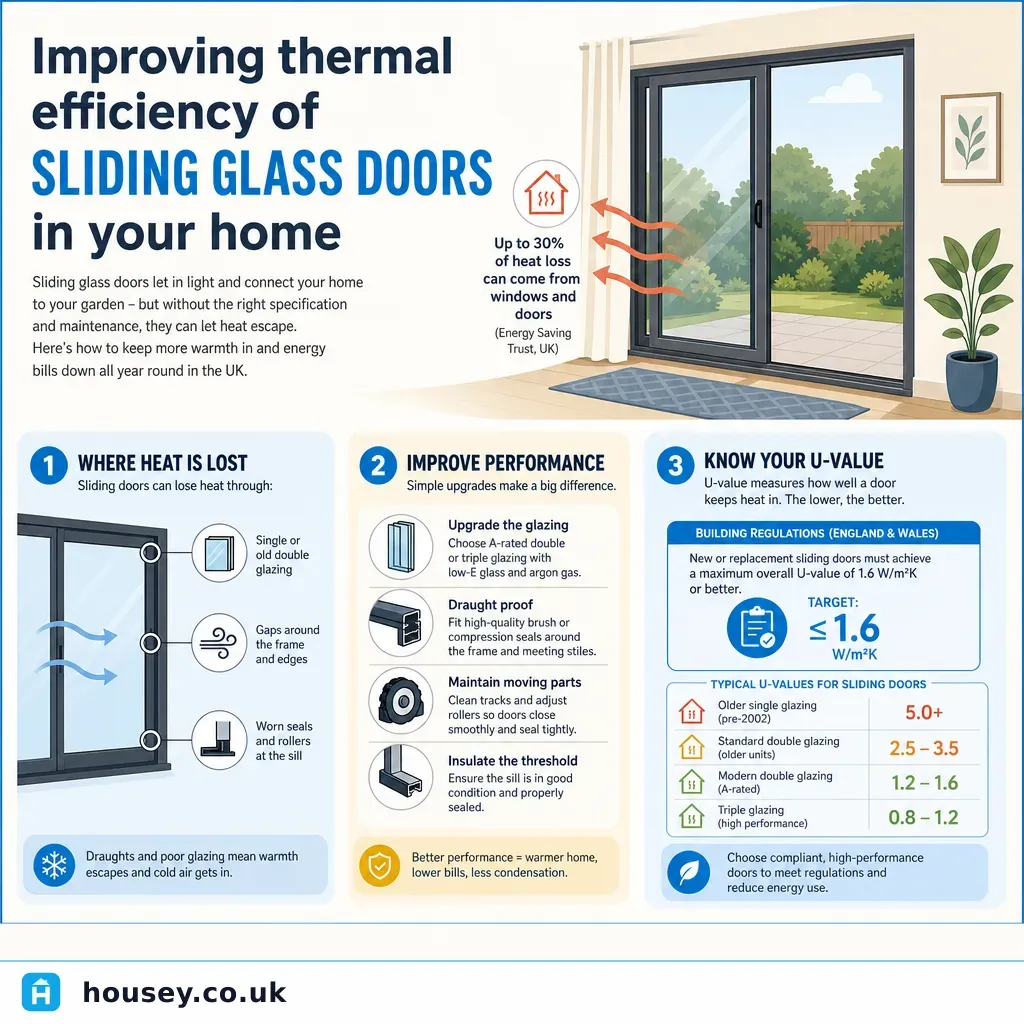
Improving thermal efficiency of sliding glass doors in your home
Sliding glass doors lose heat through the glazing unit, the frame, and air gaps in worn seals.
 Energy & Retrofit
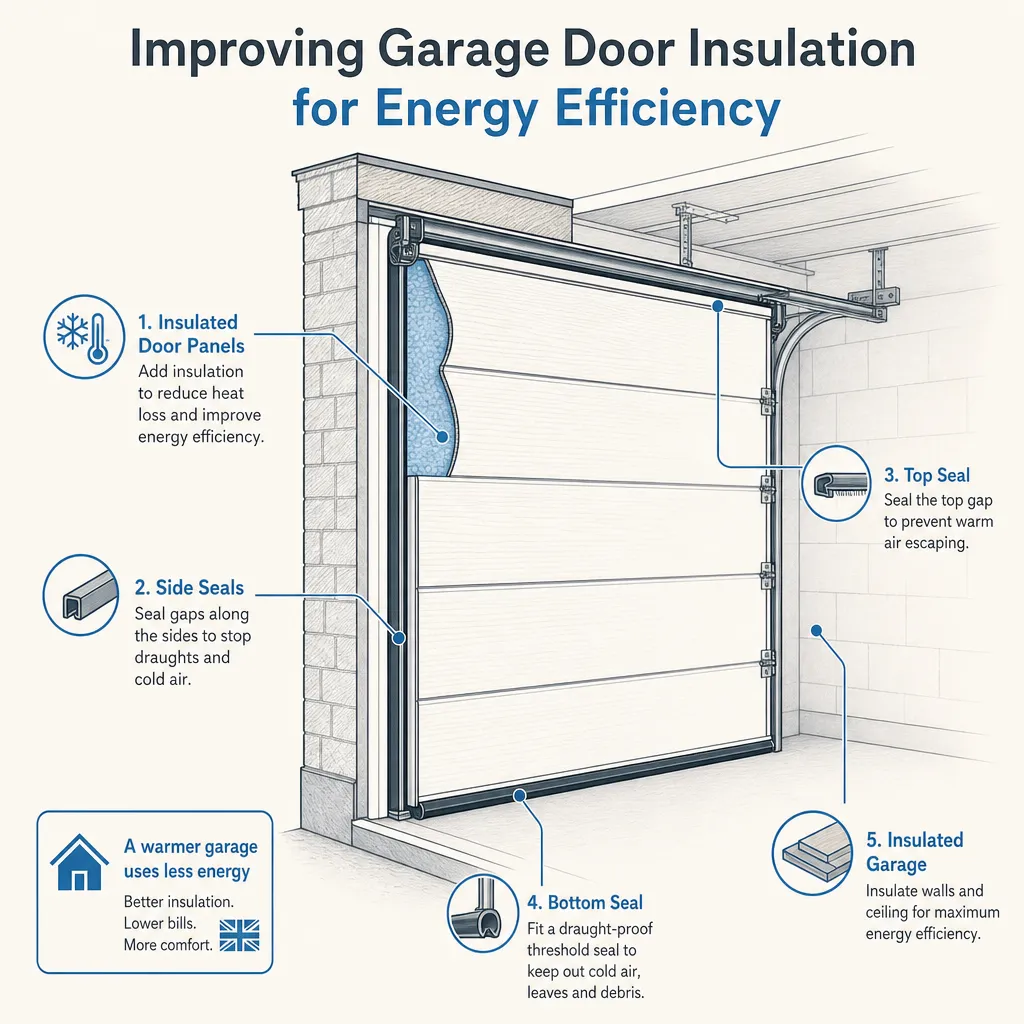
Improving Garage Door Insulation for Energy Efficiency
Improving garage door insulation typically involves fitting a retro-fit panel kit to an existing door, replacing a single-skin door with an insulated sectional model, or adding draught seals around the frame.
 Energy & Retrofit
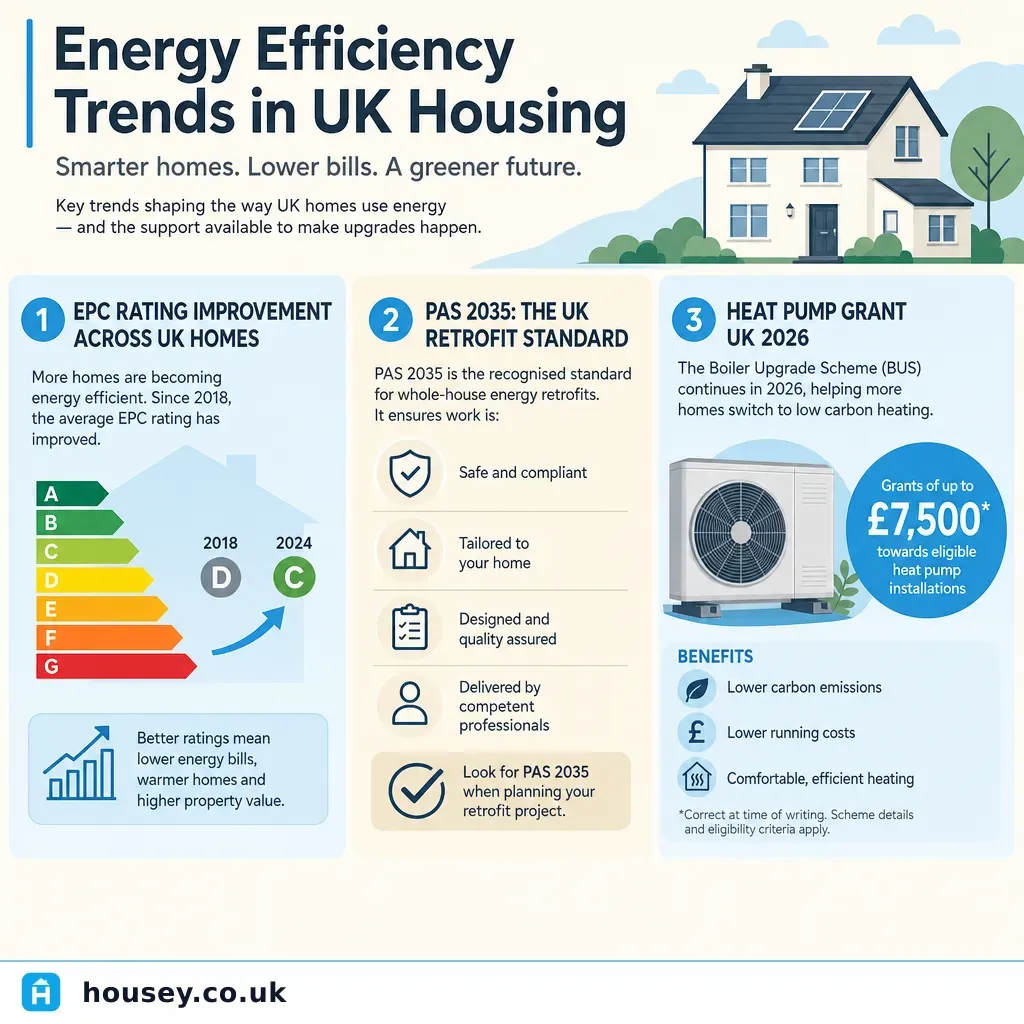
Energy Efficiency Trends in UK Housing
UK housing faces significant pressure to improve energy performance ahead of the 2050 net-zero target, with around 55% of English homes currently rated EPC D or below.