Garden Clearance Services: Overgrown Space Recovery
By Housey · Last reviewed 7th of May 2026
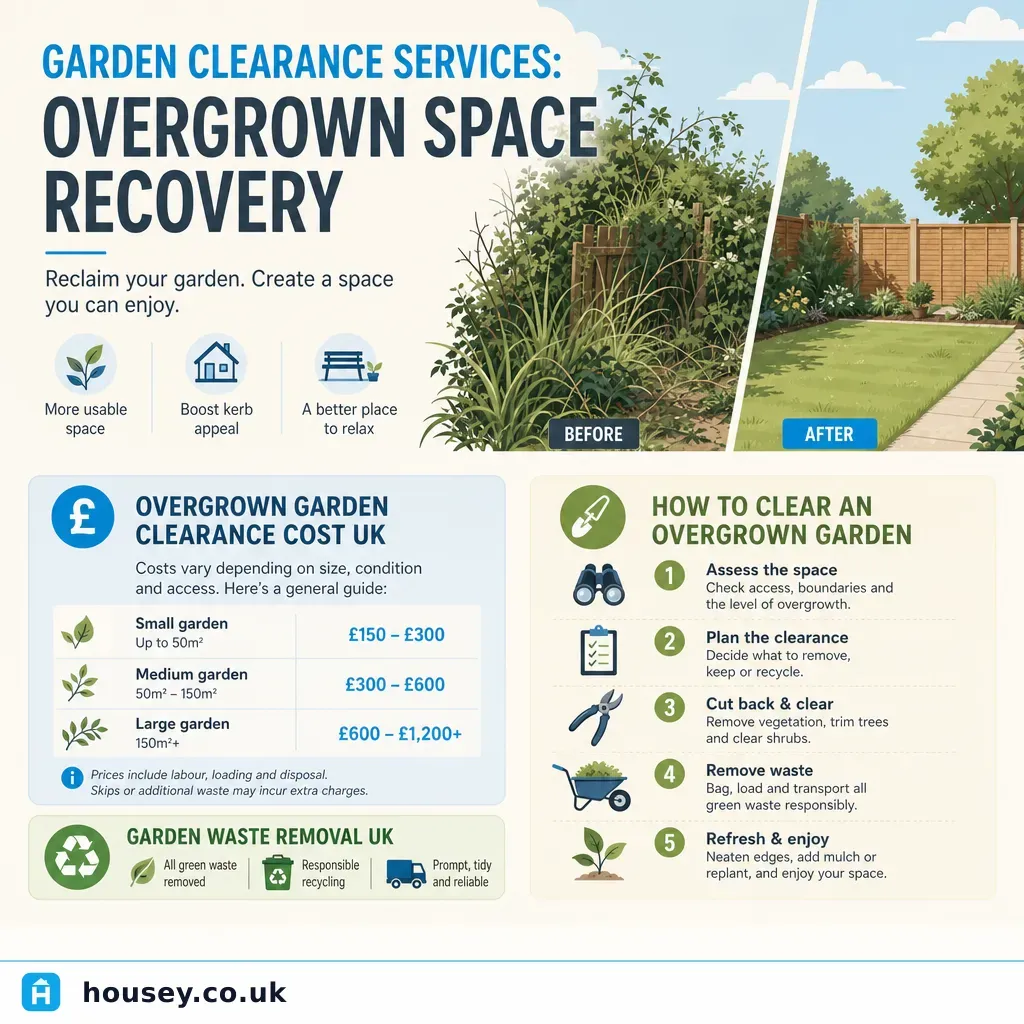
Garden Clearance Services: Overgrown Space Recovery
An overgrown or neglected garden can accumulate years of brambles, self-seeded saplings, dead wood, and accumulated waste in a surprisingly short time. The decision to clear it often comes when a property is being purchased, prepared for sale, handed back by a tenant, or when the owner is ready to reclaim the space. Understanding what a clearance project involves — and who to hire — helps you set a realistic budget and avoid paying for work you do not need.
Key points
- Garden clearance costs in the UK typically range from £150 for a small, lightly overgrown plot to £2,000 or more for a large, heavily overgrown garden with substantial woody growth or difficult access. (Indicative UK costs, last reviewed 2026-05-07.)
- Waste disposal is often priced separately from clearance labour — always confirm whether skip hire, licensed waste carrier removal, or tipping fees are included in any quote.
- Tree felling, crown reduction, and heavy pruning should only be carried out by a qualified, insured tree surgeon — not a general garden clearance operative.
- Trees in a conservation area are protected under Section 211 of the Town and Country Planning Act 1990; you must notify the local planning authority at least six weeks before carrying out any work on them.
- Plants such as Japanese knotweed are controlled under Schedule 9 of the Wildlife and Countryside Act 1981 and must not be composted or placed in a standard skip — specialist licensed disposal is legally required.
What does garden clearance involve?
Garden clearance is the removal of unwanted vegetation, debris, and organic waste from an outdoor space to prepare it for landscaping, regular maintenance, sale, or re-use. The scope varies widely depending on the size and condition of the plot.
Typical tasks within a residential clearance project include:
- Removing and disposing of overgrown grass, brambles, nettles, and scrub
- Cutting back or removing self-seeded shrubs and small trees
- Clearing dead wood, fallen branches, and exposed root systems
- Removing accumulated garden waste, old furniture, and abandoned materials
- Treating or removing invasive species such as Japanese knotweed, giant hogweed, or Himalayan balsam — each requires specialist handling
- Stump grinding for trees that have already been felled
- Clearing paths, driveways, or patio areas overgrown with vegetation
After clearance, the garden is typically handed over as bare or roughly levelled soil, ready for landscaping, turfing, or replanting.
Who should carry out the work?
The right contractor depends on the scope and complexity of the clearance. Hiring the wrong type can leave key tasks incomplete or create legal risk — particularly where protected trees or invasive species are involved.
Situation | Recommended contractor | Why |
|---|---|---|
Light to moderate overgrowth: brambles, scrub, accumulated waste | Landscaper or clearance contractor | General clearance and standard waste disposal |
Significant tree work: felling, crown reduction, large branch removal | Tree surgeon (arborist) | Safety, specialist equipment, appropriate insurance |
Invasive species confirmed or suspected | Specialist invasive species contractor | Legal disposal requirements, treatment programmes |
Hard landscaping clearance: old slabs, concrete, rubble | Groundworker or licensed waste contractor | Heavy plant, licensed tipping |
Large-scale or rural site clearance | Specialist land clearance contractor | Volume, access, machinery requirements |
Decision tree: who should you hire?
- Hire a landscaper if the garden is overgrown but contains no large trees, no identified invasive species, and no structural hard landscaping to break up.
- Hire a tree surgeon if there are trees to fell, crown lift, or heavily prune — especially near structures, overhead cables, or boundary walls.
- Hire both if the garden has significant overgrowth alongside trees requiring specialist work; many landscapers and tree surgeons collaborate on larger clearance projects and can be instructed together.
- Hire a specialist invasive species contractor if Japanese knotweed, giant hogweed, Himalayan balsam, or other Schedule 9 species are present or suspected — confirm identification before any other clearance begins.
- Hire a groundworker if old hard landscaping, rubble, or concrete needs breaking up and removing with machinery.
How much does garden clearance cost?
Costs depend on garden size, vegetation density and type, site access, distance to licensed tipping facilities, and whether waste disposal is included in the quoted price.
Garden size and condition | Indicative cost range | Notes |
|---|---|---|
Small garden (up to 30m²), lightly overgrown | £150–£400 | Half to full day; waste removal may be extra |
Medium garden (30–80m²), moderately overgrown | £400–£900 | One to two days; includes standard waste removal |
Large garden (80–200m²), heavily overgrown | £900–£2,000 | Two to four days; multiple operatives likely |
Very large or rural plot, dense scrub or trees | £2,000–£6,000+ | Machinery usually required |
Japanese knotweed treatment and removal | £1,500–£5,000+ per treatment cycle | Specialist contractor; multi-year programme often needed |
Indicative UK costs, last reviewed 2026-05-07. VAT at 20% may apply depending on contractor registration. Costs vary significantly by region, access, and waste volume. Obtain at least three itemised quotes before instructing.
Common extras not always included in headline quotes:
- Skip hire or licensed waste carrier collection: £150–£400 depending on volume
- Stump grinding: £50–£200 per stump
- Tree felling per tree: £150–£1,000+ depending on size, location, and access
- Invasive species removal or treatment: always priced separately by a specialist
What to ask before accepting a quote
- What is included and excluded — is waste disposal included, or priced separately?
- Who carries out the work, and what qualifications, accreditations, or insurance do they hold?
- If tree work is involved, do you hold full public liability insurance and are your operatives trained to current chainsaw and tree-work standards?
- Have you identified any invasive species on the site, and if so, how will they be handled and disposed of?
- Will you provide a waste transfer note as required under the Environmental Protection Act 1990?
- How will you protect adjacent plants, structures, or boundary fences during the clearance?
- What will the garden look like at the end — bare soil, roughly levelled, or with further preparation included?
- What happens if additional waste volumes or unexpected obstacles are found once work is under way?
Red flags to watch for when hiring a clearance contractor
- No public liability insurance, or reluctance to provide a copy on request — this is non-negotiable for work carried out on your property.
- Quoting without visiting the site — credible contractors assess access, volume, plant type, and potential protected trees before pricing any job.
- Offering to remove all waste by van with no documentation — large clearance volumes require a licensed waste carrier. Ask to see their waste carrier licence number before agreeing to proceed.
- No written quote or contract — verbal agreements offer very limited protection if the scope expands or a dispute arises.
- Cash only with no invoice — a VAT-registered business should issue written documentation as a matter of course.
- Proposing to fell trees without checking for protection — a competent contractor will verify Tree Preservation Orders and conservation area status before touching any tree on or near your boundary.
Are any plants or trees protected?
Before clearance begins, check for the following:
Tree Preservation Orders (TPOs): Trees protected by a TPO cannot be pruned, felled, or significantly altered without consent from the local planning authority. Check your local authority's planning search or contact the planning department before instructing any tree work. Enforcement action can result in prosecution.
Conservation area trees: Under Section 211 of the Town and Country Planning Act 1990, any tree in a conservation area with a trunk diameter of 75mm or more at 1.5m above ground requires six weeks' prior written notice to the local planning authority before work is carried out.
Protected hedgerows: Certain hedgerows are protected under the Hedgerows Regulations 1997. Before removing a hedgerow, check whether prior approval is required from the local authority.
Nesting birds: Clearance during the bird nesting season — broadly February to August — can constitute a wildlife offence under the Wildlife and Countryside Act 1981. Contractors should check for active nests before cutting any vegetation during this period.
Invasive non-native species: Plants listed on Schedule 9 of the Wildlife and Countryside Act 1981 — including Japanese knotweed, giant hogweed, and Himalayan balsam — must not be spread or disposed of in standard waste streams. Soil contaminated with Japanese knotweed rhizomes is classified as controlled waste and requires specialist licensed disposal.
When to get professional help
For most garden clearances a qualified landscaper or tree surgeon is all that is needed. Seek specialist advice if:
- You suspect Japanese knotweed or other Schedule 9 invasive species are present — confirm identification before any clearance begins, as disturbing the plant can spread it further.
- There are large trees near structures, boundaries, or overhead cables — always use a qualified, insured tree surgeon.
- The garden is adjacent to a watercourse — clearance near rivers, streams, or drainage ditches may require prior notification to the Environment Agency.
- You are unsure whether trees are subject to a TPO or are in a conservation area — check with your local planning authority before any tree work starts.
- The site involves clearance of structures, contaminated ground, or large volumes of non-organic waste — a groundworker or specialist waste contractor is more appropriate than a landscaper.
How Housey can help
Whether you need a landscaper for a straightforward clear-up, a tree surgeon for complex tree work, or a groundworker to deal with hard landscaping, Housey can connect you with vetted local contractors. Request quotes from landscapers, tree surgeons, or groundworkers to compare prices and credentials before committing to any work.
Frequently asked questions
How long does a garden clearance take?
For a small to medium garden in moderate condition, most clearances are completed in one to two days. A heavily overgrown large garden or one requiring tree felling, stump grinding, and specialist waste removal may take three to five days or more. Access — particularly whether machinery can reach the site — often has a significant effect on the timeline and the number of operatives required.
What happens to the green waste?
A reputable contractor will use a licensed waste carrier vehicle or hired skip, taking material to a licensed composting or recycling facility. They should provide a waste transfer note on request, as required under the Environmental Protection Act 1990. Be cautious of contractors who propose to burn waste on-site — this is restricted under the Clean Air Act 1993 and local bylaws in most areas of England.
Can I clear the garden myself?
For small, lightly overgrown gardens, DIY clearance is entirely feasible. For larger or heavily overgrown plots, the volume of green waste and the need for specialist equipment such as chippers and stump grinders make professional contractors the more practical and safer choice. Disposing of large volumes of green waste through domestic bins is generally not feasible — check your local household waste recycling centre limits beforehand.
What is Japanese knotweed and why does it matter for a garden clearance?
Japanese knotweed (Fallopia japonica) is an invasive non-native plant listed under Schedule 9 of the Wildlife and Countryside Act 1981. You must not allow it to spread to neighbouring land, and soil containing its rhizomes is classified as controlled waste under the Environmental Protection Act 1990. It cannot go in a standard skip. Instruct a specialist contractor before any clearance begins if you suspect it is present.
Do I need planning permission to clear my garden?
In most cases, no. General clearance on private residential land does not require planning permission. However, any work on protected trees — those subject to a Tree Preservation Order or in a conservation area — requires prior consent or six weeks' notice to the local planning authority. Work near listed buildings may also require listed building consent. Check with your local authority if you are unsure before instructing any tree work.
Sources and further reading
- Tree Preservation Orders and trees in conservation areas — GOV.UK
- Prevent the spread of Japanese knotweed — GOV.UK
- Wildlife and Countryside Act 1981 — Schedule 9 — legislation.gov.uk
- Hedgerows Regulations 1997 — legislation.gov.uk
- Check if you need an environmental permit — waste carriers — GOV.UK / Environment Agency
- Chainsaw and tree work safety — Health and Safety Executive
Useful next reads
 Improvement & Build
Installing a Fire Pit: Garden Features and Outdoor Space Design
Installing a garden fire pit in the UK is generally permitted, but Smoke Control Area rules prohibit open wood-burning in most towns and cities.
 Improvement & Build
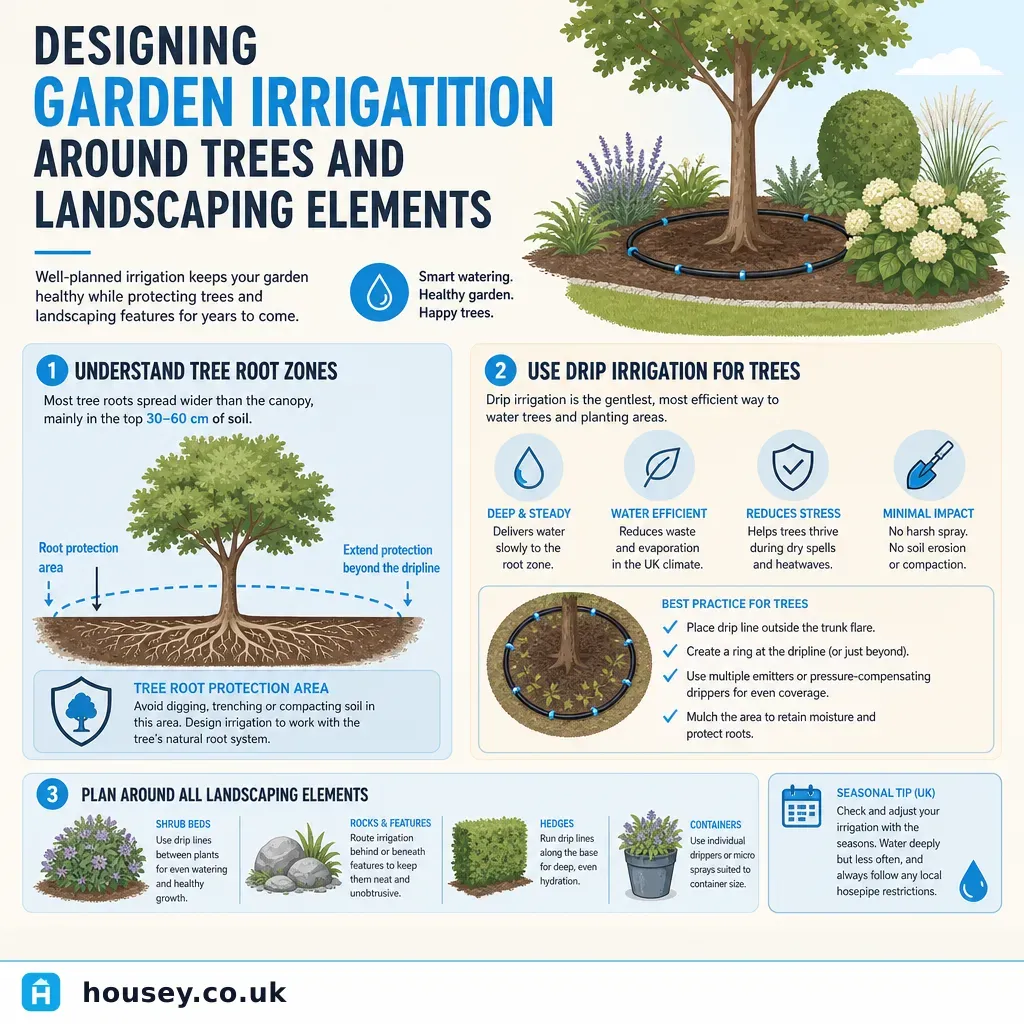
Designing Garden Irrigation Around Trees and Landscaping Elements
Design irrigation around trees by respecting the root protection area defined under BS 5837:2012, using drip or leaky pipe delivery rather than spray heads, and putting the tree zone on its own circuit.
 Improvement & Build
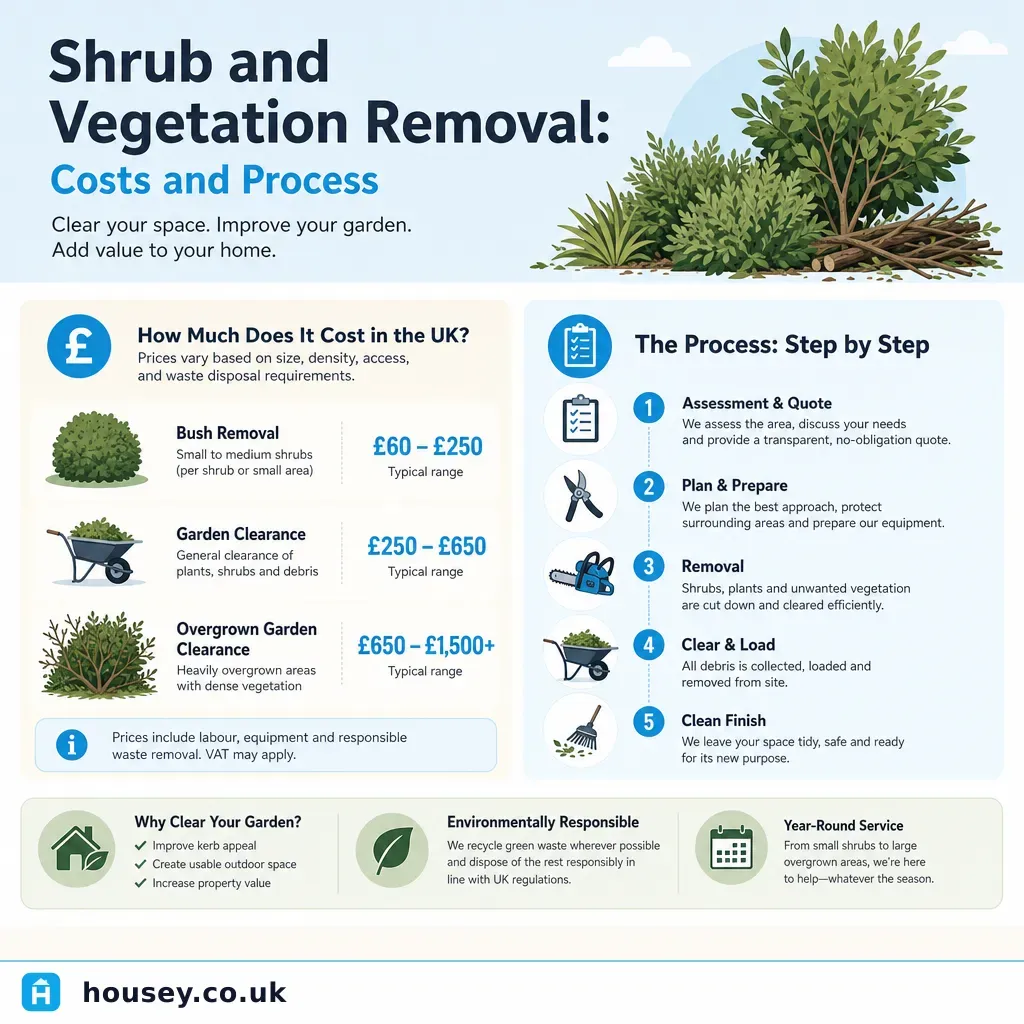
Shrub and Vegetation Removal: Costs and Process
Shrub and vegetation removal costs £50–£2,500 or more depending on area size, species involved, and whether stumps need grinding.
 Improvement & Build
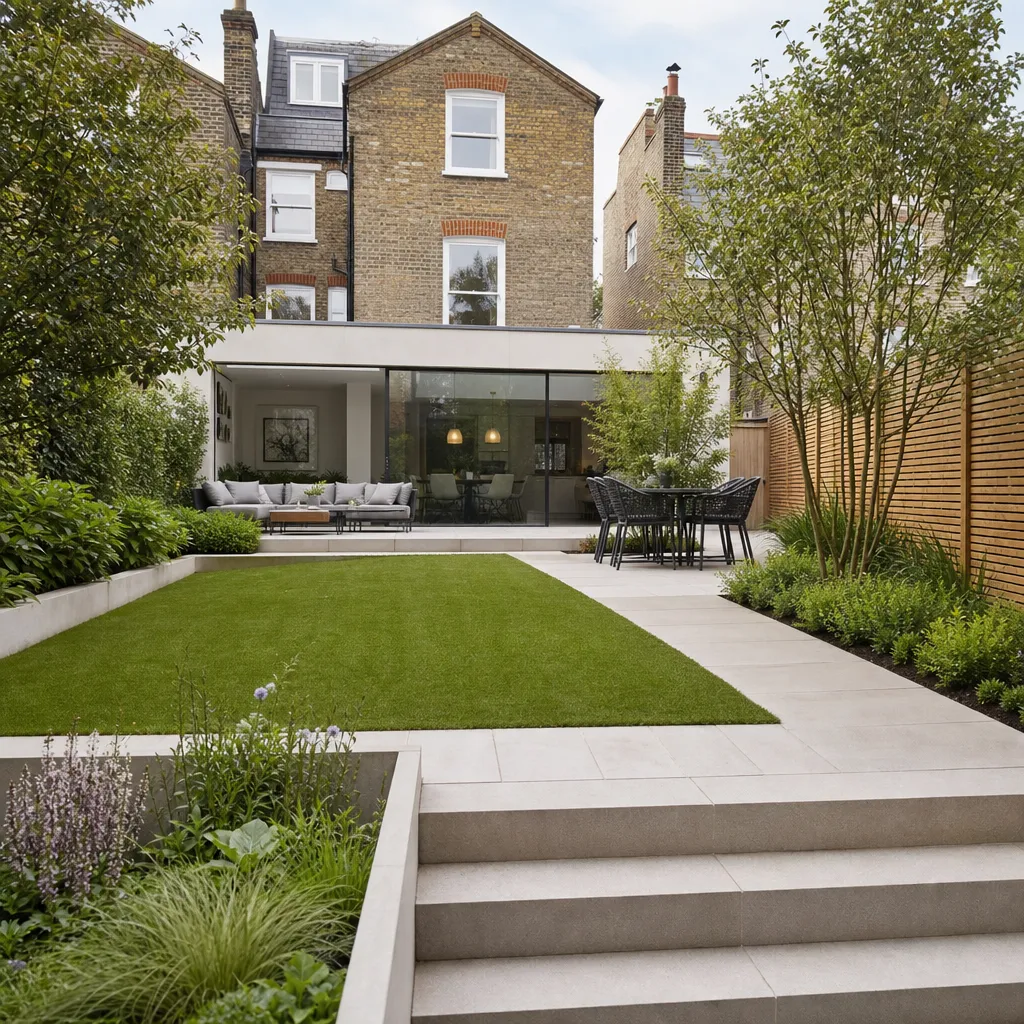
Garden Design Trends and Contemporary Landscaping Ideas
Contemporary UK garden design centres on low-maintenance naturalistic planting, multi-functional outdoor spaces, sustainable hard landscaping materials, and wildlife-friendly rewilded areas.
 Improvement & Build
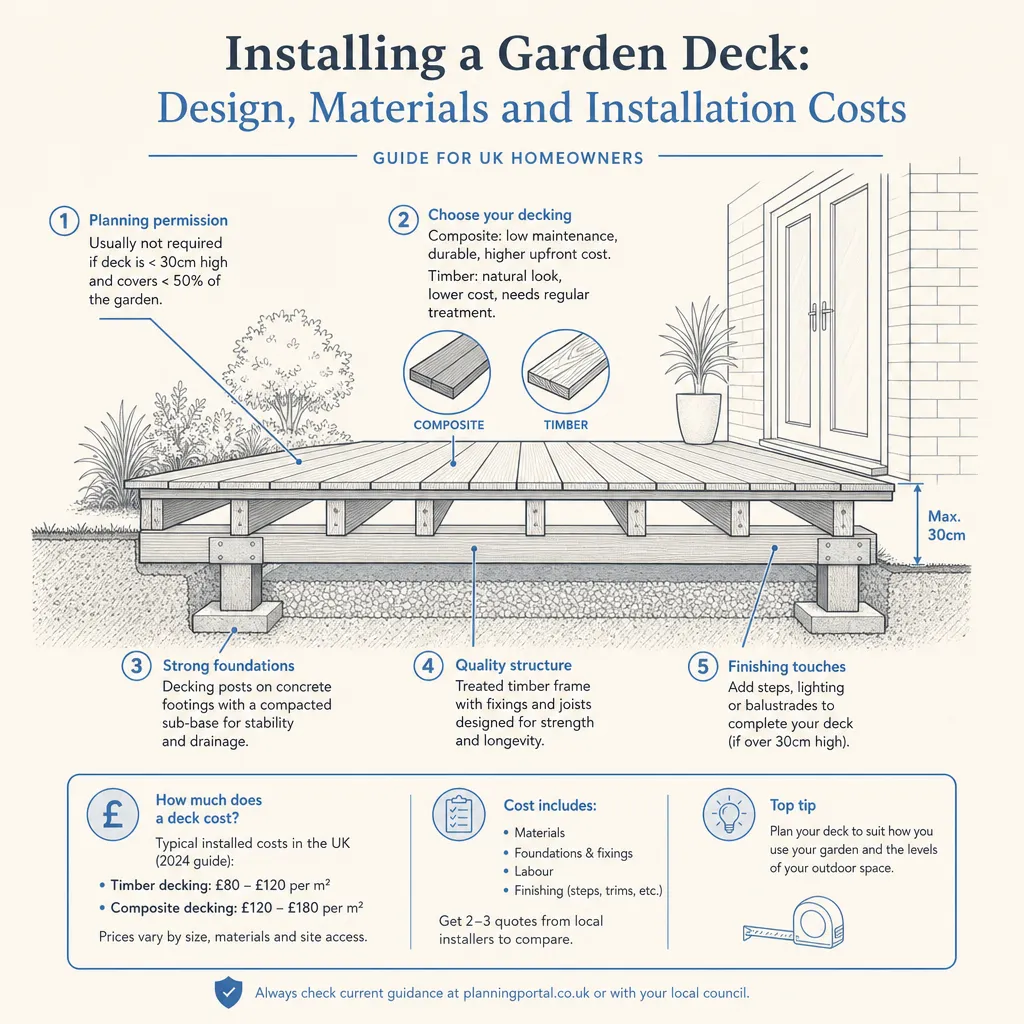
Installing a Garden Deck: Design, Materials and Installation Costs
Garden decking costs £80–250 per m² installed in the UK depending on material — softwood is cheapest, composite the most durable.