Garden Design Professionals: Landscaper, Garden Designer or Landscape Architect?
By Housey · Last reviewed 1st of June 2026
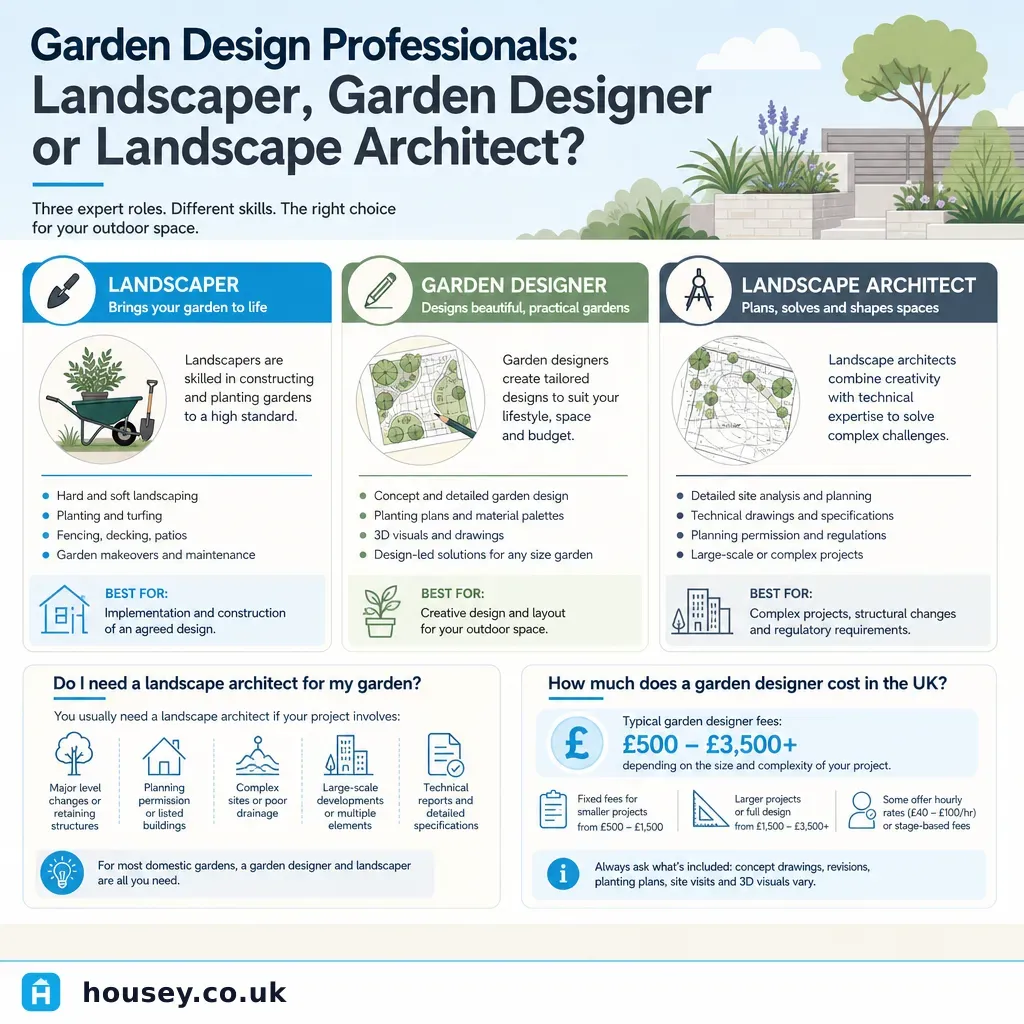
Garden Design Professionals: Landscaper, Garden Designer or Landscape Architect?
When UK homeowners decide to transform their outdoor space, they face an immediate question about who to hire. The three most common titles — landscaper, garden designer, and landscape architect — appear interchangeably in search results, contractor profiles, and online directories, yet they describe genuinely distinct roles, qualifications, and fee structures. Matching the right professional to the project from the outset avoids paying for expertise you do not need, or missing specialist input your scheme genuinely requires.
Key points
- "Landscape architect" is a protected professional title in the UK; practitioners should hold Chartered Membership of the Landscape Institute (CMLI) — anyone using the title without that credential is misrepresenting their qualifications.
- Garden designers are not regulated by a statutory body, but recognised qualifications include RHS Level 3 or 4 in Garden Design and Society of Garden Designers (SGD) membership or Associate grade.
- Landscapers carry out physical construction and planting works; they do not typically produce CAD drawings, drainage calculations, or planning-authority submissions unless they also hold separate design qualifications.
- Projects within conservation areas or affecting listed building curtilage may require professionally drawn landscape proposals — check requirements with your local planning authority before appointing anyone.
- Hard surfacing more than 5 m² of front garden with impermeable materials requires planning permission; permeable surfaces or rear garden works generally do not.
What each professional actually does
Landscaper
A landscaper — sometimes called a landscape gardener — is primarily a practical contractor. Their work covers hard landscaping (patios, paths, retaining walls, steps, decking), soft landscaping (lawns, planting, turf laying), drainage, fencing, and sometimes irrigation and ongoing maintenance. Many have strong horticultural knowledge and considerable aesthetic instinct, but producing design drawings or contributing to planning submissions is typically outside their standard scope unless they also hold design qualifications.
Garden designer
A garden designer creates a cohesive vision for your outdoor space and translates it into detailed drawings, planting plans, and specifications. They work through a design brief with you, carry out a measured survey, develop concept options, and often project-manage a landscaping contractor through the build. Qualifications range from RHS Level 3 certificates to full-time two-year diploma courses. The Society of Garden Designers maintains a publicly searchable directory of accredited and associate members.
Landscape architect
A landscape architect holds a protected chartered title regulated by the Landscape Institute. Their training — typically via a LAAB-accredited degree and a structured professional development pathway — covers urban design, environmental impact assessment, planning policy, ecology, hydrology, and large-scale site analysis alongside garden aesthetics. For domestic projects, their skills are most valuable where planning is contentious, the site is ecologically or historically sensitive, or the scheme is large, multi-phase, or requires formal submissions.
Comparing the three roles
| Landscaper | Garden Designer | Landscape Architect |
|---|---|---|---|
Primary role | Physical build and planting | Design plus project management | Design, planning, complex environmental work |
Typical output | Completed works | Design drawings, planting plans, specification | Technical drawings, planning reports, LVIA contributions |
Protected title? | No | No | Yes — Landscape Institute |
Recognised body | BALI, APL | SGD, RHS | Landscape Institute |
Best for | Smaller builds, executing an existing design, maintenance | Most domestic redesigns requiring a full design service | Complex, planning-sensitive, ecologically constrained, or large-scale projects |
Not ideal for | Design-led schemes requiring drawings or planning advocacy | Structural engineering or formal planning submissions | Small, straightforward refreshes where fees may not be proportionate |
Typical fee model | Day rate or project sum | Fixed design fee, sometimes with optional project management | Hourly rate or percentage of project value |
Indicative UK costs, last reviewed 2026-06-01. Costs vary by region, scope, and professional experience.
Which professional should you choose?
Use this decision guide to identify the right starting point:
- Choose a landscaper if you already have a design or simply need physical works carried out — paving, planting, fencing, or lawn laying.
- Choose a garden designer if you want a coherent design vision, detailed planting plans, and someone to coordinate the build, and your project does not require planning applications or technical drainage reports.
- Choose a landscape architect if your project is large-scale, sits within a conservation area or listed curtilage, requires a Landscape and Visual Impact Assessment (LVIA), involves a formal planning submission, or has complex drainage, ecological, or biodiversity net gain constraints under the Environment Act 2021.
- Ask a garden designer first if you are unsure — many practitioners will tell you honestly whether your scope exceeds their practice area and refer you to a more specialist professional.
- Check with your local planning authority before starting any works if your property is listed or in a conservation area, as specific documentation requirements may affect who you need to appoint.
Qualifications and accreditations to check
When shortlisting professionals, look for verifiable credentials rather than generic titles:
Professional | What to look for |
|---|---|
Landscaper | BALI (British Association of Landscape Industries) membership, APL (Association of Professional Landscapers) registration, current public liability insurance |
Garden designer | SGD membership or Associate grade, RHS Level 3 or 4 Garden Design, relevant diploma, portfolio of completed UK projects with references |
Landscape architect | CMLI (Chartered Member of the Landscape Institute), LAAB-accredited degree, professional indemnity and public liability insurance |
For any project involving structural elements — retaining walls over 600 mm, large water features, or significant ground-level changes near a building — confirm whether a structural engineer's input is also required. This is separate from and additional to the designer's role.
What to ask before accepting a quote
- What qualifications and professional memberships do you hold, and can you provide evidence?
- Can I see examples of comparable projects, with client references?
- Will you provide a measured survey, concept design, and detailed planting plan as part of this fee?
- Who will carry out the physical works — you or a separate contractor — and how is that relationship managed?
- What assumptions is this quote based on, and what could change the price or timeline?
- Is VAT included?
- What planning or permitted development considerations apply to my specific project and property?
- How do you handle unexpected ground conditions, drainage problems, or restricted access?
When to get professional help
For most domestic garden projects, a qualified garden designer or experienced landscaper covers everything you need. Consider engaging a landscape architect or seeking specialist advice if:
- Your garden is within a conservation area, an Article 4 direction area, or within the setting of a listed building.
- You are making a planning application that requires a Landscape and Visual Impact Assessment or a Design and Access Statement with landscape chapters.
- The scheme involves significant earthworks, retaining structures above 1 m, or alterations to watercourses or drainage patterns.
- There are ecological constraints such as protected species on site, ancient woodland adjacency, or biodiversity net gain obligations.
How Housey can help
When you are ready to move forward, Housey connects you with vetted garden designers and landscapers who can scope your project, provide itemised quotes, and advise on which professional is most appropriate for your site. Submit a brief and receive up to four comparable quotes from local practitioners.
Frequently asked questions
Do I need planning permission for garden landscaping?
Most garden landscaping falls within permitted development rights and does not require planning permission. However, hard surfacing the front garden with impermeable materials over 5 m² requires permission unless a permeable surface is used. Work in conservation areas or within listed building curtilage may have additional requirements — always check with your local planning authority before starting.
Is a garden designer the same as a landscape architect?
No. "Landscape architect" is a protected title regulated by the Landscape Institute; practitioners should hold Chartered Membership (CMLI). "Garden designer" is an unregulated title, though the Society of Garden Designers maintains a register of accredited members. Both roles can design gardens, but landscape architects are additionally trained to handle planning submissions, environmental assessments, and large-scale or multi-site projects.
How much does a garden designer cost in the UK?
Fees vary by region, experience, and project scope. Indicative UK costs, last reviewed 2026-06-01: initial consultations often cost £100–£300; full design packages for a domestic garden may range from £1,500 to £6,000 or more. Some designers charge a percentage of the build cost. Always request an itemised fee proposal and confirm whether VAT is included.
Can a landscaper produce design drawings?
Some landscapers hold garden design qualifications and can produce drawings and planting plans; others cannot. Always ask what design output is included in a quote and verify the professional's credentials for the design element separately. If detailed drawings or planning documents are required, a qualified garden designer or landscape architect is usually more appropriate.
Sources and further reading
- Chartered Membership of the Landscape Institute — Landscape Institute
- Find a Garden Designer — Society of Garden Designers
- Find a BALI Member — British Association of Landscape Industries
- Planning Portal: householder permitted development — gardens — Planning Portal
- RHS qualifications in garden design — Royal Horticultural Society
Useful next reads
 Improvement & Build
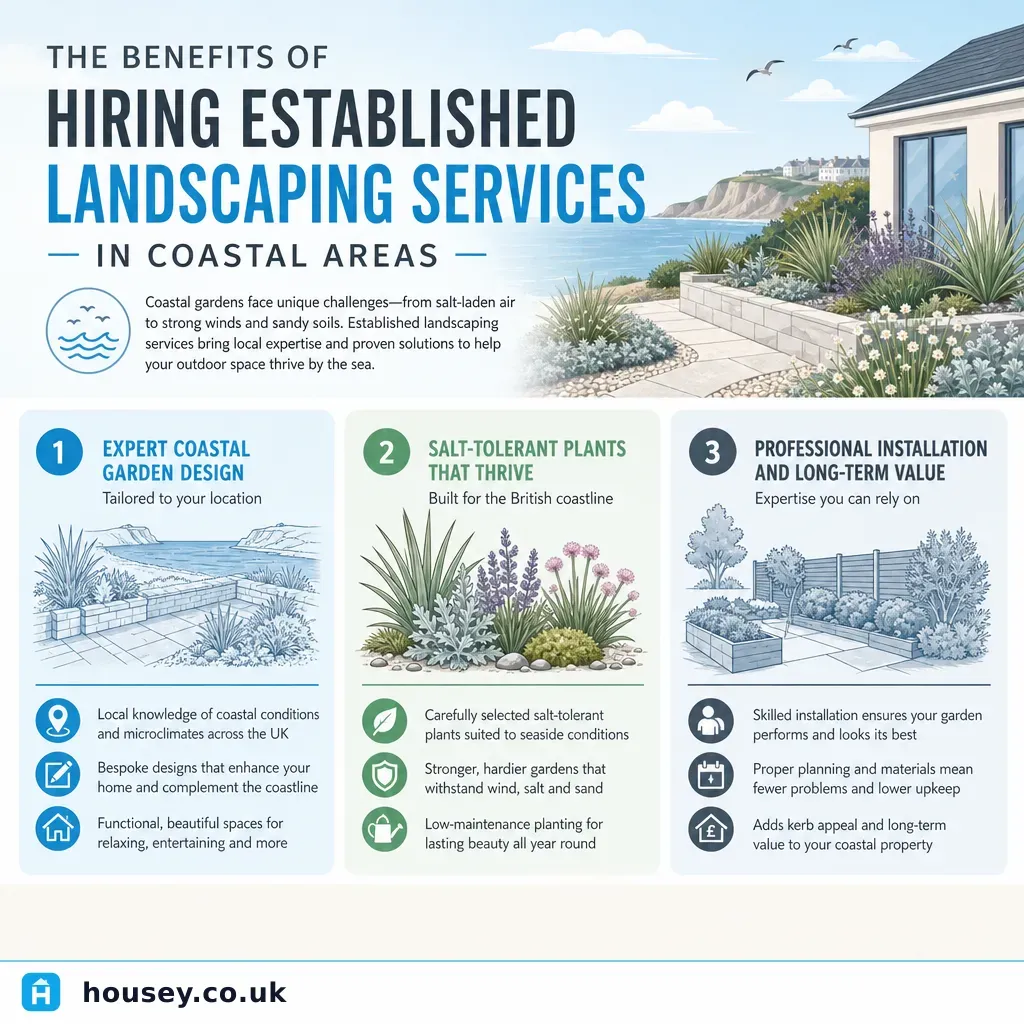
Benefits of Hiring Established Landscaping Services in Coastal Areas
Established landscaping contractors in coastal areas understand salt spray exposure, prevailing wind patterns, and local planning restrictions that inland firms often overlook.
 Improvement & Build
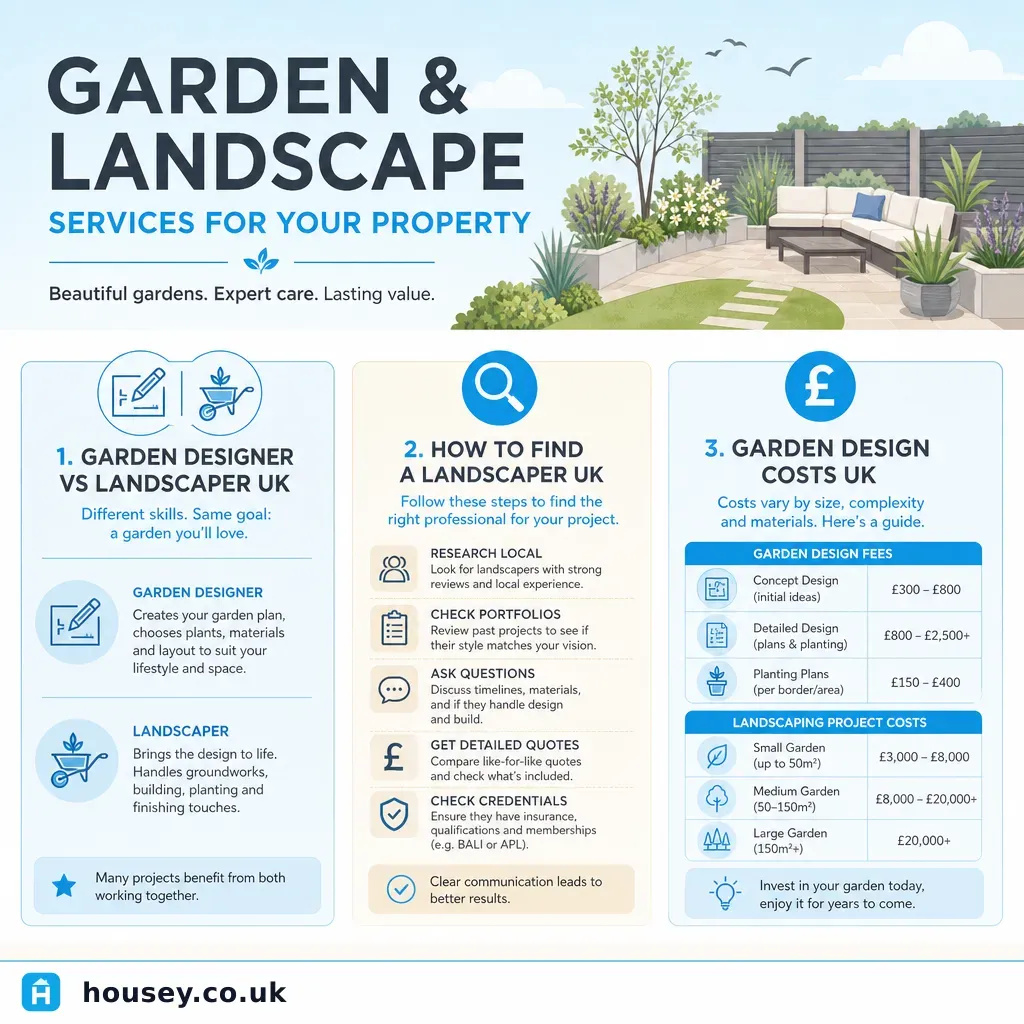
Garden and Landscape Services for Your Property
Garden designers and landscapers both improve outdoor spaces but offer different services.
 Improvement & Build
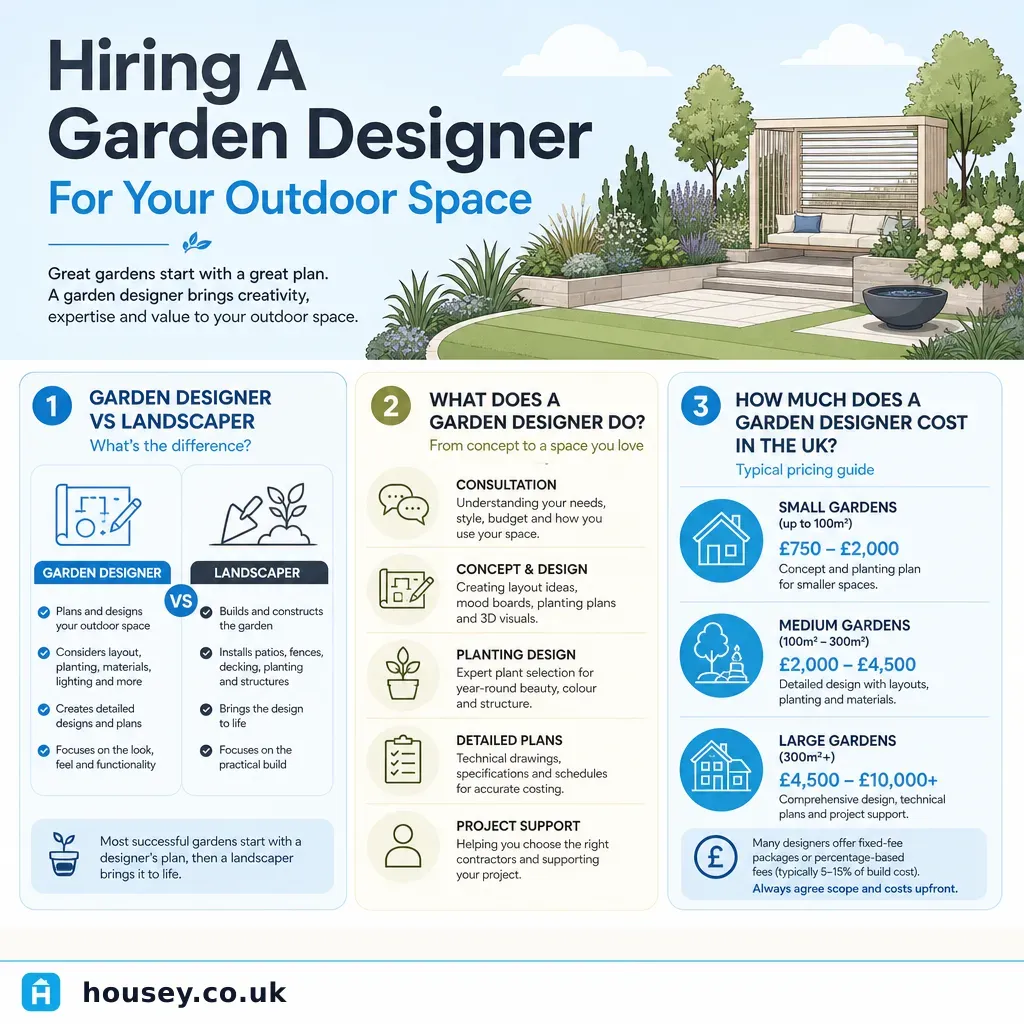
Hiring A Garden Designer For Your Outdoor Space
A garden designer creates a detailed plan — including layout, planting schemes, and hard landscaping specifications — tailored to your outdoor space and budget.
 Improvement & Build
Installing a Fire Pit: Garden Features and Outdoor Space Design
Installing a garden fire pit in the UK is generally permitted, but Smoke Control Area rules prohibit open wood-burning in most towns and cities.
 Improvement & Build
Seasonal Garden Transformations and Outdoor Design Ideas
A successful garden transformation in the UK works with the seasons rather than against them — establishing structure and hard landscaping in autumn or winter, planting in spring, and enjoying the results through summer.