Hiring A Garden Designer For Your Outdoor Space
By Housey · Last reviewed 31st of May 2026
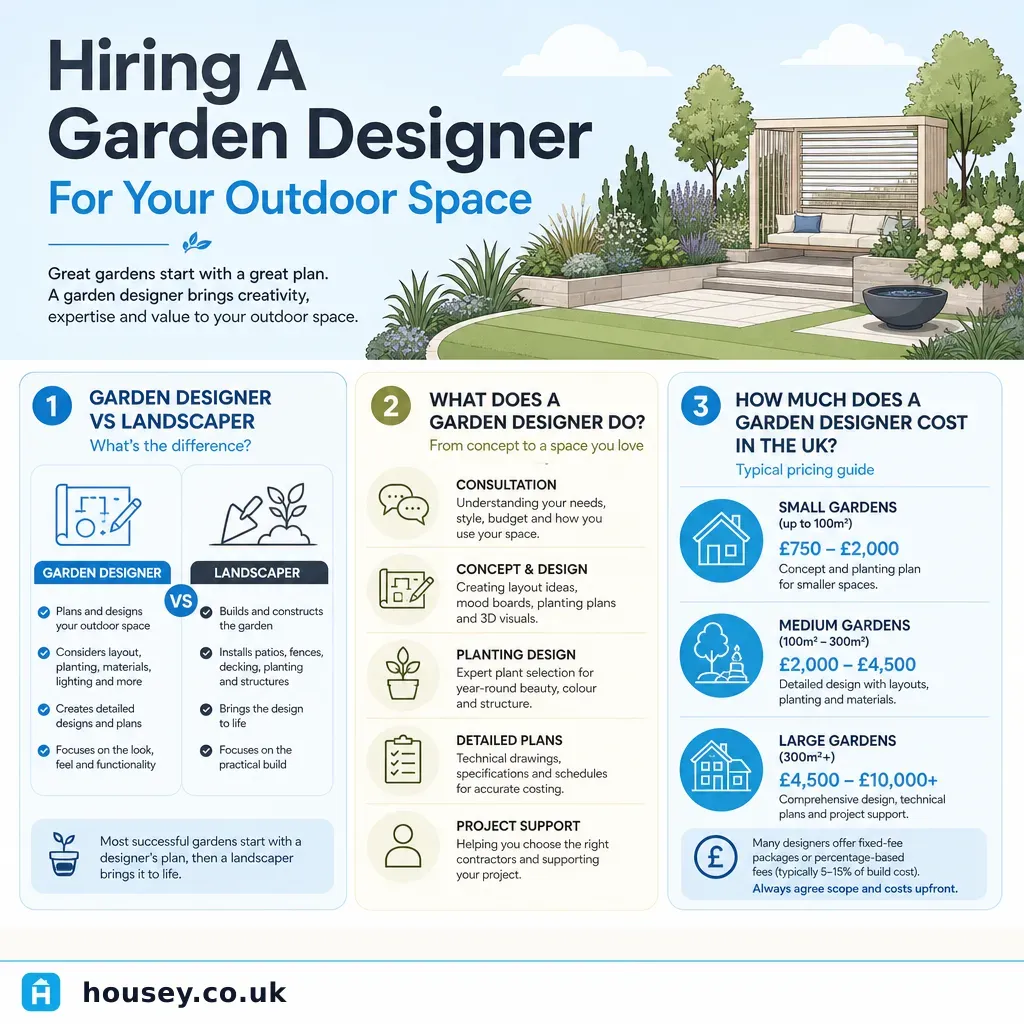
Hiring A Garden Designer For Your Outdoor Space
A garden redesign is often triggered by a life event — a new home with an overgrown plot, a growing family needing more usable outdoor space, or a long-postponed project that finally has the time and budget behind it. For UK homeowners considering a significant garden overhaul, the line between a garden designer and a landscaper is frequently blurred, and the distinction between design fees and build costs is rarely made clear at the outset.
Key points
- The Society of Garden Designers (SGD) is the UK's main professional body for residential garden designers; full members (MSGD) must demonstrate professional competence and hold relevant qualifications or significant experience.
- Garden designers produce plans and specifications; landscaping contractors carry out the physical build — these are usually separate services with separate costs.
- Building Regulations Approved Document B does not apply to soft landscaping, but may apply to proposed structures, raised walls above certain heights, and changes that materially affect surface water drainage.
- RHS Level 3 and Level 4 qualifications in Garden Design are widely held by practising designers and indicate a foundation of horticultural and design training.
- Tree Preservation Orders (TPOs) can restrict work to trees on or near your plot; always check with your local planning authority before removing or significantly pruning any established tree.
Garden designer vs landscaper: what is the difference?
These two roles are frequently confused, and many homeowners are unsure which they actually need. In practice they serve distinct purposes — and for a complex project, you may need both.
Role | What they do | Best for | Not ideal for |
|---|---|---|---|
Garden designer | Creates plans, planting schemes, material specifications, and construction details | Complex designs, cohesive vision, difficult plots | Carrying out physical build work (usually) |
Landscaper / contractor | Builds and installs according to a design brief | Hard landscaping: patios, walls, decking, drainage | Producing detailed design drawings |
Landscape architect | Large-scale planning, public realm, complex residential projects | Major projects, drainage design, planning consents | Small residential gardens (often over-specified) |
Many landscapers offer design-and-build services, but the depth of design varies considerably. If you have a complex or high-value project, commissioning a designer separately — then using their drawings to get competitive quotes from multiple contractors — often produces better value and results.
Do you need a garden designer?
Use this to decide which route suits your project:
- Choose a garden designer if you want a cohesive outdoor space planned to your brief, have a meaningful budget, or have a difficult plot (sloped, overshadowed, or irregularly shaped) that needs careful design thinking.
- Choose a design-and-build landscaper if your project is straightforward — a new patio, replacement lawn, or simple boundary — and you prefer a single point of contact.
- Choose a garden designer and a separate contractor if you want competitive quotes from multiple builders all working to the same specification.
- Consult a landscape architect if your project involves planning applications, complex drainage, significant retaining structures, or listed building curtilage.
What does the process involve?
A typical residential garden design project follows broadly this sequence:
- Initial consultation — usually a paid visit; the designer surveys your garden, discusses your brief, lifestyle, maintenance preferences, and budget.
- Measured survey — accurate dimensions, levels, soil conditions, sun and shade patterns, and existing features are recorded.
- Concept design — initial layouts showing zones, structures, planting areas, and materials, reviewed together before progressing to detail.
- Detailed design — scaled plans, planting schemes, materials schedules, and construction details for any hard landscaping.
- Tender and contractor selection — some designers help you obtain and compare quotes from contractors using their drawings.
- Site visits during construction — optional but valuable where planting sequences or bespoke details need oversight.
Not all designers offer every stage. Agree the full scope of work — and what deliverables you will receive — in writing before any work begins.
What qualifications should you look for?
There is no statutory requirement to hold specific qualifications to call yourself a garden designer in the UK, so checking credentials matters more than in regulated professions.
- SGD membership (MSGD) — requires demonstrable professional competence and is the clearest independent signal of seriousness and accountability.
- RHS Level 3 Diploma in Horticulture or RHS Level 4 Diploma in Garden Design — widely held by practising residential designers.
- Landscape Institute membership — relevant for landscape architects working on larger or more technically complex projects.
Always ask for a portfolio of recent residential projects, references, and evidence of professional indemnity insurance. Professional indemnity insurance protects you if a design error leads to financial loss.
What to ask before hiring a garden designer
Before appointing a designer, ask:
- What is included in your fee — site survey, concept design, detailed plans, planting schedule, contractor tender support?
- Who owns the design drawings, and can I use them to obtain competitive quotes from contractors of my choice?
- Do you hold professional indemnity insurance, and what is the level of cover?
- Can you provide references from recent residential projects of a similar scale?
- Do you work exclusively with specific contractors, or are you independent?
- Will you visit site during the build, and at what additional cost?
- What assumptions are you making about soil type, drainage, and existing utilities?
- Is VAT included in your quoted fee?
Homeowner checklist: before your first meeting
Preparing the following before your initial consultation will make the meeting more productive and the brief more accurate:
When to get professional help
A garden designer is the relevant professional for design work, but some situations require additional specialist input:
- If a proposed wall, pergola, or structure is close to a boundary, check permitted development limits or consult a planning professional before proceeding.
- If the project involves a material change to drainage or a significant increase in hard surfacing, Building Regulations or a drainage assessment may be required.
- If there are protected trees (subject to a Tree Preservation Order) on or adjacent to your plot, contact your local planning authority before any work begins near them.
- If you are within a conservation area or the property is listed, check whether garden structures or hard landscaping changes require heritage or planning consent.
How Housey can help
Housey connects you with vetted garden designers who can work to your brief and budget across the UK. For projects where you need a single point of contact for design and build, you can also find qualified landscapers through Housey. Submit your project details to receive quotes from local professionals.
Frequently asked questions
Do I need planning permission for garden work in the UK?
Most garden work — patios, planting, and lawn areas — does not need planning permission under permitted development rights. However, structures such as outbuildings, raised walls above certain heights, and works in conservation areas or listed building curtilage may require consent. Always check with your local planning authority if you are unsure about your specific project.
How much does a garden designer cost in the UK?
Design fees vary by project scope and designer experience. A planting plan may cost £300–£800; a full garden design with construction drawings typically ranges from £1,500 to £5,000 or more. Build costs are separate and additional. Indicative UK costs, last reviewed 2026-05-31. Always obtain at least three quotes.
How long does a garden design project take?
From initial consultation to final drawings, expect four to twelve weeks depending on project complexity and the designer's workload. Build programmes vary: a patio and planting scheme might take one to two weeks, while a full garden transformation with hard landscaping can run to several months.
What is the difference between an SGD member and any garden designer?
SGD (Society of Garden Designers) membership requires demonstrable training, professional experience, and a commitment to standards including professional indemnity insurance. Non-members may be equally skilled, but membership provides an independent check on credentials and access to the SGD's complaints process if problems arise.
Sources and further reading
- Society of Garden Designers: member directory — Society of Garden Designers
- RHS qualifications in garden design and horticulture — Royal Horticultural Society
- Planning Portal: permitted development for householders — Planning Portal
Useful next reads
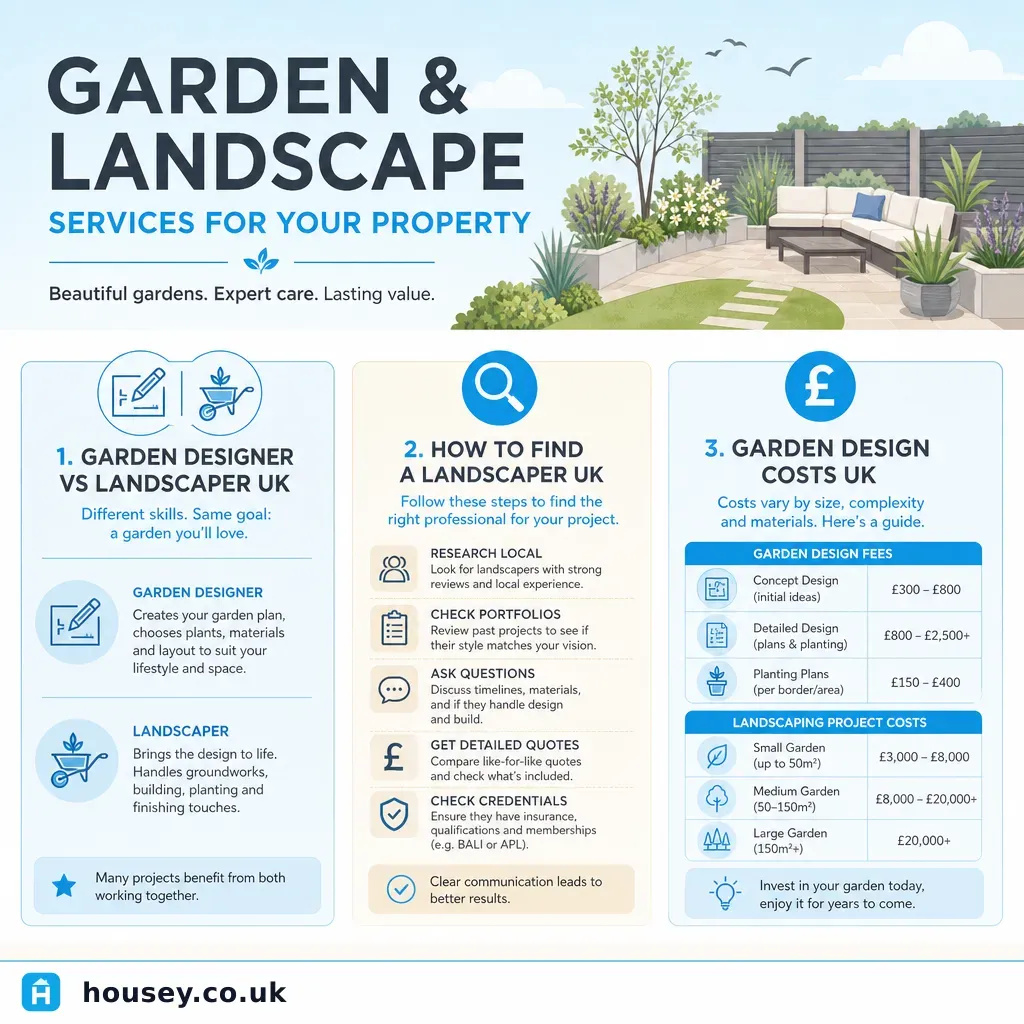 Improvement & Build
Garden and Landscape Services for Your Property
Garden designers and landscapers both improve outdoor spaces but offer different services.
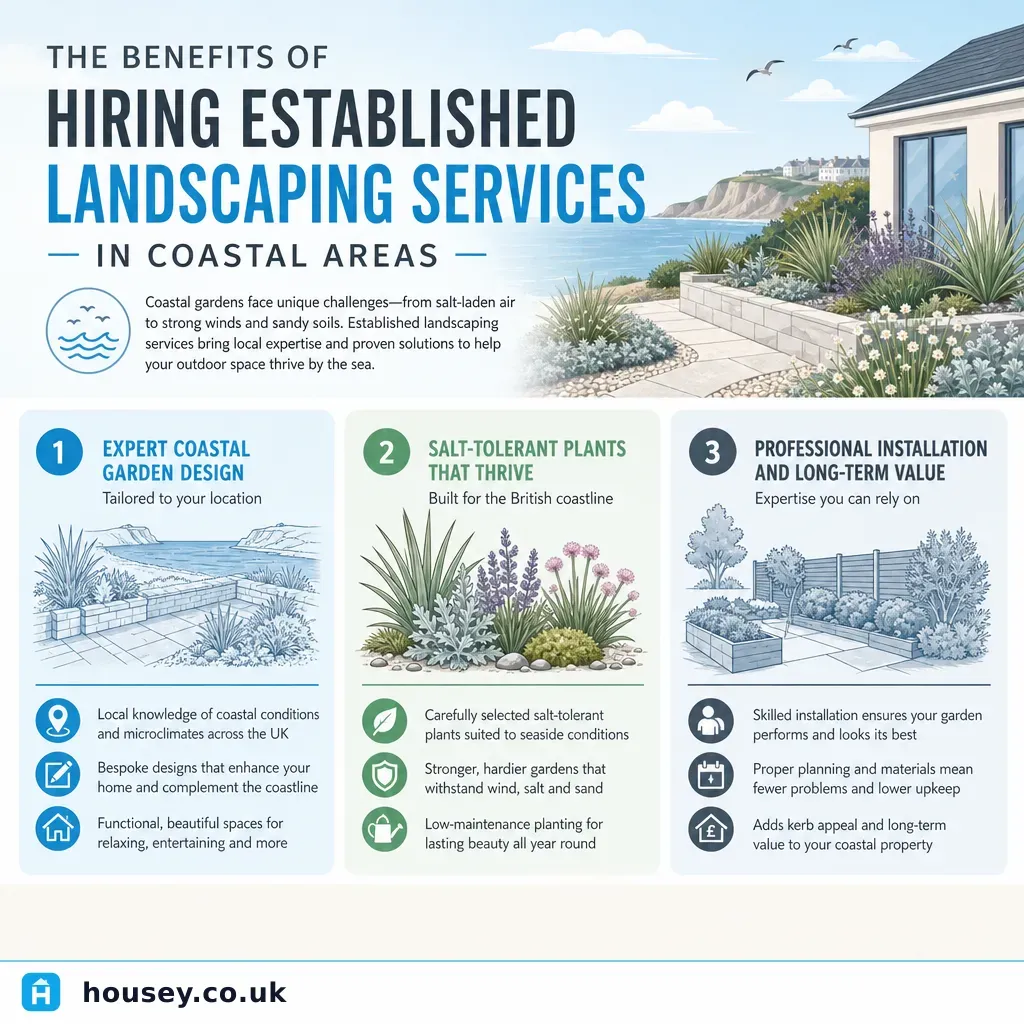 Improvement & Build
Benefits of Hiring Established Landscaping Services in Coastal Areas
Established landscaping contractors in coastal areas understand salt spray exposure, prevailing wind patterns, and local planning restrictions that inland firms often overlook.
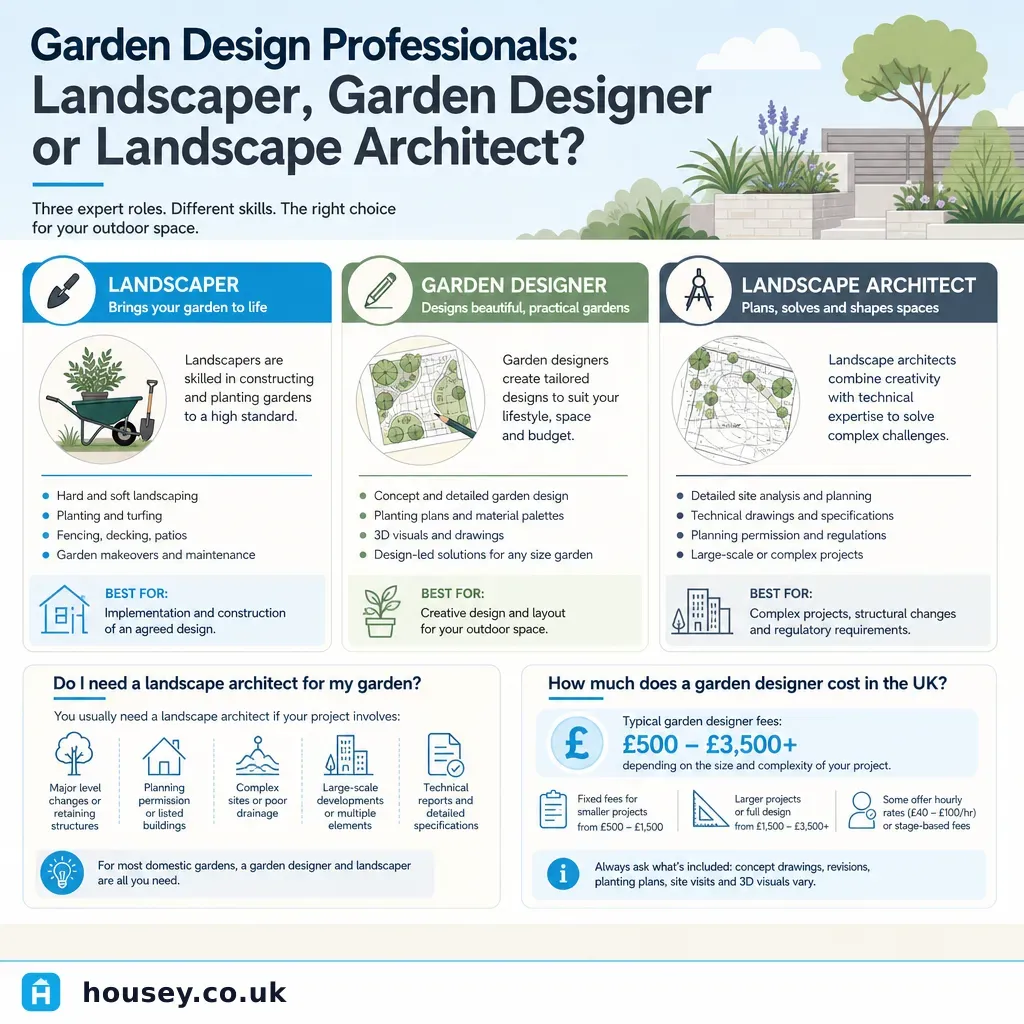 Improvement & Build
Garden Design Professionals: Landscaper, Garden Designer or Landscape Architect?
A landscaper carries out physical groundworks and planting; a garden designer creates detailed plans and often manages the build; a landscape architect holds a chartered title and suits complex or planning-sensitive projects.
 Improvement & Build
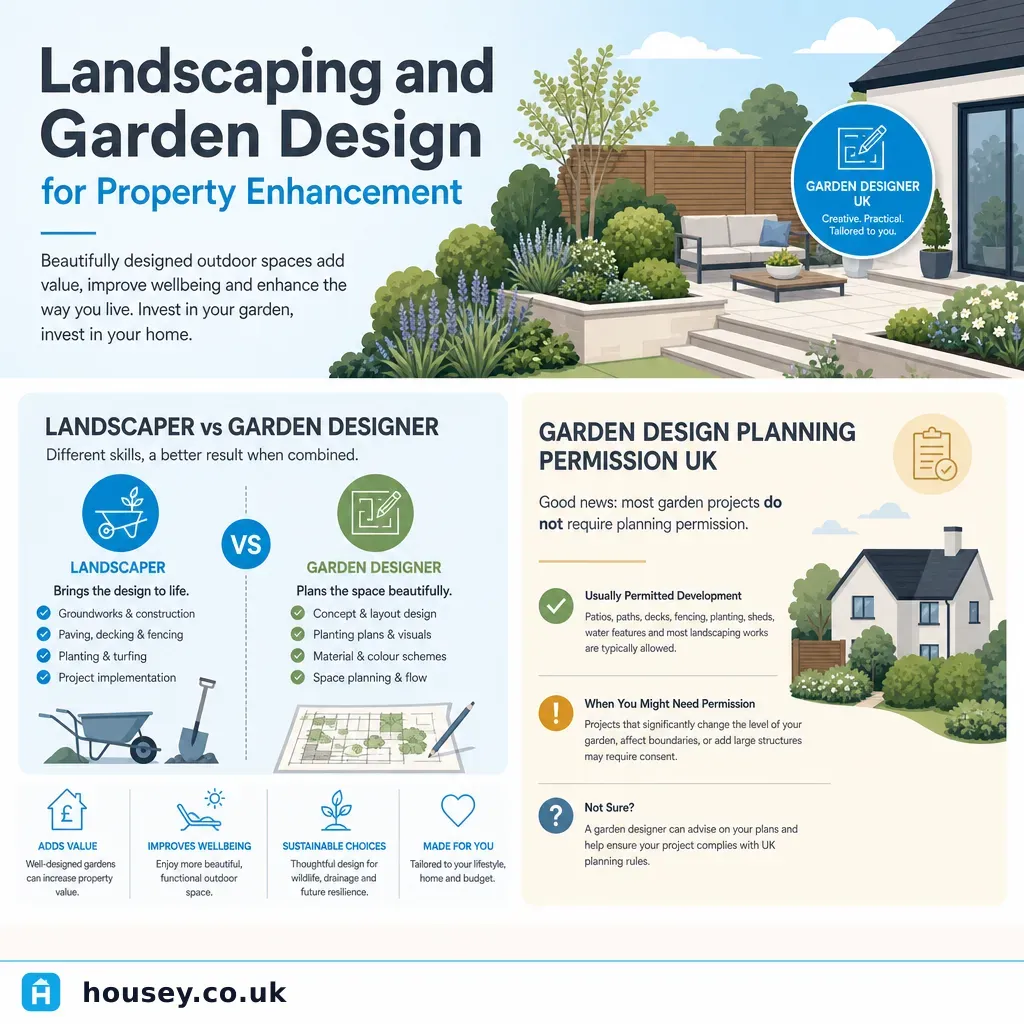
Landscaping and Garden Design for Property Enhancement
Landscaping and garden design involve planning and building outdoor spaces — from patios and raised beds to planting schemes and drainage.
 Improvement & Build
Growing Cut Flowers In Your Garden
A well-planned cut flower garden uses succession planting every two to three weeks to keep stems coming from May through October.