Garden Irrigation System Installation Costs
By Housey · Last reviewed 7th of May 2026
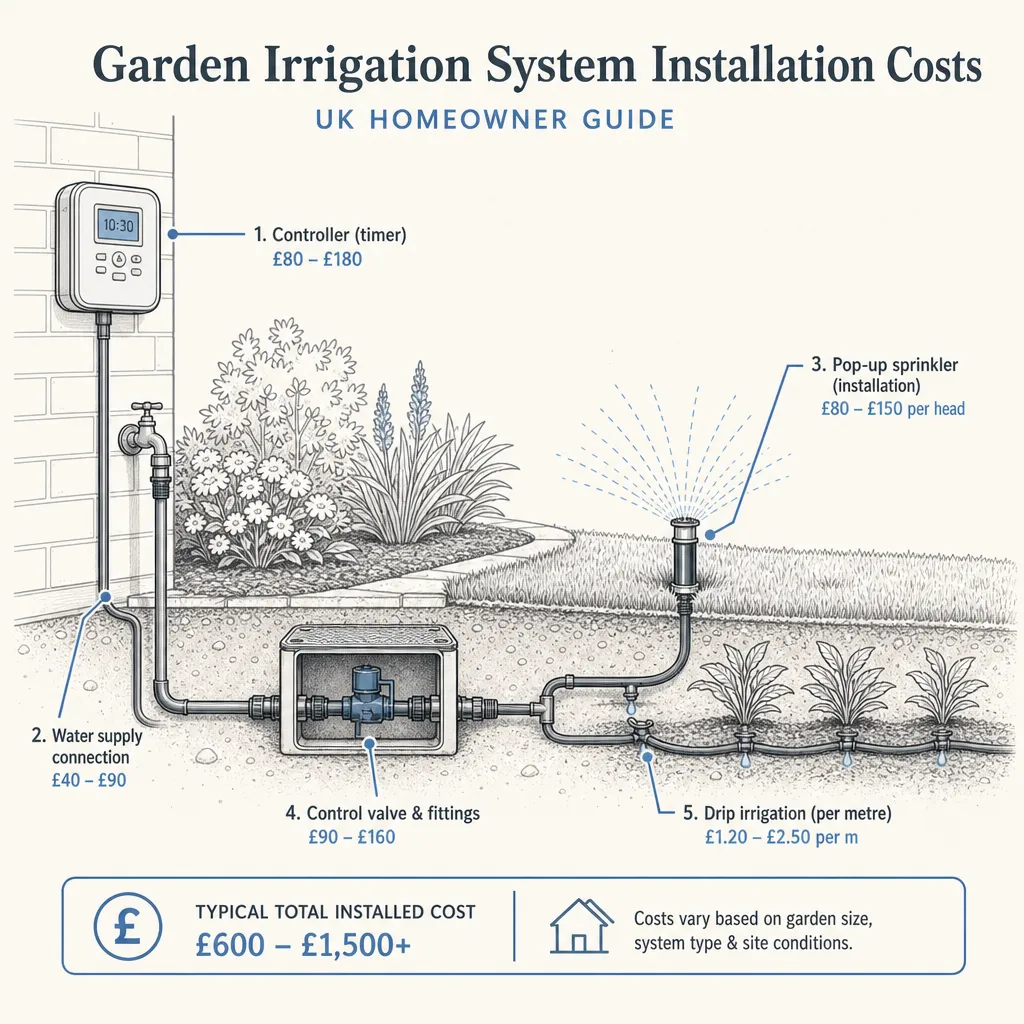
Garden Irrigation System Installation Costs
Installing a garden irrigation system is increasingly common among UK homeowners looking to protect planting investments, reduce watering time, and use water more efficiently — particularly during the dry summers that are becoming more frequent across England and Wales. The range of systems available, from simple drip lines to fully automated smart sprinkler networks, means costs vary considerably, and understanding what drives the price helps you specify the right system and compare quotes accurately.
Key points
- A professionally installed drip or soaker irrigation system typically costs £500–£2,500 for a medium UK garden; pop-up sprinkler systems cost £1,500–£6,000 or more (Indicative UK costs, last reviewed 2026-05-07).
- Any irrigation system connected to the mains water supply in England and Wales must comply with the Water Supply (Water Fittings) Regulations 1999 and must include a backflow prevention device.
- Smart irrigation controllers, which adjust watering schedules based on weather data or soil moisture, add £150–£500 to installation costs and can reduce garden water use by up to 50%, according to Waterwise.
- During a declared hosepipe ban, automatic garden watering systems connected to the mains are typically restricted alongside hand-held hosepipes; rules vary by water company.
- The Royal Horticultural Society (RHS) recommends watering in the early morning or evening to reduce evaporation — a well-designed irrigation system can replicate this schedule automatically.
What does garden irrigation system installation cost in the UK?
Costs vary significantly by system type, garden size, and ground conditions. The table below shows indicative ranges for professionally supplied and installed systems.
Indicative UK costs, last reviewed 2026-05-07. Quotes vary by region, garden layout, soil type, and distance from the mains water supply.
System type | Garden size | Estimated total installed cost |
|---|---|---|
Drip or soaker irrigation | Small (under 50 m²) | £500–£1,200 |
Drip or soaker irrigation | Medium (50–150 m²) | £1,200–£2,500 |
Pop-up sprinkler system | Medium (50–150 m²) | £1,500–£3,500 |
Pop-up sprinkler system | Large (150–400 m²) | £3,500–£7,000+ |
Micro-irrigation (containers and borders) | Any | £300–£800 |
Smart controller (added to any system) | — | £150–£500 additional |
Labour accounts for a significant portion of total cost. Groundworks, pipe-laying, and connecting to the mains supply typically take one to three days for a medium garden. Irrigation specialists charge roughly £35–£65 per hour outside London, with higher rates in London and the South East.
Materials — pipes, emitters, valves, controllers, and backflow preventers — typically account for £200–£1,500 depending on system complexity and specification.
Types of garden irrigation system
Choosing the right system for your garden layout and planting type reduces both installation cost and ongoing water waste.
System type | Best for | Not ideal for | Main consideration |
|---|---|---|---|
Drip or soaker hose | Borders, vegetable beds, shrubs | Lawns, large open areas | Most water-efficient; low visibility once installed |
Pop-up sprinkler | Lawns and large open areas | Sloping ground, tight borders | Requires excavation; may be restricted during hosepipe bans |
Micro-irrigation or misting | Containers, greenhouses, patios | Large garden areas | Low flow rate; ideal for raised beds and container displays |
Surface drip tape | Vegetable plots, polytunnels | Permanent plantings | Usually seasonal; remove and store before winter |
Smart automated system | Gardens where water efficiency matters | Very small gardens (under 20 m²) | Higher upfront cost; significant savings over time |
What affects the installation cost?
Garden size and layout
Larger gardens require more pipe runs, more valves, and more emitters. Complex layouts — with paths, patios, or raised beds that pipes must navigate around or beneath — add time and materials to any installation.
Ground conditions
Rocky or heavily compacted ground takes longer to trench. Where pipes must pass under driveways or hard landscaping, directional drilling or careful reinstatement work adds to the cost. Soft, accessible planting beds are the least expensive to work with.
Distance from the mains supply
The further the system is from the mains connection point, the longer the supply pipe run and the more complex the connection. If a new outside tap or dedicated supply point needs to be installed by a qualified plumber, this adds cost on top of the irrigation contractor's quote.
Number of watering zones
Larger gardens are divided into zones, each served by a separate valve and controller channel. More zones mean more valves, more installation time, and a higher-specification controller. A typical medium garden may have three to six zones.
System specification
A basic timer-controlled drip system costs considerably less than a fully automated smart system with rain sensors, soil moisture monitoring, and smartphone control. Smart systems carry higher upfront costs but pay back over time through lower water use and reduced maintenance.
Water regulations and compliance
Any irrigation system connected to the mains in England and Wales must comply with the Water Supply (Water Fittings) Regulations 1999. Key requirements include:
- A backflow prevention device — typically a double-check valve or RPZ valve — fitted at the point of mains connection to prevent contaminated water from entering the public supply.
- Notification to your water company if the system is not of a type already listed as approved under the Regulations.
- Use of WRAS-approved fittings throughout the installation.
Your installer should handle compliance documentation, but confirm this before any work begins. Non-compliant systems can result in disconnection by your water company.
Hosepipe bans and water restrictions
During a declared hosepipe ban in England and Wales, automatic garden watering systems connected to mains supply are generally restricted in the same way as hand-held hosepipes. Most bans cover automatic sprinklers and unattended drip irrigation connected to mains. Water company rules vary slightly, so check your supplier's specific terms and conditions before committing to installation.
Smart irrigation and water efficiency
Smart irrigation controllers use local weather data, rain sensors, or soil moisture probes to water only when conditions require it. According to Waterwise — the UK's water efficiency non-profit — smart irrigation can reduce garden water use by 30–50% compared with fixed-timer systems. This is significant both for household water bills on metered properties and in the broader context of increasing summer water restrictions across England.
Features to look for in a smart controller:
- Weather-based adjustment using evapotranspiration data or an on-site rain sensor
- Zone-by-zone scheduling with independent timing for each area
- Remote monitoring and adjustment via smartphone app
- Leak detection alerts to flag sudden pressure drops
- Compatibility with a smart water meter if your property has one
What to ask before accepting a quote
Before accepting any irrigation installation quote, ask each contractor:
- What components are included — pipes, valves, controller, backflow preventer, sensors, and all connectors?
- Is the system WRAS-compliant, and will you notify my water company on my behalf?
- How many watering zones does the design include, and what is the rationale for that number?
- What groundworks and surface reinstatement are included in the price?
- Is VAT included in the quoted total?
- What maintenance or winterisation does the system require, and is an annual service visit included?
- What warranty applies to the equipment and to the installation workmanship separately?
- Do you hold public liability insurance, and can I see a copy before work starts?
When to get professional help
A poorly designed or installed irrigation system can waste significant amounts of water, damage planting through over- or under-watering, or fail to meet legal requirements. Professional installation is recommended for:
- Any system connected to the mains supply, where compliance with the Water Supply (Water Fittings) Regulations 1999 is a legal requirement.
- Gardens with complex layouts, multiple zones, or hard landscaping that needs lifting and careful reinstatement.
- Fully automated smart systems with remote sensors, app control, or integration with a water meter.
- Metered properties where efficient zone design has a direct and ongoing impact on water bills.
If you are only installing a simple surface soaker hose connected to an outside tap, a competent DIYer can usually manage this without specialist help. For anything involving groundworks, mains connections, or automatic control, use a qualified irrigation installer.
How Housey can help
Housey connects UK homeowners with qualified landscaping and garden professionals who can specify and install garden irrigation systems as part of a wider project. Browse our landscapers service to request quotes from vetted local contractors, or use our garden designers service if you want to incorporate a full irrigation design into a broader garden transformation.
Frequently asked questions
How long does a garden irrigation system last?
A well-installed garden irrigation system typically lasts 10–20 years with proper maintenance. Plastic pipes and emitters can degrade if left exposed to UV light, and solenoid valves may need replacing after 5–10 years. Winterisation — fully draining the system before the first frost — is important in most UK regions to prevent pipe damage and prolong system life.
Do I need planning permission to install a garden irrigation system?
In most cases, no. Installing a garden irrigation system is permitted development for residential properties in England, Scotland, and Wales. However, if your property is listed or located in a designated area and the works involve significant alterations to the garden layout or boundary, it is worth checking with your local planning authority before proceeding.
Can irrigation systems be installed in winter?
Yes, though many contractors prefer spring or autumn when ground is workable but not frozen. Winter installation is feasible in milder parts of England and Wales; colder regions may make trenching more difficult in midwinter. Systems installed in winter should be pressure-tested before first use and then properly winterised — drained and shut down — at the end of the growing season.
Will a garden irrigation system add value to my property?
Evidence on direct value uplift is limited. A professionally installed system is generally seen as a practical positive for larger gardens and may support a sale, but is unlikely to add measurable value in most standard residential contexts. The main benefits are protecting planting investment, reducing maintenance time, and using water more efficiently — particularly relevant for metered properties.
How much does it cost to run a garden irrigation system?
Running costs depend on your water tariff and frequency of use. A medium-garden drip system running 30 minutes per day in summer might use 300–600 litres daily. At typical UK metered water rates of around £2.00–£2.50 per m³ in 2025–26, this equates to roughly £18–£45 per month during peak summer. A smart controller reduces this significantly by preventing unnecessary watering cycles.
Sources and further reading
- Watering your garden — Royal Horticultural Society
- Water Supply (Water Fittings) Regulations 1999 — legislation.gov.uk
- Smart irrigation and water efficiency — Waterwise
- Temporary bans on water use in England — GOV.UK
Useful next reads
 Improvement & Build
Professional Paving and Landscaping: Transforming Outdoor Spaces
Professional paving and landscaping can transform a garden or driveway, improving kerb appeal and adding usable outdoor space.
 Improvement & Build
Garden and Landscape Services for Your Property
Garden designers and landscapers both improve outdoor spaces but offer different services.
 Improvement & Build
Retaining Wall Installation: Cost, Design and Maintenance
A retaining wall holds back soil on a sloped or banked site.
 Improvement & Build
Seasonal Garden Transformations and Outdoor Design Ideas
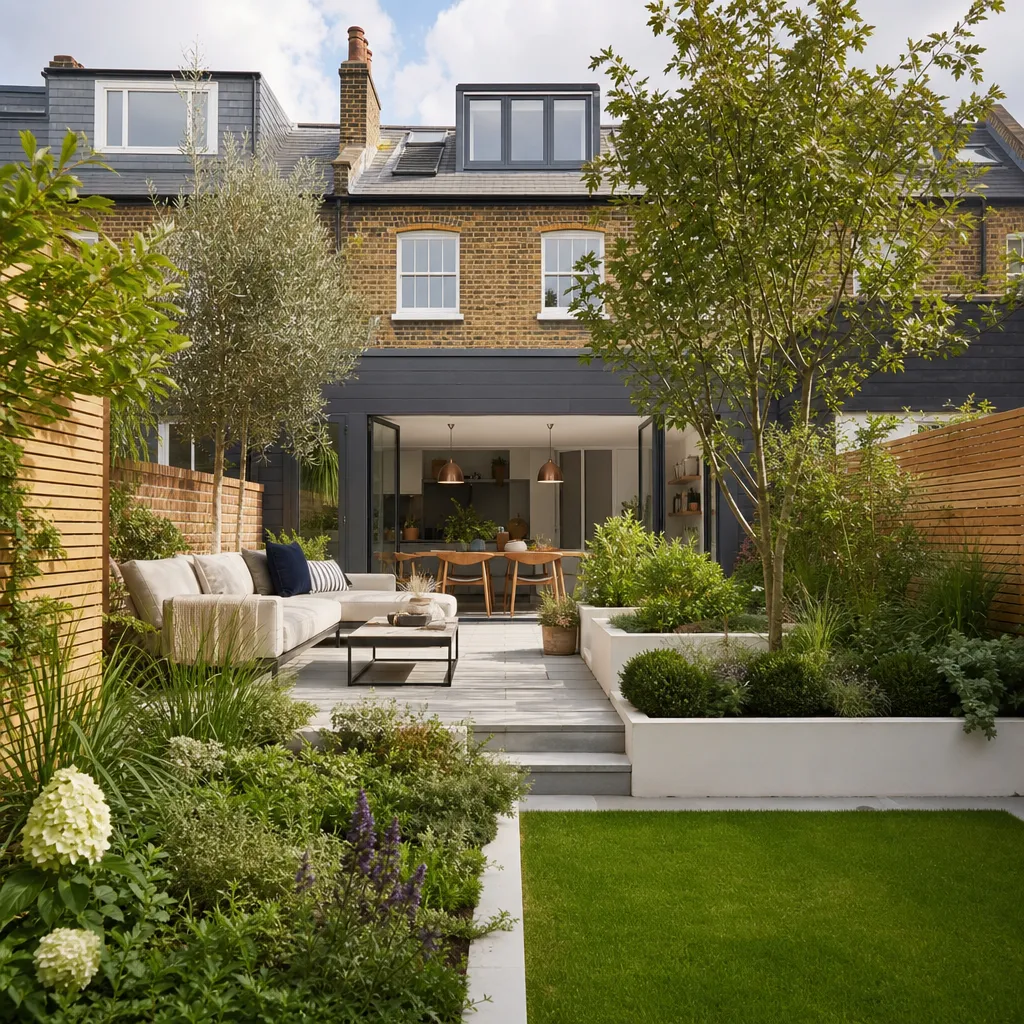
A successful garden transformation in the UK works with the seasons rather than against them — establishing structure and hard landscaping in autumn or winter, planting in spring, and enjoying the results through summer.
 Improvement & Build
Transforming Outdoor Spaces: Roof Terraces and Elevated Garden Design
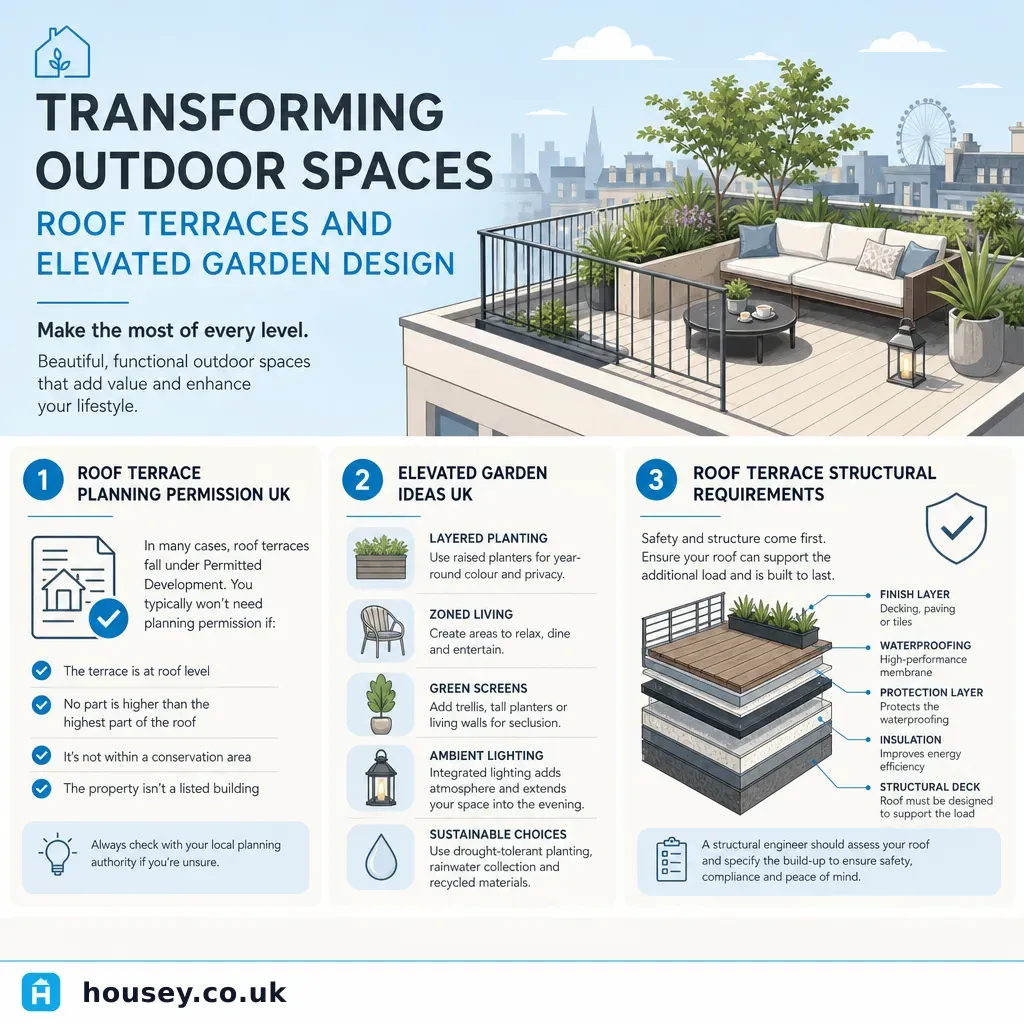
Roof terraces in the UK almost always need planning permission and a structural engineer's load capacity assessment before design work begins.