Garden Landscaping: Professional Transformation of Outdoor Spaces
By Housey · Last reviewed 19th of May 2026
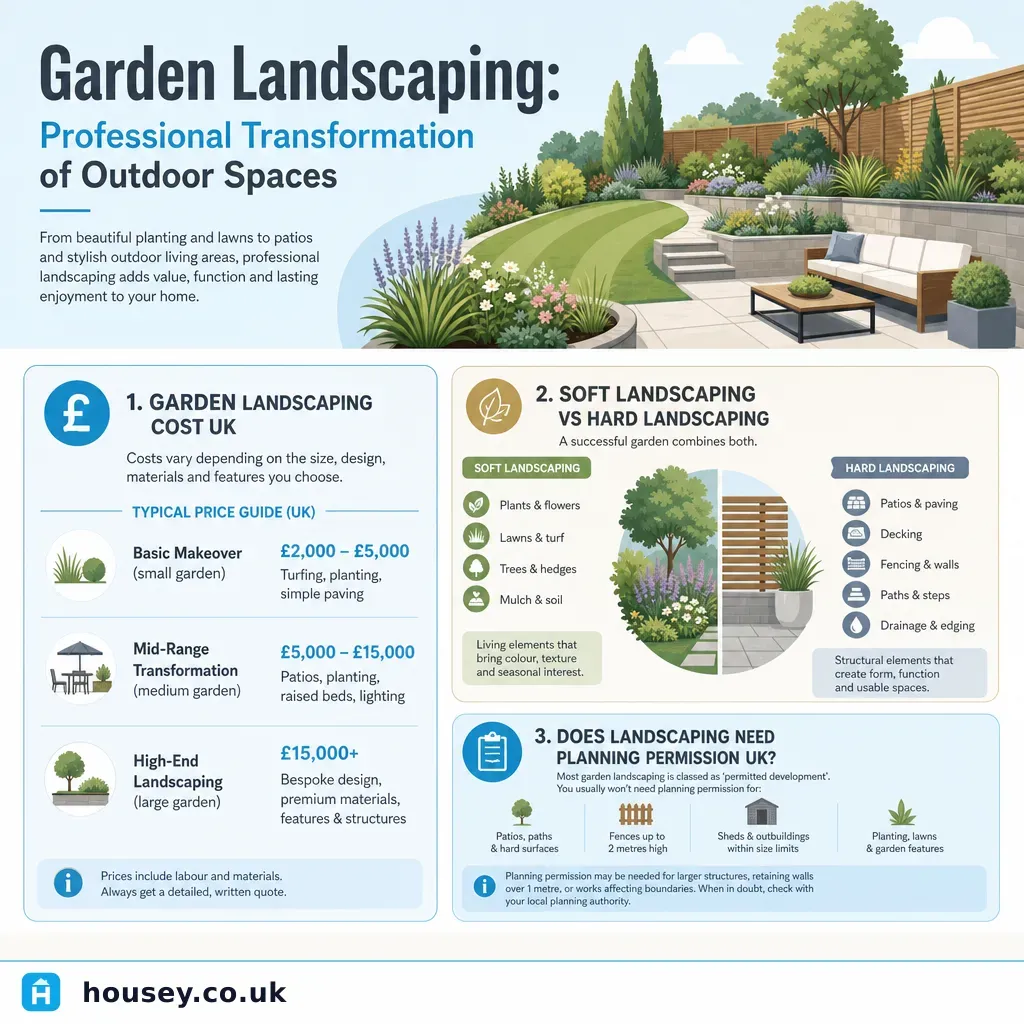
Garden Landscaping: Professional Transformation of Outdoor Spaces
Landscaping a garden is one of the most significant home improvement projects a UK homeowner can undertake — reshaping the ground, laying hard surfaces, managing drainage, and establishing planting that can last decades. The breadth of work the word landscaping covers is exactly what makes choosing the right professional, scoping the project clearly, and obtaining a detailed written contract so important before any spade breaks ground.
Key points
- Paving a front garden with impermeable materials covering more than 5m² requires either permeable surfacing or a planning application, under Schedule 2, Part 1, Class F of the Town and Country Planning (General Permitted Development) (England) Order 2015.
- Retaining walls over 1 metre adjacent to a highway or public footpath, or over 2 metres elsewhere, require planning permission.
- Professional landscapers should carry public liability insurance of at least £2 million; ask to see a current certificate before work starts.
- Indicative UK landscaping costs: soft landscaping (planting, turf laying) £50–£120 per m²; hard landscaping (patio, block paving) £80–£200 per m². Indicative UK costs, last reviewed 2026-05-19.
- Work within the root protection area of a tree subject to a Tree Preservation Order (TPO) requires prior written consent from the local planning authority under the Town and Country Planning Act 1990; breach is a criminal offence.
What does garden landscaping include?
Landscaping encompasses all physical works that alter the shape, surface, drainage, planting, or structure of an outdoor space. A project can range from a single-day turf installation to a multi-week transformation involving earthworks, drainage infrastructure, retaining walls, and new planting schemes.
Common landscaping works include:
- Hard landscaping — patios, paths, driveways, block paving, steps, retaining walls, raised beds, pergolas, decking, and fencing.
- Soft landscaping — turf laying, flower borders, tree and shrub planting, wildflower areas, and meadow creation.
- Drainage — French drains, soakaways, rain gardens, channel drainage, and surface water management.
- Earthworks — cutting, filling, levelling, and mound formation.
- Water features — ponds, streams, and fountains (requires attention to electrical safety and structural considerations).
- Boundary treatment — walls, fences, hedging, and gates.
A landscaping contractor may carry out all of these elements, or may focus on specific trades. Always confirm scope in writing, and check whether specialist subcontractors — electricians, drainage engineers, groundworkers — are included in the quoted price.
Soft vs hard landscaping: which do you need?
Feature | Soft landscaping | Hard landscaping |
|---|---|---|
What it covers | Planting, turf, lawns, borders, trees, hedges | Patios, paths, paving, walls, steps, drives |
Main benefit | Ecology, biodiversity, aesthetics, seasonal interest | Usable hard surface, structure, access, drainage control |
Typical cost per m² | £50–£120 | £80–£200 |
Planning considerations | Usually none (except near TPO-protected trees) | Front garden paving rules, retaining wall height limits, permitted development conditions |
Maintenance level | Moderate to high (weeding, pruning, mowing) | Low (cleaning, occasional re-pointing or resealing) |
Drainage impact | Permeable; supports biodiversity and water infiltration | May increase surface run-off if non-permeable materials are used |
Best suited for | Planting refresh, new borders, wildflower areas, lawn replacement | Patios, driveways, hard-wearing terraces, level changes |
Indicative UK costs, last reviewed 2026-05-19.
Do landscaping works need planning permission?
Most landscaping works in a rear garden are permitted development in England and do not require planning permission. However, several common scenarios do require either a formal application or compliance with specific rules:
- Front garden paving — any new surface over 5m² that is not permeable, or that does not drain to a permeable area, requires planning permission. See GOV.UK guidance on when planning permission is required.
- Retaining walls — walls over 1 metre adjacent to a highway, or over 2 metres anywhere else, need planning permission.
- Conservation areas and listed buildings — external works of any size may require consent.
- Tree Preservation Orders — pruning, cutting back, or removing a protected tree requires written consent from the local planning authority. Contact details are on your council's planning portal.
- Building Regulations — drainage modifications, structural walls, and some groundworks may also need building control sign-off.
Rules in Scotland, Wales, and Northern Ireland differ from England; always check with your local planning authority before starting work.
How to choose a landscaper
What to ask before accepting a quote
- What is included and excluded in this price?
- Will the work be carried out by your own staff or by subcontractors, and if so who?
- Do you hold current public liability insurance (minimum £2 million), and can I see the certificate?
- Are you a member of BALI (British Association of Landscape Industries) or the Association of Professional Landscapers (APL)?
- Can you provide references or a portfolio of similar recent projects in my area?
- How will drainage be managed during and after the project?
- Does the quote include waste removal and site clearance, and how will spoil be disposed of legally?
- Is VAT included in the quoted price?
- What is the payment schedule, and is there a retention period for defects?
- How will weather delays affect the programme, and will you notify me in advance?
Red flags when evaluating landscaping quotes
Watch out for these warning signs before committing to any contractor:
- A quote provided without a site visit or measured survey — it is impossible to price accurately without one.
- No written contract or scope of works offered before work commences.
- A request for a large upfront payment before work starts — more than 25–30% is unusual for typical residential projects.
- No mention of planning permission, building regulations, or TPO checks where clearly relevant.
- Refusal or inability to provide proof of current public liability insurance.
- Prices significantly below other quotes without a clear explanation — this may indicate lower-quality materials, unaccredited subcontractors, or an incomplete scope of works.
- No provision for licensed waste disposal — fly-tipping is a criminal offence under the Environmental Protection Act 1990, and the homeowner can be held liable if waste is disposed of illegally.
When to get professional help
A professional landscaping contractor should be used for any project involving significant groundworks, drainage modifications, structural walls, or hard landscaping across a large area. Consider involving a landscape architect or garden designer at the planning stage if:
- The project is large or complex, with multiple trades and phased delivery over months.
- Planning permission is needed and formal drawings or a design statement must be prepared.
- The garden has significant level changes requiring engineered retaining structures or designed drainage.
- Protected trees, watercourses, or ecological features are present and need specialist assessment before work begins.
- You want to phase a larger project across multiple years and need a master plan to guide sequential spending.
How Housey can help
Housey connects UK homeowners with trusted, vetted landscapers who can quote for projects of all sizes — from a single patio installation to a full garden transformation. Describe your project, receive comparable quotes, and choose with confidence.
Frequently asked questions
How long does garden landscaping take?
A small project — new patio and planting borders up to 50m² — typically takes 3–7 working days. Larger projects with earthworks, drainage modifications, and extensive hard landscaping can take 4–12 weeks. Agree a programme in writing before work starts, and confirm how weather delays will be handled in the contract.
Do I need to notify my local council before landscaping?
For most rear-garden works, no notification is required. However, paving a front garden, building a retaining wall above the relevant height thresholds, working near protected trees, or altering drainage connecting to the public sewer may require prior consent. Always check with your local planning authority before work begins.
What qualifications should a professional landscaper have?
There is no single mandatory qualification for landscapers in England. Membership of BALI or the Association of Professional Landscapers (APL) indicates commitment to industry standards. Always ask for evidence of current public liability insurance and request references from recent comparable projects regardless of membership or accreditation held.
Can landscaping improve my home's value?
Well-designed landscaping can improve kerb appeal and buyer interest, though value uplift varies. Research generally suggests gardens in good condition support property values, while poorly maintained or fully concreted plots can have the opposite effect. Functional, low-maintenance schemes using quality materials tend to be most positively received by buyers and estate agents alike.
Sources and further reading
- GOV.UK: When is permission required? — GOV.UK (front garden paving and planning thresholds)
- Town and Country Planning (General Permitted Development) (England) Order 2015 — legislation.gov.uk
- Town and Country Planning Act 1990 — legislation.gov.uk (Tree Preservation Orders)
- British Association of Landscape Industries (BALI) — BALI (trade body for professional landscapers)
- Environmental Protection Act 1990 — legislation.gov.uk (waste disposal obligations)
- RICS — Royal Institution of Chartered Surveyors — RICS (property value and home improvements guidance)
Useful next reads
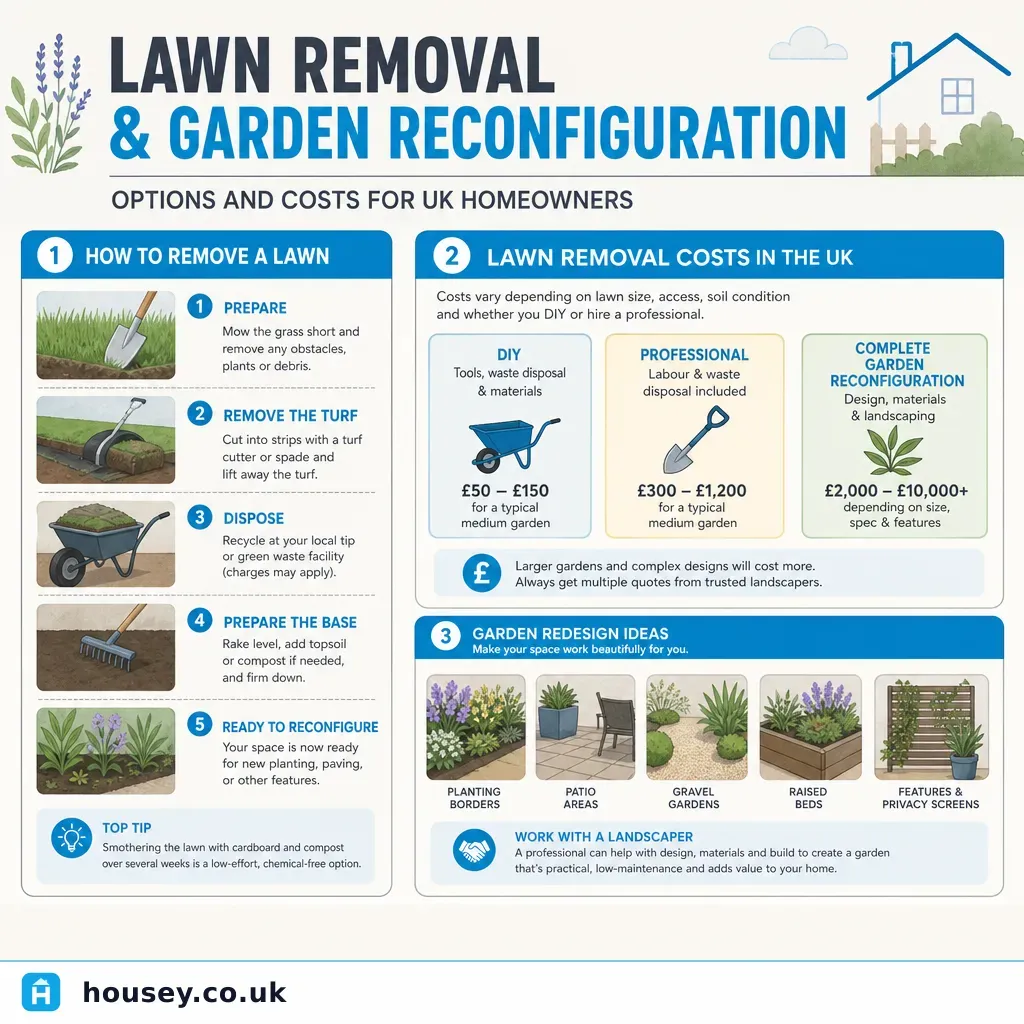 Improvement & Build
Lawn Removal and Garden Reconfiguration: Options and Costs
Lawn removal in the UK typically costs £400–£900 for a standard suburban garden, depending on method and skip hire.
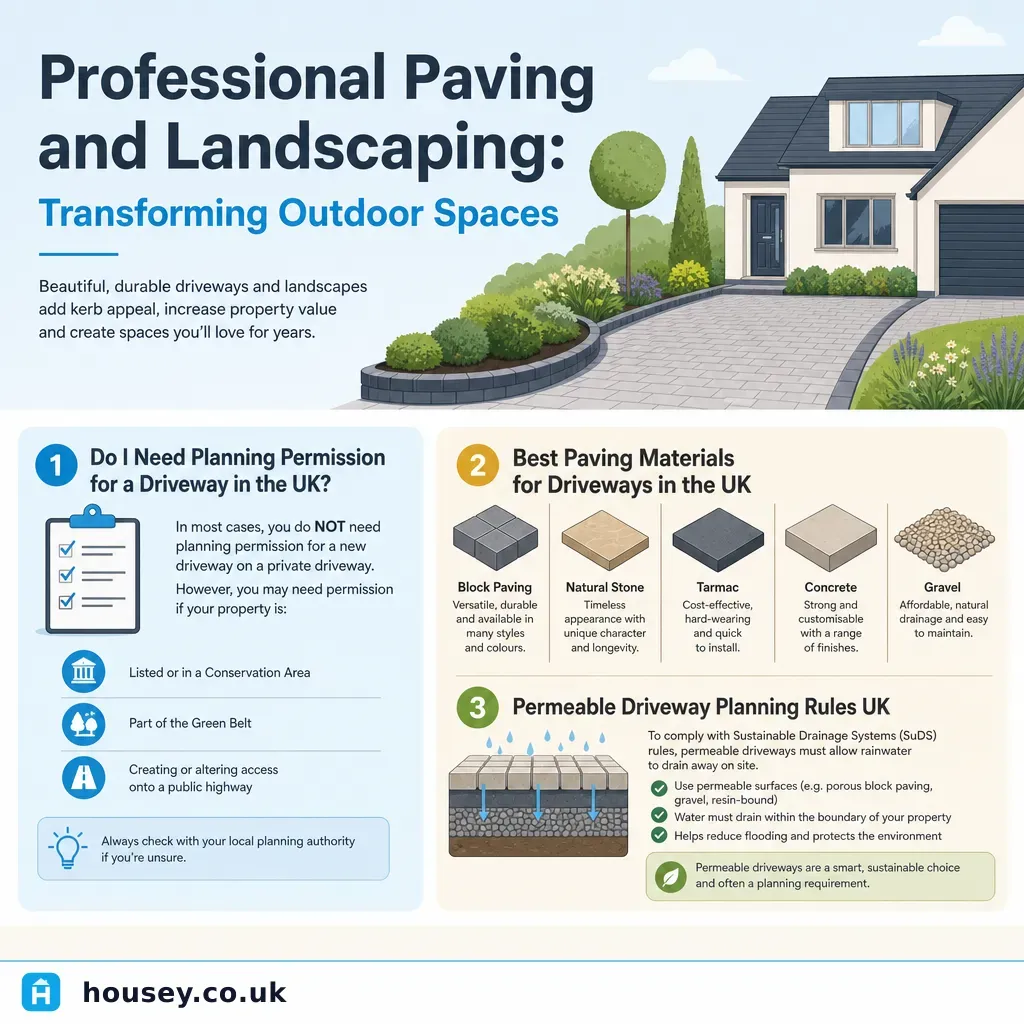 Improvement & Build
Professional Paving and Landscaping: Transforming Outdoor Spaces
Professional paving and landscaping can transform a garden or driveway, improving kerb appeal and adding usable outdoor space.
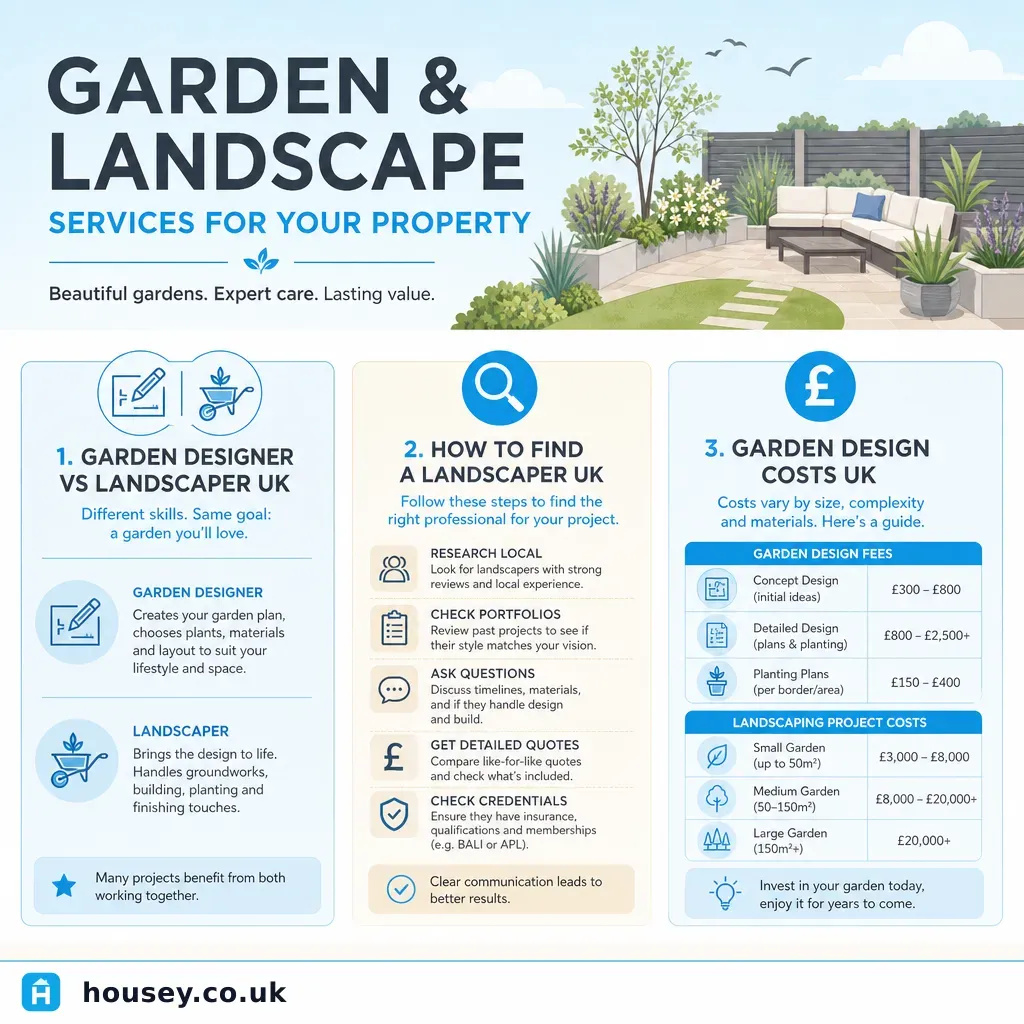 Improvement & Build
Garden and Landscape Services for Your Property
Garden designers and landscapers both improve outdoor spaces but offer different services.
 Improvement & Build
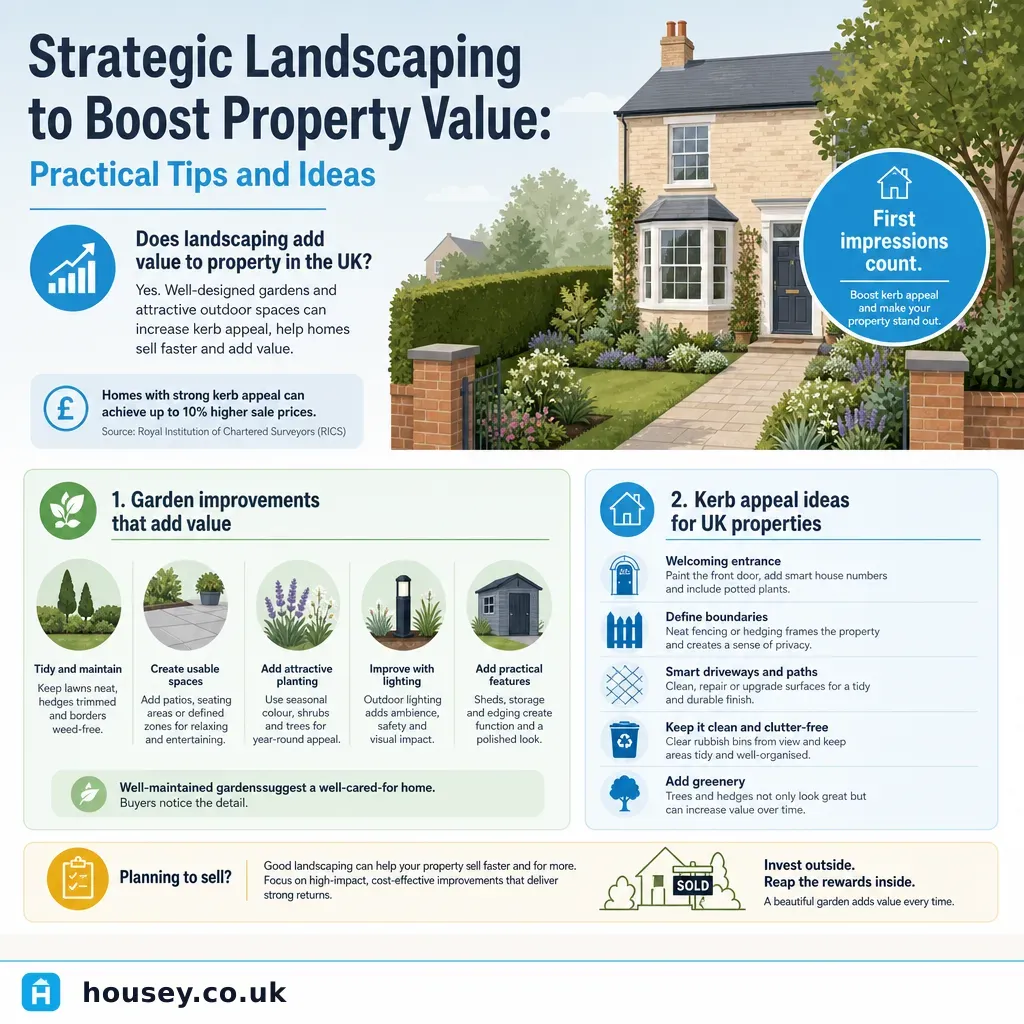
Strategic Landscaping to Boost Property Value: Practical Tips and Ideas
Landscaping can add 5–15% to a UK property's perceived value, though the return varies by improvement type.
 Improvement & Build
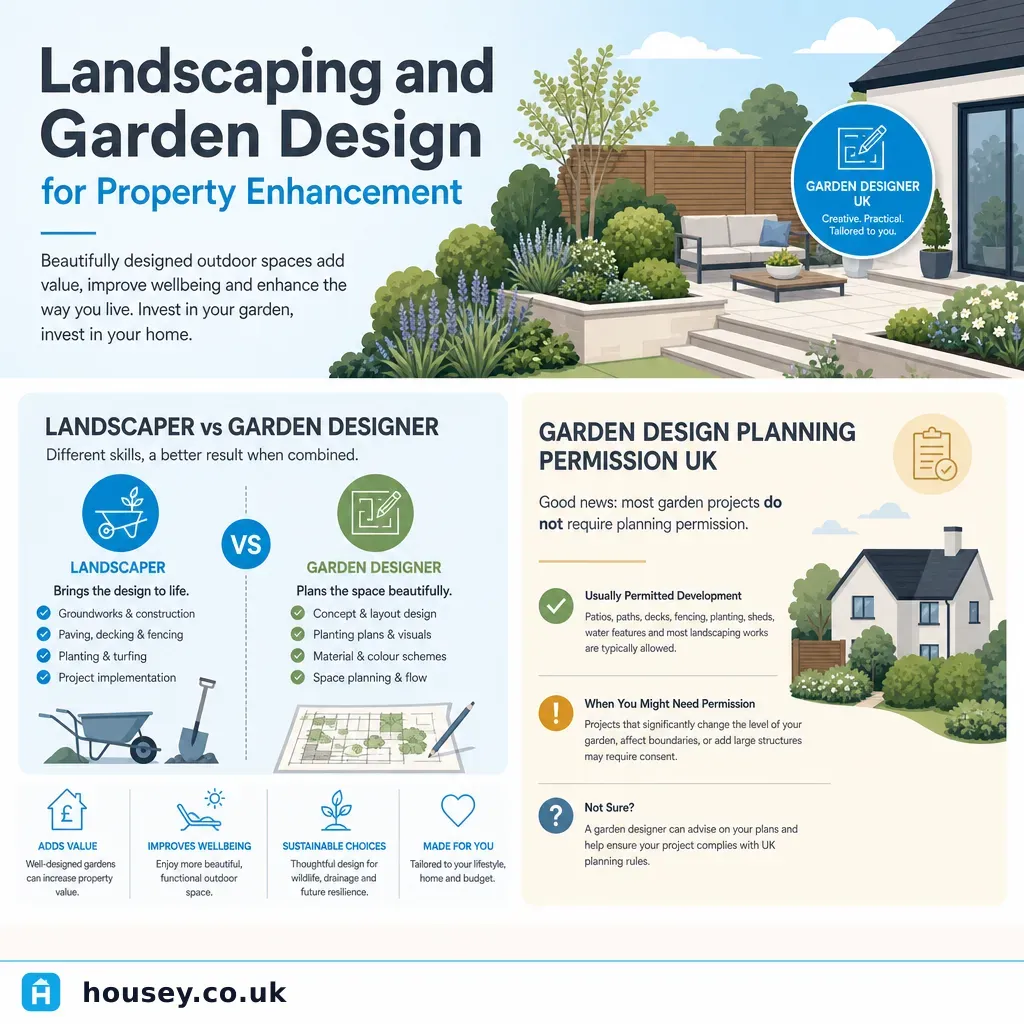
Landscaping and Garden Design for Property Enhancement
Landscaping and garden design involve planning and building outdoor spaces — from patios and raised beds to planting schemes and drainage.