Garden Lighting: Types, Design and Installation for Outdoor Spaces
By Housey · Last reviewed 26th of May 2026
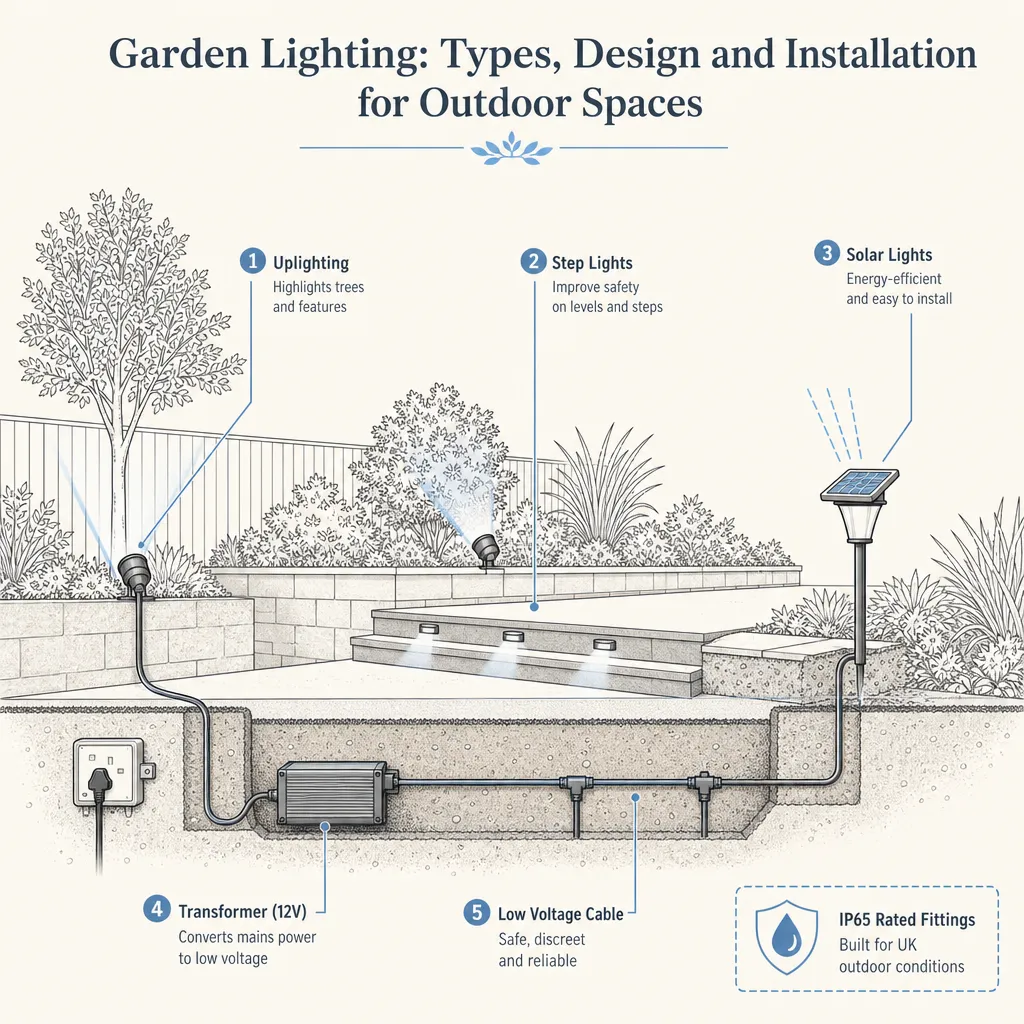
Garden Lighting: Types, Design and Installation for Outdoor Spaces
Garden lighting transforms how an outdoor space looks and feels after dark, extends usable hours through autumn and winter, and can improve security without compromising the character of a planting scheme. For UK homeowners planning a new scheme — whether a modest set of path lights or a layered design with uplighters, festoon, and floodlights — the key choices are between low-voltage, solar, and mains systems, each with different installation implications, running costs, and design flexibility.
Key points
- Any new mains outdoor electrical circuit in England and Wales is notifiable work under Part P of the Building Regulations and must be installed by a Part P-registered electrician or notified to local authority building control.
- Low-voltage garden lighting (typically 12V or 24V, supplied from a transformer plugged into an existing weatherproof outdoor socket) can be connected without Part P notification by a competent DIYer.
- Solar garden lights require no electrical connection; most need at least six hours of direct sunlight daily for adequate charging, which limits their reliability in shaded UK gardens or during winter months.
- IP (Ingress Protection) ratings determine outdoor suitability: path lights and wall lanterns need at least IP44; fittings near water features should be rated IP65 or above; any submerged fitting requires IP68.
- Colour temperature significantly affects ambience and wildlife impact — warm white LEDs (2,700–3,000K) suit most planted gardens and cause far less harm to nocturnal insects and bats than cool white (4,000K+) sources.
Types of garden lighting and what they are best for
Type | Best for | Installation complexity | Typical power source | Indicative fitting cost* |
|---|---|---|---|---|
Path and step lights | Safe navigation; boundary definition | Low to medium | Low-voltage or solar | £15–£80 per fitting |
Uplighters (spike or recessed) | Highlighting trees, shrubs, and architectural features | Medium (recessed requires groundwork) | Low-voltage or mains | £30–£150 per fitting |
Wall-mounted lanterns or coach lights | Entrances, patios, and outbuildings | Medium (cable routing required) | Mains | £50–£300 per fitting |
Festoon string lights | Pergolas and entertaining areas | Low | Mains socket or low-voltage | £20–£150 per string |
Security floodlights with PIR | Driveways, rear access, and outbuildings | Medium to high | Mains | £40–£200 per fitting |
Recessed deck and patio lights | Decking, porcelain paving, and steps | High (flush-mounted with groundwork) | Low-voltage or mains | £25–£120 per fitting |
Solar accent lights | Borders and pathways in sun-exposed areas | Very low — no cable run needed | Solar | £5–£60 per fitting |
Underwater feature lights | Ponds and water features | High — specialist waterproofing required | Mains or low-voltage | £40–£200 per fitting |
*Indicative UK costs for fittings only, last reviewed 2026-05-26. Installation labour is additional. Obtain at least three quotes.
Design principles: layering your garden lighting
Effective garden lighting uses three layers:
- Ambient lighting provides overall illumination — wall lanterns, overhead festoon strings, or broad path lights. This is the base layer that makes a space usable after dark.
- Task lighting targets specific functions — steps, entrances, barbecue areas, or seating. Safety-critical and practical.
- Accent lighting creates drama and focal points — uplighting a specimen tree, grazing a textured boundary wall, or silhouetting structural planting against a softly lit fence panel.
A common mistake in UK gardens is relying entirely on floodlights, which create flat, harsh illumination and offer no layering or atmosphere. A mix of low-level and mid-height sources at varied intensities typically gives more natural, usable results and consumes less energy overall.
Colour temperature and wildlife: the RSPB and Bat Conservation Trust advise against blue-white LEDs for garden lighting, as they disrupt insect activity and bat foraging. Warm white LEDs (2,700–3,000K) or amber sources cause significantly less ecological harm and tend to look warmer and more inviting in domestic settings.
Mains, low-voltage, or solar: which is right for your garden?
- Choose mains if you need reliable, high-output lighting for security floodlights, permanently lit entrances, or large entertaining areas, and you are willing to have a Part P-registered electrician install a dedicated outdoor circuit.
- Choose low-voltage (12V or 24V) if you want flexible, design-led garden lighting you can adjust seasonally. Most low-voltage systems plug into a single outdoor socket via a transformer, making them accessible without specialist skills.
- Choose solar if cable routing is impractical, you have a sun-exposed site, and your priority is decorative or low-level path lighting. Solar reliability drops significantly during UK winters and in gardens with more than partial shade.
- Ask a Part P-registered electrician if you are planning any new outdoor circuit, want permanently buried cables, or need to add RCD protection. Working on mains garden circuits without appropriate registration is a Building Regulations breach and creates genuine safety risk.
Homeowner checklist before buying or installing garden lighting
What to ask before accepting a quote
- What is included and excluded — supply of fittings, cable runs, transformer, control gear, and making good disturbed surfaces?
- Are you Part P-registered, and will you issue a Building Regulations compliance certificate for any new mains circuit?
- What IP rating are the proposed fittings, and are they appropriate for their exact position?
- Will all buried cables be run in conduit or armoured cable at the correct burial depth to protect against garden tools and digging?
- Is the system designed to be expandable if I want to add more fittings later?
- Is VAT included in the quoted price?
- What installation guarantee do you offer, and does it cover both fittings and labour?
When to get professional help
Low-voltage and solar lighting are generally accessible to a confident DIYer. Call a qualified, Part P-registered electrician for:
- Any new mains outdoor circuit, including for security floodlights or an additional weatherproof socket.
- Permanently buried armoured cables — correct burial depth and conduit protection are mandatory.
- Any lighting near or in water features, ponds, or swimming pools — these zones carry specific electrical safety requirements and incorrect installation can be fatal.
- Any work on or near your consumer unit or fuseboard, including adding a new circuit breaker or RCD.
How Housey can help
For a design-led garden lighting scheme, Housey can connect you with experienced garden designers who understand how lighting integrates with planting and hard landscaping, as well as with landscapers who can co-ordinate groundwork, conduit laying, and garden lighting installation as part of a wider project.
Frequently asked questions
Does garden lighting need planning permission?
In most cases, no — adding external lights to a domestic property is permitted development. However, some new-build estates have planning conditions restricting lighting, and conservation area properties may need to consider character impact. Very bright or commercial-style lighting may attract a light nuisance complaint from neighbours. Always check your planning permission conditions if you are on a new-build estate.
Do I need an electrician to install garden lights?
It depends on the system. Low-voltage lights connected to an existing outdoor socket, and solar lights, can typically be installed without a qualified electrician. Any new mains outdoor circuit must be installed by a Part P-registered electrician and is notifiable under Building Regulations in England and Wales. DIY mains garden wiring is a safety risk and may invalidate your home insurance.
How energy-efficient are LED garden lights?
Very. LED garden fittings use around 75–90% less energy than equivalent halogen fittings and typically last 25,000–50,000 hours. A 5W LED path light running 10 hours per night costs approximately £1–£2 per year at typical UK electricity tariffs (indicative only; check current rates with your supplier). LEDs also run cool, reducing the risk of heat damage to nearby fittings and planting.
How do I stop garden lighting bothering my neighbours?
Use directional fittings with hoods or louvres to limit light spill beyond your boundary. Aim uplighters carefully so beams do not overshoot into neighbouring windows. Use timers or motion sensors so lights are not burning all night. The Institution of Lighting Professionals (ILP) publishes guidance on obtrusive light in residential settings, including recommended illuminance limits at neighbouring boundaries.
Sources and further reading
- Approved Document P: Electrical Safety in Dwellings — GOV.UK
- Guidance Notes for the Reduction of Obtrusive Light GN01 — Institution of Lighting Professionals
- Wildlife-friendly garden lighting advice — RSPB
- Permitted development rights for householders — Planning Portal
Useful next reads
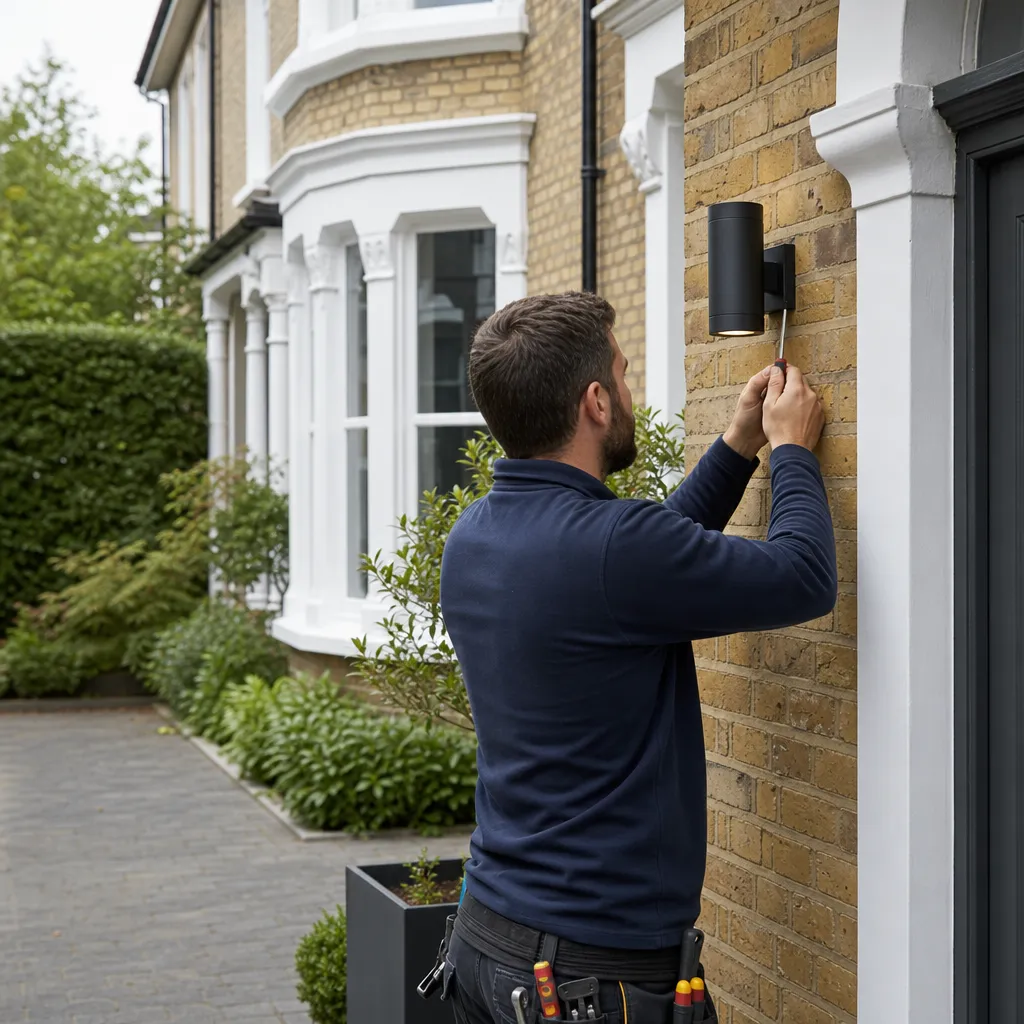 Improvement & Build
Outdoor lighting problems: solutions for common issues in gardens and driveways
Outdoor lighting problems in UK gardens commonly stem from water ingress, incorrect IP ratings, faulty transformers, poor earth connections, or corroded contacts.
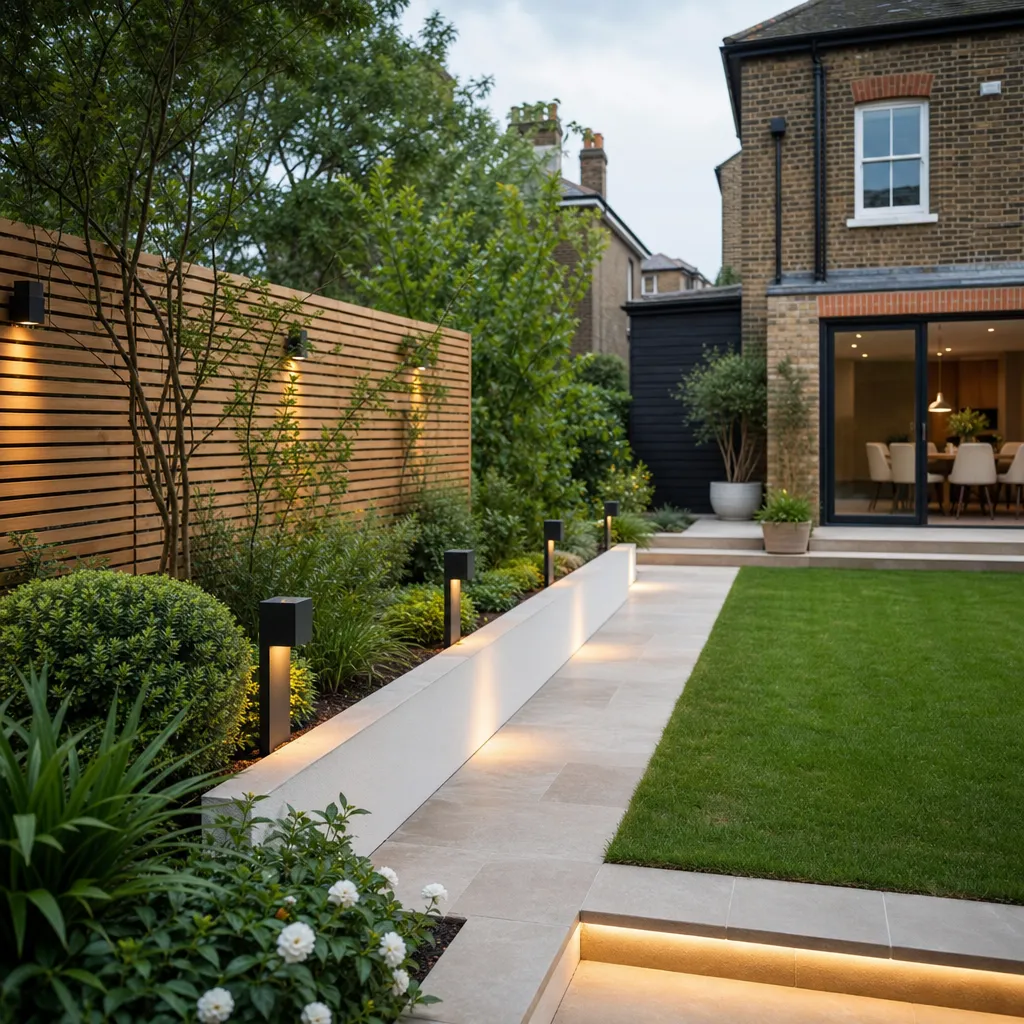 Improvement & Build
Landscape Lighting Design Ideas for Gardens
Effective garden lighting combines task lighting for paths and entrances, accent lighting to highlight trees and borders, and ambient lighting for entertaining areas.
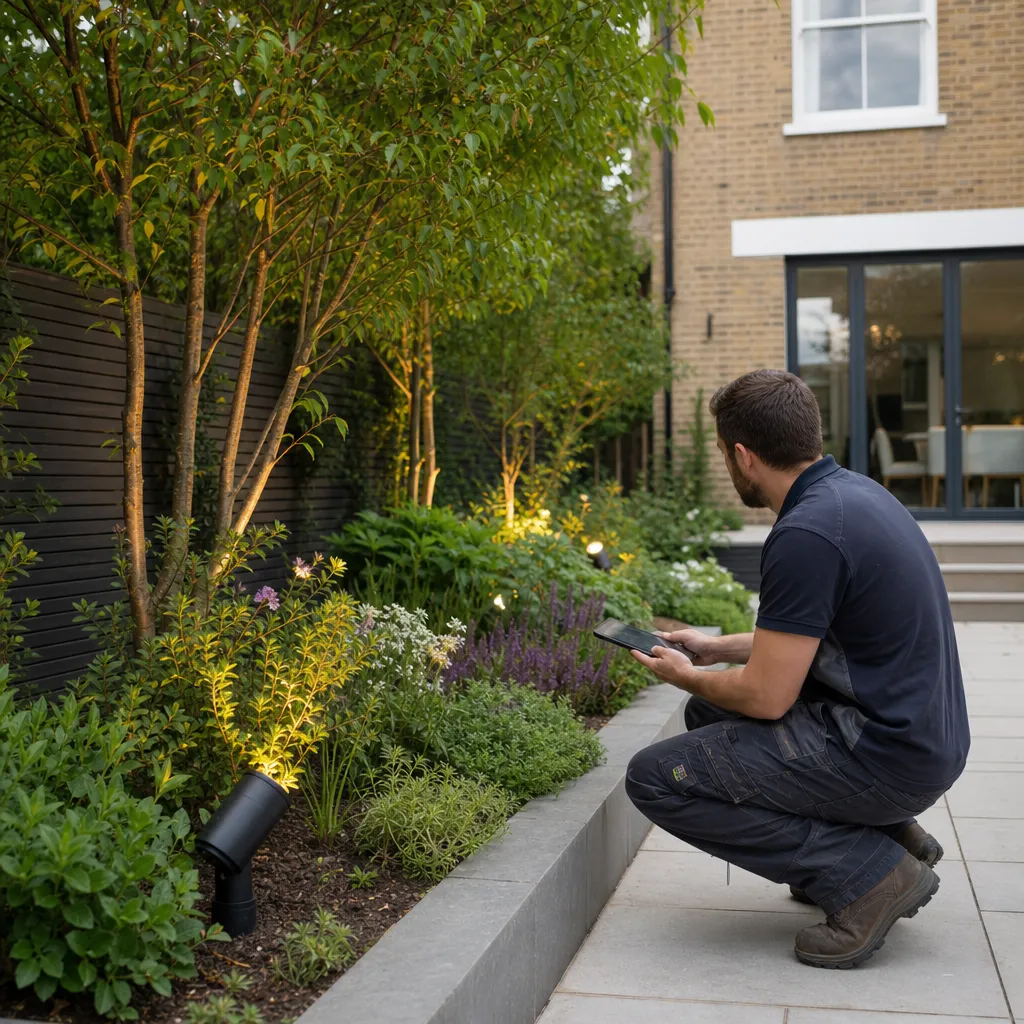 Improvement & Build
Uplighting for Gardens: Design Techniques and Effects
Garden uplighting uses low-level or in-ground fixtures to project light upward onto trees, walls, and architectural plants.
 Improvement & Build
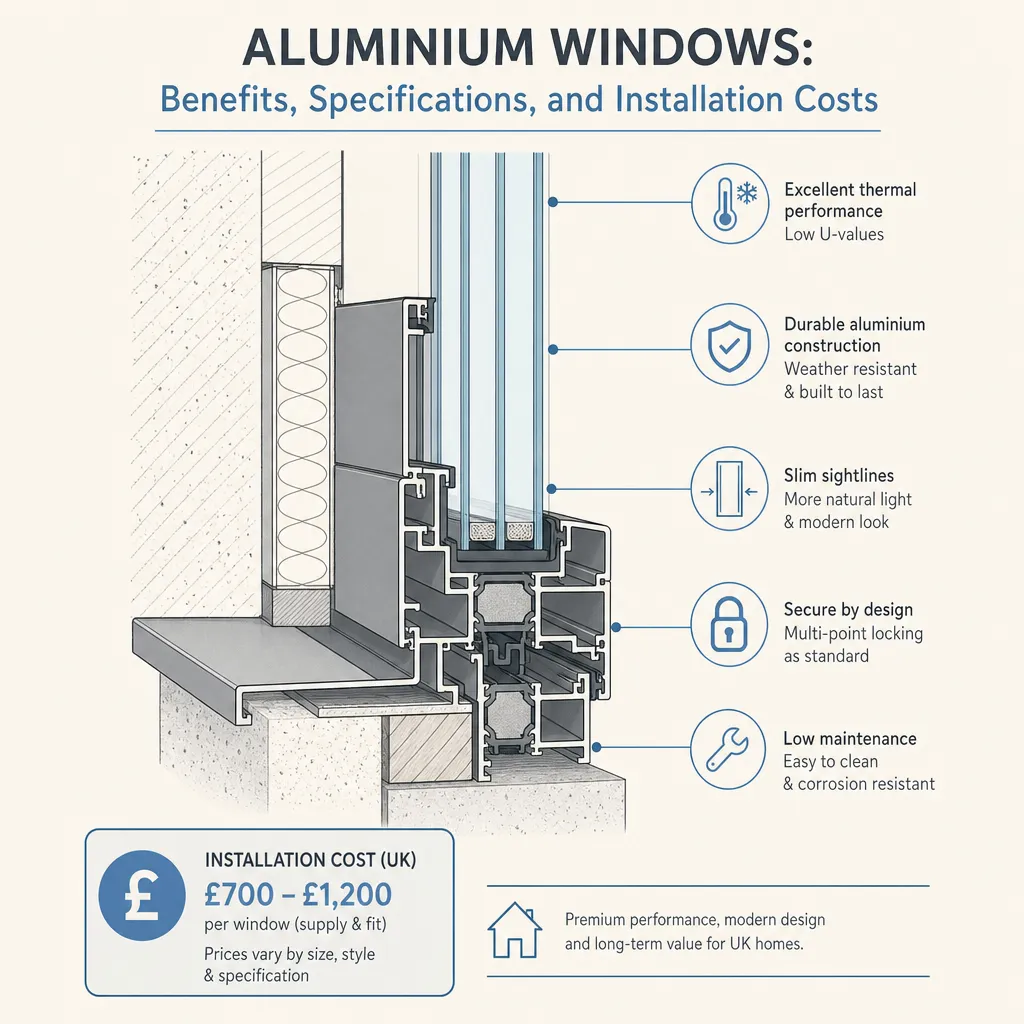
Aluminium Windows: Benefits, Specifications, and Installation Costs
Aluminium windows typically cost £600–£1,800 per window installed in the UK, depending on size and specification.
 Improvement & Build
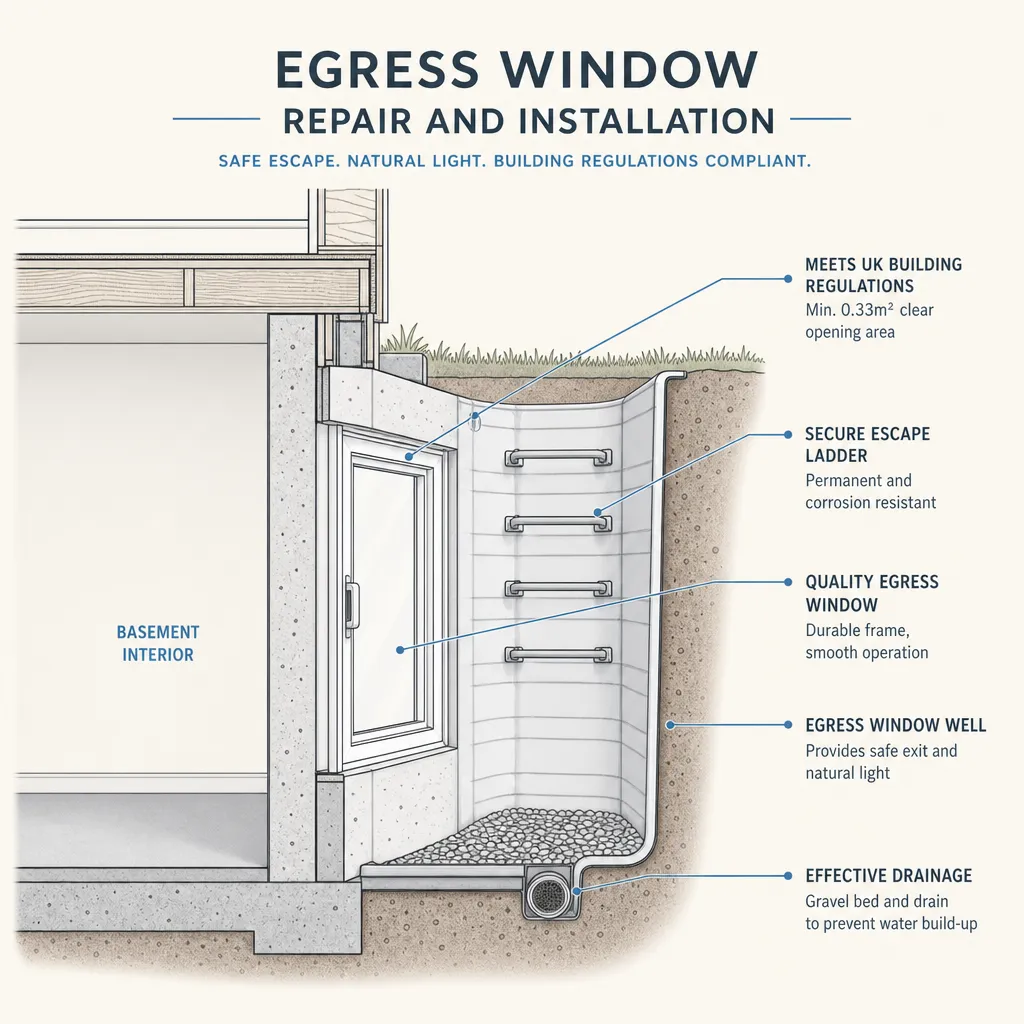
Egress Window Repair and Installation
An egress window is a window large enough to serve as an emergency escape route from a habitable room.