Garden Maintenance During Drought and Water Restrictions
By Housey · Last reviewed 11th of May 2026
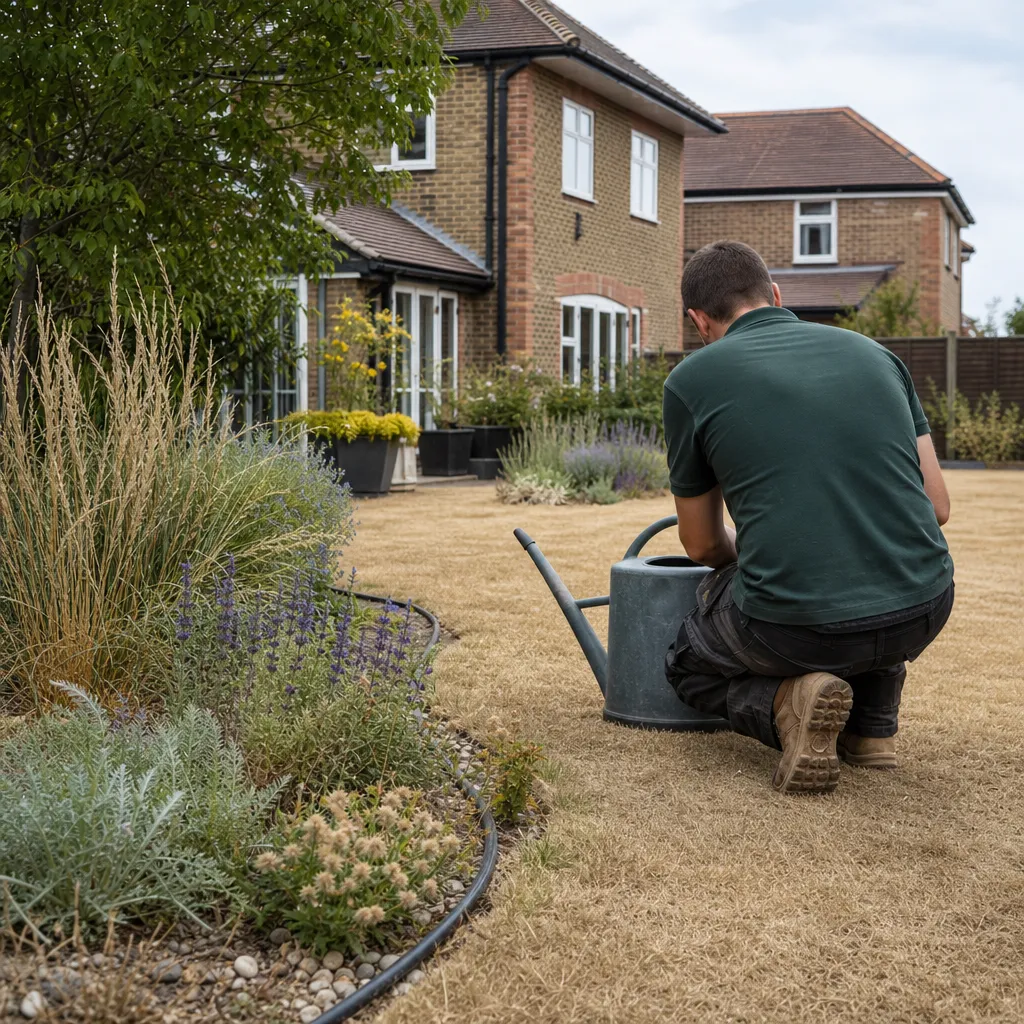
Garden Maintenance During Drought and Water Restrictions
Dry summers and formal water restrictions — including hosepipe bans — are becoming a more regular feature of UK gardening, particularly in southern and eastern England where water stress is highest. Whether you are managing an established garden through a temporary ban or preparing for the longer-term reality of drier summers driven by climate change, the combination of legal awareness, practical technique, and smarter planting choices makes a significant difference to how your garden fares and how much water you use.
Key points
- Under the Water Industry Act 1991, Section 76, water companies can declare a temporary use ban (TUB) restricting domestic hosepipe use; using a watering can is never restricted.
- Grey water from baths, showers, and handbasins (not toilets or dishwashers) can legally be used for garden watering in most circumstances but should not be stored for more than 24 hours due to bacterial growth risk.
- Most established UK lawns go dormant rather than dying in drought — yellowing grass typically recovers within two to three weeks of normal rainfall returning.
- The RHS recommends watering in the early morning or late evening to reduce evaporation by up to 50% compared with midday watering in warm weather.
- Mulching around plants with a 5–7 cm layer of organic material (bark, garden compost, straw) can reduce watering frequency significantly by slowing soil moisture loss.
What do hosepipe ban restrictions actually cover?
A hosepipe ban — formally a temporary use ban (TUB) under Section 76 of the Water Industry Act 1991 — is declared by individual water companies when reservoir levels or river flows fall below defined thresholds. Different companies may impose bans at different times, and the exact scope of restrictions can vary.
What is typically restricted under a TUB:
- Using a hosepipe or sprinkler to water a garden.
- Washing a private vehicle with a hosepipe.
- Filling or topping up a paddling pool, ornamental pond, or domestic swimming pool.
- Washing paths, patios, and other outdoor hard surfaces with a hosepipe.
What is typically not restricted:
- Using a watering can (including one filled from the tap).
- Using stored rainwater from a water butt.
- Using recycled grey water from a bath or shower.
- Commercial growing operations (covered under separate consents).
Always check your specific water company's guidance when a ban is announced, as scope can vary.
Watering method | Allowed during TUB? | Notes |
|---|---|---|
Hosepipe from mains | No | Core restriction under the TUB |
Garden sprinkler from mains | No | Covered by hosepipe ban |
Watering can (mains tap filled) | Yes | No restriction |
Water butt (harvested rainwater) | Yes | Exempt; encouraged by water companies |
Grey water from bath or shower | Yes | Use within 24 hours; avoid edible seedlings |
Drip irrigation connected to mains | Check with your supplier | Some companies restrict automatic systems |
How to water your garden efficiently during a drought
When water is limited, prioritising which plants receive water — and applying it correctly — makes the biggest practical difference.
Priority order for watering:
- Newly planted trees, shrubs, and perennials (within their first two growing seasons).
- Fruit and vegetables in the fruiting and swelling stage.
- Container plants — these dry out fastest as they have no contact with ground moisture.
- Young hedging and screening plants establishing their root systems.
- Established ornamental borders with drought-sensitive species.
- Established lawns — lowest priority; they recover naturally once rain returns.
Technique matters:
- Water at the root zone, not over the foliage. A slow, deep soak once or twice a week encourages deeper rooting than a daily light sprinkle.
- For larger shrubs and trees, use a slow-release seep — a bucket with a small hole, or a drip line — to deliver water directly to roots with minimal evaporation.
- Sink a short length of pipe (10–15 cm) into the soil beside newly planted trees so water can be applied directly to the root ball rather than running off the surface.
Drought-resilient planting and soil improvements
Adapting planting choices is the single most effective long-term strategy for reducing garden water demand during UK dry spells.
Drought-tolerant plants suited to UK conditions:
- Lavender, rosemary, thyme, and sage — low maintenance and attractive to pollinators.
- Alliums, echinops, and eryngium for mixed borders.
- Ornamental grasses such as stipa tenuissima and festuca glauca.
- Sedum (Hylotelephium) and other succulent-type plants.
- Mediterranean shrubs including cistus, pittosporum, and artemisia.
Soil improvements that improve water retention:
- Incorporate well-rotted garden compost or manure into borders each autumn — this improves water-holding capacity in sandy soils and drainage in heavy clay.
- Mulch borders to 5–7 cm depth each spring before the soil dries out, keeping mulch 10 cm clear of plant stems.
- Reduce lawn area in favour of mixed planting, gravel, or permeable paving — lawns consume considerably more water than established planted borders.
What not to assume:
- Do not assume all drought-tolerant plants suit UK clay soils — many Mediterranean species need free-draining conditions and will struggle in heavy or poorly drained ground.
- Do not assume grey water is safe for all plants — seedlings and root vegetables intended for raw consumption should receive fresh water only.
- Do not assume a yellow lawn is dead — standard UK lawn grasses go dormant in drought and recover naturally once regular rainfall resumes.
- Do not assume containers need watering once a week in summer — glazed and terracotta pots can dry out completely within 24–48 hours during a heatwave.
- Do not assume watering little and often is better than deep, infrequent watering — shallow watering encourages surface roots that are more vulnerable to drought stress.
Rainwater harvesting and grey water reuse
Installing a water butt is the simplest and most cost-effective step towards drought resilience for most UK gardens.
Water butt essentials:
- A standard 200-litre butt connected to a downpipe from the main roof can fill quickly during moderate rainfall, providing a useful reserve for a small or medium garden.
- Slimline butts (up to 500 litres) suit smaller gardens with limited space. Underground tanks can store several thousand litres for larger gardens or vegetable plots.
- Keep lids on water butts to reduce evaporation and prevent mosquito breeding.
- Link multiple butts together with an overflow pipe to maximise catchment from a single downpipe.
Using grey water safely:
- Bath and shower water can be applied to ornamental plants and established lawns using a watering can.
- Avoid grey water on seedlings, newly germinated plants, or edible leaves and root vegetables intended for raw consumption.
- Never store grey water for longer than 24 hours, as bacterial growth increases rapidly in warm conditions.
- Do not apply grey water through sprinkler systems or allow it to pool on the surface.
When to get professional help
Most routine drought management can be handled by the homeowner. Professional input is worthwhile if:
- You want to redesign a garden for long-term drought resilience — a garden designer can specify plants, materials, and drainage solutions suited to your soil type, aspect, and local climate.
- You are planning a larger landscaping project incorporating sustainable urban drainage (SuDS), rainwater harvesting infrastructure, or significant hard landscaping changes — a landscaper experienced in water management can advise on materials and drainage compliance.
- Your garden drains onto a neighbouring property or a watercourse — check with your local planning authority and the Environment Agency before altering drainage patterns.
How Housey can help
Housey connects UK homeowners with local garden designers and landscapers who can help adapt your garden for drought resilience, specify water-efficient planting schemes, or carry out larger landscaping works. Describe your garden, soil type, and goals to receive quotes from vetted local professionals.
Frequently asked questions
Is it illegal to use a hosepipe on your garden during a hosepipe ban in the UK?
Yes. Breaching a temporary use ban (TUB) declared under Section 76 of the Water Industry Act 1991 is a criminal offence, and water companies have authority to investigate complaints and inspect premises. Fines can apply. Using a watering can filled from a tap remains entirely legal during a TUB.
Will my lawn recover after a drought?
In most cases, yes. Standard UK lawn grasses — predominantly fescue and ryegrass mixtures — go dormant rather than dying during dry spells. Colour and growth typically return within two to three weeks of normal rainfall. Avoid scarifying, aerating, or feeding a dormant lawn; wait until it has fully recovered before any renovation work.
Can I use water from a paddling pool on the garden during a hosepipe ban?
It depends on the chemicals present. Water containing chlorine, algaecides, or other pool treatments should not be applied directly to soil or plants as it can harm soil biology and sensitive plants. If the water is untreated or has been left to stand and off-gas for several days, it may be used with a watering can on non-edible plants.
How much water can a water butt realistically save?
A 200-litre water butt connected to a standard downpipe can fill during a moderate 30-minute rain shower over a small roof section, providing enough water to irrigate a medium border for several days in summer. Larger underground tanks can store several thousand litres and supply garden irrigation throughout an extended dry period.
Sources and further reading
- Water Industry Act 1991, Section 76 — legislation.gov.uk
- Drought management — Environment Agency / GOV.UK
- Watering: how and when to water — Royal Horticultural Society
- Drought-tolerant plants for UK gardens — Royal Horticultural Society
Useful next reads
 Improvement & Build
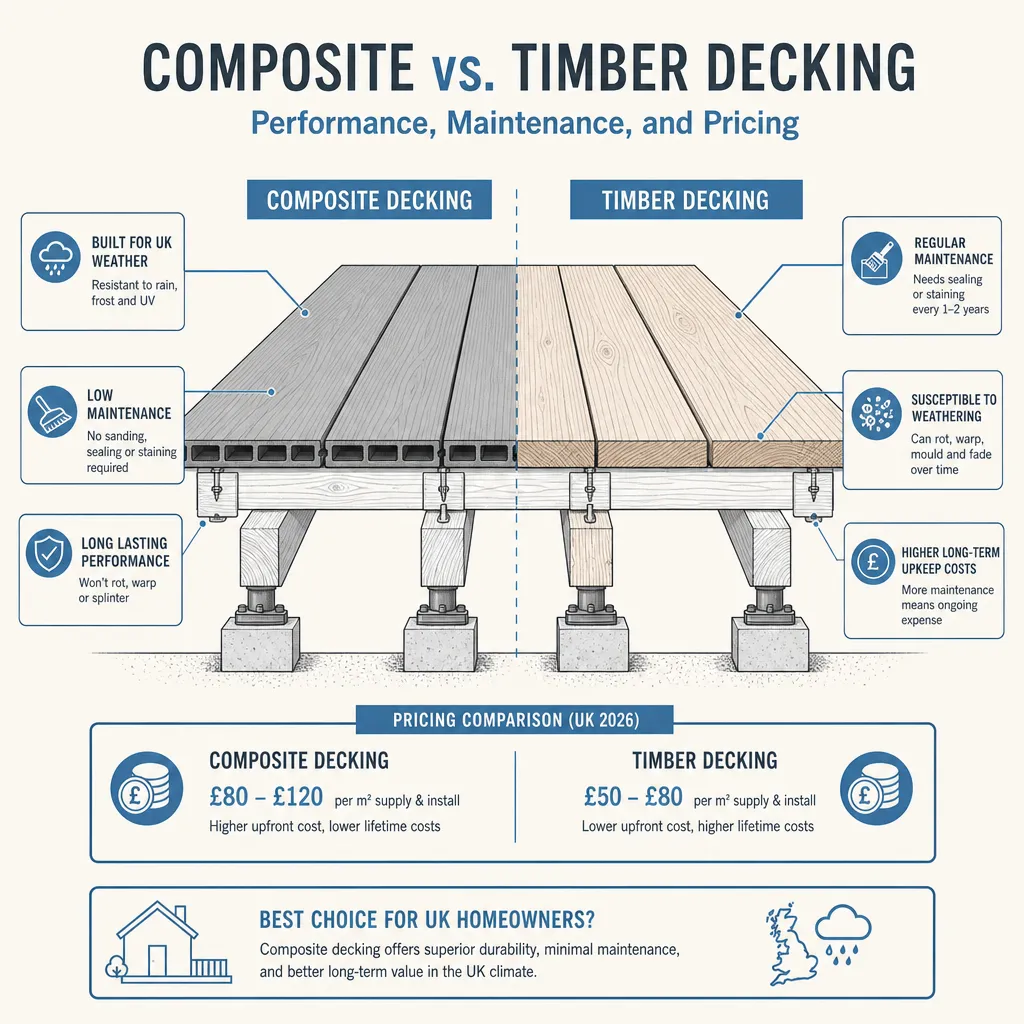
Composite vs. Timber Decking: Performance, Maintenance, and Pricing
Composite decking costs more upfront — typically £120–£220 per m² installed versus £80–£150 for treated softwood — but requires far less maintenance and carries a 25-year warranty.
 Improvement & Build
Metal Roofing Systems: Materials, Performance and Installation
Metal roofing systems in the UK include standing seam zinc, coated steel, aluminium, and copper panels, as well as profiled sheets.
 Improvement & Build
Building an Outdoor Kitchen: Design, Materials, and Investment
Building an outdoor kitchen in the UK costs roughly £3,000–£25,000 depending on size and materials.
 Improvement & Build
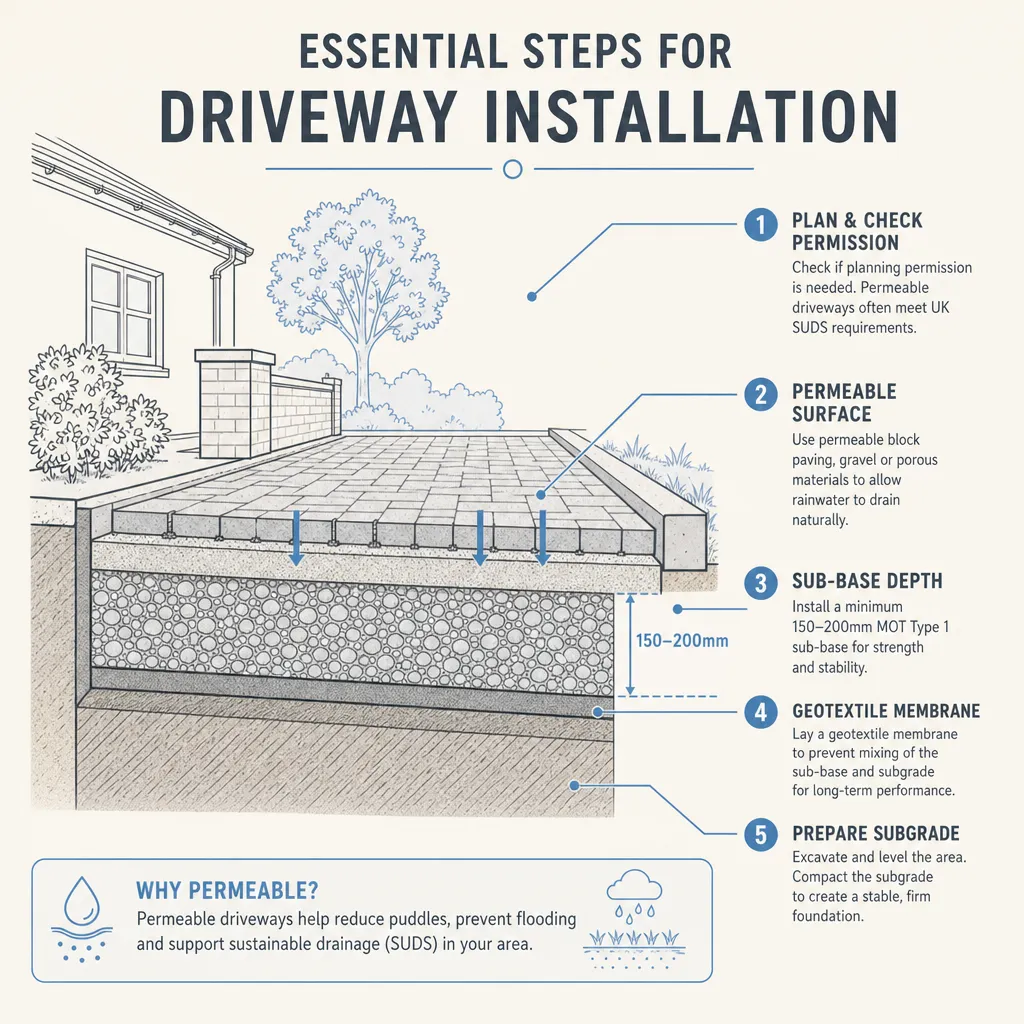
Essential Steps for Driveway Installation
Installing a driveway in England requires planning permission only when using an impermeable surface (standard tarmac, concrete, or block paving) on a front garden area over 5 m².
 Improvement & Build
Preparing Walls for Patching: Surface Preparation Best Practice
Durable wall patching starts with removing all loose material, cutting back to a clean and stable edge, cleaning the substrate, and priming with a construction-grade PVA bonding agent before applying any filler or plaster.