Transforming Your Garden: Complete Makeover Planning and Costs
By Housey · Last reviewed 7th of May 2026
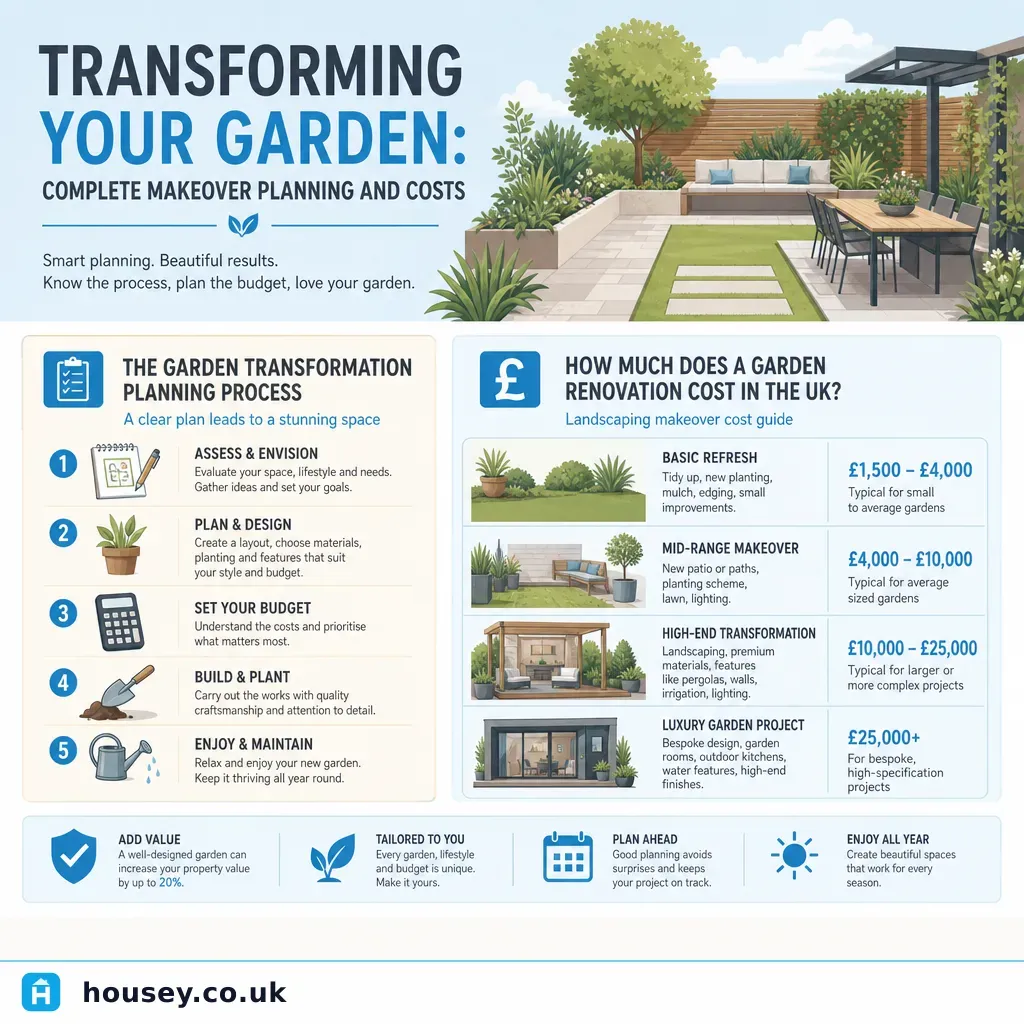
Transforming Your Garden: Complete Makeover Planning and Costs
A garden makeover is one of the most significant home improvement projects many UK homeowners undertake. It affects how you use your outdoor space daily, your property's kerb appeal, and potentially its saleability. Whether you're tackling an overgrown plot after years of neglect, adding a new terrace and planting scheme to a recently purchased home, or completely rethinking an outdated garden layout, careful planning will help you stay on budget and avoid costly surprises mid-project.
Key points
- Soft landscaping — planting, lawn, borders — typically costs £50–£150 per m²; hard landscaping such as paving, walls, and decking typically costs £80–£250+ per m² installed.
- Full garden makeover costs for a medium suburban garden (80–150m²) commonly range from £8,000 to £18,000 for patio, lawn, planting, and fencing.
- Planning permission is not usually required for garden landscaping, but fences over 1m adjoining a highway or over 2m elsewhere may need consent under the Town and Country Planning Act 1990.
- A BALI-registered or RHS-qualified garden designer typically charges £500–£3,000 for a full design, depending on garden size and complexity.
- Any significant drainage alterations, soakaways, or major excavations may require Building Regulations notification depending on the scope and proximity to the building.
What does a garden makeover involve?
A full garden makeover typically unfolds across several phases:
- Design: a garden designer or landscaper surveys the plot, discusses your brief, and produces concept plans, planting schemes, and material specifications.
- Ground clearance: removing existing planting, structures, sheds, or hard surfaces that will not be retained.
- Hard landscaping: laying new patios, paths, raised beds, walls, steps, and fencing.
- Soft landscaping: preparing soil, laying turf or establishing a seed lawn, and planting trees, shrubs, perennials, and bulbs.
- Features and finishing: irrigation, garden lighting, water features, decking, pergolas, and boundary treatments.
- Maintenance handover: establishment care instructions and an ongoing maintenance plan.
Not every project requires all phases. A simple planting and lawn refresh has a very different scope from a full hard-and-soft landscape transformation.
How much does a garden makeover cost?
Indicative UK costs, last reviewed 2026-05-07.
Project type | Typical cost range | What's usually included |
|---|---|---|
Basic tidy and refresh (50–80m²) | £2,000–£6,000 | Clearance, new planting, turf, minor edging |
Medium makeover — patio and planting (80–150m²) | £8,000–£18,000 | New patio or terrace, lawn, planting scheme, fencing |
Full transformation — design, hard, and soft (100–250m²) | £15,000–£35,000+ | Professional design, full hard landscaping, planting, features, lighting |
Large or high-specification garden | £35,000+ | Natural stone, bespoke structures, irrigation, water features |
Source: indicative ranges based on BALI industry data and Checkatrade cost guide averages. Actual quotes will vary by region, contractor, and specification.
Cost breakdown by element
Element | Typical installed cost | Key cost drivers |
|---|---|---|
Patio — natural stone | £100–£250/m² | Stone type, sub-base depth, pattern |
Patio — porcelain or concrete | £80–£150/m² | Tile quality, joint type |
Decking — treated softwood | £80–£130/m² | Deck height, balustrade, fixings |
Turf — supply and lay | £15–£30/m² | Turf grade, ground preparation |
Close-board fencing | £80–£150/m | Height, post specification, access |
Retaining wall — brick | £150–£300/m² | Height, drainage provision, engineering input |
Garden design fee | £500–£3,000 | Garden size, level of detail, designer experience |
Do you need planning permission for a garden makeover?
Most garden landscaping does not need planning permission, but there are exceptions worth checking before work begins.
Decision tree: do you need consent?
- Fences and walls: permitted under Permitted Development Rights if below 1m adjoining a highway or public footpath, or below 2m elsewhere. Restrictions may apply in conservation areas or if the property is listed — check with your local planning authority before building.
- Outbuildings (sheds, pergolas, summer houses): generally permitted if they do not exceed 50% of the total land area around the original house, are not forward of the principal elevation, and meet height limits under the Town and Country Planning (General Permitted Development) (England) Order 2015.
- Driveways: replacing a front garden with an impermeable hard surface over 5m² may require planning permission. Using permeable materials such as gravel or permeable block paving avoids this requirement.
- Listed buildings: any external works, including garden structures and walls, may require Listed Building Consent regardless of the above permitted development provisions.
- Trees with a Tree Preservation Order (TPO): work on protected trees requires prior consent from the local planning authority even within your own garden. Check the local authority's TPO register before instructing a contractor or tree surgeon.
Always confirm with your local planning authority if you are uncertain. Rules for conservation areas, article 4 directions, and individual property histories can restrict what is otherwise permitted development.
Worked UK property scenario
Scenario: James and Kate buy a 1970s semi-detached house in the East Midlands with a rear garden of approximately 100m². The garden has largely overgrown lawn, a crumbling concrete path, and an ageing timber close-board fence on one boundary.
They want: a new porcelain patio (30m²), a central lawn area, replanted borders, three raised vegetable beds, and a replacement close-board fence on one side.
Approximate budget breakdown:
Item | Estimate |
|---|---|
Garden design (BALI-registered landscaper) | £800 |
Porcelain patio — 30m² at £120/m² installed | £3,600 |
Turf — 40m² at £20/m² | £800 |
Raised vegetable beds — 3 timber beds | £600 |
Replanted borders — plants and labour | £1,200 |
Close-board fencing — 15m at £110/m | £1,650 |
Skip hire and waste removal | £400 |
Total estimate | approx. £9,050 |
This example is indicative only. Prices will vary by region, contractor, and specification. A contingency of 10–15% above the agreed contract value is prudent, particularly where drainage conditions or buried structures are unknown.
How to plan and budget a garden makeover
- Define your priorities: separate must-haves from nice-to-haves. A usable patio and lawn often delivers more day-to-day value than elaborate planting for a similar budget.
- Get a measured survey: a reputable landscaper or designer will survey the plot and produce plans before quoting. Be cautious of quotes produced without a site visit.
- Obtain at least three quotes: costs vary significantly between contractors. Confirm whether quotes include waste removal, material delivery, and VAT.
- Phase the project if needed: complete hard landscaping and structural elements first; planting can follow in a second phase, giving you time to observe light and drainage patterns across the seasons.
- Allow a contingency: 10–15% above the agreed contract value is wise, particularly if the garden involves unknown drainage conditions, buried concrete, or tree roots.
What to ask a garden landscaper before starting
- Will you produce a measured plan or design, or are you quoting from a verbal brief only?
- Is waste removal and skip hire included in your price?
- What materials are you specifying, and are there alternatives that meet the same brief at a lower cost?
- Are you a BALI or APL member, and can you provide references from recently completed projects?
- Do you hold public liability insurance (minimum £2 million)?
- Is VAT included in the quoted price?
- What is the payment schedule — a reasonable contractor typically requests a deposit of 10–25% with staged payments, not full payment upfront.
- What aftercare and plant establishment guarantee do you offer?
When to get professional help
A garden designer is worth engaging when your garden has a complex layout, significant level changes, or challenging drainage conditions, or when you are investing more than £10,000 and want a specification you can tender to multiple contractors.
For significant hard landscaping such as retaining walls, major level changes, or load-bearing structures, confirm that your landscaping contractor has the relevant experience — or engage a structural engineer for any retaining wall above 600mm in height.
For works involving drains or soakaways, check whether a drainage contractor or building control notification is required, particularly on older properties where drainage routes may not be mapped or recorded.
How Housey can help
Housey connects UK homeowners with experienced landscapers and garden designers who can assess your garden, produce proposals, and quote for the work. Request quotes from multiple local professionals and compare scope, materials, and price before committing to a contract.
Frequently asked questions
How much does a full garden makeover cost in the UK?
A medium garden makeover (80–150m²) typically costs between £8,000 and £18,000 for a combination of new patio, lawn, planting, and fencing. More complex or larger projects with high-specification materials commonly run to £25,000–£35,000 or more. Costs vary significantly by region, scope, and contractor. Always obtain at least three quotes and confirm whether VAT is included.
Do I need planning permission for landscaping my garden?
Most garden landscaping does not need planning permission. Exceptions include fences over 2m high (or 1m adjoining a highway), impermeable front driveway surfaces over 5m², some outbuildings, and any work near listed buildings or trees covered by a Tree Preservation Order. Check with your local planning authority if you are in a conservation area or are uncertain about permitted development limits.
How do I find a reputable garden landscaper?
Look for contractors who are members of the British Association of Landscape Industries (BALI) or the Association of Professional Landscapers (APL), hold public liability insurance, and can provide references from completed projects. Obtaining three quotes and asking for a measured site survey before any price is given is good practice for projects over £5,000.
Should I hire a garden designer separately from a landscaping contractor?
For larger or more complex gardens, a separate designer can produce plans to tender to multiple contractors, helping you compare like-for-like quotes and potentially saving money on the build cost. For straightforward projects, many BALI-registered landscapers offer a design-and-build service, which can be more efficient and cost-effective for smaller transformations.
How long does a garden makeover take?
A typical medium garden transformation takes two to four weeks of active work on site once materials are delivered. Larger projects involving significant hard landscaping may take six to eight weeks. Design, planning, and contractor availability often add several months to the overall timeline, so starting the process well in advance of your intended completion date is advisable.
Sources and further reading
- Permitted development rights for householders — technical guidance — Ministry of Housing, Communities and Local Government
- Tree Preservation Orders and protected trees — GOV.UK Planning Portal
- British Association of Landscape Industries — BALI
- Garden Makeover Cost Guide — Checkatrade
- Association of Professional Landscapers — APL
Useful next reads
 Improvement & Build
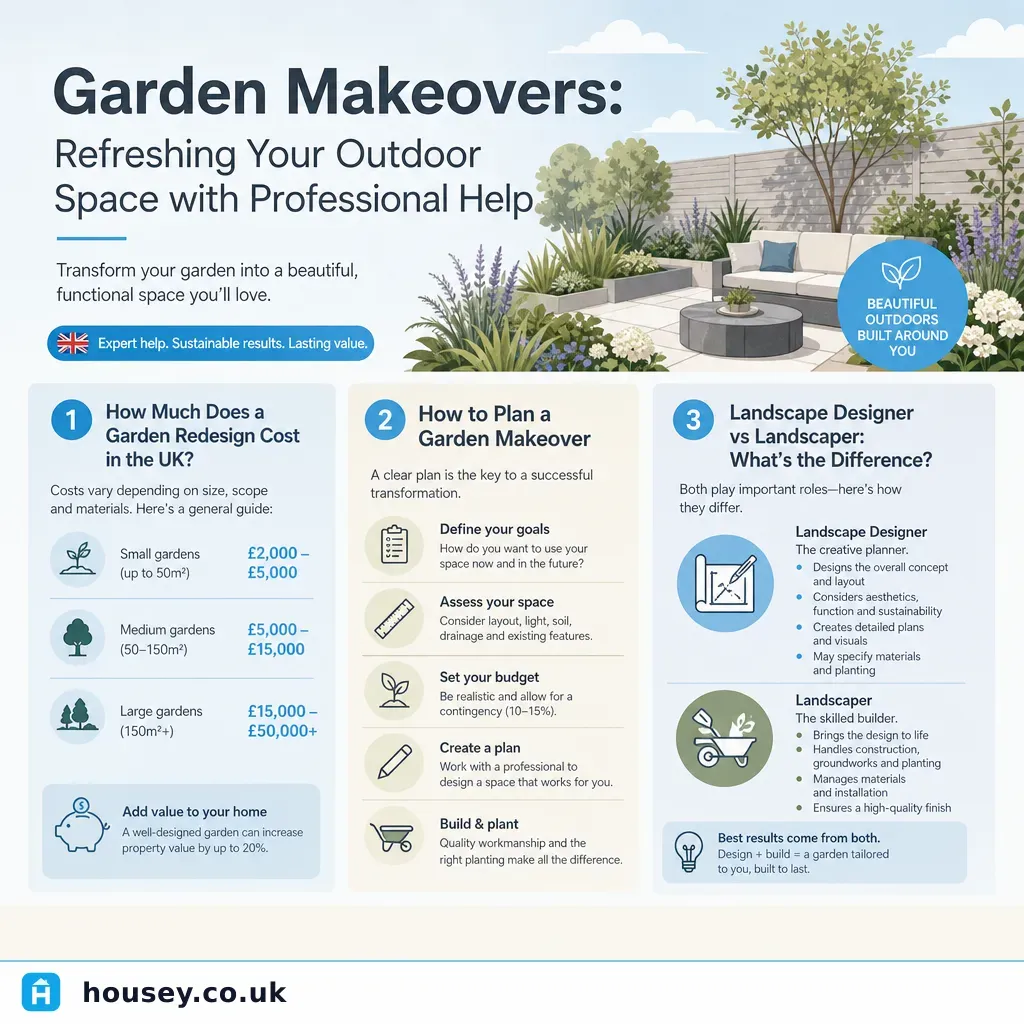
Garden Makeovers: Refreshing Your Outdoor Space with Professional Help
A professional garden makeover typically covers design consultation, site clearance, hard landscaping (patios, paths, walls), soft landscaping (planting and lawn), and finishing touches.
 Improvement & Build
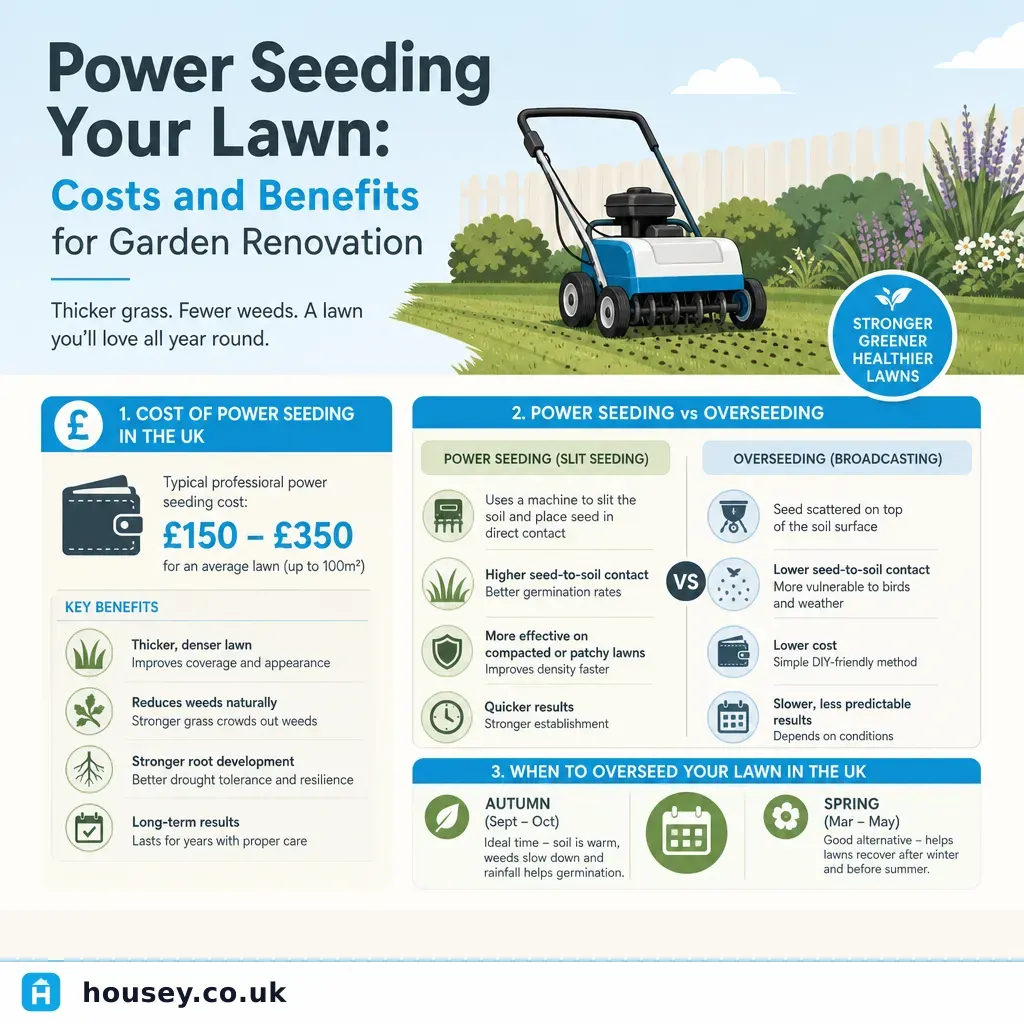
Power Seeding Your Lawn: Costs and Benefits for Garden Renovation
Power seeding uses a slit-seeding machine to cut shallow furrows into an existing lawn and deposit grass seed directly into the soil, giving far better germination rates than surface broadcasting.
 Improvement & Build
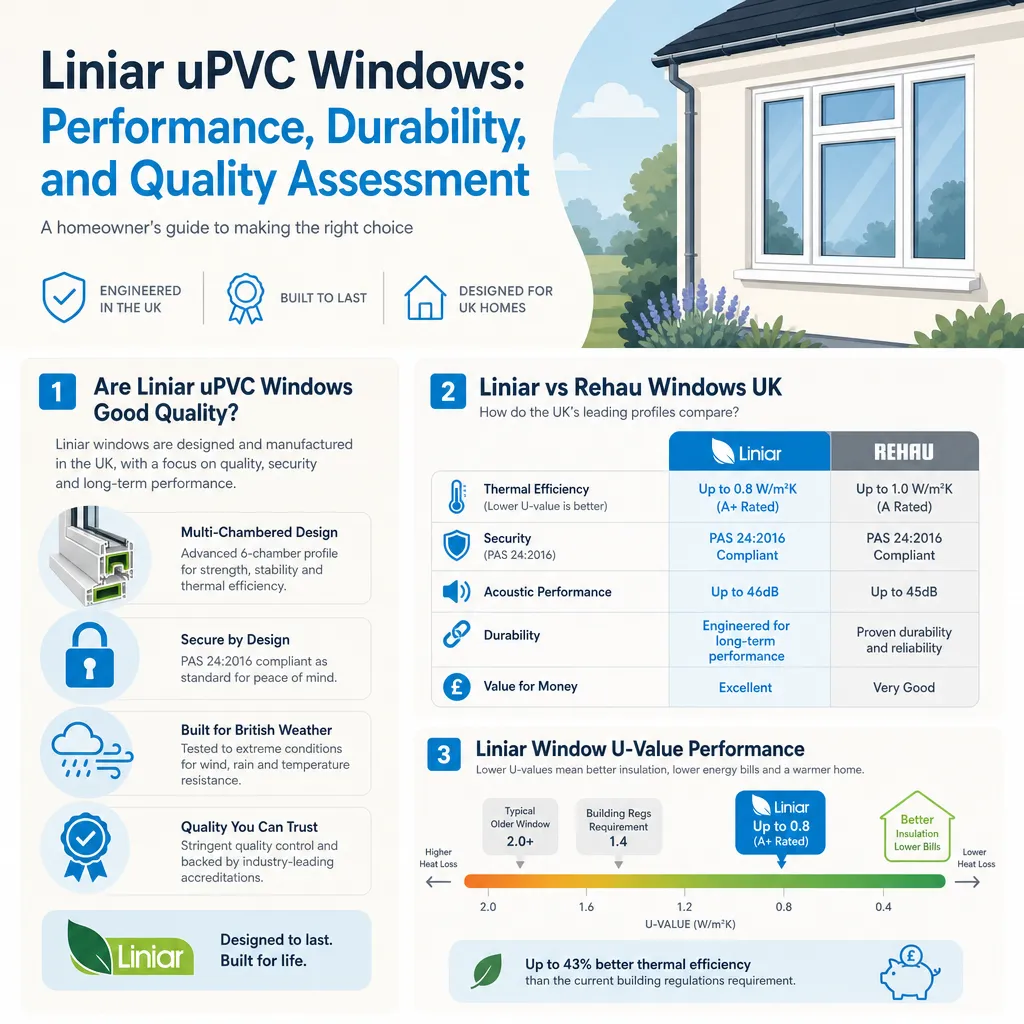
Liniar uPVC Windows: Performance, Durability, and Quality Assessment
Liniar uPVC window profiles are manufactured in the UK using multi-chambered, foamed frames.
 Improvement & Build
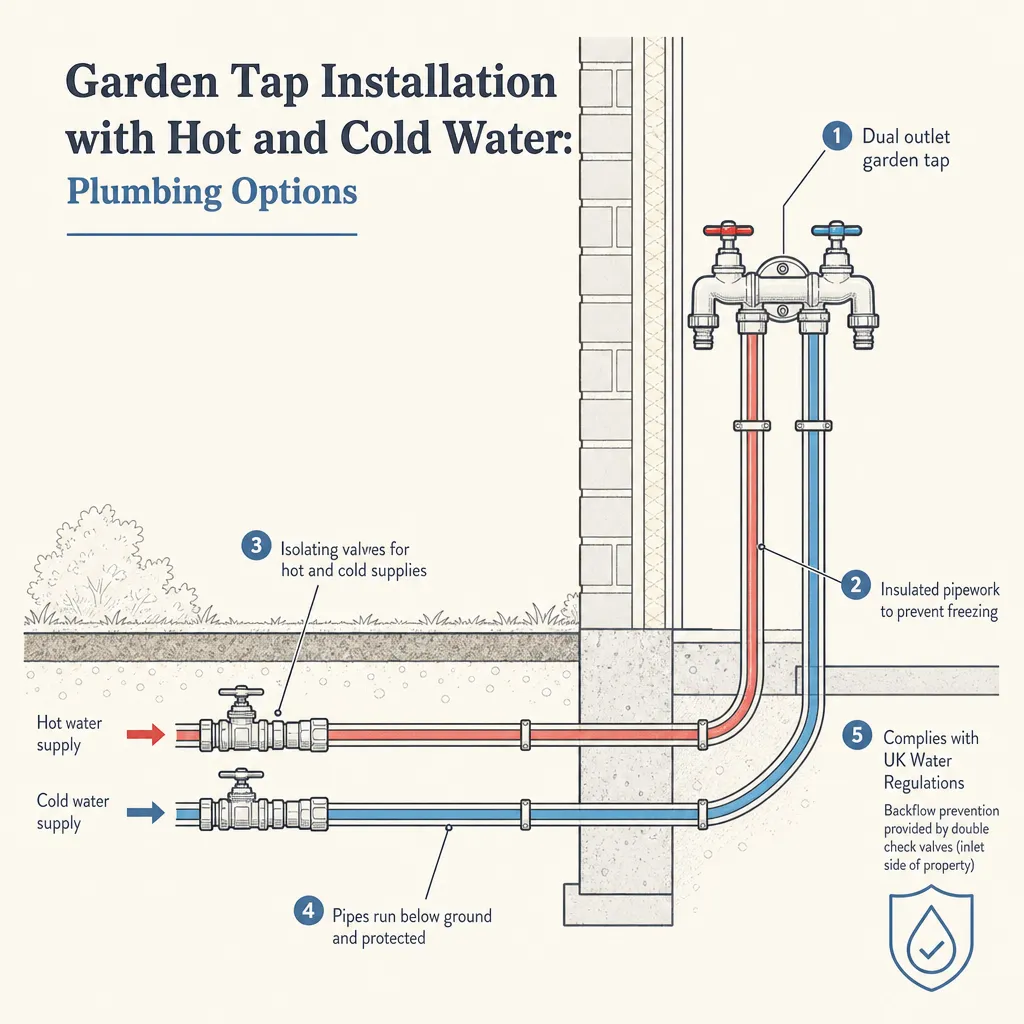
Garden Tap Installation with Hot and Cold Water: Plumbing Options
Adding a cold garden tap is a common DIY project, but routing hot water outdoors requires a plumber to connect to your domestic hot water system and comply with the Water Supply (Water Fittings) Regulations 1999.
 Improvement & Build
Sealing and Maintaining Historic Leaded Glass Windows: Preservation and Performance
Leaded glass windows are maintained using traditional linseed oil cement — not silicone or modern sealants, which prevent natural movement in the lead came.