Garden Room Extension: Investment, Design and Building Timeline
By Housey · Last reviewed 7th of May 2026
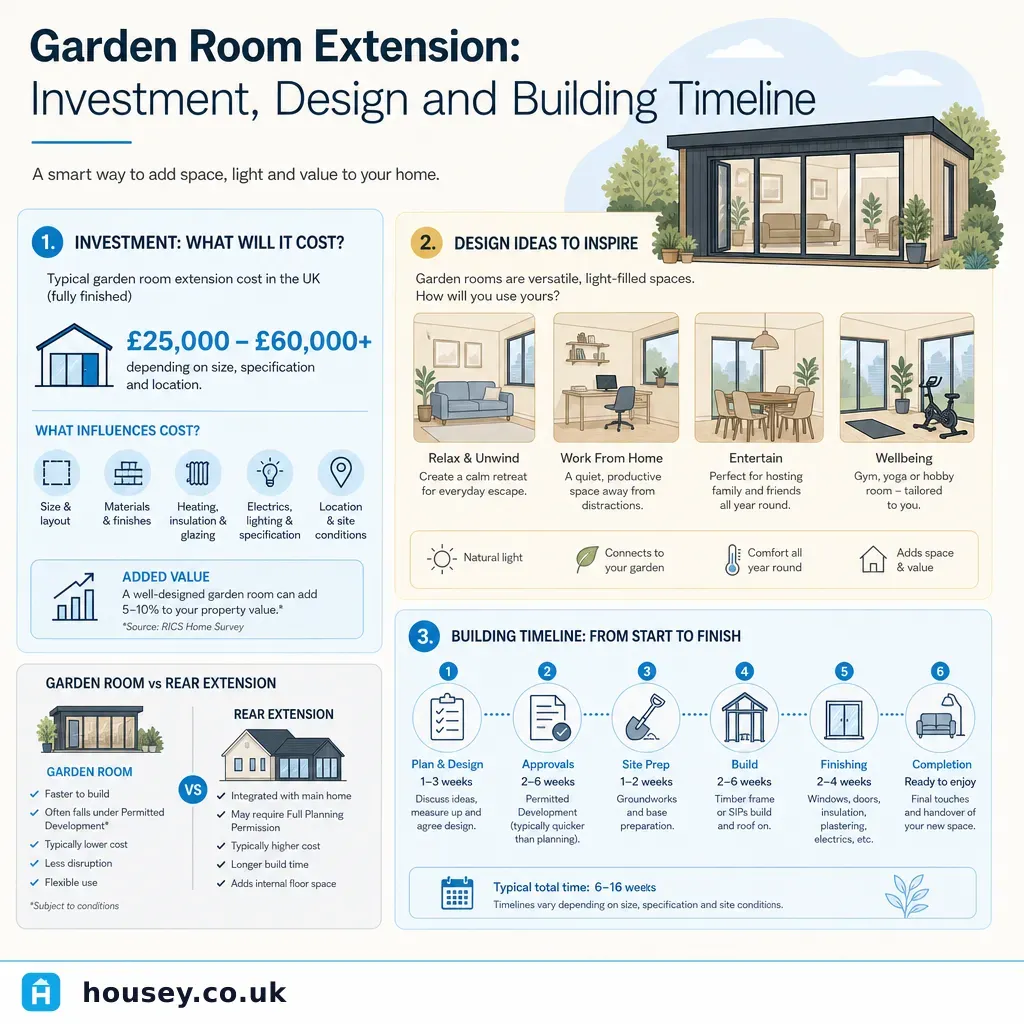
Garden Room Extension: Investment, Design and Building Timeline
For many UK homeowners, a garden room or garden extension offers the most practical route to meaningful extra space — often without planning permission and with less disruption than a full rear house extension. Translating that aspiration into a well-specified, genuinely comfortable room requires clear decisions on structure, insulation, glazing, and budget before a contractor is engaged.
Key points
- A detached garden room (Class E permitted development) and an attached rear extension (Class A permitted development) follow different planning rules with different height and projection limits
- Insulation to broadly Approved Document L standards — walls 0.18 W/m²K or better, roof 0.13 W/m²K or better — is the threshold between a usable year-round space and a structure that is uncomfortably cold in winter
- Structural frame options — timber frame, SIP panels, steel portal frame, or masonry — carry different cost, speed, and thermal performance profiles
- A quality garden room may add 5–15% to a property's value depending on specification, size, and local buyer demand, though this is not guaranteed
- Building Regulations Part P (electrical), Part H (drainage), and Part L (energy efficiency) may all apply depending on scope and intended use
Detached room or attached extension: key planning differences
Feature | Detached garden room (Class E PD) | Attached rear extension (Class A PD) |
|---|---|---|
Planning framework | Schedule 2, Part 1, Class E, GPDO 2015 | Schedule 2, Part 1, Class A, GPDO 2015 |
Height within 2m of boundary | 2.5m maximum to ridge | Separate Class A restrictions apply |
Maximum rear projection | Not applicable | 3m (semi-detached or terraced); 4m (detached) |
Garden coverage | Combined outbuildings must not exceed 50% of original curtilage | Separate volume and projection limits apply |
Building Regulations | Applies above certain size thresholds and for electrical or drainage work | Generally applies for habitable attached extensions |
Use limitation | Must be incidental to the dwelling; not sleeping or self-contained | Can extend habitable living space |
These rules apply in England. Scotland, Wales, and Northern Ireland each have separate planning frameworks.
Design decisions that determine build quality
Structural frame
Frame type | Advantages | Disadvantages | Common use |
|---|---|---|---|
Timber frame | Cost-effective, fast, sustainable materials | Careful moisture management required | Most standard garden rooms |
SIP (Structural Insulated Panel) | Excellent airtightness, fast on-site assembly | Higher panel cost, precision manufacturing needed | High-performance offices and studios |
Steel portal frame | Long spans and slim profiles possible | More expensive, cold bridge risk if not thermally broken | Large glazed premium structures |
Masonry (brick or blockwork) | Durable, matches existing house aesthetically | Slower to build, heavier, more groundwork required | Attached extensions where aesthetic match matters |
Glazing and orientation
Where your garden faces has a significant effect on how glazing should be specified.
- South-facing: large unshaded glazing causes overheating from spring onwards. Design in roof overhangs, external louvres, or solar-control glass.
- North-facing: warmth depends on insulation rather than solar gain. Prioritise triple glazing or high-specification argon-filled double glazing with an overall unit U-value of 1.4 W/m²K or lower.
- East or west-facing: low-angle morning or evening sun creates glare — fritted glass or external blinds are worth specifying at the design stage.
Insulation specification
The difference between a usable year-round room and a cold seasonal cabin is almost entirely determined by insulation. Targets broadly aligned with Approved Document L:
- Walls: 0.18 W/m²K or better
- Roof: 0.13 W/m²K or better
- Floor: 0.22 W/m²K or better
- Glazing (overall unit): 1.4 W/m²K or lower
A standard 50–75mm mineral wool cabin will not reach these targets. Request written U-value figures from any supplier before committing to a specification.
The investment case: a worked example
A homeowner with a four-bedroom 1970s detached property in the East Midlands has a 150m² rear garden. They commission a 25m² SIP-panel garden office with bi-fold doors, underfloor heating, and mains electrics. Total cost: approximately £32,000–£40,000 (indicative, last reviewed 2026-05-07).
A local estate agent suggests the property could achieve £18,000–£28,000 more at sale than an equivalent home without the garden room, based on demand from home-working buyers — though actual uplift varies significantly by location and buyer profile. The same budget applied to a brick-built rear extension would typically yield 10–14m² of integrated living space: less floor area, but architecturally seamless with the main house.
Return on investment is strongest when the specification is high (airtight, properly insulated), the use is versatile (office, gym, or studio rather than single-purpose), and the local buyer market values the space type.
Cost guide
Specification | Typical size | Indicative cost range |
|---|---|---|
Mid-range insulated garden room with electrics and heating | 15–25m² | £20,000–£38,000 |
High-spec SIP or bespoke timber with bi-fold doors | 25–40m² | £38,000–£65,000 |
Premium architectural garden extension | 35–55m² | £60,000–£100,000+ |
Attached glazed rear extension (masonry or steel frame) | 15–30m² | £40,000–£80,000 |
Indicative UK costs, last reviewed 2026-05-07. Costs vary by region, specification, and groundwork conditions. Always obtain at least three itemised quotes.
Building timeline
Phase | Typical duration |
|---|---|
Design brief and contractor selection | 3–6 weeks |
Groundworks and base | 1–2 weeks |
Modular or SIP structure on site | 3–7 days |
Bespoke or masonry structure | 4–8 weeks |
Fit-out, electrics, heating, and glazing | 2–4 weeks |
Snagging and handover | 1 week |
A standard detached garden room typically takes 6–14 weeks from brief to completion. A bespoke attached extension usually takes 14–22 weeks.
What to ask before accepting a quote
- What structural frame type and insulation specification is included, and what are the confirmed U-values for walls, roof, and floor?
- Is the price fixed, or subject to variation once groundwork conditions are assessed on site?
- Who carries out the electrical installation, and are they registered with NICEIC or NAPIT for Part P notifiable work?
- Are any Building Regulations applications included in the quoted price?
- What warranty is provided on the structure, and who underwrites it?
- Is VAT included in the quoted figure?
- What happens if ground conditions require additional work beyond the quoted scope?
- What site access is required, and how will boundaries and garden surfaces be protected during construction?
When to get professional help
Most garden room projects can be managed directly with an experienced contractor. Consider additional professional input when the project involves an attached extension requiring structural calculations or Party Wall Act notices, when ground conditions are uncertain (clay-heavy or sloped sites, proximity to large trees), when a WC or drainage connection is planned, or when the budget exceeds £40,000 and a formal construction contract with stage payments is appropriate.
A building control consultant can check your design against the Approved Documents and confirm which approvals are needed before the contractor begins. An extension builder experienced in garden structures can advise on structural options and groundwork requirements during the design stage, before costs are finalised.
How Housey can help
Housey connects UK homeowners with experienced extension builders for garden room and extension projects. Describe your project once and receive quotes from qualified local contractors, making it straightforward to compare specifications, costs, and timelines before committing to any single supplier.
Frequently asked questions
How long does it take to build a garden room?
A modular or SIP-panel garden room can be installed on site in 3–7 working days once the base is prepared. Including groundworks, fit-out, and electrics, the total project typically takes 6–14 weeks. A bespoke attached extension usually requires 14–22 weeks depending on size and structural complexity.
Do I need an architect for a garden room?
Not usually. Modular and SIP suppliers typically include design as part of their service. For bespoke builds, complex structures, or attached extensions requiring planning drawings or structural calculations, an architectural technologist or architect can add value and reduce risk.
Can a garden room be built in winter in the UK?
Most garden rooms can be built year-round. SIP and timber-frame structures are largely weather-independent. Masonry attached extensions may be slowed by frost and wet ground conditions. Discuss seasonal risk with your contractor before agreeing a programme start date.
Will building a garden room affect my home insurance?
Notify your insurer before construction begins and update your policy once the structure is complete. Most policies require outbuildings to be declared separately, and high-value contents such as computer equipment or gym machinery should be specifically listed to ensure they are covered.
Is planning permission required for an attached garden room extension?
An attached rear extension follows Class A (not Class E) permitted development rules. In England, the maximum rear projection is 3m for semi-detached and terraced homes and 4m for detached homes, single-storey with a maximum height of 4m. Check with your local planning authority if you are near these limits or if your property is listed or in a conservation area.
Sources and further reading
- Town and Country Planning (General Permitted Development) (England) Order 2015, Schedule 2, Part 1 — legislation.gov.uk
- Approved Document L: Conservation of Fuel and Power (2021 edition) — GOV.UK
- Planning Portal: Extensions — Planning Portal
- Building Regulations 2010, Schedule 2: Exempt buildings and work — legislation.gov.uk
Useful next reads
 Improvement & Build
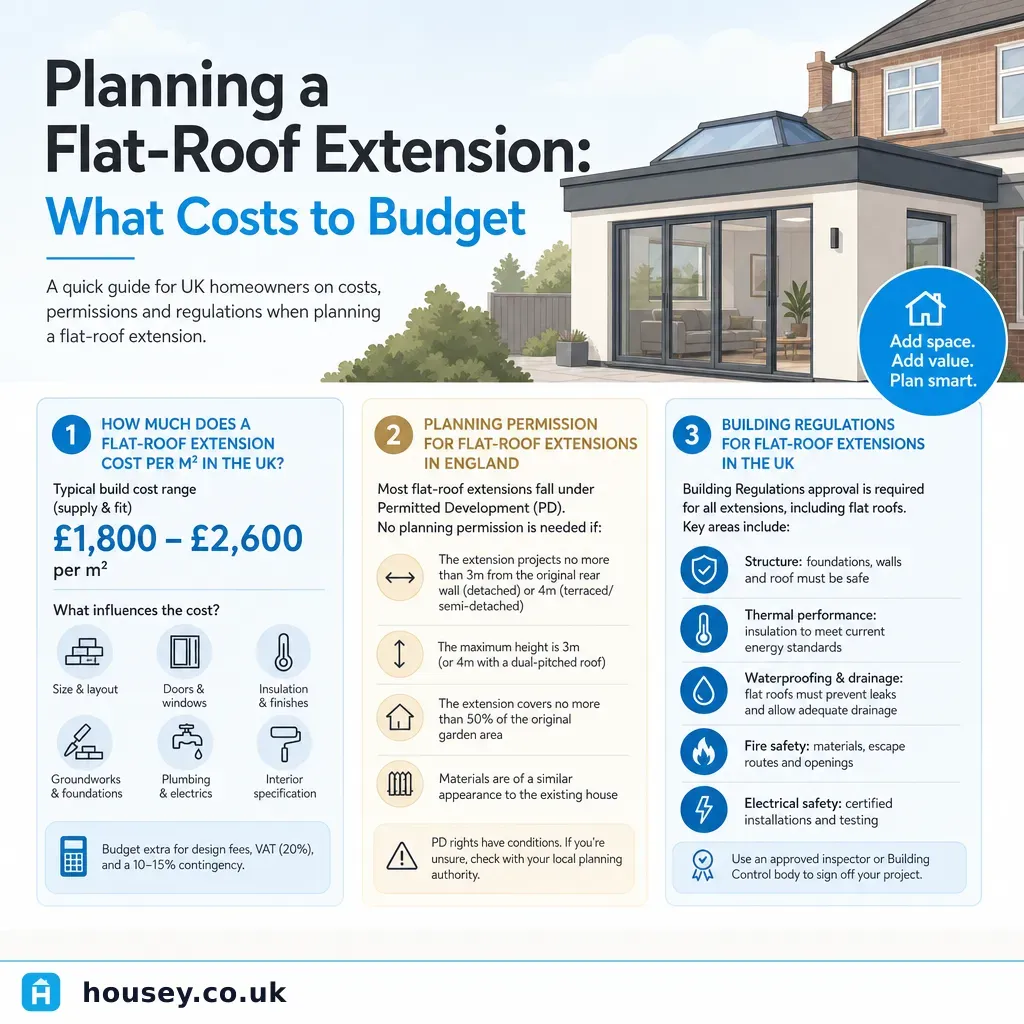
Planning a Flat-Roof Extension: What Costs to Budget
A flat-roof single-storey extension typically costs £1,500–£3,000 per m² in the UK, depending on size, specification, location, and roof membrane choice.
 Improvement & Build
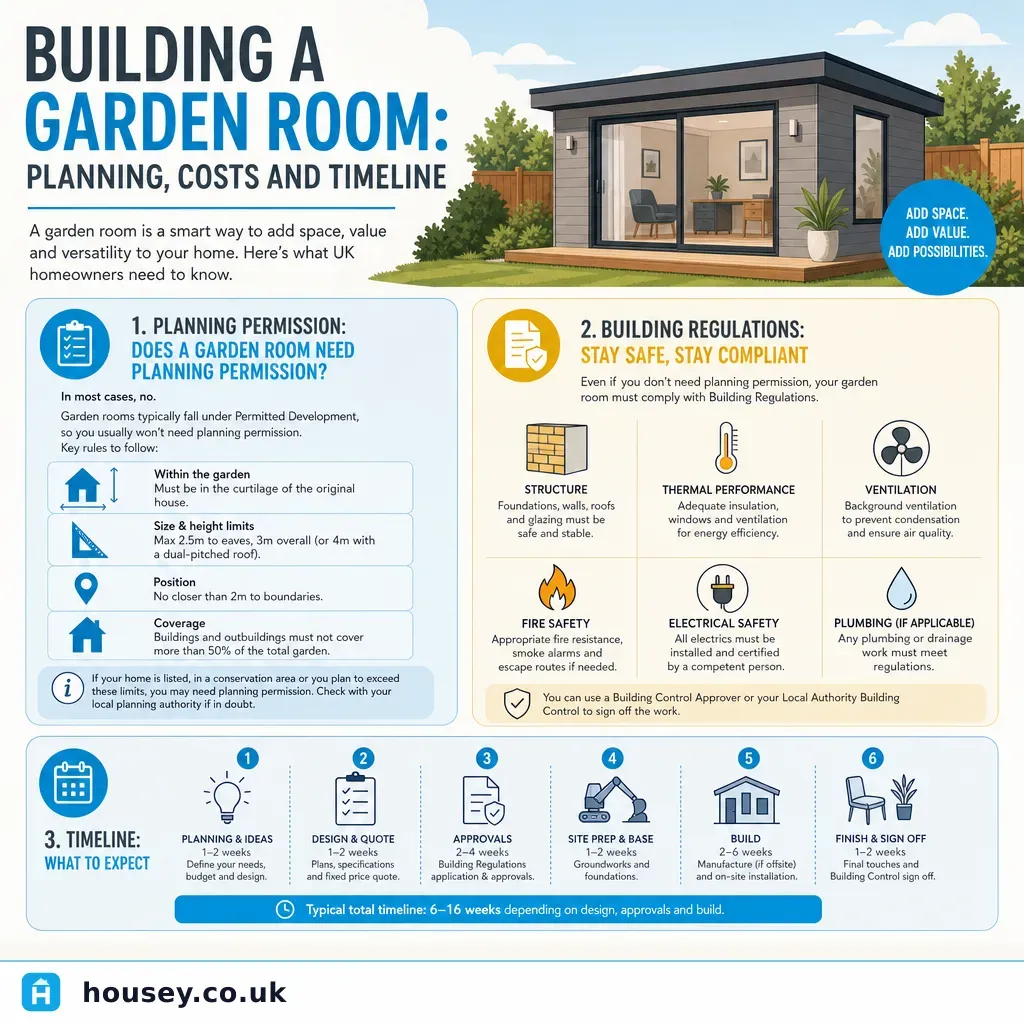
Building a Garden Room: Planning, Costs and Timeline
Most garden rooms in England fall under permitted development and don't need planning permission, provided the structure meets height, coverage, and boundary conditions.
 Improvement & Build
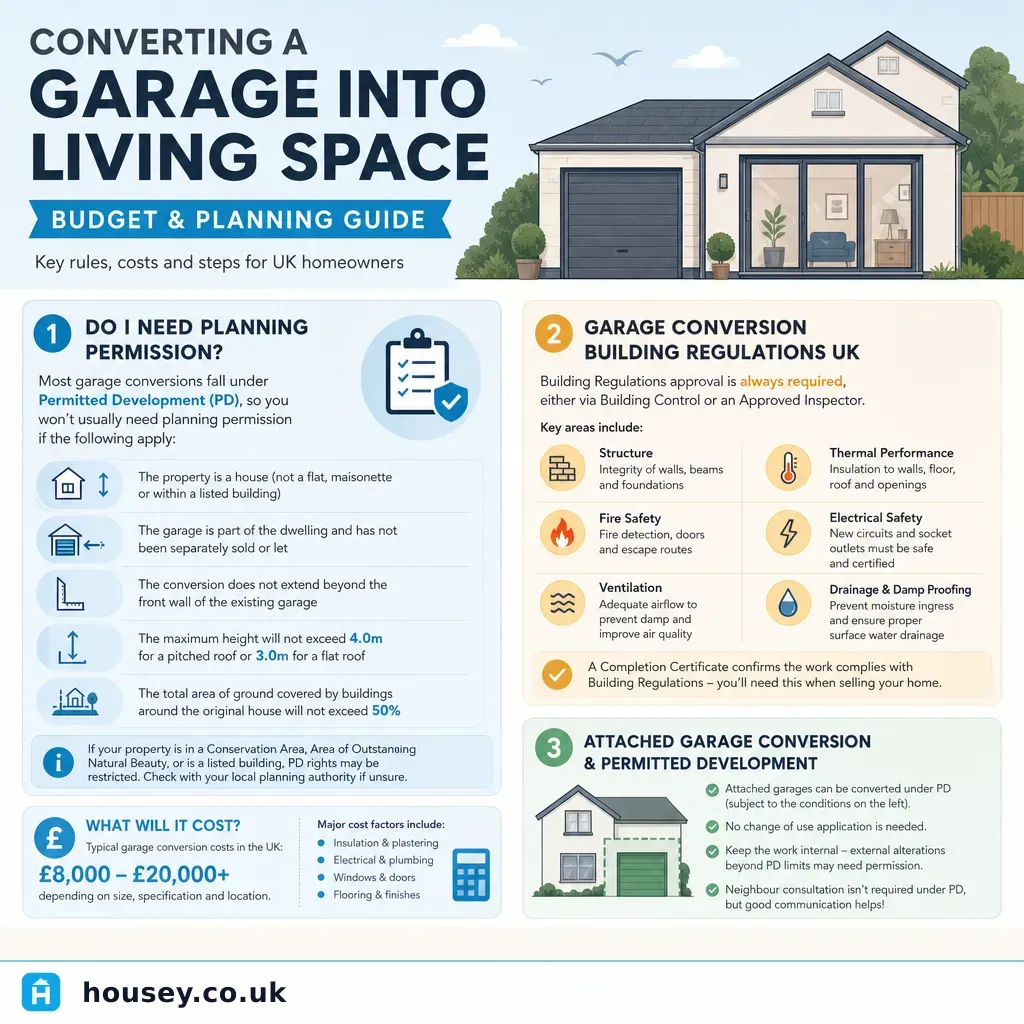
Converting a Garage into Living Space: Budget and Planning Guide
A single-garage conversion typically costs £8,000–£20,000 in the UK.
 Improvement & Build
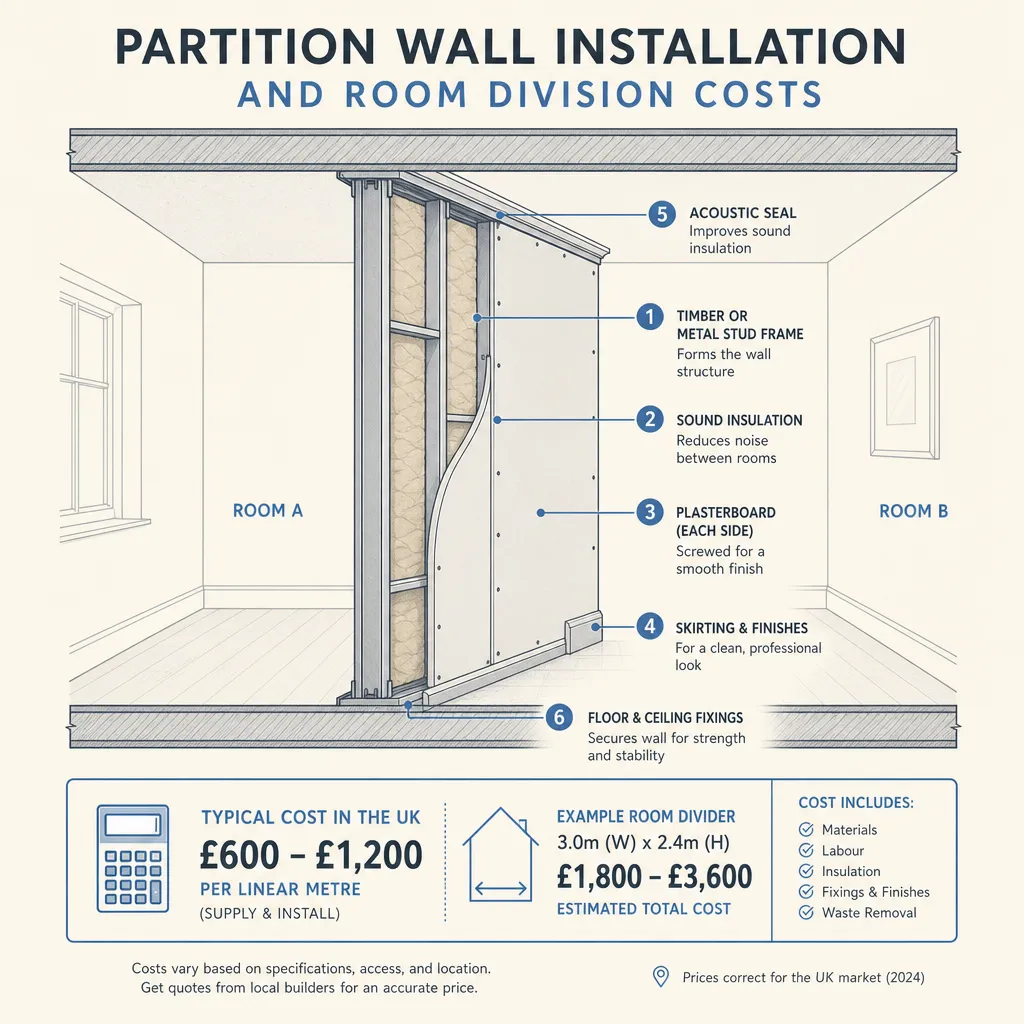
Partition Wall Installation and Room Division Costs
Installing a stud partition wall in the UK typically costs £800–£2,500 for a standard room divider, or roughly £30–£80 per m² installed.
 Improvement & Build
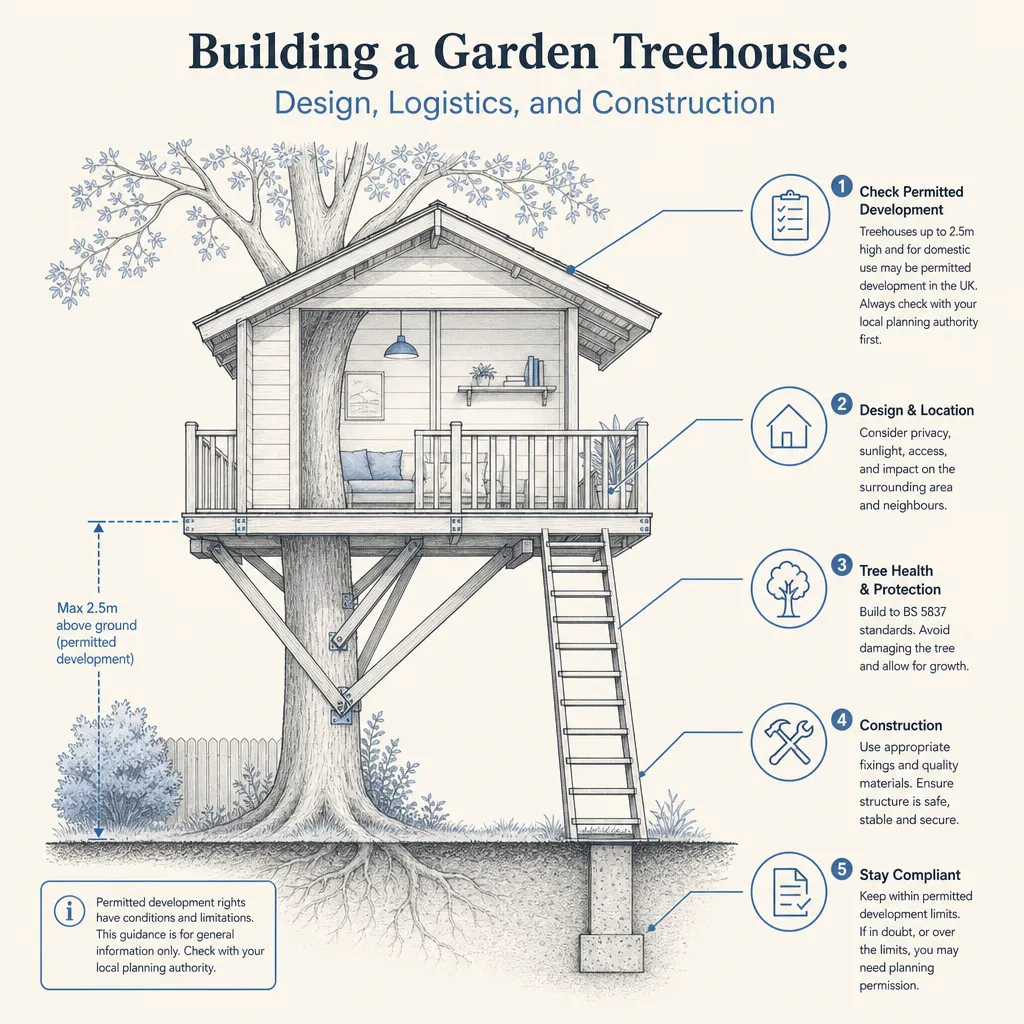
Building a Garden Treehouse: Design, Logistics, and Construction
A garden treehouse in the UK usually falls under permitted development as an outbuilding, provided it stays within permitted height and footprint limits.