Solarium versus sunroom: choosing the right structure for your home
By Housey · Last reviewed 12th of May 2026
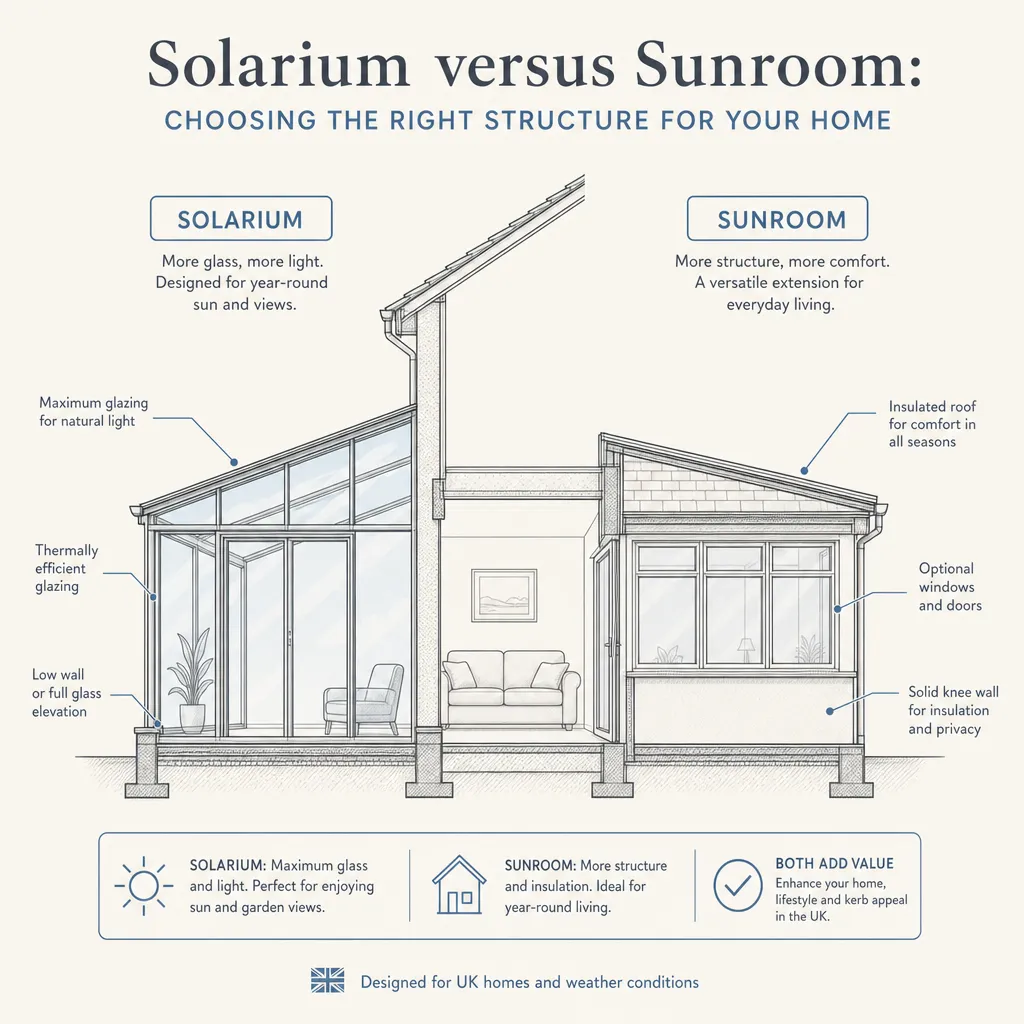
Solarium versus sunroom: choosing the right structure for your home
Choosing between a solarium and a sunroom is one of the first decisions a homeowner faces when planning a glazed extension — yet the two terms are frequently used interchangeably in sales literature and even by builders quoting on the work. In practice, they describe structures with meaningfully different thermal performance, regulatory treatment, build cost, and year-round usability. The distinction matters because it affects planning and building control requirements, whether the space qualifies as habitable floor area, and how future buyers, surveyors, and lenders will view the addition.
Key points
- In UK usage, a solarium typically describes a predominantly or wholly glazed structure with a glass or structural roof; a sunroom typically has solid insulated walls to window-sill level and is designed to meet habitable room standards under Building Regulations.
- Neither a solarium nor a standard sunroom automatically qualifies for the Building Regulations conservatory exemption, which requires at least 75% translucent roof area, thermal separation from the dwelling, and an independent heating system.
- A sunroom built to full Building Regulations Part L standards can be designated a habitable room and counted as floor area for mortgage and valuation purposes; most solariums cannot without significant glazing upgrades.
- Planning permission depends on footprint, height, and position relative to the boundary — not on whether the structure is called a solarium or a sunroom.
- A standard solarium with double-glazed roof panels may be 5–10°C cooler than the main dwelling on cold winter nights, making it unsuitable for year-round habitable use without supplementary heating and high-specification glazing.
Definitions and UK usage
The terms solarium, sunroom, conservatory, and garden room have no precise legal definition in UK planning or building regulations. In practice they are used as follows:
Term | Common UK meaning | Typical construction | Building Regs treatment |
|---|---|---|---|
Conservatory | Largely glazed; often uPVC-framed; lower cost | uPVC or aluminium frame, polycarbonate or glass roof | May be exempt under specific conditions |
Solarium | Predominantly glazed, structural glass roof; maximum light and solar connection | Aluminium or steel frame, structural glass roof | Rarely exempt; usually requires full approval |
Sunroom | Glazed room with solid insulated walls to sill height; designed for year-round use | Blockwork or timber frame walls, insulated roof with lantern or rooflights | Requires full approval; can achieve habitable room standard |
Insulated garden room | Fully insulated, sometimes freestanding | Timber or SIPS frame, solid insulated roof | Depends on whether attached or freestanding |
Thermal performance and year-round usability
The most important practical difference between a solarium and a sunroom is thermal performance — this determines how comfortable and usable the space is across the UK's climate.
Solarium thermal characteristics
A high glass-to-wall ratio and glass roof mean high solar heat gain in summer and high heat loss in winter. Without solar control glazing and effective external shading, south-facing solariums frequently overheat from late spring through early autumn. In winter, a solarium with standard double glazing may be substantially cooler than the main dwelling, particularly at night. It is not typically counted as habitable space for mortgage, insurance, or RICS valuation purposes unless upgraded to meet Part L thermal requirements.
Sunroom thermal characteristics
Solid insulated walls to sill level — typically blockwork with cavity insulation or a timber frame built to current Part L U-value standards — provide substantially better thermal retention. Glazed upper sections and a roof lantern or rooflights allow good daylight without the full heat loss of an all-glass roof. A correctly specified sunroom can meet Building Regulations Part L requirements for habitable rooms and will be counted as floor area for valuation purposes when a building control completion certificate has been issued.
Comparing solarium and sunroom
Aspect | Solarium | Sunroom |
|---|---|---|
Primary function | Light, solar connection, seasonal use | Year-round habitable room |
Roof construction | Predominantly or wholly glass | Insulated solid roof with glazed lantern or rooflights |
Wall construction | Predominantly glazed | Solid insulated walls to sill; glazed upper sections |
Winter thermal comfort | Cooler; supplementary heating usually required | Similar to main house when correctly specified |
Summer overheating risk | Higher — glazed roof requires solar control measures | Lower — solid roof reduces solar gain significantly |
Building Regs exemption | Rarely qualifies | Does not qualify; built to full habitable standard |
Habitable room status | Rarely achievable without major upgrade | Yes, with building control completion certificate |
Impact on valuation | Amenity value; not counted as habitable floor area | Counted as additional floor area if compliant |
Typical indicative cost | £25,000–£80,000+ | £30,000–£70,000+ |
Indicative UK costs, last reviewed 2026-05-12.
Which structure should you choose?
Decision guide
- Choose a solarium if your primary goal is a dramatically light-flooded space for spring, summer, and autumn use; design aesthetics and visual connection to the garden are the priority; and you accept that the space will be cooler and less energy-efficient in winter.
- Choose a sunroom if you want a year-round habitable room used as a dining room, study, or playroom; you want the space counted as formal floor area at resale; or you plan to extend the central heating system into the space.
- Consider an insulated garden room if you want maximum year-round thermal performance and the footprint can be freestanding within permitted development limits for outbuildings.
- Ask a qualified architect or design-and-build firm if the site is constrained, the property is listed or in a conservation area, or the project involves structural alterations to the existing dwelling.
What not to assume
A common misunderstanding is that a high-specification solarium — with quality double-glazing and a good SHGC rating — will automatically qualify as a habitable room. Building Regulations habitable room compliance requires the whole structure to meet Part L (thermal performance), Part F (ventilation), Part M (access), and other requirements. Glazing specification alone is not sufficient. Always confirm the regulatory status of the specific structure proposed with your local building control officer before committing to a design or signing a contract.
Important limitations
This article provides general guidance only. Planning and building control requirements vary by property, location, planning history, and local authority interpretation. The terms solarium and sunroom are not legally defined and are used inconsistently across the industry — always confirm the regulatory status of the specific structure proposed with a qualified professional. Do not rely on a builder's description of a structure type as confirmation of its planning or Building Regulations status.
When this becomes urgent
Seek immediate professional advice if:
- A contractor or salesperson is claiming a fully glazed structural extension with a glass roof does not need Building Regulations approval.
- Work has already begun without building control approval — a regularisation application should be made without delay, as unauthorised structural work is a serious problem at conveyancing.
- You are at conveyancing stage and a solicitor or surveyor has raised questions about an existing glazed extension.
- You are experiencing significant condensation, structural cracking, or heat loss issues in an existing glazed addition.
What to ask a qualified professional
Before appointing a builder or designer for either structure:
- Will this specific structure require planning permission on this property, and can you confirm that in writing?
- What Building Regulations approvals are required, and will you submit a Full Plans application?
- Will this structure qualify as a habitable room for valuation and mortgage purposes once complete?
- What glazing specification and roof construction will meet Part L requirements and avoid overheating?
- Who will manage the building control process, and who provides the completion certificate?
- Will the central heating system need to be extended, and what are the implications for the existing boiler's output capacity?
When to get professional help
Appoint a qualified architect or designer at the concept stage, before approaching builders for prices. Red flags that mean you need specialist input immediately:
- The property is listed or in a conservation area
- The proposed footprint abuts or is very close to a boundary
- The existing rear wall shows any signs of movement, past repairs, or defects
- A contractor has advised that no planning or building control approvals are needed for a glazed extension
How Housey can help
Housey connects you with vetted extension builders experienced in both solarium and sunroom construction across the UK. Providing clear details about your intended year-round use, budget, and planning history at the enquiry stage helps builders quote on the right structure type from the outset.
Frequently asked questions
Is a solarium the same as a conservatory in the UK?
They are related but not identical. A traditional conservatory is often uPVC-framed with polycarbonate or standard double-glazed roof panels and is generally lower cost; a solarium typically uses aluminium or steel structural framing with an architectural glass roof and is usually more costly and design-led. Regulatory treatment depends on the structure's actual characteristics, not its name.
Can a solarium be used year-round in the UK?
With the right specification — low U-value solar control glass, underfloor heating, external shading, and adequate ventilation — a solarium can be comfortable for most of the year. However, it will typically be cooler on cold winter nights than an insulated sunroom. Year-round habitable comfort is more reliably achieved with a sunroom built to full Part L standards.
Does a sunroom add more value than a solarium?
Generally yes, provided a building control completion certificate has been issued. A sunroom creates additional habitable floor area recognised in RICS valuations; a solarium adds amenity value but is typically treated as a non-habitable glazed space by surveyors and lenders unless it meets thermal performance standards.
Do I need planning permission for both structures?
Planning permission depends on footprint, height, and position relative to the boundary — not on whether the structure is called a solarium or sunroom. Both are subject to the same permitted development rights for householder extensions in England. Always check with your local planning authority before starting work.
Sources and further reading
- Planning Portal — Extensions and permitted development — PDR limits for householder extensions in England
- GOV.UK — Approved Document L: Conservation of Fuel and Power — thermal performance requirements for extensions
- GOV.UK — Building Regulations conservatory exemptions — when glazed structures may be exempt from Building Regulations
- RICS — Home surveys and valuations — how extensions affect RICS valuations
- GOV.UK — Listed buildings and alterations — listed building consent requirements
Useful next reads
 Improvement & Build
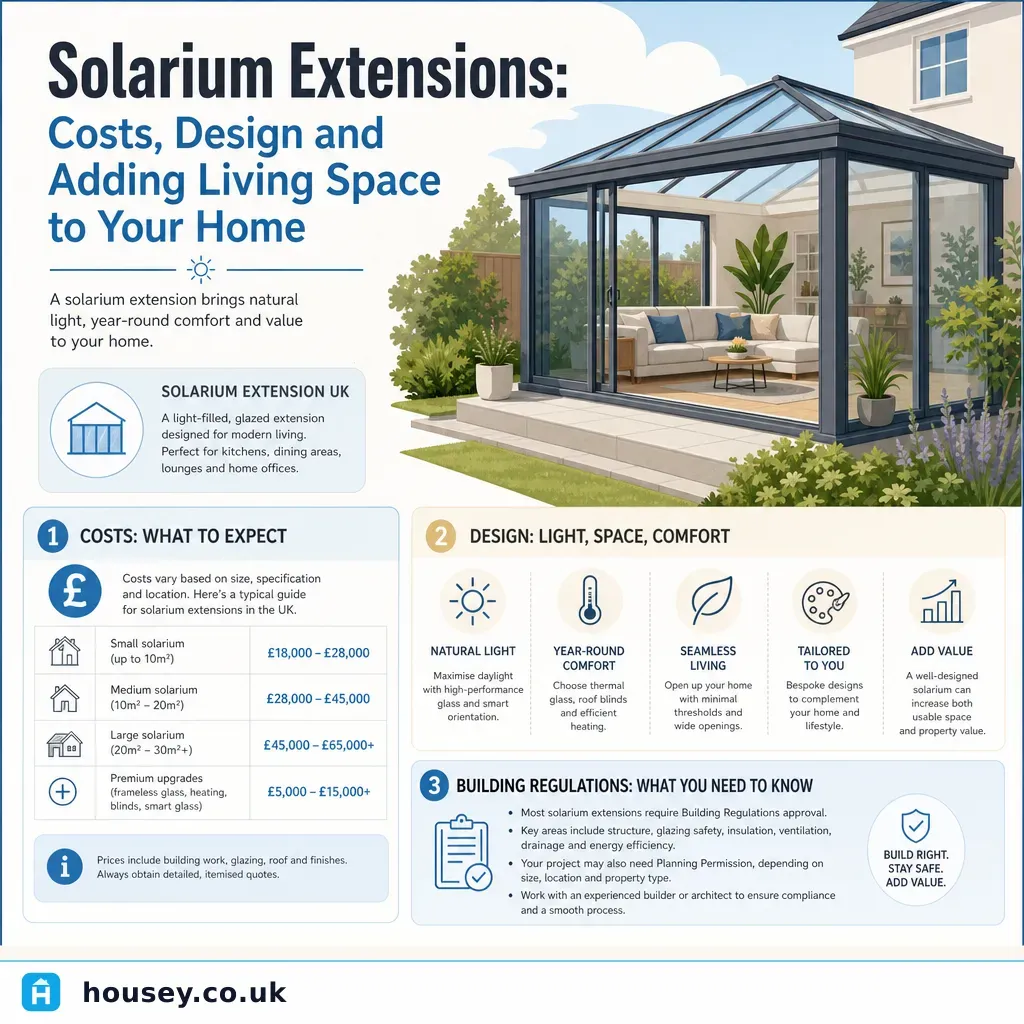
Solarium extensions: costs, design and adding living space to your home
A solarium extension is a predominantly glazed room addition with a structural glass roof, typically costing £28,000–£130,000 in the UK depending on size and specification.
 Improvement & Build
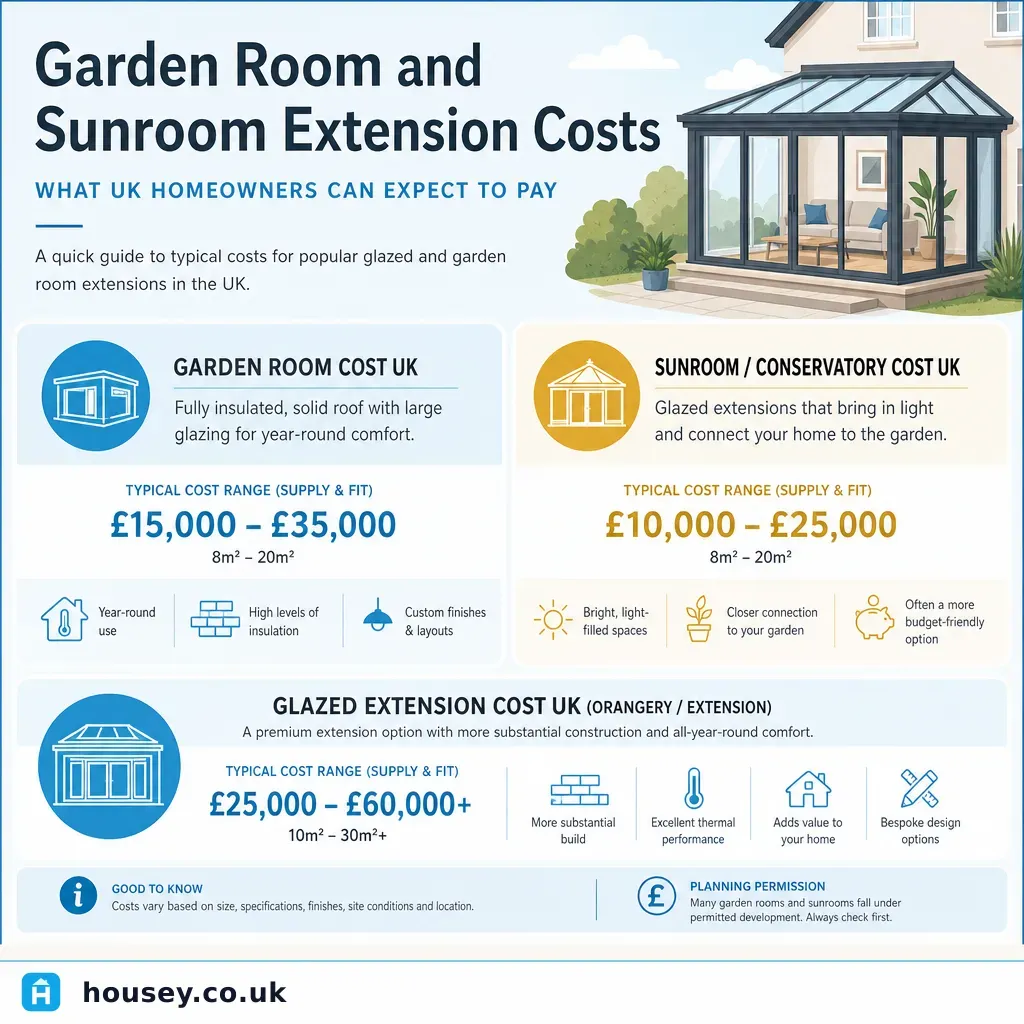
Garden Room and Sunroom Extension Costs
Garden rooms and sunroom extensions cost roughly £10,000–£80,000 installed in the UK depending on type, size, and glazing specification.
 Improvement & Build
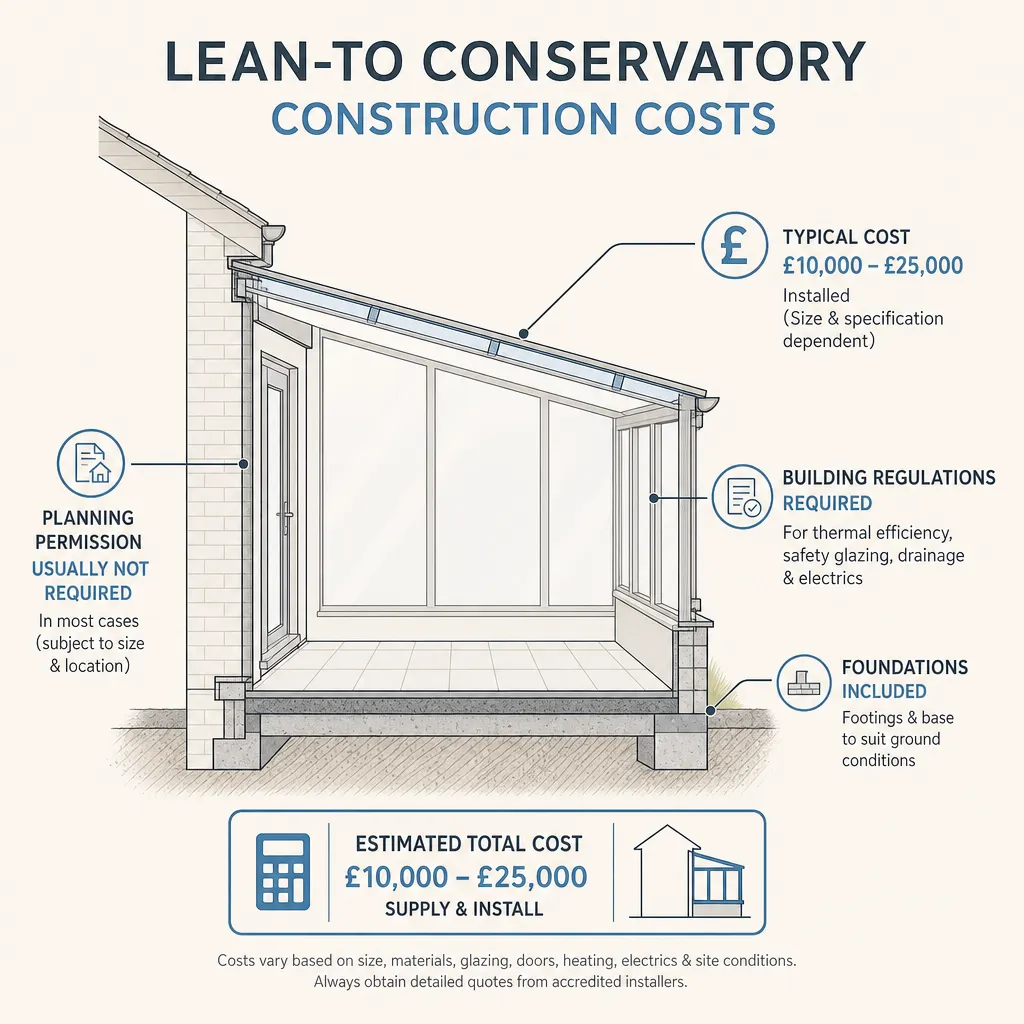
Lean-to Conservatory Construction Costs
A lean-to conservatory typically costs £8,000–£25,000 in the UK, depending on size, glazing specification, base type, and roof material.
 Improvement & Build
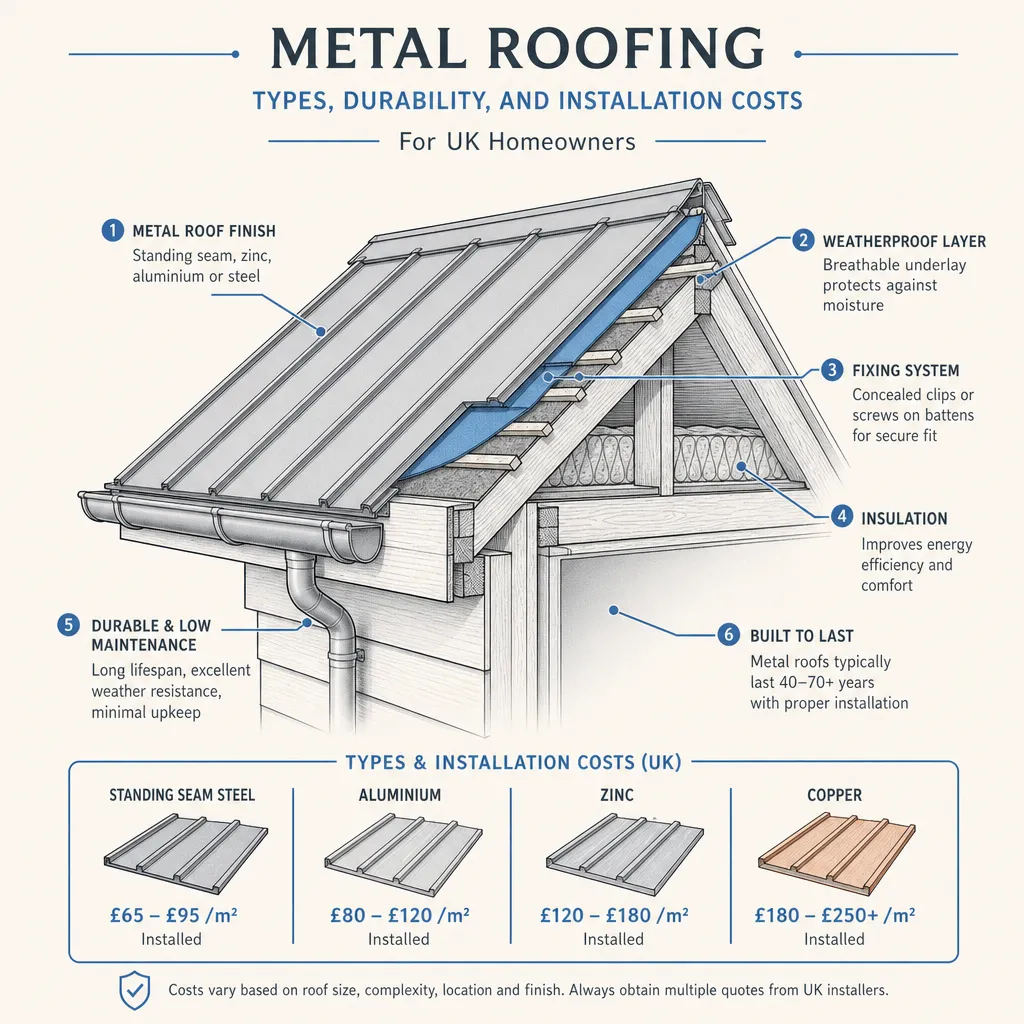
Metal Roofing: Types, Durability, and Installation Costs
Metal roofing in the UK includes standing seam, corrugated sheet, and metal tile systems in steel, aluminium, zinc, or copper.
 Improvement & Build
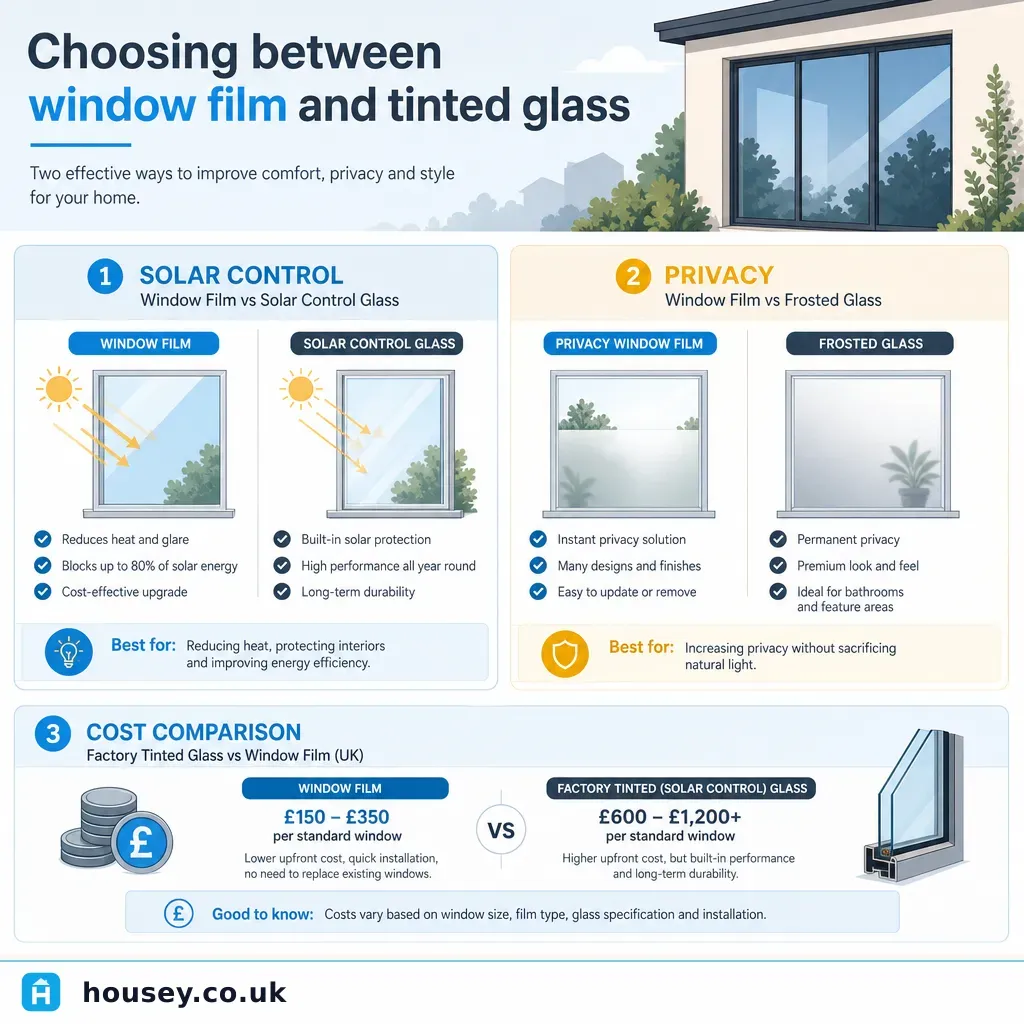
Choosing between window film and tinted glass
Window film is a retrofittable adhesive layer applied to existing glass — cheaper and reversible; factory-tinted or solar-control glass is manufactured with the tint integral to the pane, offering better durability and consistent performance.