Garden Rooms: Expanding Living Space with Outdoor Structures
By Housey · Last reviewed 19th of May 2026
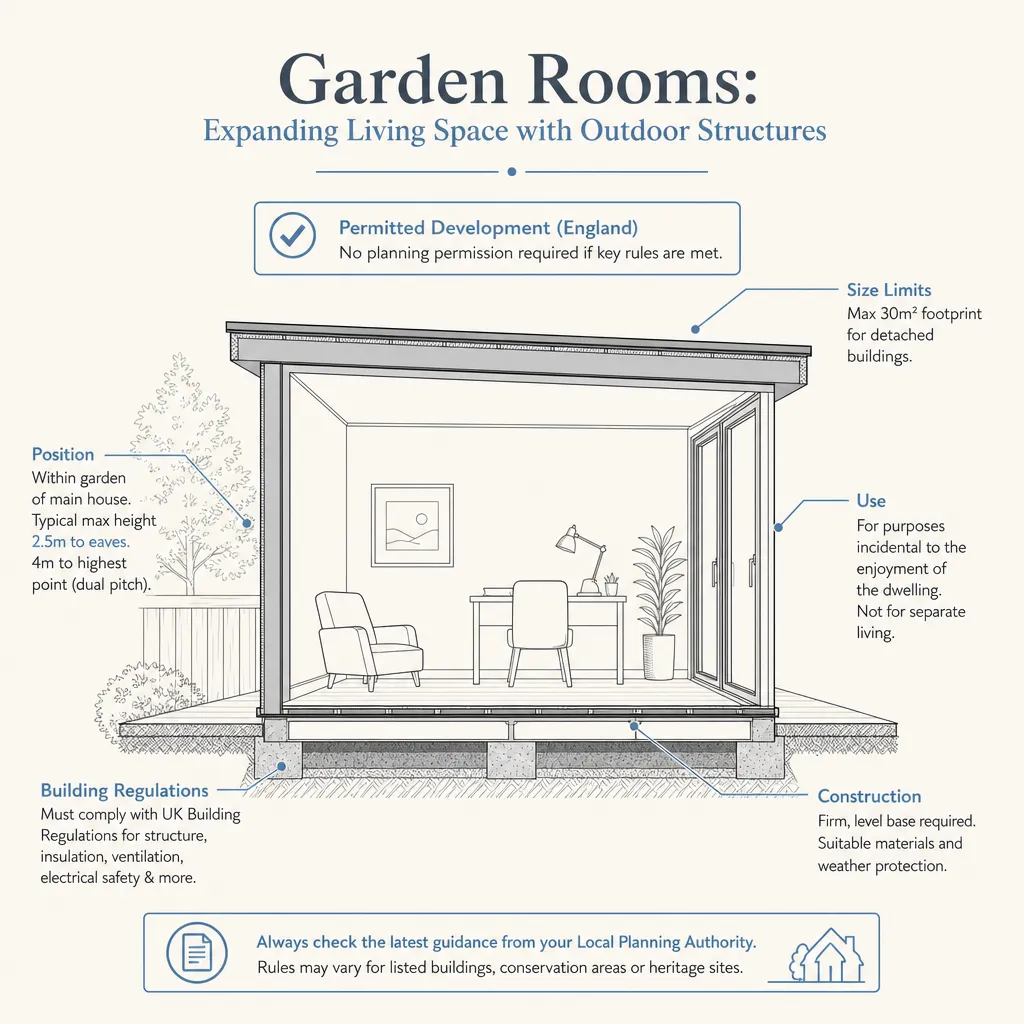
Garden Rooms: Expanding Living Space with Outdoor Structures
Garden rooms — insulated, electrified outbuildings used as home offices, studios, gyms, or hobby spaces — have become one of the most popular home improvements in England over recent years. For many homeowners, the appeal is gaining usable square footage without the cost and disruption of a full house extension. Before commissioning any work, understanding the planning framework is essential: errors can lead to enforcement action, complications at sale or remortgage, or the cost of retrospective applications. The rules are set at national level through permitted development legislation but can be significantly modified by local authority decisions and property-specific circumstances.
Key points
- Under Schedule 2, Part 1, Class E of the Town and Country Planning (General Permitted Development) (England) Order 2015 (GPDO), most outbuildings are permitted development and do not require planning permission — provided all specific conditions are met.
- Maximum overall height for an outbuilding within 2 metres of a curtilage boundary is 2.5 metres; elsewhere the limit is 4 metres for a dual-pitched roof or 3 metres for any other roof type, with maximum eaves height of 2.5 metres throughout.
- Permitted development rights are restricted or removed for properties in conservation areas, World Heritage Sites, Areas of Outstanding Natural Beauty (AONB), and National Parks, and for some properties subject to Article 4 Directions.
- A garden room cannot be used as a separate self-contained dwelling or as sleeping accommodation under Class E permitted development rights.
- Building regulations approval is not generally required for garden rooms used as incidental outbuildings under 30 m², but new electrical circuits within the structure may require Part P notification regardless of floor area.
Do I need planning permission for a garden room?
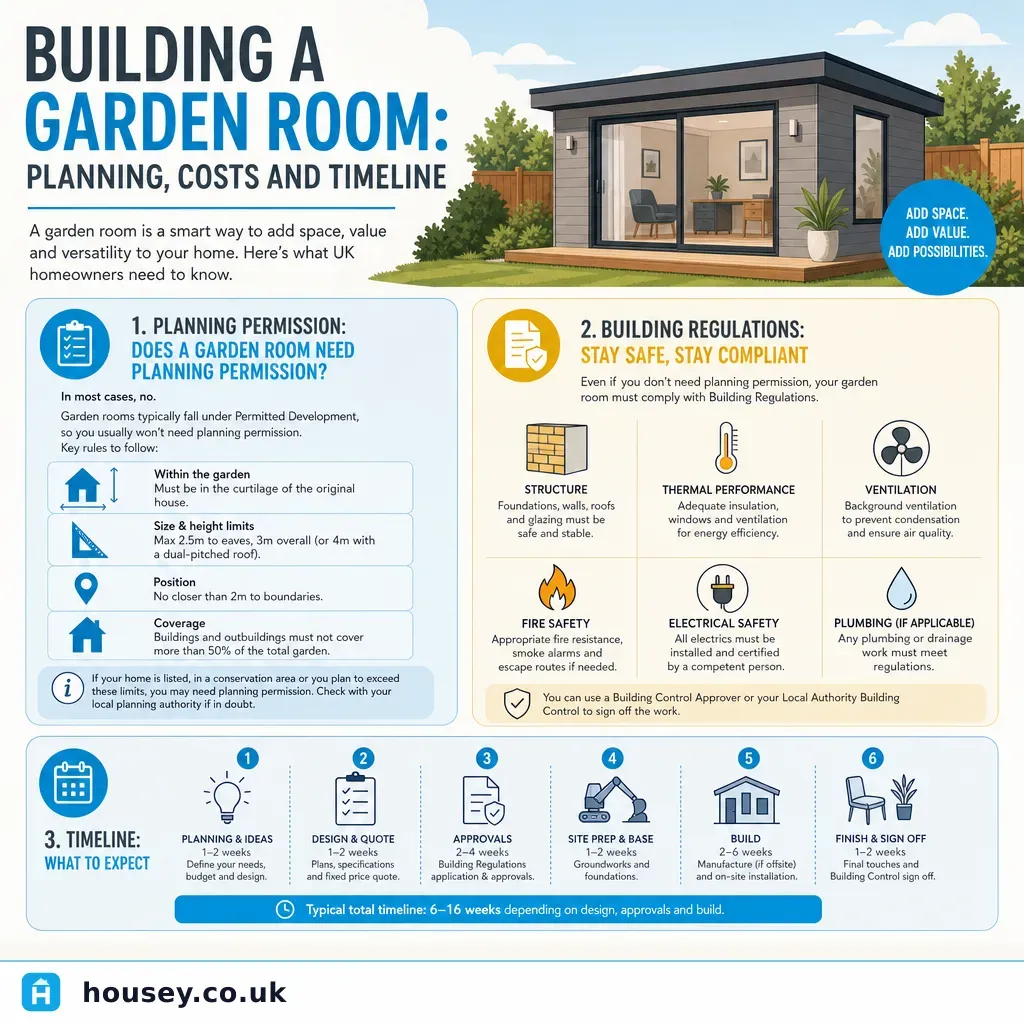
Most garden rooms in England fall within permitted development rights under Class E of the GPDO 2015. To qualify, the structure must satisfy all of the following conditions simultaneously:
- It must be within the curtilage of a dwellinghouse — the land around the house that is used for domestic purposes.
- It must not be forward of the principal elevation (the front wall facing the street or main highway).
- The combined area covered by all outbuildings and structures — excluding the house itself — must not exceed 50% of the total curtilage area at the time of the original grant of planning permission for the house.
- Maximum eaves height: 2.5 metres, regardless of position or roof type.
- Maximum overall height: 4 metres (dual-pitched roof) or 3 metres (any other roof type) — reduced to 2.5 metres overall if the structure is within 2 metres of the curtilage boundary.
- The structure must not contain a separate dwelling or sleeping accommodation as its primary purpose.
In Wales, Scotland, and Northern Ireland, different permitted development rules apply — check the relevant national planning guidance for your jurisdiction before proceeding.
Which option should you choose?
- Choose permitted development (no application required) if your proposed garden room meets all Class E conditions and your property is not in a restricted area or subject to an Article 4 Direction.
- Apply for full planning permission if the design exceeds height or footprint limits, if it is sited in a conservation area or AONB, or if it will be positioned forward of the principal elevation.
- Obtain a Lawful Development Certificate (LDC) even when planning permission is not required — an LDC formally confirms the legality of the works and is valuable evidence at resale and remortgage. Apply via your local planning authority.
- Consult a planning consultant or architect if your property has had previous extensions or outbuildings that may affect the 50% curtilage calculation, or if you are in a restricted area.
- Check for an Article 4 Direction with your local planning authority — these remove permitted development rights in specific areas and are not always widely advertised to residents.
Do building regulations apply to a garden room?
Building regulations approval is generally not required for garden rooms where:
- The structure has a gross internal floor area of less than 15 m² and contains no sleeping accommodation.
- The structure is between 15 m² and 30 m², is sited at least 1 metre from any boundary, and is constructed substantially of non-combustible materials.
Building regulations do apply if:
- The building exceeds 30 m² in floor area.
- The building will contain sleeping accommodation, regardless of size.
- The building will be used as a workplace where employees other than the homeowner regularly work — the Workplace (Health, Safety and Welfare) Regulations 1992 may also apply.
- New electrical circuits are installed within the structure — Part P of the Building Regulations requires either notification to building control or use of a registered competent person scheme such as NICEIC or NAPIT.
Always confirm with your local building control authority before proceeding where there is any doubt about whether regulations apply.
Garden room vs house extension: a comparison
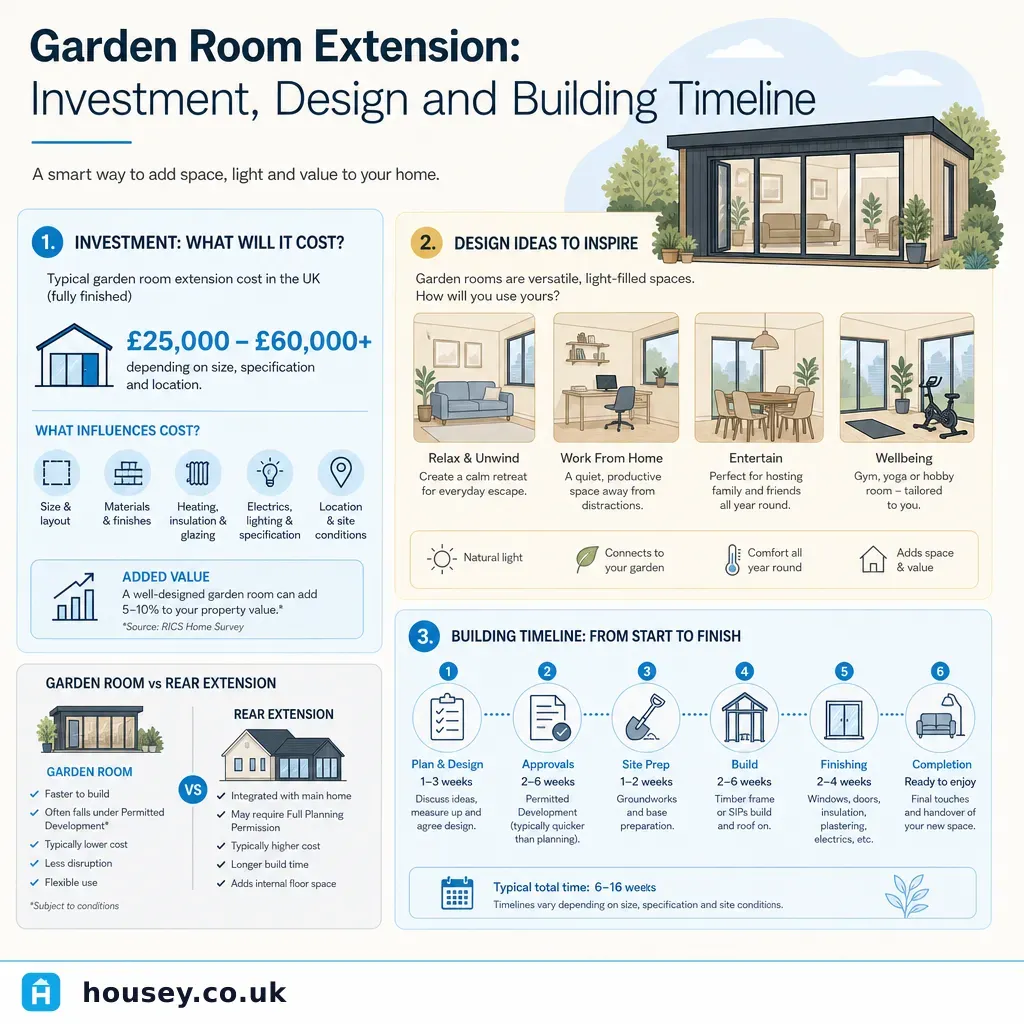
Feature | Garden room (outbuilding) | Single-storey rear extension |
|---|---|---|
Planning permission | Usually not required (permitted development) | Usually not required (subject to specific depth and width limits) |
Building regulations | Usually not required under 30 m² | Always required |
Connection to house | Separate structure; no internal access | Attached; internal access via main house |
Typical indicative cost | £15,000–£35,000 for an insulated, electrified room | £25,000–£60,000+ depending on specification |
Best use case | Home office, studio, gym, hobby room | Additional bedroom, extended kitchen or living area |
Curtilage impact | Counts toward 50% outbuilding coverage limit | Subject to rear extension depth and width permitted development limits |
Indicative UK costs, last reviewed 2026-05-19.
Important limitations
This guide provides general information about planning permission and building regulations for garden rooms in England as at May 2026. Planning rules are subject to change, and local planning authorities may apply restrictions — including Article 4 Directions — that override the national permitted development framework. Individual property circumstances, including previous extensions or outbuildings, listed building consent requirements, restrictive covenants, and leasehold obligations, can all affect what is lawful. This guide is not a substitute for professional planning or legal advice. Always verify your specific position with your local planning authority or a qualified professional before beginning any work.
What to ask a qualified professional
Before instructing a garden room supplier or builder, ask the following questions:
- Does my proposed structure satisfy all the Class E conditions under the GPDO 2015, including height, position relative to the principal elevation, and the 50% curtilage coverage rule?
- Is my property subject to an Article 4 Direction, conservation area designation, listed building consent requirements, or AONB restrictions that remove or limit permitted development rights?
- Should I apply for a Lawful Development Certificate before or after construction, and what evidence will the local planning authority require?
- How does the 50% curtilage calculation apply to my specific plot, given any existing outbuildings, sheds, or garages?
- Will the electrical installation require Part P notification, and which competent person scheme should the electrician be registered with?
- Are there any restrictive covenants on the title register that might prohibit outbuildings or limit their use or appearance?
- If employees will regularly work in the garden room, what building regulations and health and safety obligations apply?
When this becomes urgent
Seek professional planning or legal advice before proceeding if any of the following apply to your situation:
- Your property is in a conservation area, AONB, National Park, or World Heritage Site, or the building is listed.
- Previous extensions or outbuildings may mean you are already close to or over the 50% curtilage coverage limit.
- The proposed structure will exceed 2.5 metres in overall height and sit within 2 metres of any boundary.
- You intend to use the garden room as a bedroom, granny annexe, holiday let, or rental accommodation — these uses take the structure outside permitted development.
- Your property is leasehold — the lease may contain clauses restricting outbuildings or external alterations; check with a solicitor before commissioning any work.
- A neighbour or your local authority has already raised a concern about a structure on your property.
How Housey can help
If you're ready to explore your options, Housey can connect you with experienced extension builders who work regularly on garden rooms and outbuildings across the UK and can advise on design, specification, and compliance with permitted development conditions.
Frequently asked questions
Does a garden room need building regulations approval?
Most domestic garden rooms under 30 m² used as a home office, studio, or gym do not require building regulations approval in England. Under 15 m² — no approval needed; 15–30 m² — approval not needed if at least 1 metre from any boundary and built substantially of non-combustible materials; over 30 m² — approval required. Electrical installations within the structure may require Part P notification regardless of floor area.
Can I use a garden room as a home office?
Yes, in most cases. Using a garden room as a home office is the most common use and does not affect its permitted development status. If employees other than the homeowner regularly work there, the Workplace (Health, Safety and Welfare) Regulations 1992 may apply and building regulations may be triggered. Check with your local building control authority if employees will use the space regularly.
What is the maximum size of a garden room under permitted development?
There is no single maximum floor area under Class E of the GPDO 2015. The binding constraints are the height limits and the 50% curtilage coverage rule — outbuildings must not cover more than half of the total area of the original curtilage. In practice, building regulations are triggered at 30 m², so many garden room suppliers size standard products just below this threshold.
Can I add a garden room in a conservation area?
Permitted development rights for outbuildings are more restricted in conservation areas. In England, outbuildings of more than 10 m² located to the side or rear of a property within a conservation area are not permitted development and require full planning permission. Conservation area boundaries and any additional local restrictions can be checked with your local planning authority before proceeding.
Sources and further reading
Useful next reads
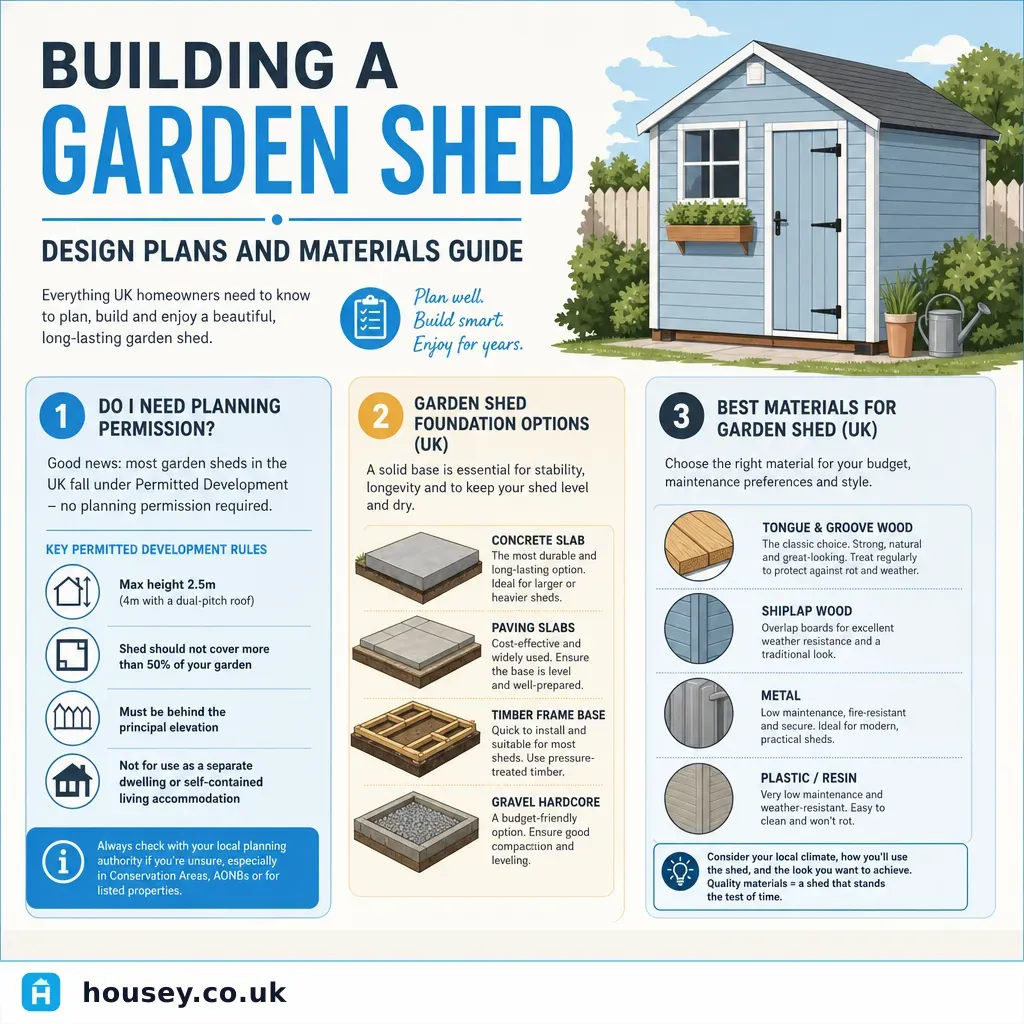 Improvement & Build
Building a Garden Shed: Design Plans and Materials Guide
Most garden sheds in England are Permitted Development, provided they sit behind the principal elevation, have eaves no higher than 2.
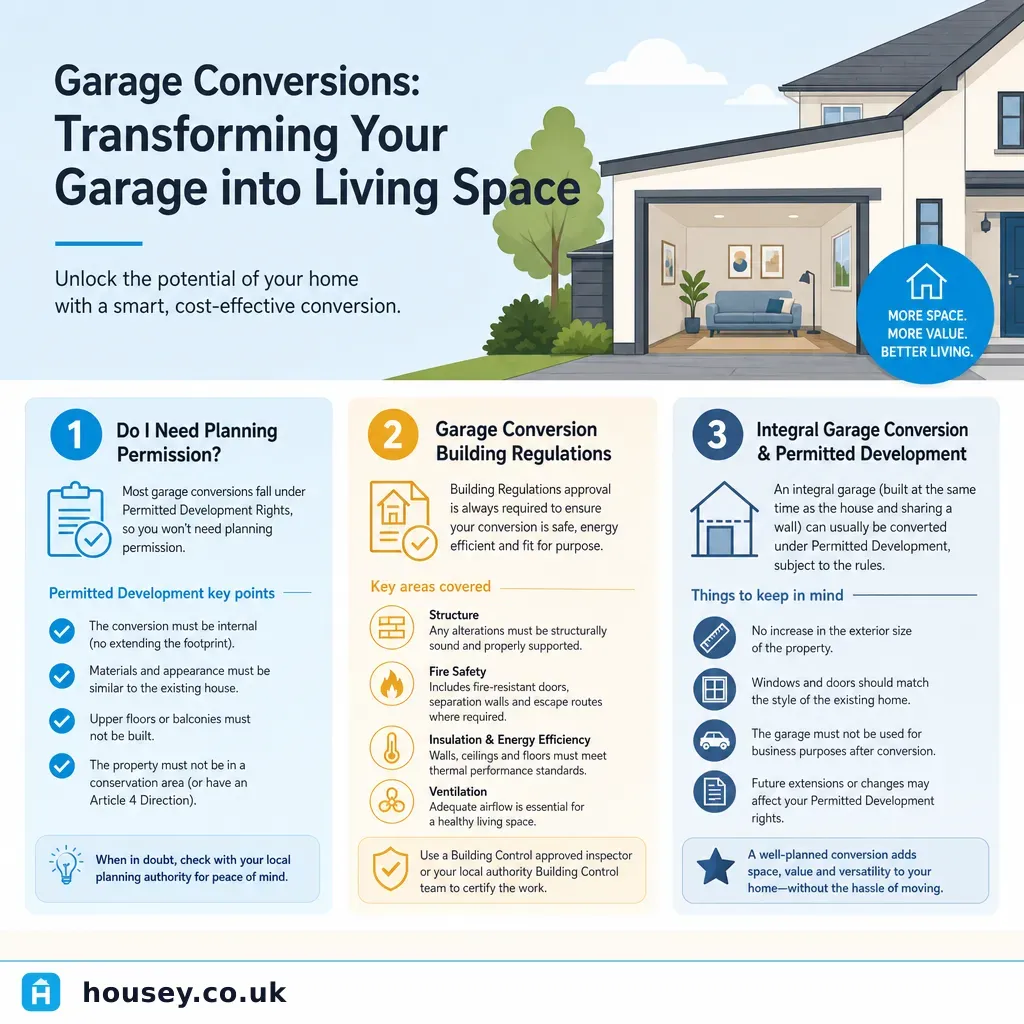 Improvement & Build
Garage Conversions: Transforming Your Garage into Living Space
Most integral garage conversions in England fall within permitted development and do not require a planning application, but Building Regulations approval is required in virtually all cases.
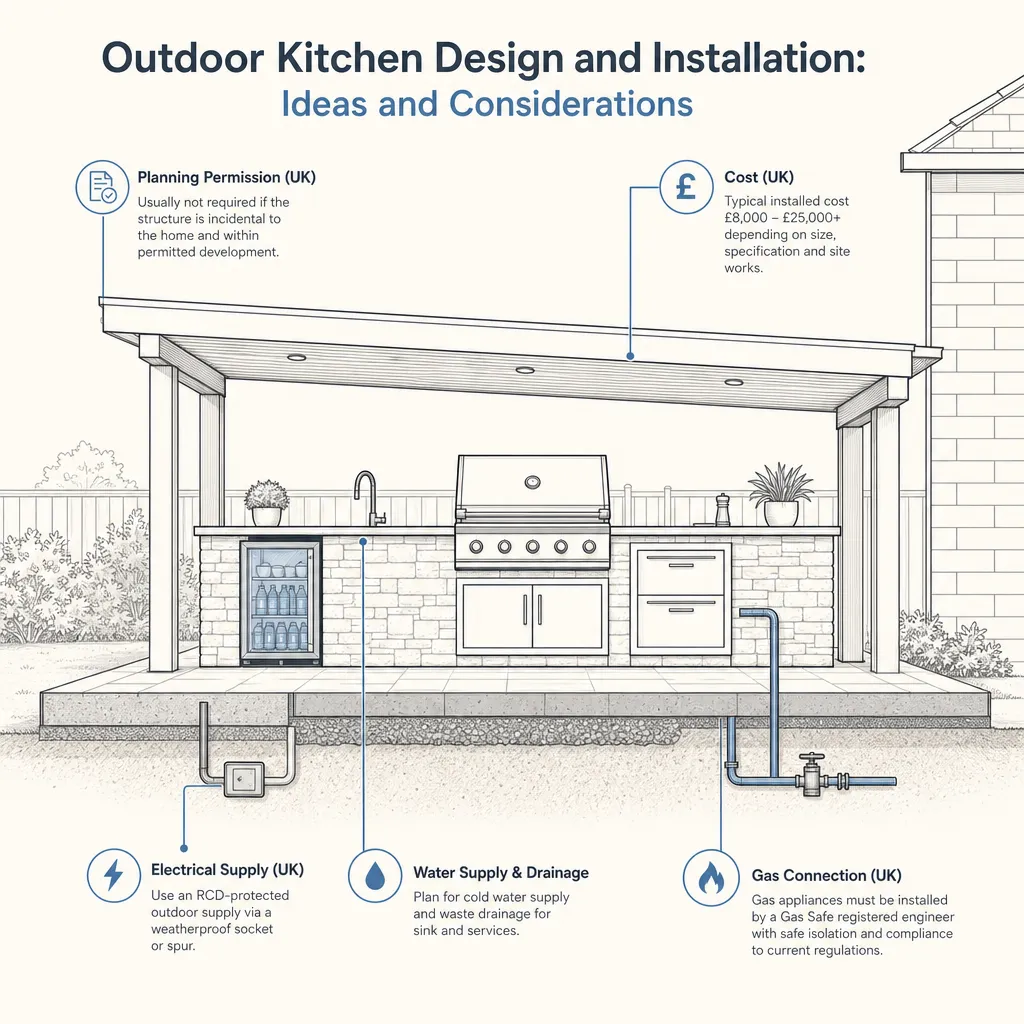 Improvement & Build
Outdoor Kitchen Design and Installation: Ideas and Considerations
An outdoor kitchen in the UK typically costs £3,000–50,000 depending on size and specification.
 Improvement & Build
Building a Garden Room: Planning, Costs and Timeline
Most garden rooms in England fall under permitted development and don't need planning permission, provided the structure meets height, coverage, and boundary conditions.
 Improvement & Build
Garden Room Extension: Investment, Design and Building Timeline
A garden room or garden extension can add usable year-round space without always requiring planning permission.