Garden Sheds and Outdoor Structures: Design and Construction
By Housey · Last reviewed 8th of May 2026
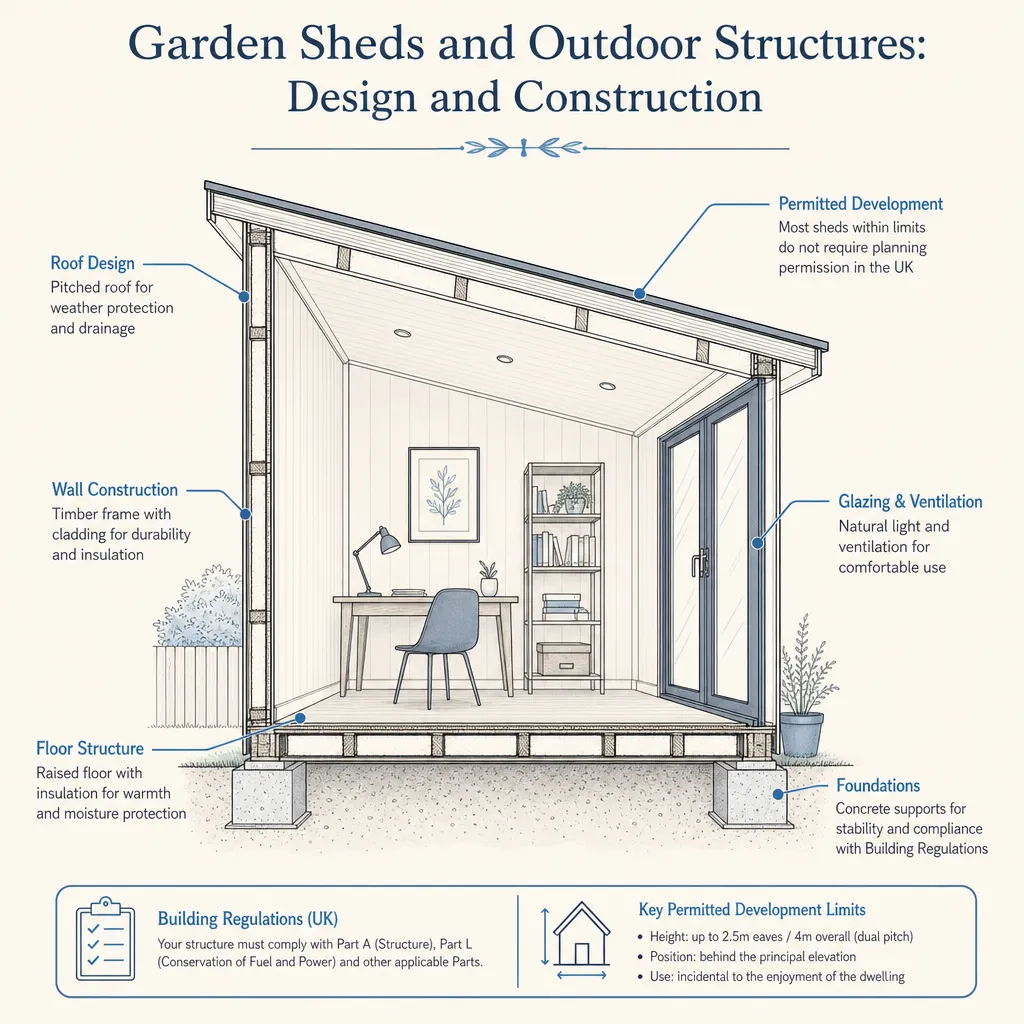
Garden Sheds and Outdoor Structures: Design and Construction
Garden sheds, summerhouses, and outbuildings have become one of the most popular home improvement projects in the UK, driven by the growth of home working and greater investment in outdoor space. Most modest structures fall within permitted development rights and need no planning permission — but size, position, conservation area designation, and existing outbuilding coverage all affect whether consent is required. Understanding the rules before breaking ground avoids enforcement problems, delays, and complications when you come to sell.
Key points
- Under Class E permitted development rights (GPDO 2015, Schedule 2, Part 1), most garden outbuildings in England require no planning permission, provided they remain incidental to the enjoyment of the dwelling and all outbuildings and extensions together do not exceed 50% of the original curtilage.
- Height rules: outbuildings within 2m of any boundary must not exceed 2.5m total height; a dual-pitched roof structure more than 2m from any boundary may reach 4.0m; a single-pitch or flat roof more than 2m from any boundary is limited to 3.0m.
- Building regulations approval is generally not required for outbuildings under 15m² floor area; the rules become more nuanced between 15–30m² depending on boundary proximity and construction materials.
- Permitted development does not apply to listed buildings, properties in conservation areas, AONBs, National Parks, or to flats and maisonettes.
- Outbuildings used for sleeping accommodation require building regulations regardless of size, and electrical installations must comply with Part P of the Building Regulations.
Do you need planning permission for a garden shed or outbuilding?
For most UK homeowners, garden outbuildings — including sheds, summerhouses, garden offices, and home studios — fall under Class E of Schedule 2, Part 1 of the Town and Country Planning (General Permitted Development) (England) Order 2015 (as amended). This means no formal planning application is needed, provided all the conditions are met.
Planning permission is required if:
- The total area covered by all outbuildings and extensions exceeds 50% of the original curtilage (garden area as it was on 1 July 1948, or when the house was built if later).
- The structure would be forward of the principal elevation of the house facing the highway.
- The property is in a conservation area, AONB, National Park, or World Heritage Site — in these locations, outbuildings to the side of the house also require permission.
- The property is a listed building — any outbuilding within the curtilage requires listed building consent.
- The dwelling is a flat or maisonette — Class E permitted development does not apply.
- An Article 4 Direction has removed permitted development rights for the area.
Always verify with your local planning authority before starting work. Consider applying for a Lawful Development Certificate (LDC) if you want a formal record that no permission was needed — this is particularly useful if you plan to sell.
Permitted development size and height rules
Condition | Rule under Class E GPDO 2015 |
|---|---|
Total area of all outbuildings + extensions | Must not exceed 50% of the original curtilage |
Position | Not forward of the principal elevation |
Eaves height | Maximum 2.5m for any outbuilding |
Total height — within 2m of any boundary | Maximum 2.5m |
Total height — dual-pitched roof, more than 2m from boundary | Maximum 4.0m |
Total height — single-pitch or flat roof, more than 2m from boundary | Maximum 3.0m |
Use as sleeping accommodation | Not permitted under Class E |
Verandas, balconies, raised platforms | Not permitted under Class E |
Source: Town and Country Planning (General Permitted Development) (England) Order 2015, Schedule 2, Part 1, Class E. Wales, Scotland, and Northern Ireland have their own permitted development frameworks with different thresholds — check with the relevant planning authority.
When do building regulations apply?
Building regulations are a separate consideration from planning permission. Under Schedule 2, Class 6 of the Building Regulations 2010 (as amended):
- Under 15m² floor area: exempt from building regulations, unless the structure contains sleeping accommodation.
- 15m² to 30m² floor area: exempt if the structure is positioned more than 1m from any boundary or is built substantially of non-combustible materials; otherwise building regulations apply.
- Over 30m² floor area: building regulations approval required.
- Any sleeping accommodation: building regulations required regardless of size.
For electrical installations within an outbuilding, a competent person registered under a Part P self-certification scheme (such as NICEIC or NAPIT) can self-certify the work. If an unregistered tradesperson or the homeowner carries out the electrical work, a Building Regulations application must be submitted to the local building control authority.
Decision tree: does your outbuilding need planning permission?
Work through these questions before starting work — always confirm with your local planning authority for your specific site:
- Is the property a flat or maisonette? → Yes: permitted development does not apply; contact your LPA before proceeding.
- Is the property listed? → Yes: listed building consent is required; instruct a conservation architect or planning consultant.
- Is the property in a conservation area, AONB, National Park, or World Heritage Site? → Yes: check with the LPA — side outbuildings require permission; front outbuildings always require permission.
- Will the structure be forward of the principal elevation? → Yes: planning permission required.
- Will all outbuildings and extensions together exceed 50% of the original garden area? → Yes: planning permission required.
- Is the structure within 2m of any boundary and over 2.5m high? → Yes: planning permission required.
- Is it a dual-pitched roof structure, more than 2m from the boundary, but over 4.0m high? → Yes: planning permission required.
- None of the above apply → likely permitted development; consider applying for an LDC for documentary certainty.
Foundation and construction considerations
Even a small outbuilding needs an adequate base to prevent movement, frost heave, and drainage problems. Common approaches in the UK include:
- Concrete slab: the most durable option for permanent structures. A minimum of 100mm depth is typical for a timber-framed garden building on stable ground.
- Paving slabs or treated timber bearers on gravel: suitable for lightweight prefabricated sheds; ensure adequate drainage beneath to prevent timber rot.
- Screw piles or adjustable pad foundations: used for structures over softer ground or where minimising ground disturbance is a priority.
Proximity to trees is a practical consideration — root systems can affect ground stability and there may be Tree Preservation Order (TPO) implications for excavation near protected trees. A groundworker can advise on the appropriate base for your specific site conditions, soil type, and drainage.
For larger garden rooms or studios that approach the 30m² building regulations threshold, an extension builder can help coordinate the full build and ensure compliance with applicable regulations. A garden designer can assist with integrating the structure into the wider garden layout, including hard landscaping, levels, and planting.
Homeowner checklist: before you build a garden outbuilding
When to get professional help
If your planned outbuilding is close to any of the size or height thresholds, contact your local planning authority before starting work rather than after. For listed buildings or properties in conservation areas, instruct a planning consultant or architect before finalising any design. For structures over 15m² or where building regulations apply, engage a qualified builder and submit a building control application where required. For electrical connections, always use a Part P registered electrician.
How Housey can help
Housey can connect you with the right professionals at every stage of an outbuilding project. Whether you need site assessment and design input from a garden designer, groundworks and base preparation from a groundworker, or a full build from an extension builder for a larger garden room or studio, Housey makes it straightforward to request and compare quotes from experienced local professionals.
Frequently asked questions
Do garden sheds need planning permission in the UK?
Most garden sheds fall within permitted development rights and do not require planning permission, provided they comply with the size, height, and position rules under Class E of the GPDO 2015. Key exceptions include listed buildings, properties in conservation areas or AONBs, flats, and situations where total outbuilding coverage would exceed 50% of the garden area.
Can I use a garden outbuilding as a home office?
Yes. Using an outbuilding as a home office is generally considered incidental to the enjoyment of the dwelling and is permitted under Class E. However, if the structure is also used for sleeping accommodation, building regulations will apply regardless of floor area. Check with your local planning authority if the intended use involves frequent client visits or commercial activity.
What is a Lawful Development Certificate and do I need one?
A Lawful Development Certificate (LDC) is a formal confirmation from the local planning authority that a development is lawful under permitted development rights. It is not mandatory, but provides useful documentary evidence for conveyancers when you sell. Application fees vary by local authority — check current fees with your LPA before applying.
Do I need building regulations approval for a garden shed?
Generally, no — outbuildings under 15m² floor area are exempt from building regulations, and standard garden sheds fall well within this limit. Regulations apply to structures over 30m², and to those between 15–30m² if within 1m of a boundary and not substantially constructed from non-combustible materials. Any outbuilding used for sleeping accommodation requires building regulations regardless of size.
Sources and further reading
- Planning Portal: Outbuildings — Permitted development rules and planning guidance for outbuildings in England
- Town and Country Planning (General Permitted Development) (England) Order 2015 — legislation.gov.uk
- Building Regulations 2010: Exempt buildings and works — legislation.gov.uk
- GOV.UK: Apply for a Lawful Development Certificate — GOV.UK
- GOV.UK: Planning permission — Overview of when planning permission is required in England and Wales
Useful next reads
 Improvement & Build
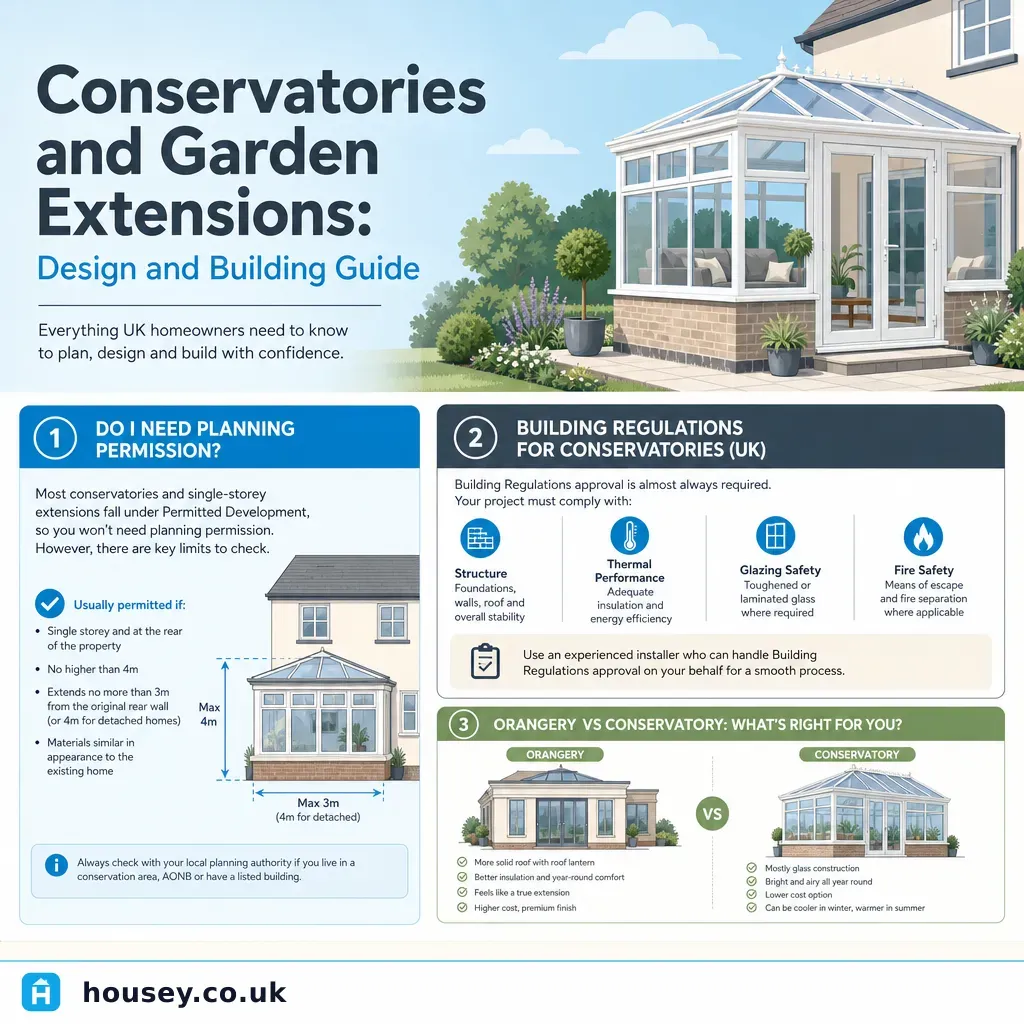
Conservatories and Garden Extensions: Design and Building Guide
Most conservatories qualify as permitted development in England if they are single-storey, within 50% of original curtilage, and meet dimensional limits.
 Improvement & Build
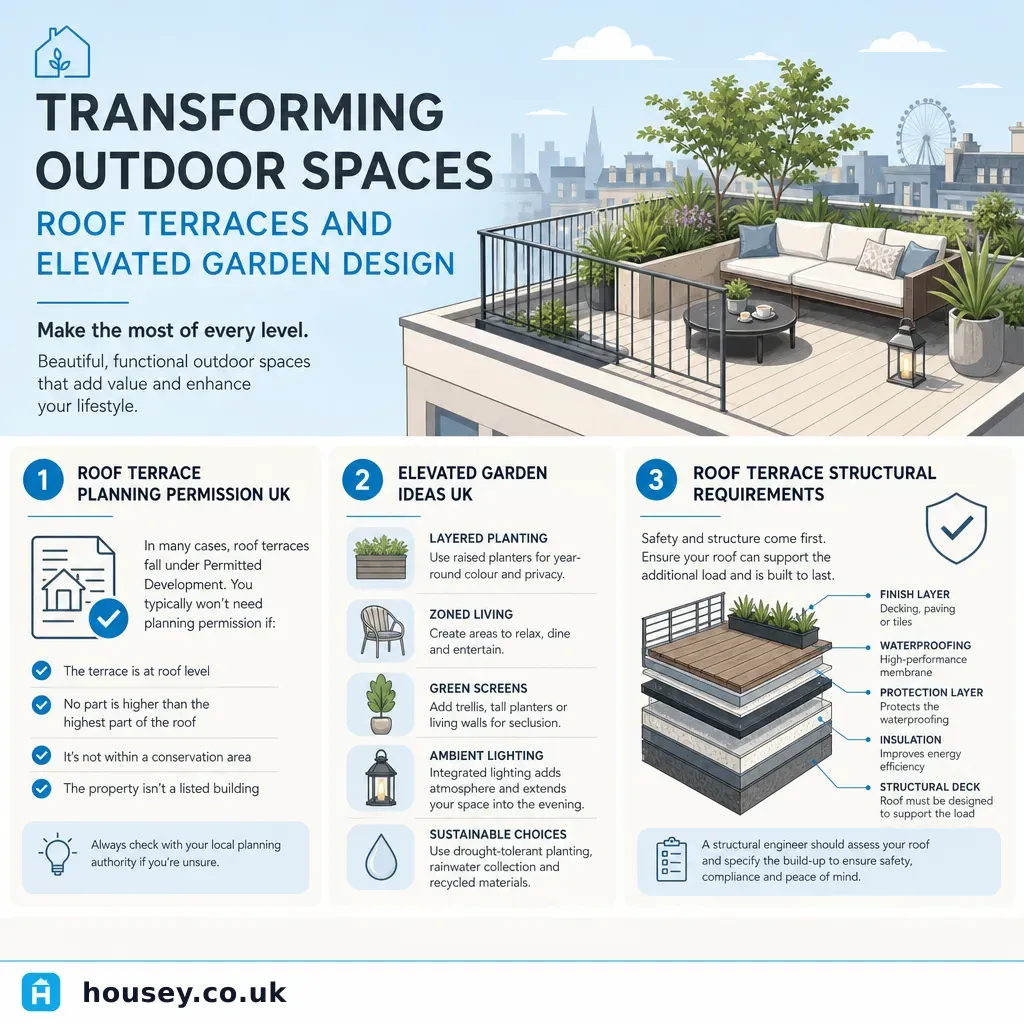
Transforming Outdoor Spaces: Roof Terraces and Elevated Garden Design
Roof terraces in the UK almost always need planning permission and a structural engineer's load capacity assessment before design work begins.
 Improvement & Build
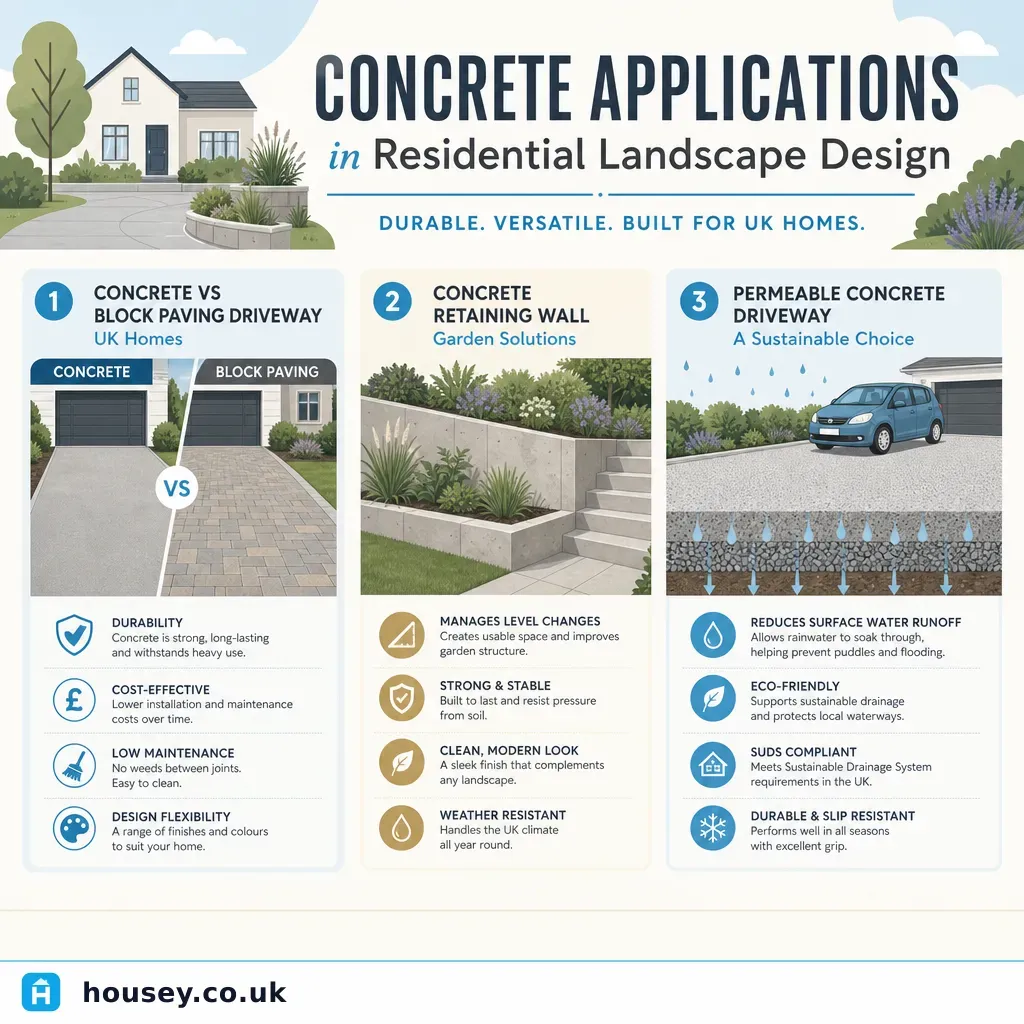
Concrete Applications in Residential Landscape Design
Concrete serves multiple roles in residential landscape design: as a surface material for driveways, patios, and paths; as a structural element in retaining walls and foundations; and as prefabricated components including slabs, edging, and copings.
 Improvement & Build
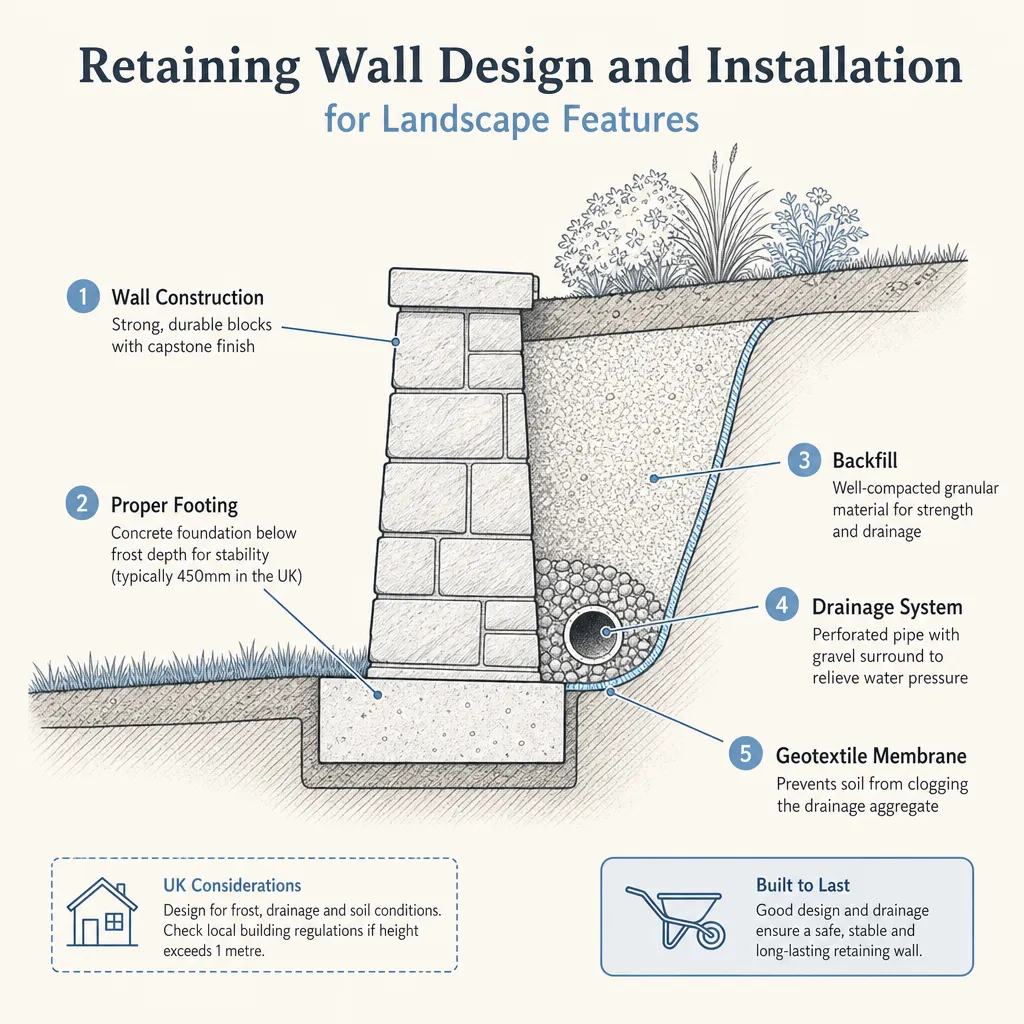
Retaining Wall Design and Installation for Landscape Features
A garden retaining wall holds back soil on a sloped plot using concrete blocks, stone, or timber.
 Improvement & Build
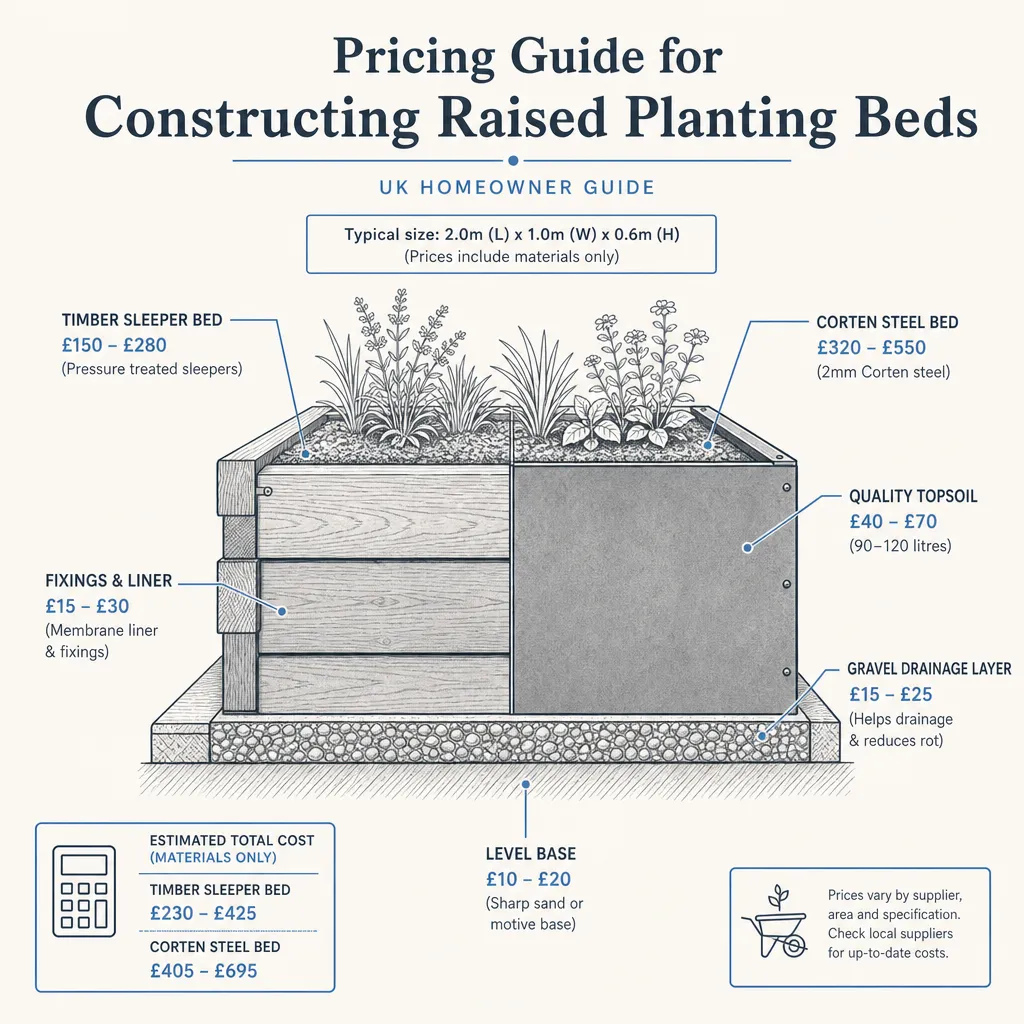
Pricing Guide for Constructing Raised Planting Beds
Raised planting beds cost from around £40 in DIY timber materials for a standard size, rising to £200–£1,500 or more for professionally installed sleeper or Corten steel beds.