Garden Space Demand: What Modern Homebuyers Are Looking For
By Housey · Last reviewed 10th of May 2026
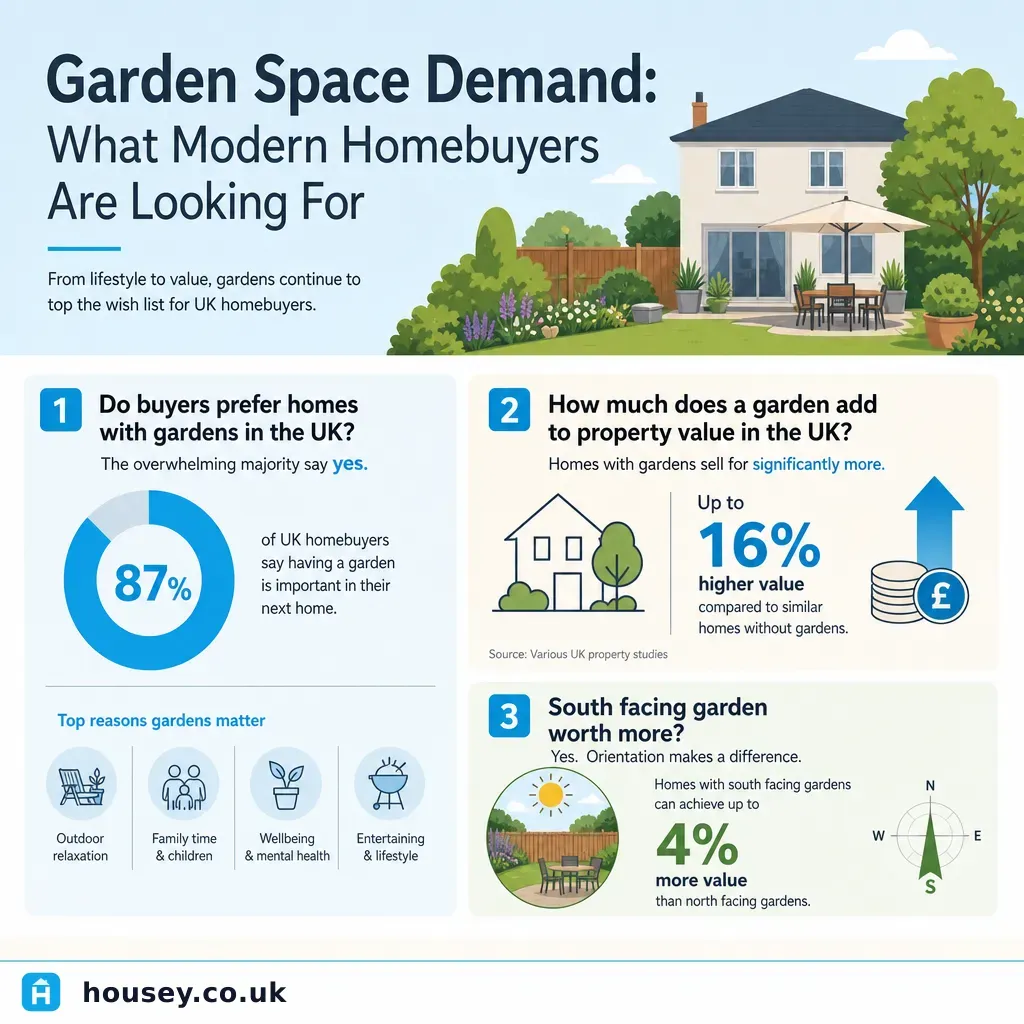
Garden Space Demand: What Modern Homebuyers Are Looking For
Outdoor space has become a defining factor in how UK buyers compare and prioritise properties, particularly since 2020. Whether you are buying or selling a family home, a city-centre flat, or a suburban semi-detached, understanding how buyers think about gardens can influence how you present, price, or choose a property. The question of garden demand sits at the intersection of lifestyle preference, regional market dynamics, and the wider shift in how people use their homes day-to-day.
Key points
- Garden was reported as the most searched-for property feature on Rightmove following the 2020 pandemic period, according to Rightmove's own data and press releases.
- South-facing gardens receive direct sunlight through more of the day and are widely recognised by estate agents as commanding a premium over comparable north-facing properties.
- Private outdoor space — even a small courtyard or patio — is a significant differentiator for flats, where any form of private outdoor space is far from guaranteed.
- Condition matters as much as size: an overgrown or poorly maintained garden can deter buyers even when the rest of the property presents well.
- Certain garden works — including impermeable front garden surfacing over 5m² and some outbuildings — require planning permission under the Town and Country Planning Act 1990 and the Town and Country Planning (General Permitted Development) (England) Order 2015.
Why outdoor space became a priority for buyers
The early 2020s produced a well-documented shift in buyer priorities across England, Scotland, and Wales. Rightmove's search data showed garden as one of the most frequently applied property filters, and estate agents across the country reported a marked increase in buyers specifically requesting homes with outdoor space.
This reflected a broader reassessment of what homeowners need from their properties, particularly for households working from home, families with children, or buyers who had previously rented or owned urban flats without private outdoor access. The trend has not simply reversed — portal search patterns and estate agent commentary have consistently shown private outdoor space remaining among the top features buyers mention when setting their priorities.
It is worth noting that the strength of garden demand varies by property type, buyer profile, and location. A two-bedroom flat in central Manchester competes on entirely different criteria from a four-bedroom semi-detached house in a Surrey commuter town.
What type of outdoor space do buyers want?
Not all outdoor space carries equal appeal. The table below summarises how different types of outdoor space are typically perceived by UK buyers.
Outdoor space type | Buyer appeal | Best for | Common concerns |
|---|---|---|---|
Private rear garden (lawn) | High | Families, pet owners, home workers | Size, orientation, condition |
South-facing garden | Very high | Most buyer profiles | None significant if well maintained |
Courtyard or paved patio | Moderate to high | Downsizers, city buyers, low-maintenance seekers | Privacy, overall size |
Communal garden (flats) | Moderate | Young professionals, first-time buyers | Maintenance responsibility, access rights |
Front garden only | Low to moderate | Town and city properties | Privacy, security, parking conversion risk |
Roof terrace | High in niche urban market | Flat buyers in cities | Lease terms, permitted development restrictions, maintenance |
No outdoor space | Low — affects saleability | City-centre apartments with strong alternative selling points | Significantly restricts buyer pool |
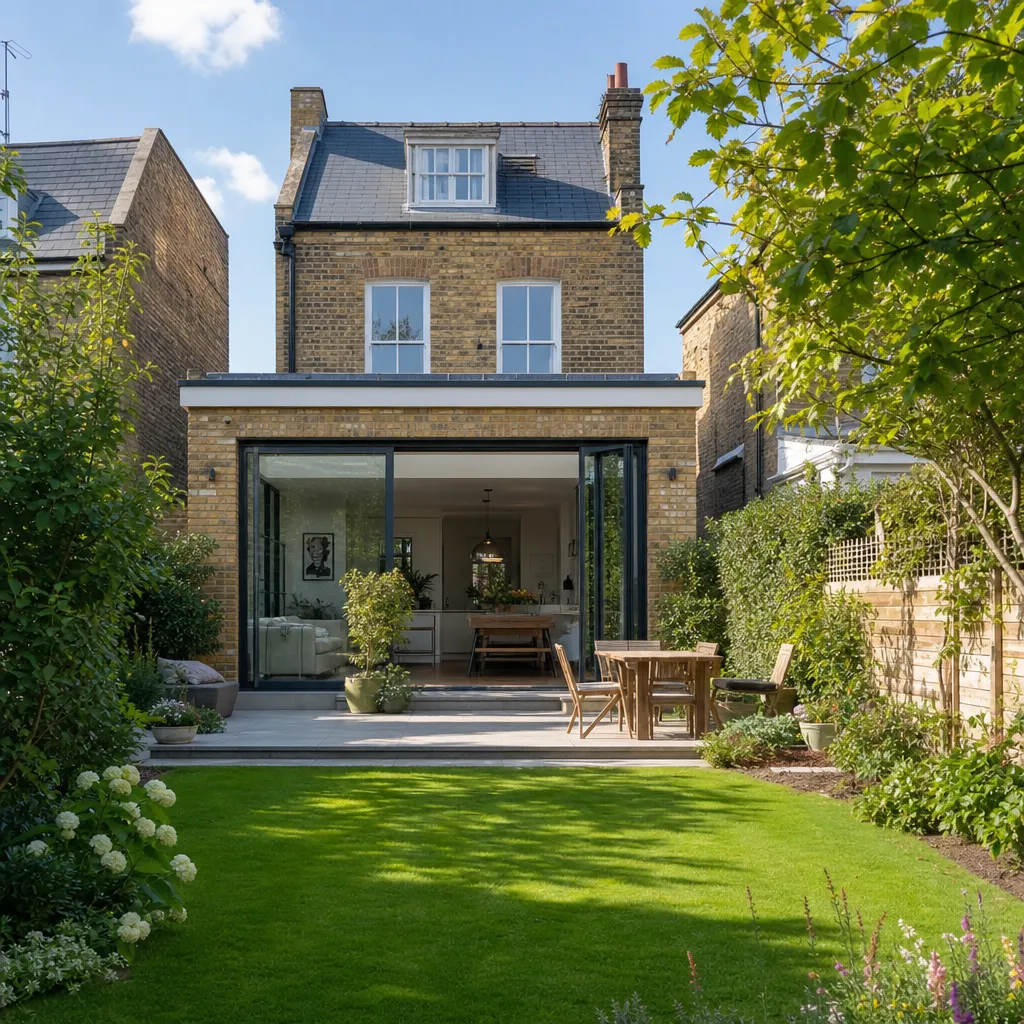
Most buyers are not looking for a large estate. A well-maintained garden of any size, with clear boundaries, reasonable privacy, and good natural light, consistently outperforms a neglected large plot in buyer perception and time on market.
How orientation and size affect value
South-facing gardens receive direct sunlight through much of the day and are particularly valued in regions with cooler or more overcast climates — which covers most of England, Scotland, and Wales. Estate agents routinely flag orientation in listings, and buyers frequently raise it at viewings.
Garden size matters less to many buyers than usability. Families with young children often prioritise a flat, safe lawn over a large but awkward or steeply sloping plot. Buyers looking to entertain may prefer a well-laid patio with screening. Those seeking low maintenance may actively favour a smaller, well-designed garden over a large, high-maintenance one.
What almost all buyers agree on: a garden that is clearly cared for signals that the property as a whole has been looked after. An overgrown or poorly presented garden raises questions about the rest of the property before the buyer has even stepped through the front door.
Regional differences in garden demand
Garden demand and the premium it commands are not uniform across the UK:
- London: Outdoor space commands a significant premium in most boroughs. A private garden — even a small one — can meaningfully affect both asking price and time on market. Gardens are a key reason many London families move to the outer boroughs or to commuter belt locations in Kent, Surrey, Hertfordshire, and Essex.
- South East and East of England: Strong demand, particularly for family-sized gardens in areas popular with commuters. Competition for houses with decent outdoor space can be intense in some markets.
- Midlands and North of England: Gardens remain highly valued but the premium over properties without outdoor space may be less extreme than in London. More of the housing stock includes a garden as standard.
- Scotland: Private gardens are common in most of the housing stock outside city centres. Shared garden areas are typical in many traditional tenement buildings in Edinburgh and Glasgow, and the legal framework for maintaining them differs under Scots property law.
- Wales and rural areas: Outdoor space tends to be more readily available at lower price points. In these markets, buyers are more likely to be comparing the quality and usability of different gardens rather than debating whether one is present at all.
What sellers should consider before listing
If you are preparing a property for sale, the garden deserves genuine attention. A few practical points:
- Tidy and define: Clear boundary lines, mow the grass, and remove obvious debris. Buyers find it easier to see potential in a tidy, well-defined space.
- Avoid over-improvement: Expensive landscaping rarely recoups its full cost at sale. Focus on condition and presentation rather than transformation.
- Check permitted development history: If you have added outbuildings, decking raised over 300mm, or fencing over 1m adjoining a highway (or over 2m elsewhere), verify whether planning permission was required under the Town and Country Planning (General Permitted Development) (England) Order 2015 or the equivalent Scottish and Welsh regulations.
- Clarify boundaries: Buyers and their solicitors will ask about boundary ownership and responsibility. Understanding your title plan and any boundary agreements beforehand reduces the risk of delays during conveyancing.
Homeowner checklist: preparing your garden for sale
When to get professional help
In most cases, preparing and selling a property with a garden does not require specialist professional involvement beyond a conveyancer and estate agent. However, there are situations where expert advice adds real value:
- Boundary disputes: If there is an unresolved disagreement with a neighbour about where a boundary falls, take advice from a solicitor with property law experience before listing. Unresolved boundary disputes can delay or collapse a sale at any stage of conveyancing.
- Trees subject to Tree Preservation Orders (TPOs): If your property has trees that may be covered by a TPO, check with your local planning authority before undertaking any works. Carrying out works on a protected tree without consent is a criminal offence under the Town and Country Planning Act 1990.
- Listed buildings: If you own a listed property, certain garden structures, walls, and alterations may require listed building consent in addition to planning permission. Advice from a planning consultant or your local conservation officer is advisable before any works.
- Structural concerns near boundaries: If there are signs of subsidence, cracking, or movement affecting retaining walls, slopes, or other structures near the boundary, a structural engineer or chartered building surveyor should assess the situation before you proceed with a sale.
How Housey can help
Housey connects UK homeowners with qualified property professionals, including surveyors, structural engineers, planning consultants, and conveyancers. Whether you need a survey before purchasing a property with a large garden, clarification on planning history for outbuildings, or help finding a professional to assess a boundary concern, Housey can help you request and compare quotes from relevant local specialists.
Frequently asked questions
Does having a garden add value to a property in the UK?
Outdoor space generally adds value, particularly in urban areas and for family homes. The amount varies by location, size, orientation, and condition. South-facing gardens and private gardens on flats typically command the clearest premiums. In rural areas where most properties already include outdoor space, condition and usability matter more than mere presence.
Is a south-facing garden really worth more?
South-facing gardens receive sunlight for longer periods throughout the day and are consistently flagged as desirable by buyers and estate agents across the UK. The premium over a comparable north-facing property varies and is difficult to quantify without a formal valuation, but orientation is a real and widely recognised factor in buyer decision-making.
Can I convert my front garden into a parking space without planning permission?
Permitted development allows hard-standing in front gardens using permeable materials — such as gravel or permeable block paving — with proper drainage in place. Using impermeable surfaces such as tarmac or concrete over 5m² requires planning permission under changes introduced in 2008 to the Town and Country Planning Act. Always check with your local planning authority if you are uncertain.
Do I need planning permission for a garden outbuilding?
In many cases, outbuildings in rear gardens fall under permitted development, provided they meet specific rules: maximum eaves height of 2.5m, overall height of 4m for a dual-pitched roof or 3m for any other roof, and plot coverage limits. Outbuildings in front gardens or intended for living accommodation generally require planning permission. Check with your local planning authority, especially if the property is listed or in a conservation area.
Do all buyers expect a property to have a garden?
No. Many buyers — particularly single professionals, investors, or downsizers — actively prefer lower-maintenance properties without a garden. However, the absence of any outdoor space reduces the pool of potential buyers and can affect both asking price and time on market, especially for family-sized properties or those in areas where gardens are a standard expectation.
Sources and further reading
- Rightmove: Property news and market data — Rightmove
- HM Land Registry: Price paid data downloads — HM Land Registry
- Planning Portal: Outbuildings and permitted development — Planning Portal
- GOV.UK: Tree Preservation Orders and trees in conservation areas — GOV.UK
- ONS: Housing statistics for local areas in England — Office for National Statistics
Useful next reads
 General property advice
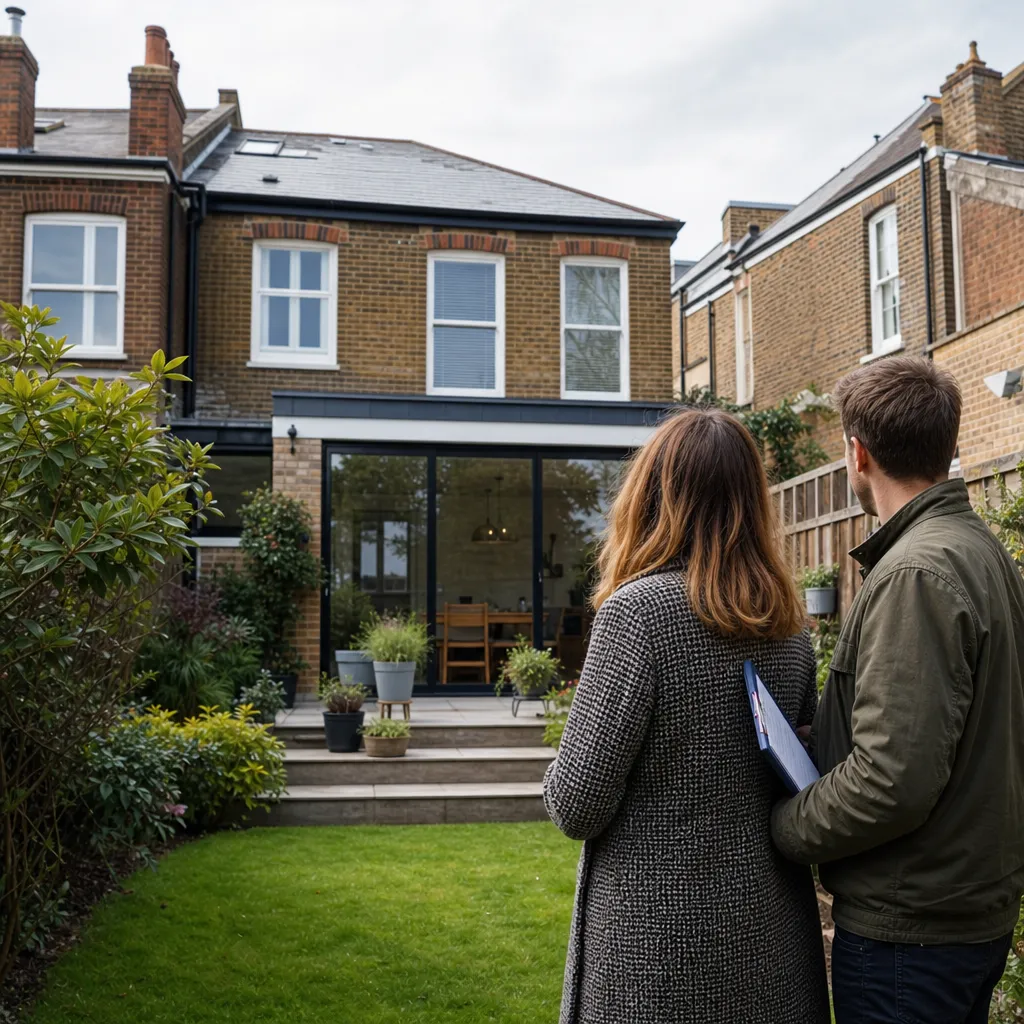
Rental Market Trends: Garden Space Demand Among Tenants
Demand for rental properties with garden access has grown markedly since 2020, with families, remote workers, and pet owners rating outdoor space among their top priorities.
 General property advice
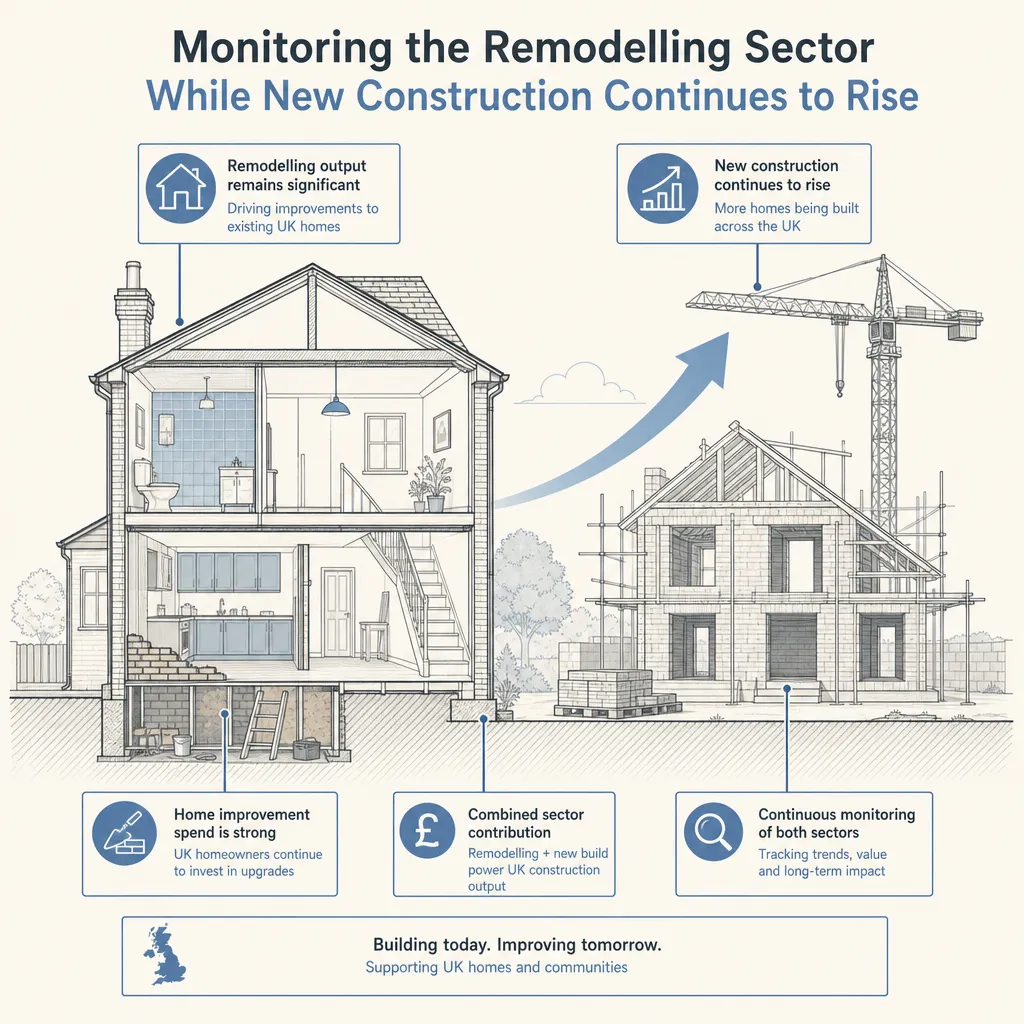
Monitoring the Remodelling Sector While New Construction Continues to Rise
The UK renovation sector runs alongside new-build activity, not in opposition to it — both draw on the same pool of skilled labour and materials.
 General property advice
Post-Lockdown Migration: Understanding Buyer Movement Out of Urban Areas
The COVID-19 lockdowns triggered a significant shift in UK buyer priorities, with many households trading city flats for more space in commuter towns, market towns, and rural areas.
 General property advice
Property Type Preferences: Understanding Market Demand
Semi-detached houses consistently attract the highest transaction volumes in England and Wales, making them the most liquid part of the UK market.
 General property advice
South-Facing Garden Properties: Premium Pricing and Demand Analysis
A south-facing garden typically attracts stronger buyer demand and can command a premium of around 5–15% in competitive UK markets, though the impact depends on garden size, surrounding buildings, property type, and local conditions.