Rental Market Trends: Garden Space Demand Among Tenants
By Housey · Last reviewed 10th of May 2026
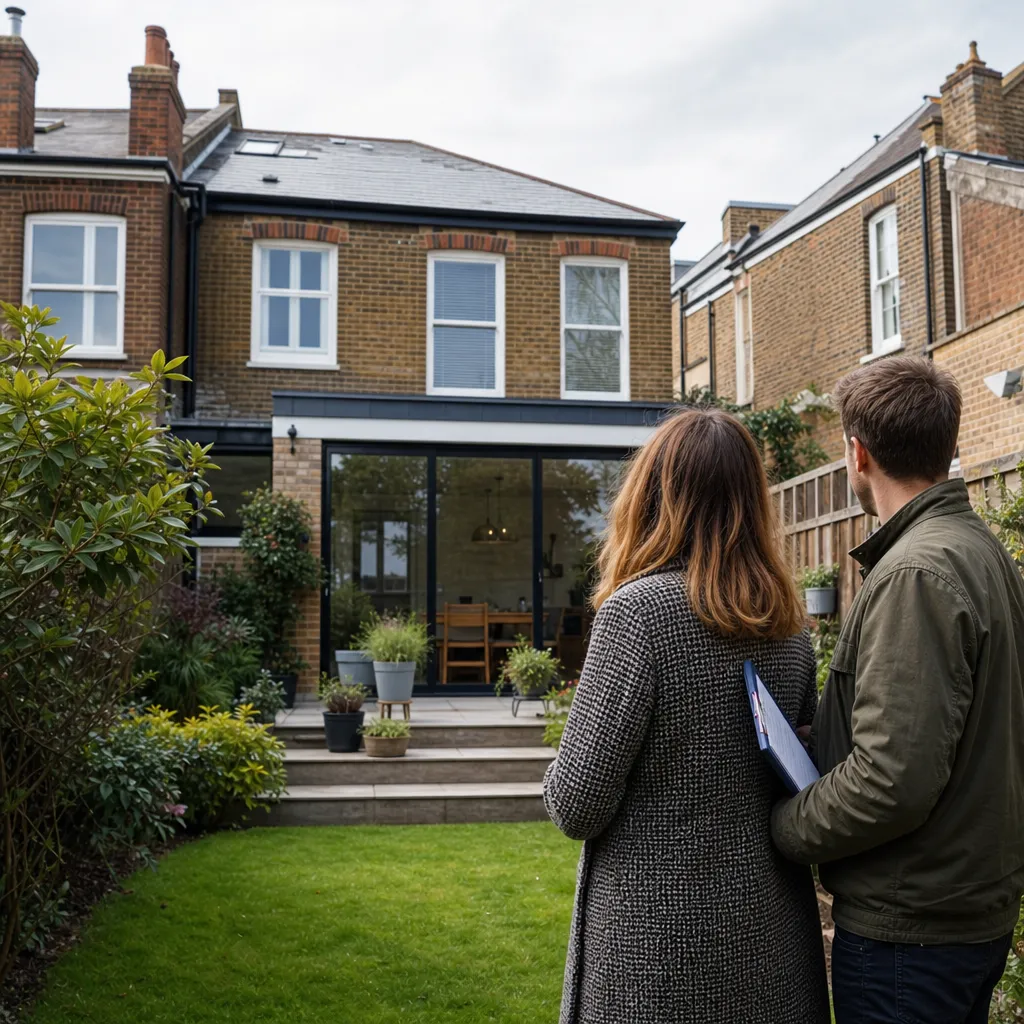
Rental Market Trends: Garden Space Demand Among Tenants
The question of whether private outdoor space commands a genuine premium in the UK rental market has moved from a landlord hunch to a documented pattern in lettings data. The period from 2020 onwards reordered tenant priorities — and garden access emerged as one of the clearest beneficiaries. Whether you are a landlord assessing how to market a property, a tenant understanding your negotiating position, or an investor comparing two similar properties, knowing where garden demand sits today informs better decisions.
Key points
- Rightmove reported a sharp increase in searches using the garden filter following UK lockdown restrictions from 2020, with elevated volumes persisting since.
- The English Housing Survey (EHS) records garden access as one of the most commonly cited priorities among private renter households, particularly those with children or pets.
- Private gardens typically achieve a measurable rent premium over comparable properties without outdoor space — the scale varies by location, garden condition, and local supply.
- Remote and hybrid working has sustained garden demand among working-age professional tenants, a demographic that previously placed less emphasis on outdoor access.
- Shared or communal gardens are valued by many tenants but are consistently rated below private gardens in UK lettings preference research.
Why garden demand surged — and why it stayed
Before 2020, garden access was a priority largely associated with families, pet owners, and older tenants. The national lockdowns of 2020 and 2021 compressed the entire experience of home — work, leisure, exercise, and social life — into a single property. Tenants without outdoor access were disproportionately affected.
Since restrictions lifted, UK rental search data from the major portals has continued to show elevated interest in outdoor space. Rightmove and Zoopla noted in 2021–2022 that garden featured among the top searched features in rental listings. The elevated demand has structural reasons beyond the pandemic itself: hybrid working has normalised spending more weekday time at home across a much wider demographic. Tenants working from home two or three days a week value garden access differently from those who previously commuted daily and rarely used outdoor space on weekdays.
The English Housing Survey consistently records that a meaningful share of private renters regard outdoor space as a significant factor in their housing choices, particularly in suburban locations and commuter belts.
Which tenants value garden space most
Not all tenant groups value garden space equally. Understanding which profiles dominate your target market helps forecast rental appeal more accurately.
Tenant profile | Garden priority | Typical requirement | Key driver |
|---|---|---|---|
Families with young children | Very high | Private garden, any usable size | Safety, play space, and outdoor routine |
Pet owners | Very high | Private garden or secure enclosed yard | Private access often unlocks the pet-owner lettings market |
Remote or hybrid workers | High | Private or low-maintenance outdoor space | Weekday wellbeing; a growing segment since 2020 |
Professional couples without children | Moderate | Low-maintenance private or quality communal garden | Maintenance burden matters; overgrown gardens deter this group |
Young single professionals | Lower, but rising | Communal or shared garden acceptable | May trade off garden for city-centre proximity |
Older tenants downsizing | High | Low-maintenance private garden | Patio or raised-bed style preferred over large lawns |
General demand patterns only. Local market dynamics vary significantly.
What kind of outdoor space tenants are looking for
Portals and tenants increasingly distinguish between outdoor space categories. Being precise in listings avoids disappointment at the viewing stage:
Private garden: Fully enclosed or clearly demarcated space for the tenants' sole use. Consistently the most desirable option, particularly for families, pet owners, and remote workers.
Shared or communal garden: Available to multiple residents. Well-maintained communal gardens in converted or purpose-built properties retain strong appeal in cities where private gardens are scarce. Poorly maintained areas can reduce rental appeal rather than add to it.
Roof terrace or balcony: Popular in urban apartment markets. Not a substitute for a garden for families or pet owners, but appreciated by younger professionals.
Yard or hardstanding: A paved area. Suits low-maintenance preferences and provides useful outdoor storage. Carries lower appeal than a planted garden for most profiles, but preferable to no outdoor access at all.
Rental premiums: what the evidence suggests
Precise premium figures vary by location, property type, and garden condition, and quoted ranges should be treated as indicative rather than guaranteed. Letting agent reports and portal research have consistently suggested that direct garden access adds a rental premium in most UK markets.
Indicative guidance from lettings market analysis suggests that a private garden may add approximately 5–15% to achievable rent compared to an equivalent property without outdoor space. The higher end tends to apply in suburban markets where family demand is strongest. In central urban locations the premium is often lower because garden-equipped properties are scarce across the whole market.
Indicative UK market context, last reviewed 2026-05-10. Actual premiums depend on local supply, demand, and property condition.
A neglected or overgrown garden does not deliver the same uplift as a presentable, usable space. Basic improvements — a clear lawn or patio, tidy boundaries, and accessible outdoor furniture space — make a material difference to how a property is perceived at viewing.
What landlords commonly get wrong
Several persistent assumptions can lead landlords to miscalculate garden appeal or undervalue it entirely.
What not to assume:
- "Young tenants don't care about gardens." This has shifted since 2020. Remote-working professionals in their late 20s and 30s now routinely list garden access as a requirement.
- "Any outdoor space is equally valued." A small south-facing private garden in good condition outperforms a large overgrown shared area in almost every preference study.
- "A balcony is the same as a garden." For families and pet owners it is not. Be precise in listings about what type of space is available.
- "Tenants won't maintain a garden." Many will — particularly dog owners and home workers — when the tenancy agreement is clear and basic tools are provided.
- "Shared gardens are a reliable substitute for private access." They are acceptable to some profiles but are consistently rated lower than private access in preference data.
Regional patterns
Garden demand does not follow a uniform national pattern:
- London: Private gardens are scarce in inner areas but command significant premiums. Family demand is intense, particularly in outer London boroughs.
- Commuter belt and suburban markets: Gardens are near-essential for mid-market family lets across the South East, East of England, and Greater Manchester suburbs.
- Northern cities: Strong demand at the family-let level; the professional flatshare market is less price-sensitive to garden access but still regards it positively.
- Rural and coastal areas: Most properties already include gardens as standard, so the premium effect is less pronounced because it is built into the baseline supply.
When to get professional help
If you are a landlord considering investment in garden improvements as part of a rental strategy, a letting agent with local expertise is the most reliable source of guidance on what the market in your area values and what achievable rent uplift is realistic.
If you are a property investor assessing a purchase based on garden access:
- Consult a RICS-registered valuer or lettings specialist for rental income guidance specific to your target location.
- Check recent comparable lettings data via portals or request a formal lettings appraisal.
- Check permitted development limits before planning any garden structures such as a garden office — rules vary by property type and local authority.
How Housey can help
Housey connects homeowners, landlords, and property investors with vetted UK property professionals. If you need a lettings valuation or want to understand how outdoor space affects your property's rental or sale value, Housey can help you request quotes from qualified professionals in your area.
Frequently asked questions
Does having a garden mean I can charge more rent?
Usually, yes — though the size of any premium depends on your location, the condition of the garden, and local rental supply. In suburban, family-dominated markets, a private garden typically supports a higher rent. In city-centre flatshare markets the uplift is more modest. A local letting agent can advise on what is realistic in your specific postcode.
What do tenants mean when they search for a garden on property portals?
Most tenants searching for a garden want private outdoor space for their sole or primary use. Shared communal areas may not match their expectations, so be clear in your listing about what type of space is available. Describing a communal yard as a garden is a common source of tenant disappointment after viewings.
Are tenants willing to maintain a garden?
Many tenants will maintain a garden if the tenancy agreement is clear about expectations and basic tools are available. Families with children and dog owners are particularly likely to look after a garden actively. Professional tenants tend to prefer lower-maintenance options. Overgrown gardens at the start of a let can deter all tenant profiles.
Has garden demand changed since the pandemic?
Yes. Rightmove and Zoopla data from 2021 to 2022 documented a significant increase in garden searches compared to pre-pandemic levels. Demand has remained elevated, likely because remote and hybrid working means more tenants spend weekday hours at home. Garden access is now a stronger priority across a broader range of demographics than before 2020.
Does a shared communal garden still add rental appeal?
A shared or communal garden adds appeal over having no outdoor access and can support a modest premium. It is consistently rated lower than private access by most tenant groups, particularly families and pet owners. A well-maintained communal space in a city-centre block is more competitive than the same feature in a suburban market where private gardens are the norm.
Sources and further reading
- English Housing Survey — GOV.UK / MHCLG: annual data on housing conditions and private renter satisfaction in England
- Rightmove news and lettings data — Rightmove: portal search trend data including feature filter usage in rental listings
- Zoopla Rental Market Report — Zoopla: UK rental market analysis and tenant demand trends
- Propertymark UK Lettings Reports — Propertymark: lettings agent survey data on tenant demand and rental market conditions
Useful next reads
 General property advice
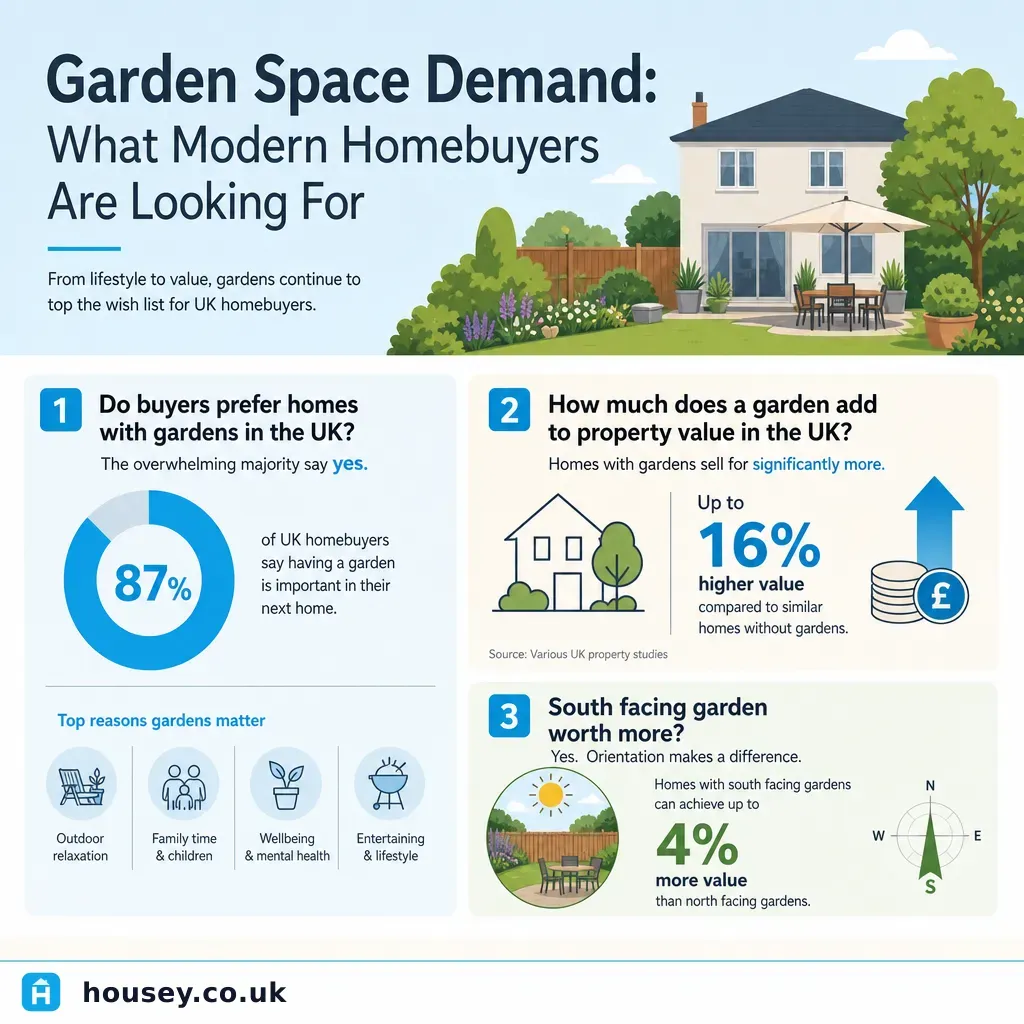
Garden Space Demand: What Modern Homebuyers Are Looking For
Gardens and private outdoor space rank among the most sought-after features for UK homebuyers, particularly since 2020.
 General property advice
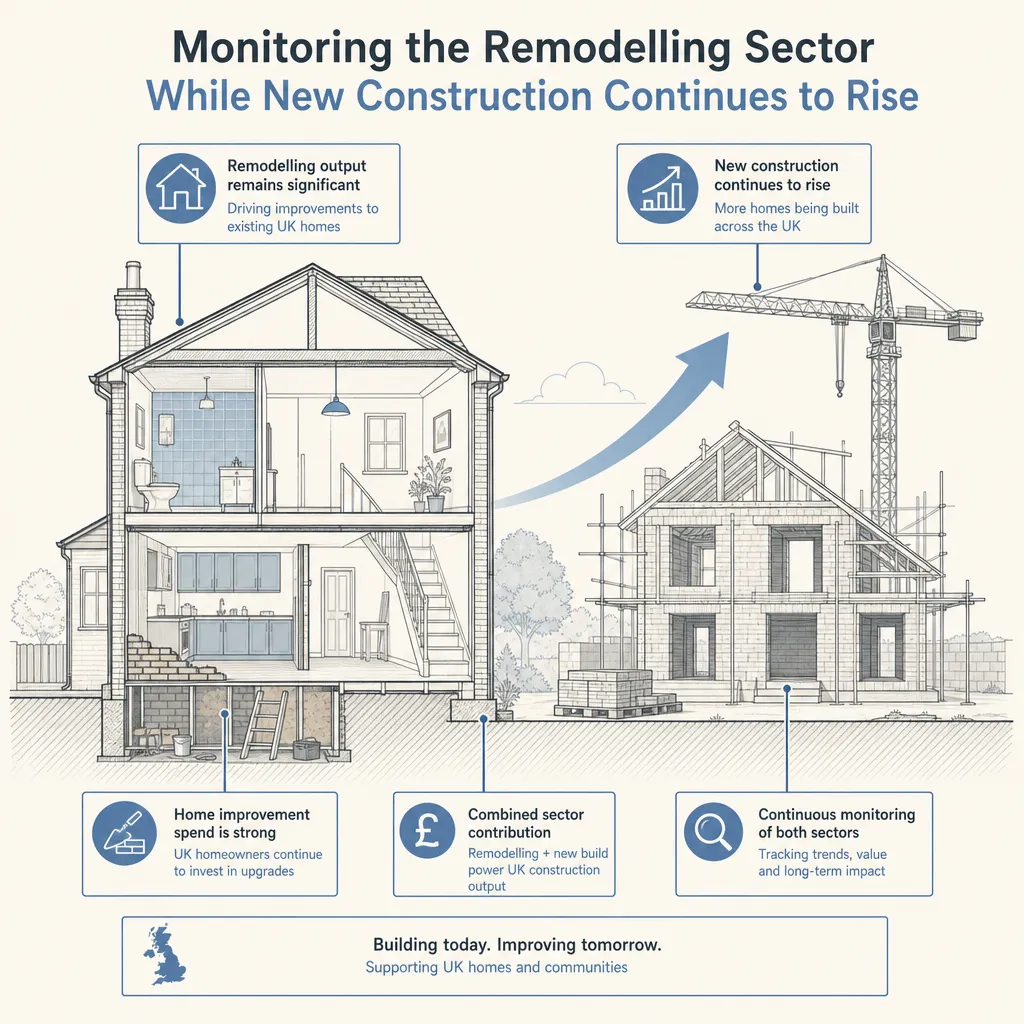
Monitoring the Remodelling Sector While New Construction Continues to Rise
The UK renovation sector runs alongside new-build activity, not in opposition to it — both draw on the same pool of skilled labour and materials.
 General property advice
Post-Lockdown Migration: Understanding Buyer Movement Out of Urban Areas
The COVID-19 lockdowns triggered a significant shift in UK buyer priorities, with many households trading city flats for more space in commuter towns, market towns, and rural areas.
 General property advice
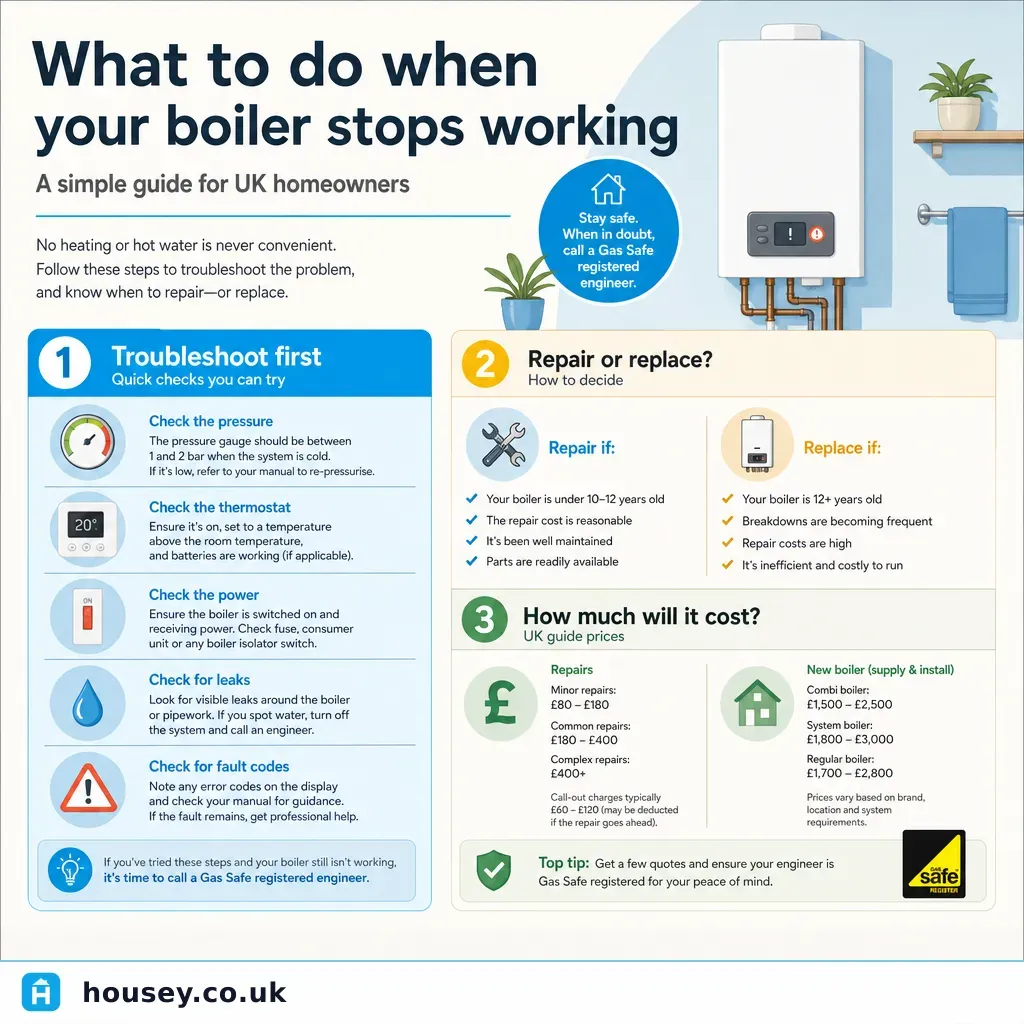
What to do when your boiler stops working
When your boiler stops working, check the pressure gauge (should read 1–1.
 General property advice
Property Market Trends: Activity Growth and Price Movements
UK property market activity is measured through completed sale registrations (HM Land Registry), lender mortgage data, and transaction volumes from HMRC.