Garden Supply and Landscaping Distribution: UK Market Trends for Homeowners
By Housey · Last reviewed 24th of May 2026
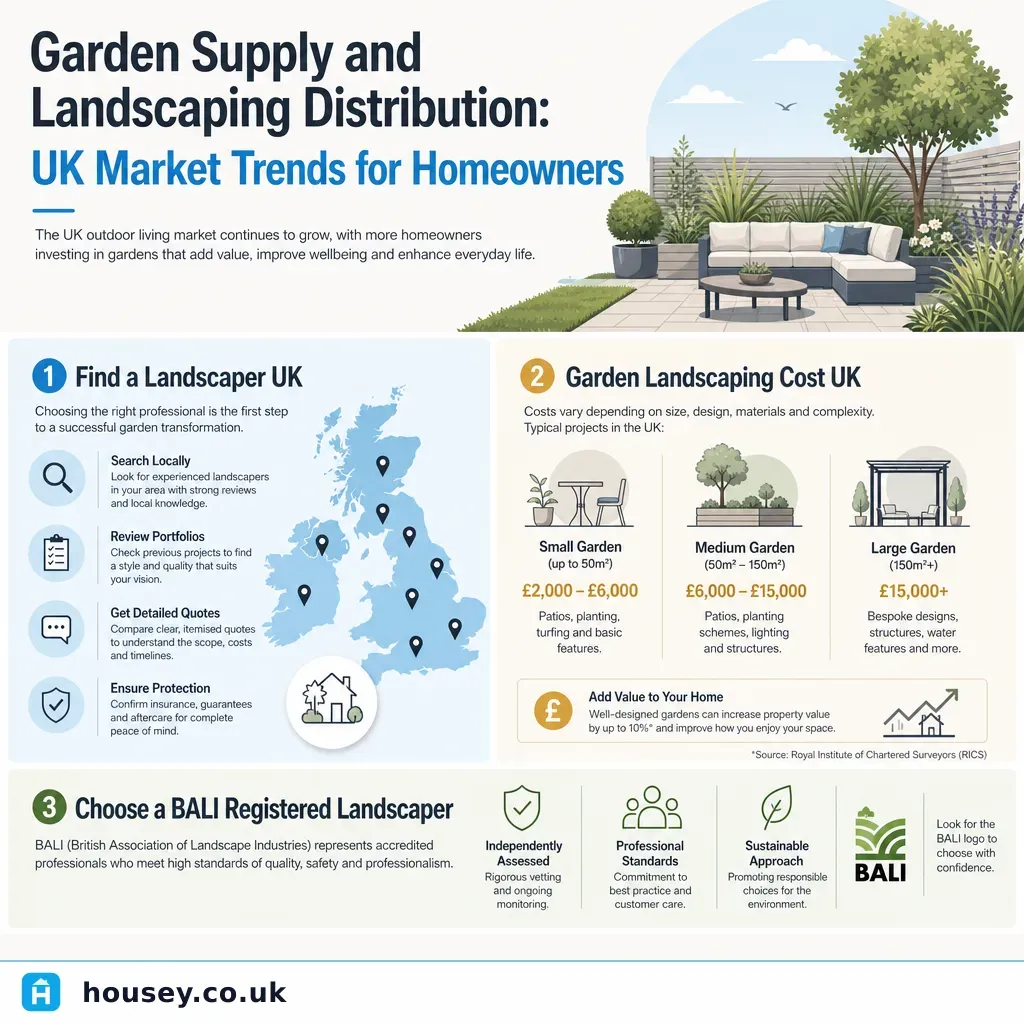
Garden Supply and Landscaping Distribution: UK Market Trends for Homeowners
Planning a significant garden project — whether a full landscaping redesign, patio installation, or new planting scheme — brings homeowners into contact with a supply chain that most have never needed to understand before. From stone and aggregate quarries to specialist plant nurseries and hardwood timber merchants, the materials that make up a garden are sourced, distributed, and priced through networks that have changed substantially over the past decade. Understanding this market helps you work more effectively with your landscaper, ask better questions, and set realistic project budgets.
Key points
- The Horticultural Trades Association (HTA) represents over 1,700 businesses across the UK garden industry, covering growers, retailers, and landscape contractors.
- BALI (British Association of Landscape Industries) is the primary professional body for UK landscape contractors; full BALI members are assessed against professional standards and insurance requirements as a condition of membership.
- Hard landscaping materials — stone paving, block paving, aggregates, and drainage products — are predominantly distributed through regional builders' merchants and specialist landscape distributors, where trade pricing typically differs from retail garden centre costs.
- Under permitted development rules, replacing more than 5m² of a front garden with an impermeable surface may require planning permission, or the use of a permeable alternative that drains to a lawn or border.
- RHS-qualified garden designers and BALI-registered contractors typically have access to trade accounts and wholesale plant suppliers not available to private buyers.
How UK landscaping materials reach your garden
The landscape supply chain operates through several tiers, and the route your contractor uses affects both the range of materials available and the pricing structure.
Supply tier | Who uses it | Typical materials | Notes for homeowners |
|---|---|---|---|
Specialist landscape distributors | Professional landscapers and larger contractors | Premium stone, porcelain, hardwood decking, drainage systems | Often not open to the public; trade pricing applies |
National builders' merchants | Landscapers and self-build homeowners | Aggregates, block paving, timber, drainage products | Trade accounts offer better pricing than cash counter rates |
Regional quarries and stone merchants | Landscapers and stone specialists | Natural stone, slate, gravel, decorative aggregates | Minimum order quantities often apply |
Garden centres and DIY sheds | DIY homeowners | Plants, compost, bagged aggregates, basic paving | Higher retail margins; limited hard landscaping range |
Online landscape suppliers | Landscapers and homeowners | Porcelain tiles, composite decking, artificial grass | Growing sector; delivery costs and material quality vary |
For significant projects, your contractor's supplier relationships can meaningfully influence both quality and cost. A landscaper with established trade accounts at specialist distributors often has access to materials — particularly natural stone and large-format porcelain — unavailable through mainstream retail.
Why the UK landscaping market has expanded
Investment in garden and outdoor living space accelerated noticeably following the 2020–2021 period, when many homeowners redirected discretionary spending into improving outdoor areas. While growth has moderated since, several lasting changes are visible in the market:
- Demand for specialist hard landscaping materials — porcelain paving, composite decking, rendered garden walls — has remained elevated.
- New importers have entered the UK market, particularly for large-format porcelain tiles from Spain, Italy, and China, increasing choice but also introducing variation in quality and thickness tolerances.
- The number of BALI-registered contractors has grown, though the sector continues to include many unregistered operators.
- Online distribution has expanded homeowner access to trade-specification products, though without the expert advice available from a specialist merchant or professional contractor.
What a professional landscaper brings beyond labour
A skilled contractor is also a procurement agent for the materials going into your garden. A professional landscaper will:
- Select materials appropriate for your drainage conditions, soil type, and frost exposure.
- Inspect deliveries and reject substandard product before installation.
- Advise on sub-base depth, edging requirements, and drainage gradients suited to your site.
- Hold trade accounts enabling access to products and pricing not available at retail.
The question of whether to supply your own materials or have your contractor source them deserves care. Supplying materials yourself can reduce the contractor's mark-up but transfers quality risk to you — and most professional landscapers will not warranty workmanship on materials they did not supply.
What to ask before hiring a landscaper
Before appointing any contractor, work through the following questions.
What to ask a landscaper before accepting a quote
- Are you a BALI registered member, or do you hold another recognised trade accreditation?
- Do you carry public liability insurance, and can I see a current certificate?
- Who will carry out the physical work — you directly, or subcontractors?
- What specifications will you use for sub-base depth and drainage?
- Where will you source the stone, paving, or timber, and can I see a sample or visit a completed project?
- What is the warranty on your workmanship?
- Is VAT included in your quote?
- How will you manage site access, waste disposal, and any skip requirements?
- Are there any permissions, notices, or utilities checks you will arrange?
Planning permission and paving: what homeowners often miss
Not all garden work proceeds without a planning application. Common points that catch homeowners out include:
Front garden paving. Replacing a front garden surface with impermeable paving covering more than 5m² requires planning permission or must use a permeable material, or direct water runoff to a lawn or border. This flows from householder permitted development rules aimed at managing surface water.
Garden walls. Walls higher than one metre adjacent to a highway, or over two metres elsewhere on a property, may require planning permission.
Rear patios. Rear garden hard landscaping is generally permitted development, but conservation area conditions or Article 4 Directions may apply.
Retaining walls and excavation. Where significant excavation is planned adjacent to a neighbouring boundary or property, a party wall notice under the Party Wall etc. Act 1996 may be required.
Always check with your local planning authority before beginning work in a conservation area or on or near a listed building.
When to get professional help
Consider engaging a qualified garden designer — look for RHS or Landscape Institute membership — rather than going directly to a contractor if:
- Your garden involves significant level changes, retaining structures, or drainage challenges.
- You want a cohesive design across a large or complex plot.
- You need to navigate planning requirements for structures or surface changes.
- You are planning to sell and want an outdoor scheme that improves kerb appeal without over-capitalising.
How Housey can help
Housey connects homeowners with vetted landscaping professionals across the UK. Whether you need a full design-and-build service, a specialist hard landscaping contractor, or guidance on planning requirements for your garden, Housey helps you find and compare local professionals with the right experience.
Frequently asked questions
Do I need planning permission for a new patio?
Rear garden patios are normally permitted development and do not require a planning application. However, if you are replacing front garden surfaces with impermeable material covering more than 5m², planning permission may be required or you must use a permeable surface alternative. Check with your local planning authority if you are in a conservation area or if permitted development rights have been restricted on your property.
Should I supply my own landscaping materials or let the contractor source them?
Letting your contractor source materials is generally the more straightforward approach, as they take responsibility for quality, suitability, and quantity. Most professional landscapers will only warrant their workmanship on materials they have supplied. Supplying your own materials can reduce the mark-up, but you bear the risk if materials arrive damaged, short, or unsuitable for the application.
What does BALI membership mean for a landscaping contractor?
BALI (British Association of Landscape Industries) full membership requires contractors to hold appropriate public liability insurance and meet professional standards as a condition. BALI operates a contractor-finding service and a complaints process. Membership indicates a baseline of professional accountability, but it does not guarantee project outcomes — always check references and ask to visit completed work before appointing.
How do I know if a landscaping quote is reasonable?
Obtain at least three written quotes from separate contractors to benchmark pricing. Each quote should specify material grades, sub-base depths, drainage provisions, labour rates, waste disposal, and whether VAT is included. Significant variation between quotes often reflects differences in specification rather than pricing alone. Ask each contractor to confirm in writing what is included and what could cause the final cost to change.
Sources and further reading
- Horticultural Trades Association — HTA (UK garden and horticultural industry body)
- BALI: British Association of Landscape Industries — professional body for landscape contractors
- Planning Portal: paving your front garden — Planning Portal
- GOV.UK: Party Wall etc. Act 1996 guidance — GOV.UK
- Royal Horticultural Society: finding a garden designer — Royal Horticultural Society
Useful next reads
 Improvement & Build
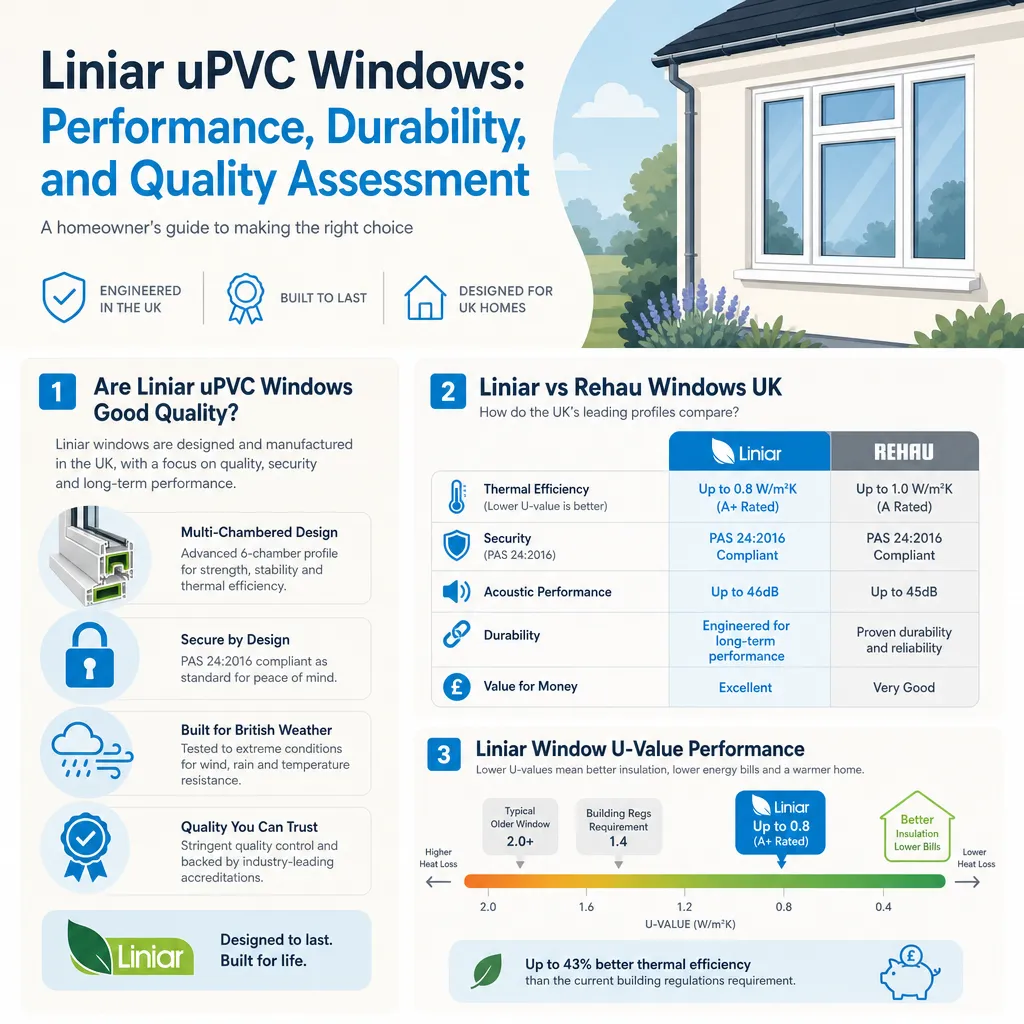
Liniar uPVC Windows: Performance, Durability, and Quality Assessment
Liniar uPVC window profiles are manufactured in the UK using multi-chambered, foamed frames.
 Improvement & Build
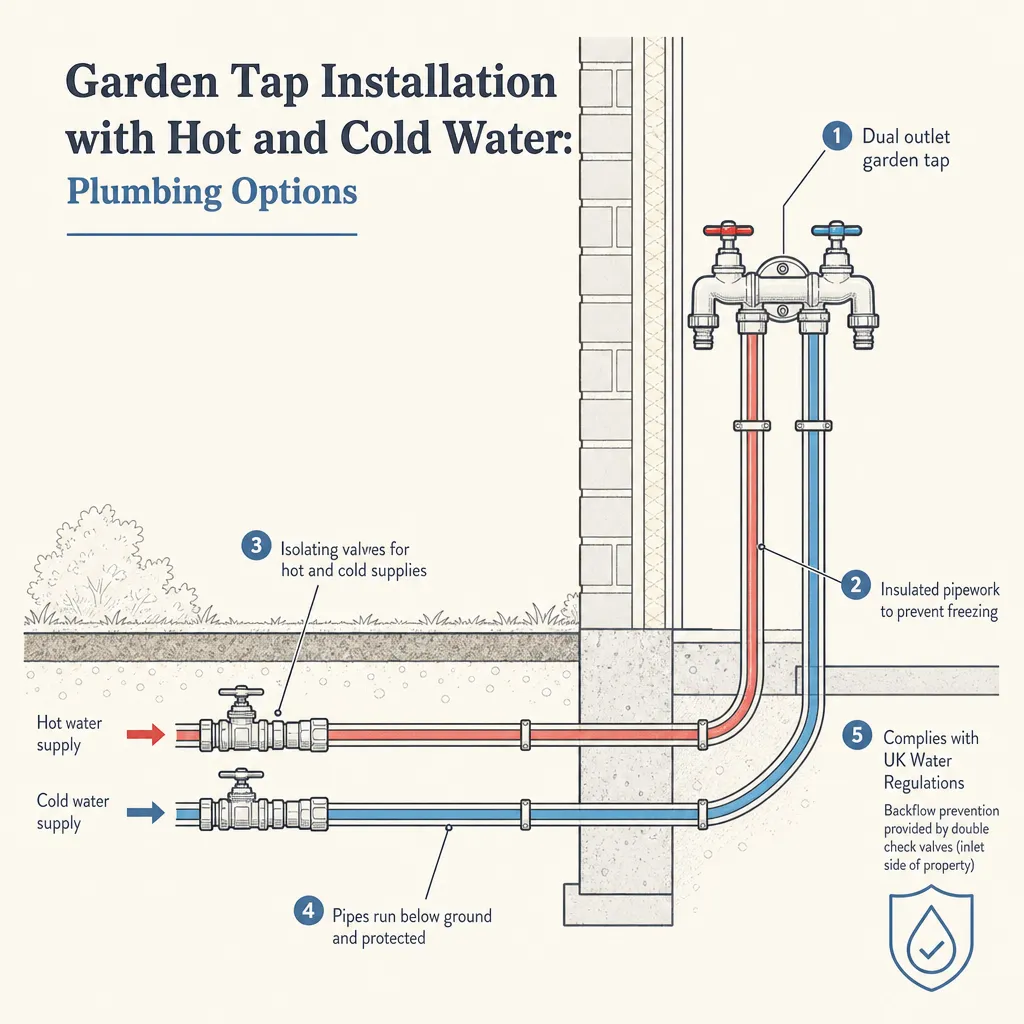
Garden Tap Installation with Hot and Cold Water: Plumbing Options
Adding a cold garden tap is a common DIY project, but routing hot water outdoors requires a plumber to connect to your domestic hot water system and comply with the Water Supply (Water Fittings) Regulations 1999.
 Improvement & Build
Sealing and Maintaining Historic Leaded Glass Windows: Preservation and Performance
Leaded glass windows are maintained using traditional linseed oil cement — not silicone or modern sealants, which prevent natural movement in the lead came.
 Improvement & Build
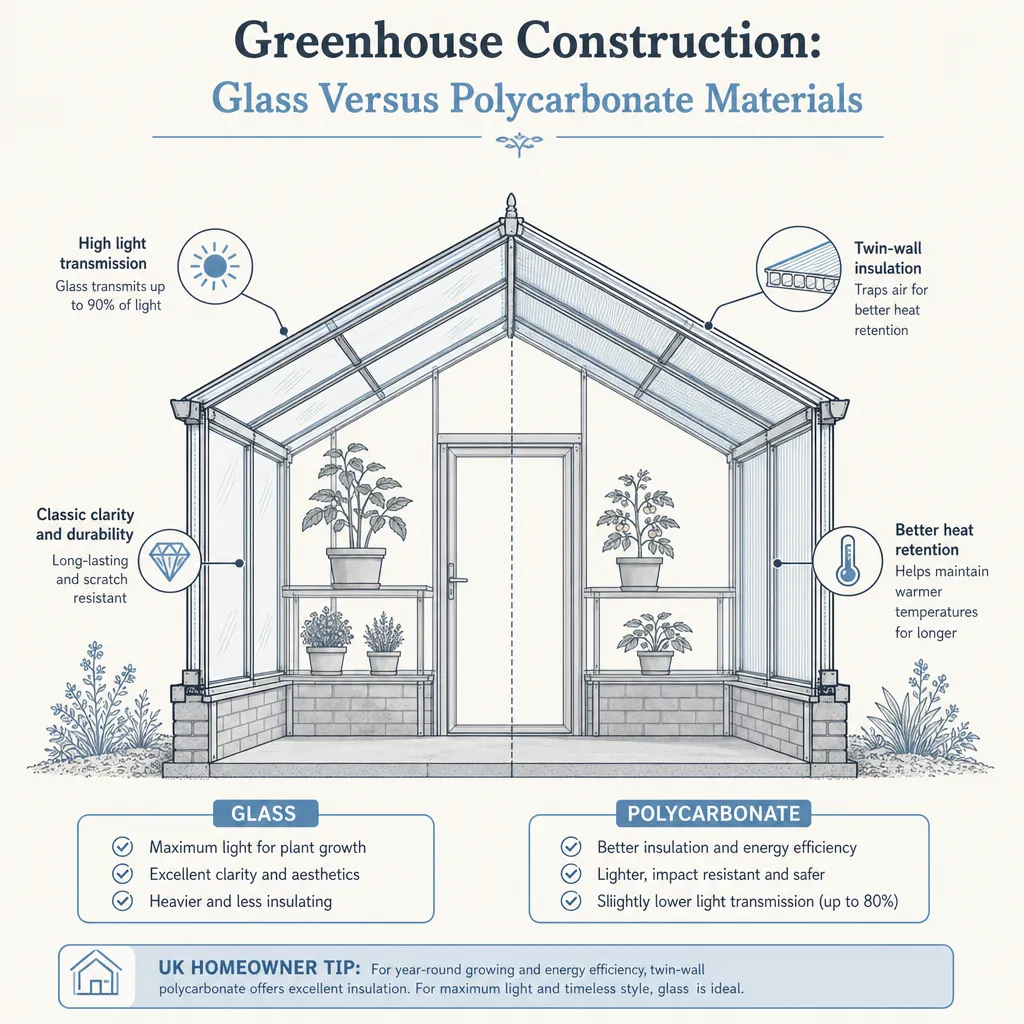
Greenhouse Construction: Glass Versus Polycarbonate Materials
Glass transmits around 90% of available light and lasts indefinitely if unbroken, but insulates poorly and shatters into sharp fragments.
 Improvement & Build
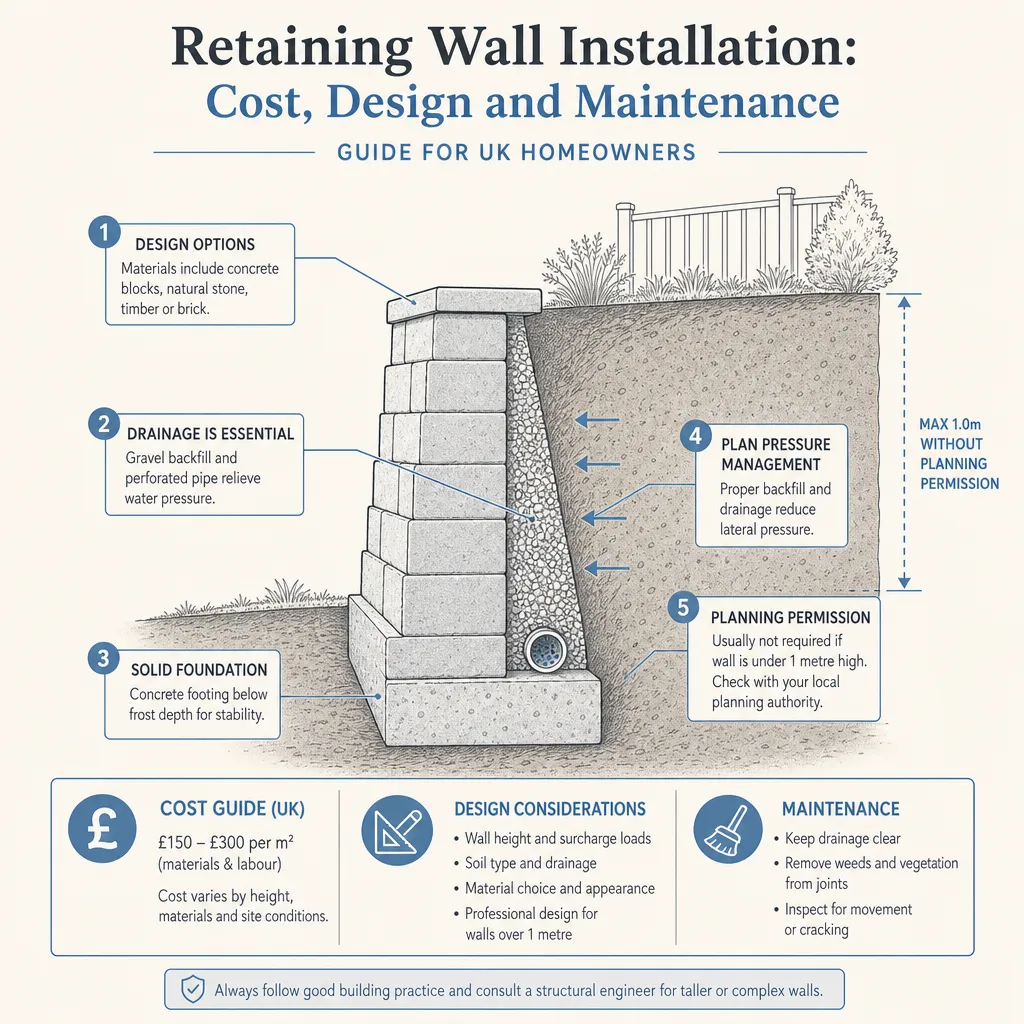
Retaining Wall Installation: Cost, Design and Maintenance
A retaining wall holds back soil on a sloped or banked site.