Garden Water Feature Design and Installation Costs
By Housey · Last reviewed 11th of May 2026
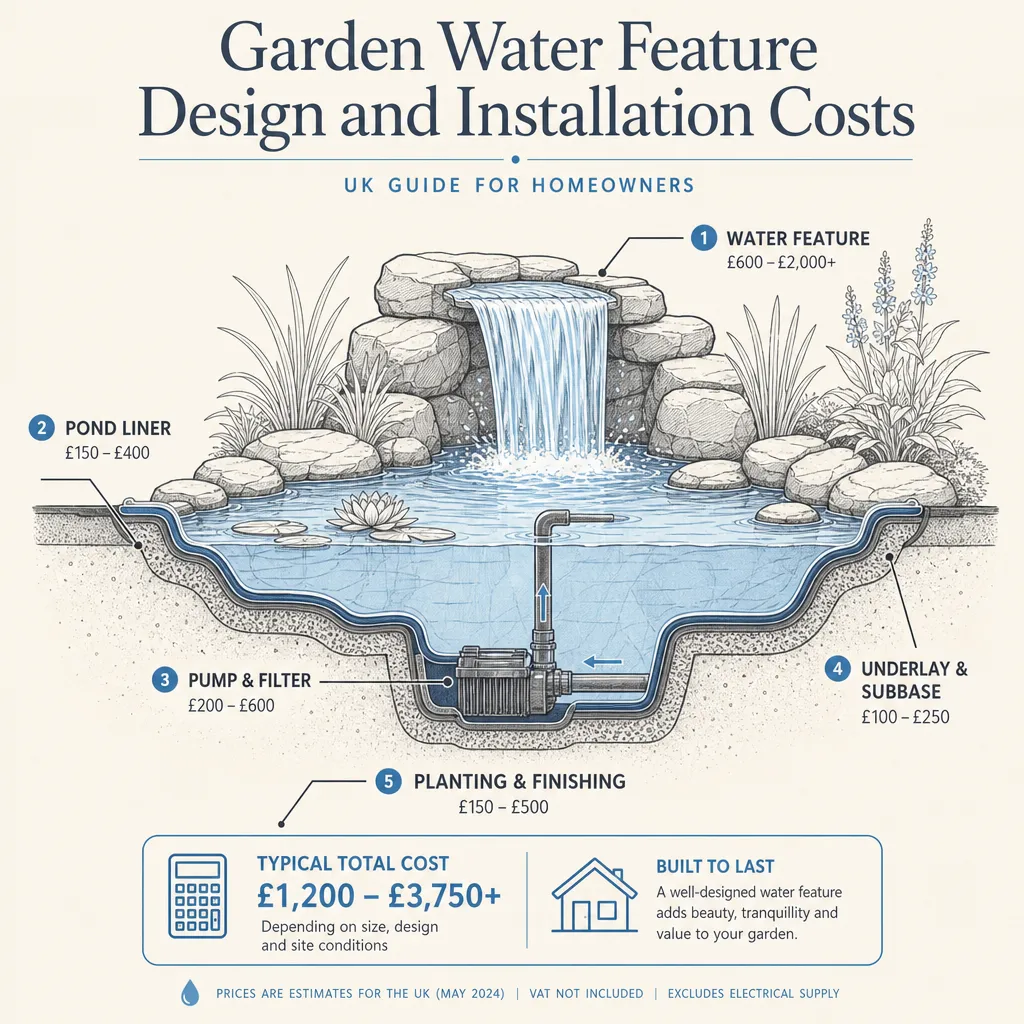
Garden Water Feature Design and Installation Costs
Whether you're planning a wildlife pond for a suburban back garden or a slimline wall-mounted fountain for a compact London terrace, the decision usually comes about during a wider garden redesign or when an outdoor space needs a defining focal point. The range of water features available to UK homeowners — from plug-in self-contained units to bespoke natural swimming ponds — means that costs, trade-offs, and installation requirements vary enormously, and the wrong choice for your plot, budget, or lifestyle can be expensive to correct.
Key points
- Indicative UK installation costs range from £300–£800 for a small self-contained fountain to £3,000–£15,000 or more for a lined pond with filtration, edging, and lighting, last reviewed 2026-05-11.
- Any mains-connected water feature requires a 240V outdoor-rated power supply with RCD protection; this electrical work must be carried out by a qualified electrician registered under Part P of the Building Regulations.
- Garden ponds in conservation areas, on listed properties, or covering more than half of the total garden area may require a check with the local planning authority before work begins.
- A 0.75 mm butyl rubber liner typically carries a 20–25 year manufacturer's guarantee; cheaper PVC alternatives often carry only 5–10 years.
- Running costs for a recirculating pump fall between roughly £30 and £150 per year depending on pump wattage and daily hours of operation.
Types of water feature and what they cost
Choosing the right feature type is the single biggest cost decision. The table below summarises common options for UK residential gardens.
Feature type | Typical installed cost (indicative, 2026) | Best for | Not ideal for | Maintenance level |
|---|---|---|---|---|
Self-contained fountain (plug-in or solar) | £300–£800 | Small patios, quick installs | Large gardens, naturalistic schemes | Low |
Wall-mounted water feature | £500–£1,500 | Narrow spaces, modern gardens | Wildlife ponds, informal designs | Low–medium |
Raised formal pond | £1,500–£4,000 | Contemporary layouts, structured gardens | Informal cottage styles | Medium |
Informal in-ground pond | £2,000–£8,000 | Wildlife habitats, naturalistic planting | Very small plots | Medium–high |
Rill or stream channel | £2,500–£10,000 | Long gardens, linking separate zones | Flat sites without gradient | Medium |
Koi pond with filtration | £5,000–£20,000+ | Fish keeping, feature gardens | Budget projects | High |
Natural swimming pond | £20,000–£60,000+ | Large rural or suburban plots | Compact urban gardens | High |
Indicative UK costs, last reviewed 2026-05-11. Prices depend on materials, size, site access, and local labour rates. Always obtain at least three competitive quotes.
Worked scenario: a 1930s semi in the East Midlands
A homeowner with a 60 sq m rear garden wanted a wildlife pond with marginal planting and a small waterfall cascade. Their installer quoted:
- Excavation and groundworks: £400
- 0.75 mm butyl liner (3 × 4 m): £220
- Pre-formed waterfall unit and submersible pump: £350
- Natural stone edging and cobble surround: £600
- Marginal and oxygenating plants: £180
- Electrical spur from garage (Part P-registered electrician): £280
Total: approximately £2,030. A formal raised pond in the same garden with rendered blockwork walls and granite coping would have cost £3,500–£4,500 for a similar footprint.
What affects the installation price?
Several factors push costs up or down independently of the feature type:
Site access and groundworks. Narrow side gates, sloped ground, or heavy clay soils increase excavation difficulty. Rocky ground may require specialist machinery.
Pump and filtration specification. A 15,000-litre koi pond needs a multi-stage filtration system and UV clarifier; a 1,000-litre wildlife pond may need only a simple submersible pump.
Electrical requirements. A new armoured cable run from the house to an outdoor weatherproof socket typically costs £200–£500 depending on distance and whether trenching through hard landscaping is needed.
Edging and surrounding materials. Natural stone costs significantly more than concrete, porcelain, or gravel alternatives.
Automation and lighting. LED underwater lighting, automatic top-up valves, and smart pump controllers each add upfront cost but can reduce long-term maintenance effort.
Design fees. If you instruct a garden designer separately from your installer, expect £50–£150 per hour or a fixed-fee design package from around £500.
Electrical and planning considerations
Electrical safety: any water feature connected to the mains must comply with Part P of the Building Regulations. Low-voltage (12V or 24V) pond transformers reduce shock risk, but the transformer must still be correctly installed and weatherproofed by a registered electrician. Most reputable installers either include an electrician in their team or sub-contract this work — confirm the arrangement before signing any contract.
Planning permission: most garden ponds and water features fall within permitted development and do not require a planning application. Check with your local planning authority if your property is in a conservation area, is listed, or if the feature would cover more than half the total garden area. In England, large ponds abstracting significant volumes from a watercourse or borehole may also require an abstraction licence from the Environment Agency.
Homeowner checklist: preparing for installation
Before your landscaper or garden designer arrives on site, confirm or gather the following:
What to ask before accepting a quote
- What is included — groundworks, liner, pump, electrics, edging, planting?
- Who carries out the electrical work, and are they registered under Part P (NICEIC, NAPIT, or equivalent)?
- What liner material and guarantee is offered?
- What pump and filter specification is proposed, and why is it suited to this pond volume?
- Is VAT included in the quoted price?
- What ongoing maintenance is recommended, and is a service contract available?
- What happens if ground conditions differ from expectations — and how is any additional cost agreed in advance?
When to get professional help
For simple solar-powered or plug-in features, confident DIYers can often carry out the installation. Mains electrical connections outdoors always require a Part P-registered electrician. Instruct a qualified landscaper and relevant specialists if your project involves:
- Excavation deeper than 600 mm, or near drainage runs, gas pipes, or foundations
- Mains electrical connections in an outdoor environment
- A pond exceeding 1,500 litres in a garden used by young children
- Groundwater or watercourse abstraction potentially requiring an Environment Agency licence
- Any works on or near a listed structure or within a conservation area
How Housey can help
Housey connects you with vetted landscapers and garden designers who can assess your plot, advise on the most suitable water feature type, and manage the installation from groundworks to planting. Describe your project once and compare multiple quotes, experience levels, and approaches side by side.
Frequently asked questions
Do I need planning permission for a garden pond?
Most garden ponds are permitted development and do not need planning permission. Exceptions include properties in conservation areas, listed buildings, and cases where the pond would cover more than half the garden's curtilage. Check with your local planning authority if in doubt — it's a free enquiry and can prevent costly enforcement problems later.
How much does it cost to run a garden water feature?
Running costs depend on pump wattage and daily operating hours. A 50W pump running 12 hours a day costs roughly £65–£90 per year at current UK electricity rates. Solar-powered features eliminate running costs but may not operate continuously during low-light months. Indicative figure, last reviewed 2026-05-11.
How long does garden water feature installation take?
A small self-contained wall fountain can usually be installed in a single day. A formal raised pond with edging and electrics typically takes two to four days. A larger informal pond with planting, filtration, and a new electrical supply may take five to ten working days, depending on site conditions and groundworks required.
What is the most low-maintenance type of water feature?
Self-contained recirculating fountains with a sealed reservoir require the least maintenance — topping up water in dry weather and occasional pump cleaning. Open wildlife ponds need more regular management (algae, blanket weed, autumn leaf clearance) but support biodiversity and cost less to run than filtered koi ponds.
Sources and further reading
- Planning Portal — garden projects and permitted development — Planning Portal / GOV.UK
- Apply for a water abstraction or impoundment licence — Environment Agency / GOV.UK
- Approved Document P — electrical safety in dwellings — GOV.UK
- Find a registered electrician — NICEIC
Useful next reads
 Improvement & Build
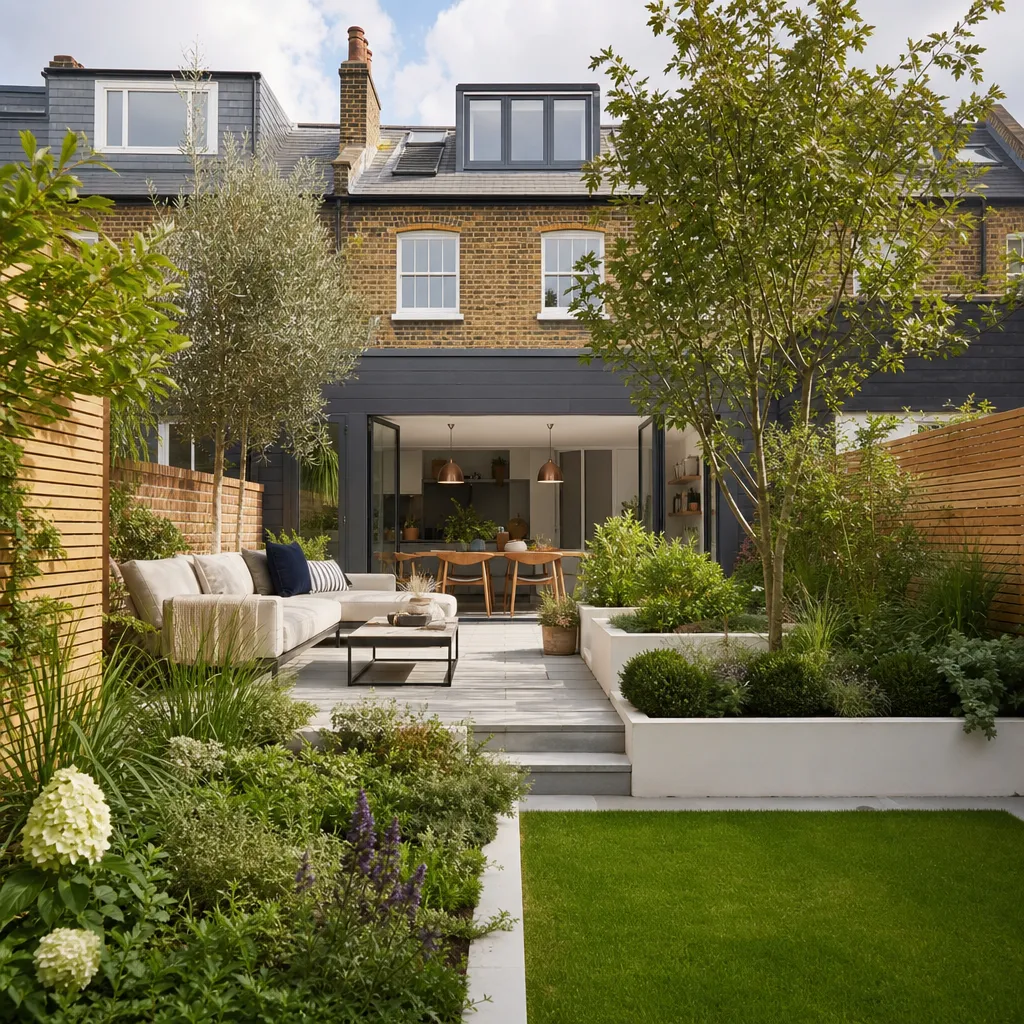
Seasonal Garden Transformations and Outdoor Design Ideas
A successful garden transformation in the UK works with the seasons rather than against them — establishing structure and hard landscaping in autumn or winter, planting in spring, and enjoying the results through summer.
 Improvement & Build
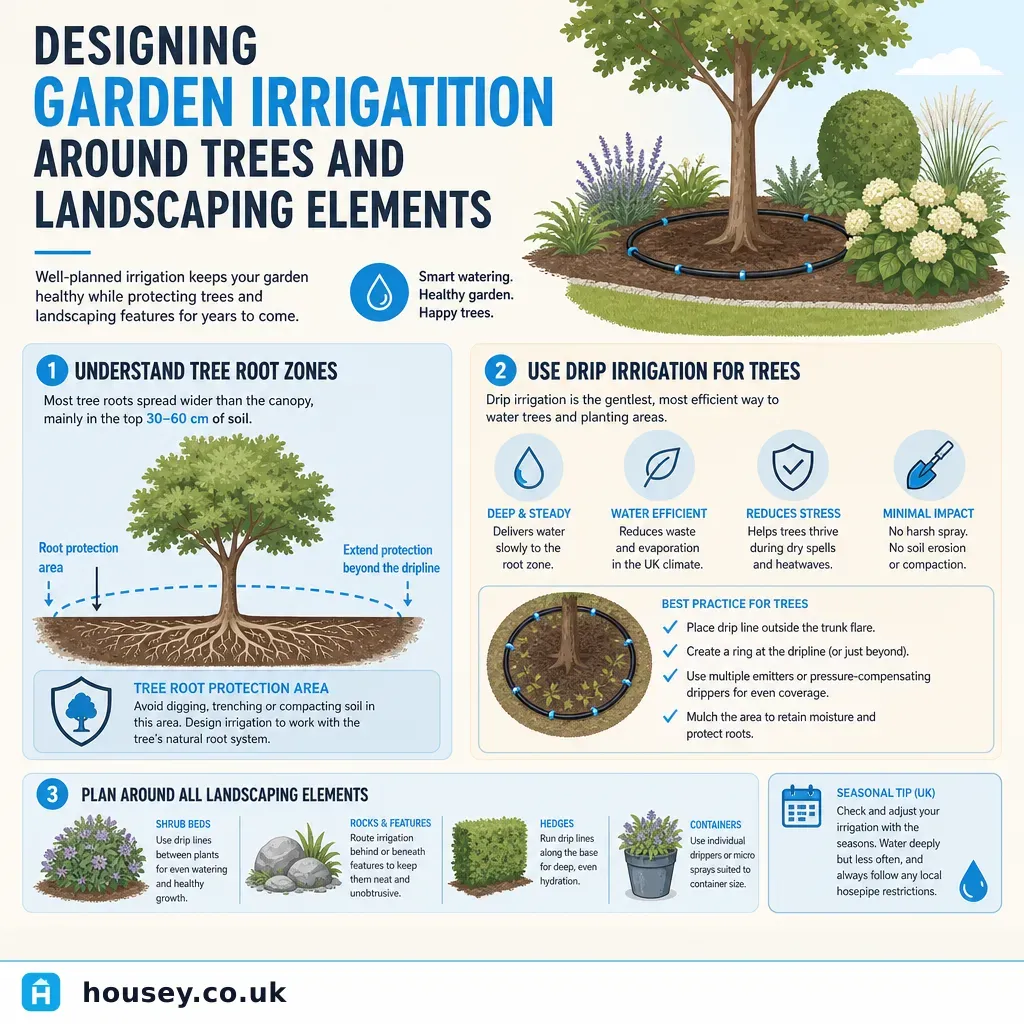
Designing Garden Irrigation Around Trees and Landscaping Elements
Design irrigation around trees by respecting the root protection area defined under BS 5837:2012, using drip or leaky pipe delivery rather than spray heads, and putting the tree zone on its own circuit.
 Improvement & Build
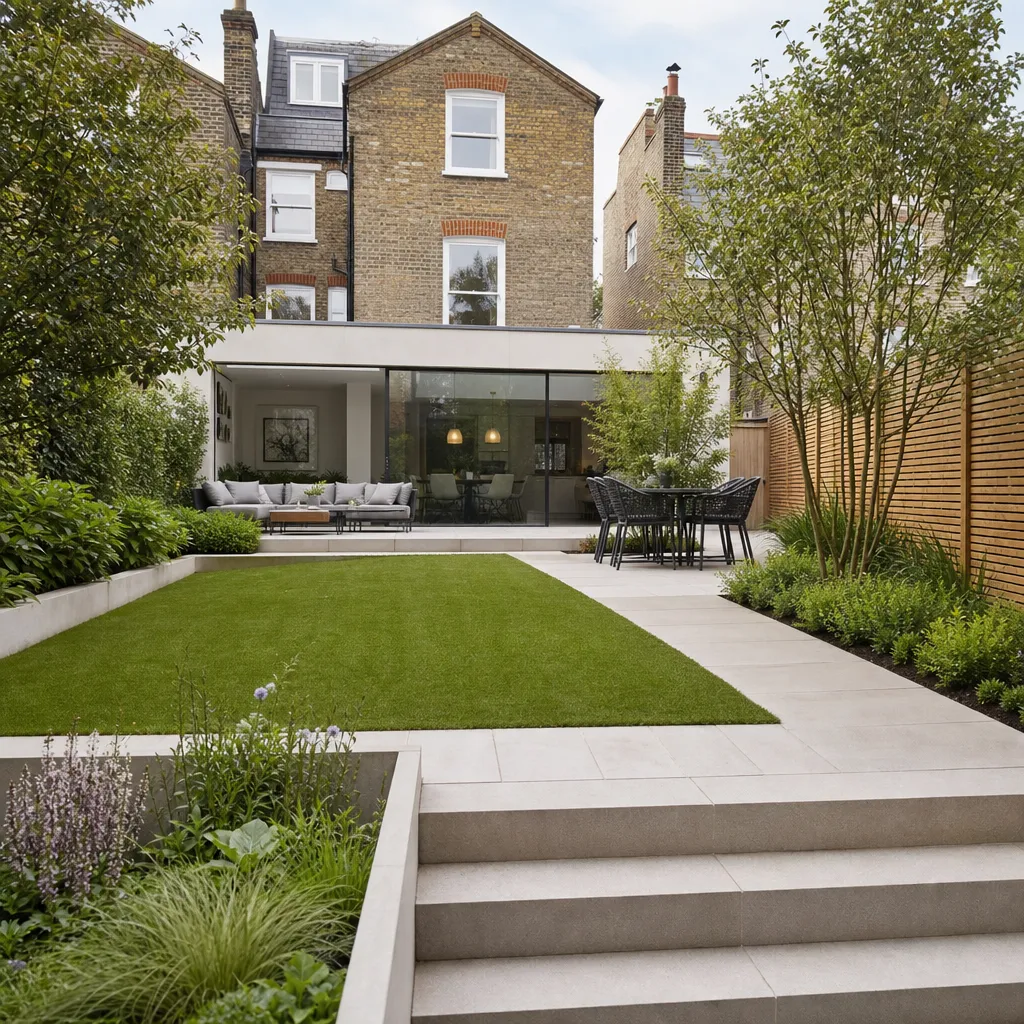
Garden Design Trends and Contemporary Landscaping Ideas
Contemporary UK garden design centres on low-maintenance naturalistic planting, multi-functional outdoor spaces, sustainable hard landscaping materials, and wildlife-friendly rewilded areas.
 Improvement & Build
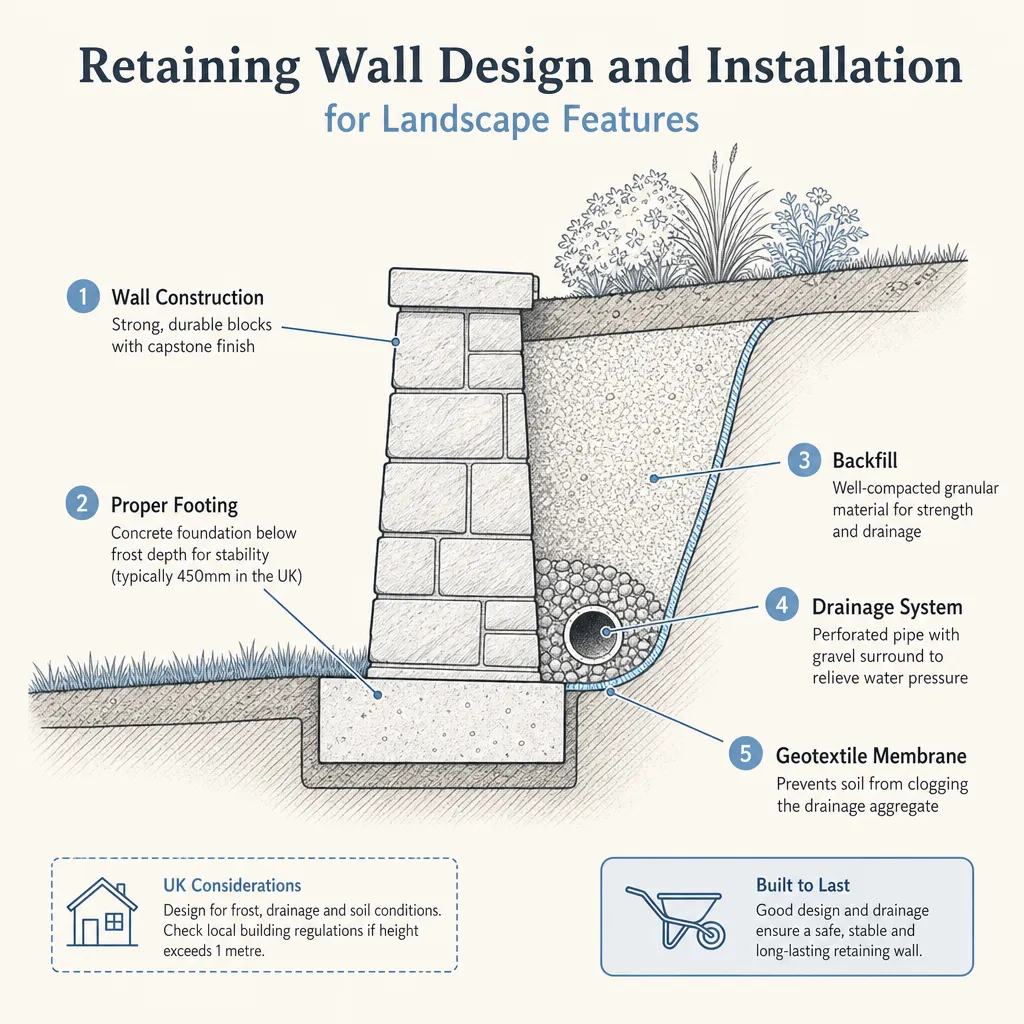
Retaining Wall Design and Installation for Landscape Features
A garden retaining wall holds back soil on a sloped plot using concrete blocks, stone, or timber.
 Improvement & Build
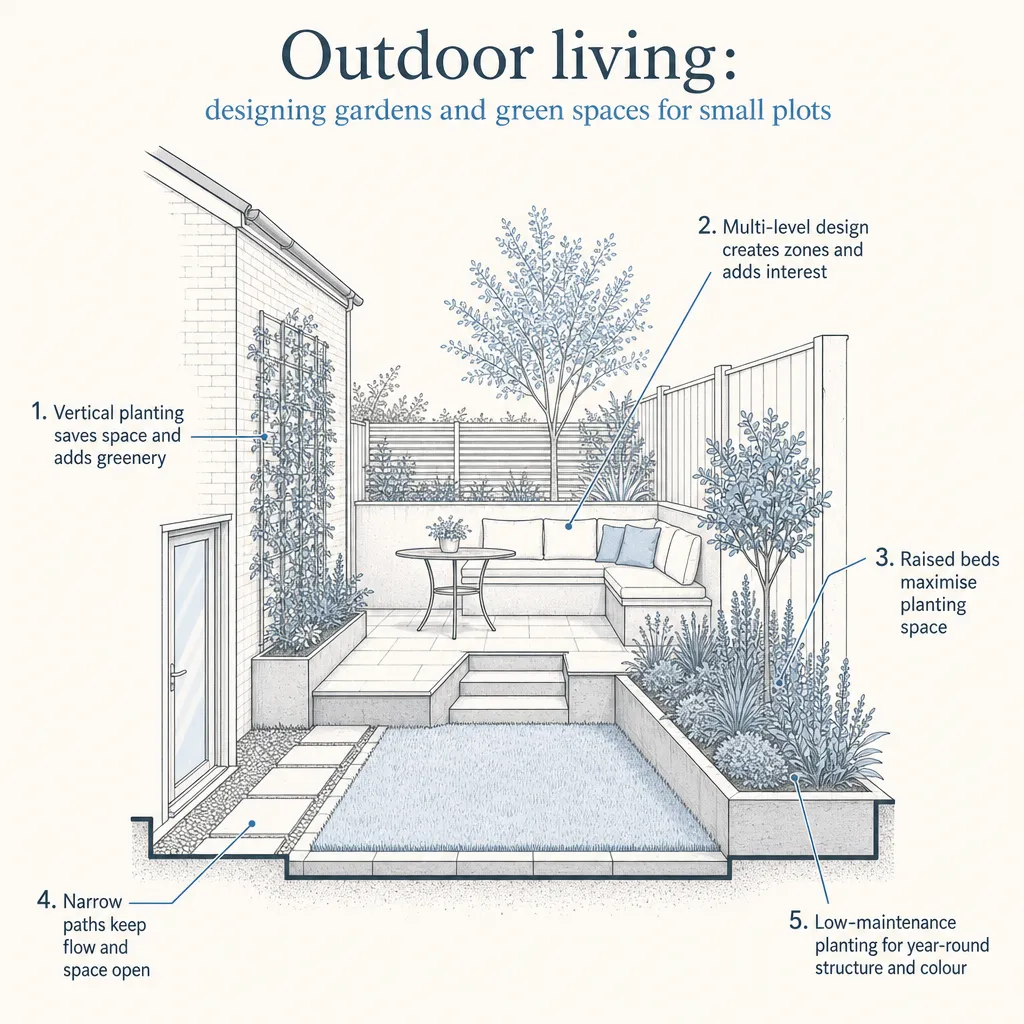
Outdoor living: designing gardens and green spaces for small plots
Small plots work best when divided into defined zones — seating, planting, and utility — before materials are chosen.