Garden Windows: Design, Installation, and Benefits
By Housey · Last reviewed 31st of May 2026
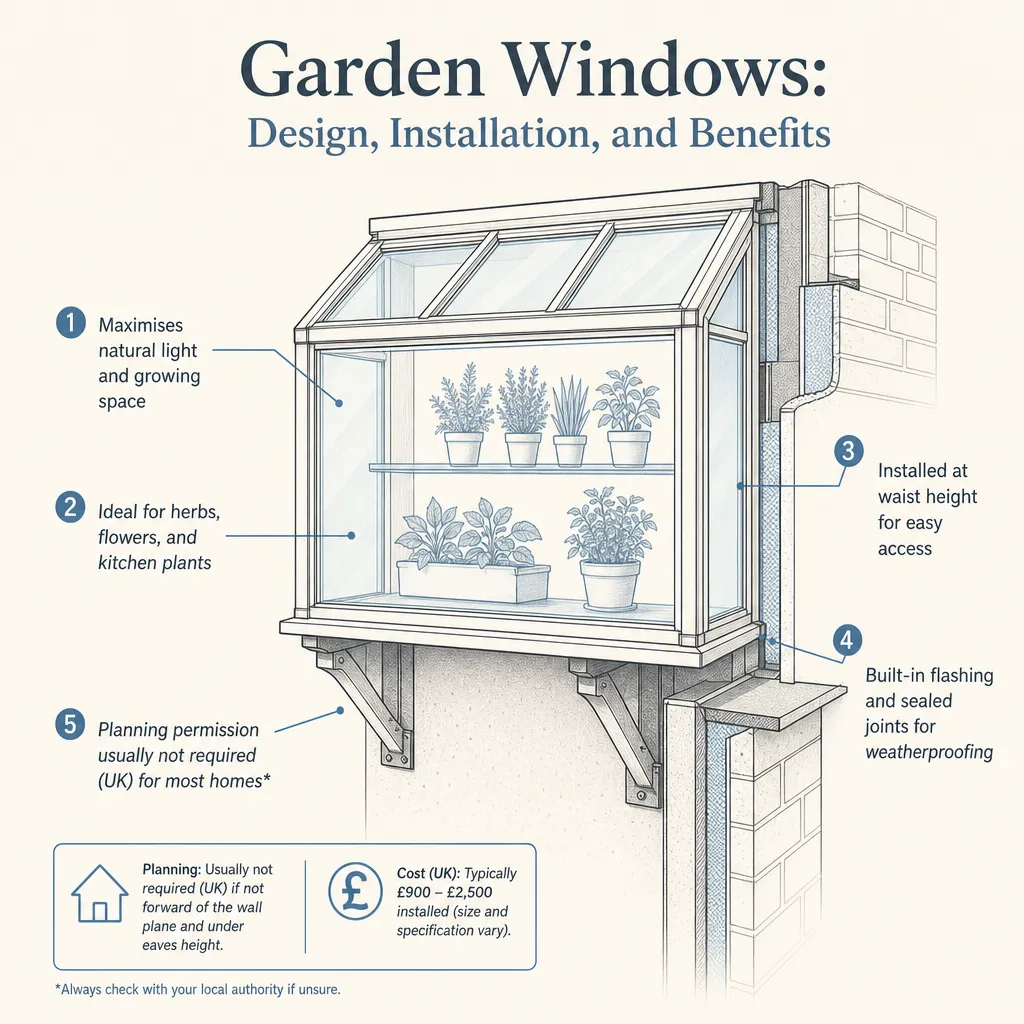
Garden Windows: Design, Installation, and Benefits
Garden windows sit at the junction of practical improvement and design statement — they extend outward from the building like a small glazed box, creating a shelf flooded with natural light. They are most commonly considered during a kitchen refit or window replacement, when homeowners want to increase light and the sense of space without the cost or complexity of a full extension. Getting the installation right means understanding permitted development rules, glazing standards, and what a competent installer should deliver.
Key points
- A garden window is a projecting glazed unit with a sloped or flat glass roof panel, fixed side panels, and one or two opening side vents — distinct from a conservatory or a traditional bay window.
- Most garden window installations in England fall within permitted development rights and do not require a planning application, provided the projection does not exceed 300 mm beyond the outside wall and no raised platform is included.
- Building Regulations Part L (conservation of fuel and power) applies to replacement glazing, including garden windows; minimum whole-window energy ratings or U-values must be achieved.
- FENSA-registered installers can self-certify compliance with Building Regulations and issue a certificate that satisfies future buyers' solicitors and HM Land Registry requirements.
- Indicative UK supply and installation costs range from approximately £800 to £3,500 or more, depending on size, frame material, and glazing specification (Indicative UK costs, last reviewed 2026-05-31 — obtain project-specific quotes).
What is a garden window?
A garden window — sometimes called a greenhouse window — projects outward beyond the external wall, creating a box-shaped alcove with a glazed surround. Unlike a conservatory, which forms a full room extension, a garden window replaces a single window opening and typically projects 250–400 mm beyond the wall line.
The standard components are:
- A sloped or flat glazed roof panel to admit overhead light
- Fixed glazed side panels
- One or two opening side vents for ventilation and access
- A shelf or sill at the base — suitable for plants, herbs, or display items
They are most commonly installed in kitchens above worktops, where the combination of overhead light and ventilation is particularly useful. Bathrooms, living rooms, and utility rooms are also feasible locations, depending on building orientation and wall construction.
Garden windows compared with bay windows and conservatories
Feature | Garden window | Bay window | Conservatory |
|---|---|---|---|
Projection from wall | Typically 250–400 mm | Variable; often 500 mm–1 m+ | Usually 2.5 m or more |
Structural alteration required | Rarely — fits existing opening | Sometimes — may require new lintel | Yes — foundations and base required |
Planning permission (typical) | Usually not required (permitted development) | Depends on size and projection | Usually not required if under 30 m² and other PD conditions are met |
Building Regulations | Part L (glazing energy performance) | Part L plus structural if lintel needed | Part L, Part A, Part B if adjacent to dwelling |
Indicative cost range | £800–£3,500+ | £3,000–£10,000+ | £10,000–£30,000+ |
Primary benefit | Light, display shelf, ventilation | Space, light, kerb appeal | Additional habitable room |
Best suited to | Kitchens, utility rooms | Living rooms, front elevations | Where a full extra room is needed |
Indicative UK costs, last reviewed 2026-05-31. Costs vary by size, specification, location, and contractor.
Planning and Building Regulations
Permitted development in England
In England, most garden window installations fall within permitted development rights for existing dwellings under the Town and Country Planning (General Permitted Development) (England) Order 2015. The key conditions are:
- Projection no more than 300 mm beyond the outside wall of the house
- No higher than the bottom of the existing window eaves
- No raised platform included in the design
- Does not face a highway in a position that would project beyond the principal elevation
If your property is a listed building, in a conservation area, or subject to an Article 4 Direction removing permitted development rights, a planning application is required regardless of the window's size. Always check with your local planning authority before proceeding if you are uncertain.
In Scotland and Wales, permitted development rules differ in their detail; consult your local planning authority for current guidance.
Building Regulations Part L
Replacement glazing — including garden windows — must achieve minimum energy performance standards under Building Regulations Part L. In practice this means:
- A minimum whole-window energy rating of Band C (Window Energy Rating — WER), or
- A centre-pane U-value of no more than 1.2 W/m²K for double glazing
FENSA-registered installers can self-certify that the installation complies and provide a certificate. If your installer is not FENSA-registered, a separate building regulations application must be made to the local authority building control. Retain any certificate you receive — it will be requested on any future sale.
Checklist: before instructing a garden window installer
What to ask before accepting a quote
- What is the projected depth, width, and height of the finished unit, and how does it relate to the existing opening?
- Is the price for supply and full installation, or supply only?
- Are you FENSA-registered, and will you provide a Building Regulations compliance certificate?
- What glazing specification are you using, and what WER or U-value does it achieve?
- What does the price assume about the existing opening and lintel condition — and what happens if that assumption proves wrong on the day?
- Is internal redecoration or making-good after installation included, or priced separately?
- What is the guarantee period for the frame, glazing unit, and seals?
When to get professional help
Most garden window installations are straightforward. Consult a professional if:
- Your property is listed or in a conservation area — planning permission or listed building consent may be needed before any work begins.
- The existing window opening requires structural alteration, such as widening or a new or upgraded lintel.
- The installation is at first-floor level or above — working at height requires appropriate access equipment from a competent contractor.
- You are unsure about the wall construction type, and the installer has not assessed the fixing requirements before quoting.
How Housey can help
Housey connects homeowners with vetted window and door installers who can supply, specify, and fit garden windows to Building Regulations standards. Use Housey to compare quotes from local specialists and confirm that your installer holds FENSA registration or an equivalent accreditation before work begins.
Frequently asked questions
Do garden windows need planning permission?
Most garden window installations in England fall within permitted development rights, provided the projection does not exceed 300 mm beyond the outside wall and the unit does not include a raised platform. Listed buildings, conservation areas, and properties with Article 4 Directions require planning permission. Always confirm with your local planning authority if you are unsure.
Can a garden window be installed in a solid wall?
Yes, but the installation is more complex than in a cavity-wall property. Solid walls require appropriate fixings and weatherproofing details to prevent water ingress at the frame junction. A competent installer should assess the wall construction and confirm the fixing specification before quoting.
How much does a garden window cost in the UK?
Indicative UK supply and installation costs range from approximately £800 for a small standard uPVC unit to £3,500 or more for a larger aluminium or timber-framed unit with premium glazing. Costs vary by size, specification, wall construction, and location. Obtain at least two to three detailed quotes before proceeding. (Indicative UK costs, last reviewed 2026-05-31.)
Do I need to tell my mortgage lender about a garden window?
A like-for-like garden window replacement within permitted development is unlikely to affect your mortgage materially. If you are widening the opening or making structural alterations, notify your buildings insurer and check your mortgage conditions. Retain your FENSA certificate as evidence of Building Regulations compliance.
How long does a garden window installation take?
A standard installation — removing the existing window and fitting the garden window to an existing opening — typically takes one working day. If the opening requires alteration, new lintel work, or significant making-good internally and externally, the programme will extend to two or more days.
Sources and further reading
- Town and Country Planning (General Permitted Development) (England) Order 2015 — legislation.gov.uk
- Conservation of fuel and power: Approved Document L — GOV.UK
- FENSA: registered window and door installers — FENSA
- Planning guidance: Windows — Planning Portal
Useful next reads
 Improvement & Build
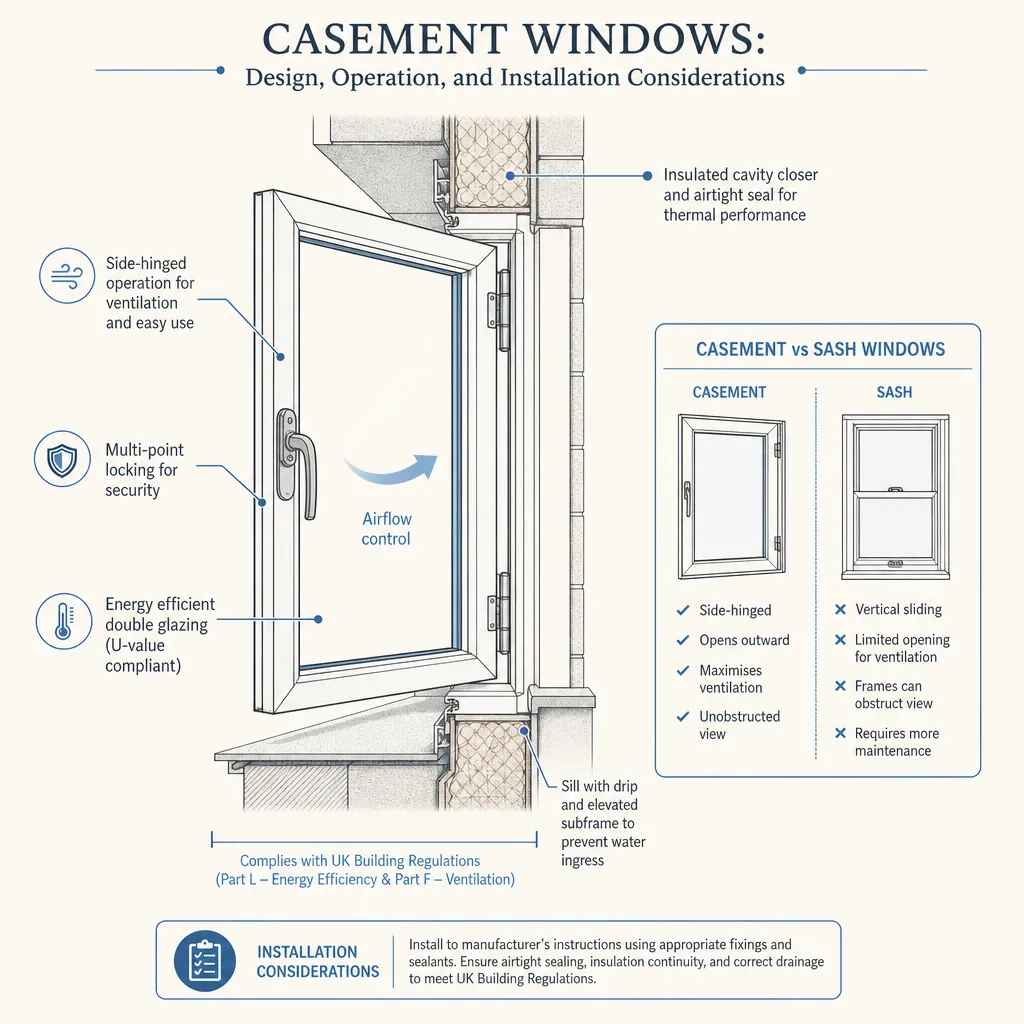
Casement Windows: Design, Operation, and Installation Considerations
Casement windows are hinged on one side and open outward, controlled by a handle and stay bar.
 Improvement & Build
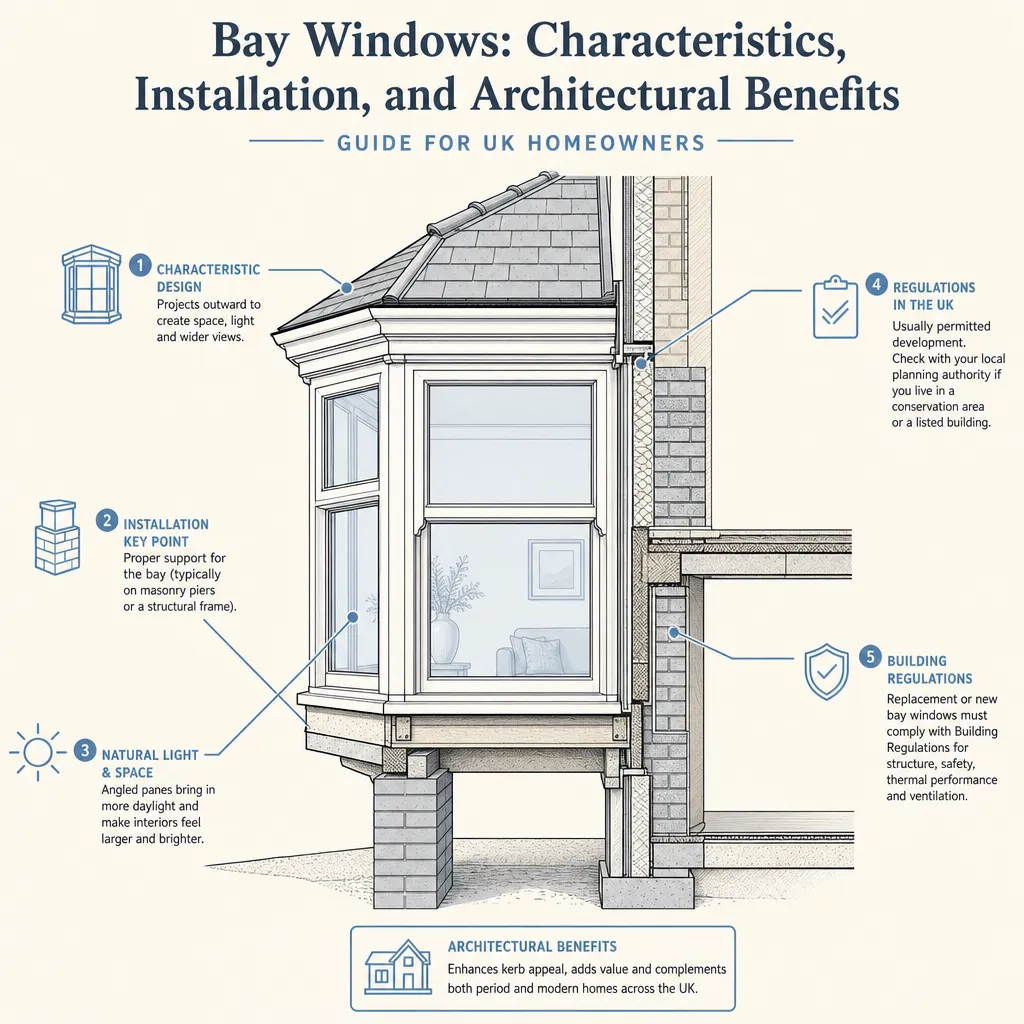
Bay Windows: Characteristics, Installation, and Architectural Benefits
Bay windows project outward from the main wall, adding floor space, natural light, and architectural character.
 Improvement & Build
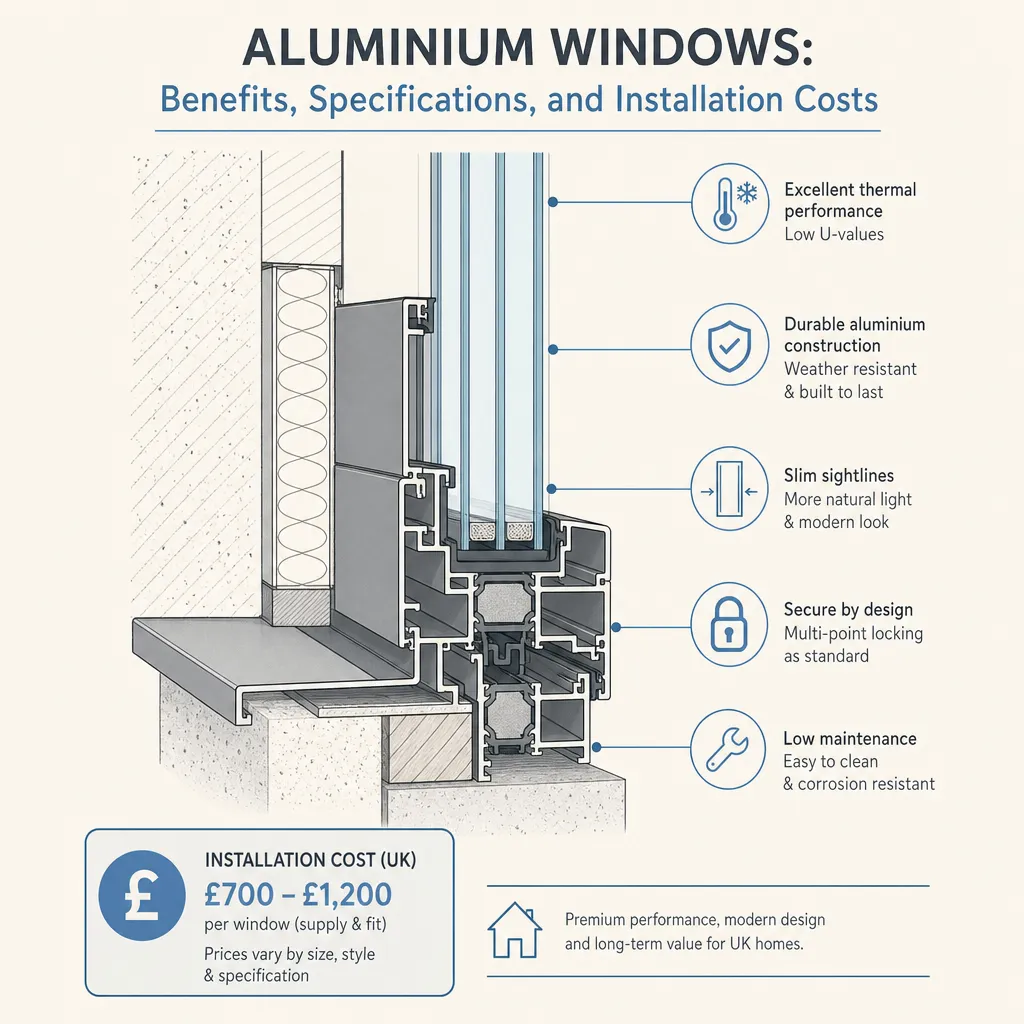
Aluminium Windows: Benefits, Specifications, and Installation Costs
Aluminium windows typically cost £600–£1,800 per window installed in the UK, depending on size and specification.
 Improvement & Build
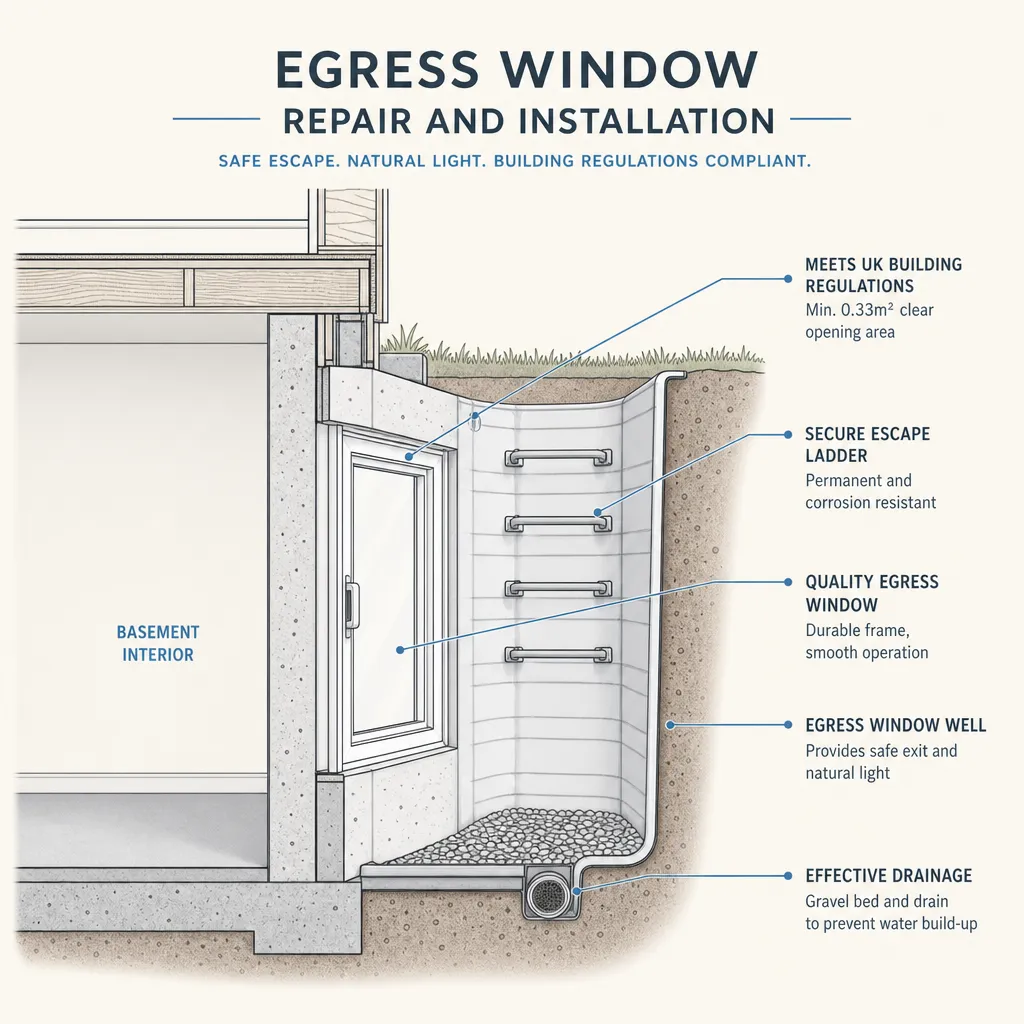
Egress Window Repair and Installation
An egress window is a window large enough to serve as an emergency escape route from a habitable room.
 Improvement & Build
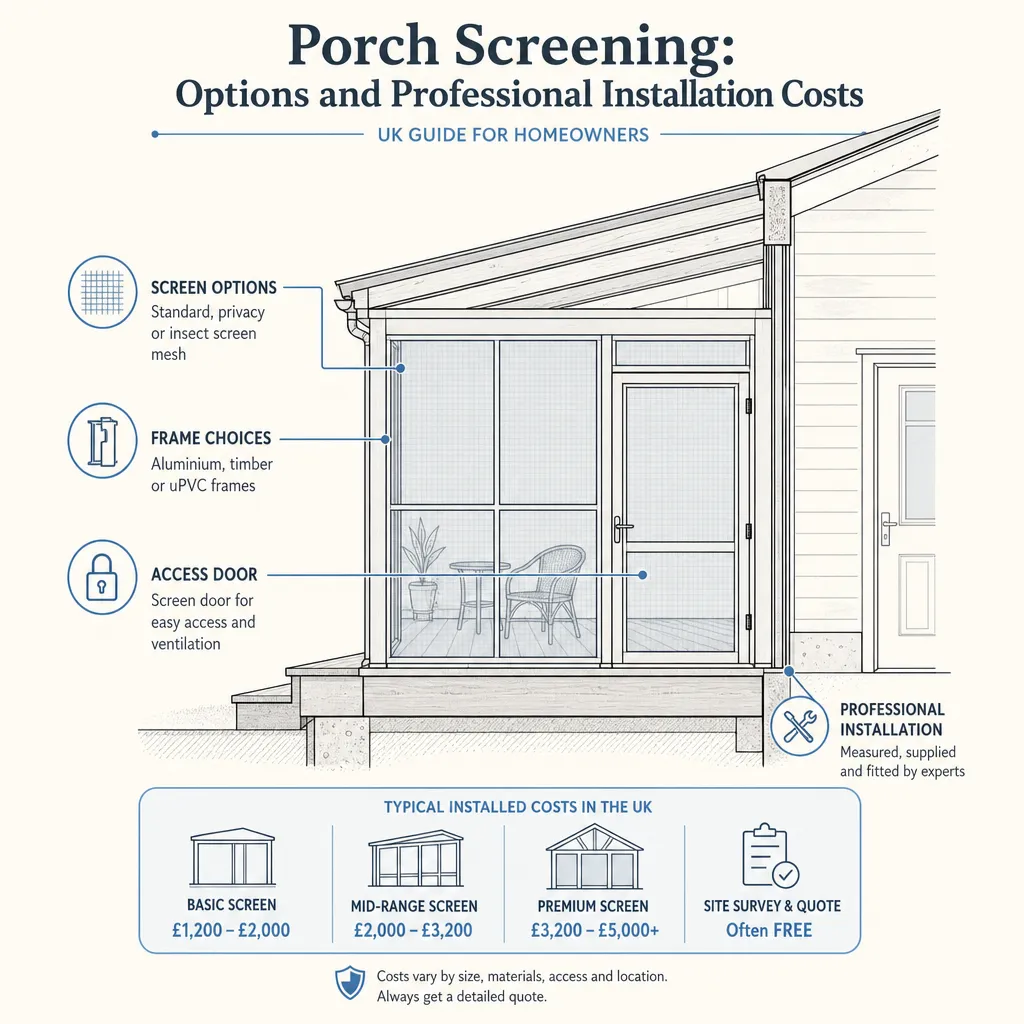
Porch Screening: Options and Professional Installation Costs
Porch screening ranges from simple insect mesh on a timber frame to bespoke aluminium-framed glazed enclosures.