Garden and Yard Drainage Problems: Professional Solutions
By Housey · Last reviewed 11th of May 2026
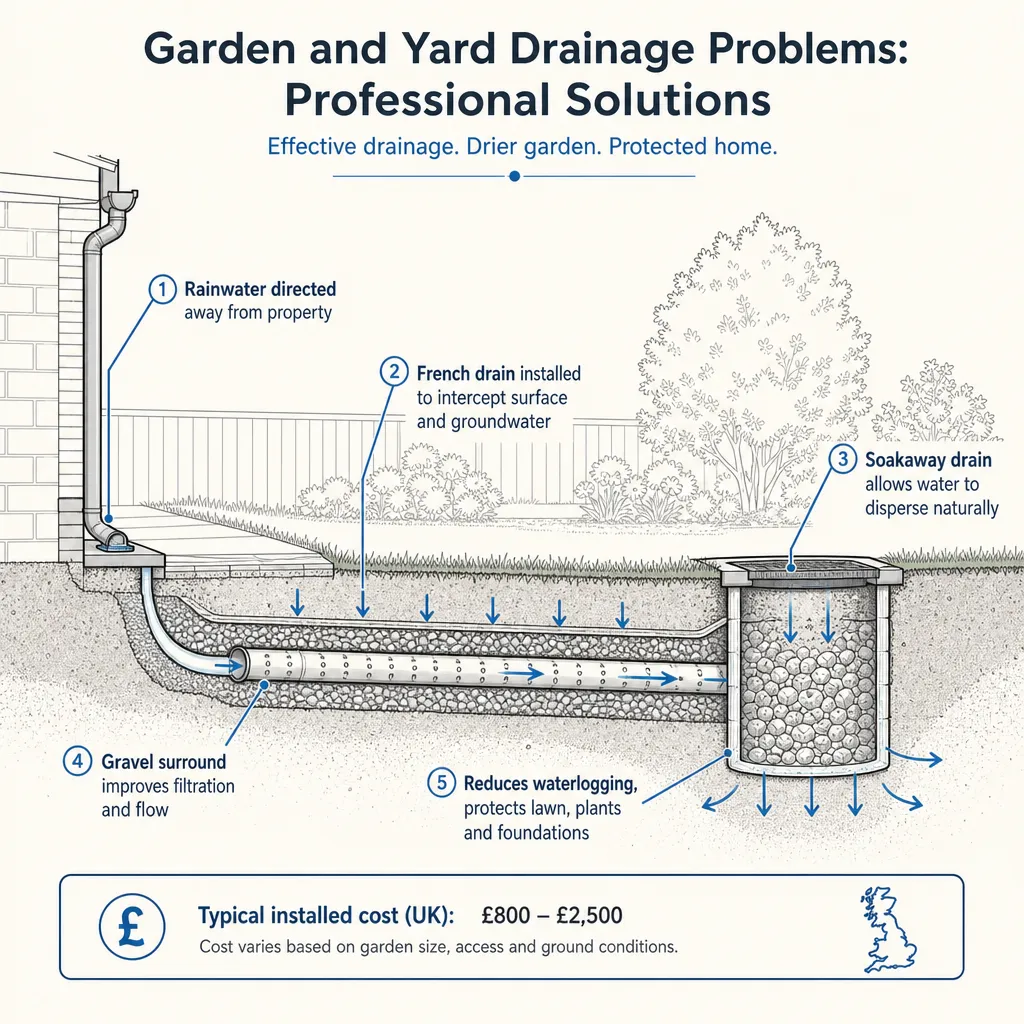
Garden and Yard Drainage Problems: Professional Solutions
Poor drainage is one of the most persistent and damaging problems affecting UK gardens and yards, particularly in older properties on heavy clay soils or on plots that have been built up or altered over time. The symptoms typically emerge after prolonged autumn and winter rainfall, when standing water refuses to disperse and waterlogged ground begins affecting patios, paths, and the perimeter of buildings. Acting on drainage problems early — before water reaches foundations or affects neighbouring land — can significantly reduce the cost and disruption of eventual remediation.
Key points
- Soakaways must be positioned at least 5 metres from any building and 2.5 metres from a boundary under Building Regulations Approved Document H.
- Connecting a new drainage outlet to the public sewer requires prior consent from your sewerage undertaker; unauthorised connections are an offence under the Water Industry Act 1991.
- Clay soils underlie approximately 40% of England and are the leading cause of residential garden waterlogging; they also shrink and swell seasonally, which can contribute to foundation movement if drainage is poorly managed.
- French drains, soakaways, and channel drains each suit different soil types and plot configurations — specifying the wrong system can worsen waterlogging rather than resolve it.
- Discharging drainage to a watercourse requires consent from the Environment Agency (main rivers) or the lead local flood authority (ordinary watercourses) under the Flood and Water Management Act 2010.
What causes garden and yard drainage problems?
Waterlogging occurs when rainfall accumulates faster than the soil can absorb or disperse it. The most common causes in UK residential properties include:
- Clay or compacted subsoil — impermeable layers beneath the topsoil prevent downward percolation.
- Lack of fall — flat or bowl-shaped gardens trap surface water with nowhere to run.
- Blocked or absent drains — older properties often have silted land drains or no drainage provision at all.
- Impermeable surfacing — paved patios, driveways, and decking reduce natural absorption and increase surface run-off.
- Altered ground levels — extensions, outbuildings, or retaining walls can redirect water towards the house.
- High water table — particularly in low-lying areas or near rivers, the ground may be saturated from below.
A drainage contractor will typically carry out a site survey to identify the root cause before recommending a system. Treating symptoms only — adding a channel drain to a patio without addressing underlying groundwater, for example — often provides short-term relief at best.
Which drainage solution is right for your garden?
The table below compares the principal options available in the UK. A qualified drainage contractor can advise which suits your soil type, plot size, and available discharge options.
Solution | Best for | Not ideal for | Typical depth | Key consideration |
|---|---|---|---|---|
French drain (perforated pipe in gravel) | Intercepting lateral water movement; wet borders | Small gardens; high water tables | 450–600 mm | Needs an outlet — soakaway, watercourse, or sewer with consent |
Soakaway (perforated chamber or crate) | Surface and roof run-off on free-draining soils | Heavy clay soils; small plots | 1,000–2,000 mm | Minimum 5 m from buildings; percolation test required |
Channel drain | Patios, driveways, hard-standing areas | Lawn or soft landscaping | Surface level | Outlet must be agreed with water company if connecting to sewer |
Land drain (perforated pipe grid) | Large, persistently wet lawns | Small gardens; hard landscaping | 600–900 mm | Requires regular outlet maintenance to prevent silting |
Regrading / reshaping | Flat or bowl-shaped gardens with poor fall | Where soil movement is structurally restricted | Surface earthworks | Often combined with one of the piped systems above |
Do I need planning permission or building regulations approval?
Most garden drainage works fall under permitted development, but there are important exceptions:
- Soakaways near buildings — Approved Document H of the Building Regulations sets out minimum separation distances and construction requirements to prevent undermining foundations.
- Connecting to a public sewer — requires prior written approval from your sewerage undertaker under the Water Industry Act 1991. Rainwater run-off must connect to a surface-water sewer only, never a foul sewer.
- Discharging to a watercourse — requires consent from the Environment Agency (main rivers) or the lead local flood authority (ordinary watercourses) under the Flood and Water Management Act 2010.
- Listed buildings and conservation areas — drainage works affecting the character of a listed building or its curtilage require listed building consent.
If in doubt, contact your local planning authority or water company before work begins. A reputable drainage contractor will flag these requirements as part of their initial proposal.
Which drainage professional do I need?
- Choose a drainage contractor if you need a complete garden drainage system designed and installed — French drains, soakaways, channel drains, or land drains.
- Choose a landscape contractor if waterlogging is primarily a surface issue caused by poor ground shaping, and the solution is regrading without pipe-laying.
- Choose a structural engineer if you suspect water ingress has caused or may cause foundation movement, or if building control requires a drainage design report.
- Check with the Environment Agency or lead local flood authority if your garden borders a watercourse or if surface run-off is affecting neighbouring land.
Homeowner checklist before calling a drainage contractor
What to ask before accepting a quote
- What drainage solution are you recommending, and why is it suited to my soil type and plot?
- What site investigation or percolation test will you carry out before finalising the design?
- Where will the water discharge, and will you obtain the necessary consents?
- What materials are you specifying — pipe class, crate size, geotextile grade?
- What is included in, and excluded from, the price?
- Will you provide a completion drawing or as-built record?
- Is VAT included?
- What public liability insurance do you carry?
Red flags when hiring a drainage contractor
Be cautious of contractors who:
- Quote without visiting the site — reputable contractors inspect before pricing.
- Do not mention where water will discharge or raise the need for required consents.
- Offer cash-only pricing with no written quotation.
- Cannot provide references or examples of comparable completed work.
- Recommend a public-sewer connection without mentioning the requirement for water company consent.
When to get professional help
Garden drainage is rarely a successful DIY project beyond simple surface regrading. Call a professional if:
- Standing water persists for more than 24 hours after rainfall stops.
- Waterlogging is within 2 metres of the house foundations.
- You suspect a broken or collapsed drain — a CCTV survey or drain jetting may be needed to diagnose this.
- Neighbouring properties are affected by run-off from your garden.
- The problem has developed suddenly, which may indicate a blockage or collapse rather than a drainage design issue.
How Housey can help
Housey connects you with vetted drainage contractors who cover your postcode area. Describe your drainage problem, receive quotes from qualified local professionals, and compare them before committing — no obligation to proceed.
Frequently asked questions
How much does garden drainage cost in the UK?
Indicative UK costs, last reviewed 2026-05-11. A basic soakaway typically costs £800–£1,500. A French drain ranges from £800 to £3,000 or more depending on length, soil conditions, and outlet works. Channel drain installation across a standard patio typically runs £300–£800. Costs vary significantly by region, access, and ground type — always obtain at least three written quotes before committing.
Does garden drainage need building regulations approval?
Not automatically. It depends on what is being installed and where it discharges. Soakaways near buildings must comply with Approved Document H. Any connection to the public sewer requires prior consent from your sewerage undertaker. A drainage contractor familiar with UK regulations should advise you during their initial site survey — this is a standard part of any professional assessment.
Who is responsible if my neighbour's drainage causes flooding in my garden?
If water flows naturally from higher to lower land, the upper landowner is not generally liable under the natural flow principle. If a neighbour has altered drainage — for example by adding impermeable paving or redirecting downpipes — and this has worsened run-off onto your land, they may be liable for nuisance or negligence. Seek advice from a property solicitor if the dispute cannot be resolved directly.
Can I connect garden drainage to the public sewer?
Surface water and garden run-off must connect to a surface-water sewer only — never a foul sewer. You need prior written consent from your sewerage undertaker. In many areas, new connections to the public surface-water network are restricted or refused; a soakaway or consented discharge to a watercourse is often the preferred alternative.
Sources and further reading
- Building Regulations Approved Document H: Drainage and Waste Disposal — GOV.UK
- Flood and Water Management Act 2010 — legislation.gov.uk
- Check your long-term flood risk — Environment Agency
- Water Industry Act 1991 — legislation.gov.uk
- Connect surface water drainage to a public sewer — GOV.UK
Useful next reads
 Improvement & Build
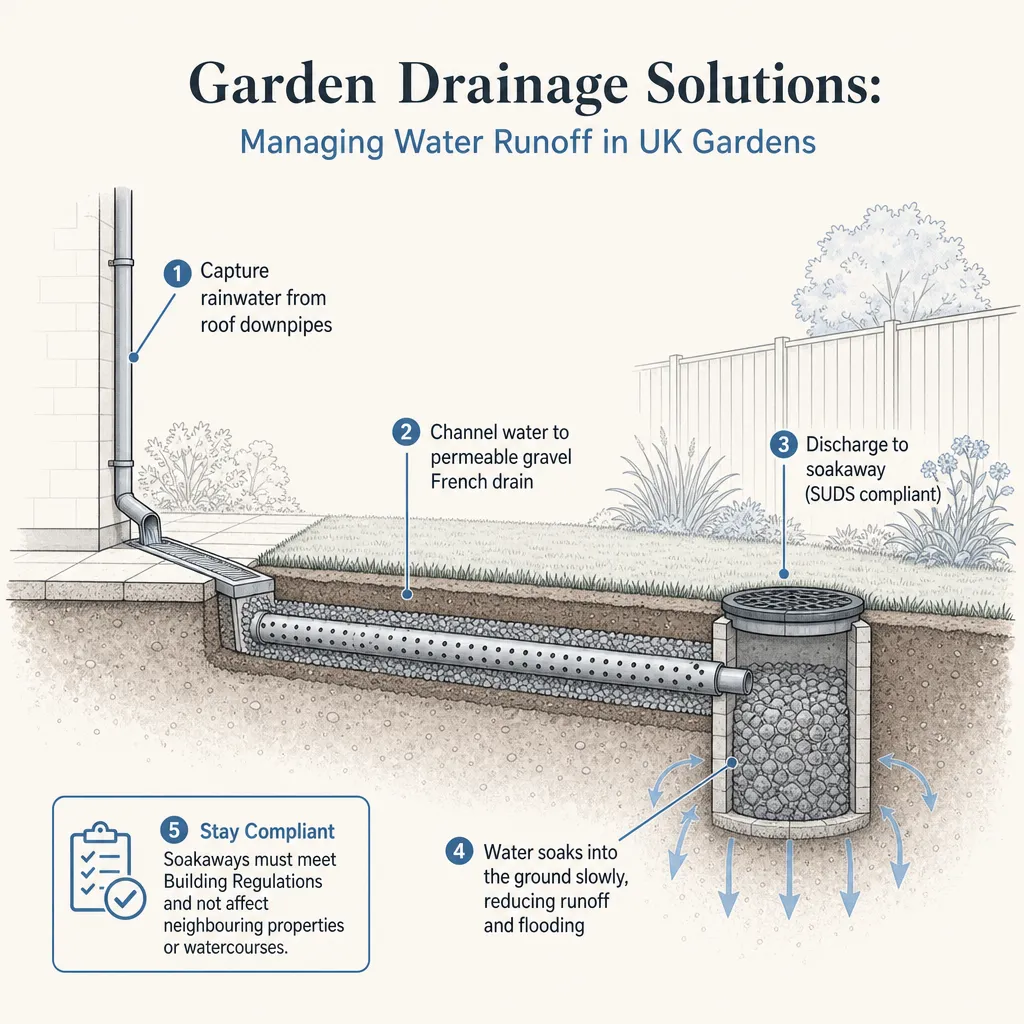
Garden Drainage Solutions: Managing Water Runoff in UK Gardens
Poor garden drainage in the UK is usually caused by clay soil, surface compaction, or too much hard-standing.
 Improvement & Build
Fixing Leaking Back Doors and Water Ingress
Most leaking back doors in UK homes fail at one of three points: the threshold or door sill joint, the frame-to-masonry mastic seal, or the door weatherstrip.
 Improvement & Build
Who Provides House Demolition Services
House demolition in the UK is carried out by specialist demolition contractors, often members of the National Federation of Demolition Contractors (NFDC).
 Improvement & Build
Tree Branch Removal and Tree Surgeon Services
Tree surgery — from deadwooding and crown reduction to branch removal and felling — must be carried out by qualified, insured contractors in the UK.
 Improvement & Build
Repairing Broken Windows: Finding a Window Specialist
Repairing a broken window depends on the type of damage: a failed double-glazing unit (misted glass) needs the sealed unit replaced, cracked or broken glass needs a glazier, and frame damage may require a specialist joiner.