Gardening in Hot Weather: Growing Successfully in Summer Conditions
By Housey · Last reviewed 10th of May 2026
Gardening in Hot Weather: Growing Successfully in Summer Conditions
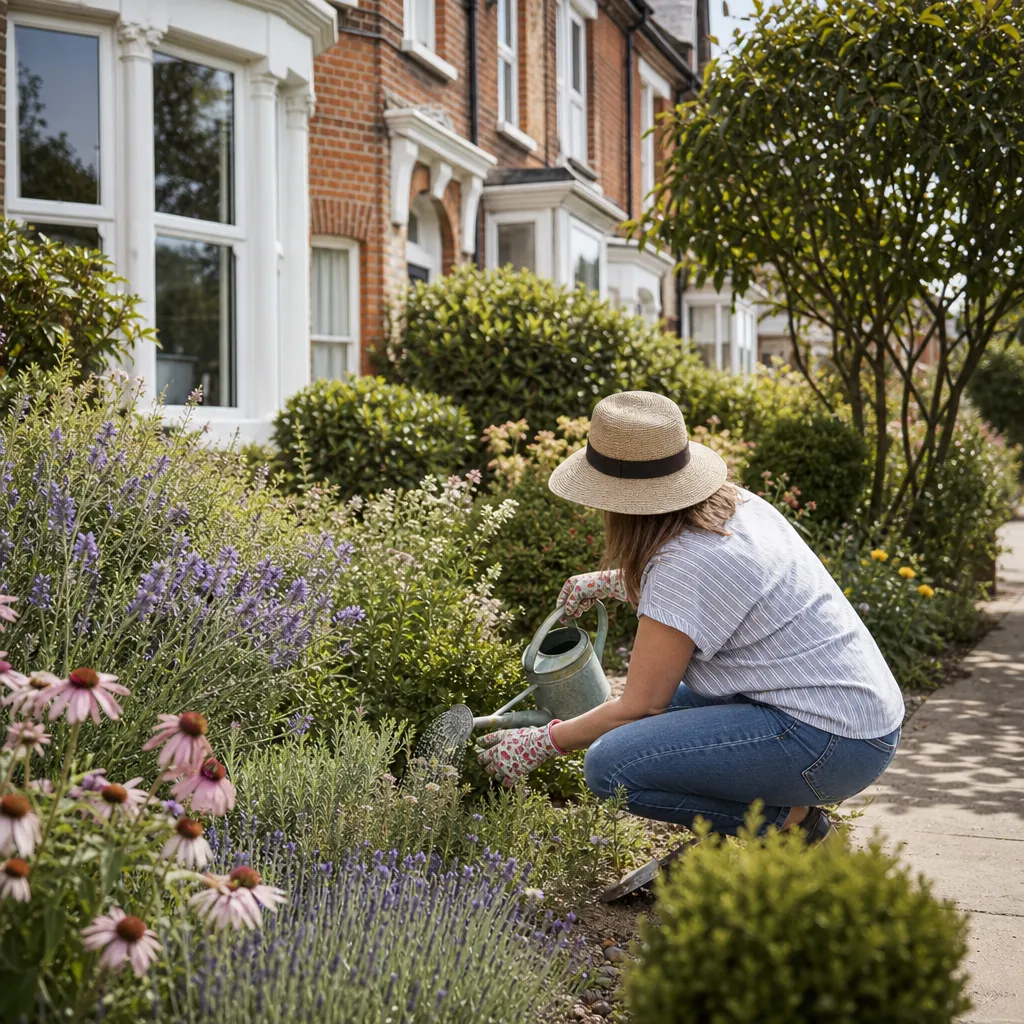
UK summers are increasingly variable — periods of intense heat and prolonged dry spells now sit alongside the traditional wet weather, placing demands on gardens that many existing planting schemes were never designed to handle. For homeowners, adjusting watering habits, plant selection, and garden layout ahead of the hot season can make the difference between a resilient outdoor space and scorched borders that require expensive replanting.
Key points
- The RHS recommends watering in the early morning or late evening to reduce evaporation — watering at midday can lose a significant proportion of water before it reaches the root zone.
- Mulching to a depth of 5–7.5 cm around plants and borders can reduce soil moisture loss considerably, according to RHS guidance.
- Hosepipe bans — formally Temporary Use Bans under the Water Industry Act 1991 — are declared by individual water companies and restrict garden watering to watering cans only in affected regions.
- Raising the mower height to 5–7.5 cm during dry periods shades grass roots and reduces moisture loss from the lawn surface.
- The RHS Chelsea Chop — cutting back certain perennials by one-third in late May or early June — helps drought-tolerant species produce compact growth and use available moisture more efficiently.
How to water effectively in hot weather
Watering efficiently matters as much as watering at all. During hot or dry spells:
- Water deeply and infrequently rather than little and often — deep watering encourages roots to grow downward into cooler, moister soil, making plants more resilient to future drought.
- Time it right: early morning is ideal — soil is cool, evaporation is low, and foliage dries before nightfall, reducing the risk of fungal diseases such as powdery mildew.
- Target the root zone: use drip irrigation, soaker hoses, or a watering can at ground level rather than overhead sprinklers. This directs water where it is needed and avoids wetting foliage unnecessarily.
- Collect rainwater: a standard 200-litre water butt is sufficient for several days of targeted garden watering and can be installed on most standard downpipes. Many UK water companies and councils offer subsidised water butts — check your local water company's website.
- Grey water: water from washing-up bowls or baths (without bleach-based cleaners) can supplement supply for ornamental beds. It is not recommended for edible crops.
During a hosepipe ban, only watering cans are permitted for garden use under a Temporary Use Ban. Drip or trickle irrigation systems may be restricted depending on the specific ban conditions — check your water company's terms.
Drought-tolerant plants suited to UK gardens
Shifting gradually towards drought-tolerant species is the most sustainable long-term response to hotter summers. The following plants perform well in UK conditions and periods of reduced rainfall:
Plant | Type | Drought tolerance | RHS hardiness | Notes |
|---|---|---|---|---|
Lavender (Lavandula) | Evergreen shrub | High | H4–H5 | Requires well-drained soil; thrives in heat and full sun |
Verbena bonariensis | Perennial | High | H4 | Self-seeds readily; excellent for pollinators |
Stachys byzantina (lamb's ears) | Perennial | High | H5 | Silver foliage; very low water needs |
Echinacea purpurea (coneflower) | Perennial | Moderate–high | H7 | Long flowering season; good for wildlife |
Hylotelephium (formerly Sedum) | Succulent perennial | Very high | H5–H7 | Late summer colour; exceptional drought resistance |
Cistus (rock rose) | Evergreen shrub | Very high | H3–H4 | Best in sheltered spots; Mediterranean origin |
Agapanthus | Bulbous perennial | Moderate–high | H3–H4 | Spectacular summer flowers; well suited to containers |
Gaura (Oenothera lindheimeri) | Perennial | High | H4 | Airy growth habit; continuous flowering in warm conditions |
RHS hardiness: H4 = hardy in most of the UK; H5 = hardy throughout the UK; H7 = very hardy. Always check individual cultivar ratings. Source: RHS hardiness ratings.
Caring for lawns during dry spells
UK lawns typically show stress quickly in drought, but established grass is more resilient than it appears. Yellowing and browning are usually signs of dormancy, not death:
- Raise the mower height to 5–7.5 cm — taller grass shades the soil, reduces moisture loss, and is more resilient to heat stress.
- Stop applying nitrogen-rich fertiliser during drought — this promotes soft, thirsty growth that cannot be sustained without water.
- Accept dormancy: most established grass will green up naturally once rain returns. Overwatering a dormant lawn is less effective than allowing natural recovery.
- Avoid scarifying, aerating, or overseeding during hot, dry spells — these processes add further stress to already struggling turf.
New lawn installations — seed or turf — should be avoided during hot weather unless irrigation can be guaranteed throughout establishment. The best periods for new lawns in the UK are September and March to April.
Garden design for long-term drought resilience
Longer-term resilience to hot weather involves design decisions, not just plant selection:
- Gravel and decorative stone mulch around Mediterranean or drought-tolerant plantings retains moisture, suppresses weeds, and creates a microclimate suited to heat-loving species.
- Rain gardens: shallow planted depressions that capture surface run-off during heavy rain events, slow percolation, and reduce dependence on mains water during dry periods. Suitable moisture-tolerant species include Iris sibirica, Persicaria, and Molinia grasses.
- Shade structures: pergolas, sail shades, or strategic tree planting can reduce soil temperature by several degrees in south-facing gardens, moderating moisture evaporation rates.
- Soil improvement: incorporating organic matter into sandy soils improves water retention; in clay soils it improves drainage and aeration, reducing both waterlogging in wet periods and extreme cracking in dry ones.
- Permeable paving: replacing impermeable hard surfaces with permeable alternatives (gravel, permeable block paving, resin-bonded aggregate) helps rainwater percolate into soil rather than running off to drains — reducing both flooding risk and the speed at which your garden dries out.
A professional garden designer can integrate these elements into a planting scheme suited to your specific aspect, soil type, and local microclimate.
Homeowner checklist: preparing your garden for a hot summer
When to get professional help
Most hot-weather gardening can be managed by a confident homeowner. Consider professional help when:
- You want to redesign borders or beds to be systematically more drought-resilient — a garden designer can specify plants, mulches, and layout appropriate to your soil type and aspect.
- Your garden requires hard landscaping changes such as new permeable surfaces, rain gardens, or drainage improvements — a landscaper or garden designer can ensure correct levels, falls, and material choices.
- Mature trees are showing signs of heat stress — contact a certified arborist (check the Arboricultural Association's register) rather than attempting remedial work yourself.
- You are considering installing a rainwater harvesting or grey water recycling system — these may involve plumbing work and need to comply with water supply (water fittings) regulations.
How Housey can help
If you are considering a more comprehensive redesign to make your garden resilient to hot and dry conditions, Housey can connect you with professional garden designers and landscapers who understand UK soil conditions, local planning requirements for hard landscaping changes, and the plant palette suited to your region.
Frequently asked questions
When is the best time to water the garden in hot weather?
Early morning is ideal — soil temperatures are lower, evaporation is reduced, and foliage has time to dry before evening, which lowers fungal disease risk. Evening watering is a reasonable second choice but can leave foliage damp overnight. Avoid watering in direct midday sun, when the RHS estimates evaporation rates are at their highest and much water is lost before reaching roots.
Will my lawn recover after a prolonged drought?
Most established UK lawns will recover naturally once rainfall returns, even after extended browning. Grass goes dormant rather than dying in most drought conditions. Avoid heavy watering, feeding, or scarifying until the lawn has visibly greened up after rain. New turf or seed laid during dry weather is far more vulnerable and needs consistent irrigation to establish.
Are hosepipe bans common in the UK?
Hosepipe bans — formally Temporary Use Bans under the Water Industry Act 1991 — are declared by individual water companies during prolonged dry periods. Frequency varies by region: southern England, particularly areas served by Thames Water and Southern Water, is more prone than wetter regions in Scotland and northern England. Check your water company's website for current restrictions.
What is the best mulch for a hot-weather UK garden?
Organic mulches such as bark chips, wood chip, or compost improve moisture retention and soil structure as they break down, and suit most border plantings. Gravel and decorative stone are better suited to drought-tolerant, Mediterranean-style schemes. Both are effective at reducing surface moisture loss when applied at 5–7.5 cm depth over already damp soil.
Can I use grey water on my garden during a hosepipe ban?
Grey water from washing-up bowls or baths — provided it does not contain bleach-based cleaners — can supplement supply for ornamental plantings and lawns. It is not recommended for edible crops due to the risk of pathogen transfer. Collected rainwater from water butts is a better option. Check your water company's specific Temporary Use Ban terms, as conditions can vary.
Sources and further reading
- RHS advice on watering plants — Royal Horticultural Society
- RHS plant hardiness ratings — Royal Horticultural Society
- DEFRA National Drought Framework — GOV.UK / DEFRA
- Water Industry Act 1991 — legislation.gov.uk
- Waterwise: water efficiency in gardens — Waterwise
Useful next reads
 Improvement & Build
Raised Garden Beds: Design Benefits and Implementation
Raised garden beds suit most UK gardens, particularly those with heavy clay, poor drainage, or limited growing space.
 Improvement & Build
Growing Your Own: Garden Design for Food and Horticulture
A productive food garden starts with assessing your plot's sunlight, soil, and drainage, then choosing the right structures — raised beds, paths, a cold frame, or a greenhouse — to match your space.
 Improvement & Build
Expert advice for garden design and outdoor space planning
Effective garden design begins with a site assessment — soil type, aspect, drainage, and existing trees — before any planting or layout decisions are made.
 Improvement & Build
Installing a Fire Pit: Garden Features and Outdoor Space Design
Installing a garden fire pit in the UK is generally permitted, but Smoke Control Area rules prohibit open wood-burning in most towns and cities.
 Improvement & Build
Seasonal Garden Transformations and Outdoor Design Ideas
A successful garden transformation in the UK works with the seasons rather than against them — establishing structure and hard landscaping in autumn or winter, planting in spring, and enjoying the results through summer.