Growing Your Own: Garden Design for Food and Horticulture
By Housey · Last reviewed 30th of May 2026
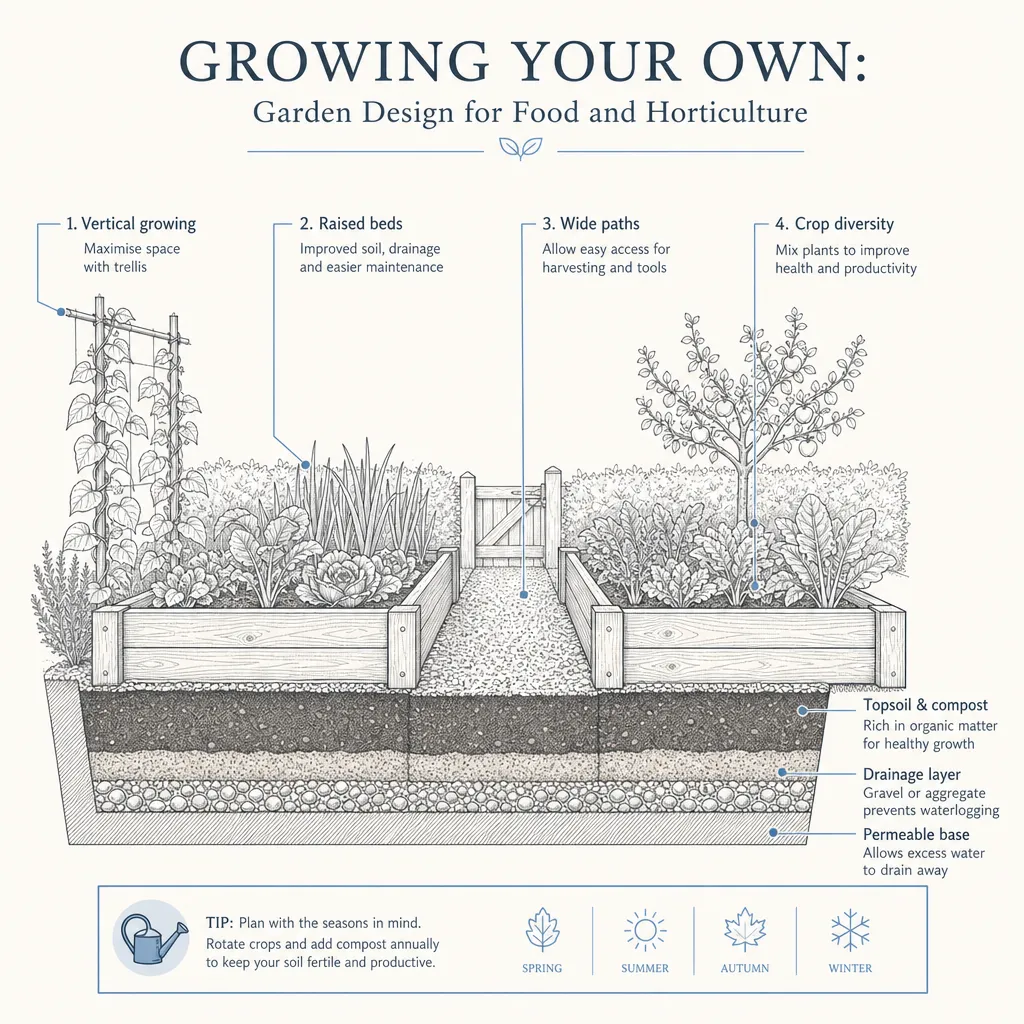
Growing Your Own: Garden Design for Food and Horticulture
Turning part of a UK garden into a productive growing space is one of the most rewarding home improvements available to homeowners — but the gap between an enthusiastic first season and a consistently productive plot often comes down to planning. Whether you have a generous rear garden in a 1930s semi or a compact courtyard behind a Victorian terrace, thinking carefully about layout, soil, structures, and crop rotation before you invest in raised beds, a greenhouse, or planting will save considerable time, money, and disappointment.
Key points
- Full sun — at least six unshaded hours daily — is the single most important factor for vegetables and most fruit; shadow from buildings, fences, or trees is the most common reason for poor harvests on UK plots.
- Raised beds of 1.2 m width allow you to reach the centre from either side without stepping on and compacting the soil — a standard guideline from the Royal Horticultural Society (RHS).
- Crop rotation across at least four distinct beds or zones reduces soil-borne disease and nutrient depletion; the four classic groups are brassicas, legumes, alliums, and roots.
- A water supply within 10–15 m of your main growing area significantly improves the consistency of watering during dry UK summers — a water butt fed from a nearby downpipe is a practical, low-cost solution.
- Greenhouses and polytunnels over 30 m² may require planning permission in some local authority areas; check with your local planning authority before building.
How much space do you actually need?
A productive food garden does not need to be large. Research from the RHS suggests that a well-managed plot of as little as 10 m² can supply a significant proportion of summer salads and herbs for a typical household. The key is matching ambition to the space, light, and time you have available.
Plot size | Realistic output | Structures to consider |
|---|---|---|
Up to 10 m² | Salads, herbs, cut-and-come-again crops | 2–4 raised beds, water butt |
10–30 m² | Salads, legumes, root vegetables, soft fruit | 4+ raised beds, cold frame, compost bay |
30–60 m² | Broad vegetable range, fruit canes, small trained trees | Raised beds, greenhouse or polytunnel, tool storage |
Over 60 m² | Near self-sufficient vegetable growing, trained fruit and espaliers | Full kitchen garden layout, greenhouse, fruit cage |
These are indicative outputs; actual productivity depends on soil quality, sun exposure, and the time you can commit to the plot.
Choosing the right structures for your plot
Raised beds are the most versatile starting point. Timber, brick, or galvanised steel frames allow you to control soil quality independently of your existing ground conditions — particularly useful on the clay-heavy soils common across much of the Midlands and south-east England, or on compacted urban plots. Standard depth is 20–30 cm; deeper beds of 30–45 cm suit root vegetables such as parsnips and carrots.
Paths are often underestimated in kitchen garden planning. A minimum width of 60 cm between beds allows comfortable kneeling and wheelbarrow access; 90 cm is more practical for regular use. Permeable surfaces — gravel, bark, or engineering brick — are preferable to solid paving in a working growing area.
Greenhouses and cold frames extend your growing season at both ends — typically by four to six weeks in spring and autumn under UK conditions. A small unheated greenhouse of 6–12 m² will accommodate propagation, tender crops such as tomatoes and cucumbers, and overwintering of frost-sensitive plants. Cold frames are a lower-cost alternative for hardening off seedlings.
Composting is integral, not optional, in a productive food garden. Two or three compost bays in rotation allow continuous production of homemade compost, reducing the need for bought-in soil improvers. Locate your composting facility close to the growing area but shielded from direct view if the garden is also used for leisure.
Planning your crop layout: rotation and succession
Crop rotation over a four-bed or four-zone system is the standard approach for managing soil health and reducing disease pressure year on year. Each group moves to the next bed in sequence:
- Brassicas (cabbage, broccoli, kale, Brussels sprouts) — follow with legumes
- Legumes (peas, broad beans, runner beans) — fix nitrogen; follow with roots
- Roots (carrots, parsnips, beetroot, potatoes) — follow with alliums
- Alliums and miscellaneous (onions, garlic, leeks, courgettes, squash) — follow with brassicas
Succession sowing — small, repeated sowings every two to three weeks rather than one large batch — is the most effective way to maintain a continuous harvest throughout the season. Fast-maturing crops such as lettuce, radish, and salad leaves particularly reward this approach.
Homeowner checklist: planning your food garden layout
Soil preparation and ongoing fertility
UK garden soils vary considerably — from the heavy clay of the London Basin to the thin, free-draining chalk soils of the South Downs. Understanding your starting point before building raised beds or beginning to grow saves money on amendments.
No-dig methods — popularised in the UK by Charles Dowding and increasingly supported by horticultural research — involve laying a thick mulch of compost on the surface rather than incorporating it, building soil biology without disturbing it. Traditional double digging remains useful for breaking up severely compacted ground before creating new beds.
For raised beds, a mix of good topsoil, garden compost, and a small proportion of horticultural grit for drainage is the standard fill. Look for topsoil suppliers certified to BS 3882, the British Standard for topsoil quality, to avoid variable or contaminated material.
Ongoing fertility is maintained by adding 5–10 cm of homemade or bought-in compost each autumn, and by growing nitrogen-fixing green manures such as clover or winter tares in empty beds between crops.
When to get professional help
Most food garden projects are low-risk and well within the scope of a confident homeowner. Consider professional advice if:
- Your plot has a significant slope and you are planning terracing — civil engineering input may be needed to avoid ground movement or drainage problems
- You suspect ground contamination, which can occur on urban plots, former industrial land, or sites near old painted structures; professional soil testing is advisable before growing food crops
- You plan a greenhouse or other substantial structure and are unsure about permitted development rules or building regulations compliance
- Drainage problems are severe enough to affect the wider garden or the property itself
How Housey can help
If you would like experienced professional input on your food garden project, Housey connects you with vetted garden designers who can produce a detailed kitchen garden layout and planting plan tailored to your plot, and with landscapers who can install raised beds, paths, greenhouse bases, and water management systems to a professional standard.
Frequently asked questions
Do I need planning permission for raised beds or a greenhouse?
Raised beds are almost always permitted development — they are not permanent structures requiring consent. A greenhouse or polytunnel under 30 m² is usually permitted development for a dwelling house, but exceptions apply to listed buildings, flats, and properties where permitted development rights have been removed. Always check with your local planning authority if in doubt.
What are the easiest vegetables to grow in a UK garden?
Courgettes, salad leaves, radishes, runner beans, and potatoes are consistently reliable for UK beginners. They are forgiving of imperfect soil, quick to establish, and produce generous harvests with modest input. Hardy herbs such as mint, chives, and parsley are also nearly foolproof year-round additions to a food garden.
When should I hire a garden designer for a food garden?
A professional designer adds most value when your plot has significant challenges — steep slopes, poor drainage, or heavy shade — or when you want a productive garden that is also aesthetically considered. For plots over roughly 30 m², a detailed design drawing helps contractors price installation work accurately and avoids costly mid-project changes.
Sources and further reading
- RHS: Vegetables — Royal Horticultural Society
- RHS: No-dig gardening — Royal Horticultural Society
- Planning Portal: Outbuildings — Planning Portal
- BS 3882: Specification for topsoil — BSI Group
Useful next reads
 Improvement & Build
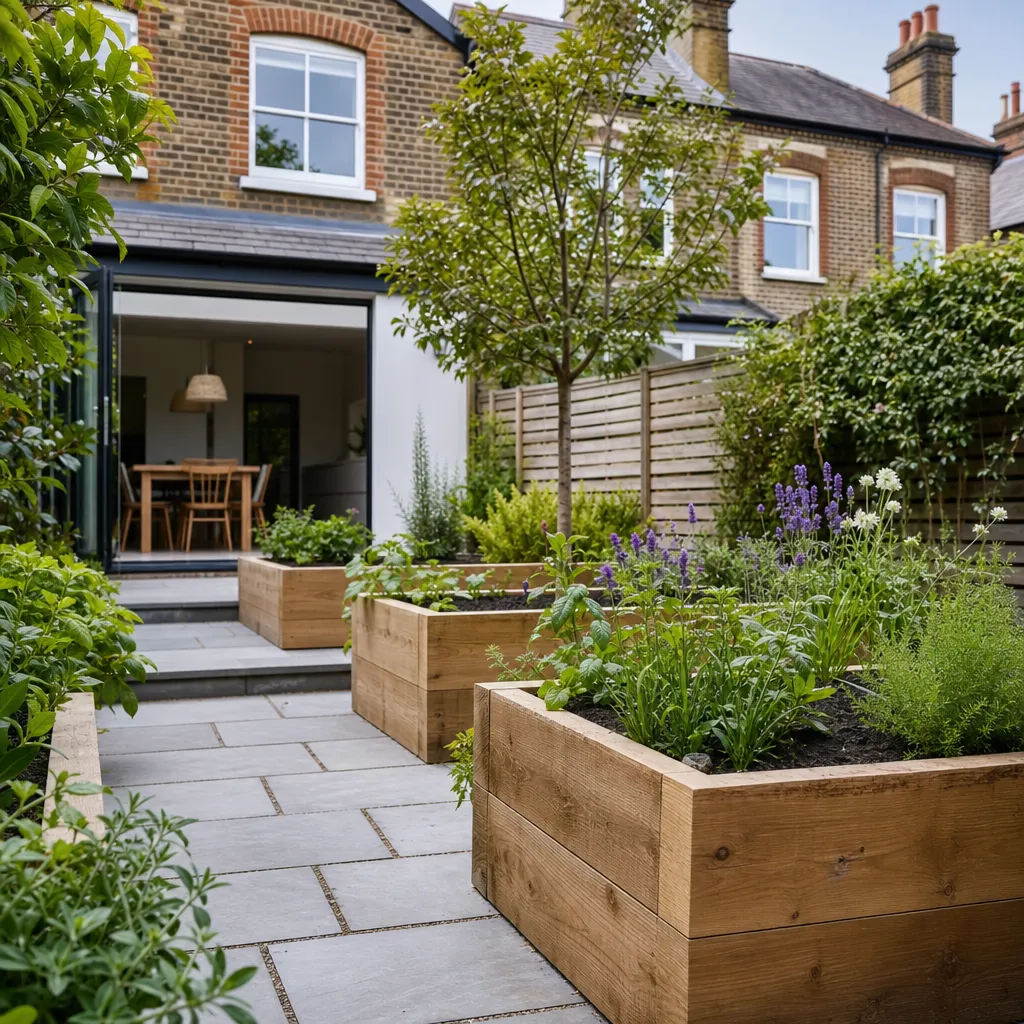
Raised Garden Beds: Design Benefits and Implementation
Raised garden beds suit most UK gardens, particularly those with heavy clay, poor drainage, or limited growing space.
 Improvement & Build
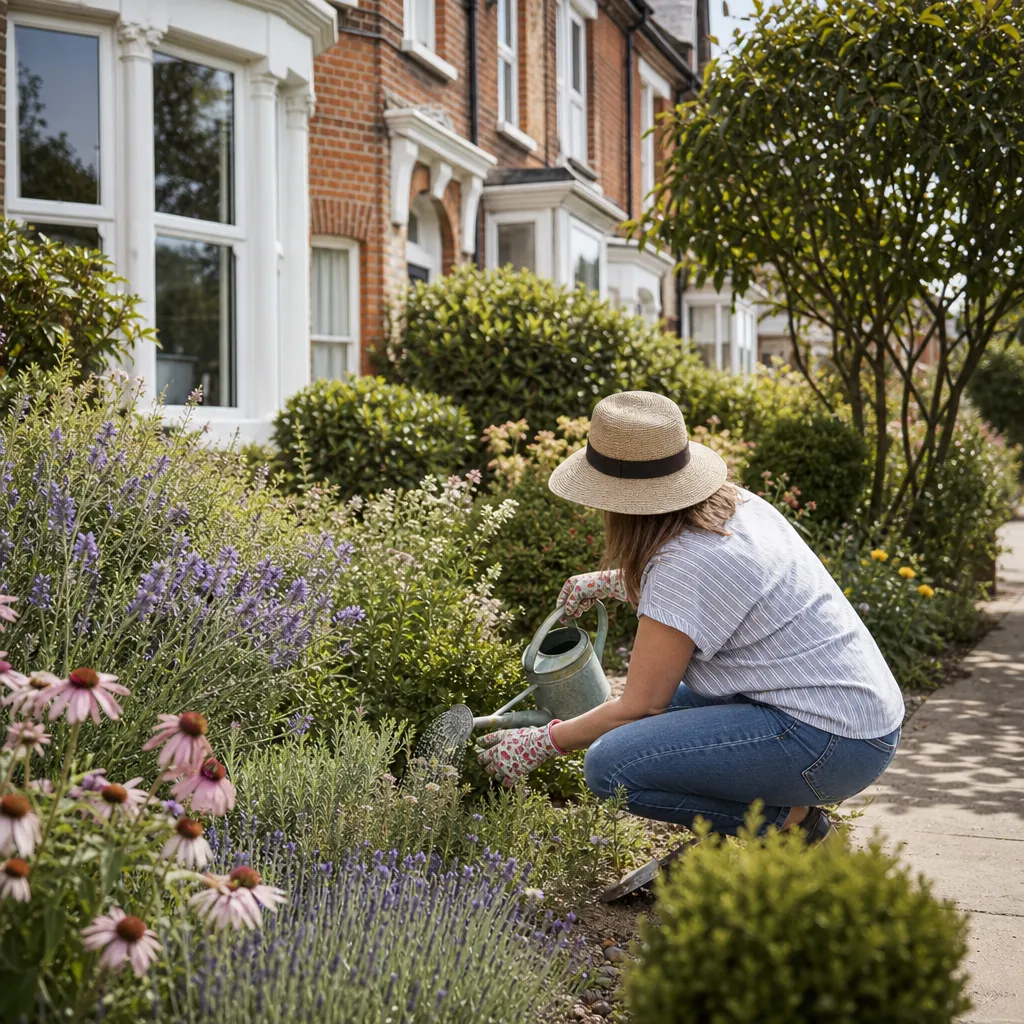
Gardening in Hot Weather: Growing Successfully in Summer Conditions
In hot weather, UK gardens benefit most from deep watering in the early morning, a 5–7.
 Improvement & Build
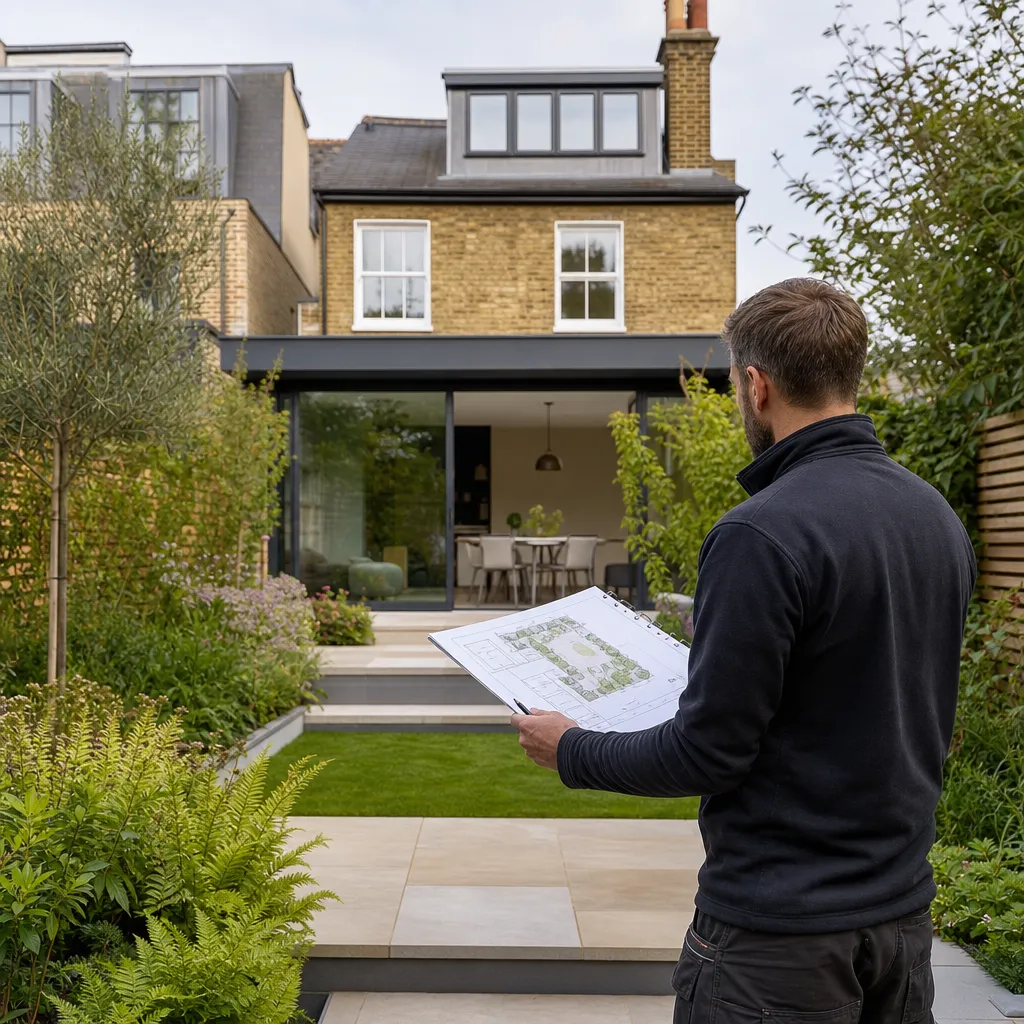
Expert advice for garden design and outdoor space planning
Effective garden design begins with a site assessment — soil type, aspect, drainage, and existing trees — before any planting or layout decisions are made.
 Improvement & Build
Installing a Fire Pit: Garden Features and Outdoor Space Design
Installing a garden fire pit in the UK is generally permitted, but Smoke Control Area rules prohibit open wood-burning in most towns and cities.
 Improvement & Build
Seasonal Garden Transformations and Outdoor Design Ideas
A successful garden transformation in the UK works with the seasons rather than against them — establishing structure and hard landscaping in autumn or winter, planting in spring, and enjoying the results through summer.