Gas Bonding and Earth Meter Installation Costs
By Housey · Last reviewed 6th of May 2026
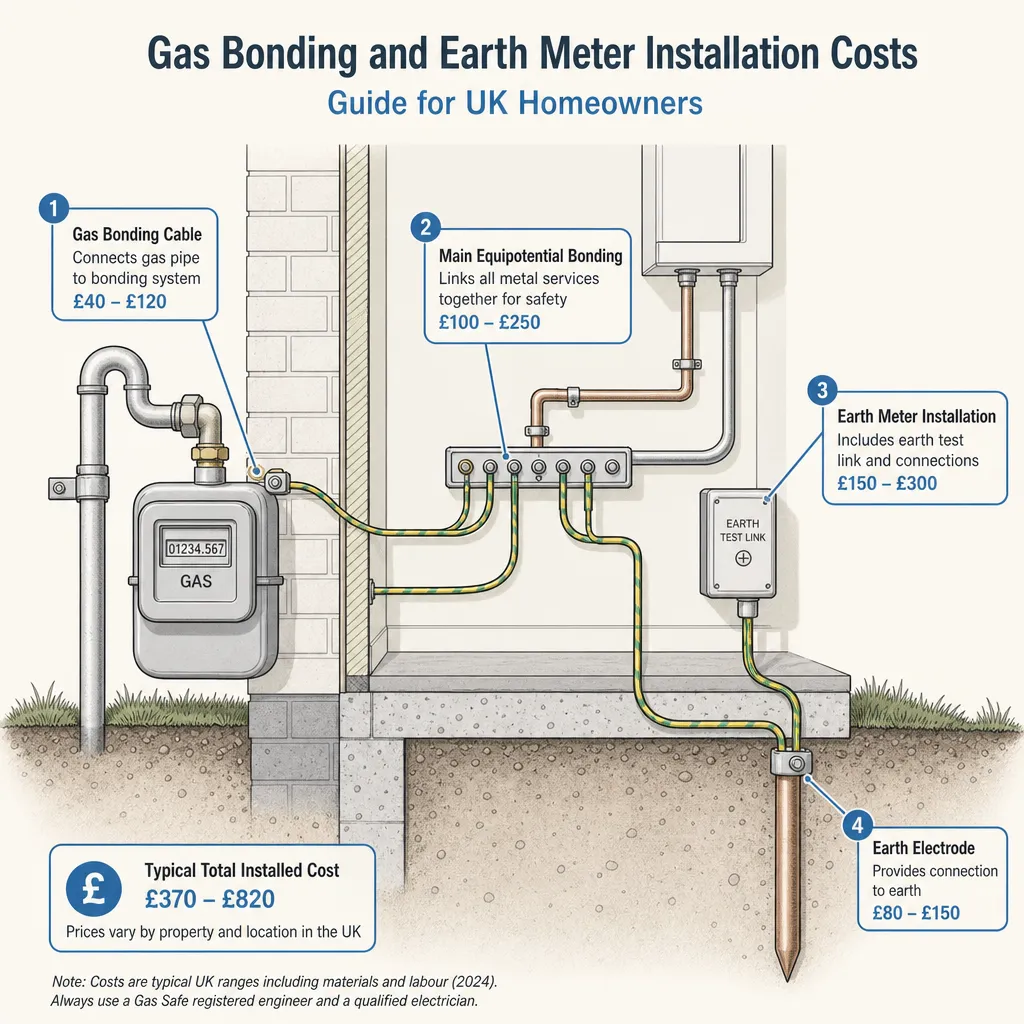
Gas Bonding and Earth Meter Installation Costs
Gas bonding is one of those safety-critical jobs that often surfaces during an EICR or a gas safety check — yet many homeowners have little idea what it involves or whether their existing installation meets current standards. In UK properties, poorly installed or missing bonding is consistently flagged as a code-C2 or C1 observation, meaning it poses a potential danger and requires attention before the installation can be signed off.
Key points
- Main equipotential bonding of gas pipework is required under BS 7671:2018 (IET Wiring Regulations, 18th Edition), Regulation 411.3.1.2.
- The main bonding conductor must connect gas installation pipework to the main earthing terminal within 600 mm of the gas meter inlet.
- Minimum conductor sizes are 10 mm² for TN-S systems and 6 mm² for TN-C-S (PME) supplies, though 10 mm² is commonly used in practice across both.
- Supplementary bonding in bathrooms and kitchens may be required where extraneous-conductive-parts are within arm's reach of simultaneously touchable earthed metalwork.
- Indicative UK costs for main gas bonding run from around £150 to £400 depending on access, cable run length, and whether clamps need upgrading. Indicative UK costs, last reviewed 2026-05-06.
Why gas bonding is required
Without proper bonding, an electrical fault can raise metallic pipework — including gas pipes — to a dangerous potential relative to earth. Anyone touching a pipe while also contacting another earthed surface completes a circuit through their body. Bonding eliminates this voltage difference by creating a low-resistance path that allows protective devices to operate quickly.
The obligation sits with the property owner. If an Electrical Installation Condition Report (EICR) finds missing or defective bonding, it must be remedied before the EICR can be issued as satisfactory. A registered electrician holding membership of a competent-person scheme such as NICEIC or NAPIT should carry out the work.
What a gas bonding installation involves
A typical main bonding job involves:
- Identifying the main earthing terminal — usually at or near the consumer unit.
- Running a bonding conductor from the main earthing terminal to the gas service pipework, connecting within 600 mm downstream of the meter outlet cock.
- Installing a BS 951 bonding clamp on the pipe — the clamp must make solid metal-to-metal contact, so any paint or corrosion is removed first.
- Labelling the conductor at both ends with a BS 7671-compliant bonding label.
- Testing — continuity and resistance checks to confirm the bond is effective.
The electrician may also check supplementary bonding in bathrooms if the property predates 2008 or if those circuits lack RCD protection.
What an earth meter installation involves
The term 'earth meter installation' in a residential context usually refers to one of two things:
- An earth electrode — a copper rod driven into the ground to provide an earth reference where the network earth is unreliable (common in rural properties with TT earthing).
- An earth loop impedance test — a test instrument reading, not a permanent installation, carried out to verify that the earth path is effective.
If your property has a TT earthing arrangement, an earth electrode and RCD protection are both required. Installing a suitable earth electrode typically costs £200–£500 depending on soil conditions and cable runs. Indicative UK costs, last reviewed 2026-05-06.
Cost comparison: bonding and earthing work types
Work type | Typical scope | Indicative cost (inc. VAT) | Notes |
|---|---|---|---|
Main gas bonding only | Single cable run, clamp, label, test | £150–£300 | Simple access, short run |
Main gas bonding (complex access) | Concealed pipe or long run | £250–£400 | May require redecoration |
Supplementary bonding (bathroom) | 2–4 connections, test | £100–£250 | Often combined with main bonding |
Water supply main bonding | Short run from earthing terminal | £100–£200 | Commonly done at same time as gas |
Earth electrode installation (TT system) | Rod, cable, connections, RCD check | £200–£500 | Soil conditions affect price |
Full re-bonding after EICR C2 | All services, labelling, test certificate | £300–£700 | Varies significantly by property |
Indicative UK costs, last reviewed 2026-05-06. Costs vary by region, access, and contractor. Always obtain at least two written quotes.
Which professional do you need?
Task | Who to use | Required registration |
|---|---|---|
Main and supplementary bonding | Registered electrician | NICEIC, NAPIT, or equivalent competent-person scheme |
EICR (identifies bonding defects) | Registered electrician | NICEIC, NAPIT, or equivalent |
Checking gas pipework condition | Gas Safe registered engineer | Gas Safe Register (mandatory) |
Earth electrode installation | Registered electrician | NICEIC, NAPIT, or equivalent |
Part P self-certification of works | Registered electrician | Part P competent-person scheme |
An electrician can work on bonding conductors and clamps without Gas Safe registration — the gas pipe is simply being clamped to, not modified. If the gas pipework itself needs attention, a Gas Safe registered engineer must be involved.
Red flags to look out for
- A green-and-yellow bonding conductor that is visibly corroded, broken, or disconnected at either end.
- No bonding clamp visible on the gas pipework within 600 mm of the meter.
- A bonding clamp fitted over paint, plastic lagging, or corrosion rather than bare metal.
- A conductor that appears undersized — main bonding should be at least 10 mm².
- No BS 7671 bonding label at the clamp or at the consumer unit end.
- An EICR coded C1 or C2 for bonding defects — these require immediate or prompt remediation respectively.
Important limitations
This article provides general information about gas bonding and earthing requirements in UK residential properties. It is not a substitute for inspection of your specific installation by a qualified electrician. The requirements above reflect BS 7671:2018 (18th Edition, as amended); always confirm that any contractor works to the current edition and applicable amendments. Requirements can vary depending on earthing arrangement, property type, and local distribution network operator specifications.
What to ask a qualified professional
- Are you registered with NICEIC, NAPIT, or another competent-person scheme approved for Part P electrical work?
- Will you issue a Minor Electrical Installation Works Certificate or an Electrical Installation Certificate on completion?
- Does my property have TN-S, TN-C-S, or TT earthing — and does this affect the required conductor size?
- Will you check supplementary bonding in all bathrooms and wet rooms at the same time?
- Will you label the bonding conductors at both ends in line with BS 7671?
- What does your quote include — cable, clamps, labels, testing, and the completion certificate?
- Is VAT included in the price?
When to get professional help
If an EICR has flagged a C1 observation (danger present) for missing or defective bonding, arrange remediation urgently — a C1 means there is an immediate risk of injury. For C2 (potentially dangerous), remediation is required promptly — typically within 28 days for rental properties under the Electrical Safety Standards in the Private Rented Sector (England) Regulations 2020.
Do not attempt to install or modify bonding conductors yourself unless you are a qualified electrician. Bonding is Part P notifiable work and must be self-certified by a registered contractor or inspected by a building control body.
Seek urgent professional attention if:
- You feel a mild electric tingle when touching metallic pipework in your home.
- Gas pipe shows visible damage or severe corrosion near the meter area.
- Your EICR was issued as unsatisfactory with C1 bonding defects.
- Bonding conductors appear disturbed or damaged after a kitchen or bathroom renovation.
How Housey can help
If your EICR has flagged bonding defects, or you want to confirm your installation meets BS 7671 requirements, Housey can connect you with NICEIC and NAPIT-registered electricians in your area. Start by requesting an Electrical Installation Condition Report (EICR) to get a full picture of your installation's compliance before instructing remediation work.
Frequently asked questions
Does my gas pipe need to be bonded even if it is plastic?
Main bonding applies to metallic gas installation pipework — typically copper or steel downstream of the meter. If your supply uses plastic pipework throughout with no metallic extraneous-conductive-parts, the requirement may differ. Check with a registered electrician who can assess whether any metal components in your installation require bonding. Most older UK homes have metallic gas pipework that will need bonding.
Can a gas engineer install the bonding cable?
Only if they are also registered as a competent electrician under a scheme such as NICEIC or NAPIT. Gas Safe registration alone does not qualify an engineer to carry out Part P electrical work. In practice, most gas engineers will recommend you instruct a registered electrician to install or repair the bonding conductors.
How long does gas bonding take to install?
A straightforward main bonding job — one cable run from the earthing terminal to the gas meter — typically takes one to two hours. If supplementary bonding is also needed in bathrooms throughout the property, allow half a day. More complex jobs involving concealed pipework, long cable runs, or combined EICR remediation may take a full day.
Is gas bonding required in a rented property?
Yes. Landlords in England must have a valid EICR every five years or at change of tenancy under the Electrical Safety Standards in the Private Rented Sector (England) Regulations 2020. Missing bonding will be flagged, and remediation must be completed within 28 days of a C2 observation. Equivalent duties exist in Scotland and Wales under devolved regulation.
What is the difference between bonding and earthing?
Earthing connects the electrical installation to earth — via the supply network or an earth electrode — so fault current can flow and protective devices operate. Bonding connects extraneous-conductive-parts such as gas and water pipes to the earthing terminal to prevent dangerous voltage differences. Both are required under BS 7671 and both are checked during an EICR.
Sources and further reading
- BS 7671:2018 Requirements for Electrical Installations — IET (Institution of Engineering and Technology)
- Gas Safe Register: find a registered engineer — Gas Safe Register
- Electrical Safety Standards in the Private Rented Sector (England) Regulations 2020 — legislation.gov.uk
- NICEIC: registered electricians and competent-person scheme — NICEIC
- HSE: electrical safety guidance — Health and Safety Executive
Useful next reads
 Surveys & Inspections
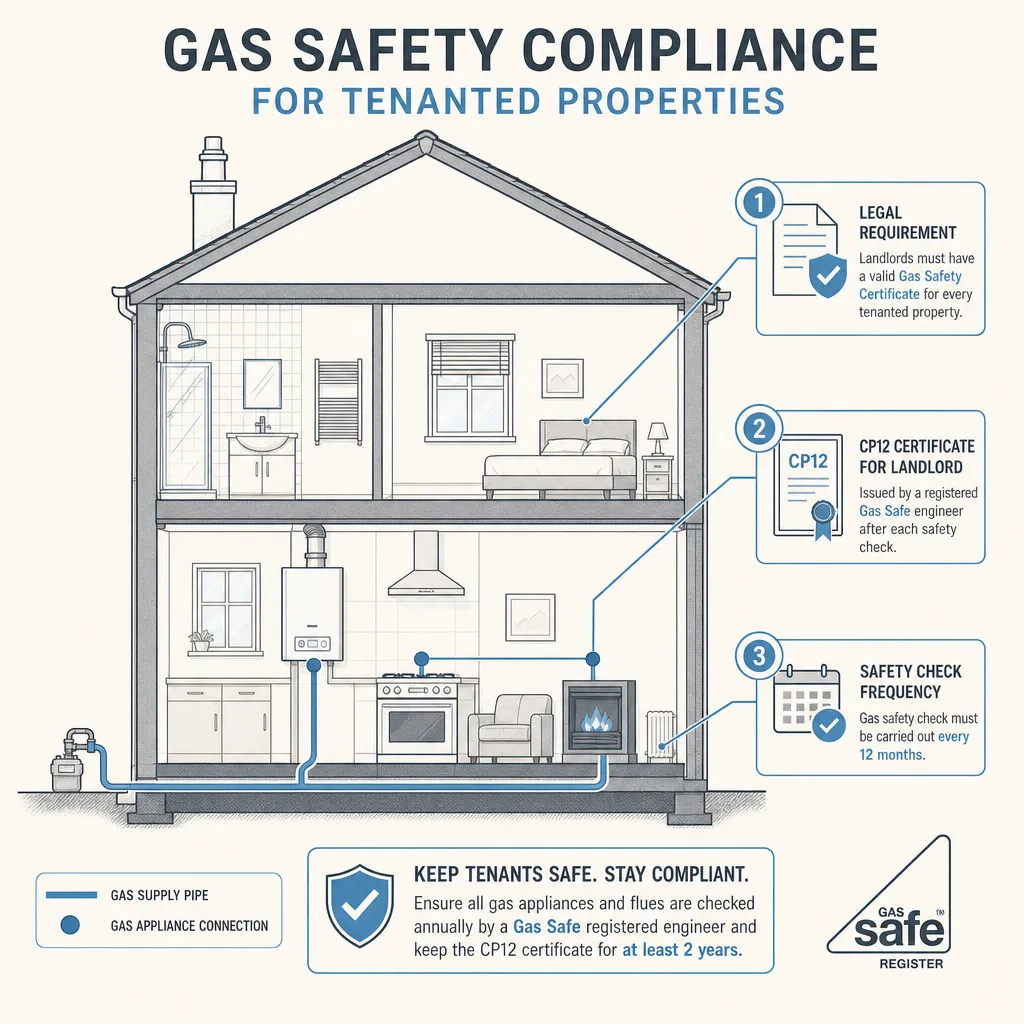
Gas Safety Compliance for Tenanted Properties
UK landlords are legally required to arrange an annual gas safety check by a Gas Safe registered engineer for every tenanted property with a gas appliance.
 Surveys & Inspections
What to Budget for Upgrading a Fuse Box or Consumer Unit
Replacing a consumer unit (fuse box) in the UK typically costs £400–£900 for a straightforward installation by a Part P registered electrician.
 Surveys & Inspections
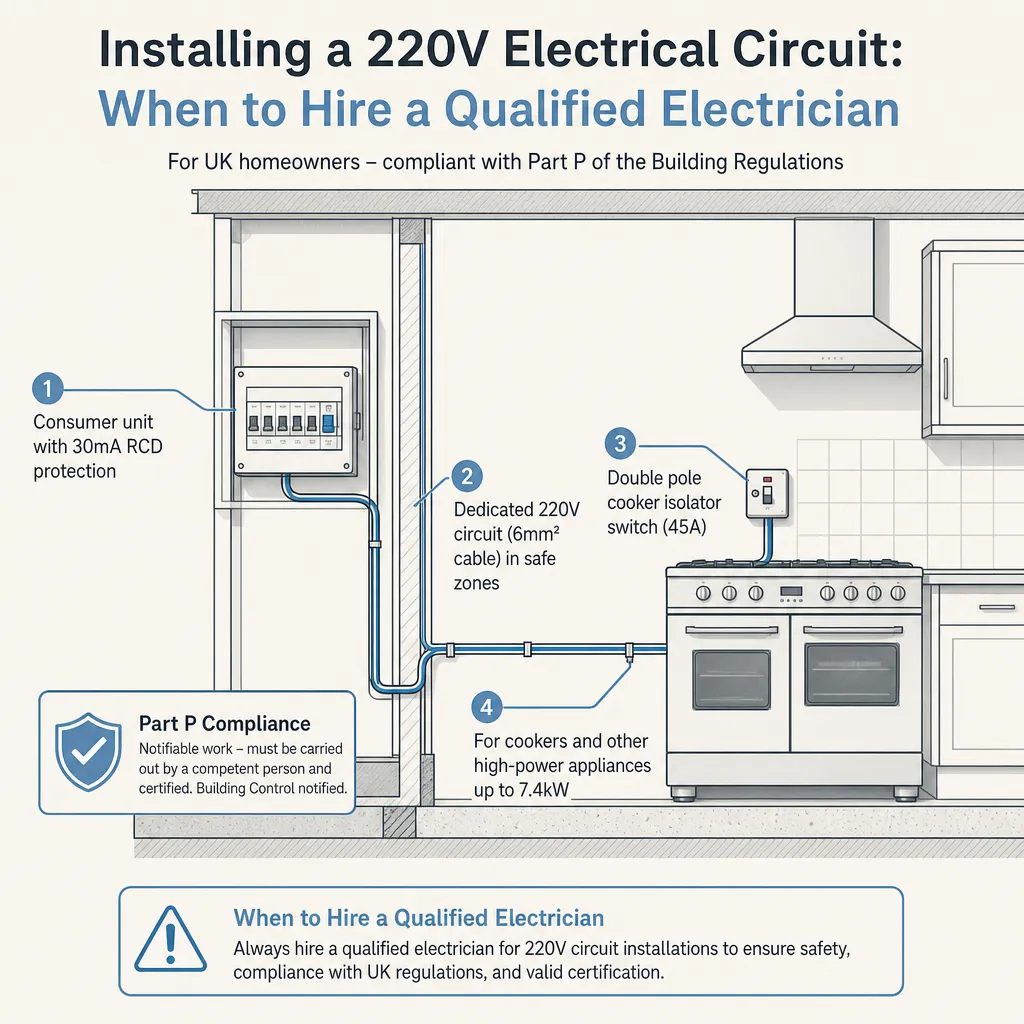
Installing a 220V Electrical Circuit: When to Hire a Qualified Electrician
In the UK, domestic mains supply is 230V — not 220V — and any dedicated high-current circuit for a cooker, shower, or EV charger is notifiable work under Part P of the Building Regulations.
 Surveys & Inspections
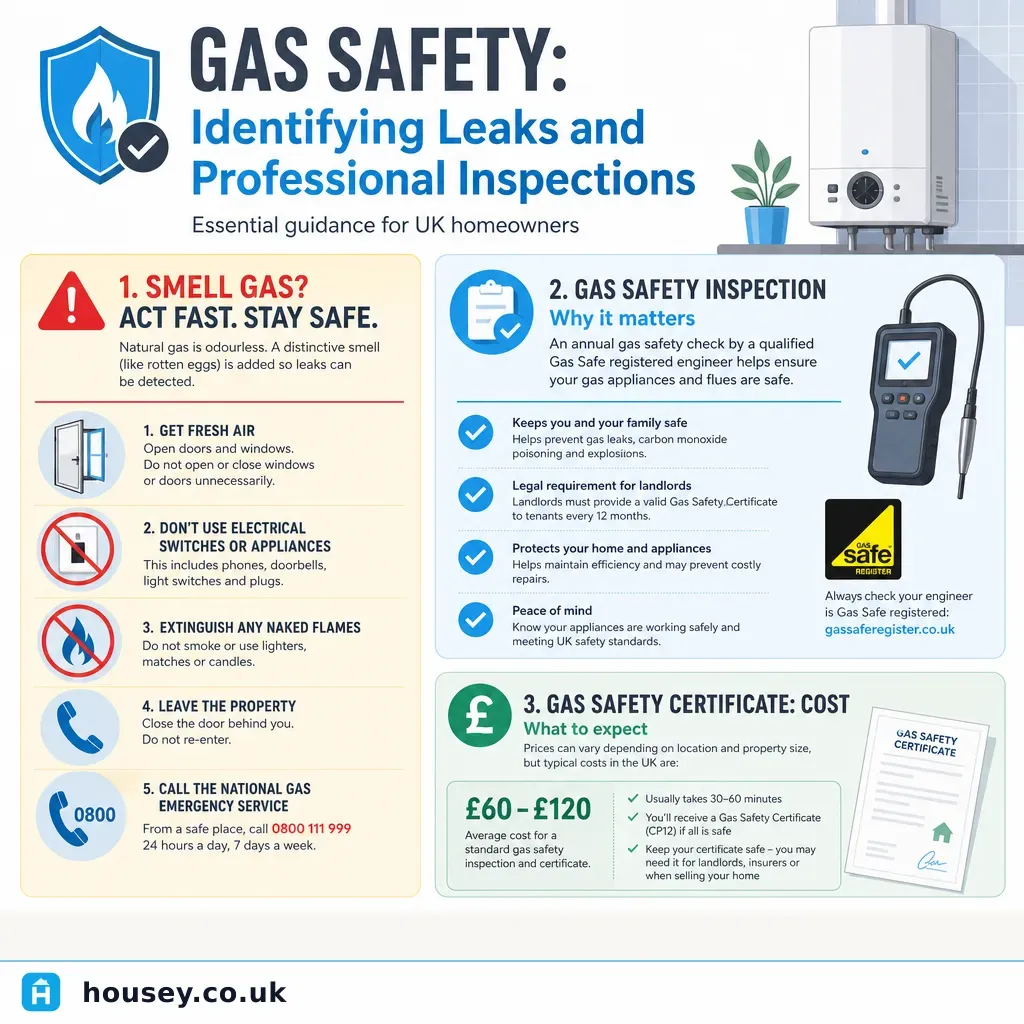
Gas Safety: Identifying Leaks and Professional Inspections
If you smell gas or suspect a leak, leave the building immediately, avoid using switches or flames, and call the National Gas Emergency Service on 0800 111 999.
 Surveys & Inspections
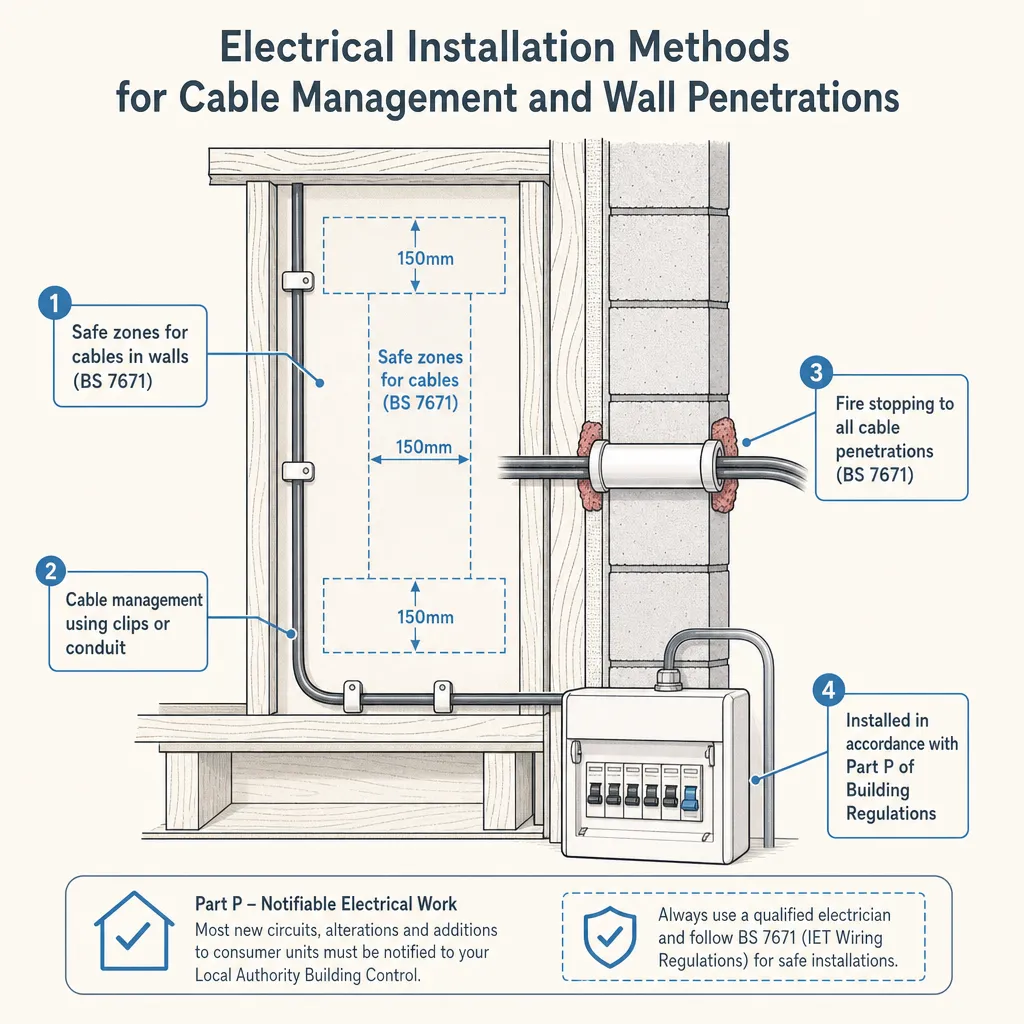
Electrical installation methods for cable management and wall penetrations
Cables concealed in walls must follow safe-zone routes or be protected by earthed metallic conduit under BS 7671 Regulation 522.