Gas Safety: Identifying Leaks and Professional Inspections
By Housey · Last reviewed 9th of May 2026
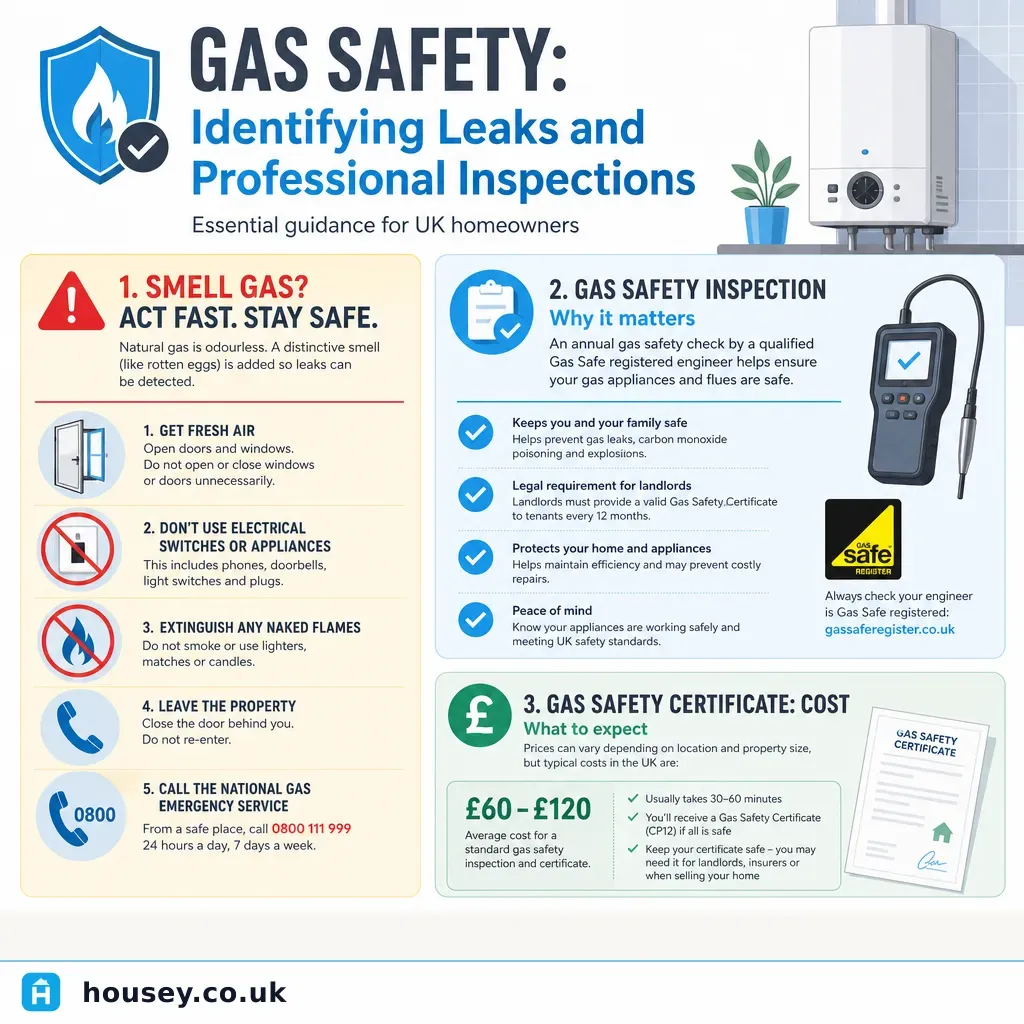
Gas Safety: Identifying Leaks and Professional Inspections
Gas leaks and faulty appliances are among the most serious hazards in UK homes, contributing to fires, explosions, and carbon monoxide (CO) poisoning every year. Whether you have noticed an unfamiliar smell, recently moved into a property, or simply have not had your boiler serviced for some time, understanding the warning signs and knowing when to call a professional could be genuinely life-saving.
Key points
- The National Gas Emergency Service number is 0800 111 999 — operated by Cadent and regional network operators, available 24 hours a day, 7 days a week.
- Only engineers on the Gas Safe Register are legally permitted to carry out gas work in Great Britain under the Gas Safety (Installation and Use) Regulations 1998.
- Landlords must provide tenants with a Gas Safety Record (CP12) every 12 months and show the current record to new tenants before they move in.
- Carbon monoxide is colourless and odourless; a working CO alarm conforming to BS EN 50291 is the only reliable protection in the home.
- A gas safety check typically costs £60–£120 for a single appliance (indicative UK costs, last reviewed 2026-05-09), varying by region and the number of appliances inspected.
What are the signs of a gas leak?
Natural gas supplied to UK homes contains a chemical odorant called mercaptan, which produces a distinctive sulphur or "rotten egg" smell. If you notice any of the following, treat it as a potential gas emergency:
- A sulphur or rotten egg smell indoors or near external pipework.
- A hissing or whistling sound near a gas meter, pipe, or appliance.
- Dead or yellowing patches of vegetation above an underground gas service pipe.
- Bubbling in standing water close to external pipework.
- Soot marks or dark staining around a gas appliance.
- A pilot light that keeps extinguishing, or a flame that burns orange or yellow rather than blue.
Carbon monoxide symptoms — persistent headaches, nausea, dizziness, or drowsiness that ease when you leave the property — may indicate incomplete combustion rather than a direct gas leak, but they require the same urgency.
What to do if you suspect a gas leak
Do:
- Leave the property immediately, taking everyone with you.
- Leave doors open as you exit to help ventilate the space.
- Call 0800 111 999 from outside the property or from a neighbour's home.
- Wait for the engineer's confirmation before re-entering.
Do not:
- Switch any electrical lights or appliances on or off.
- Use a mobile phone inside the property.
- Smoke or use any naked flame.
- Attempt to locate or repair the leak yourself.
The emergency service will isolate the gas supply and make the situation safe. A Gas Safe registered engineer will then need to investigate the cause, carry out any repairs, and re-commission affected appliances before the supply is restored.
What does a professional gas inspection involve?
A gas safety inspection by a Gas Safe registered engineer covers all gas appliances, pipework, and the meter within the property. The engineer checks each item and records the findings on a Gas Safety Record (CP12).
Area inspected | What the engineer assesses |
|---|---|
Boiler and flue | Combustion performance, flue integrity, safety cut-off devices, ventilation |
Gas pipework | Visible condition, corrosion, and joint integrity |
Gas meter and control valve | Condition, accessibility, and operation of the emergency control valve |
All gas appliances | Safe operation, burner condition, correct flame picture |
Ventilation | Adequate air supply to open-flued and room-sealed appliances |
CO alarms | Presence and correct positioning (advisory check) |
At the end of the inspection, the engineer records whether each appliance is safe to use, not to current standards (an advisory — further action recommended), or immediately dangerous (requiring isolation before the engineer leaves). An "immediately dangerous" result means the appliance must be isolated on the day.
Who needs a gas safety certificate and when?
Landlords: Annual gas safety checks are a legal requirement under the Gas Safety (Installation and Use) Regulations 1998. A valid Gas Safety Record must be provided to existing tenants within 28 days of completion and to new tenants before they move in. Landlords who fail to comply can face prosecution and substantial fines.
Owner-occupiers: There is no statutory requirement for homeowners to have an annual gas safety check, but the HSE and Gas Safe Register both strongly recommend one. Annual boiler servicing and periodic appliance checks significantly reduce the chance of faults developing undetected.
When buying or selling: Solicitors and surveyors increasingly ask for evidence of gas safety records and appliance service history, particularly for older boilers or where recent gas work has been carried out.
Choosing a Gas Safe registered engineer
All gas engineers working legally in Great Britain must be listed on the Gas Safe Register, which replaced CORGI registration in April 2009. You can verify any engineer at gassaferegister.co.uk using their licence number or company name. Every registered engineer carries a Gas Safe ID card showing which appliance categories they are qualified to work on — domestic boiler, cooker, LPG, and so on. Always check the card covers your appliance type before work begins.
What to ask before hiring an engineer
- Are you Gas Safe registered? May I see your ID card and verify your licence number online?
- Which appliance types and gas categories are covered by your current registration?
- Do you carry public liability insurance?
- What does the inspection include, and will you issue a written Gas Safety Record on completion?
- How long will a thorough inspection take? (A standard combination boiler service typically takes 45–60 minutes.)
- What happens if you find a fault — will I receive a written fault report before any remedial work is agreed?
- Is VAT included in the quoted price?
Red flags to watch for
- An engineer who cannot produce a Gas Safe ID card, or whose licence number does not appear on the register when checked.
- A price significantly below the local market rate, or an offer to skip the written Gas Safety Record.
- Pressure to agree to expensive remedial work on the spot, without a written fault description.
- An inspection that takes less than 30 minutes for a standard boiler — a thorough check takes considerably longer.
- Any suggestion that you can reconnect or restore the gas supply yourself after an emergency isolation.
- An engineer who is reluctant to explain what each item on the Gas Safety Record means in plain terms.
Important limitations
This article provides general information for UK homeowners and does not constitute professional gas safety advice. Gas installations vary significantly by property age, appliance type, pipework configuration, and local supply arrangement, including LPG supplies in rural areas. Regulatory oversight differs in Northern Ireland, though Gas Safe registration applies across Great Britain and Northern Ireland. A qualified Gas Safe registered engineer must assess your specific situation. Do not attempt to inspect, repair, or recommission gas appliances yourself under any circumstances.
What to ask a qualified professional
Before the inspection:
- Is my property's gas supply type (mains natural gas, LPG, or other) within your registration scope?
- If you need to isolate an appliance immediately, what are my obligations as a landlord or as an owner-occupier?
After the inspection:
- Can you explain each item on the Gas Safety Record, and what do any advisory notices mean in practice?
- My boiler uses an open-flued arrangement — is the current ventilation provision still adequate for safe operation?
- Are there items I should monitor or address before the next annual check?
- When would you recommend the next service, and is there anything I should do in the meantime?
When to get professional help
Call 0800 111 999 immediately if you smell gas, hear hissing near pipework, or anyone in the property shows symptoms that may indicate carbon monoxide exposure. Do not delay to investigate further.
Book a Gas Safe engineer for a non-emergency inspection if:
- You have not had a gas appliance checked within the past 12 months.
- You have moved into a property and cannot verify its gas safety or service history.
- A boiler flame burns consistently yellow or orange rather than blue.
- Recent building work may have disturbed gas pipework or the meter area.
- A CO alarm has triggered or is displaying a fault indicator.
- You are a landlord approaching the annual renewal date for your Gas Safety Record.
How Housey can help
Housey connects homeowners and landlords with Gas Safe registered engineers across the UK. Compare quotes from local professionals for a gas safety certificate and ensure your property is inspected before a problem arises.
Frequently asked questions
How often should I have my gas appliances inspected in the UK?
The HSE and Gas Safe Register recommend annual checks for all gas appliances. For landlords, annual inspections are a legal requirement under the Gas Safety (Installation and Use) Regulations 1998. Owner-occupiers are not legally required to do so, but annual servicing and periodic checks significantly reduce the risk of undetected faults and carbon monoxide exposure.
How much does a gas safety inspection cost in the UK?
Indicative UK costs, last reviewed 2026-05-09: a single-appliance gas safety check typically costs £60–£120, depending on location and the number of appliances. London and the South East tend to be at the higher end. Always request a written quote and confirm what is included before booking.
Can I carry out my own gas safety check?
No. Under the Gas Safety (Installation and Use) Regulations 1998, only Gas Safe registered engineers may carry out gas work or safety inspections on domestic appliances in Great Britain. Attempting to inspect or work on your own gas installation is illegal and highly dangerous.
What is the difference between a gas safety check and a boiler service?
A gas safety check (CP12) records whether appliances are operating safely and issues a formal written record. A boiler service goes further — the engineer cleans internal components, checks the heat exchanger, replaces worn parts, and optimises combustion efficiency. Both are recommended annually and are often carried out together, but they are distinct activities.
What should I do if my CO alarm sounds?
Treat a carbon monoxide alarm activation as an emergency. Leave the property immediately, get fresh air, and call 999 if anyone feels unwell. Then call the National Gas Emergency Service on 0800 111 999. Do not re-enter the property until a qualified engineer has confirmed it is safe to do so.
Sources and further reading
- Gas Safe Register — find a registered engineer — Gas Safe Register
- Gas Safety (Installation and Use) Regulations 1998 — legislation.gov.uk
- Landlord gas safety responsibilities — HSE
- Carbon monoxide: protect yourself — HSE
- What to do if you smell gas — Cadent Gas
- BS EN 50291: specification for carbon monoxide alarms — BSI Group
Useful next reads
 Surveys & Inspections
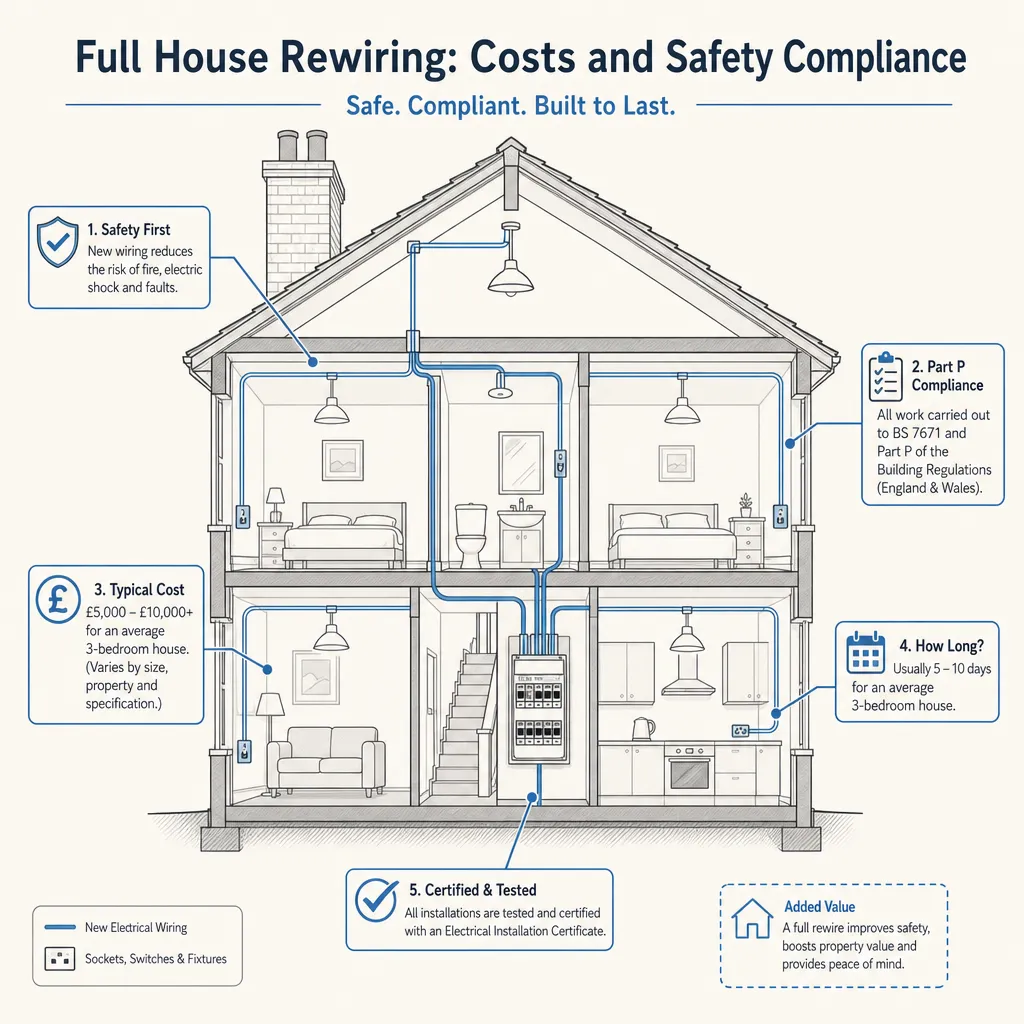
Full House Rewiring: Costs and Safety Compliance
A full house rewire in the UK typically costs £3,500–£6,000 for a three-bedroom semi and must comply with BS 7671:2018 and Building Regulations Part P.
 Surveys & Inspections
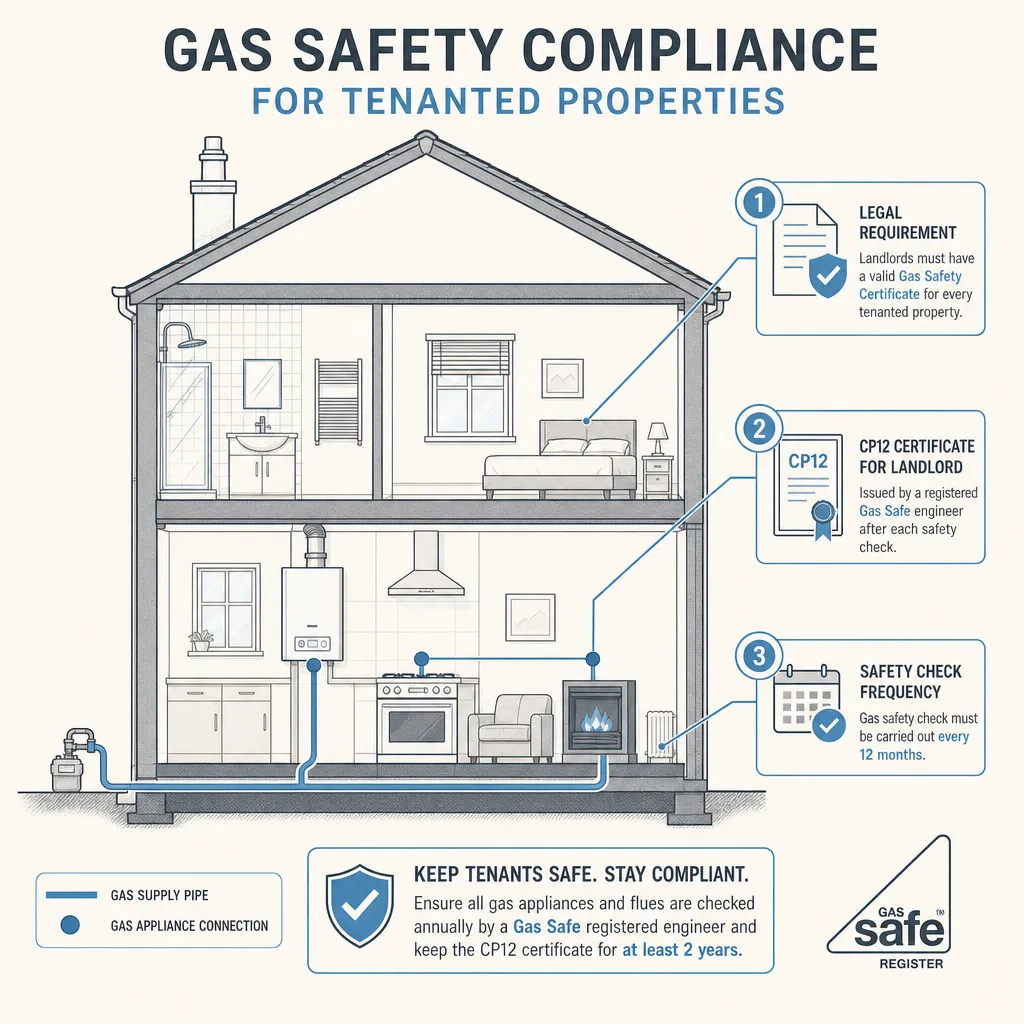
Gas Safety Compliance for Tenanted Properties
UK landlords are legally required to arrange an annual gas safety check by a Gas Safe registered engineer for every tenanted property with a gas appliance.
 Surveys & Inspections
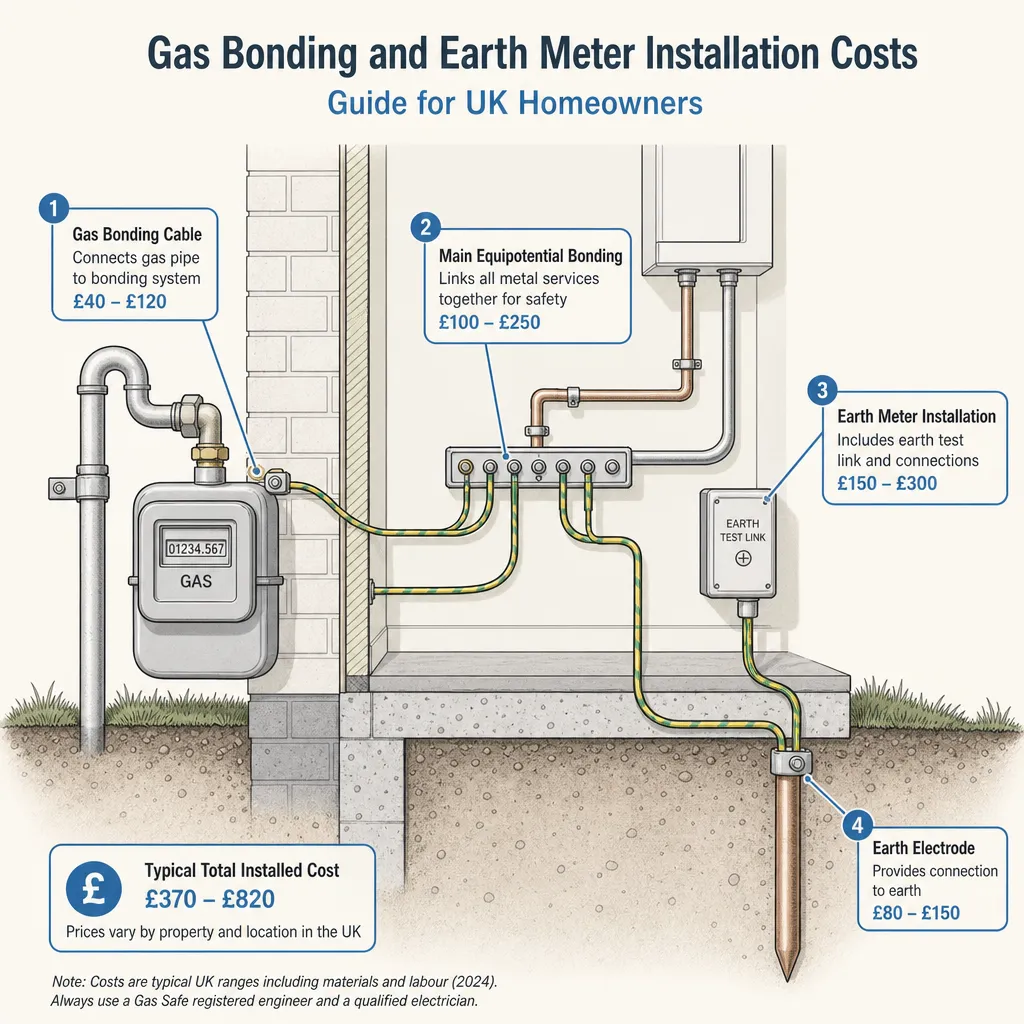
Gas Bonding and Earth Meter Installation Costs
Main gas bonding connects your gas pipework to the electrical earthing terminal, preventing dangerous voltage differences.
 Surveys & Inspections
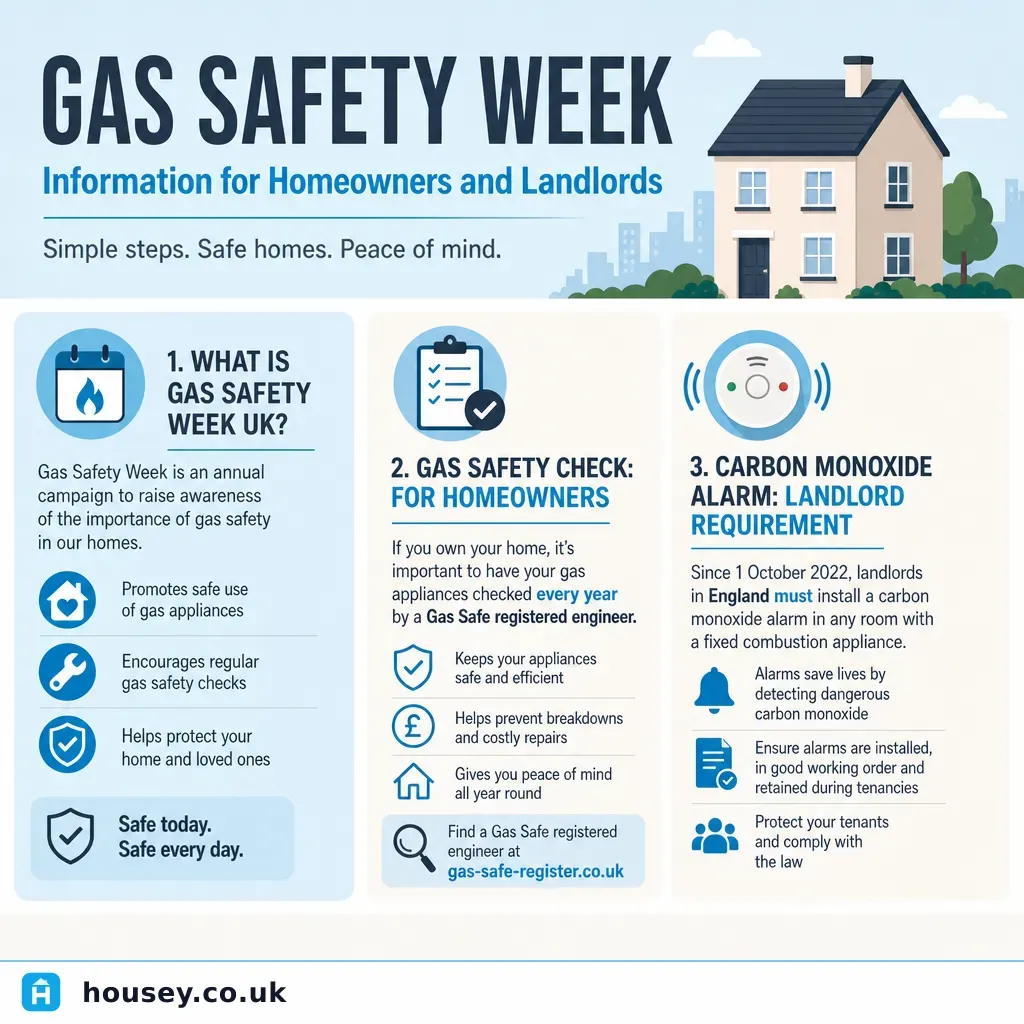
Gas Safety Week: Information for Homeowners and Landlords
Gas Safety Week, run each September by Gas Safe Register, highlights the risks of unsafe gas appliances and unlicensed gas work.
 Surveys & Inspections
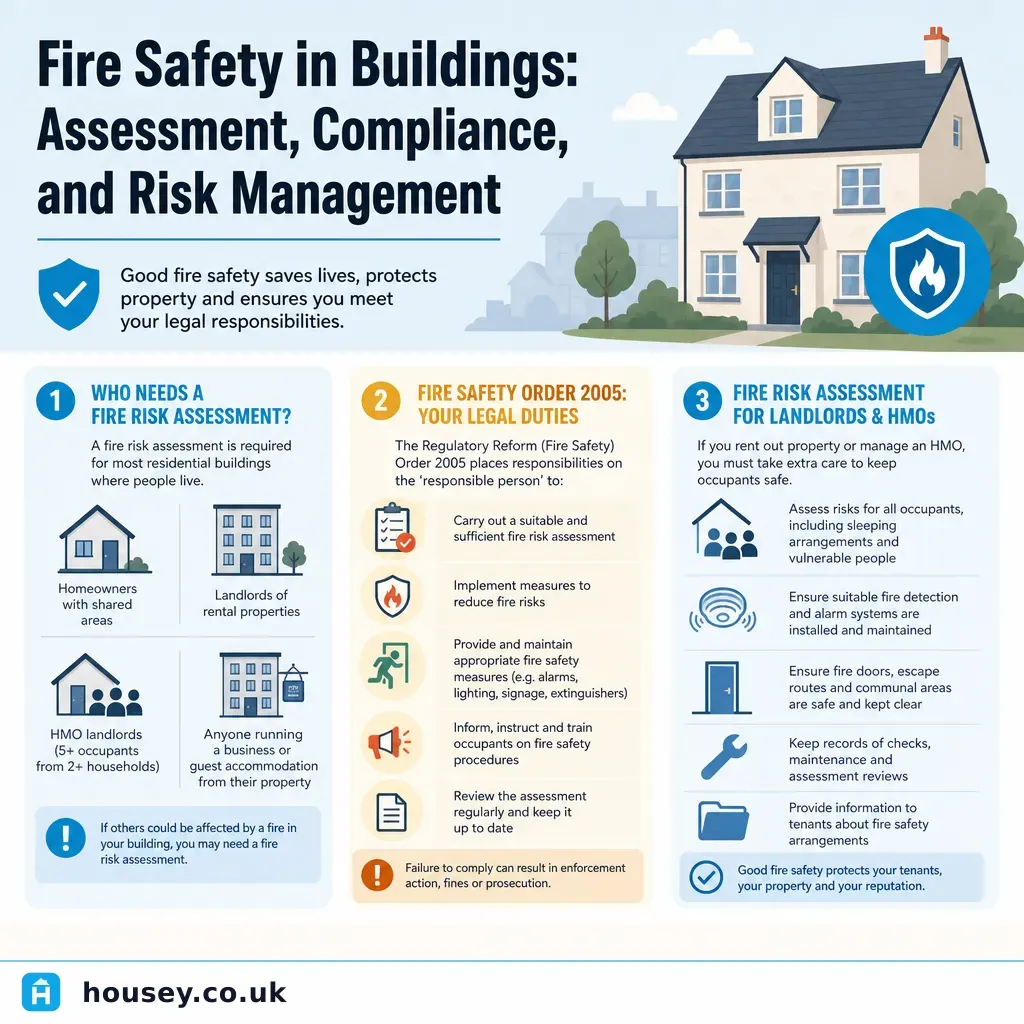
Fire Safety in Buildings: Assessment, Compliance, and Risk Management
The Regulatory Reform (Fire Safety) Order 2005 requires most non-domestic and multi-occupied residential buildings to have a written fire risk assessment carried out by a competent person.