Installing a 220V Electrical Circuit: When to Hire a Qualified Electrician
By Housey · Last reviewed 1st of June 2026
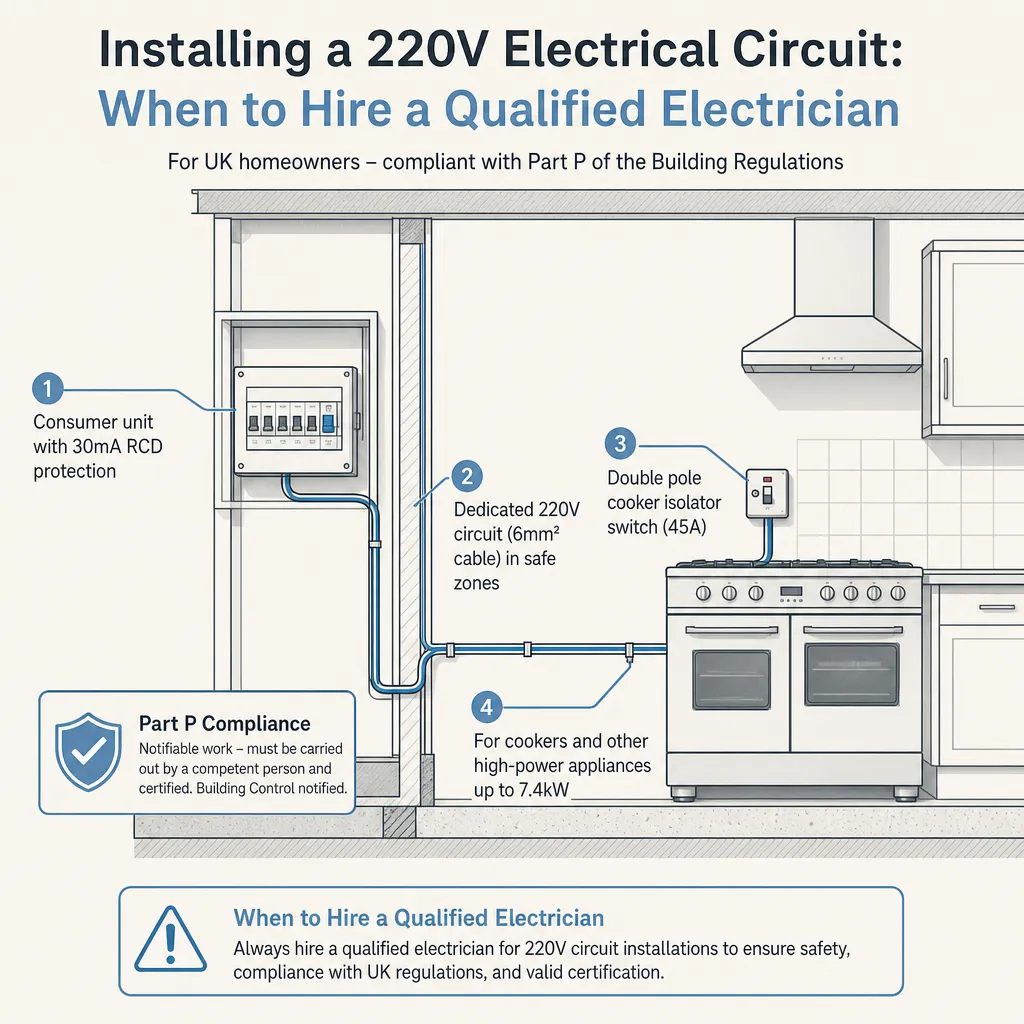
Installing a 220V Electrical Circuit: When to Hire a Qualified Electrician
Many UK homeowners searching for "220V" installation guidance are preparing to add a high-demand appliance — a range cooker, electric shower, EV charge point, or workshop machine. The terminology can mislead, because the UK mains supply is standardised at 230V rather than 220V, but the underlying regulatory question is the same: new circuits in dwellings are tightly controlled under Part P of the Building Regulations, and the consequences of unnotified or unqualified work can affect insurance, property sales, and safety.
Key points
- The UK domestic mains supply is 230V single-phase (harmonised from 240V in 1994, tolerance ±10%) — "220V" is not a distinct UK circuit category; most high-demand appliances run on a dedicated 230V single-phase circuit with appropriate cable sizing and overcurrent protection.
- Part P of the Building Regulations makes it a legal requirement for all electrical installation work in dwellings to be either carried out or certified by a registered competent person — all new circuits are notifiable work.
- On completion of notifiable work, a registered electrician must issue an Electrical Installation Certificate (EIC); without one, the installation is unverified and non-compliant.
- Competent person schemes authorised for domestic electrical self-certification include NICEIC, NAPIT, ELECSA, and STROMA.
- An unlicensed installation with no certification may void your buildings insurance, complicate a property sale, and leave you without any documented assurance of the installation's safety.
What does "220V" mean in a UK context?
The UK harmonised its domestic supply voltage from 240V to 230V in 1994 following the European Low Voltage Directive. The supply can legally range from 207V to 253V (±10% tolerance), so appliances and machinery labelled "220V" or "240V" operate normally on the current UK supply without modification.
When UK homeowners search for "220V installation", they are almost always referring to one of the following:
- A dedicated high-current circuit for a cooker (30–45A), electric shower (30–45A), EV charge point (16–32A), or immersion heater (16A) — these require a separate circuit from the consumer unit, with appropriately sized cable and a dedicated circuit breaker or RCBO.
- European or older UK appliances rated at 220V or 240V — these typically work without alteration on the current 230V supply.
- Rarely, three-phase supply for heavy workshop machinery — which requires a separate supply agreement with the distribution network operator (DNO) and is outside standard domestic circuit installation.
The rest of this article focuses on dedicated high-current single-phase circuits, which is what most UK homeowners are planning when they search for this topic.
When is a new circuit notifiable under Part P?
Part P (Electrical Safety — Dwellings) of the Building Regulations applies in England. The following constitute notifiable work:
- All new circuits — regardless of current rating, cable size, or appliance type.
- Replacing a consumer unit — even like-for-like.
- New circuits in special locations — bathrooms, outdoor installations, and swimming pools — which carry additional requirements under BS 7671 (the IET Wiring Regulations, 18th edition).
Notifiable work must be either carried out by a registered competent person who self-certifies, or submitted to the local building control authority for inspection — typically costing £200–£400 for a standard residential circuit. Like-for-like replacements of accessories on an existing circuit (such as swapping a socket outside a special location) are generally not notifiable.
Who can carry out and certify the work?
Route | Who does the work | Who certifies | Documentation issued |
|---|---|---|---|
Registered competent person | NICEIC, NAPIT, ELECSA, or STROMA-registered electrician | Self-certifies | Electrical Installation Certificate (EIC) |
Building control notification | Any competent person (including unregistered) | Local building control authority | Building control completion certificate |
DIY without notification | Homeowner | No valid certification | Non-compliant — no certificate issued |
The third route — installing a circuit without notification or certification — is not a legal option for notifiable work in England. Beyond non-compliance, it may void home insurance, leave the property unmarketable without remediation, and provide no safety assurance.
You can verify an electrician's current registration using the NICEIC Find a Contractor tool or the NAPIT member register. An electrician claiming they can self-certify without scheme membership is not Part P compliant.
What does a dedicated circuit installation typically cost?
The following are indicative UK costs, last reviewed 2026-06-01. Actual costs depend on cable run length, access, consumer unit capacity, and location.
- Cooker circuit (6mm² T&E cable, 40–45A RCBO, short run): £200–£450 supply and install.
- Electric shower circuit (6mm² or 10mm² T&E, 40–45A): £200–£450 supply and install.
- EV charge point circuit and unit (7kW tethered charger, 32A RCBO, OZEV-approved installer): £600–£1,200 installed.
- Consumer unit upgrade (where existing capacity is insufficient): £400–£800 additional.
VAT at 20% should be clearly itemised in any quote. Ask whether the Electrical Installation Certificate and building control notification costs are included. Obtain at least three itemised quotes.
Important limitations
This article provides general information about Part P of the Building Regulations and the process for installing dedicated circuits in UK dwellings. It is not electrical engineering advice and does not replace an assessment by a qualified, registered electrician. Electrical installations must comply with the current edition of BS 7671 (IET Wiring Regulations, 18th edition), and requirements for a specific property, circuit type, or special location may differ from the guidance here. Rules in Scotland, Northern Ireland, and Wales may differ from those in England. Always engage a qualified, registered electrician to assess your specific situation before undertaking any electrical work.
When this becomes urgent
Arrange a professional assessment without delay if:
- Circuit breakers or RCDs trip repeatedly without an obvious cause.
- There is scorching, discolouration, or heat around socket outlets, switches, or the consumer unit.
- You smell burning plastic or hear buzzing or crackling from any part of the electrical installation.
- Electrical work has been carried out in the property with no documentation — especially before a sale, remortgage, or major renovation.
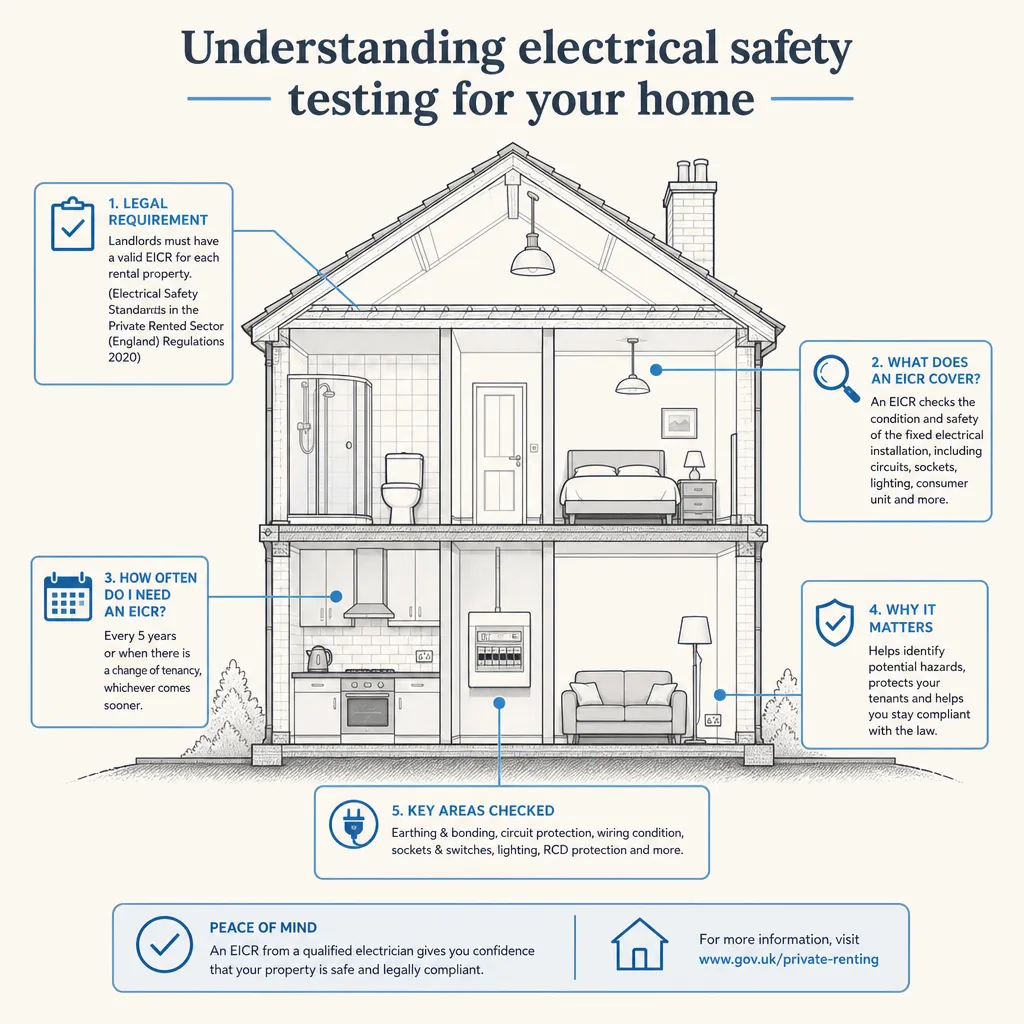
- You are a landlord in England: an Electrical Installation Condition Report (EICR) is a legal requirement every five years and at each change of tenancy under the Electrical Safety Standards in the Private Rented Sector (England) Regulations 2020.
What to ask a qualified professional
Before instructing an electrician for a new dedicated circuit:
- Are you currently registered with NICEIC, NAPIT, ELECSA, or STROMA — and may I verify your current registration number?
- Will you issue an Electrical Installation Certificate (EIC) on completion and notify the work to your competent person scheme?
- Does my existing consumer unit have sufficient capacity for a new RCBO, or will it need replacing?
- What cable route are you proposing, how will the cable be protected, and is any surface boxing or conduit required?
- Is the earthing arrangement and main bonding on my property adequate for the additional circuit?
- What is the fully itemised cost, including labour, materials, certification, and VAT?
When to get professional help
All new circuits in dwellings are notifiable under Part P — there is no legal route to self-install a new circuit in England without engaging a registered competent person or notifying building control. Beyond regulatory compliance, electrical faults are a leading cause of accidental dwelling fires in the UK. This is not a category of work where unqualified installation is appropriate.
If you have existing work without certification, or you are buying or selling a property where electrical certificates cannot be produced, an Electrical Installation Condition Report (EICR) from a registered electrician will assess the installation's current safety and identify any remedial work required.
How Housey can help
Housey connects UK homeowners with NICEIC- and NAPIT-registered electricians for dedicated circuit installations, consumer unit upgrades, and certification work. We also help homeowners and landlords arrange an Electrical Installation Condition Report (EICR) — essential before a sale, let, or major renovation — so you have a clear picture of your installation's condition before new work begins.
Frequently asked questions
Can I install my own electrical circuit in the UK?
You can carry out electrical work in your own home, but if it is notifiable under Part P — which includes all new circuits — you must either engage a registered competent person to certify it or notify your local building control authority and have it inspected. Completing notifiable work without certification is non-compliant, may invalidate home insurance, and will need to be disclosed and potentially remedied at the point of sale.
What certificates should I receive after a new circuit is installed?
You should receive an Electrical Installation Certificate (EIC), which records circuit details, test results, and confirms compliance with BS 7671. If the electrician is registered under a competent person scheme, they will also notify the work to that scheme and to local building control. Keep the EIC with your property documents — solicitors will ask for it during conveyancing.
What is the difference between an EIC and an EICR?
An Electrical Installation Certificate (EIC) is issued when new electrical work is completed, certifying that the installation meets BS 7671. An Electrical Installation Condition Report (EICR) assesses the safety and condition of an existing installation and identifies any defects or departures from the current standard. They are distinct documents serving different purposes and should not be confused.
How long does a dedicated circuit installation take?
For a straightforward single circuit — such as a cooker or shower — installation typically takes half a day to a full day, depending on cable run length and access. If the consumer unit needs upgrading or cable routing is complex, allow a full day or more. Testing and issuing the Electrical Installation Certificate adds time at the end of the visit.
Sources and further reading
- Approved Document P: Electrical Safety in Dwellings — GOV.UK
- NICEIC: Find a Contractor — NICEIC
- NAPIT: Find a Member — NAPIT
- IET Wiring Regulations (BS 7671) — IET
- Electrical Safety First: Homeowner Guidance — Electrical Safety First
Useful next reads
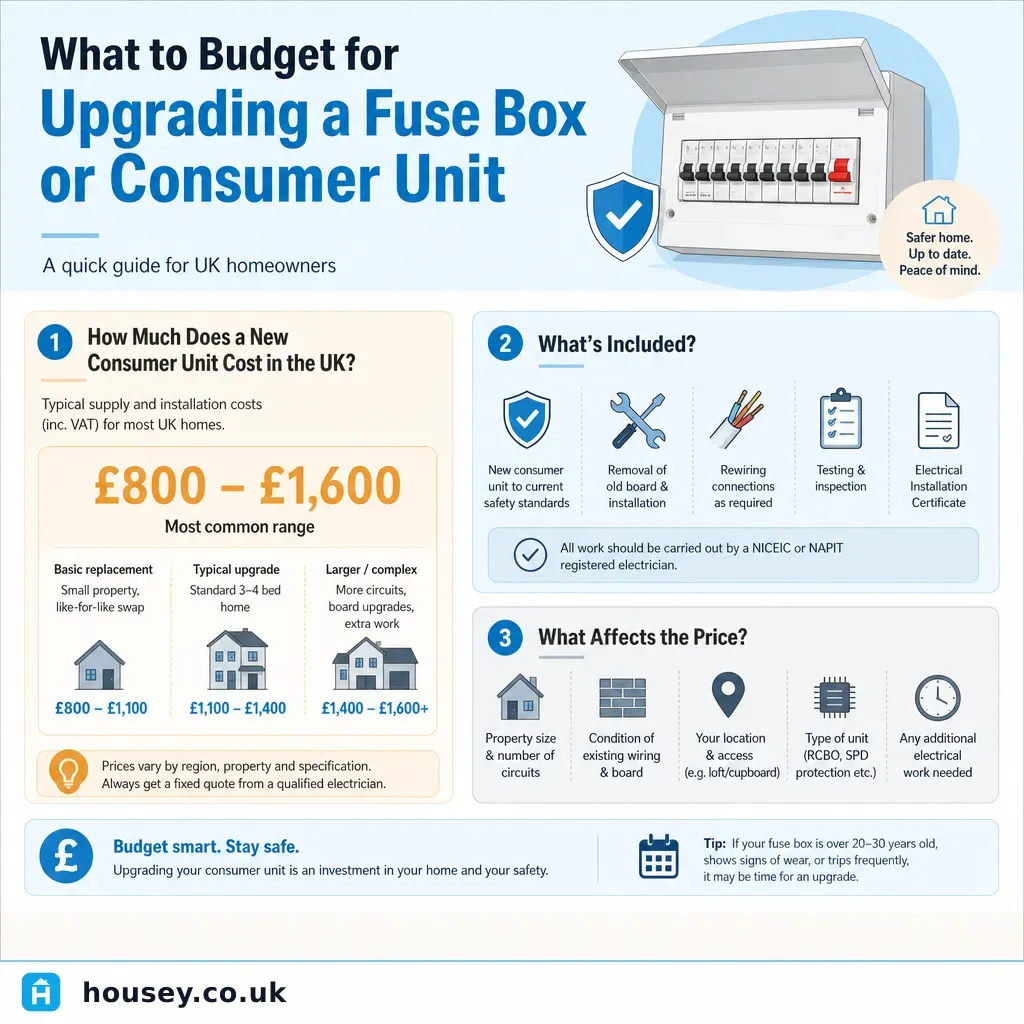 Surveys & Inspections
What to Budget for Upgrading a Fuse Box or Consumer Unit
Replacing a consumer unit (fuse box) in the UK typically costs £400–£900 for a straightforward installation by a Part P registered electrician.
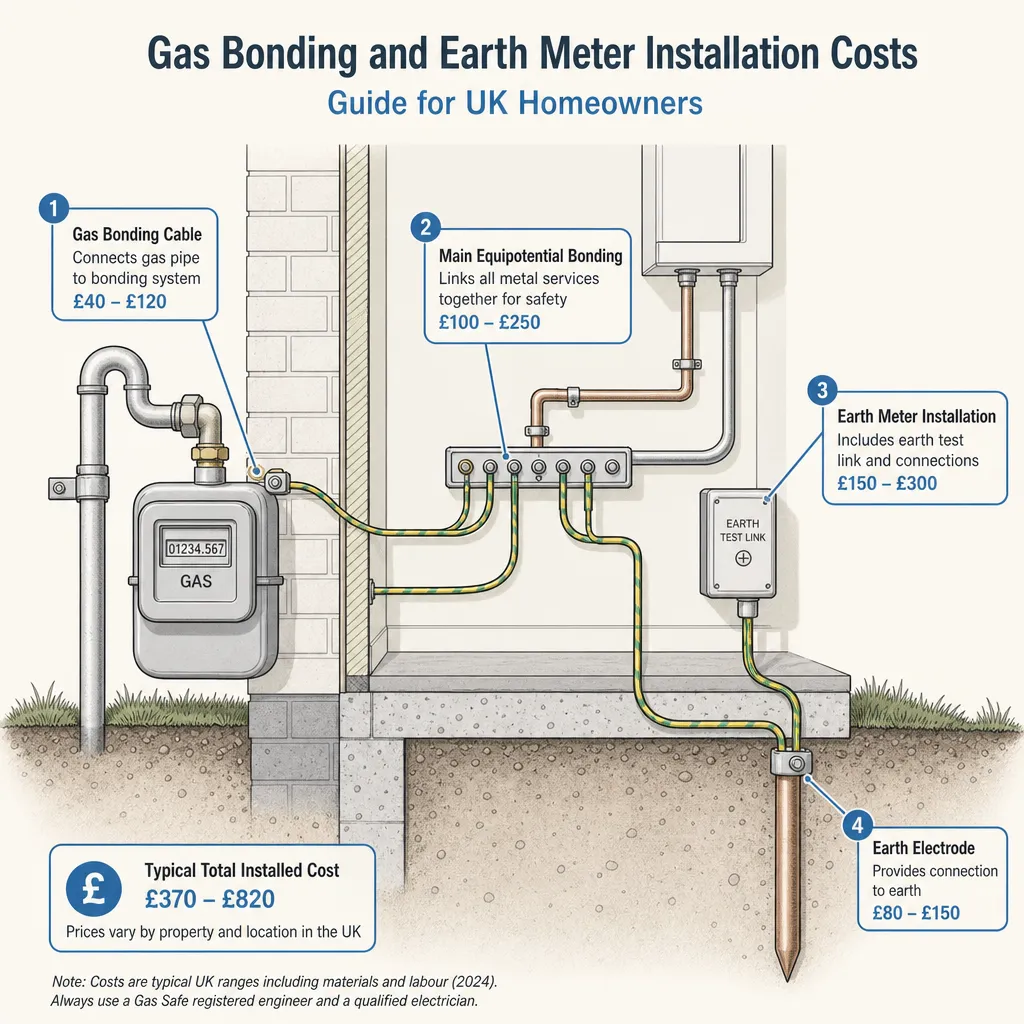 Surveys & Inspections
Gas Bonding and Earth Meter Installation Costs
Main gas bonding connects your gas pipework to the electrical earthing terminal, preventing dangerous voltage differences.
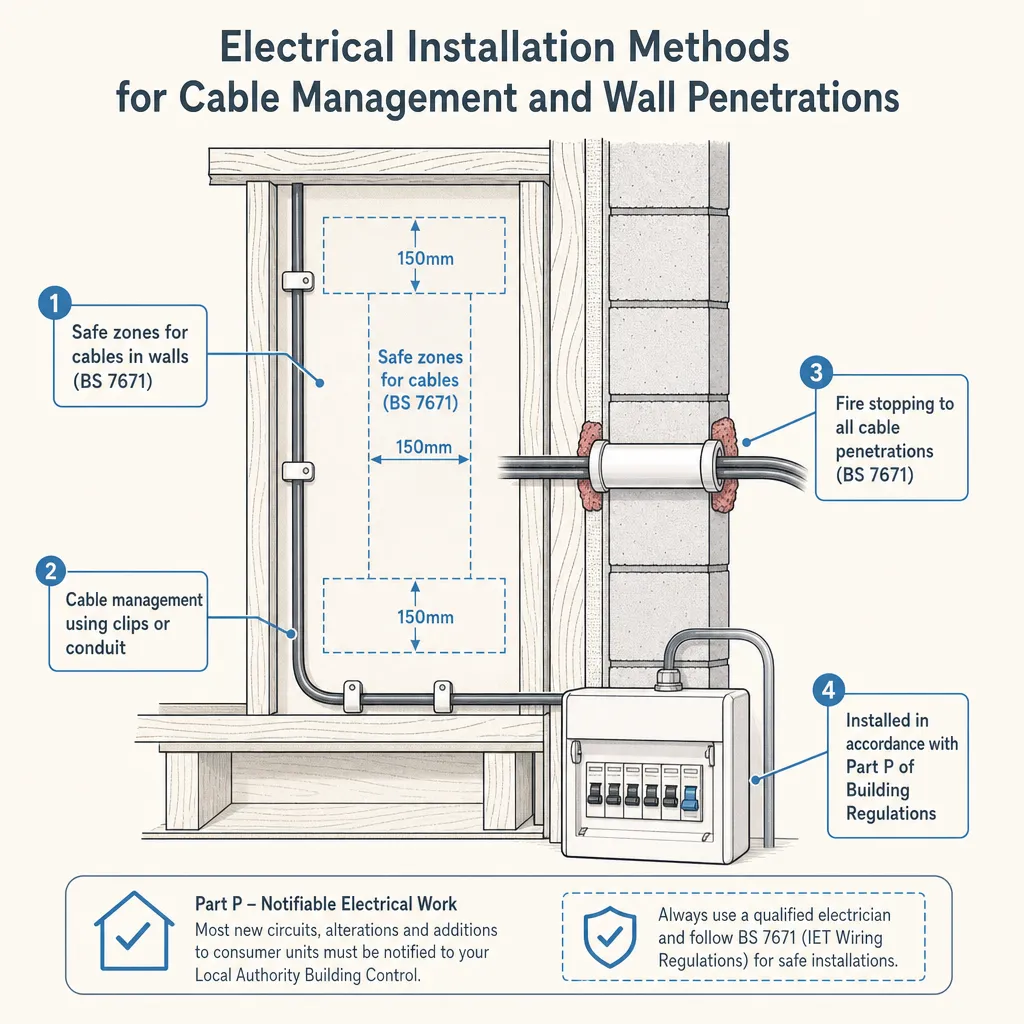 Surveys & Inspections
Electrical installation methods for cable management and wall penetrations
Cables concealed in walls must follow safe-zone routes or be protected by earthed metallic conduit under BS 7671 Regulation 522.
 Surveys & Inspections
Understanding electrical safety testing for your home
An Electrical Installation Condition Report (EICR) assesses the fixed wiring, consumer unit, and electrical circuits in a property.
 Surveys & Inspections
Why Property Boundaries Matter: Surveying and Dispute Prevention
Property boundaries in England and Wales are recorded as general boundaries by HM Land Registry — not precise measurements.