Gas Line Installation: Safety Standards and Costs
By Housey · Last reviewed 30th of May 2026
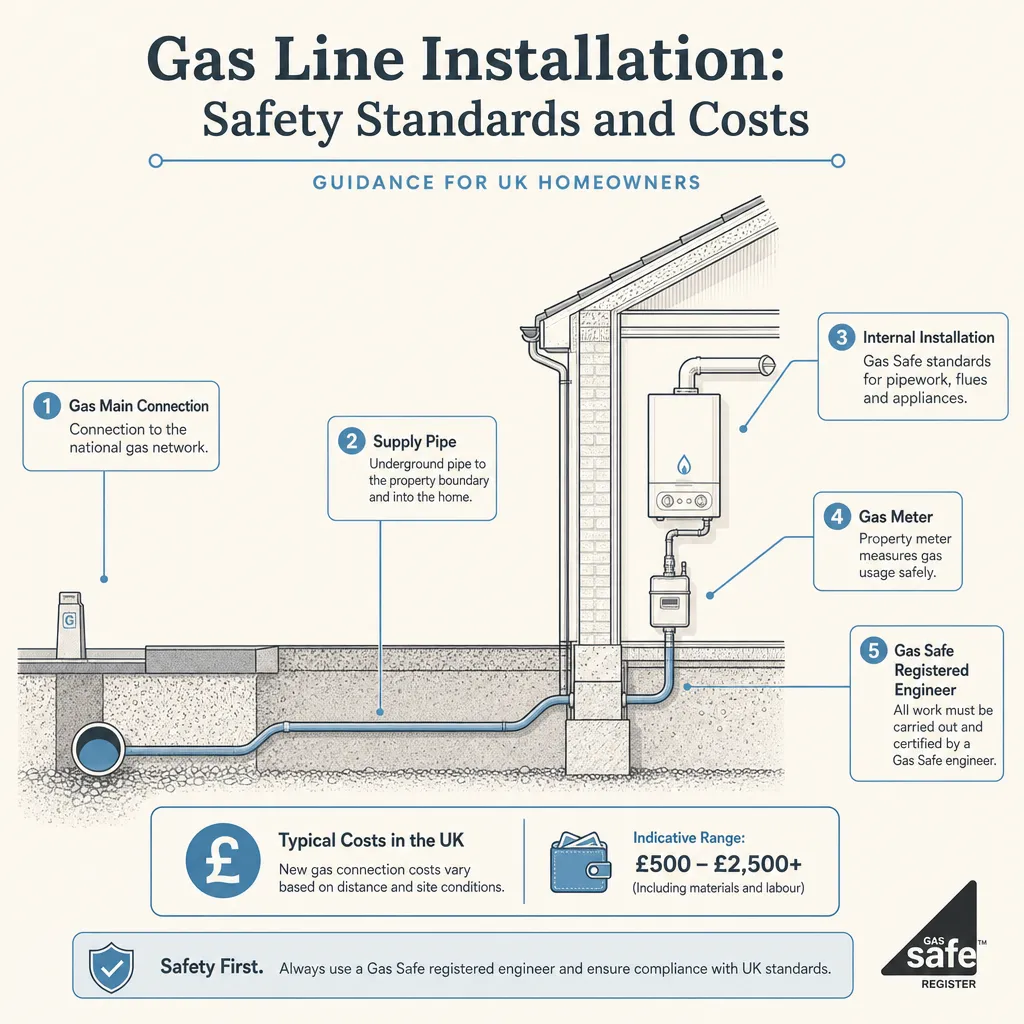
Gas Line Installation: Safety Standards and Costs
Installing a gas line — whether connecting a property to the mains network for the first time, extending a supply to a new kitchen or utility room, or running pipework to an outbuilding — is one of the most tightly regulated tasks in UK residential construction. Questions about gas line installation most commonly arise when buyers are purchasing a property with no existing mains gas, when homeowners are planning a new build or substantial renovation, or when considering a gas-powered annexe or garden room. The legal requirements governing who can carry out this work, and how, are not optional.
Key points
- All gas work in Great Britain must be carried out by a Gas Safe registered engineer — this is a legal requirement under the Gas Safety (Installation and Use) Regulations 1998, and applies to installation, commissioning, maintenance, and repair of gas fittings and pipework.
- Connecting a new property to the mains gas network is the responsibility of the local gas transporter — Cadent, SGN, Northern Gas Networks, or Wales & West Utilities — not your boiler installer or plumber.
- Internal gas pipework must be installed to the standards set out in BS 6891 (installation and maintenance of low-pressure gas pipework in domestic premises) and must be tested for soundness before any appliance is commissioned.
- Building Regulations Approved Document J (Combustion Appliances and Fuel Storage Systems) applies to the installation of gas appliances, and certain work must be notified to building control under the Building Regulations 2010.
- The cost of a new mains gas connection is formally quoted by the gas transporter — it is not a figure your gas engineer or boiler company can reliably estimate, as it depends on distance, street works, and potential network reinforcement.
Who can carry out gas line work?
Only a Gas Safe registered engineer may legally install, commission, maintain, or repair gas fittings and pipework in Great Britain. This requirement is established by the Gas Safety (Installation and Use) Regulations 1998, enforced by the Health and Safety Executive. Working on gas fittings without Gas Safe registration is a criminal offence.
You can verify any engineer's current registration — and check the specific appliance categories they are qualified to work on — at the Gas Safe Register using their licence number. An engineer qualified for domestic central heating may not hold separate qualifications for LPG or gas cookers; always check the licence card for the work you need.
Note: CORGI registration (the predecessor scheme) was replaced by Gas Safe in 2009. A CORGI certificate does not confirm current Gas Safe registration.
New mains gas connections
If a property has no mains gas supply and you wish to connect to the distribution network:
- Confirm network proximity — gas transporters typically connect properties within a reasonable distance of the existing network; distance and ground conditions determine feasibility and cost.
- Apply to the local gas transporter — Cadent, SGN, Northern Gas Networks, or Wales & West Utilities, depending on your region. Each publishes an online application process. You apply directly to the transporter, not through a gas engineer.
- Receive a formal quotation — the transporter surveys the route, assesses the street works required, and issues a written quote. This typically takes several weeks and is the only reliable cost figure for your specific address.
- Approve and schedule works — the transporter or their appointed contractor installs the connection to your property boundary; a Gas Safe registered engineer then runs internal pipework and connects appliances.
- Commission and certify — the engineer tests for soundness, commissions appliances, and notifies building control under the competent person scheme where applicable.
Extending or adding gas pipework
If your property already has a mains supply and you are extending pipework — to add a gas hob to a new kitchen island, supply a new boiler location, or run gas to an outbuilding — the work must still be carried out by a Gas Safe registered engineer to BS 6891 standards.
Running gas to an outbuilding, annexe, or garden room involves additional considerations:
- Underground pipework must be correctly sleeved, at the prescribed depth, and clearly identified
- Pipe sizing must be specified by a qualified engineer based on appliance demand and run length
- The outbuilding installation may require separate building control notification depending on the appliance type and structure
Gas line installation costs
Indicative UK costs, last reviewed 2026-05-30. Costs vary significantly by region, connection distance, street works required, and appliance type. Always obtain itemised quotes from Gas Safe registered engineers and a formal quote from the gas transporter for mains connections.
Work type | Indicative cost range |
|---|---|
New mains connection (standard distance, at boundary) | £1,000–£3,500+ (transporter quotation required) |
Internal gas pipework run (single appliance, new kitchen) | £300–£800 |
Gas pipework extension to outbuilding (10–15m) | £800–£2,000 |
New gas boiler installation (labour, excluding boiler cost) | £800–£1,500 |
Gas meter installation | Usually included in the connection quotation |
Street excavation, traffic management requirements, and longer connection distances can substantially increase the cost of a new mains connection — the gas transporter's formal quotation is the only reliable figure.
Comparing fuel and heating options
If mains gas is unavailable or impractical, consider the alternatives before committing to a connection application.
Option | Best for | Not ideal for | Regulatory body | Key consideration |
|---|---|---|---|---|
Mains gas | Properties near the distribution network | Rural locations far from the grid | Gas Safe Register / local gas transporter | Lowest ongoing fuel cost of gas options |
LPG (bulk tank) | Rural properties off the mains gas network | High-density urban areas with limited garden space | Gas Safe Register (LPG-qualified engineers) | Higher unit cost than mains gas; tank rental or purchase required |
Oil | Rural areas with no gas connection | Areas subject to NO₂ or air quality restrictions | OFTEC (not Gas Safe) | Stored on-site; price volatile; phased out in new builds from 2025 |
Air source heat pump | Most properties with adequate insulation | Older, uninsulated solid-wall properties without fabric improvements | MCS-certified installers | Electricity-based; no gas infrastructure required; may qualify for Boiler Upgrade Scheme |
Important limitations
This article provides general information about gas line installation processes and regulations in Great Britain. Gas safety law is strict and non-negotiable — no online guide, including this one, can substitute for assessment by a Gas Safe registered engineer or a formal quotation from a gas transporter. Building Regulations requirements, connection feasibility, and costs vary by property type, location, and site conditions. Rules in Northern Ireland differ from Great Britain; if your property is in Northern Ireland, check with the Health and Safety Executive for Northern Ireland and consult a locally registered engineer.
When this becomes urgent
Stop what you are doing and act immediately if:
- You smell gas in or around your property — call the National Gas Emergency Service on 0800 111 999 (free, 24 hours)
- A carbon monoxide alarm sounds — evacuate the building and call 999
- A gas appliance is producing yellow or orange flames rather than a crisp blue flame
- An existing gas installation has been disturbed, damaged, or modified by an unregistered person
- You discover capping on a gas pipe with no record of who did the work or when
Do not attempt to trace a gas leak or reconnect any fitting yourself.
What to ask a qualified professional
Before instructing a Gas Safe registered engineer or submitting a connection application to a gas transporter:
- Is the engineer currently Gas Safe registered, and what appliance categories does their licence cover — does this match the work I need?
- What standards will the installation be designed to — BS 6891 for pipework, Approved Document J for appliances?
- Will you notify building control on my behalf, or do I need to arrange this separately?
- What documentation will I receive on completion — gas soundness test record, commissioning certificate, building regulations compliance certificate?
- Is the quotation from the gas transporter or a private contractor, and what exactly is included?
- What ground conditions, access constraints, or site factors could change the final price or programme?
- Is VAT included in the quoted figure?
When to get professional help
Gas line work is not a DIY task under any circumstances. Any person who installs, commissions, maintains, or repairs a gas fitting without Gas Safe registration commits a criminal offence under the Gas Safety (Installation and Use) Regulations 1998. If you are uncertain whether your existing installation is safe, compliant, or complete, arrange a gas safety inspection with a Gas Safe registered engineer before carrying out any further work.
How Housey can help
For new gas installations and building work involving gas appliances, a building control consultant can help you navigate the notification and compliance requirements under the Building Regulations 2010, ensuring your project meets Approved Document J and any relevant local authority conditions. For the gas engineering work itself, always verify your engineer's current Gas Safe registration directly at gassaferegister.co.uk before instructing them.
Frequently asked questions
Can I do any gas work myself?
No. The Gas Safety (Installation and Use) Regulations 1998 make it a criminal offence for anyone who is not Gas Safe registered to carry out gas work in Great Britain. This applies to pipework, appliance connections, and commissioning — regardless of your other trade qualifications. Always verify an engineer's current registration at gassaferegister.co.uk before instructing them.
How long does a new mains gas connection take?
From application to completed connection, allow 6–12 weeks for a straightforward connection, though timescales vary by gas transporter, time of year, and the extent of street works required. Complex routes, traffic management requirements, or network reinforcement can extend this significantly. Apply to your local gas transporter directly as early as possible.
Do I need building control approval for a new gas boiler?
Yes, in most cases. Installing a gas boiler is notifiable work under the Building Regulations 2010. A Gas Safe registered engineer can self-certify under the Gas Safe Register's competent person scheme, notifying building control on your behalf. You should receive a building regulations compliance certificate on completion — retain this for any future sale or remortgage.
What is the difference between a gas transporter and a gas supplier?
Your gas transporter (Cadent, SGN, Northern Gas Networks, or Wales & West Utilities depending on your region) owns and maintains the physical pipe network that delivers gas to your property. Your gas supplier is the energy company you pay for usage. New connections and pipe extensions are arranged with the transporter, not your energy supplier.
Sources and further reading
- Gas Safety (Installation and Use) Regulations 1998 — legislation.gov.uk
- Gas Safe Register — find an engineer — Gas Safe Register
- Approved Document J: Combustion appliances and fuel storage systems — Ministry of Housing, Communities & Local Government
- HSE: Gas safety in the home — Health and Safety Executive
- Cadent Gas: New connections — Cadent Gas
Useful next reads
 Improvement & Build
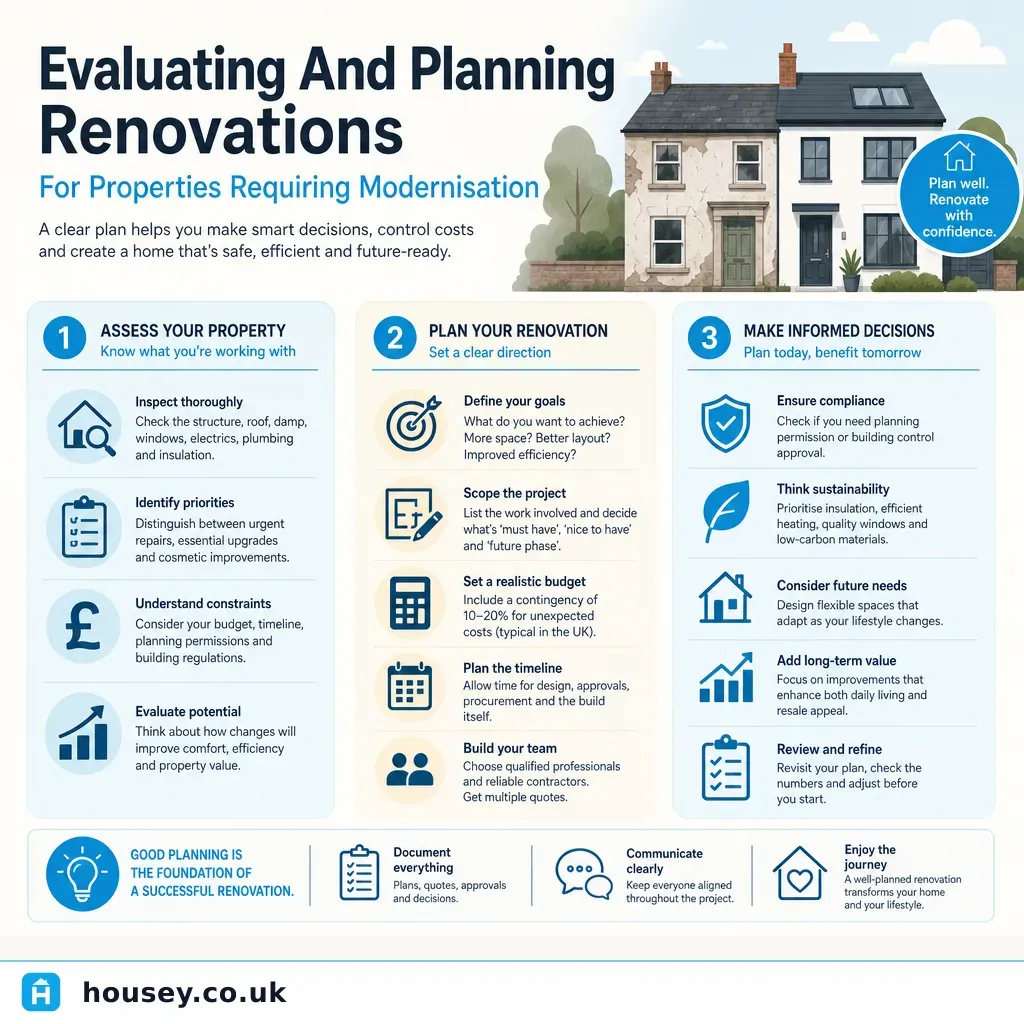
Evaluating And Planning Renovations For Properties Requiring Modernisation
Start by commissioning a condition survey — RICS Level 3 for pre-1919 properties — to identify structural defects, damp, and services issues before finalising a budget.
 Improvement & Build
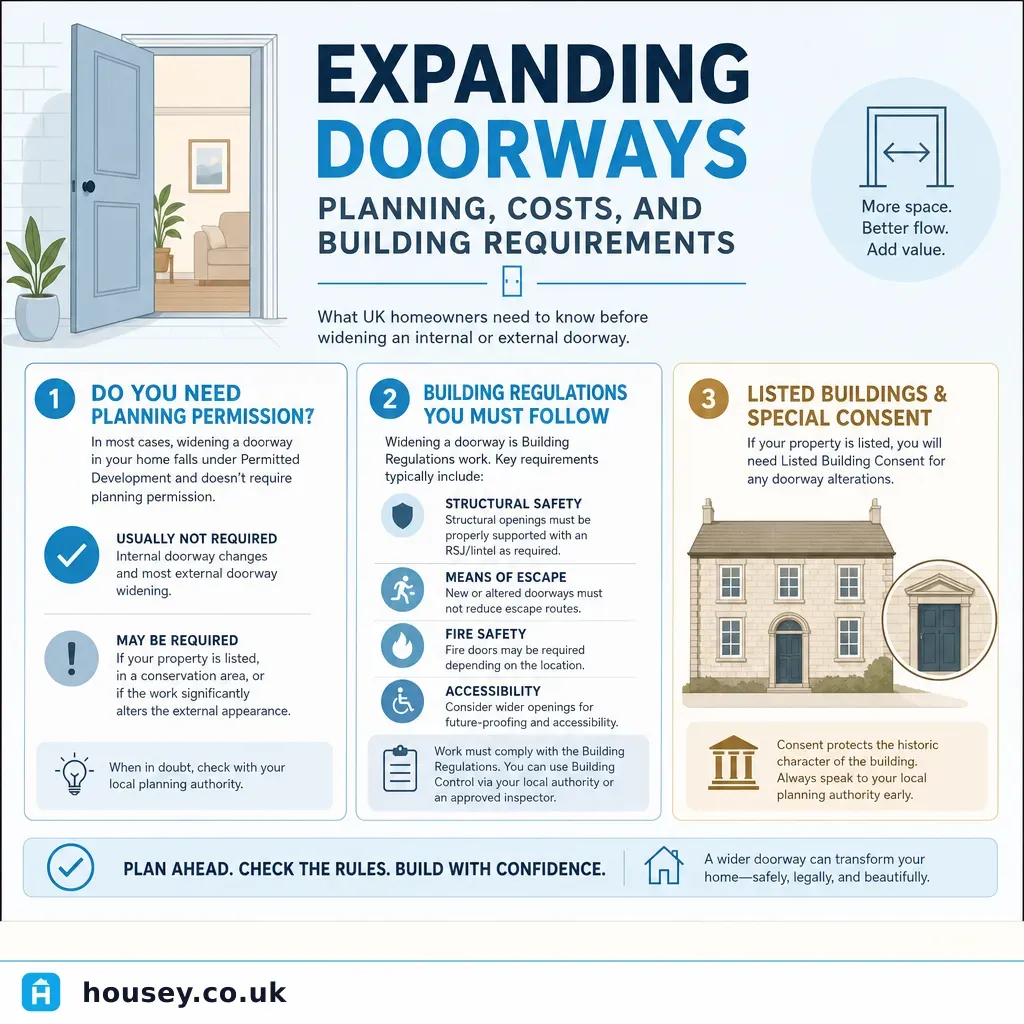
Expanding Doorways: Planning, Costs, and Building Requirements
Expanding a doorway in a load-bearing wall requires Building Regulations Part A approval and a structural engineer's lintel design.
 Improvement & Build
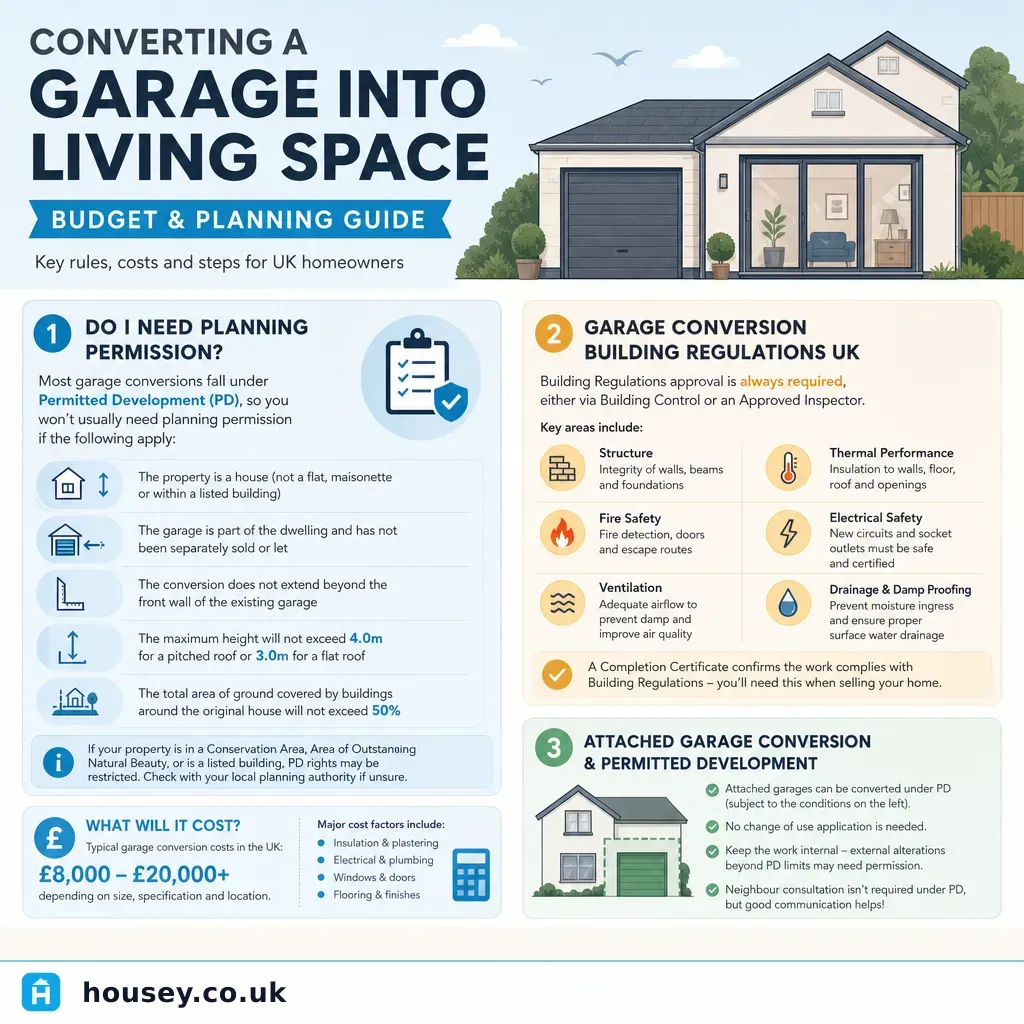
Converting a Garage into Living Space: Budget and Planning Guide
A single-garage conversion typically costs £8,000–£20,000 in the UK.
 Improvement & Build
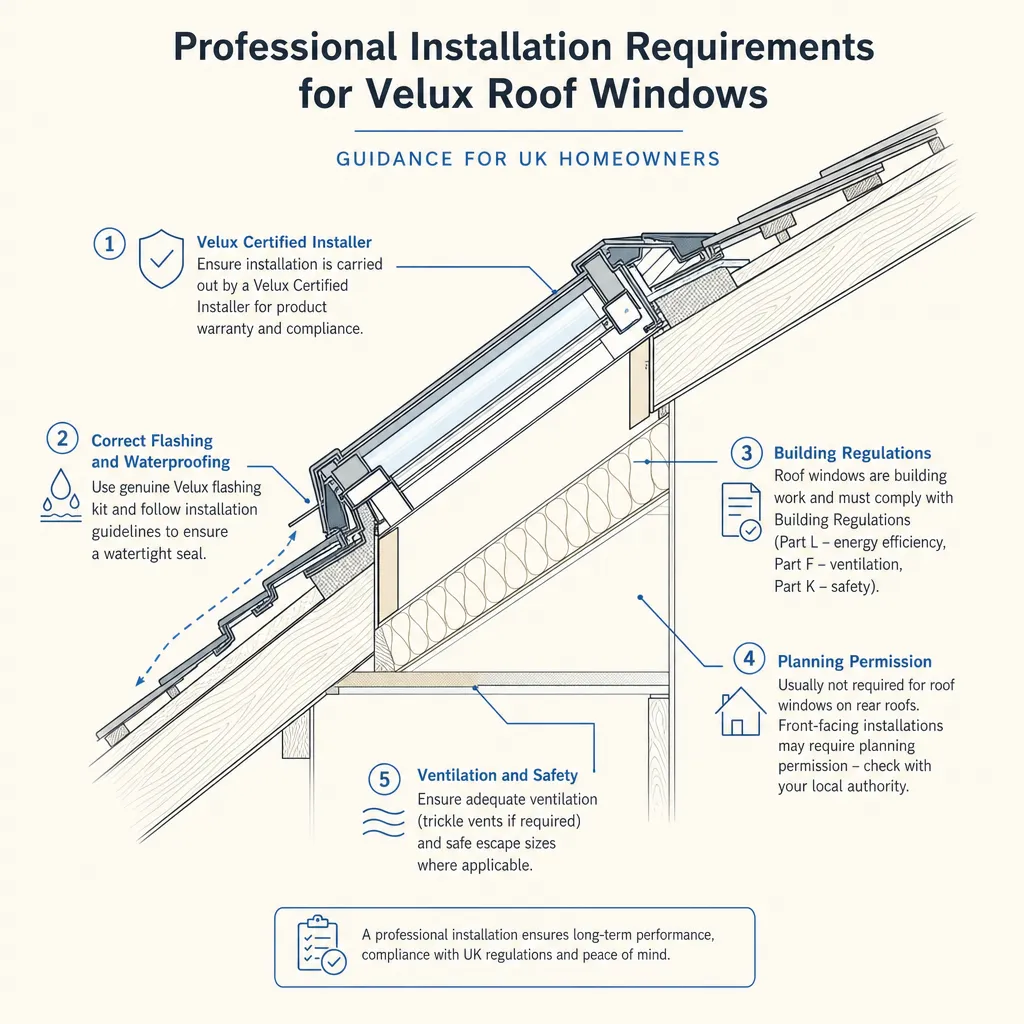
Professional Installation Requirements for Velux Roof Windows
Velux roof windows installed as replacements in the same opening usually fall under permitted development, but new openings or changes on listed buildings or in conservation areas require planning permission.
 Improvement & Build
Budget Guide for Two-Storey House Extensions
A two-storey house extension in the UK typically costs £1,800–£3,000+ per square metre for the build alone.