Gas Meter Relocation: Moving from Internal Walls to External Walls
By Housey · Last reviewed 4th of May 2026
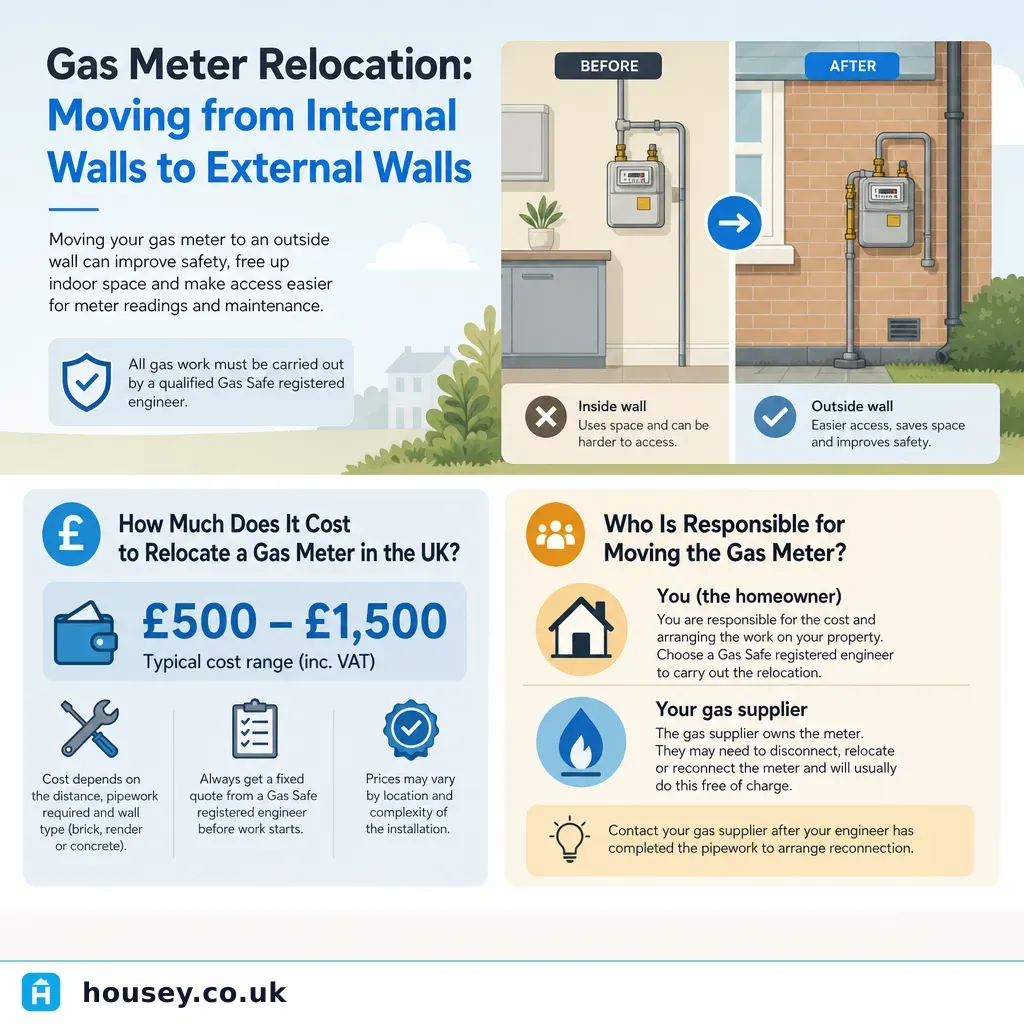
Gas Meter Relocation: Moving from Internal Walls to External Walls
Moving a gas meter is one of those decisions that surfaces unexpectedly — during a kitchen extension, a loft conversion, or a layout remodel that suddenly makes an internal meter inconvenient or inaccessible. In the UK, gas meters are owned and managed by gas transporters (regional network operators, not your energy supplier), which means the rules, responsibilities, and costs are more tightly regulated than most homeowners anticipate. Getting the process wrong — or instructing the wrong professional — can delay a project significantly and create serious safety risks.
Key points
- Gas meters in the UK are owned by the gas transporter (network operator), not the homeowner or energy supplier — common UK transporters include Cadent, SGN, Wales & West Utilities, and Northern Gas Networks.
- Only a Gas Safe registered engineer may carry out work on consumer pipework on your side of the meter; the network operator handles the meter itself and the incoming supply pipe up to the Emergency Control Valve (ECV).
- Building Regulations Approved Document J (combustion appliances and fuel storage) and Part C (resistance to moisture) may apply when pipework penetrates an external wall.
- External gas meter boxes must meet a minimum IP54 rating (dust and splash resistant) and comply with the Gas Industry Unsafe Situations Procedure (GIUSP) guidance on positioning and access.
- A homeowner-initiated meter move typically incurs a charge from the transporter — indicative UK costs range from around £400 to over £1,000 depending on distance and complexity (Indicative UK costs, last reviewed 2026-05-04; contact your network operator for a written quote).
Who is responsible for moving a gas meter in the UK?
The gas meter and the incoming supply pipe up to the Emergency Control Valve are assets owned and managed by your regional gas transporter. You cannot instruct any contractor — even a Gas Safe registered one — to move the meter itself. You must contact your gas transporter directly to request a meter move.
To find your gas transporter, use the Xoserve Find My Network Operator service or check your gas bill. Your energy supplier can also direct you to the correct operator.
Once the transporter agrees to the relocation and carries out the work on the meter and incoming pipework, a Gas Safe registered engineer can then extend or alter the consumer pipework on your side of the meter to connect your appliances to the new position.
Who does what in a gas meter relocation
Task | Who carries it out | Regulated by |
|---|---|---|
Moving the gas meter itself | Gas transporter (network operator) | Ofgem / HSE |
Extending consumer pipework to the new meter position | Gas Safe registered engineer | Gas Safe Register / HSE |
Installing the external meter box | Gas Safe engineer or specialist installer | Building Regulations / GIUSP |
Building control notification (if structural wall work is involved) | Building control body or approved inspector | Building Regulations |
Making good the internal wall after meter removal | General builder | Building regs if structural |
When should a gas meter be moved to an external wall?
Homeowners typically request an external meter move in one of four situations:
- Kitchen or utility room redesign: the existing internal meter obstructs a run of fitted units or appliances, and external access would improve safety and convenience.
- Extension or conversion work: the updated building layout makes an internal meter position inaccessible or non-compliant once building work is complete.
- Safety or access concerns: the meter is housed in a cupboard with inadequate ventilation, or emergency isolation access is obstructed.
- Landlord compliance: improving meter access for readings and emergency isolation before a tenancy or compliance inspection.
An external meter box on an accessible wall also allows energy suppliers to read the meter without entering the property.
Building regulations and planning considerations
Moving a gas meter is not typically subject to a planning permission application, but building regulations may apply depending on the scope of work:
- Routing pipework through an external wall may engage Part A (Structure) and Part C (Resistance to moisture) — the wall penetration must be properly sealed to maintain weather resistance and damp performance.
- Where an external wall forms part of a thermally insulated envelope, Part L (Conservation of fuel and power) requires that any penetration does not create a significant thermal bridge.
- In a listed building or conservation area, any external works — including fitting a new meter box — may require listed building consent or conservation area consent. Check with your local planning authority before instructing any work.
Building control notification is most likely needed if the meter relocation forms part of a wider project such as an extension or conversion. For a standalone meter move, the gas transporter and Gas Safe engineer will typically confirm compliance without a formal application — but verify with a qualified building control consultant if your project involves structural wall penetrations or is part of a notifiable building project.
How much does gas meter relocation cost?
Costs vary based on the distance the meter is being moved, access conditions, whether excavation is needed, and your transporter's current pricing schedule. VAT at 5% applies to domestic gas meter work.
Indicative UK cost ranges (last reviewed 2026-05-04 — always request a written quote from your transporter):
Scenario | Indicative cost |
|---|---|
Minor repositioning, short distance, same wall area | £400–£600 |
Internal to external move, straightforward access | £600–£900 |
Complex move involving excavation or a long pipe run | £1,000+ |
Move deemed necessary by the transporter for safety reasons | May be free — confirm with your operator |
Gas Safe engineer fees for consumer pipework extension and appliance recommissioning are quoted and charged separately by your chosen engineer.
What to ask before accepting a quote
- Is VAT included in the quoted price?
- What is and is not included in the gas transporter's scope, and what work falls to the Gas Safe engineer?
- How long will the gas supply be interrupted, and how much notice will be given before the appointment?
- Will building control notification be required for any structural or wall penetration work?
- What warranty or guarantee applies to the pipework and meter box installation?
- Will all connected appliances need recommissioning, and is this included or quoted separately?
- Are there any known property-specific issues — age, wall type, existing pipework material — that could affect the price or timeline?
The relocation process: what to expect
- Contact your gas transporter to request a meter move and agree the proposed new external position.
- Agree the new meter position — external boxes must be at an accessible height, positioned away from ignition sources, and not behind locked gates or in unventilated enclosures.
- Instruct a Gas Safe registered engineer to quote for consumer pipework extension and appliance recommissioning.
- Check building regulations requirements with a building control consultant if the work is part of a wider project or involves structural wall penetration.
- Transporter carries out the meter move on an agreed date; the gas supply will be interrupted for a period, typically a few hours.
- Gas Safe engineer installs consumer pipework from the new external meter position to your appliances.
- Appliances are recommissioned, tested, and a Gas Safe certificate is issued for all new pipework and recommissioning work.
Important limitations
This article provides general guidance only. Gas installations are safety-critical, and the rules governing meter ownership, pipework standards, and building regulations compliance depend on your specific property, its construction type and age, and your regional gas transporter's current policies. Nothing in this article constitutes gas safety advice or a substitute for professional assessment by a Gas Safe registered engineer or your gas transporter.
- Gas Industry Unsafe Situations Procedure (GIUSP) guidance on meter positioning may be updated; always verify current requirements with your network operator.
- Charges and eligibility for free moves vary by transporter and may change — confirm directly with your network operator before committing to any work.
- Properties with older steel pipework, cast-iron pipes, or shared meter arrangements (such as some purpose-built flats) may face additional complexity not addressed in this general guide.
- Listed building or conservation area status may impose additional restrictions beyond those described here.
What to ask a qualified professional
Before instructing a gas transporter or Gas Safe engineer, ask:
- Is the proposed new external meter position compliant with current GIUSP guidance on setback distances, ignition sources, and access requirements?
- Will routing pipework through the external wall require a building regulations application, and if so, who manages this process?
- Can you confirm your Gas Safe registration number and the specific categories covering this type of domestic gas installation work?
- What pipework standard will be used — for example, BS 6891 for small-bore domestic copper or steel pipework?
- Will all connected appliances need recommissioning after the meter move, and what does this involve in practice?
- Is there anything about my property — its age, wall construction, or existing pipework material — that could complicate or increase the cost of the work?
When to get professional help
All gas meter and pipework work must be carried out by qualified professionals — it is illegal for an unregistered person to carry out gas work in a UK home. Contact your gas transporter immediately if:
- You can smell gas near the meter at any time — call the National Gas Emergency Service on 0800 111 999 immediately and do not attempt to move or interfere with the meter.
- The meter shows signs of corrosion, physical damage, or suspected leakage.
- A Gas Safe engineer has flagged existing pipework as "At Risk" or "Immediately Dangerous" during any inspection.
- The existing meter is in a non-compliant position — inside a bedroom, bathroom, or a void with inadequate ventilation — as this is a safety concern requiring prompt action.
- You are planning an extension or conversion that will enclose, obstruct, or restrict access to the existing meter position.
How Housey can help
If your meter relocation is part of a larger building project — such as an extension or conversion involving structural wall work or a formal building regulations application — Housey can help you request quotes from qualified building control consultants who can advise on compliance requirements and manage the building control process on your behalf.
Frequently asked questions
Can I move my own gas meter?
No. Gas meters are owned by the gas transporter and can only be moved by the network operator. Consumer pipework on your side of the meter must be extended or altered by a Gas Safe registered engineer. Attempting to move a gas meter yourself is illegal and potentially fatal.
How do I find my gas transporter in the UK?
Your gas transporter is separate from your energy supplier. Use the Xoserve Find My Network Operator tool or check your gas bill. Common UK transporters include Cadent, SGN, Wales & West Utilities, and Northern Gas Networks — the correct one depends on your postcode area.
Is planning permission needed to move a gas meter to an external wall?
In most cases, no planning permission is needed. However, if your property is listed or in a conservation area, fitting a new meter box on an external wall may require listed building consent or conservation area consent from your local planning authority. Always check before any external works begin.
How long does a gas meter relocation take?
The day's work typically takes a few hours, with a period of gas supply interruption. Lead times for scheduling with the gas transporter can range from a few weeks to several months depending on the complexity of the move, transporter workload, and whether excavation is required.
Will my appliances need recommissioning after a gas meter move?
Yes. All gas appliances connected to the system should be checked and recommissioned after the supply is restored. A Gas Safe registered engineer should carry this out and issue the appropriate certificate. Do not use any appliances until recommissioning is confirmed complete and safe.
Sources and further reading
- Gas Safe Register — Gas Safe Register
- HSE: Gas safety in domestic properties — Health and Safety Executive
- GOV.UK: Approved Document J — Combustion appliances and fuel storage systems — Ministry of Housing, Communities & Local Government
- Ofgem: Gas and electricity network operators — Ofgem
- National Gas Emergency Service — National Gas
Useful next reads
 Planning & Pre-Build
Septic Tank Installation in the UK: Costs, Planning and Regulations
Installing a septic tank or sewage treatment plant in the UK requires registration or a permit under the Environment Agency's General Binding Rules, Building Regulations Part H compliance, and a percolation test to assess ground suitability.
 Planning & Pre-Build
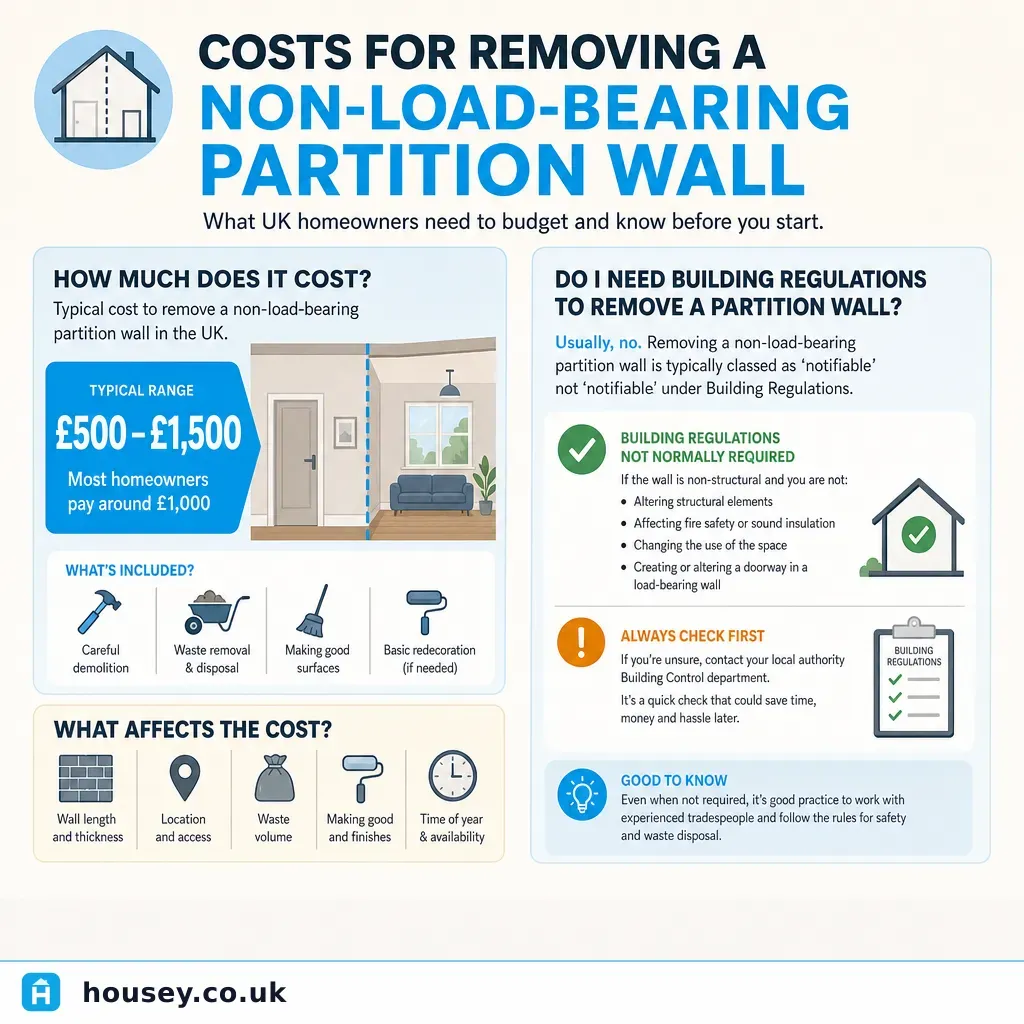
Costs for removing a non-load-bearing partition wall
Removing a non-load-bearing partition wall in a UK home typically costs £300–£1,500 in labour, plus £200–£600 or more for replastering and making good.
 Planning & Pre-Build
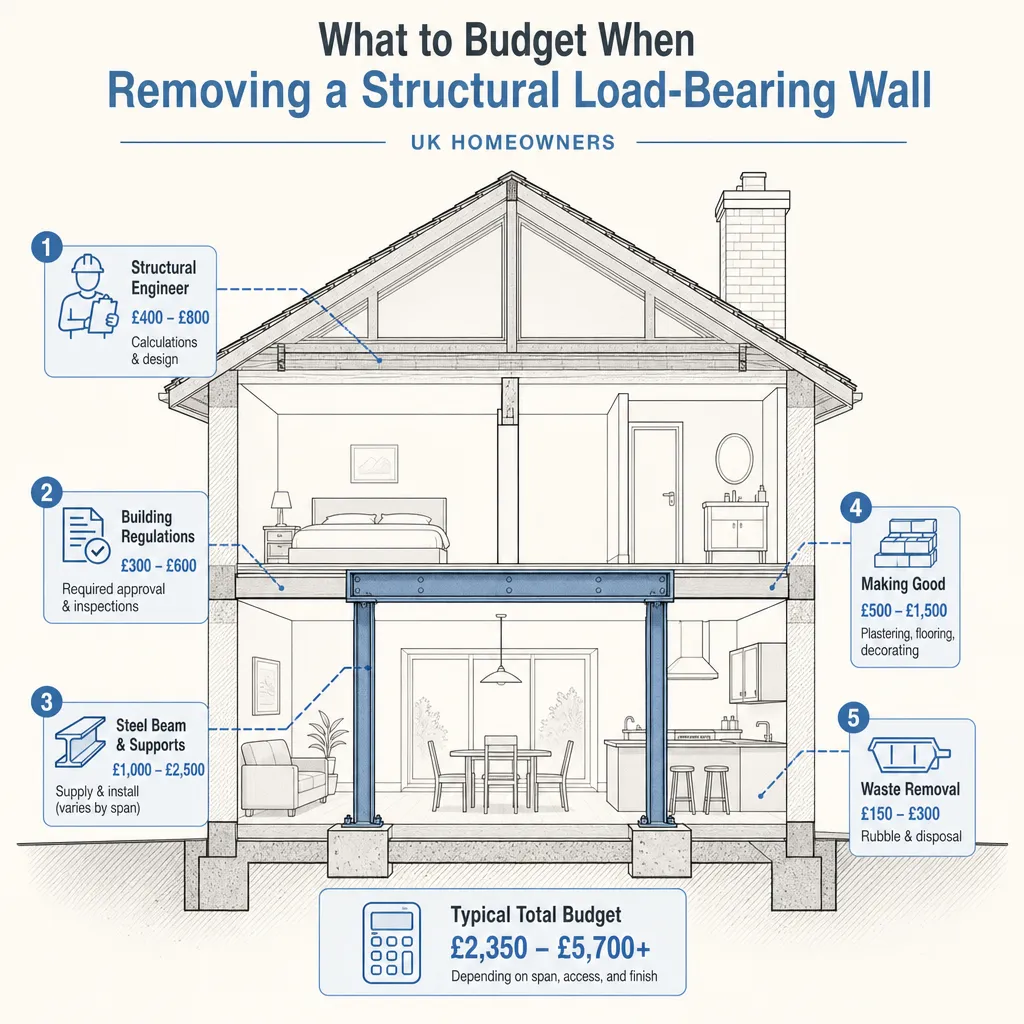
What to Budget When Removing a Structural Load-Bearing Wall
Removing a load-bearing wall in a typical UK home costs £2,500–£8,000 or more in total, covering a structural engineer's calculations, Building Regulations approval, the steel beam, builder's labour, and replastering.
 Planning & Pre-Build
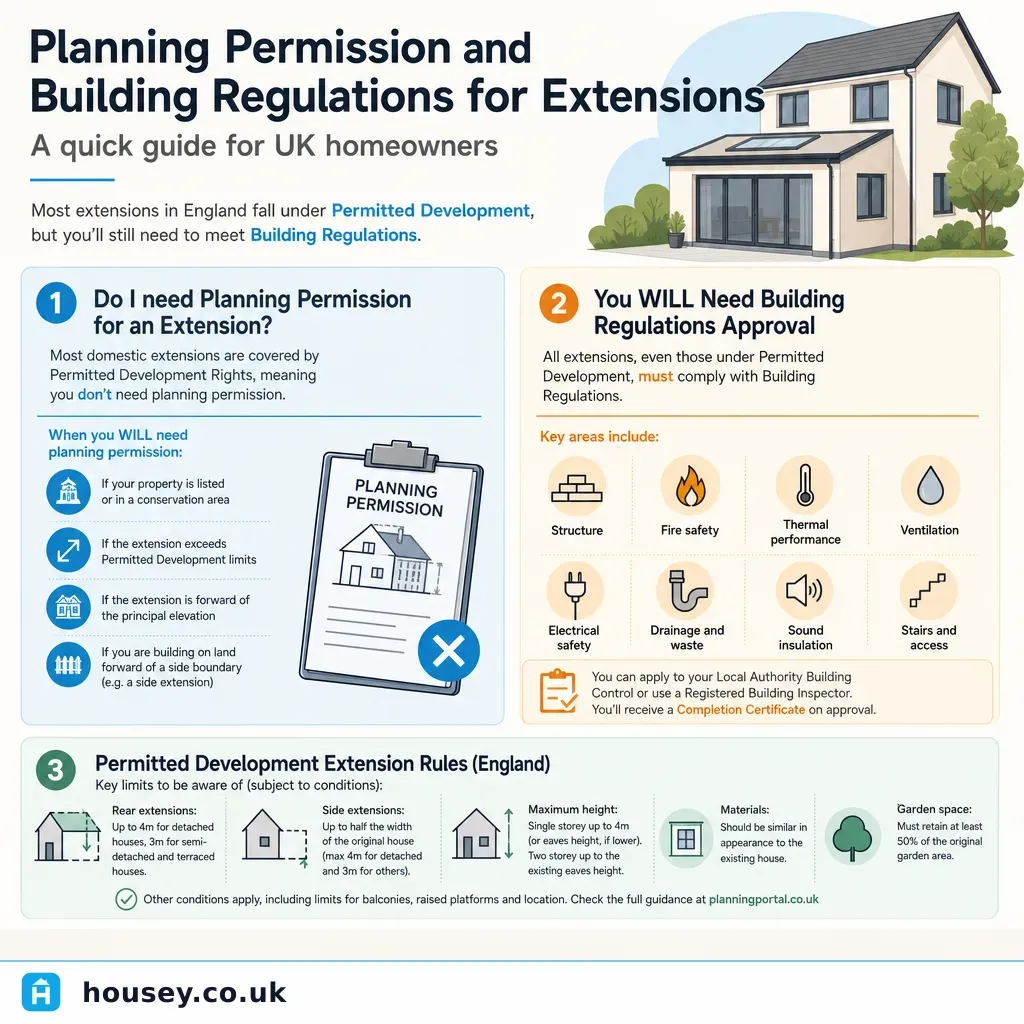
Planning Permission and Building Regulations for Extensions
UK home extensions usually require both planning permission and Building Regulations approval, though most smaller rear extensions qualify as Permitted Development under the GPDO 2015 and need no planning application.
 Planning & Pre-Build
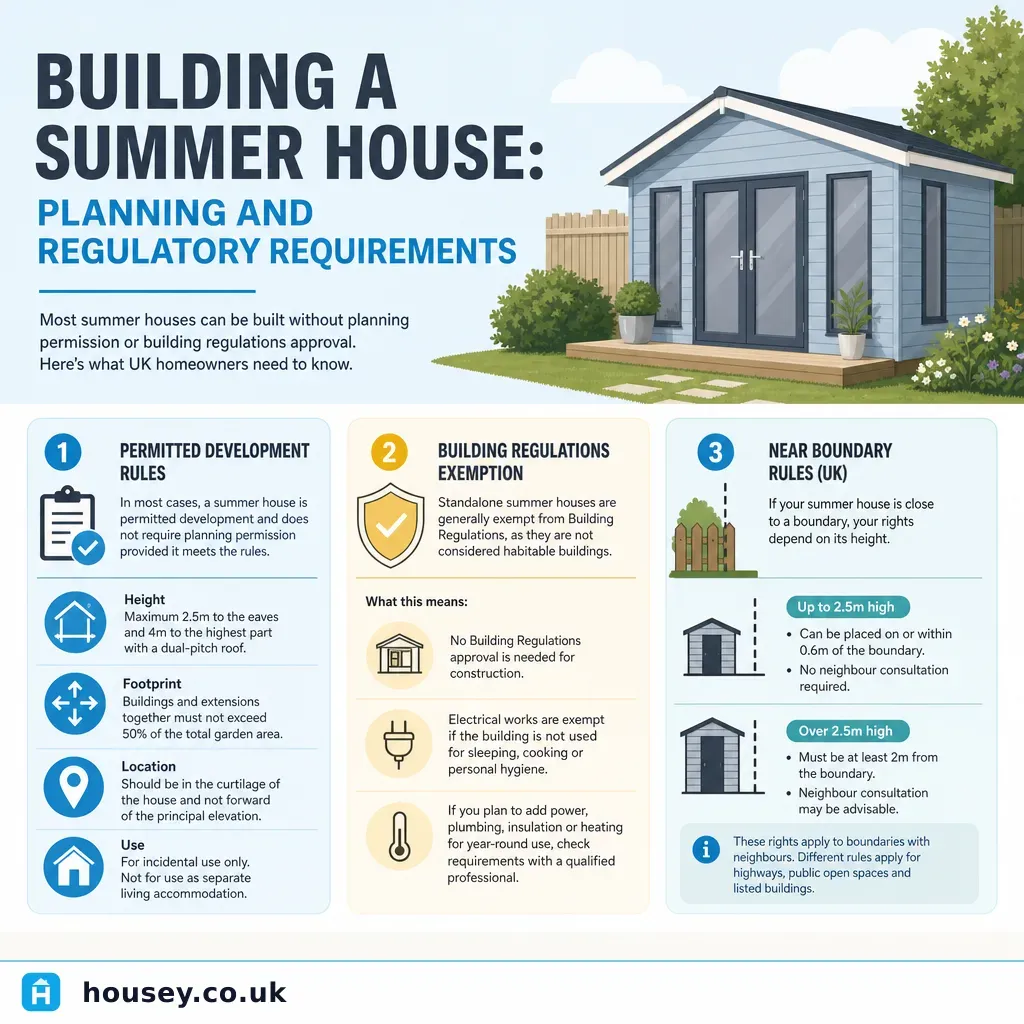
Building a Summer House: Planning and Regulatory Requirements
Most garden summer houses in England fall under Class E permitted development and need no planning permission, provided they are single-storey, within height limits, and not used for sleeping.