Gas Pipe Termination Regulations: Can You Cap External Gas Lines?
By Housey · Last reviewed 3rd of May 2026
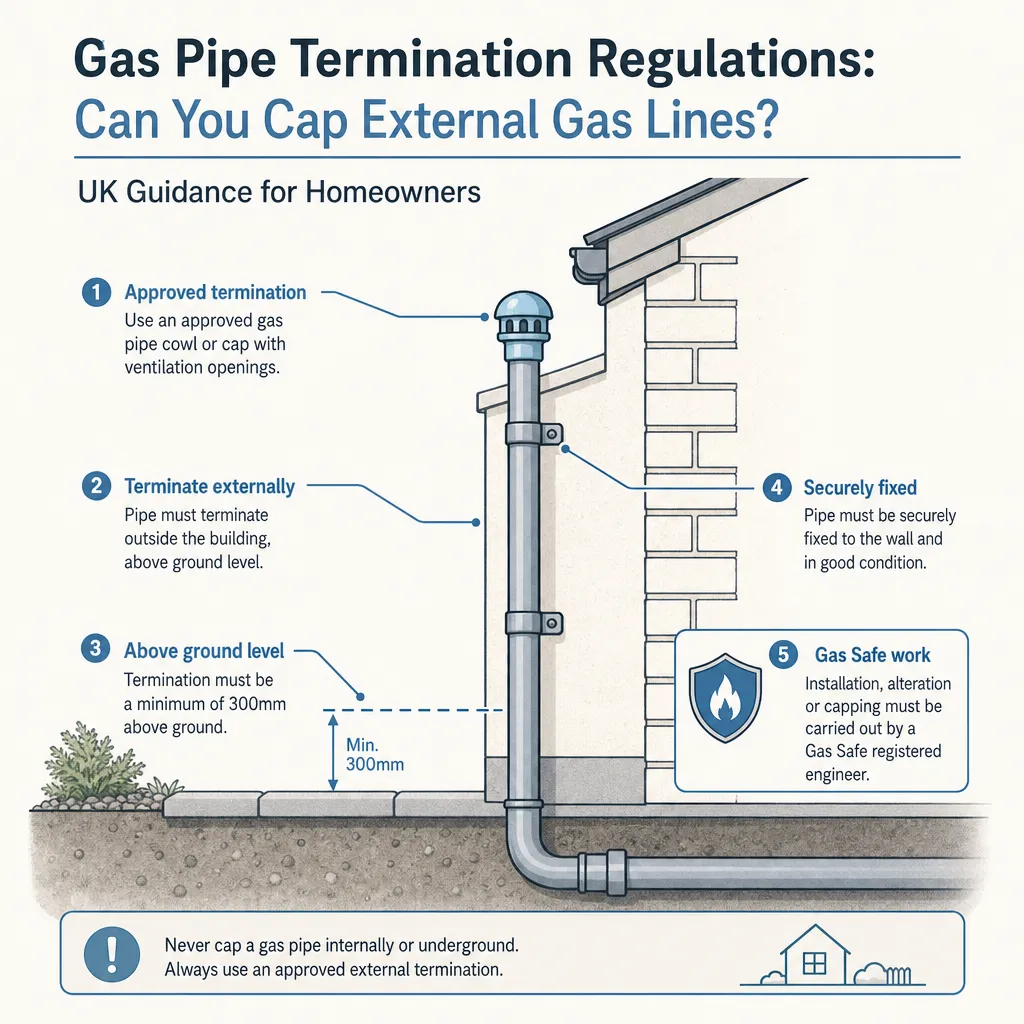
Gas Pipe Termination Regulations: Can You Cap External Gas Lines?
Working on or around gas pipework — even to cap off an unused line — is a strictly regulated activity in the UK. Whether you are removing an old outdoor gas appliance, decommissioning a redundant external pipe run, or preparing a property for an extension or conversion, understanding the rules around gas pipe termination is essential. Questions about capping external gas pipes arise regularly in renovation and demolition projects, often when homeowners or contractors discover too late that the work cannot lawfully be carried out without a registered professional.
Key points
- All work on gas pipes and fittings in the UK must be carried out by a Gas Safe registered engineer — this includes capping, extending, or removing external pipework regardless of pipe size or location.
- The Gas Safety (Installation and Use) Regulations 1998 (SI 1998/2451) set the primary legal framework; carrying out gas work without registration is a criminal offence.
- An external gas pipe that is capped but still connected to the supply remains live and under pressure — it must be treated as such until formally decommissioned by a competent engineer.
- Where gas supply is being permanently removed, work involving the meter or service pipe must be coordinated with the relevant gas transporter (Cadent, SGN, Northern Gas Networks, or Wales & West Utilities depending on your region).
- Building Regulations Approved Document J (Combustion appliances) may require notification to building control if gas pipe changes are associated with an appliance installation, replacement, or removal as part of a larger project.
What UK law says about gas pipe work
The legal framework governing gas work in Great Britain rests on three instruments:
- Gas Safety (Installation and Use) Regulations 1998: Makes it an offence for anyone other than a competent person — in practice, a Gas Safe registered engineer — to carry out work on a gas fitting. A "gas fitting" includes pipes, valves, fittings, meters, and appliances.
- Gas Act 1986 (as amended): Sets out the duties and rights of gas transporters and suppliers, including infrastructure ownership.
- Health and Safety at Work etc. Act 1974: Imposes an overarching duty not to create risks to health and safety — relevant to anyone working near live gas infrastructure.
In Northern Ireland, equivalent provisions apply under the Gas Safety (Installation and Use) Regulations (Northern Ireland) 2004.
Who owns which section of the gas supply?
Section of pipework | Ownership and responsibility |
|---|---|
Gas main beneath the street | Gas transporter (e.g., Cadent, SGN) |
Service pipe from main to meter | Gas transporter, up to the Emergency Control Valve (ECV) |
Gas meter | Meter Asset Manager (usually arranged via the supplier) |
Consumer pipework from meter onwards | Property owner or landlord |
External pipework serving appliances | Property owner or landlord |
The property owner is responsible for consumer-side pipework — but cannot carry out work on it themselves. A Gas Safe registered engineer must be instructed.
What capping an external gas pipe involves
A Gas Safe registered engineer carrying out a lawful termination must:
- Isolate the supply at the nearest appropriate valve — usually the meter or ECV.
- Purge the pipe of gas using an approved procedure, typically following IGEM/UP/1B (the industry standard for tightness testing and purging of domestic installations).
- Install a cap or plug of an appropriate material and pressure rating, using a method approved for gas use.
- Test for soundness to confirm no gas is escaping from the termination.
- Label the capped pipe clearly to indicate it is decommissioned and must not be reconnected without professional inspection.
- Issue documentation — a Gas Safety Record or equivalent written confirmation of the work and test results.
Decision tree: what type of gas pipe work do you need?
- Capping an external consumer pipe (e.g., removing a gas heater from an outbuilding): instruct a Gas Safe registered engineer; no gas transporter notification is typically required.
- Removing the gas meter: contact your gas supplier — they coordinate meter removal with the transporter.
- Disconnecting the service pipe at the boundary: contact your gas transporter directly; this is their infrastructure.
- Capping pipework inside a newly built extension or conversion: your Gas Safe engineer should confirm whether building regulations notification is required under Part J.
- Unsure which section of pipe is involved: always start with a Gas Safe engineer — they will advise on ownership and notify other parties if necessary.
What not to assume
- Assuming the gas is safe to cap yourself because the meter valve is closed: The pipe between the meter and the ECV can contain residual gas. Work must be done by a Gas Safe registered professional regardless of whether the meter valve is in the off position.
- Treating gas capping as equivalent to water plumbing: Gas fittings are legally distinct from water plumbing. A Gas Safe registration is required and is not transferable from general plumbing qualifications — the two registers are separate.
- Believing pipe size reduces the legal requirement: All gas pipe sizes present explosive and toxic risk if incorrectly handled. There is no size threshold below which the Regulations do not apply.
- Assuming a general builder can include it in a renovation package: Unless the builder holds a current Gas Safe registration for the specific work category, carrying out the work is a criminal offence under the 1998 Regulations.
Important limitations
This article provides general information about the UK regulatory framework for gas pipe termination. Gas work carries serious safety risks including fire, explosion, and carbon monoxide poisoning. Nothing here should be treated as technical or legal advice about your specific installation. Rules and procedures can vary by supply pressure, pipe material, property type, and the gas transporter serving your area. Always instruct a Gas Safe registered engineer and verify their current registration at gassaferegister.co.uk before any work begins.
What to ask a qualified professional
Before instructing a Gas Safe engineer, ask:
- Are you currently Gas Safe registered for this category of work? (Ask to see their card or check at gassaferegister.co.uk.)
- Does this work require building regulations notification under Part J?
- Will you need to notify the gas transporter or coordinate with the supplier?
- What documentation will you provide on completion — soundness test results, Gas Safety Record?
- Will the capped pipe be clearly labelled with its decommissioned status?
- Is capping in situ the right long-term approach, or should the pipe be removed entirely?
- Is there any risk to adjacent pipework or structures during the capping procedure?
When to get professional help
Any work on gas pipework requires a Gas Safe registered engineer — there are no exceptions under UK law. Do not attempt to cap, extend, remove, or otherwise interfere with gas pipes yourself, and do not instruct an unregistered person to do so.
Contact the National Gas Emergency Service on 0800 111 999 immediately if you can smell gas. Do not call a contractor first.
Also seek immediate professional help if you discover an uncapped or poorly terminated gas pipe during renovation or demolition work, or if a previous owner appears to have capped pipework informally — this requires professional inspection before any further work proceeds.
For projects where gas termination is part of a larger build programme, building regulations drawings should document the proposed changes, and building control consultants can advise on notification requirements under Approved Document J.
How Housey can help
For the building regulations side of a project involving gas pipe changes, Housey can connect you with building control consultants who can advise on notification obligations and ensure your project documentation is in order. Where your project also requires building regulations drawings to reflect the decommissioned pipework layout, Housey can help you find qualified professionals to prepare them.
Frequently asked questions
Is capping a gas pipe the same as disconnecting from the supply?
No. Capping terminates a pipe run but leaves it connected to the supply network up to the cap. A full disconnection — such as removing the meter or cutting the service pipe — requires gas transporter involvement. A Gas Safe registered engineer can advise which approach is appropriate and coordinate with the transporter if needed.
How much does it cost to have a gas pipe capped by a Gas Safe engineer?
Indicative UK costs for capping a single external gas pipe point range from approximately £80–£200, depending on complexity, location, and what testing and documentation is required. Indicative UK costs, last reviewed 2026-05-03. Always get at least two quotes from Gas Safe registered engineers and confirm whether VAT is included.
Do I need building regulations approval for capping an external gas pipe?
Not always. Part J notification is typically required when gas appliances are installed, replaced, or their flues altered — not for simple pipe capping. However, if capping is part of a larger project such as an extension, check with your building control body or a building control consultant about any notification obligations.
Who is responsible if a poorly capped gas pipe causes an injury?
The property owner can face civil and potentially criminal liability if a gas fitting is in an unsafe condition and the work was not done by a Gas Safe registered engineer. Insurance policies may also be invalidated. Always retain the engineer's documentation confirming the work was completed and soundness-tested.
Can I cap a gas pipe in an outbuilding or garden?
Yes. A Gas Safe registered engineer can cap external consumer pipework in outbuildings, gardens, or any other external location on the property. The same legal requirements apply regardless of where on the property the pipe is located.
Sources and further reading
- Gas Safety (Installation and Use) Regulations 1998 — legislation.gov.uk
- Gas Safe Register — find and verify a registered engineer — Gas Safe Register
- Building Regulations Approved Document J — Combustion appliances — GOV.UK
- HSE gas safety guidance for homeowners and landlords — Health and Safety Executive
Useful next reads
 Planning & Pre-Build
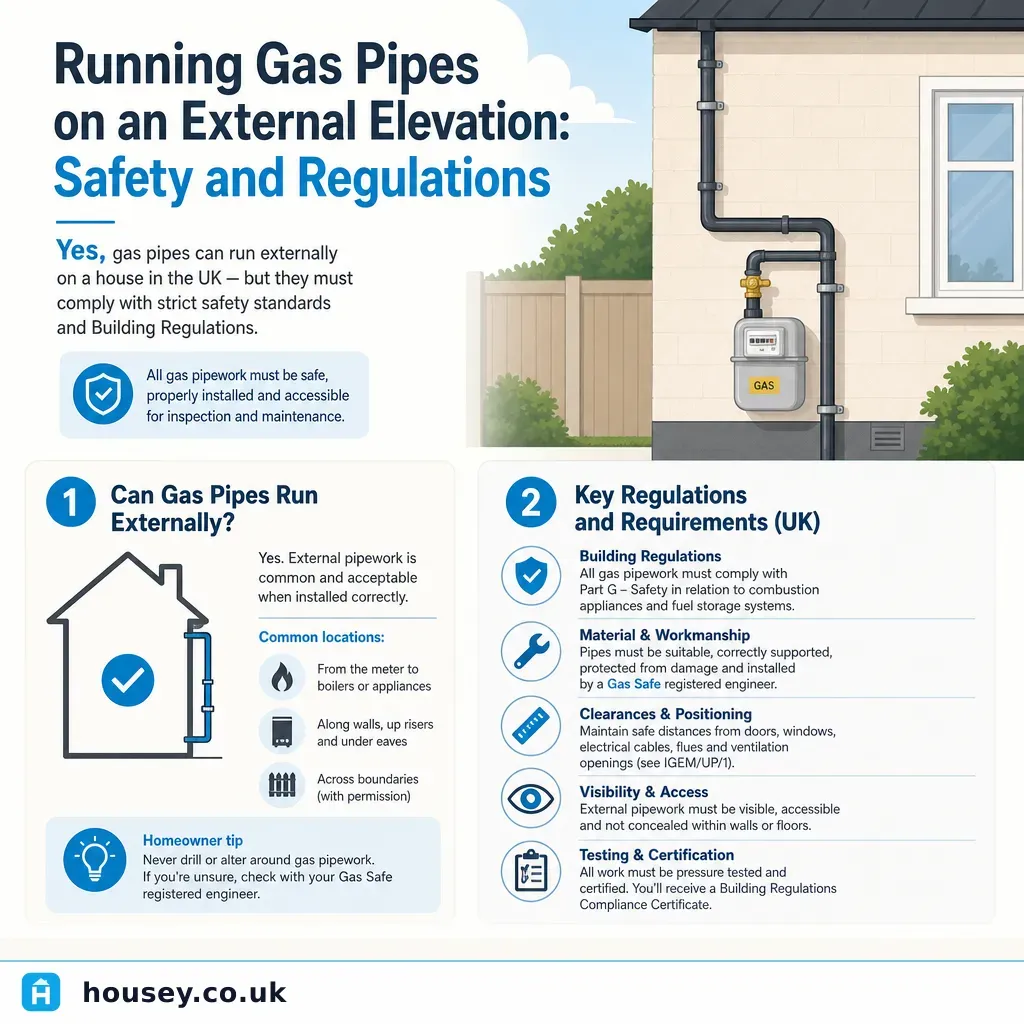
Running Gas Pipes on an External Elevation: Safety and Regulations
External gas pipework is permitted on UK property elevations and is often the preferred route when internal runs are impractical.
 Planning & Pre-Build
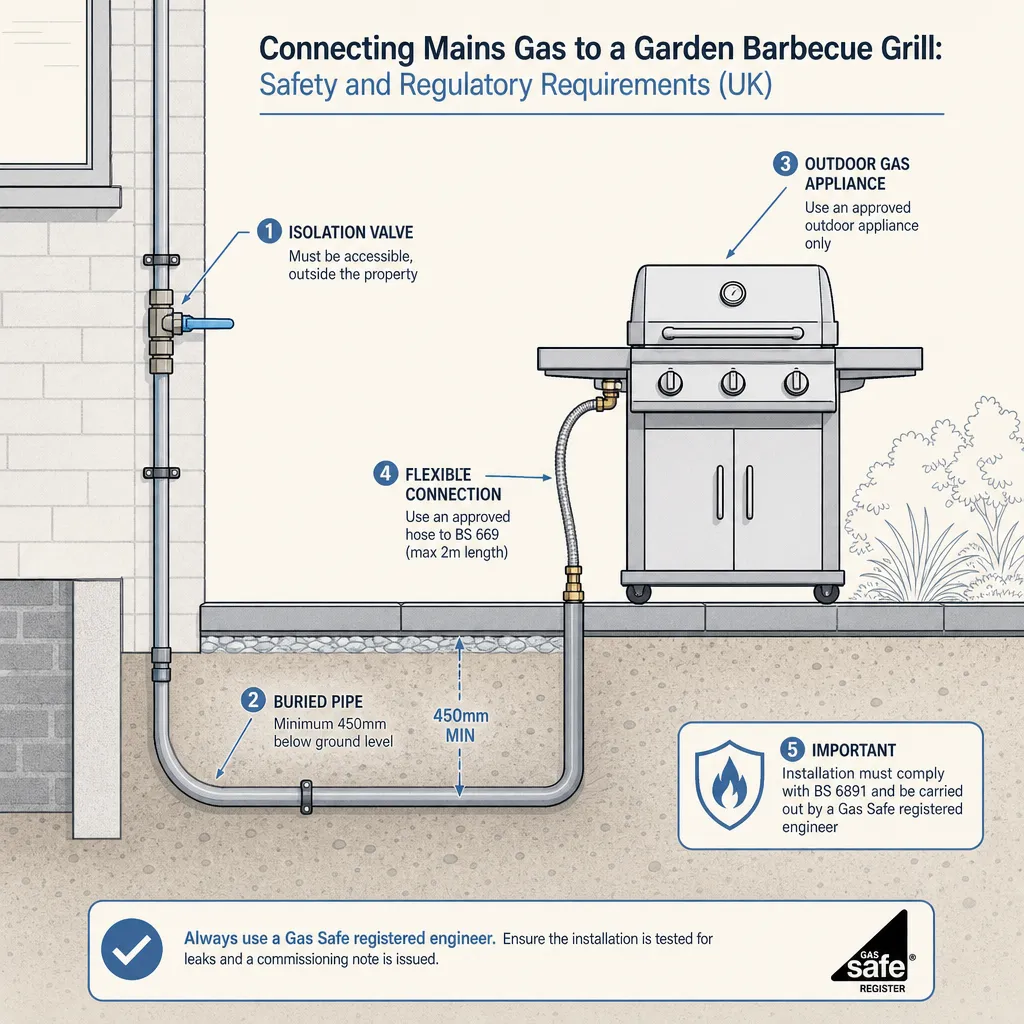
Connecting Mains Gas to a Garden Barbecue Grill: Safety and Regulatory Requirements
Connecting mains gas to a garden barbecue requires a Gas Safe registered engineer and must comply with the Gas Safety (Installation and Use) Regulations 1998.
 Planning & Pre-Build
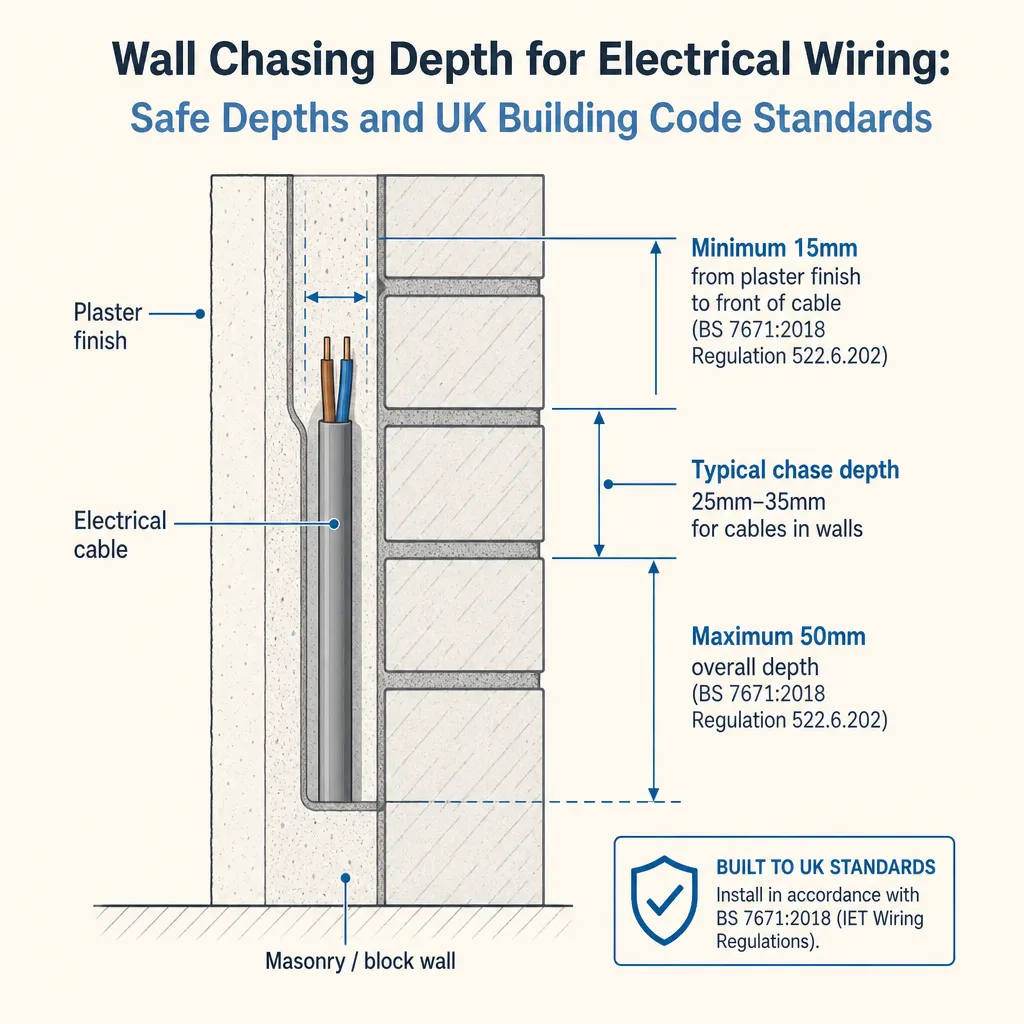
Wall Chasing Depth for Electrical Wiring: Safe Depths and UK Building Code Standards
Cables chased into walls must be within BS 7671 safe zones — within 150 mm of a ceiling, floor, or corner junction — or enclosed in rigid conduit for mechanical protection.
 Planning & Pre-Build
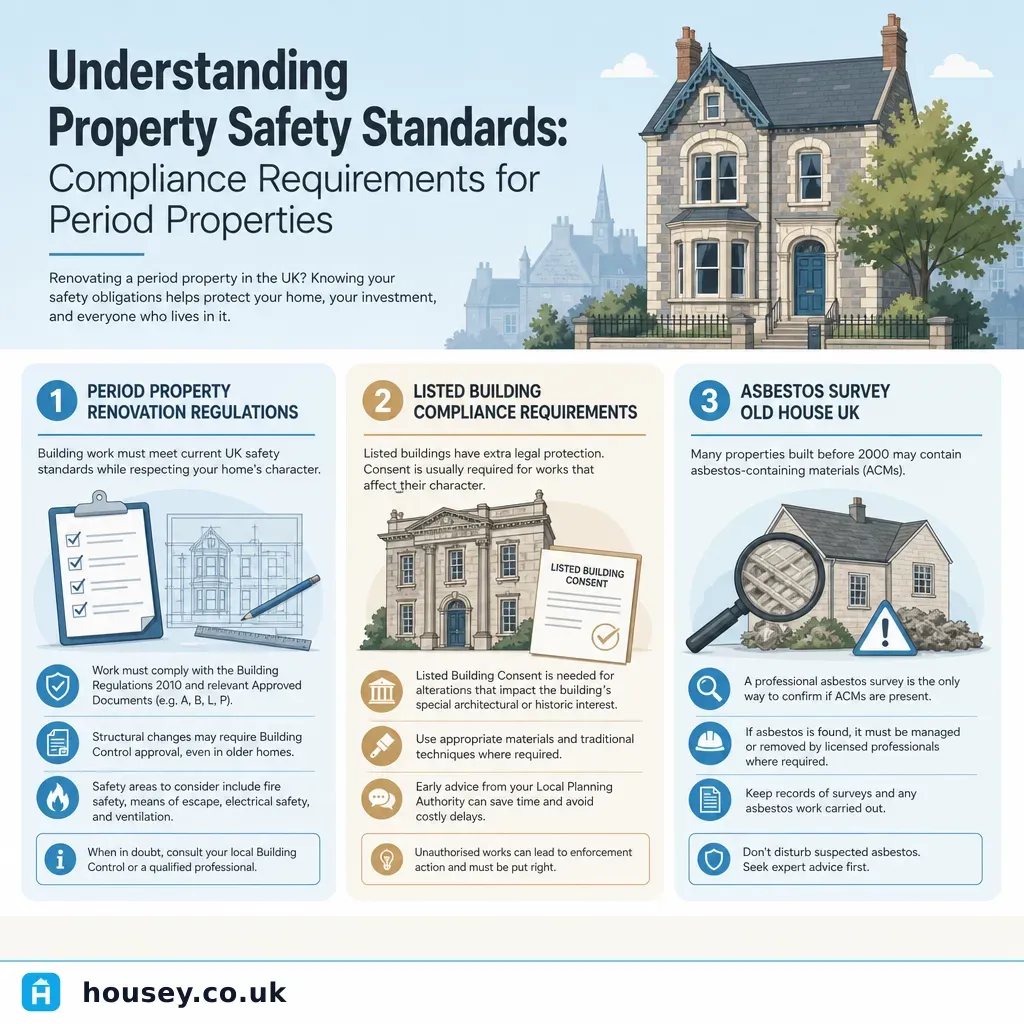
Understanding Property Safety Standards: Compliance Requirements for Period Properties
Period properties in England are not automatically exempt from current Building Regulations — any notifiable work must comply with today's Approved Documents.
 Planning & Pre-Build
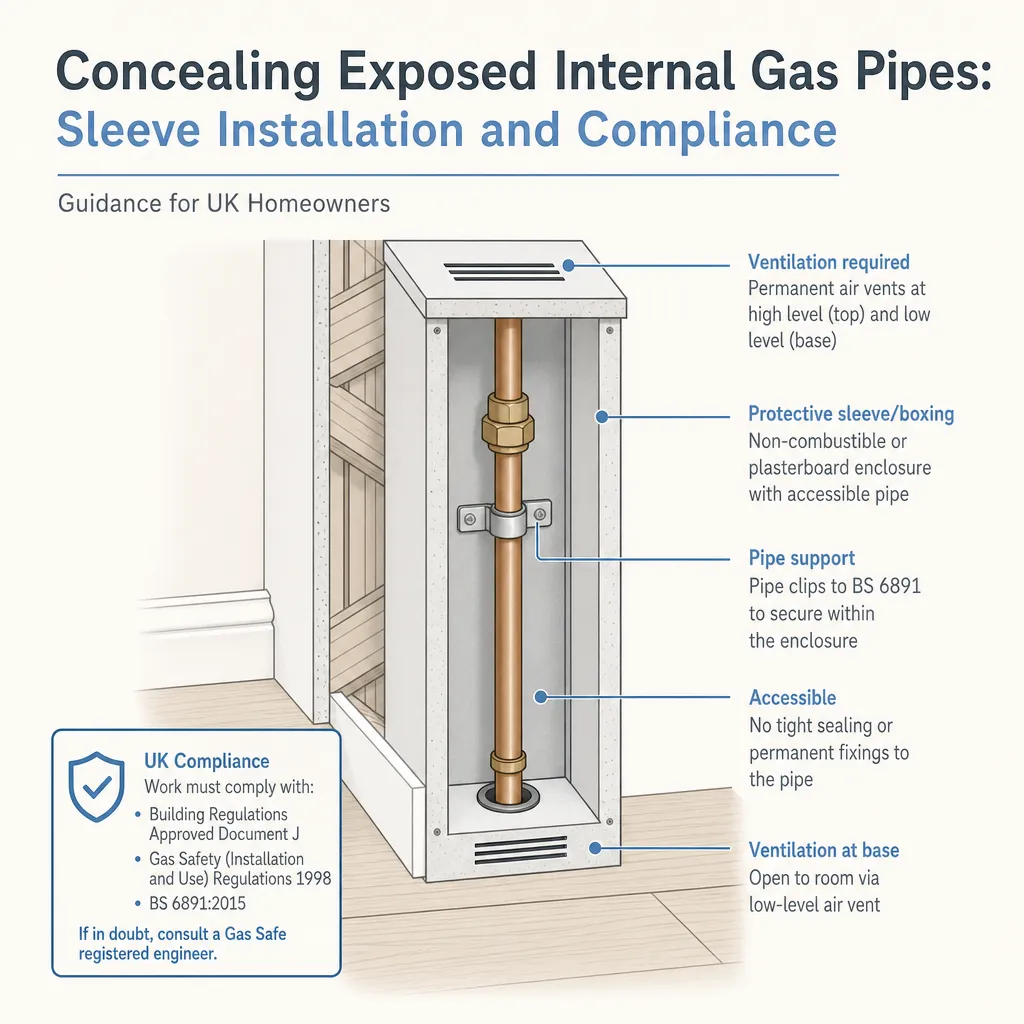
Concealing Exposed Internal Gas Pipes: Sleeve Installation and Compliance
Exposed internal gas pipes can be concealed using ventilated boxed casings or correctly sleeved chases, but only under the supervision of a Gas Safe registered engineer following the Gas Safety (Installation and Use) Regulations 1998.