Wall Chasing Depth for Electrical Wiring: Safe Depths and UK Building Code Standards
By Housey · Last reviewed 5th of May 2026
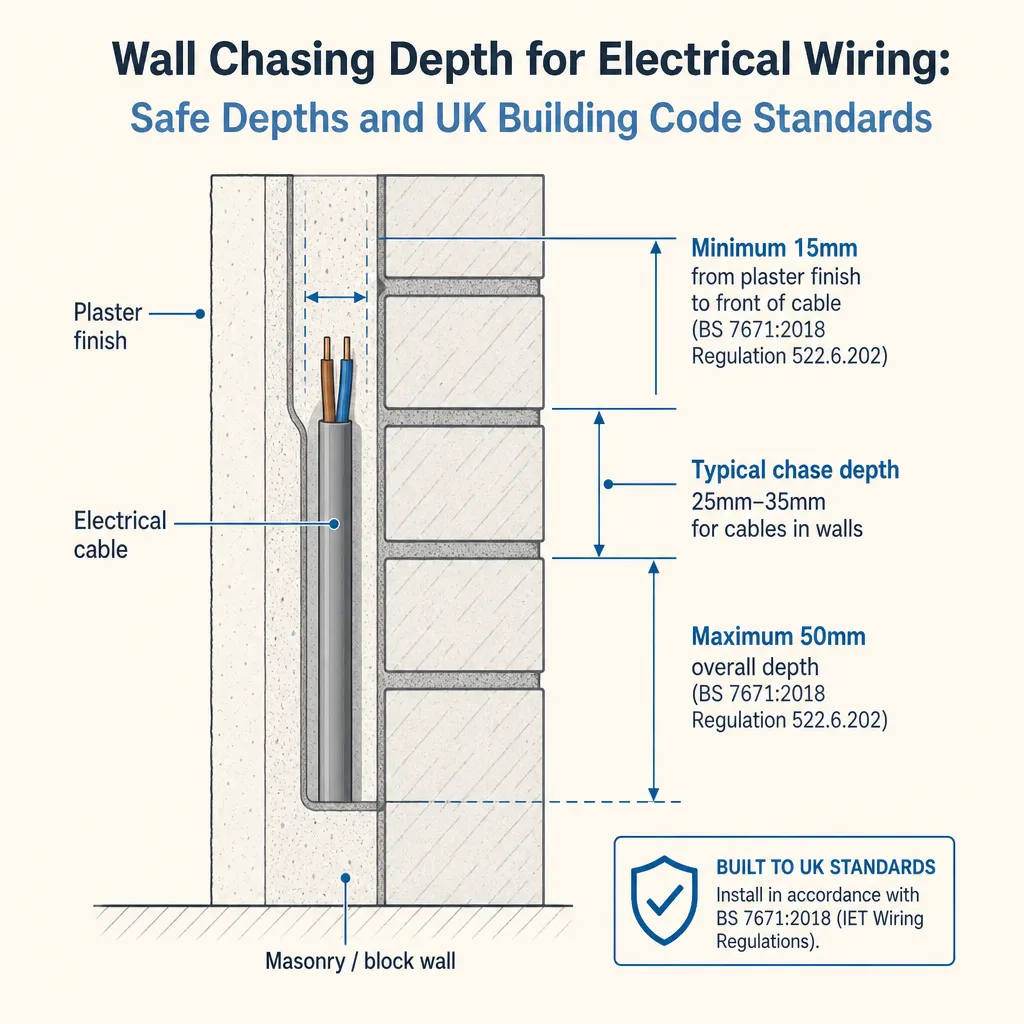
Wall Chasing Depth for Electrical Wiring: Safe Depths and UK Building Code Standards
Wall chasing — cutting channels into masonry or plasterboard to conceal electrical cables — is a routine part of domestic installation work in UK homes, but it carries real risks if the depth, routing, and protection requirements are not correctly applied. Whether you are adding sockets to a Victorian terrace, rewiring a 1930s semi, or running new circuits as part of a kitchen or loft conversion, understanding the requirements under BS 7671 and Building Regulations Part P helps you work more effectively with your electrician and avoid costly remedial work down the line.
Key points
- BS 7671:2018+A2:2022 (IET Wiring Regulations, 18th Edition) sets the technical requirements for cable installation, including mechanical protection for cables concealed in walls.
- Building Regulations Approved Document P requires that most new electrical installation work in a dwelling is carried out or certified by a registered competent person, or notified to building control before starting.
- Safe zones — wall positions where cables are least likely to be accidentally penetrated by fixings — are defined as within 150 mm of a ceiling or floor junction (horizontal runs) and within 150 mm of a corner junction.
- Cables outside safe zones must be mechanically protected, typically by enclosure in rigid PVC or metal conduit, to withstand penetration by at least a 2.5 mm nail, as required by Regulation 522.6.6 of BS 7671.
- An Electrical Installation Certificate (EIC) or Minor Works Certificate must be issued on completion of all notifiable work — this is a legal requirement, not optional.
What are the safe zones for electrical cables in walls?
Safe zones are defined positions in a wall where a cable is considered adequately protected against accidental damage from screws, nails, or picture hooks without needing additional mechanical protection. Under BS 7671 Regulation 522.6.6 and associated guidance, a cable is within a safe zone when routed:
- Vertically, directly above or below an electrical accessory (socket, switch, or junction box), within 150 mm of the edge of the accessory.
- Horizontally, within 150 mm of the ceiling junction.
- Horizontally, within 150 mm of the floor junction.
- Within 150 mm of a vertical corner junction between two walls.
Outside these zones, cables concealed in a wall at any depth must be mechanically protected. The most reliable and widely accepted method is to enclose the cable in a rigid PVC or metal conduit before chasing. Where RCD protection not exceeding 30 mA is also provided, some alternative arrangements may be acceptable under the regulations, but conduit remains the preferred solution for long-term reliability and future inspection.
Safe zone summary
Zone | Position in wall | Typical application |
|---|---|---|
Top of wall | Within 150 mm of ceiling junction, horizontal run | Feeding ceiling lights, loft circuits |
Bottom of wall | Within 150 mm of floor junction, horizontal run | Ring mains, skirting-level sockets |
Corner | Within 150 mm of a vertical wall corner, vertical or horizontal run | Crossing room corners |
Vertical drop or rise | Directly above or below an electrical fitting | Socket drops, switch legs |
Outside safe zones | Any wall position beyond 150 mm from the references above | Requires rigid conduit or equivalent mechanical protection |
How deep should a wall chase be?
BS 7671 does not prescribe a single minimum depth figure for all wall types, because the core requirement is mechanical protection rather than depth alone. However, good practice and industry guidance indicate the following:
- In brick or masonry walls: a chase depth of approximately 25–40 mm is typical for a single cable run, sufficient to accommodate a 20 mm oval or round conduit sitting flush below the finished plaster surface.
- In dense blockwork: similar depth applies; up to 50 mm may be needed to accommodate conduit plus a minimum plaster cover of 10–15 mm.
- In plasterboard stud walls: cables are not normally chased into the plasterboard. Instead, they are run through pre-drilled holes in the timber or metal studs, with a steel nail protection plate fixed at each stud face.
The cable must sit fully within any conduit, and the conduit must sit fully below the eventual finished surface. A plaster cover of at least 10–15 mm over the conduit is standard practice. Any chase that leaves conduit proud of the surface is non-compliant — a wall fixing made at a later date could reach the cable.
Where cables run in a recognised safe zone without conduit, a galvanised steel capping strip placed over the cable before plastering is strongly recommended as an additional safeguard and as a visible indicator during any future renovation works.
Which walls can be chased, and which cannot?
Wall type, construction, and heritage status all affect whether chasing is suitable and what method is appropriate.
Wall type | Chase feasibility | Key consideration |
|---|---|---|
Solid brick or masonry | Generally suitable | Avoid load-bearing wall cores; use SDS drill and angle grinder with care |
Cavity wall (inner leaf only) | Generally suitable | Inner leaf only — do not bridge or compromise the cavity |
Dense concrete or reinforced slab | Difficult; specialist equipment needed | Structural engineer advice needed if chasing near reinforcement |
Timber stud with plasterboard | Not typically chased — drill through studs | Protect cable with steel nail plates at each stud face |
Listed building or conservation area | Requires specific consent | Contact local planning authority and conservation officer before any chasing |
Solid stone wall | Usually avoided; surface trunking preferred | Difficult to chase cleanly; moisture ingress risk |
Any chasing that affects a structural or load-bearing element should be discussed with a structural engineer or building control body before proceeding. BS 7671 governs the electrical installation; structural integrity is separately governed by Building Regulations Part A.
Does wall chasing require building regulations notification?
In England and Wales, most new electrical installation work — including new circuits, consumer unit changes, and work in kitchens and bathrooms — is notifiable under Building Regulations Approved Document P. You must either:
- Use an electrician registered with a government-approved Competent Person Scheme (such as NICEIC, NAPIT, or ELECSA), who self-certifies the completed work; or
- Notify your local building control body before work begins and arrange an inspection on completion.
Wall chasing forms part of the installation process for any notifiable circuit, so it falls within the same requirement. A straightforward like-for-like accessory replacement in the same position may not trigger notification, but any new or altered circuit does.
If you are uncertain whether your project is notifiable, your electrician should advise you. You can also check with your local building control body or speak with building control consultants for independent guidance on compliance before work starts.
Important limitations
This article provides general information based on BS 7671:2018+A2:2022 and Building Regulations Approved Document P as of 2026-05-05. Requirements can vary depending on wall construction, property type, circuit design, local building control interpretation, and whether the property is listed or in a conservation area. This article is not a substitute for a qualified electrician's assessment of your specific installation. Regulations are updated periodically; always verify current requirements with a registered competent person or your local building control body.
When this becomes urgent
Stop work immediately and seek professional help if:
- You discover existing cables in the chase area — isolate the circuit at the consumer unit before proceeding and call an electrician.
- You encounter rubber-insulated, aluminium wiring, or unsheathed cables — these indicate older or potentially non-compliant installations requiring formal assessment.
- The wall shows signs of damp, cracking, or structural movement.
- Any electrical accessory sparks, trips a breaker, or behaves erratically after chasing has begun in the vicinity.
When to get professional help
All wall chasing associated with new or modified electrical circuits should be carried out by a Part P-qualified electrician registered with a recognised Competent Person Scheme. Do not attempt to install, modify, or connect cables yourself unless you hold the relevant qualifications. Seek professional advice if:
- Work involves kitchens, bathrooms, or outdoor areas, which are special locations under BS 7671 Part 7 with additional protection requirements.
- You are chasing a wall you suspect may be structural or load-bearing.
- The property is listed or situated in a conservation area.
- The project forms part of a larger notifiable building project where multiple trades are involved.
Red flags when hiring an electrician
- The installer does not mention issuing a completion certificate.
- The quote makes no reference to building control notification or self-certification.
- Cables are proposed to be chased and plastered outside safe zones without conduit.
- No RCD protection is specified for the new circuit.
- The installer cannot provide evidence of current registration with NICEIC, NAPIT, ELECSA, or another government-approved scheme.
What to ask a qualified professional
Before instructing an electrician to carry out wall chasing and cable installation, ask:
- Are you registered with NICEIC, NAPIT, ELECSA, or another government-approved Competent Person Scheme?
- Will this work require notification to building control, or will you self-certify on completion?
- What certificates will you issue — an Electrical Installation Certificate or a Minor Works Certificate?
- Will cables be run in conduit, or are the proposed routes within recognised BS 7671 safe zones?
- What cable identification and capping strip will be used before plastering?
- Can you confirm the proposed route avoids structural elements and existing services?
- Will you provide a cable route plan or photographs as part of the completion documentation?
How Housey can help
If your project involves new circuits, a partial rewire, or electrical installation as part of a larger renovation, Housey connects you with registered electrical contractors. For properties where you want to verify the condition of existing electrical work — including whether previous wall chasing meets current standards — an Electrical Installation Condition Report (EICR) provides a formal assessment. For guidance on whether your project triggers building control requirements, building control consultants can clarify your obligations before work starts.
Frequently asked questions
Do I need to inform building control about wall chasing for a new socket?
Adding a new socket on a new circuit is notifiable work under Building Regulations Part P. Your electrician should self-certify through a Competent Person Scheme such as NICEIC or NAPIT, or you must notify your local building control body before work begins. The wall chasing forms part of that notifiable work, not a separate activity requiring separate notification.
Can I chase a wall horizontally anywhere I like?
No. Under BS 7671, horizontal chases are only within a recognised safe zone if they run within 150 mm of the ceiling or floor junction. Horizontal chases at other heights require the cable to be mechanically protected — usually enclosed in rigid conduit — because a later screw or nail could penetrate the cable and create a serious shock or fire hazard.
What protection does a cable need in a wall chase outside a safe zone?
Regulation 522.6.6 of BS 7671 requires the cable to be enclosed in rigid PVC or metal conduit, or provided with mechanical protection capable of withstanding penetration by a 2.5 mm nail. Inside a safe zone, standard cable sheathing covered by plaster is compliant, though a galvanised steel capping strip is strongly recommended before plastering.
Can I chase plasterboard walls to hide cables?
Plasterboard on timber stud walls is not typically chased. Cables are usually passed through pre-drilled holes in the timber or metal studs, with a steel nail protection plate fixed at each stud face to prevent future screw penetration. Surface-mounted conduit or trunking is a common alternative where drilling through studs is not possible.
Will a plasterer fill the chase after the electrician?
Yes, in most domestic projects. The electrician should fix a galvanised steel capping strip over the cable or conduit before the plasterer attends, and should photograph or sketch the cable route for future reference. Ask your electrician to include a cable route plan as part of the completion documentation — this is particularly valuable during any future renovation work.
Sources and further reading
- BS 7671:2018+A2:2022 IET Wiring Regulations (18th Edition) — The Institution of Engineering and Technology
- Approved Document P: Electrical safety – dwellings — GOV.UK / MHCLG
- Electrical safety in the home — Electrical Safety First
- Find a registered electrician — NICEIC
Useful next reads
 Planning & Pre-Build
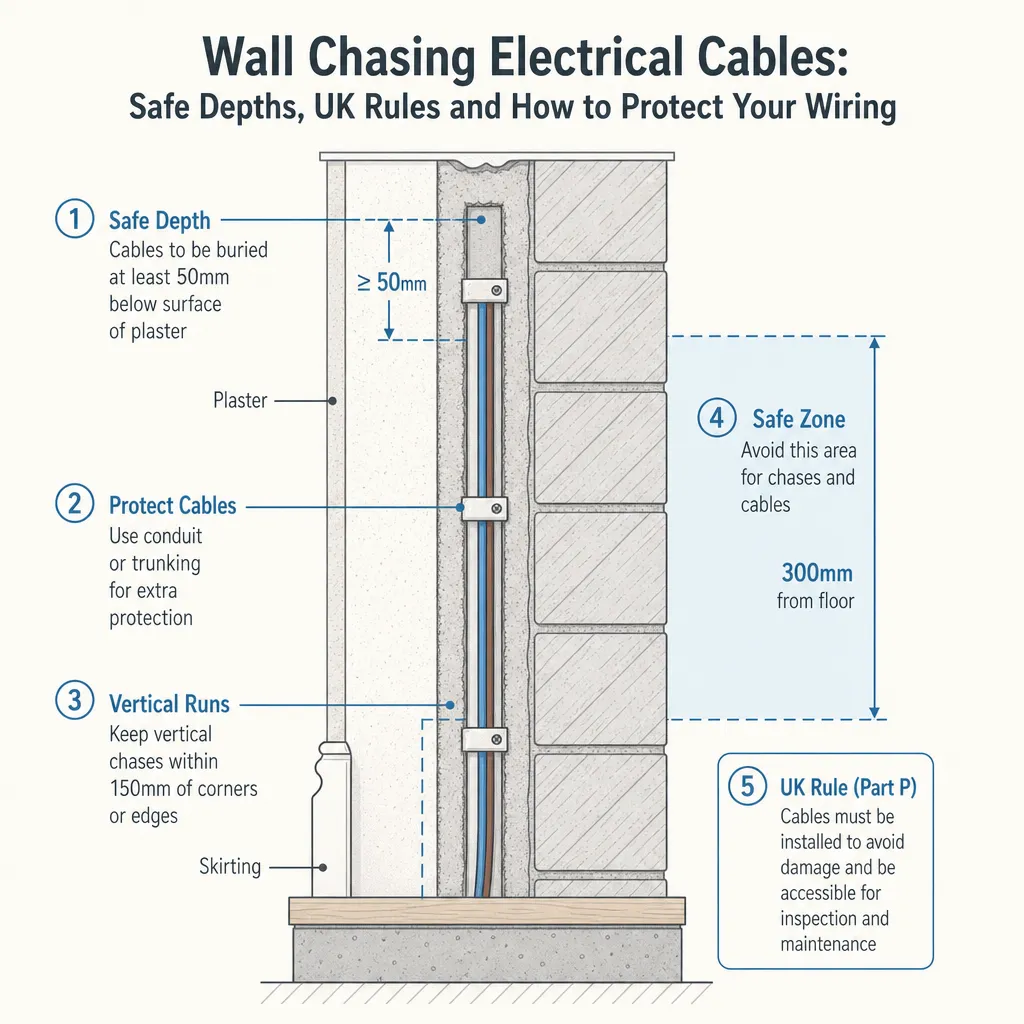
Wall Chasing Electrical Cables: Safe Depths, UK Rules and How to Protect Your Wiring
Wall chasing depth for electrical cables in UK homes must allow around 25mm of plaster or render cover over the cable.
 Planning & Pre-Build
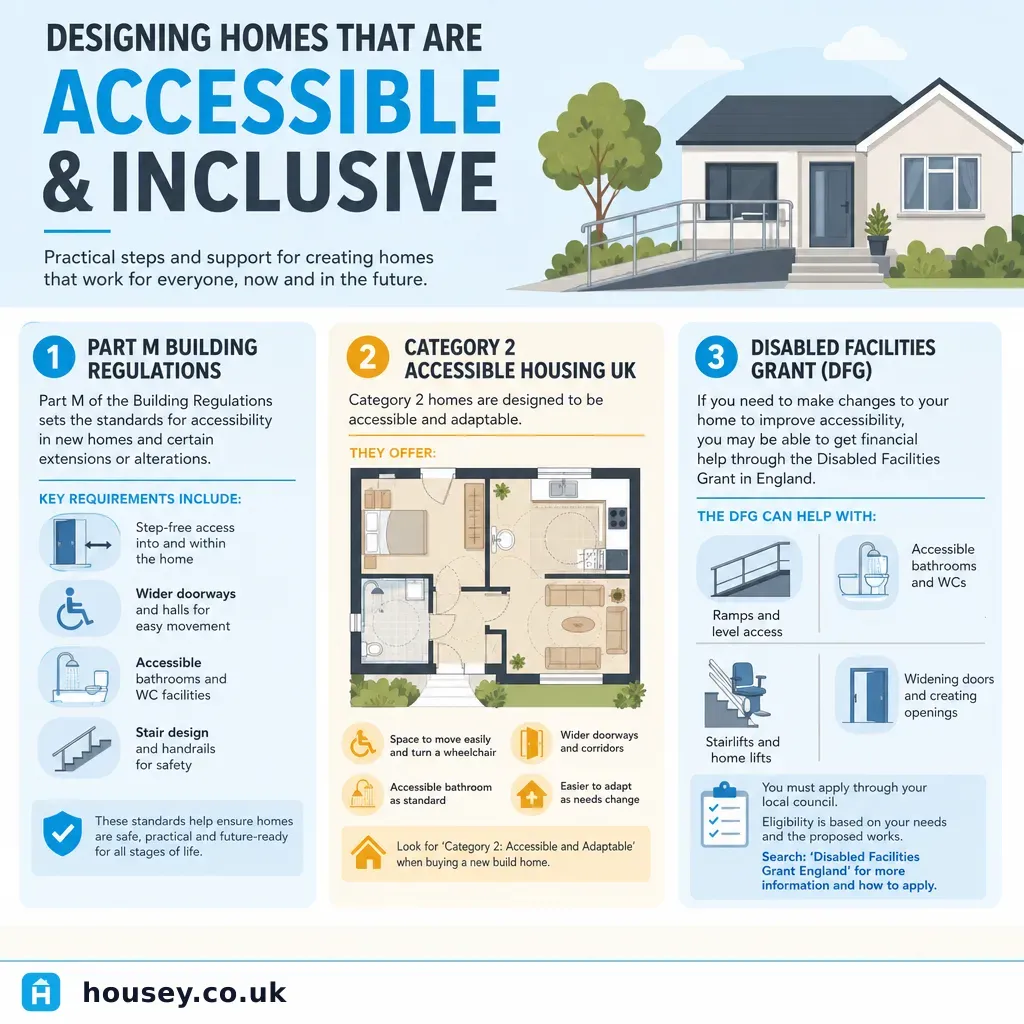
Designing Homes That Are Accessible and Inclusive
Accessible home design in the UK is guided by Building Regulations Approved Document M, which sets three standards for new dwellings: Category 1 (Visitable), Category 2 (Accessible and Adaptable), and Category 3 (Wheelchair User Dwelling).
 Planning & Pre-Build
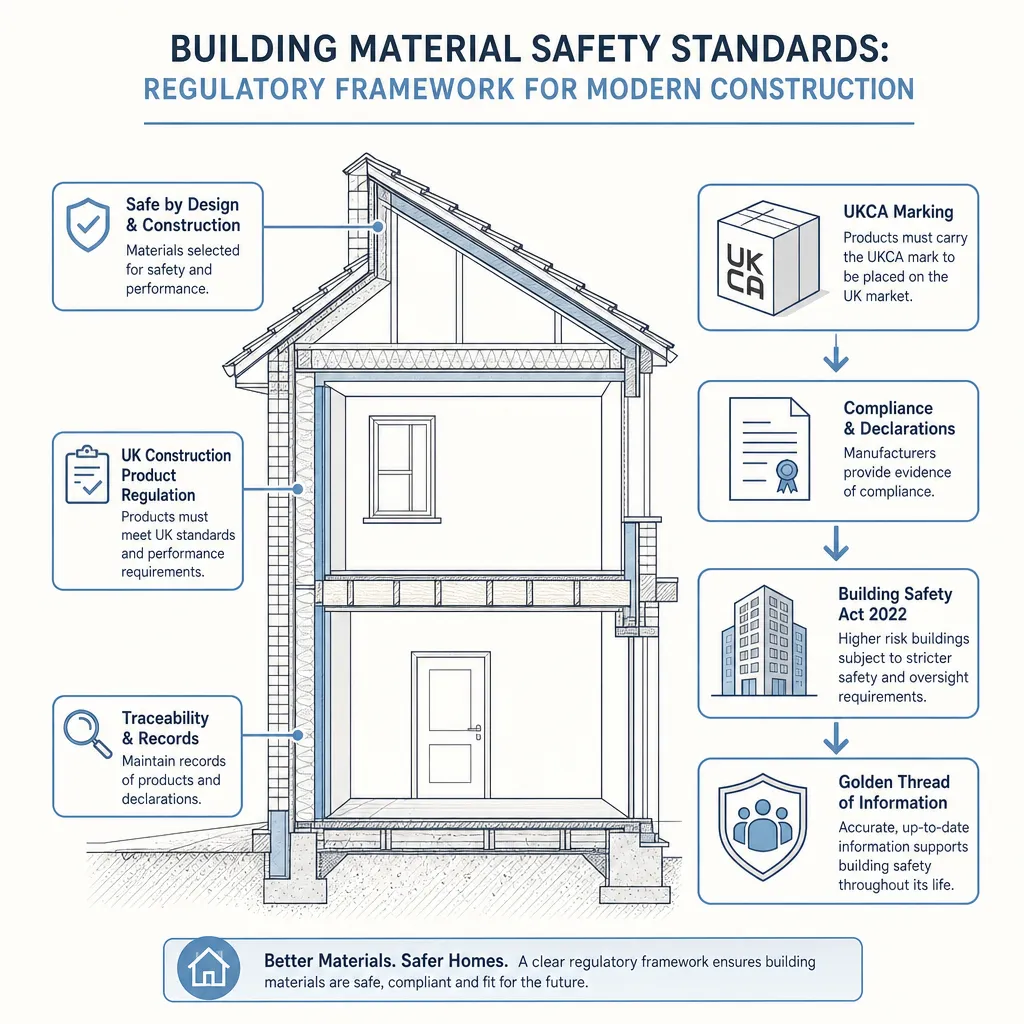
Building Material Safety Standards: Regulatory Framework for Modern Construction
UK building material safety standards are set through the Building Regulations 2010 and associated Approved Documents covering structure, fire, damp, energy, and ventilation.
 Planning & Pre-Build
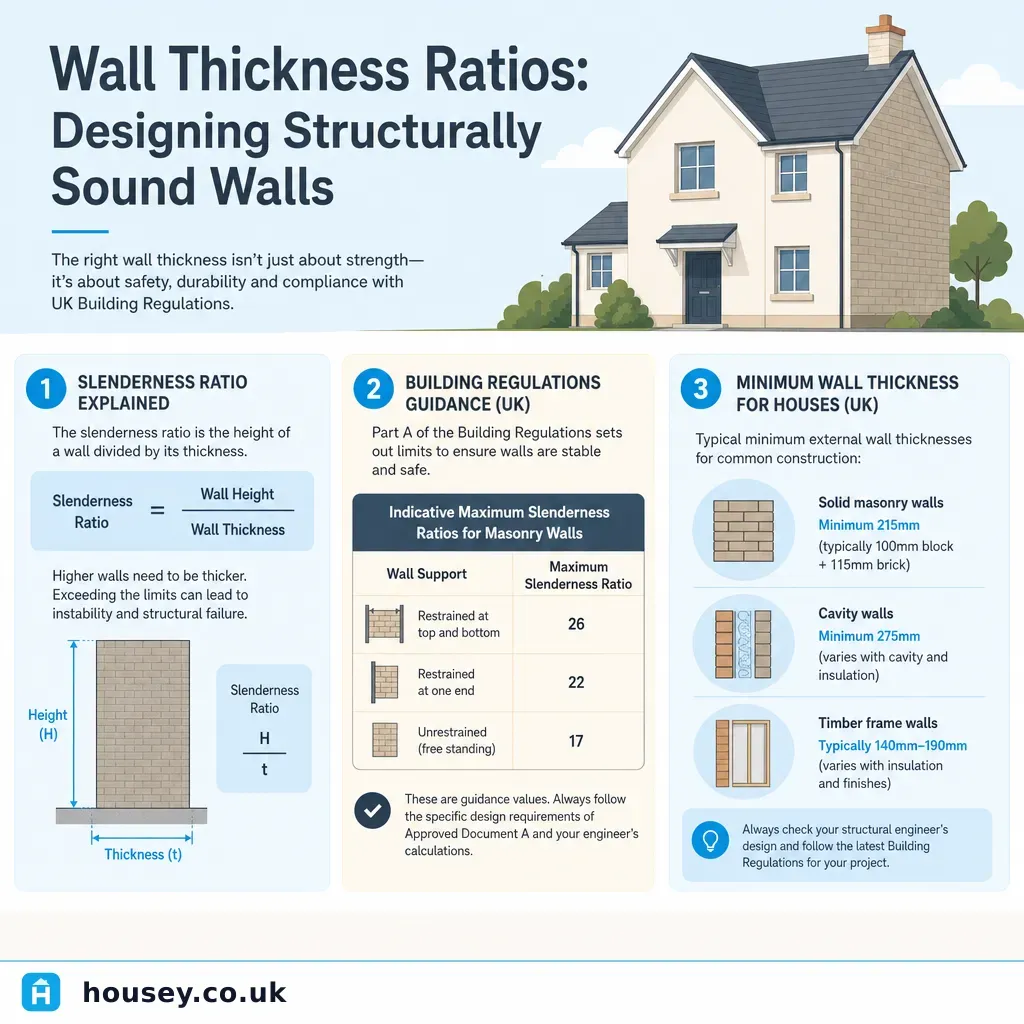
Wall Thickness Ratios: Designing Structurally Sound Walls
Wall thickness ratios — particularly the slenderness ratio (effective height divided by effective thickness) — determine whether a wall can safely carry load without buckling.
 Planning & Pre-Build
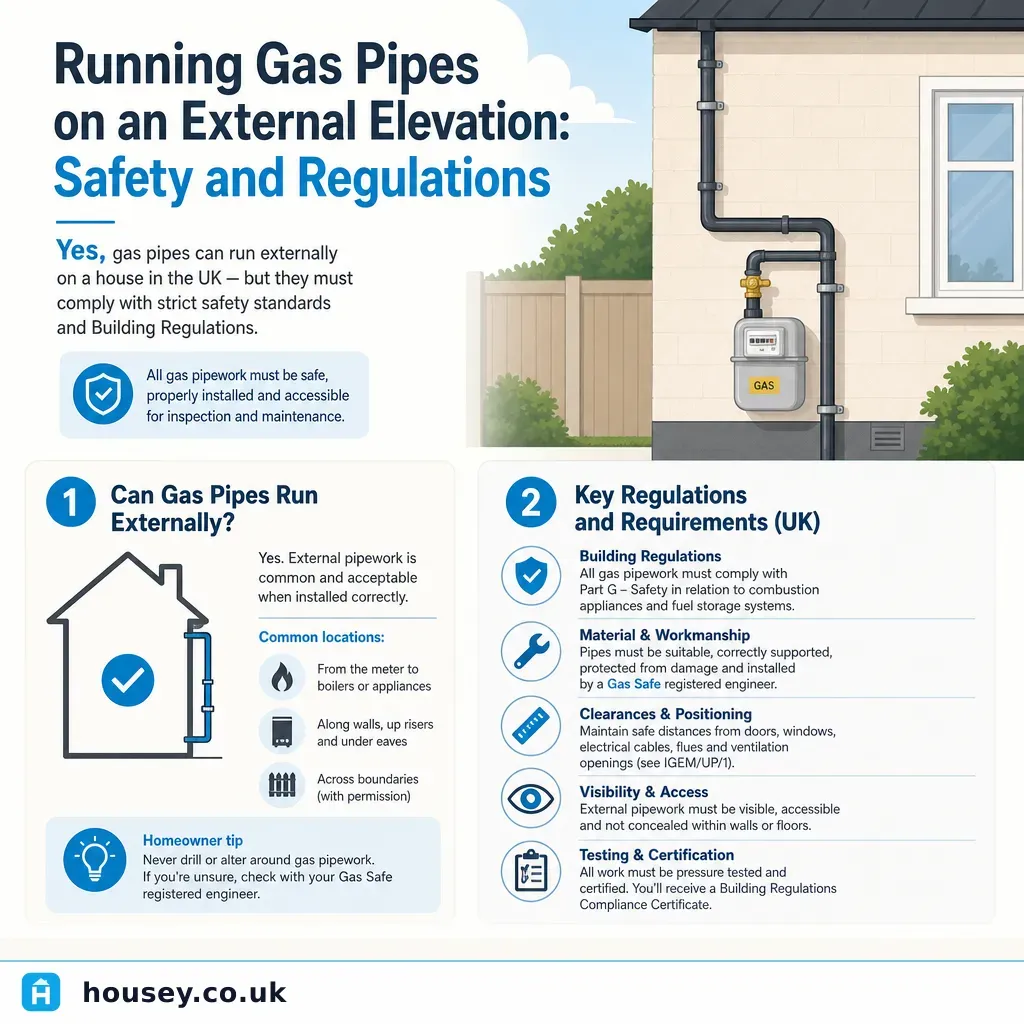
Running Gas Pipes on an External Elevation: Safety and Regulations
External gas pipework is permitted on UK property elevations and is often the preferred route when internal runs are impractical.