Understanding Property Safety Standards: Compliance Requirements for Period Properties
By Housey · Last reviewed 31st of May 2026
Understanding Property Safety Standards: Compliance Requirements for Period Properties
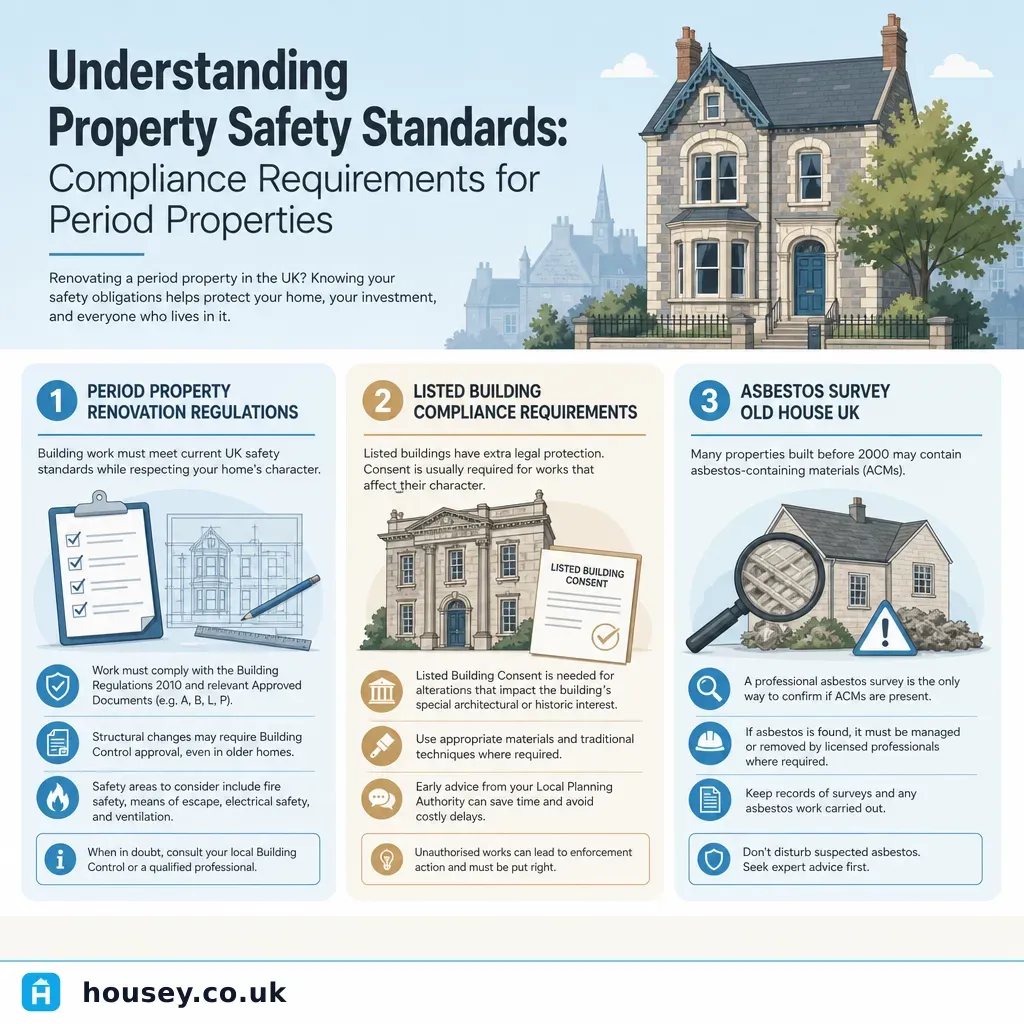
Period properties — Victorian terraces, Edwardian semis, Georgian townhouses, and pre-war cottages — form a significant part of the UK housing stock. When owners undertake renovation, change of use, or sale, they often encounter compliance questions that do not arise with newer homes: which regulations apply, which were grandfathered in, and where modern standards must be met regardless of age. The consequences of getting this wrong range from enforcement notices and failed conveyancing to genuine safety risk.
Key points
- Pre-1919 properties built under no statutory building regulations may still need to comply with current standards when altered, extended, or when a material change of use occurs.
- Approved Document B (fire safety), Approved Document F (ventilation), and Approved Document L (energy efficiency) all apply to new work in period homes, even if the existing fabric does not meet those standards.
- Listed buildings and conservation area properties face additional consent requirements; some standard safety upgrades such as replacement double glazing may require Listed Building Consent.
- Electrical Installation Condition Reports (EICRs) are legally required for rental properties every five years under the Electrical Safety Standards in the Private Rented Sector (England) Regulations 2020.
- Asbestos-containing materials were used routinely in UK buildings constructed before 2000; any disturbance during renovation requires a survey and, where necessary, licensed removal under the Control of Asbestos Regulations 2012.
What building regulations compliance means for a period property
Building Regulations (governed by the Building Act 1984 and the Building Regulations 2010 in England) apply to building work, not to a building's age. A Victorian terrace built in 1880 is not automatically required to retrofit all current standards — but any notifiable work carried out today must comply with the relevant Approved Documents.
Notifiable work that commonly triggers compliance in period properties includes:
- Extensions and loft conversions
- Replacement boilers or changes to the heating system
- New or replacement electrical circuits
- Structural alterations such as removing walls or chimney breasts
- Material changes of use, for example converting a house into two flats
Work that falls under permitted development and does not involve structural, fire, or energy changes may not require a Building Regulations application, but the threshold is narrower than many homeowners assume and is worth checking with your local building control body before starting.
Compliance requirements by hazard type
Hazard | Applicable regulation | Key requirement | Typical professional |
|---|---|---|---|
Fire safety | Approved Document B | Mains-wired interlinked smoke alarms on each storey; heat detector in kitchen | Building control body; fire engineer for HMOs |
Gas appliances | Gas Safety (Installation and Use) Regulations 1998 | Annual Gas Safe service; all work by Gas Safe registered engineer | Gas Safe registered engineer |
Electrical safety | BS 7671 18th Edition Wiring Regulations | EICR every five years for rental properties | NICEIC or NAPIT-registered electrician |
Asbestos | Control of Asbestos Regulations 2012 | Management survey before disturbance; refurbishment survey before intrusive work | Licensed asbestos surveyor |
Structural stability | Approved Document A | Structural alterations require Building Regulations approval and engineer's calculations | Structural engineer, building control |
Energy efficiency (rentals) | Minimum Energy Efficiency Standards (MEES) | EPC rating of E or above required to let legally | Retrofit assessor, accredited energy assessor |
Period-property-specific compliance considerations
Listed buildings
A listed building of any grade requires Listed Building Consent (LBC) for works that would affect its character as a building of special architectural or historic interest. This includes external alterations such as replacement windows and doors, internal structural changes, and some fire-safety upgrades.
LBC is separate from, and in addition to, planning permission. Works without consent are a criminal offence under Section 9 of the Planning (Listed Buildings and Conservation Areas) Act 1990.
Conservation areas
Properties within a conservation area are not automatically listed, but many local planning authorities have Article 4 Directions in place that withdraw permitted development rights. Minor alterations such as changing window styles, adding external cladding, or altering roofing materials may need planning permission even where they would ordinarily be permitted development elsewhere.
Solid-wall properties and energy efficiency
Pre-1919 solid-wall properties are generally exempt from the requirement to insulate walls when carrying out consequential improvements in most circumstances. However, if they are being let, Minimum Energy Efficiency Standards still apply. Solid-wall insulation in listed buildings is particularly complex and may require specialist approval from the local planning authority.
Homeowner compliance checklist for period properties
Use this before starting any renovation, letting, or sale preparation:
Important limitations
This article provides general information on UK building regulations and safety standards as they typically apply to period properties in England. Rules vary by property type, location, tenure, local authority, and the nature of the work planned. This is not legal, structural, or professional advice. A qualified building control body, structural engineer, or specialist solicitor should assess your specific circumstances before you undertake notifiable work or make compliance decisions.
Listed building and conservation area rules are enforced by local planning authorities; guidance differs significantly between authorities and between England, Wales, Scotland, and Northern Ireland, which operate separate regulatory regimes.
What to ask a qualified professional
Before instructing a building control consultant, architect, or contractor for work on a period property:
- Is my proposed work notifiable under Building Regulations, or does it fall within an exemption?
- Which Approved Documents are relevant, and are there any relaxations available because of the existing fabric?
- Does my property have listed building status, or is it in a conservation area with Article 4 Directions that affect my plans?
- Do you recommend a pre-application asbestos or hazardous materials survey before any intrusive work begins?
- Who will be responsible for obtaining building regulations approval and the final completion certificate?
- How will you document compliance, and what sign-off will I receive on completion?
When to get professional help
Seek professional advice before starting work if any of the following apply:
- The property is listed or sits within a conservation area
- You suspect asbestos-containing materials in areas to be disturbed
- Work involves structural changes, including removing chimney breasts, load-bearing walls, or altering foundations
- You plan to convert the property to multiple dwellings or change its use
- The property is to be let and the EPC rating is F or G
- An electrical rewire or replacement consumer unit is planned
- You have received a building control enforcement notice or planning enforcement notice
How Housey can help
If you are planning work on a period property and want guidance on compliance sign-off, Housey can connect you with experienced building control consultants who understand the additional complexity of older and listed buildings. Use the Housey quote tool to describe your project and receive comparable quotes from local specialists.
Frequently asked questions
Do Building Regulations apply to repairs and maintenance on a period property?
Like-for-like repairs and maintenance are generally exempt from Building Regulations notification requirements. However, if a repair involves a material change — replacing a window with a different specification, swapping a boiler for one of a different fuel type, or upgrading an electrical circuit — the new work must comply with current Approved Documents. When in doubt, contact your local building control body before starting.
Can I install double glazing in a listed building?
Double glazing is not automatically prohibited in listed buildings, but it requires Listed Building Consent if it would affect the building's character. Some local planning authorities accept secondary glazing as a less intrusive alternative that may not need consent. Always check with your local planning authority or a conservation architect before any window work on a listed building.
What is the penalty for carrying out notifiable work without building regulations approval?
Carrying out notifiable work without approval is a contravention of the Building Act 1984. The local authority may issue an enforcement notice requiring the work to be altered or removed. Retrospective regularisation is possible where work meets current standards, but lack of sign-off creates complications at the point of sale, as buyers' solicitors will ask for completion certificates.
Is a period property exempt from Minimum Energy Efficiency Standards if it is to be let?
No. Rental properties in England and Wales must have an EPC rating of E or above regardless of age. Listed buildings may qualify for an exemption if all reasonable improvements have been made or if improvements would unacceptably alter the building's character. Exemptions must be registered on the PRS Exemptions Register. Check current GOV.UK guidance before assuming an exemption applies.
Sources and further reading
- Building Regulations: Approved Documents — GOV.UK
- Owning a listed building — Historic England
- Control of Asbestos Regulations 2012 — Health and Safety Executive
- Electrical safety standards in the private rented sector — GOV.UK
- Domestic private rented sector: minimum energy efficiency standard — GOV.UK
- Gas Safety (Installation and Use) Regulations — Health and Safety Executive
Useful next reads
 Planning & Pre-Build
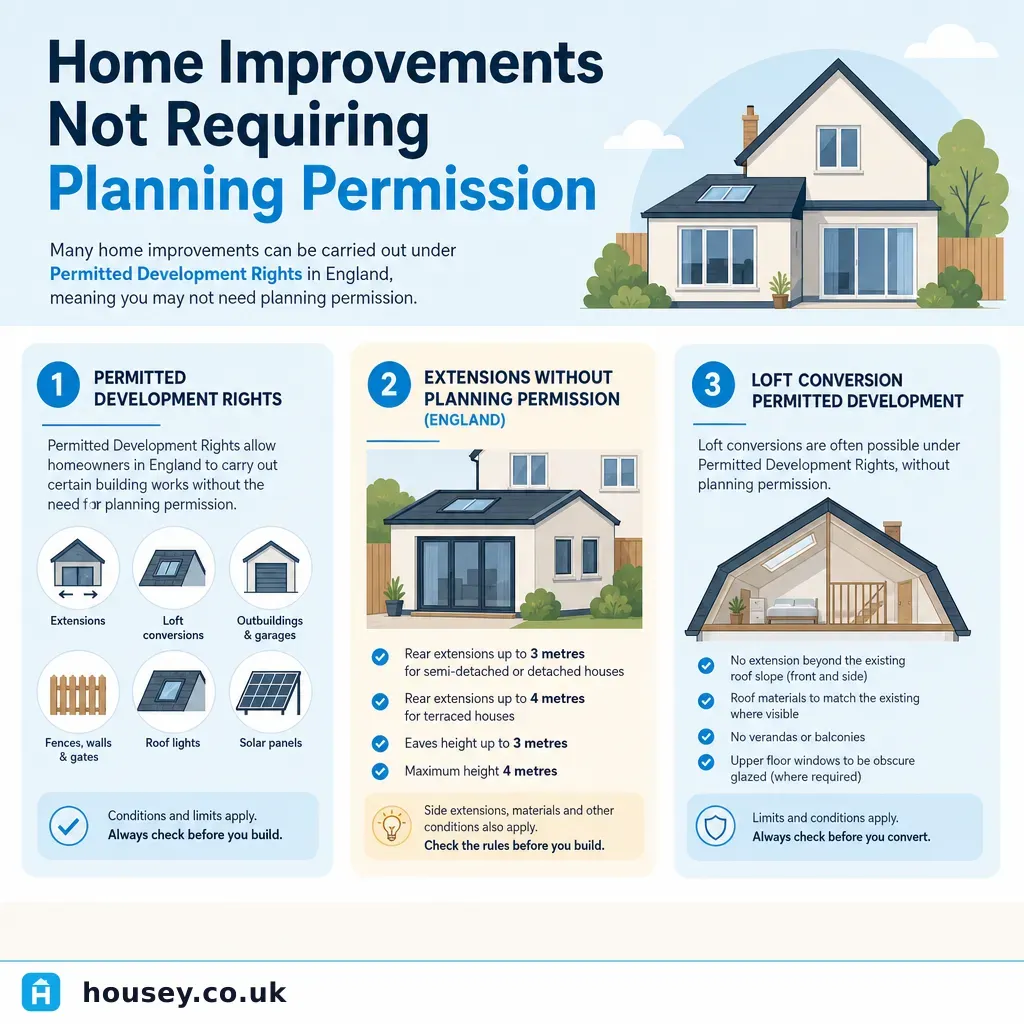
Home Improvements Not Requiring Planning Permission
Many common home improvements in England fall under Permitted Development Rights and do not require a planning application.
 Planning & Pre-Build
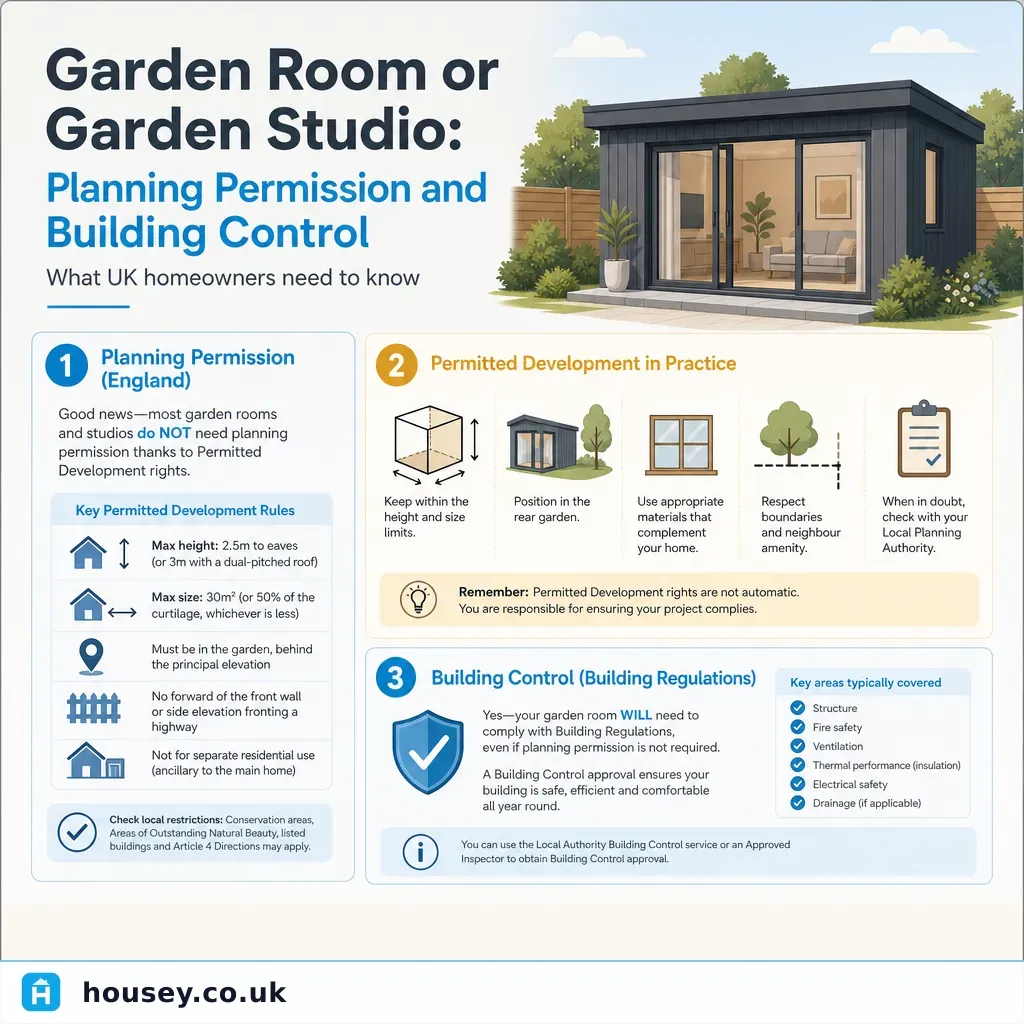
Garden Room or Garden Studio: Planning Permission and Building Control
A garden room or studio often qualifies as permitted development in England, meaning no planning application is needed — provided it occupies no more than 50% of the total curtilage, sits within height limits, and is not used as a separate dwelling.
 Planning & Pre-Build
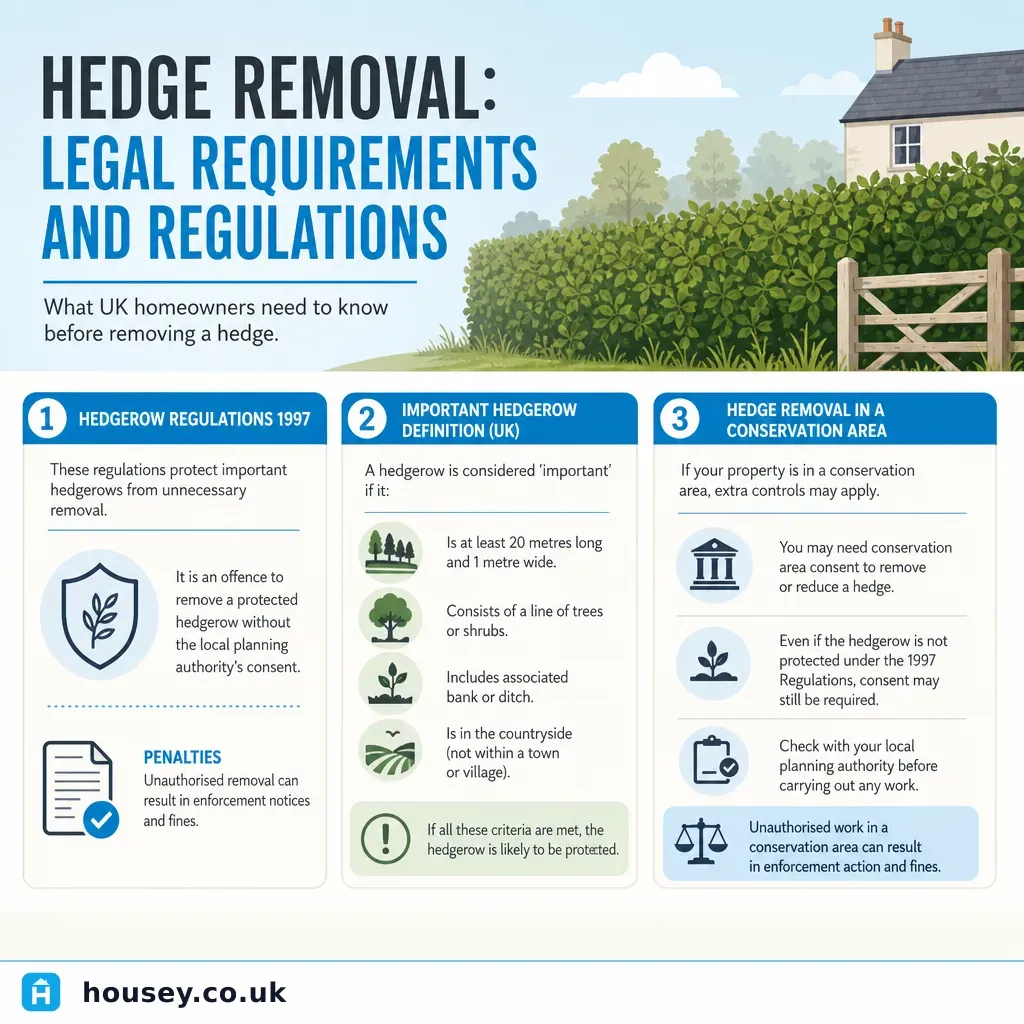
Hedge Removal: Legal Requirements and Regulations
Whether you need permission to remove a hedge in the UK depends on its location, age, and what it contains.
 Planning & Pre-Build
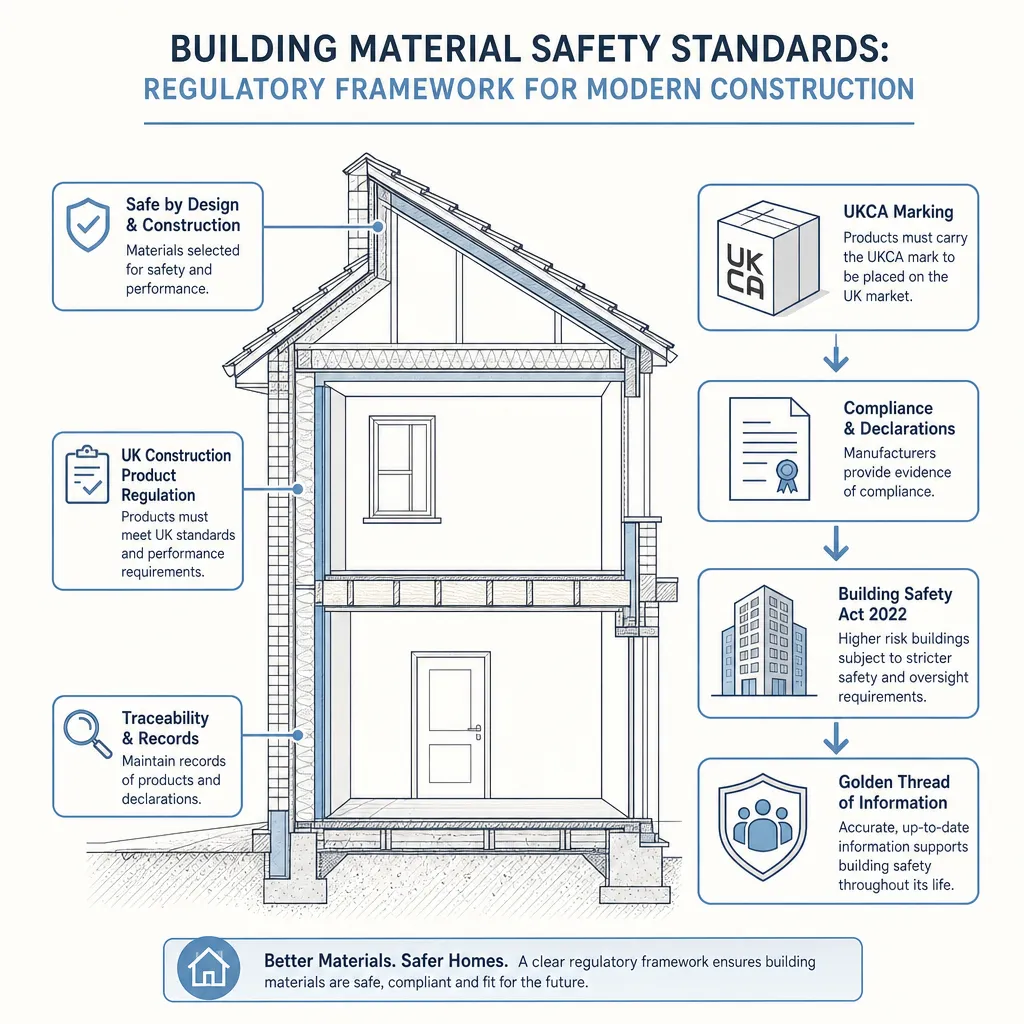
Building Material Safety Standards: Regulatory Framework for Modern Construction
UK building material safety standards are set through the Building Regulations 2010 and associated Approved Documents covering structure, fire, damp, energy, and ventilation.
 Planning & Pre-Build
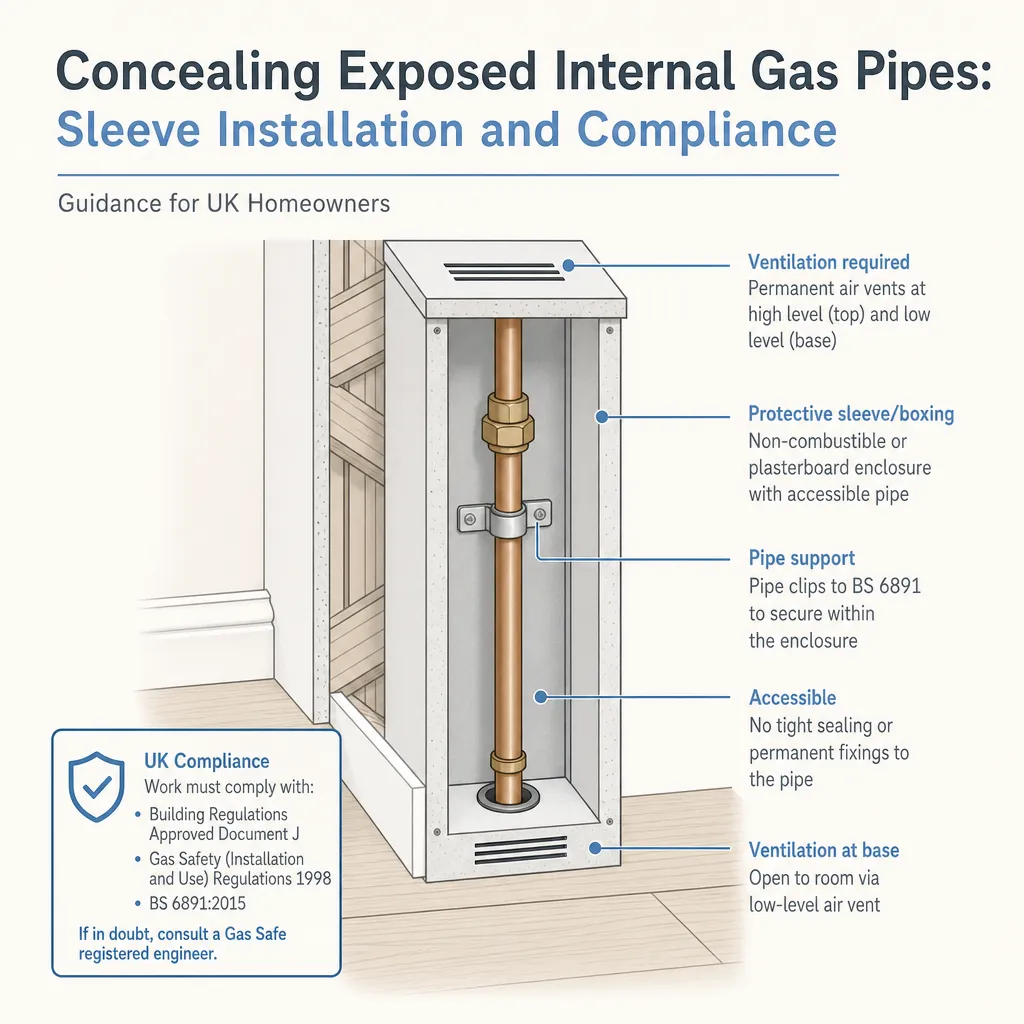
Concealing Exposed Internal Gas Pipes: Sleeve Installation and Compliance
Exposed internal gas pipes can be concealed using ventilated boxed casings or correctly sleeved chases, but only under the supervision of a Gas Safe registered engineer following the Gas Safety (Installation and Use) Regulations 1998.