Gas Safety Week: Information for Homeowners and Landlords
By Housey · Last reviewed 11th of May 2026
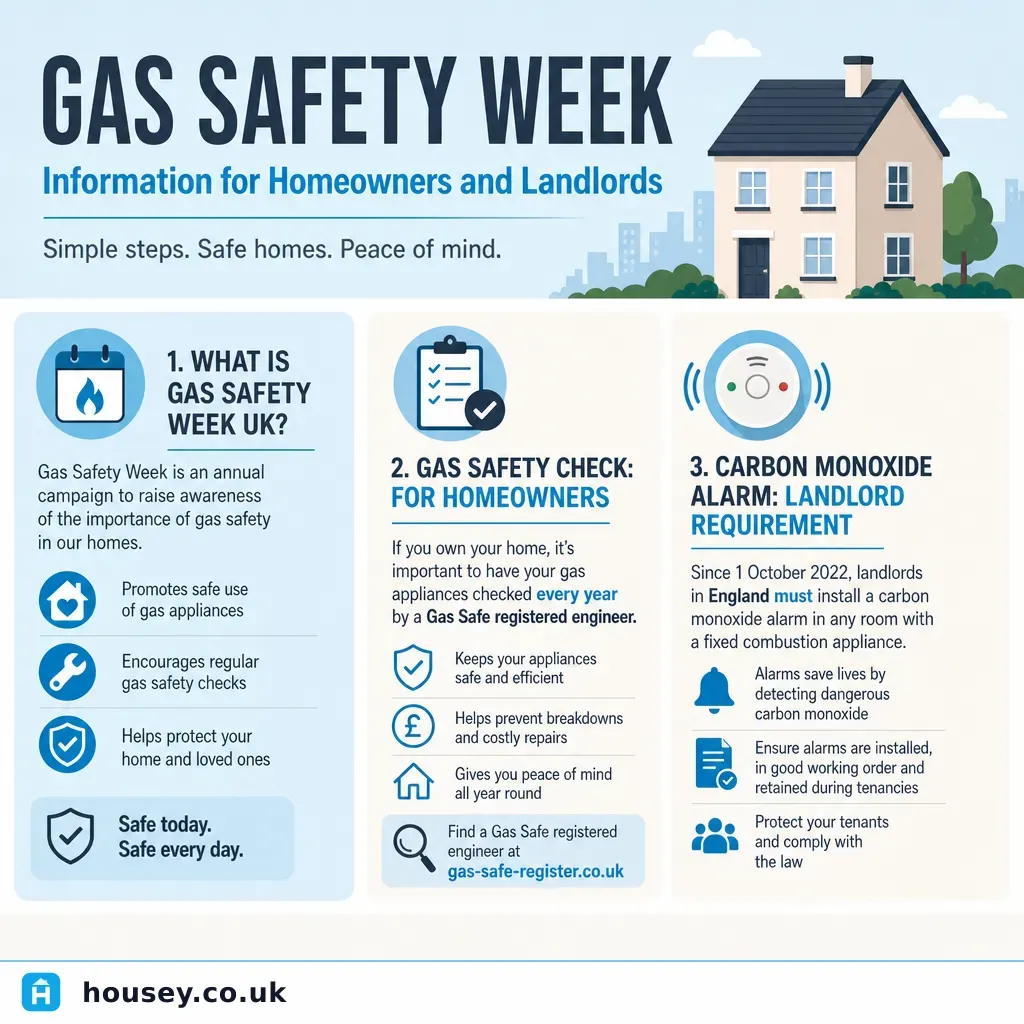
Gas Safety Week: Information for Homeowners and Landlords
Each September, Gas Safety Week draws national attention to the risks posed by poorly maintained gas appliances and unlicensed gas work in UK homes and rented properties. For homeowners, it is a prompt to book an overdue appliance service; for landlords, it is an opportunity to audit whether CP12 Landlord Gas Safety Records, carbon monoxide alarms, and engineer credentials are all in order. With around 40 deaths attributed to accidental carbon monoxide poisoning each year in England and Wales, according to HSE estimates, the annual campaign addresses a genuine and underestimated household risk.
Key points
- The Health and Safety Executive estimates approximately 40 people die each year from accidental carbon monoxide poisoning in England and Wales, with thousands more attending A&E with CO-related symptoms.
- The Smoke and Carbon Monoxide Alarm (Amendment) Regulations 2022 require landlords in England to fit a carbon monoxide alarm in any room containing a fixed combustion appliance (excluding gas cookers), with effect from 1 October 2022.
- In Scotland, requirements under the Tolerable Standard (Housing (Scotland) Act 2014) mandated CO detectors in all homes with a carbon-fuelled appliance or flue from February 2022.
- Only engineers on the Gas Safe Register may legally carry out gas work on domestic UK properties — unlicensed gas work is a criminal offence.
- Gas Safety Week is organised annually by Gas Safe Register, typically in September, and is supported by gas networks, emergency services, and housing organisations across the UK.
What Gas Safety Week covers
Gas Safety Week is an industry-wide awareness campaign coordinated by Gas Safe Register, the official body responsible for gas safety in the UK. The campaign highlights the dangers of carbon monoxide poisoning, appliances that have not been serviced, and work carried out by unregistered gas fitters. It is also a structured prompt for landlords to check whether their annual Landlord Gas Safety Records are current and for homeowners to arrange servicing they may have deferred.
For owner-occupiers there is no statutory requirement to arrange an annual gas safety inspection, but Gas Safety Week is a useful reminder that appliance manufacturer guidance and most home insurance policies recommend annual checks. Appliances that have not been serviced for several years can present risks that are not visible to the occupant.
Homeowner gas safety checklist
Use this checklist during Gas Safety Week — or at any time of year — to review your home's gas safety position.
Carbon monoxide alarm requirements
For landlords in England
The Smoke and Carbon Monoxide Alarm (Amendment) Regulations 2022 require landlords in England to install a carbon monoxide alarm in any room that contains a fixed combustion appliance, excluding gas cookers. The alarm must be in working order at the start of each new tenancy, and landlords must repair or replace a faulty alarm promptly when a tenant reports the issue.
For landlords in Scotland
Requirements under the Tolerable Standard (Housing (Scotland) Act 2014 and associated regulations) mandate CO detectors in all homes with a carbon-fuelled appliance or flue. Local authorities can take enforcement action where alarms are absent.
For landlords in Wales and Northern Ireland
Separate regulations apply. In Wales, the Renting Homes (Wales) Act 2016 sets out duties for smoke and CO alarms. Landlords in Northern Ireland should consult Gas Safe Register guidance and current Northern Ireland Executive regulations, as the framework differs from England and Scotland.
For homeowners
There is no statutory requirement for owner-occupiers to install CO alarms, but Gas Safe Register, the HSE, and most boiler manufacturers strongly recommend fitting at least one CO alarm on each floor — particularly near sleeping areas and in any room containing a gas appliance.
Red flags: when gas safety needs urgent attention
Act immediately if you notice any of the following:
- Smell of gas indoors or near external pipework — leave the building, do not operate electrical switches or use naked flames, and call the National Gas Emergency Service (0800 111 999).
- Yellow or orange boiler or gas fire flame instead of a stable blue flame — this may indicate incomplete combustion and a potential carbon monoxide risk.
- CO alarm sounding or displaying an alert — treat this as an emergency; evacuate all occupants and call 999.
- Symptoms consistent with CO exposure — headache, dizziness, nausea, or confusion in one or more occupants, especially if symptoms improve on leaving the building.
- Sooty or dark staining around a gas appliance or flue — this can indicate inadequate ventilation or a flue blockage.
- A gas appliance making unusual noises or failing to ignite correctly on repeated attempts.
If you suspect a gas leak or carbon monoxide, call the National Gas Emergency Service on 0800 111 999 immediately.
What to ask a Gas Safe engineer before booking
- Are you enrolled on the Gas Safe Register, and can I verify your licence number before you start work?
- Which appliances will you inspect or service during this visit?
- Will you test combustion gas levels at the flue?
- If you identify a defect, what category will you assign — Immediately Dangerous (ID), At Risk (AR), or Not to Current Standards (NCS)?
- Will I receive written confirmation of any defects found, and will the CP12 be issued on the day?
- Do you offer both a boiler service and a gas safety check in a single visit, and is VAT included in the quoted price?
Important limitations
This article provides general awareness information only. Regulations on carbon monoxide alarms, landlord duties, and gas safety certification differ between England, Scotland, Wales, and Northern Ireland. All gas inspection and installation work must be carried out by an engineer enrolled on the Gas Safe Register. If you suspect a gas leak, carbon monoxide, or an unsafe appliance, act immediately — do not rely on a guide.
When to get professional help
Contact a Gas Safe registered engineer as soon as possible if:
- Any gas appliance in your home has not been serviced or inspected within the past 12 months.
- A CO alarm has sounded, even briefly, without an obvious explanation such as dust or a manufacturing fault confirmed by the manufacturer.
- Any gas work was recently carried out by someone who cannot be verified on the Gas Safe Register — this may need to be independently inspected and potentially remedied.
- You are a landlord and your CP12 Landlord Gas Safety Record has expired or was never obtained for a property.
How Housey can help
Housey makes it straightforward to find and compare Gas Safe registered engineers who carry out gas safety certificates and annual appliance checks. Whether you are a landlord meeting your statutory obligations or a homeowner prompted by Gas Safety Week to arrange an overdue service, Housey can connect you with a qualified local engineer quickly.
Frequently asked questions
When is Gas Safety Week?
Gas Safety Week is organised by Gas Safe Register and typically takes place in September each year. Exact dates are announced on the Gas Safe Register website annually. The campaign is supported by gas networks and energy providers, some of which offer promotions on safety checks during the week.
Does a homeowner legally have to have an annual gas check?
No — unlike landlords, owner-occupiers have no statutory obligation to arrange annual gas safety checks. However, appliance manufacturers recommend annual servicing, and many home insurance policies include a maintenance clause. Annual checks are also the most reliable way to identify deteriorating appliances before they become dangerous to occupants.
What is the difference between a gas service and a gas safety check?
A gas service is a maintenance procedure: the engineer cleans, adjusts, and checks components to extend appliance life. A gas safety check is a formal inspection resulting in the Landlord Gas Safety Record (CP12), legally required annually for rented properties. Many engineers carry out both in a single visit — confirm this when booking.
Can I report a suspected illegal gas fitter?
Yes. Gas Safe Register operates a confidential reporting service for suspected illegal gas work, with contact details on their website. The Health and Safety Executive can also investigate and prosecute individuals who carry out gas work without being enrolled on the Gas Safe Register, as it is a criminal offence to do so.
How long do CO alarms last?
Most carbon monoxide alarms have a rated service life of 7–10 years. Electrochemical sensor units display an end-of-life warning when the sensor degrades. Check the manufacture date on your unit and replace it when it reaches the end of its rated service life, even if the device appears to be functioning normally.
Sources and further reading
- Gas Safety Week — Gas Safe Register
- Carbon monoxide poisoning: guidance for the public — Health and Safety Executive (HSE)
- Smoke and Carbon Monoxide Alarm (Amendment) Regulations 2022 — legislation.gov.uk
- Landlord gas safety responsibilities — GOV.UK
Useful next reads
 Surveys & Inspections
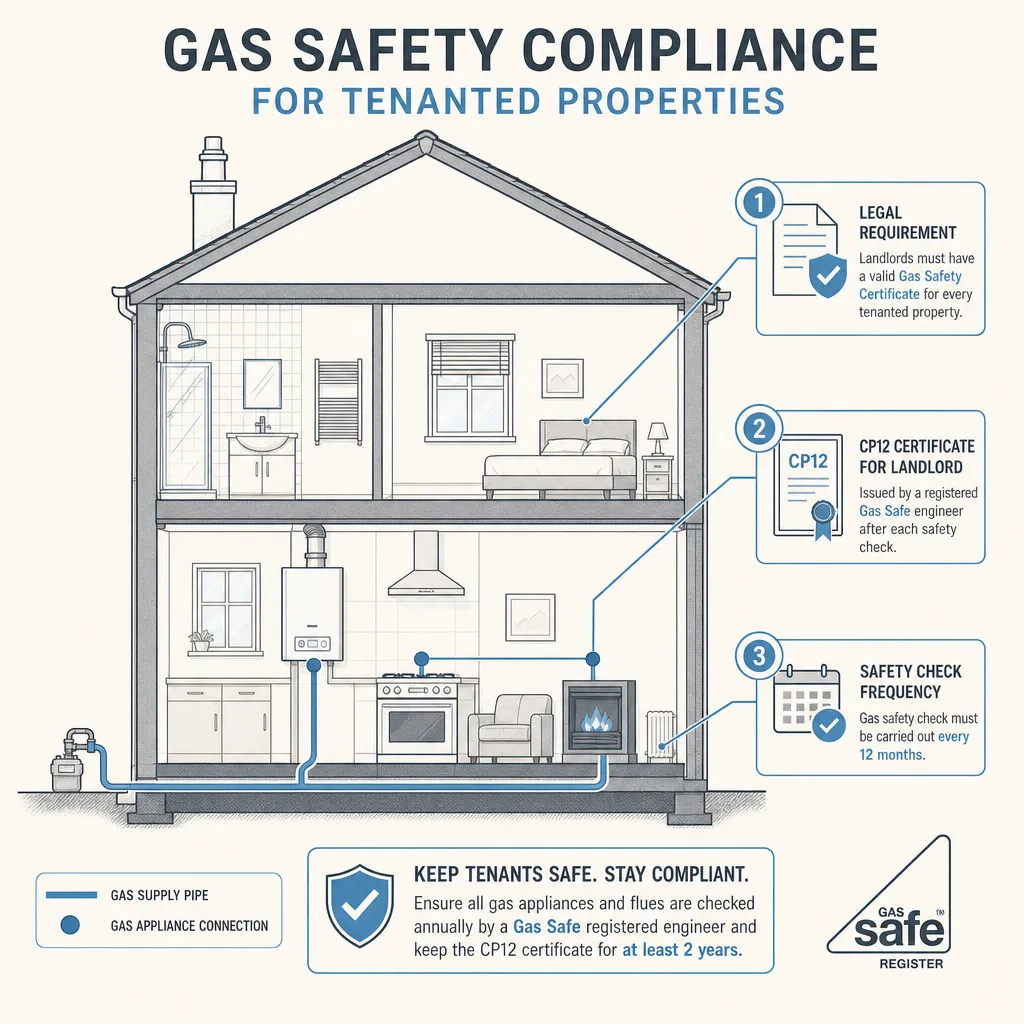
Gas Safety Compliance for Tenanted Properties
UK landlords are legally required to arrange an annual gas safety check by a Gas Safe registered engineer for every tenanted property with a gas appliance.
 Surveys & Inspections
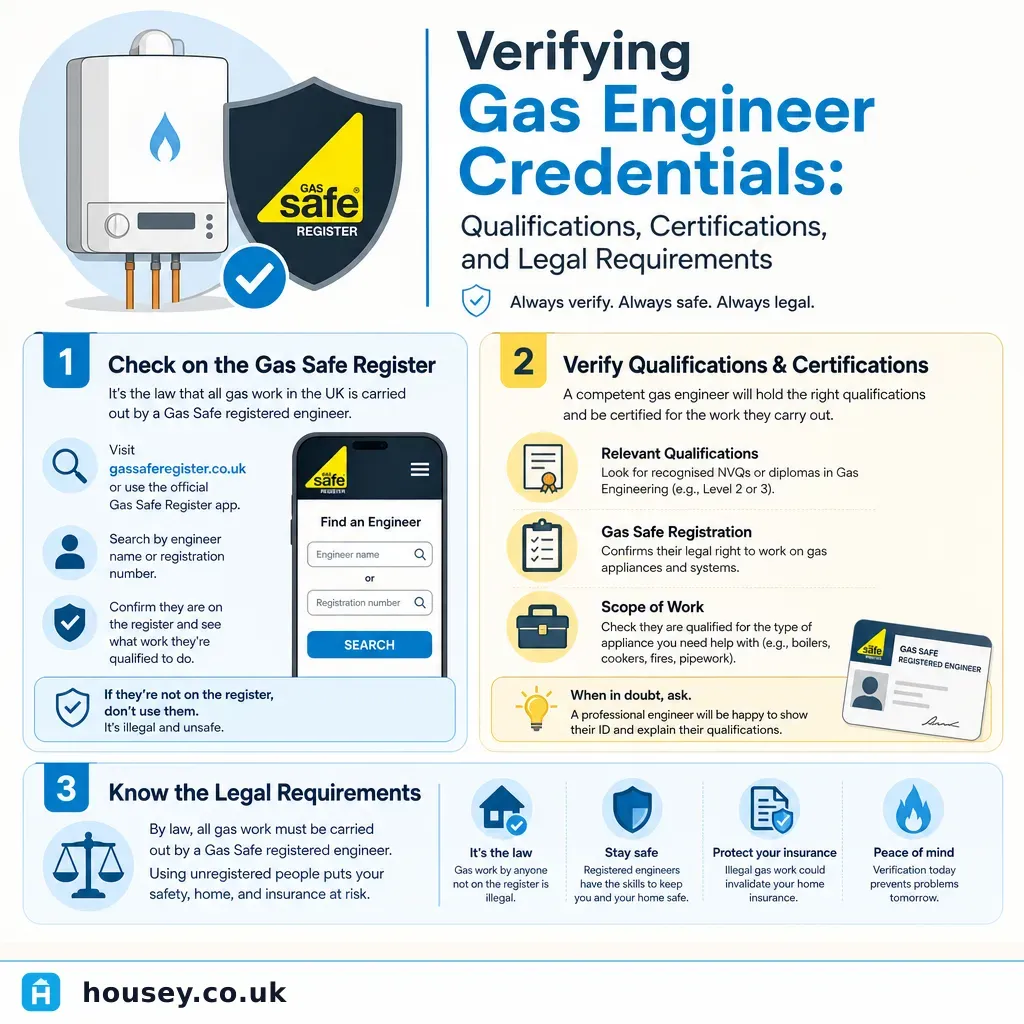
Verifying Gas Engineer Credentials: Qualifications, Certifications, and Legal Requirements
All gas engineers working on domestic properties in Great Britain must be Gas Safe registered — a legal requirement under the Gas Safety (Installation and Use) Regulations 1998.
 Surveys & Inspections
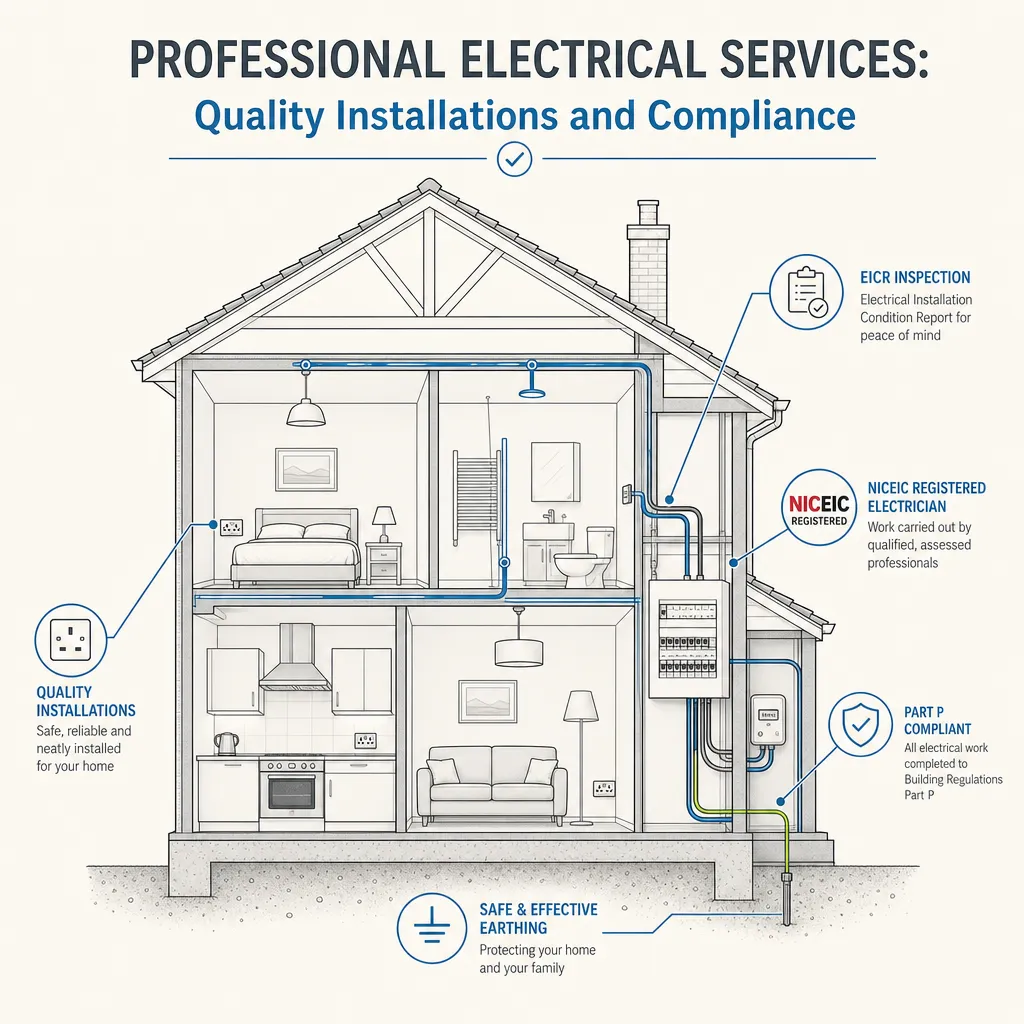
Professional Electrical Services: Quality Installations and Compliance
Professional electrical services in UK homes are governed by Part P of the Building Regulations and BS 7671 (18th Edition).
 Surveys & Inspections
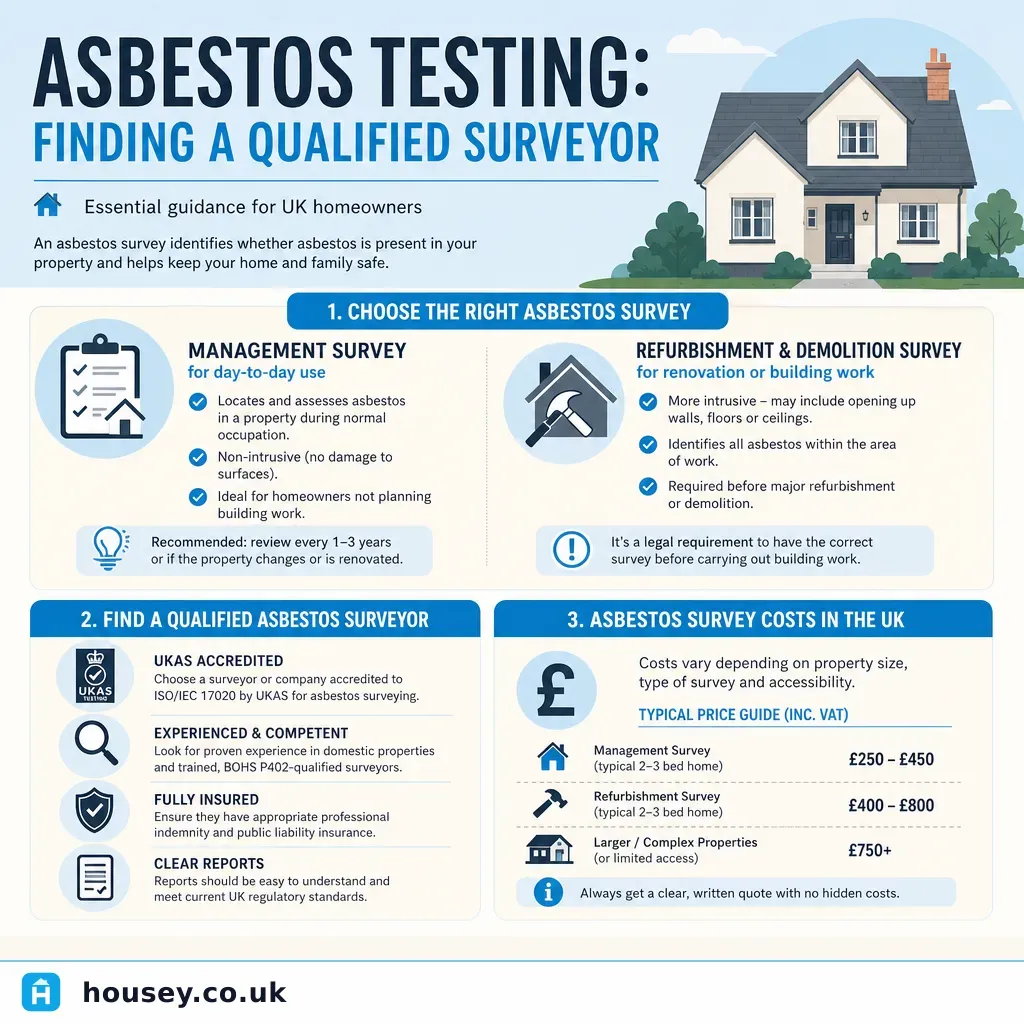
Asbestos Testing: Finding a Qualified Surveyor
Finding a qualified asbestos surveyor means choosing a company accredited by UKAS to ISO/IEC 17020, with analysts holding BOHS P402 or equivalent qualifications.
 Surveys & Inspections
Artex Surfaces and Property Market Perception
Artex applied before 2000 may contain chrysotile asbestos, which is safe when undisturbed but hazardous if sanded or scraped without professional assessment.