Gender Diversity in Construction: Attracting and Supporting Women in the Building Sector
By Housey · Last reviewed 31st of May 2026
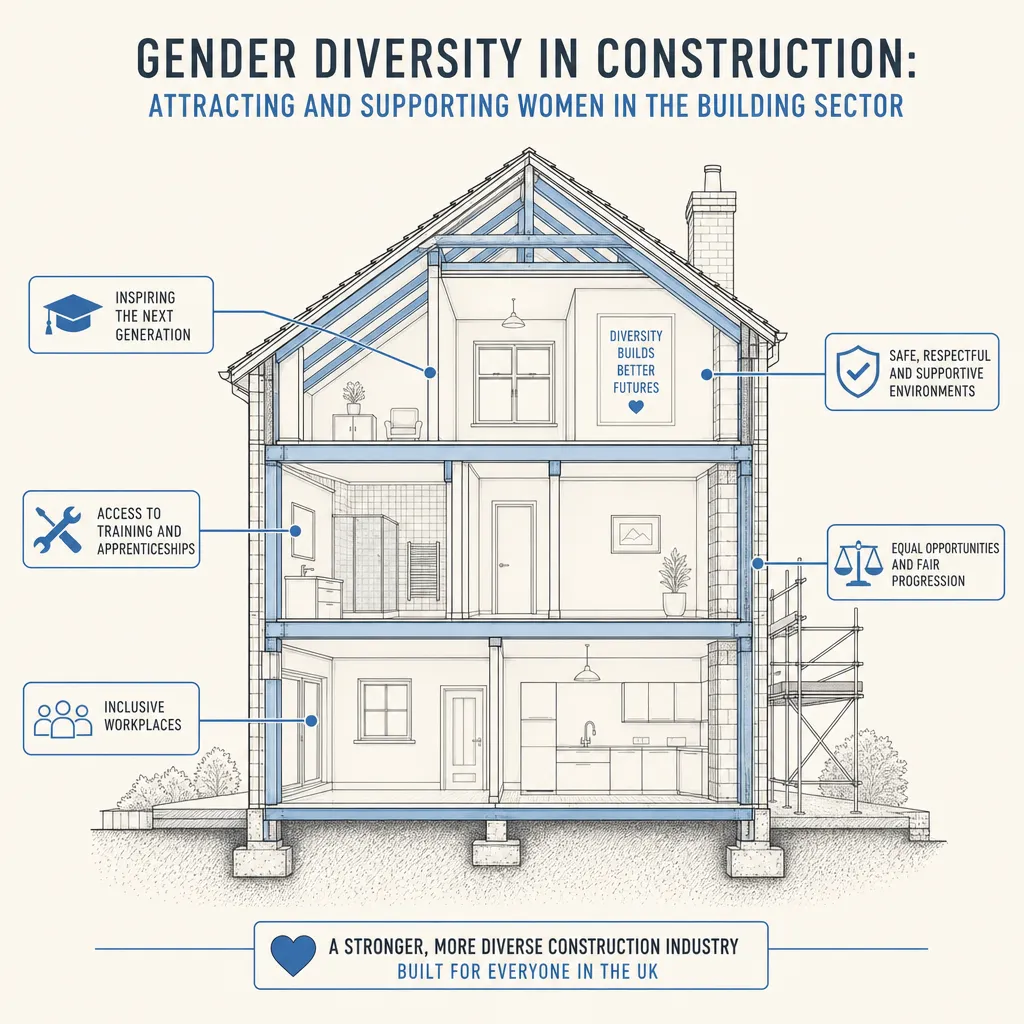
Gender Diversity in Construction: Attracting and Supporting Women in the Building Sector
The UK construction industry faces a well-documented skills shortage, and the persistent under-representation of women is increasingly recognised as both a talent issue and a barrier to sector growth. With the industry needing to scale its workforce substantially to deliver new homes and retrofit millions of existing ones, understanding who is entering the trades — and why many do not — matters to homeowners, employers, and anyone considering a career in the building sector.
Key points
- Women represent approximately 15% of the UK construction workforce overall, according to the Construction Industry Training Board (CITB), but around 2–3% of on-site trade roles.
- The Equality Act 2010 requires construction employers to provide equal pay, non-discriminatory recruitment, and reasonable adjustments for all workers regardless of sex.
- The Health and Safety Executive (HSE) requires employers to provide separate, appropriate welfare facilities for women on construction sites under the Construction (Design and Management) Regulations 2015.
- CITB levy funding supports apprenticeship grants for employers recruiting under-represented groups, including women returning to work and new entrants to the trades.
- A CITB Construction Skills Network projection published in 2024 estimated that over 250,000 additional workers will be needed in the UK construction sector by 2028.
Why this matters for UK construction and homeowners
The scale of what the UK needs to build and retrofit over the next two decades is substantial. The Climate Change Committee has noted that improving 29 million homes to meet net-zero targets requires a significant expansion of the skilled trades workforce. With a large proportion of the current workforce expected to retire before 2030, broadening the pipeline of who enters the trades is one practical route to managing that shortfall.
For homeowners, a tighter labour market in the trades translates into longer lead times for projects, upward pressure on labour costs, and in some cases a reduced choice of contractors. Understanding the structural causes of those shortages helps put the practical realities of commissioning building work in context.
Where women work in UK construction
Representation is uneven and varies significantly between office-based and on-site roles.
Women in UK construction by role type
Role | Approximate share of women | Notes |
|---|---|---|
Professional and managerial (architects, project managers, quantity surveyors) | ~20–25% | Higher among recent graduates; office roles closer to parity |
Site management and supervision | ~8–12% | Growing, but cultural barriers persist |
On-site trade roles (electrician, plumber, bricklayer, joiner) | ~2–3% | Persistently low; practical and cultural barriers remain |
Procurement, commercial, and finance | ~30–35% | Closer to parity with the broader UK workforce |
Source: CITB Construction Skills Network and Build UK diversity data.
What is changing in the sector
Several industry-level and government-backed initiatives have developed traction in recent years:
- Build UK diversity targets: Build UK, the principal trade body for the UK construction supply chain, has committed to publishing annual workforce diversity data and setting improvement targets for member contractors.
- CITB employer grants: the CITB levy system funds training grants for employers sponsoring apprenticeships, including for under-represented groups. Apprenticeship starts by women in construction in England have grown year-on-year since 2019, though absolute numbers remain low.
- Women into Construction and Tradeswomen UK: these charities provide supported training pathways, employer-matching, and mentoring for women entering or returning to the building trades.
- Part-time apprenticeship routes: changes to the apprenticeship standards framework allow part-time starts, which improves access for those with caring responsibilities.
- HSE welfare facility requirements: the Construction (Design and Management) Regulations 2015 require principal contractors and clients to plan for adequate welfare facilities, including separate and lockable provision for women wherever they are present on site.
Barriers that remain
Honest analysis of what is holding back progress helps target effective responses:
Workplace culture is consistently cited in CITB survey data as the primary barrier — specifically informal exclusion, lack of female role models in senior site roles, and difficulty fitting into male-dominated site environments.
PPE and workwear fit is a practical safety issue: standard personal protective equipment is typically sized for male physiques. Ill-fitting hard hats, harnesses, and safety boots are not merely inconvenient — they represent genuine safety risks, and HSE guidance makes clear that equipment must fit the individual wearer.
Lack of visible career pathways: many women who express interest in the trades cite not knowing how to start, or perceiving the trades as inaccessible, as a significant practical obstacle. School careers guidance has historically underweighted trades as options for young women.
Retention after qualification: evidence from organisations including Women into Construction suggests women who qualify in trades leave the sector within five years at higher rates than male counterparts, with workplace culture and limited progression cited most frequently as reasons.
What to ask if you are hiring contractors
Homeowners who want to support inclusive construction businesses can ask practical questions when gathering quotes:
- Does your business have a written equality and diversity policy?
- Do you work with or employ female tradespeople, apprentices, or subcontractors?
- Are your site facilities compliant with HSE welfare requirements for all workers?
- Are your recruitment processes open to all genders for all roles?
- Does your business support apprenticeship or returner programmes?
- Can you evidence any industry body membership that includes a diversity commitment?
These are reasonable questions that any professionally run contractor should be able to answer clearly. They are also worth asking when selecting firms to invite to quote for significant home improvement or building projects.
When to get professional help
If you are an employer in the construction sector dealing with workplace culture complaints, equal pay concerns, or discrimination grievances, an employment solicitor or HR professional with sector experience should be your first call. The ACAS helpline (0300 123 1100) provides free, impartial guidance on UK employment rights. The Equality and Human Rights Commission publishes detailed guidance on employer obligations under the Equality Act 2010 at equalityhumanrights.com.
How Housey can help
Housey connects homeowners with vetted service providers across a broad range of building and improvement specialisms. As the platform develops, we are committed to working with providers who demonstrate fair and inclusive hiring practices alongside professional standards and strong customer service. Browse our service categories to find qualified professionals in your area.
Frequently asked questions
What percentage of construction workers in the UK are women?
Approximately 15% of the total UK construction workforce is female, according to CITB data. However, this includes office-based, professional, and managerial roles. In on-site trade roles — bricklayers, electricians, joiners, and plumbers — the share is closer to 2–3%. The sector is increasing its female workforce, but from a low base, particularly in manual trades and site-based roles.
Are there grants to help women enter the construction trades in the UK?
Yes. CITB levy funds support employer grants for apprenticeship training, including for under-represented groups. Organisations such as Women into Construction and Tradeswomen UK offer supported entry pathways, mentoring, and employer-matching programmes. Some levy-funded apprenticeship routes may be completed part-time, improving access for those with caring responsibilities. Visit CITB.co.uk and Women into Construction for current programmes.
Do construction employers have a legal duty to accommodate women on site?
Yes. Under the Equality Act 2010, construction employers must not discriminate on grounds of sex in recruitment, pay, or working conditions. The HSE's guidance under the Construction (Design and Management) Regulations 2015 requires adequate welfare facilities — including separate, lockable toilet and changing provision — wherever women are present on site. Failure to provide these is a potential HSE enforcement matter.
Does the construction skills shortage affect homeowners?
Yes, it can. Labour shortages in key trades — groundworkers, bricklayers, electricians, and heating engineers — have contributed to extended project lead times and upward pressure on labour costs, particularly since 2021. Diversifying the workforce is a long-term structural response; in the near term, homeowners should plan for longer contractor availability windows and obtain multiple written quotes.
Sources and further reading
- CITB Construction Skills Network Labour Market Intelligence — Construction Industry Training Board
- Build UK diversity and inclusion — Build UK
- Women into Construction — Women into Construction
- Equality Act 2010 — legislation.gov.uk
- HSE welfare facilities in construction — Health and Safety Executive
Useful next reads
 Improvement & Build
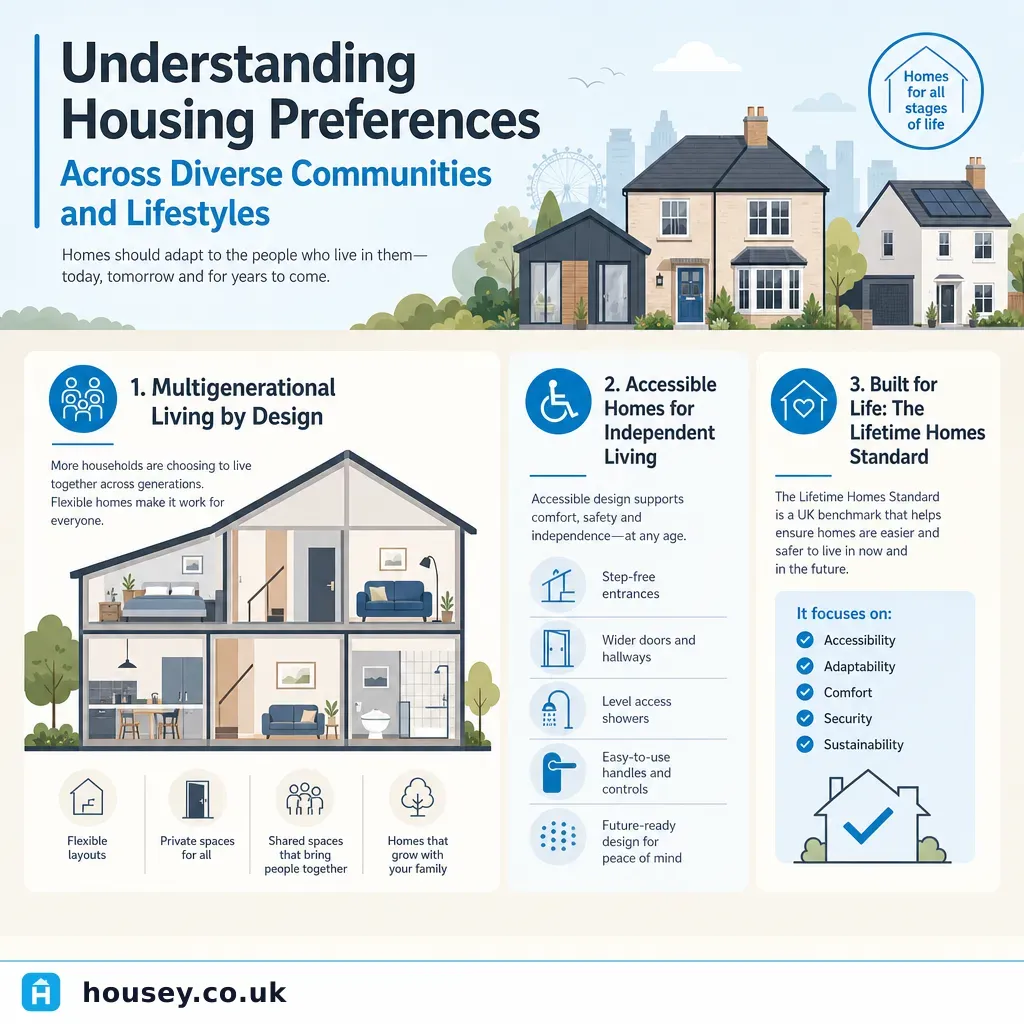
Understanding Housing Preferences Across Diverse Communities and Lifestyles
UK housing preferences vary significantly by household composition, life stage, and cultural background.
 Improvement & Build
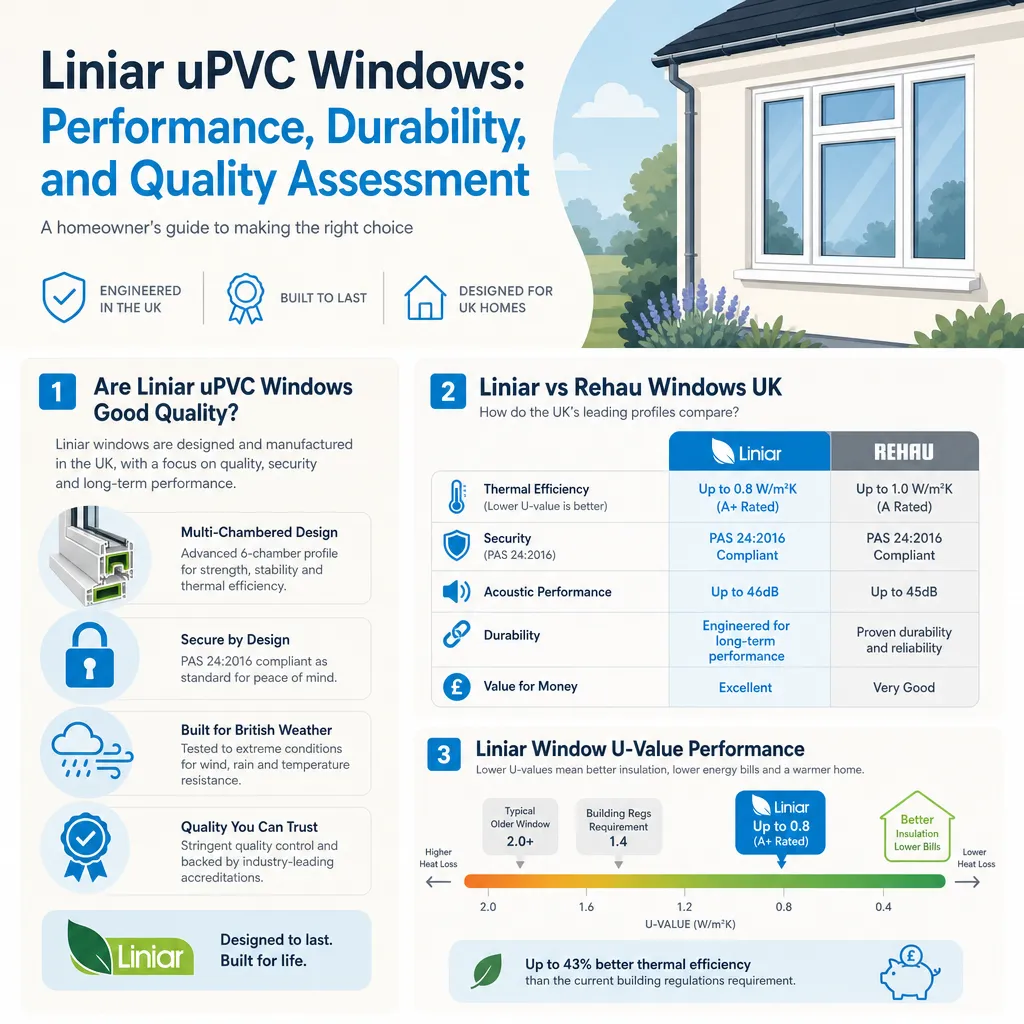
Liniar uPVC Windows: Performance, Durability, and Quality Assessment
Liniar uPVC window profiles are manufactured in the UK using multi-chambered, foamed frames.
 Improvement & Build
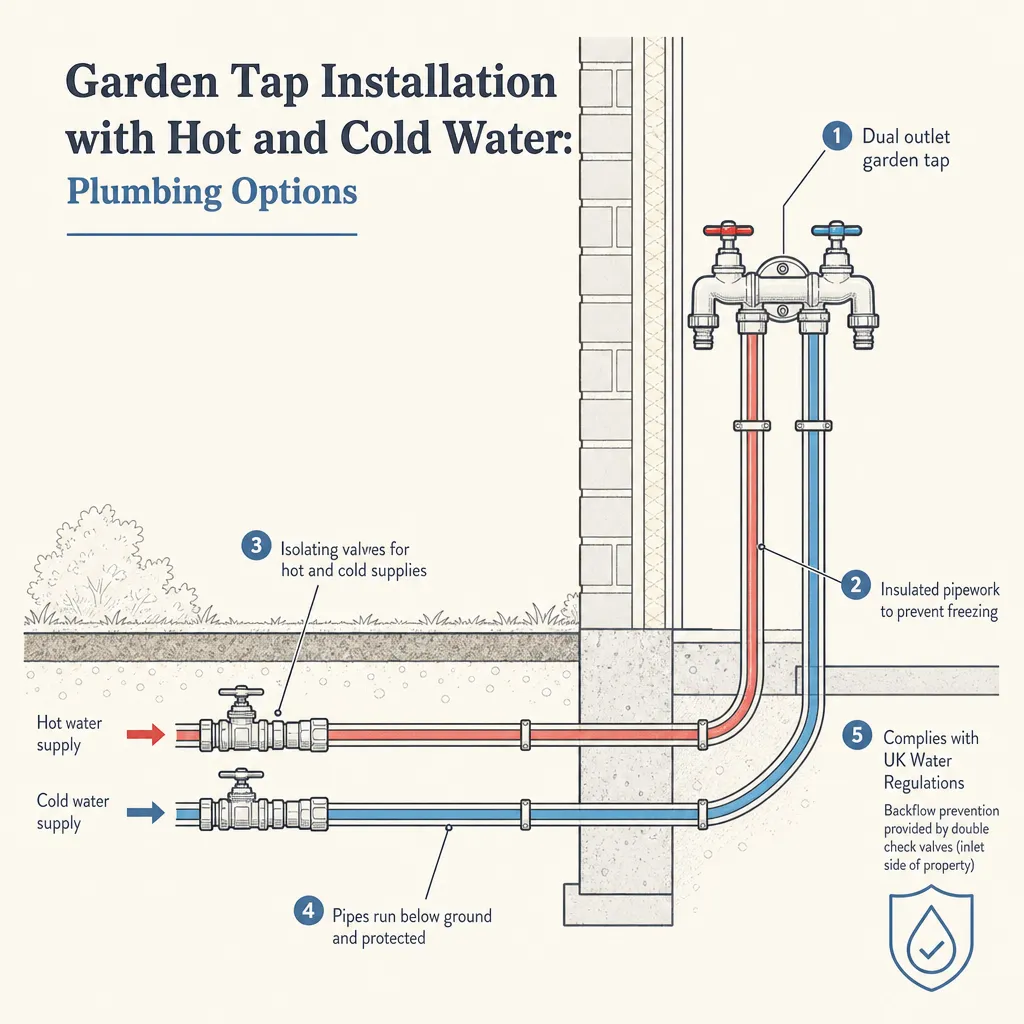
Garden Tap Installation with Hot and Cold Water: Plumbing Options
Adding a cold garden tap is a common DIY project, but routing hot water outdoors requires a plumber to connect to your domestic hot water system and comply with the Water Supply (Water Fittings) Regulations 1999.
 Improvement & Build
Sealing and Maintaining Historic Leaded Glass Windows: Preservation and Performance
Leaded glass windows are maintained using traditional linseed oil cement — not silicone or modern sealants, which prevent natural movement in the lead came.
 Improvement & Build
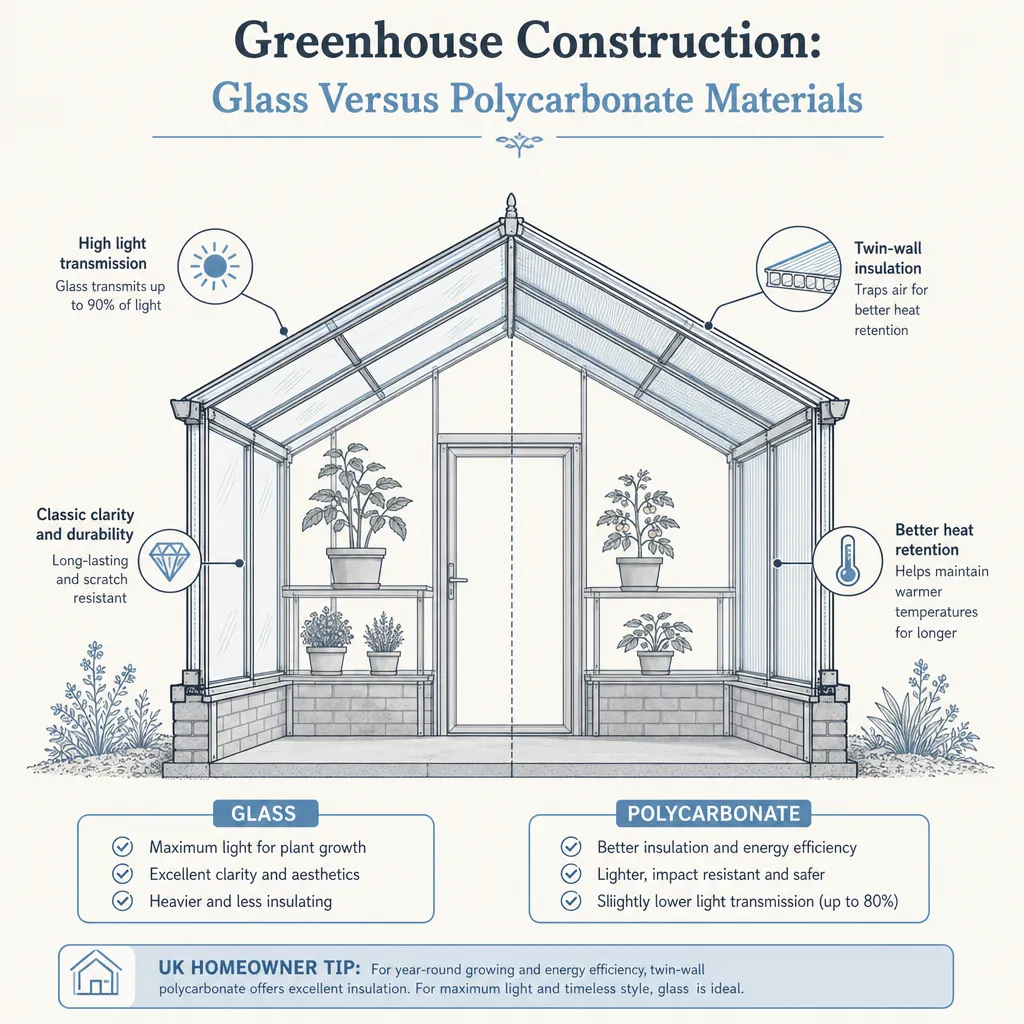
Greenhouse Construction: Glass Versus Polycarbonate Materials
Glass transmits around 90% of available light and lasts indefinitely if unbroken, but insulates poorly and shatters into sharp fragments.