Understanding Housing Preferences Across Diverse Communities and Lifestyles
By Housey · Last reviewed 31st of May 2026
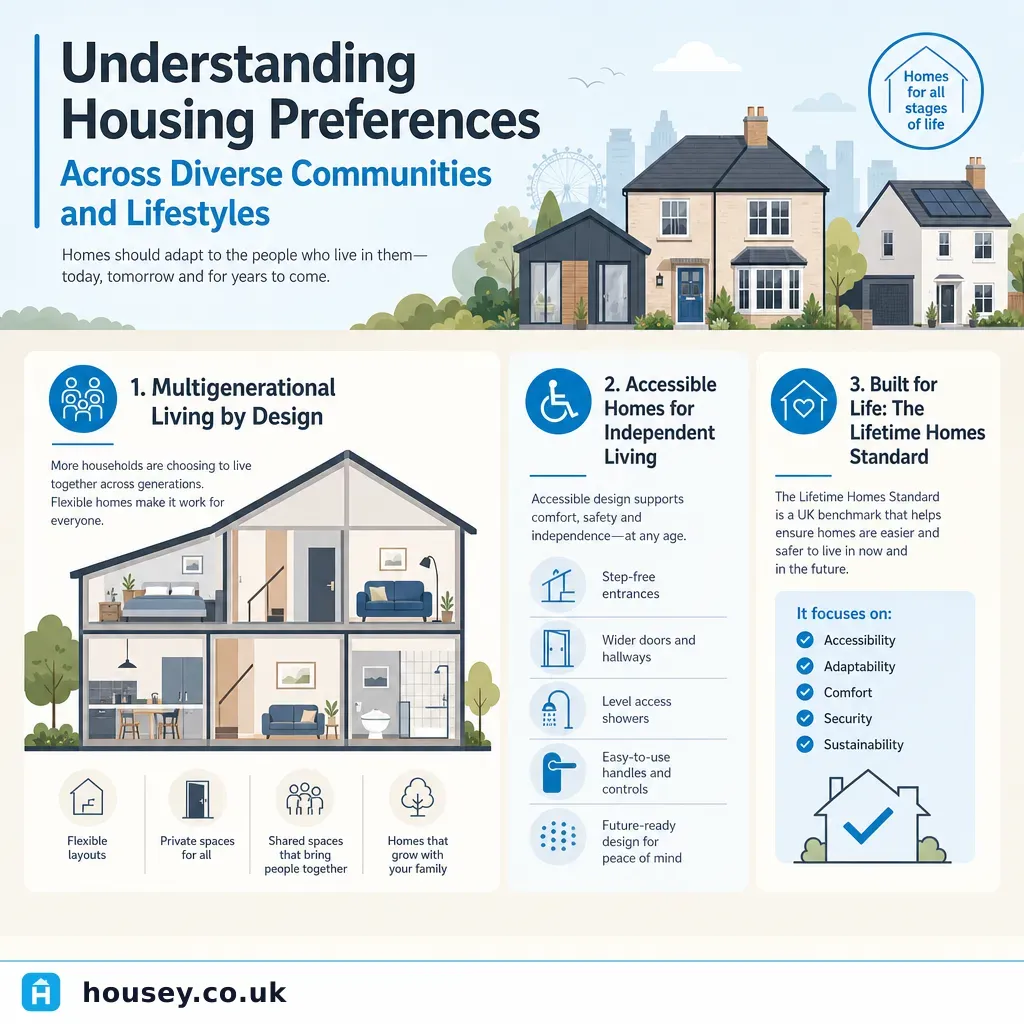
Understanding Housing Preferences Across Diverse Communities and Lifestyles
Britain's housing stock was largely designed around a single household model: two adults and children in a three-bedroom semi-detached. The reality of how people actually live — multigenerational families, older adults ageing in place, disabled household members, solo occupiers, and households with specific cultural priorities — rarely fits that template neatly. Whether you are adapting an existing home or commissioning new works, understanding diverse housing needs helps you specify the right design from the outset rather than retrofitting solutions at greater cost later.
Key points
- The 2021 Census recorded over 1.8 million multigenerational households in England and Wales — a significant increase since 2011 — driving demand for self-contained annexes, ground-floor bedrooms, and wider circulation spaces.
- Building Regulations Part M Category 2 (accessible and adaptable dwellings) requires step-free entrance access, 775 mm clear door widths, and a ground-floor WC; local planning policies increasingly require Category 2 as a minimum for new build homes.
- Disabled Facilities Grants of up to £30,000 are available in England via local authorities to fund home adaptations for disabled people; applications require an occupational therapist assessment.
- Certain home adaptations for disabled people — including ramps, hoists, and some bathroom alterations — qualify for VAT zero-rating under Group 12, Schedule 8 of the VAT Act 1994.
- Many access improvements including ramps, widened doorways, and single-storey ground-floor extensions can be carried out under permitted development rights without a full planning application in most non-Article 4 areas.
How household type shapes design priorities
Multigenerational households
The UK is seeing a sustained increase in three-generation households, driven by housing affordability pressures, cultural preferences in many South Asian, Black African, and East Asian communities, and the practical need to care for elderly parents close to home. This creates specific design requirements:
- Self-contained annexes: A single-storey rear or side annexe with its own entrance, kitchenette, shower room, and living space gives privacy while maintaining proximity. Single-storey annexes within permitted dimensions may qualify as permitted development; always verify against local planning policy before building, as self-containment and habitation use can trigger full planning requirements.
- Ground-floor principal bedroom: A home where the main sleeping space can relocate to ground level as mobility changes is far more adaptable across a lifetime.
- Wider doorways and level access: Part M Category 2 specifies 775 mm clear opening width as a minimum — retrofitting this into a Victorian terrace may require structural work if openings are in load-bearing walls.
Older adults and solo occupiers
Around eight million people in the UK live alone; a significant proportion are over 65. Common design priorities include:
- Compact, efficient layouts with lower running costs and minimal cleaning effort.
- Level-access showers or wet rooms replacing traditional baths.
- Good natural light and open aspects, which support wellbeing in smaller footprints.
- Smart home technology — voice-controlled lighting, video doorbells, programmable thermostats — for convenience and safety.
- Proximity to local amenities: a location factor rather than a design one, but central to how older adults assess housing suitability.
Households with disabled members
Adaptations for physical disability are often iterative over time. Frequently required features include:
- Threshold ramps and level access throughout the ground floor.
- Wet room or level-access shower with fixed grab rails and a turning space compliant with BS 8300 (minimum 1,500 mm turning circle).
- Adjustable-height worktops and accessible kitchen storage.
- Structural reinforcement to ceilings where hoisting equipment is required — this must be specified before ceiling finishes are applied.
Which approach should you choose?
- Choose minor access modifications (wider doors, lever handles, threshold ramps) if mobility requirements are mild and expected to remain stable.
- Commission a full accessible bathroom conversion if a household member uses a wheelchair or has significant mobility impairment — engage an occupational therapist to define the brief before appointing a contractor.
- Apply for a Disabled Facilities Grant via your local council before committing to works — grants of up to £30,000 in England can fund qualifying adaptations and are not available retrospectively.
- Commission a Part M Category 2 review if you are building an extension or new structure and want to future-proof the space for all ages and abilities.
- Consult a heritage architect or planning consultant if your property is listed or in a conservation area, where access adaptations still require listed building consent or planning permission.
- Speak to your freeholder first if you own a leasehold flat — structural or external alterations typically require written freeholder consent before any works start.
Cultural considerations in UK home design
Housing preferences vary significantly across cultural communities in the UK, and individual household priorities always override broad generalisations. A skilled designer will ask detailed questions about how a household actually lives before proposing a layout. Some well-documented patterns worth understanding:
- Larger reception and entertaining spaces: Households from South Asian, Middle Eastern, and some East African communities often prioritise kitchen-diners and reception rooms capable of hosting extended family gatherings of ten or more people — a need the standard British open-plan layout sometimes underestimates.
- Separate formal and everyday spaces: Some households prefer a layout with a formal reception room kept separate from the family living area, a division the recent open-plan trend has largely erased in new builds.
- Outdoor growing space: Many UK communities — particularly those with Caribbean, South Asian, and East African backgrounds — place high value on garden space for growing vegetables, herbs, and culturally specific produce.
- Prayer and contemplation spaces: Households observing regular prayer may want a quiet room with clear orientation away from high-traffic areas, or a dedicated external space for specific festivals.
Which professional do you need?
Need | Professional to engage | Typical credential |
|---|---|---|
Accessible bathroom adaptation | Wet room specialist plus occupational therapist assessment | RCOT (occupational therapist); qualified tanked bathroom installer |
Annexe or multigenerational extension | Architect or design-and-build firm | ARB-registered architect or RIBA member |
Disabled Facilities Grant assessment | Occupational therapist (local authority or private) | RCOT |
Structural changes for wider doorways | Structural engineer | IStructE or ICE chartered member |
Listed building or conservation area adaptation | Heritage architect and planning consultant | AABC or RIBA conservation accreditation |
Accessible kitchen design | Specialist kitchen designer | NKBA or equivalent |
When to get professional help
Accessible and inclusive home design often carries regulatory, structural, and funding complexity that goes well beyond a standard renovation project.
Situations that require specialist professional involvement:
- Applying for a Disabled Facilities Grant — a mandatory occupational therapist assessment is required in England before a grant can be awarded.
- Any structural alteration to widen a doorway or create a through-room in load-bearing masonry construction.
- Creating an annexe that might be considered a separate dwelling unit for planning or council tax purposes.
- Alterations to a leasehold property — freeholder consent is typically required before any structural or external works begin.
- Works to a listed building — any internal or external alteration requires listed building consent regardless of scale.
How Housey can help
Whether you are planning a multigenerational extension, an accessible bathroom conversion, or a full redesign to serve a diverse household, an experienced design-and-build firm can take your brief from initial concept through to building control completion — coordinating structural, access, and regulatory requirements within a single managed process.
Frequently asked questions
What is the Disabled Facilities Grant and how much can I receive?
The Disabled Facilities Grant (DFG) is a means-tested grant from your local authority to fund adaptations for disabled people — covering ramps, stairlifts, wet rooms, and wider doorways. In England, grants of up to £30,000 are available. Applications require an occupational therapist assessment to determine the scope of qualifying works and are processed via your local council.
Does an annexe for a family member need planning permission?
It depends on size, location, and degree of self-containment. A small single-storey annexe within the permitted development envelope may not need a planning application, but a self-contained unit with its own entrance and facilities often does — and could trigger separate council tax liability. Always verify with your local planning authority before building, as policy varies between councils.
Can I get VAT relief on home adaptations for a disabled person?
Certain adaptations for a person with a disability — including ramps, hoists, lifts, and some bathroom alterations — qualify for VAT zero-rating under Group 12, Schedule 8 of the VAT Act 1994. The relief applies to the supply and installation of qualifying goods, not all associated building work. HMRC guidance sets out the detailed eligibility criteria; your contractor should be able to confirm which elements qualify.
What is the Lifetime Homes Standard?
The Lifetime Homes Standard consists of 17 design criteria developed by the Centre for Accessible Environments to produce homes adaptable across all life stages without major rebuilding. Criteria cover step-free access, circulation widths, bathroom provision, and structural readiness for future hoisting equipment and stairlifts. The standard is voluntary but increasingly referenced in local planning policies and housing design guides.
Sources and further reading
- Approved Document M: Access to and Use of Buildings — GOV.UK
- Disabled Facilities Grants — GOV.UK
- VAT relief for disabled people — HMRC
- Lifetime Homes Standard — Centre for Accessible Environments
- Families and households in England and Wales: Census 2021 — ONS
Useful next reads
 Improvement & Build
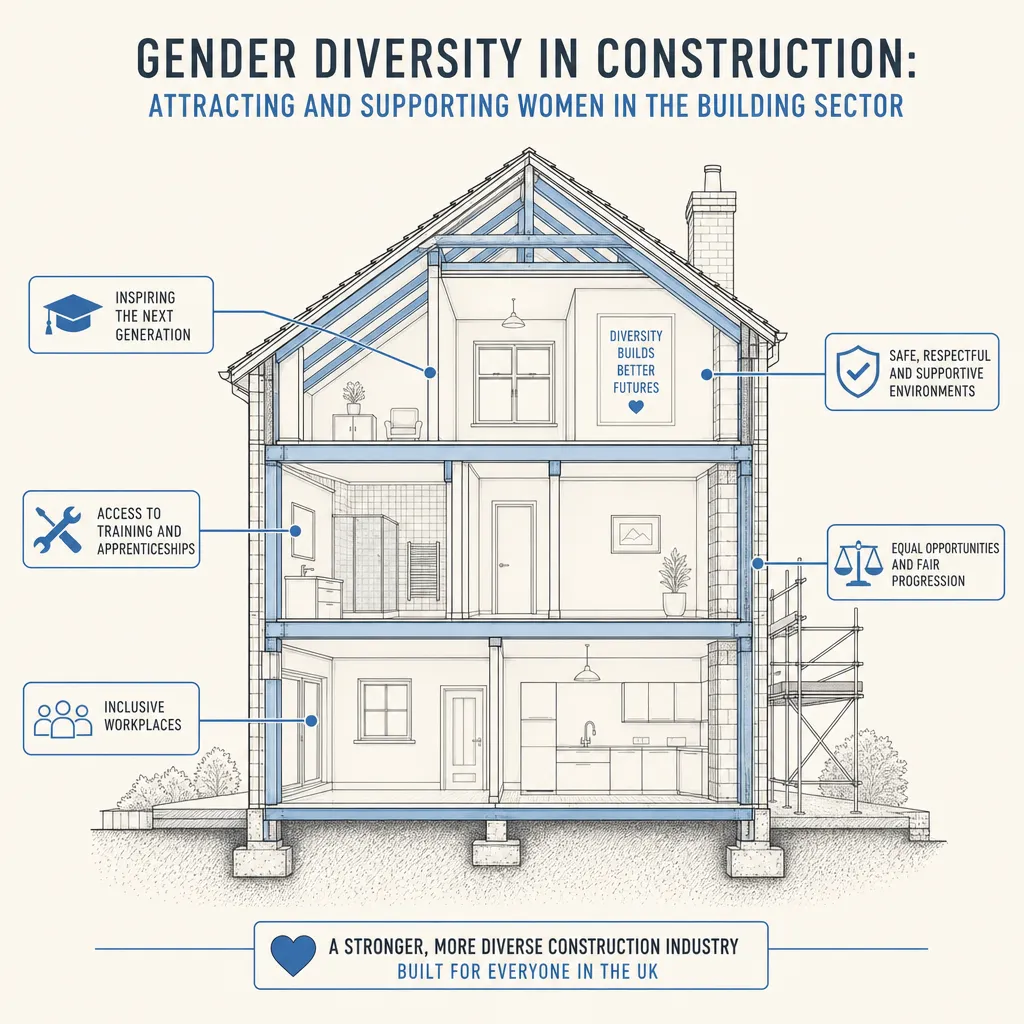
Gender Diversity in Construction: Attracting and Supporting Women in the Building Sector
Women represent around 15% of the UK construction workforce overall, but only about 2–3% of on-site trade roles.
 Improvement & Build
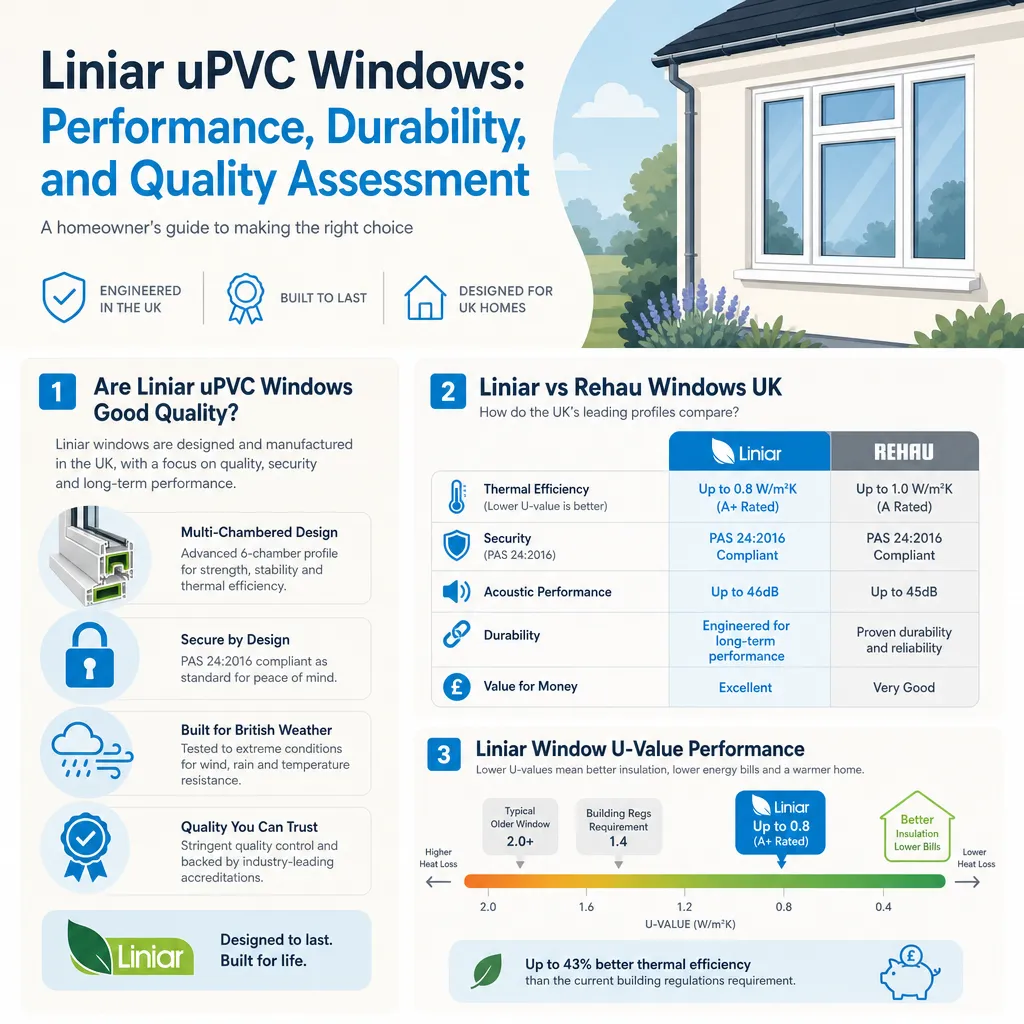
Liniar uPVC Windows: Performance, Durability, and Quality Assessment
Liniar uPVC window profiles are manufactured in the UK using multi-chambered, foamed frames.
 Improvement & Build
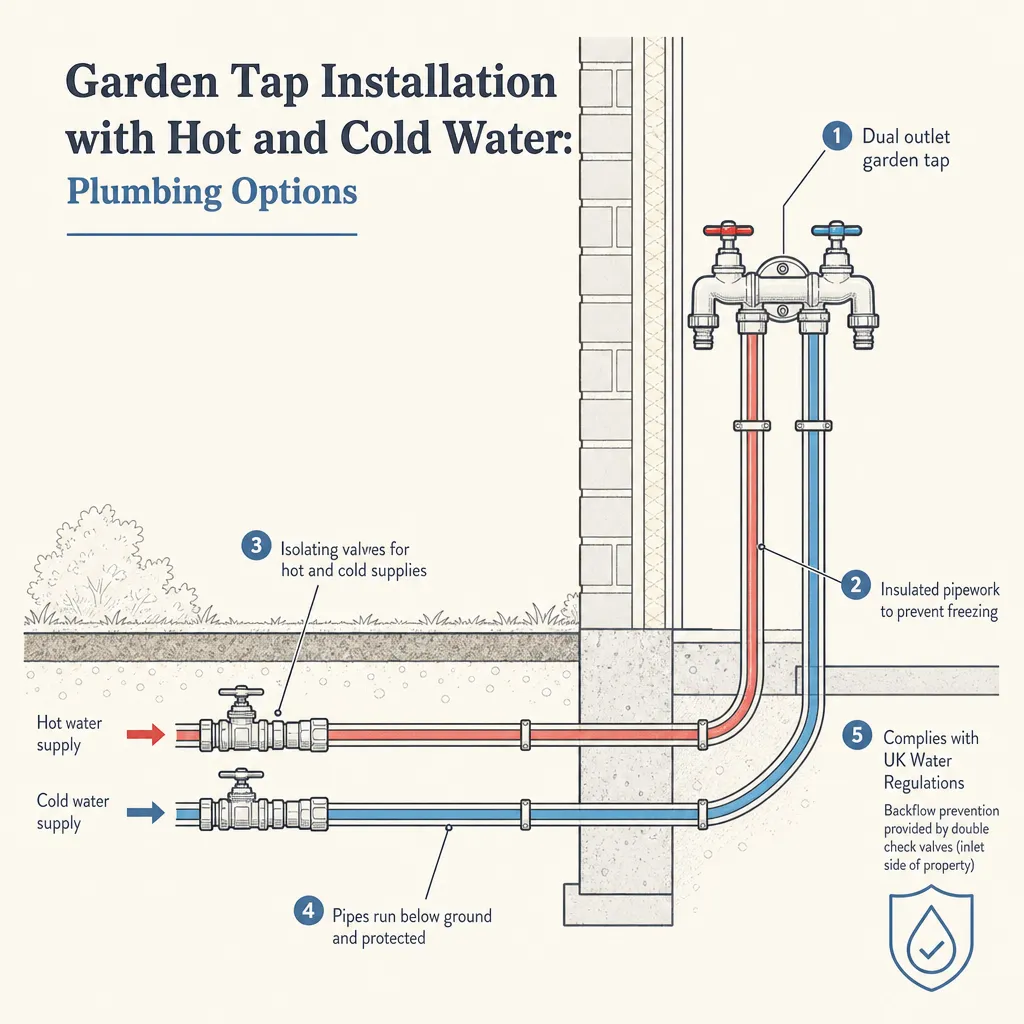
Garden Tap Installation with Hot and Cold Water: Plumbing Options
Adding a cold garden tap is a common DIY project, but routing hot water outdoors requires a plumber to connect to your domestic hot water system and comply with the Water Supply (Water Fittings) Regulations 1999.
 Improvement & Build
Sealing and Maintaining Historic Leaded Glass Windows: Preservation and Performance
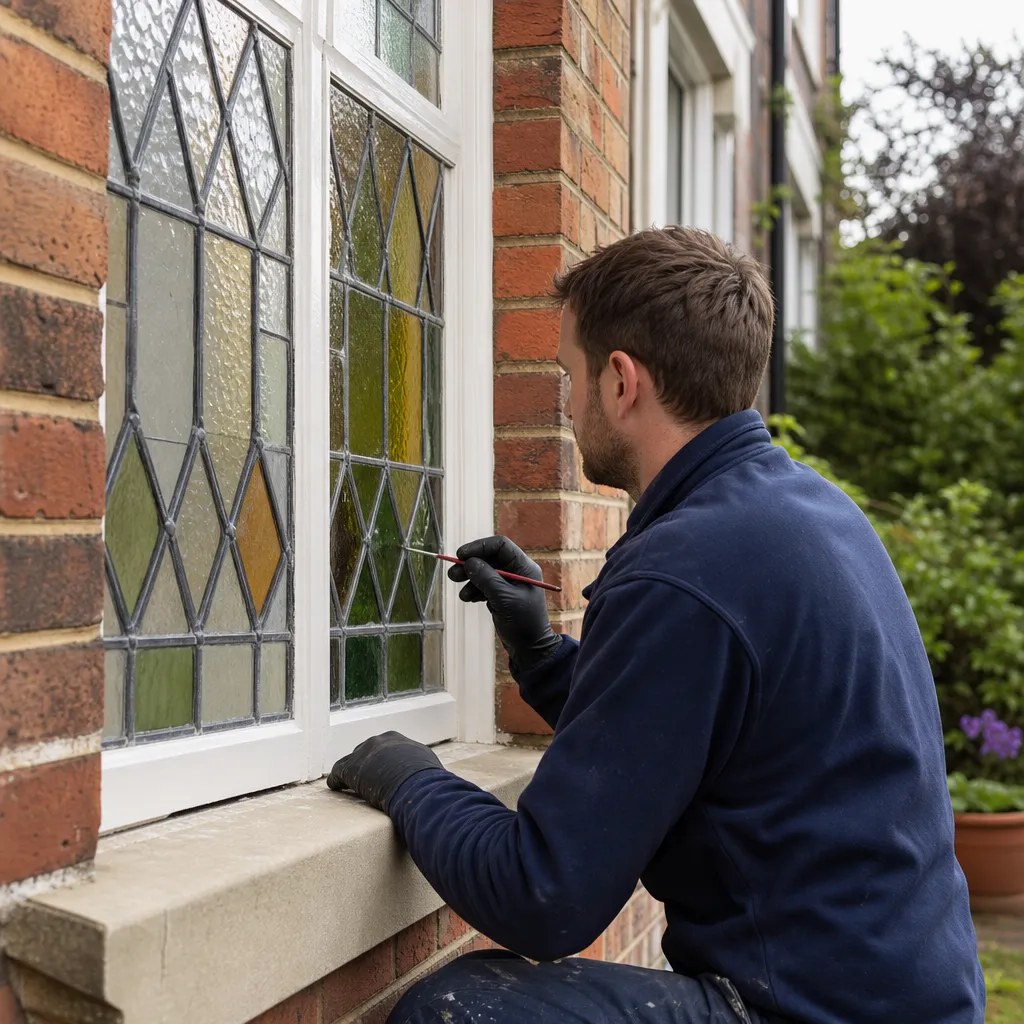
Leaded glass windows are maintained using traditional linseed oil cement — not silicone or modern sealants, which prevent natural movement in the lead came.
 Improvement & Build
Greenhouse Construction: Glass Versus Polycarbonate Materials
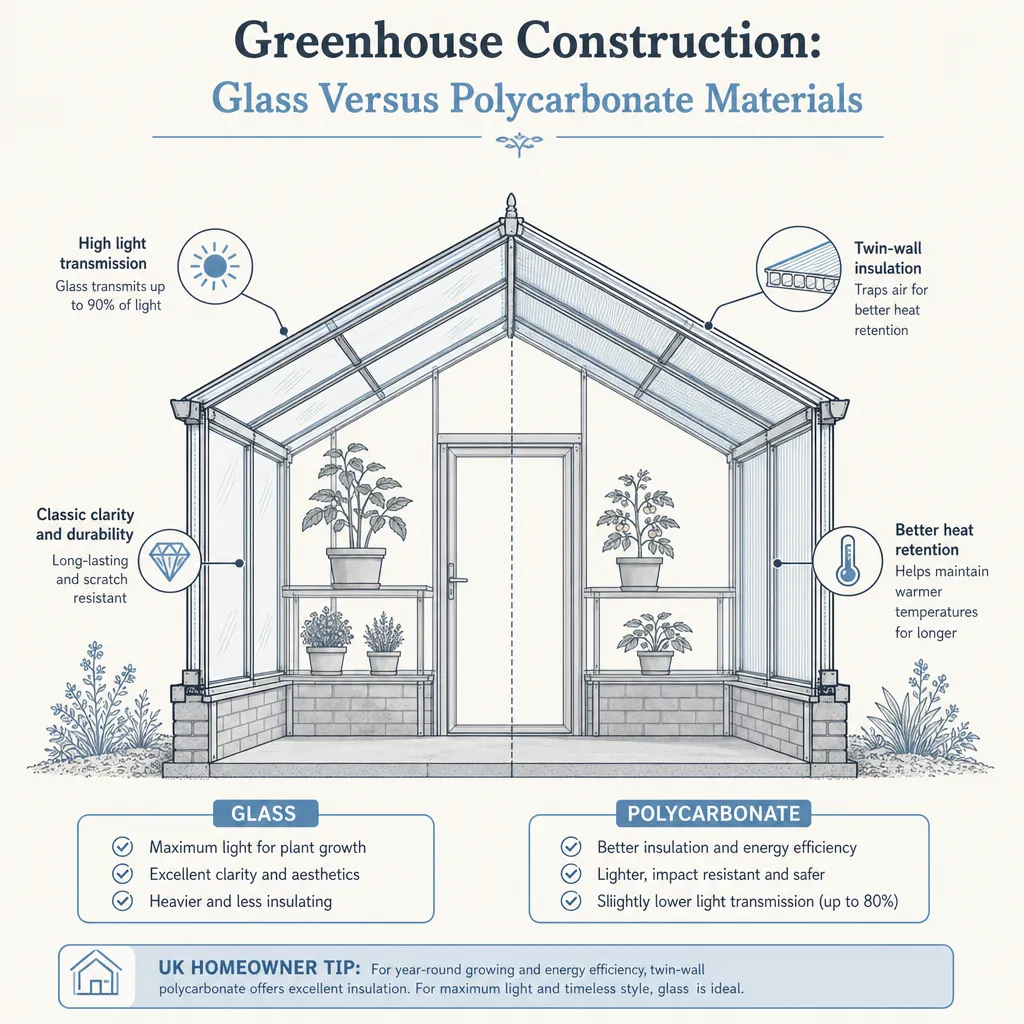
Glass transmits around 90% of available light and lasts indefinitely if unbroken, but insulates poorly and shatters into sharp fragments.