Renovation Case Studies: Learning From Successful Home Transformations
By Housey · Last reviewed 10th of May 2026
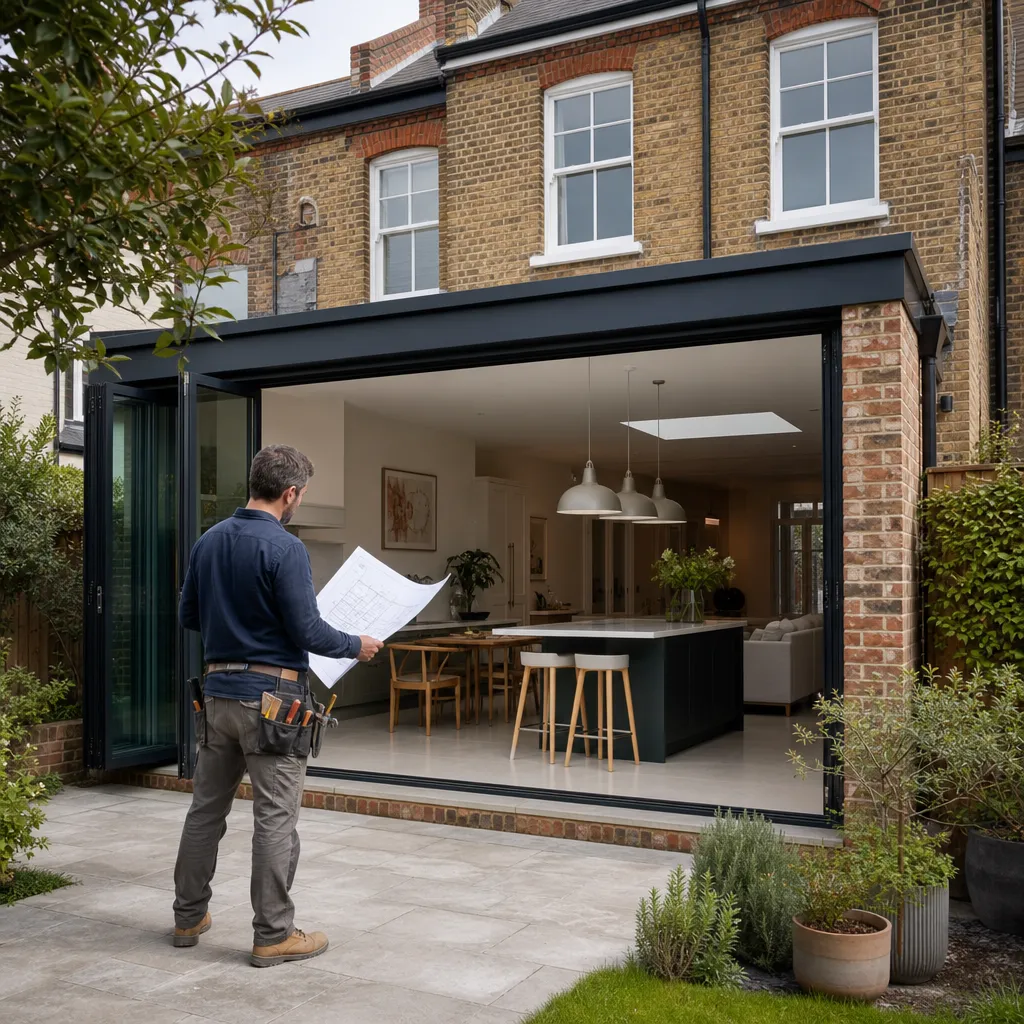
Renovation Case Studies: Learning From Successful Home Transformations
Few planning tools are more useful than a completed project that has already navigated the decisions you are facing. UK homeowners considering extensions, loft conversions, or structural alterations typically share the same questions: which planning route applies, what approvals are needed, and how do you avoid the mistakes that push projects over budget? The three worked examples below cover the most common residential renovation types in England and Wales, showing how planning, procurement, and professional appointments shaped each outcome.
Key points
- Single-storey rear extensions up to 6m deep on terraced or semi-detached homes may proceed under permitted development via the Neighbour Consultation Scheme (prior approval) — but this does not remove the requirement for Building Regulations approval.
- Rear dormers on semi-detached and terraced homes generally fall within permitted development provided they are on the rear slope and the property is not in a conservation area, an Area of Outstanding Natural Beauty, or subject to an article 4 direction.
- Nationwide Building Society data suggests loft conversions may add 10–20% to a property's value, though returns vary significantly by location and quality of finish.
- A full plans Building Regulations application — rather than a building notice — gives both client and contractor an approved set of drawings before the build starts, reducing on-site disputes and clarifying the building control inspection schedule.
- VAT on renovation and repair work in England is charged at 20%; a reduced rate of 5% may apply in limited circumstances, such as residential properties that have been empty for two or more years.
Three UK renovation scenarios: what worked and why
These are illustrative scenarios based on common UK renovation types and real decision-points homeowners face. They are not verbatim client cases.
Scenario 1: Single-storey rear extension on a Victorian terrace, South London
The project: A couple added a 5.5m single-storey kitchen-diner extension to the rear of a Victorian terrace. The build took 22 weeks from design sign-off to the Building Regulations completion certificate.
Planning route: The extension depth fell within the Neighbour Consultation Scheme limits for permitted development. The local planning authority confirmed prior approval was not required within four weeks of the application.
What worked:
- An architect was instructed before a builder, resolving structural requirements and preparing the full Building Regulations package before going to tender.
- A full plans Building Regulations application was approved before groundworks started, giving the contractor and building control officer a shared programme of inspection stages.
- A 5% retention was agreed in the contract, held for 12 weeks after practical completion and released only when the snagging list was cleared.
What nearly went wrong: Groundworks uncovered a buried drain crossing the foundation line that did not appear on any drainage records. A CCTV drain survey commissioned before tender would have identified this and avoided a two-week delay.
Lesson: On Victorian and Edwardian properties, commission a CCTV drainage survey before tender. Hidden services are common and can significantly disrupt the groundworks programme.
Scenario 2: Loft conversion on a 1930s semi-detached, West Midlands
The project: A family converted an unused loft into a double bedroom with en-suite. A rear dormer was added for standing height; front Velux rooflights preserved the street elevation.
Planning route: The rear dormer fell within permitted development for this property. Party Wall etc. Act 1996 notices were served on the adjoining neighbour eight weeks before work began.
What worked:
- A specialist loft conversion company with an in-house structural engineer was appointed, streamlining Building Regulations sign-off and avoiding a separate structural engineering commission.
- Fire safety measures were specified from the outset — fire doors, mains-wired smoke alarms, and 30-minute fire-resistant construction at the new floor level (required under Building Regulations Part B) — rather than being added retrospectively.
- Scaffolding and the party wall surveyor's fee were identified and budgeted before contract signing, avoiding surprises mid-project.
What nearly went wrong: The initial quote did not itemise scaffolding (typically £1,000–£3,000) or party wall surveyor fees (typically £700–£1,200 per party; indicative UK costs, last reviewed 2026-05-10, quotes vary). These were caught before signing.
Lesson: When comparing loft conversion quotes, ask each contractor to itemise scaffolding, party wall fees, building control fees, and structural steel separately. A low headline figure sometimes excludes significant cost lines.
Scenario 3: Garage conversion to home office, North West England
The project: A homeowner converted an integral single garage into a home office and utility room. No major structural openings were needed beyond an improved doorway.
Planning route: The conversion did not materially change the external appearance and fell within permitted development. Building Regulations approval was obtained for insulation, damp-proofing, ventilation, and fire separation from the main house.
What worked:
- The homeowner first verified that the original planning permission for the house included no condition requiring the garage to remain as a garage — a common condition on newer estates. No such condition applied.
- A builder with Building Regulations experience was appointed rather than a general handyman, ensuring the project received a completion certificate.
- The floor build-up included a damp-proof membrane and 100mm rigid insulation, achieving a U-value compliant with Building Regulations Part L.
Lesson: Check for any planning conditions restricting the garage's use by searching the original planning reference on your local planning authority's online register before starting work.
Renovation types compared
Renovation type | Planning permission usually needed? | Building Regulations required? | Typical duration | Indicative cost range (2026) |
|---|---|---|---|---|
Single-storey rear extension | Often no (PD may apply) | Yes | 3–6 months | £25,000–£60,000+ |
Loft conversion with dormer | Usually no (rear slope, PD) | Yes | 8–16 weeks | £35,000–£65,000+ |
Garage conversion | Usually no | Yes | 4–8 weeks | £10,000–£25,000+ |
Two-storey extension | Usually yes | Yes | 6–12 months | £50,000–£120,000+ |
Indicative UK costs, last reviewed 2026-05-10. Costs vary significantly by region, specification, and site conditions. Obtain at least three written, itemised quotes before committing.
Red flags to watch for in renovation projects
- A contractor quotes without mentioning Building Regulations or planning permission for structural or external work — these are legal requirements that should feature in any professional quote.
- The quote is a round-sum figure with no breakdown of materials, labour, groundworks, scaffolding, or fees.
- No written contract or specification is offered — disputes about scope and payment are very difficult to resolve without one.
- The contractor requests more than 25–30% of the total contract value upfront.
- No public liability insurance certificate is offered when requested.
- The contractor cannot provide references from similar projects completed within the last two years.
When to get professional help
Most renovation projects benefit from professional design input before a builder is appointed, not after problems arise. Engage an architect or structural engineer at the outset if the project involves changes to load-bearing walls, foundations, or the roof structure. For larger or multi-trade projects, an experienced project manager can coordinate contractors, maintain programme, and manage quality control throughout the build.
Specific situations requiring specialist advice include: listed buildings or properties in conservation areas where additional consents may be needed; suspected structural movement or subsidence; and any work involving fire compartmentation or means of escape.
How Housey can help
Whether your project calls for extension builders for a rear addition, specialist loft conversion companies for a dormer build, or an experienced project manager to oversee a complex multi-trade renovation, Housey connects you with vetted UK professionals and helps you compare quotes in one place.
Frequently asked questions
Do I always need planning permission for a home extension in England?
Not always. Many single-storey rear extensions fall within permitted development rights, so no formal planning application is needed. However, limits apply to depth, height, and materials, and rights can be removed by planning conditions, conservation area designation, or prior extensions. Always check with your local planning authority or use the Planning Portal's interactive guide before starting work.
What is the difference between planning permission and Building Regulations approval?
Planning permission determines whether a development is acceptable in land-use and design terms and is decided by the local planning authority. Building Regulations approval covers structural integrity, fire safety, energy efficiency, drainage, and accessibility, and is issued by a building control body. Most structural renovation work in England and Wales requires both, and they are applied for separately.
How do I obtain a completion certificate for Building Regulations?
Apply for Building Regulations approval before work starts, then notify the building control body at required inspection stages — foundations, damp-proof course, structural frame, insulation, and completion. Once the final inspection is passed, the building control body issues a completion certificate. Keep this document safely; it is typically required when selling or remortgaging the property.
Is a loft conversion worth it financially in the UK?
The return depends on location, existing property layout, and local market conditions. Nationwide data suggests a well-executed loft conversion can add around 10–20% to a property's value, with stronger returns in London and the South East. Budget with a contingency of 15–20%, as cost overruns are common on older properties where unforeseen structural issues are discovered when the roof structure is opened up.
Sources and further reading
- Permitted development rights for householders: technical guidance — GOV.UK
- Building Regulations: apply for approval — GOV.UK
- Party Wall etc. Act 1996: explanatory booklet — GOV.UK
- Common projects: guidance for homeowners — Planning Portal
- How to find a builder — Which?
Useful next reads
 Improvement & Build
Georgian Property Renovation: A Complete Transformation Guide
Georgian property renovation requires working within heritage constraints.
 Improvement & Build
Planning Successful Loft Conversions: Practical Design Examples and Case Studies
Most UK loft conversions are permitted development and do not need planning permission, provided they remain within the volume allowances — 40 m³ for terraced houses and 50 m³ for detached or semi-detached properties.
 Improvement & Build
UK Property Transformation Projects: Realistic Renovation Outcomes and Costs
UK renovation projects — from rear extensions to loft conversions and full house overhauls — can add usable space, improve energy performance, and uplift market value, but rarely return the full build cost in added value pound for pound.
 Improvement & Build
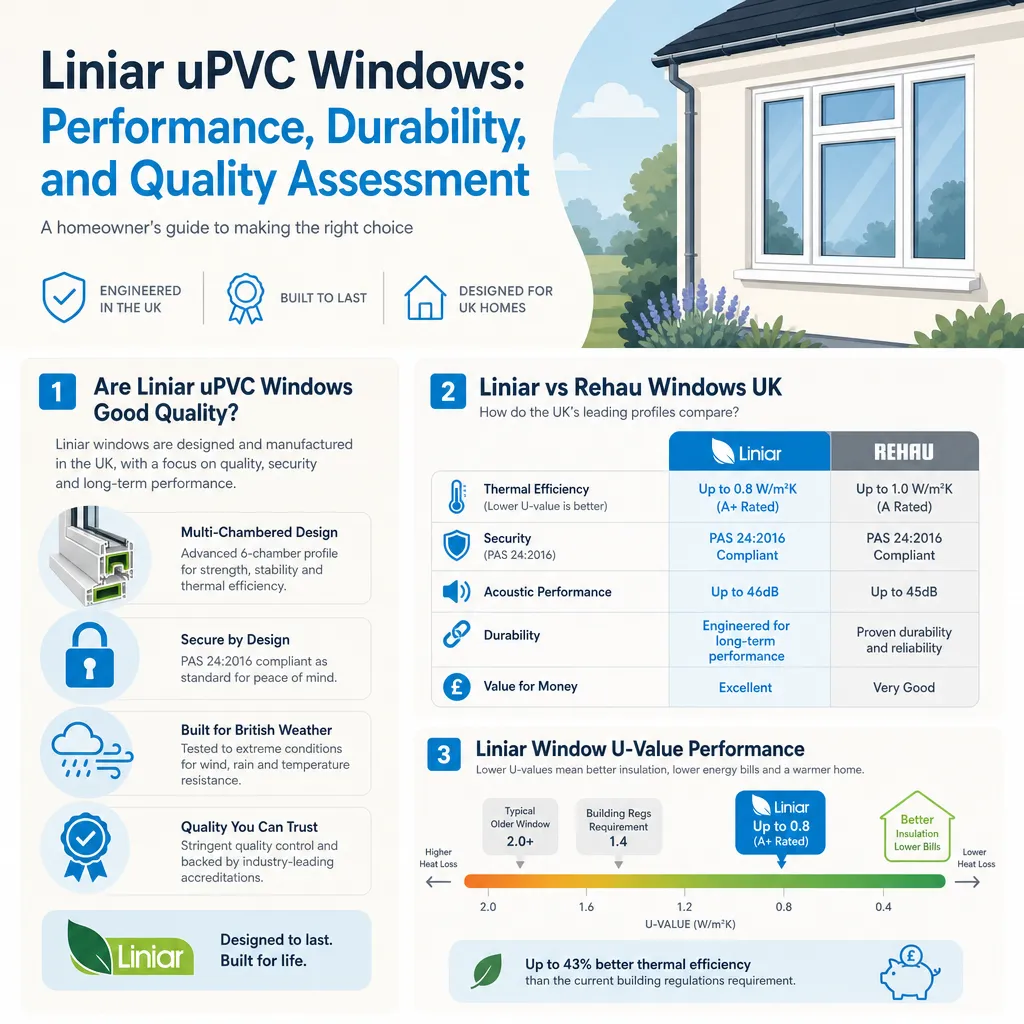
Liniar uPVC Windows: Performance, Durability, and Quality Assessment
Liniar uPVC window profiles are manufactured in the UK using multi-chambered, foamed frames.
 Improvement & Build
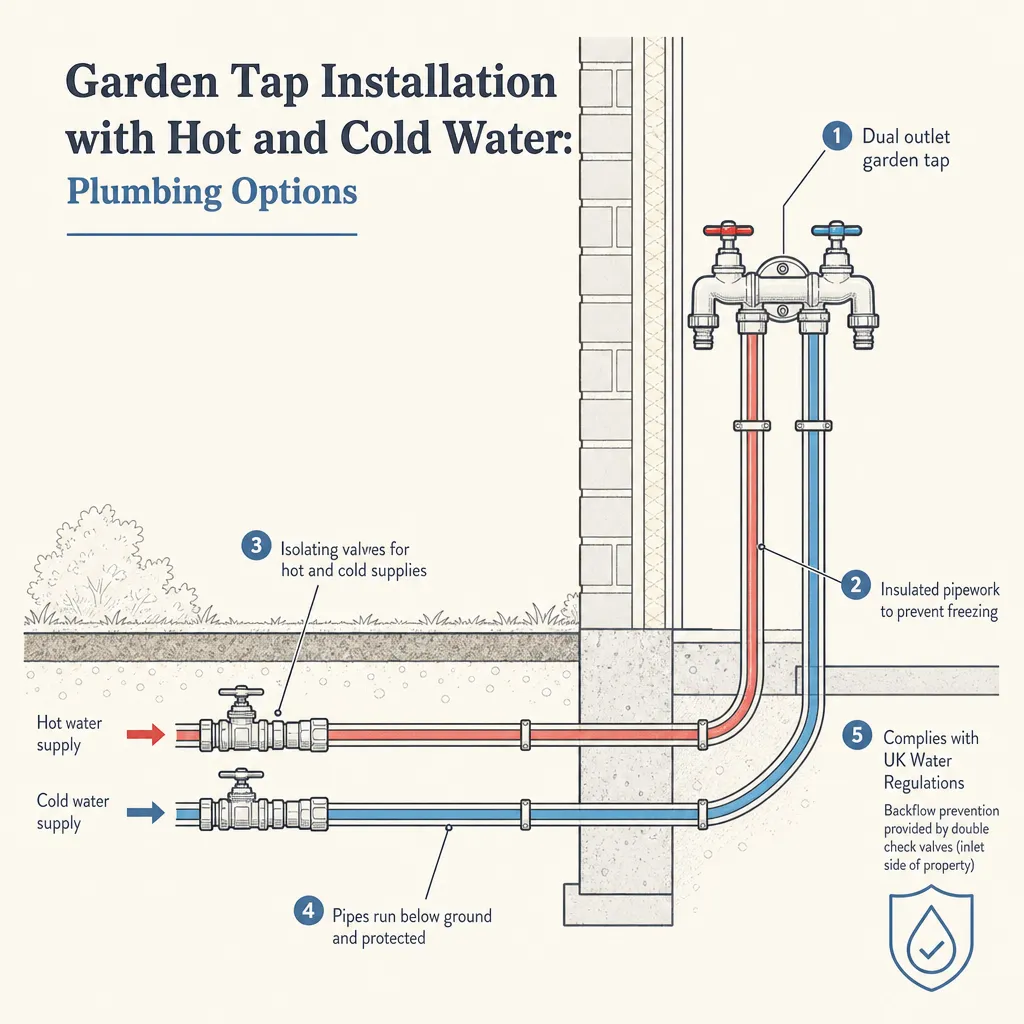
Garden Tap Installation with Hot and Cold Water: Plumbing Options
Adding a cold garden tap is a common DIY project, but routing hot water outdoors requires a plumber to connect to your domestic hot water system and comply with the Water Supply (Water Fittings) Regulations 1999.