UK Property Transformation Projects: Realistic Renovation Outcomes and Costs
By Housey · Last reviewed 17th of May 2026
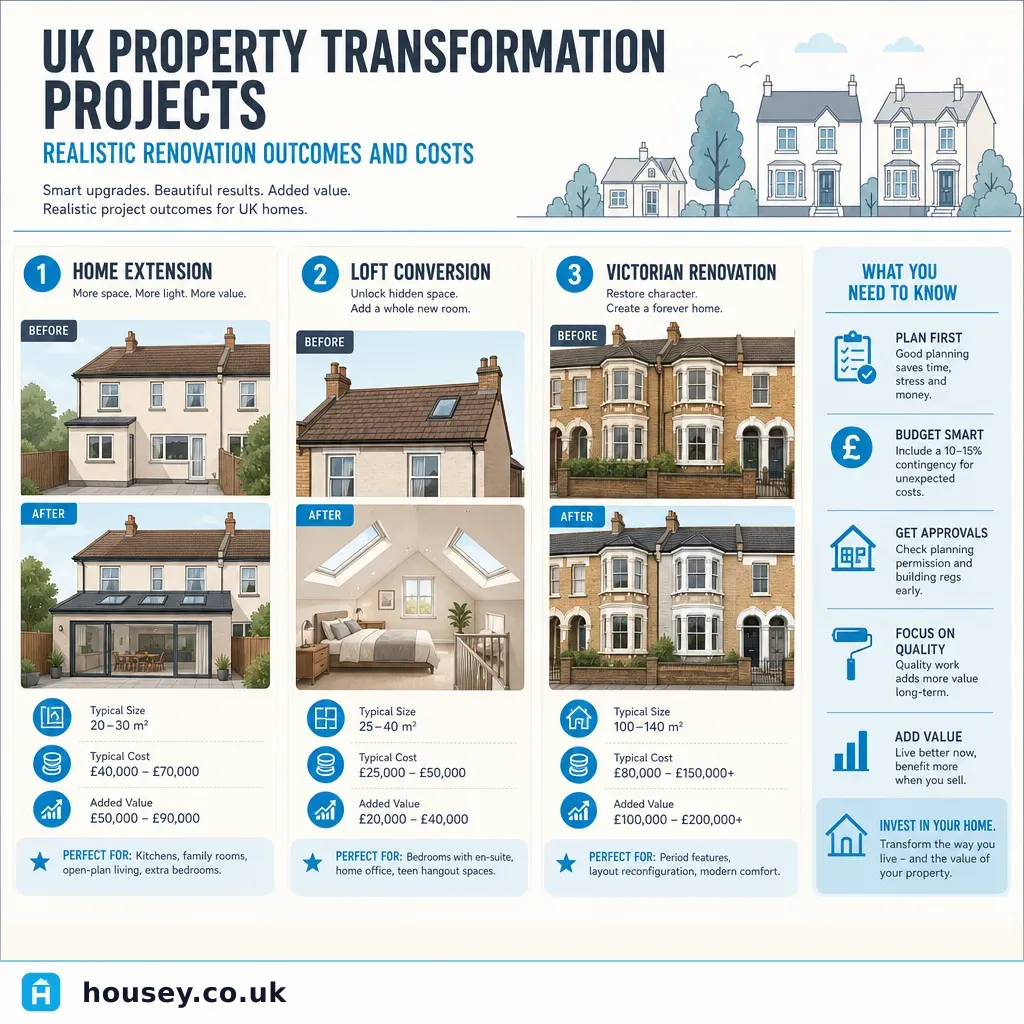
UK Property Transformation Projects: Realistic Renovation Outcomes and Costs
Home renovation in the UK spans a wide spectrum — from modest kitchen refits to whole-house transformations — and the gap between expectation and outcome is often wide in both directions. Understanding what realistic renovation projects actually deliver, how costs track against added value, and what separates successful projects from expensive disappointments helps any homeowner plan with clearer eyes. The scenarios below are representative of project types commonly undertaken across UK residential stock.
Key points
- Loft conversions typically add 10–20% to a UK property's market value, though returns vary significantly by location, property type, and specification.
- Single-storey rear extensions under 4m depth (detached) or 3m depth (semi-detached or terraced) often qualify as permitted development under Class A of the GPDO, avoiding a full planning application.
- Building Regulations approval — covering structure, fire safety, drainage, and insulation — is required for virtually all extensions and structural alterations regardless of planning status.
- Full house renovations on pre-1919 properties routinely uncover defects that add 10–25% to estimated build costs.
- A project manager or principal contractor holding a written programme and contract significantly reduces cost overrun and delay risk on projects exceeding six weeks.
What typical UK renovation projects actually achieve
The following are representative scenarios for project types common in UK residential stock. All costs are indicative, last reviewed 2026-05-17; actual quotes vary by region, specification, and site conditions.
Scenario 1: Victorian terraced house, full renovation
Before: A three-bedroom mid-terrace built circa 1895 in northern England. Original single-glazed sash windows, no cavity insulation (solid brick walls), an ageing boiler, a consumer unit replaced in the 1980s but now dated, no loft insulation, active rising damp in the ground-floor rear room, and a cracked chimney stack with open joints.
Works undertaken: Full rewire with a new consumer unit (certified by an NICEIC-registered electrician), new gas boiler and radiator system installed by a Gas Safe-registered engineer, solid-wall internal insulation to front and rear elevations, damp-proof injection treatment and replastering to affected ground-floor walls, sash windows replaced with double-glazed timber equivalents, chimney stack repointed and lead flashing renewed, and loft insulation brought to 270mm depth.
Outcome: EPC rating improved from E to C. Estimated annual heating cost reduction of approximately 35%, consistent with Energy Saving Trust published figures for solid-wall insulation. Property brought to a mortgageable and lettable standard.
Indicative total cost: £55,000–£75,000 including professional fees and building control. Indicative UK costs, last reviewed 2026-05-17.
What was not anticipated: Asbestos artex in a first-floor ceiling required specialist removal before plastering could proceed — approximately £1,200 additional cost. A cracked soil pipe beneath the ground-floor slab was identified during drainage investigations, adding a further £2,500 to the programme.
Scenario 2: 1930s semi-detached, rear extension and kitchen refurbishment
Before: A three-bedroom inter-war semi in the South East. Galley kitchen with poor natural light, no family dining space, and a rear garden accessible only via a ground-floor bedroom.
Works undertaken: Single-storey rear extension at 3.5m depth, qualifying as permitted development under Class A of the GPDO. Removal of the non-structural rear wall, full-width bifold doors to the garden, an open-plan kitchen-diner with a new kitchen installation, underfloor heating, and an airtight roof construction meeting current Building Regulations Part L requirements. A structural engineer's beam design was required for the enlarged internal opening.
Outcome: Usable ground-floor area increased by approximately 24m². Indicative value uplift in local market conditions: £40,000–£55,000. Indicative total build cost including kitchen supply and fit: £60,000–£80,000. Indicative UK costs, last reviewed 2026-05-17.
What was not anticipated: The structural beam required for the enlarged opening was heavier than the initial desktop calculation suggested, confirmed only after opening up on site. This added approximately £3,500 and two weeks to the programme.
Scenario 3: 1970s detached bungalow, dormer loft conversion
Before: A three-bedroom detached bungalow with an unused loft space. Low eaves height made a Velux-only conversion impractical for habitable use without a dormer.
Works undertaken: Rear dormer loft conversion with Velux rooflights to the rear pitch, a bedroom with en-suite shower room, and a new staircase rising from the existing landing. The dormer volume exceeded the permitted development threshold for this property and location, requiring a full householder planning application. Building Regulations approval was obtained via a private approved inspector.
Outcome: Property gains an additional bedroom with en-suite, effectively moving from three to four bedrooms. Indicative total cost: £45,000–£65,000. Indicative UK costs, last reviewed 2026-05-17.
What was not anticipated: The existing roof structure required significantly more strengthening than the initial assessment suggested — a known characteristic of lighter timber sections used in 1970s bungalow construction compared with modern standards.
Comparing UK renovation projects by type and outcome
Project type | Typical value uplift | Indicative cost range | Planning required? | Building Regs required? | Key professional |
|---|---|---|---|---|---|
Loft conversion — Velux only | 10–15% | £25,000–£45,000 | Usually no (PD) | Yes | Structural engineer, loft conversion company |
Loft conversion — dormer | 15–20% | £40,000–£70,000 | Often yes | Yes | Structural engineer, loft conversion company |
Single-storey rear extension | 5–15% | £35,000–£80,000+ | Often no (PD) | Yes | Structural engineer, extension builder |
Double-storey extension | 10–20% | £65,000–£150,000+ | Usually yes | Yes | Architect, structural engineer, extension builder |
Full house renovation (pre-1919) | Variable | £50,000–£150,000+ | Depends on scope | Yes | Project manager, all trades |
Garage conversion | 5–10% | £15,000–£30,000 | Often no (PD) | Yes | Builder, structural engineer |
Indicative UK costs, last reviewed 2026-05-17. Quotes vary significantly by location, specification, and site conditions.
What separates successful transformations from costly disappointments
Clear scope before contractor appointment. Homeowners who define the scope in writing — with drawings where relevant — before inviting tenders receive comparable quotes and fewer variation disputes. Those who scope on the fly tend to receive low initial quotes followed by escalating variation orders as the project progresses.
Structural and building control sign-off. Every project type in the scenarios above required structural input and building control approval. Skipping either creates problems at resale: buyers' solicitors routinely request building regulations completion certificates, and their absence can delay or derail a sale.
A written contract. For any project over approximately £10,000, a formal agreement — such as a JCT Homeowner Contract — protects both parties, sets payment terms, and defines the dispute resolution process. The Royal Institute of British Architects (RIBA) publishes a standard domestic building contract suitable for most renovation projects.
A realistic programme with contingency time. Projects on pre-1919 properties routinely run 10–20% longer than the initial programme due to unforeseen conditions. Building this into your expectations — rather than treating it as failure — is the more resilient approach to managing contractors and temporary living arrangements.
When to get professional help
Any project involving structural alterations — removal of load-bearing walls, changes to foundations, or roof structure modifications — requires a structural engineer's design and sign-off, not just a builder's reassurance. You should also instruct a project manager if:
- The project involves multiple trades working in sequence over more than eight weeks
- You are unable to be on site regularly to manage day-to-day decisions
- The property is listed or in a conservation area, requiring specialist planning and design input
- The overall project budget exceeds £50,000, where the cost of professional oversight is typically recovered through tighter contractor management
How Housey can help
Housey connects homeowners with the right professionals at every stage of a transformation project. Extension builders and loft conversion companies can provide feasibility assessments and tender proposals. For complex or multi-trade projects, a project manager coordinates the programme and protects your budget from the outset. Where structural alterations are planned, structural engineering input is available through the Housey network.
Frequently asked questions
How do I know if my renovation will add value?
Value added depends on the local market, the current condition of the property, and the quality of works. In most UK markets, bringing a property to good condition and adding usable floor space delivers measurable uplift, though the return rarely equals build cost pound for pound. Speak to a local estate agent for an indicative before-and-after valuation before committing to a large project.
Do I need an architect for a home extension?
Not always. For straightforward single-storey extensions, an architectural technologist or design-and-build contractor can produce drawings for planning and building regulations. For more complex projects, listed buildings, or where design quality is a priority, a RIBA-registered architect adds significant value — particularly at the design and planning stages, where good decisions have the most lasting impact on the finished project.
How long does a typical loft conversion take?
A straightforward Velux loft conversion on a three-bedroom semi typically takes eight to twelve weeks on site. A dormer requiring planning permission and structural works can take fourteen to twenty weeks, not including the planning determination period — typically eight weeks for a standard householder application. Factor planning time into your overall project timeline from the outset.
Can I live in the property during a full renovation?
For major renovations involving structural works, rewiring, and replastering, living on site is often impractical — particularly for families with young children. Many homeowners move into temporary accommodation for the main invasive phase. Budget for rental or storage costs within the overall project plan from the start, rather than treating them as unexpected additional costs.
Sources and further reading
- Planning Portal: common home improvement projects — Planning Portal
- Building Regulations Approved Documents — GOV.UK
- RIBA domestic building contract — Royal Institute of British Architects
- Solid wall insulation guidance — Energy Saving Trust
- RICS guides for the public — RICS
Useful next reads
 Improvement & Build
Georgian Property Renovation: A Complete Transformation Guide
Georgian property renovation requires working within heritage constraints.
 Improvement & Build
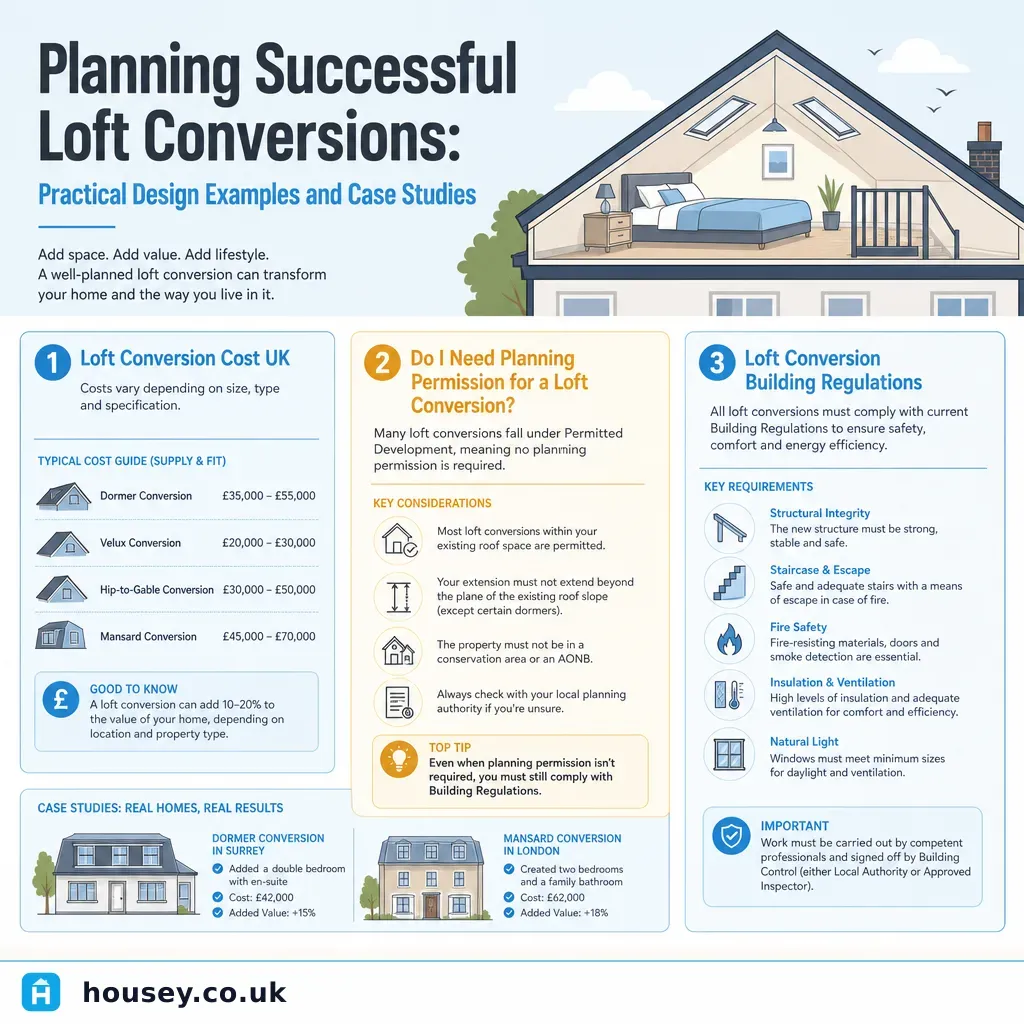
Planning Successful Loft Conversions: Practical Design Examples and Case Studies
Most UK loft conversions are permitted development and do not need planning permission, provided they remain within the volume allowances — 40 m³ for terraced houses and 50 m³ for detached or semi-detached properties.
 Improvement & Build
Designing urban outdoor spaces: professional garden ideas for city homes
Most urban garden redesigns don't need planning permission, but paving a front garden with impermeable materials over 5m² does.
 Improvement & Build
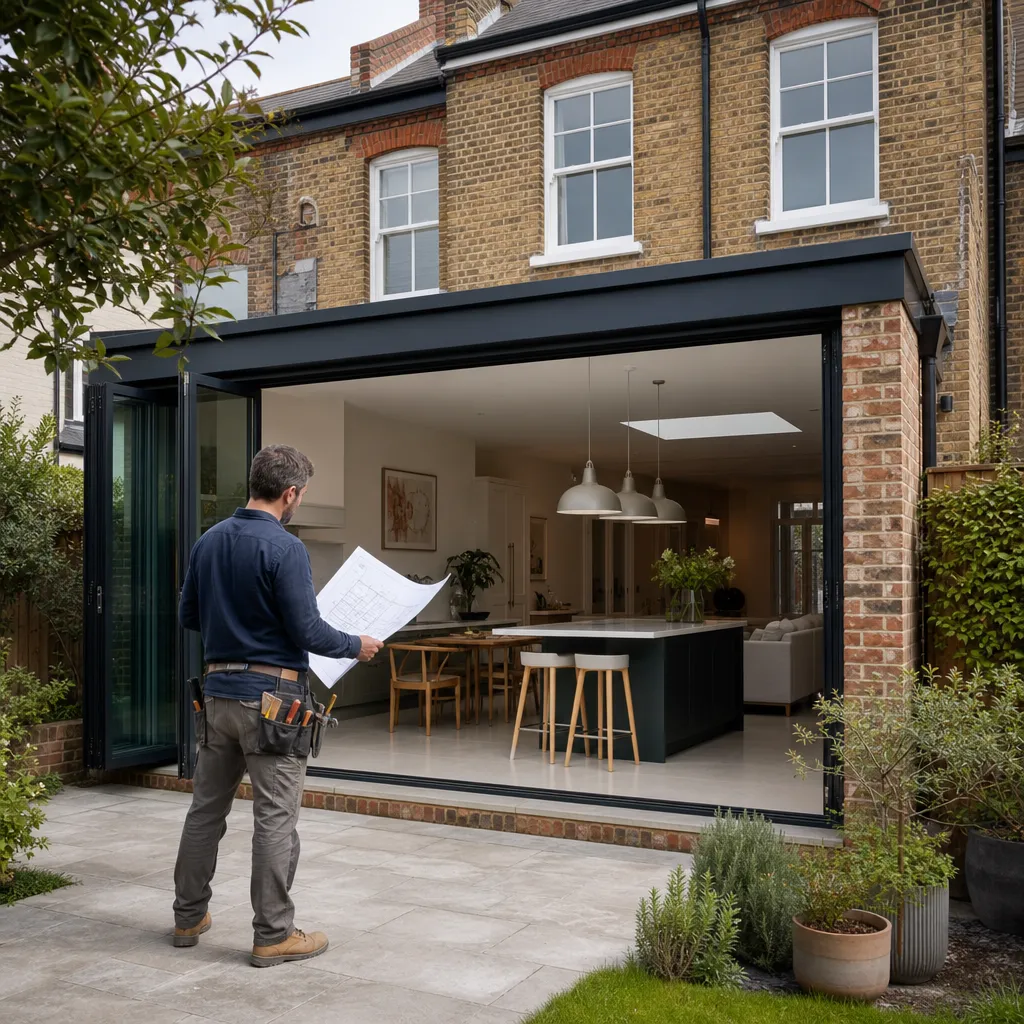
Renovation Case Studies: Learning From Successful Home Transformations
Real UK renovation projects follow common patterns: confirming planning and Building Regulations routes before work starts, commissioning drainage surveys on older properties, and retaining 5% of payment until snagging is resolved.
 Improvement & Build
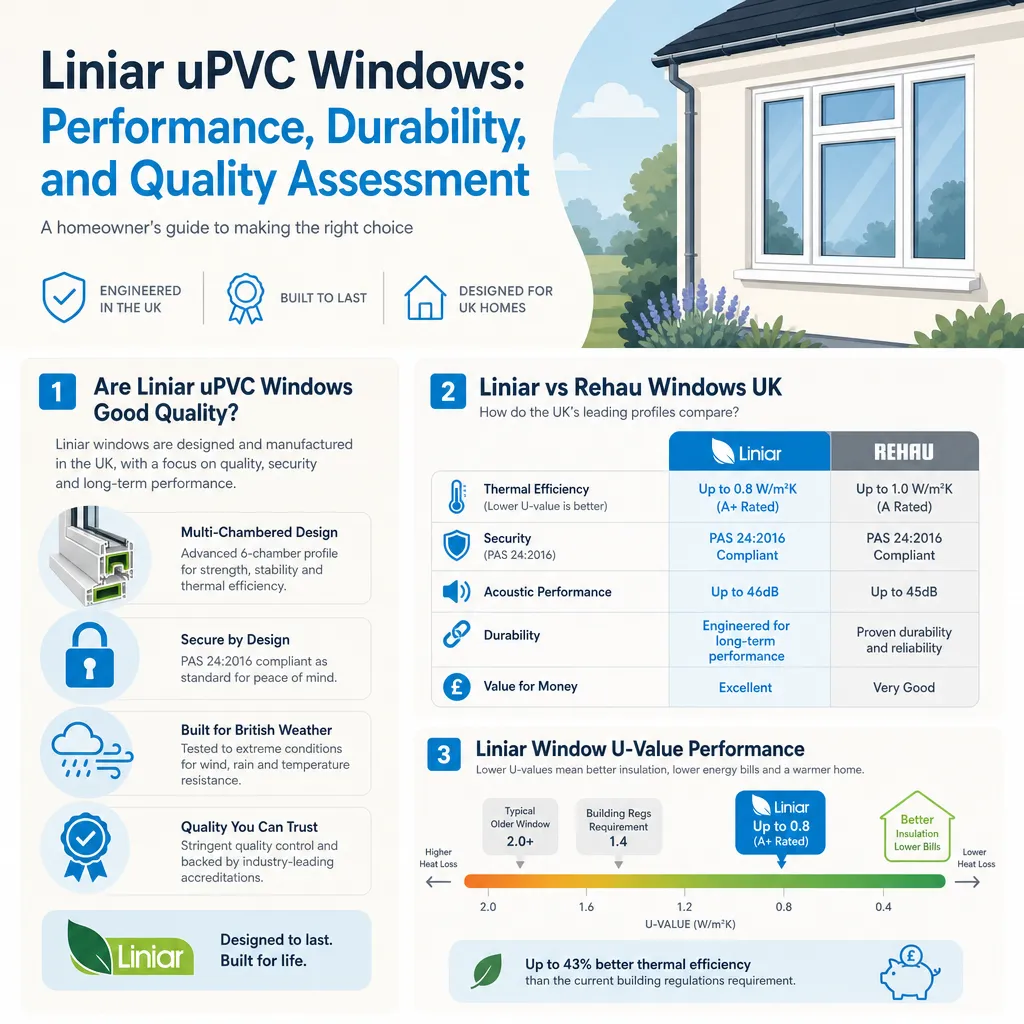
Liniar uPVC Windows: Performance, Durability, and Quality Assessment
Liniar uPVC window profiles are manufactured in the UK using multi-chambered, foamed frames.