Getting competitive solar panel quotes: how to compare and negotiate
By Housey · Last reviewed 12th of May 2026
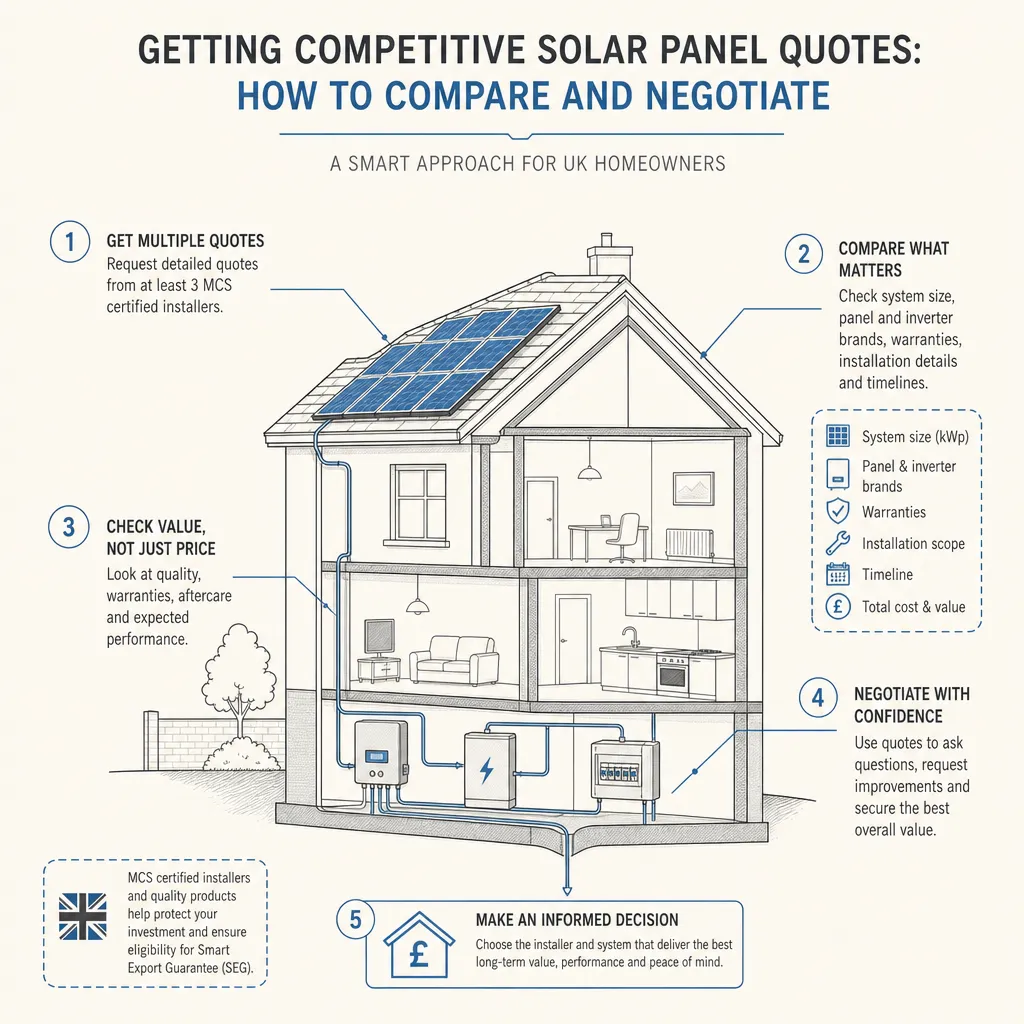
Getting competitive solar panel quotes: how to compare and negotiate
Commissioning solar panels is a significant purchase — typically £5,000–£10,000 for a residential system in the UK — and the quality of the installation matters as much as the headline price. Many homeowners collect two or three quotes but find them difficult to compare because each installer presents information differently, bundles components in different ways, or uses different assumptions about roof orientation and shading. Knowing what a compliant, comparable quote should contain puts you in a much stronger position before the quotes arrive.
Key points
- MCS (Microgeneration Certification Scheme) certification is required for installers whose customers want to claim the Smart Export Guarantee; always verify a potential installer's current MCS registration at mcscertified.com before engaging them.
- A compliant quote should specify panel brand, model, and wattage; inverter brand, model, and type; and mounting system — not just a headline system size in kWp.
- Quotes should include projected annual generation in kWh, calculated using the PVGIS tool or equivalent, with orientation, tilt, and shading assumptions stated.
- VAT on residential solar panel installations is 0% under current UK tax rules (as at May 2026); a quote that adds 20% VAT to the whole installation warrants clarification.
- Scaffolding, building control notifications, and DNO application fees may or may not be included — ask explicitly before comparing totals.
What should a solar panel quote include?
A professional, comparable solar quote should contain all of the following. If any element is missing, ask for it in writing before making a decision.
System specification:
- Panel brand, model number, wattage per panel, and total system capacity in kWp
- Inverter brand, model, type (string, hybrid, or microinverter), and warranty period
- Mounting system type and brand (roof tiles, flat roof, or in-roof)
- Battery storage specification if included (brand, capacity in kWh, chemistry type)
Performance projection:
- Estimated annual generation in kWh based on your roof's orientation, tilt, and any shading factors
- The tool or method used to calculate this (PVGIS is the standard for UK residential)
- Projected Smart Export Guarantee income, using a named tariff rate and your estimated export percentage
Costs and payment:
- Itemised breakdown covering panels, inverter, mounting, scaffolding, electrical work, monitoring, and commissioning
- Whether VAT is included (should be 0% for residential solar supply and installation in the UK)
- Payment schedule and deposit terms
Warranties and compliance:
- Panel performance warranty (typically 25 years), product warranty (typically 10–12 years), and workmanship warranty
- Inverter warranty (typically 5–10 years, with options to extend)
- Confirmation of MCS certification and the installer's MCS certificate number
- DNO (Distribution Network Operator) application — who handles it and whether the fee is included
Comparing quotes: what good looks like
Aspect | What to look for | Red flag |
|---|---|---|
Installer credentials | Current MCS registration verifiable on mcscertified.com | Claims MCS status without a verifiable registration number |
Component specification | Named brand and model for every major component | Specifies only tier-1 panels or a quality inverter without naming models |
Generation estimate | PVGIS or equivalent tool with assumptions stated | No kWh projection, or a projection with no stated methodology |
VAT | 0% on the supply and install of solar panels for residential properties | 20% VAT applied to the whole installation without explanation |
Scaffolding | Explicitly included or excluded with a cost stated | Not mentioned at all |
Workmanship warranty | At least 2 years; many reputable installers offer 5–10 | No workmanship warranty stated |
DNO application | Included in the service, or a clear process explained | No mention of DNO notification |
Quote comparison template
Because installers may propose different system sizes, panel counts, or inverter types, a like-for-like comparison requires adjustment. Use this template to compare quotes using consistent metrics:
| Quote A | Quote B | Quote C |
|---|---|---|---|
Installer (MCS number) |
|
|
|
Total system size (kWp) |
|
|
|
Number of panels |
|
|
|
Panel brand and model |
|
|
|
Inverter brand and model |
|
|
|
Battery included? |
|
|
|
Projected annual output (kWh) |
|
|
|
Estimated SEG income (£/yr) |
|
|
|
Total quoted price (inc. scaffolding, DNO) |
|
|
|
Cost per kWp (£) |
|
|
|
Panel performance warranty |
|
|
|
Inverter warranty |
|
|
|
Workmanship warranty |
|
|
|
Deposit required |
|
|
|
The most reliable comparison metric is cost per kWp installed alongside the projected payback period.
What to ask before accepting a quote
- What MCS certificate number will appear on my installation certificate after the work is completed?
- Which company will carry out the installation — is any part of the work subcontracted?
- How was the projected annual generation figure calculated, and what orientation and shading assumptions have been made for my specific roof?
- Is scaffolding included in the price, and how long will it be on site?
- Who submits the DNO application, and is the application fee included in the quote?
- What workmanship warranty is provided, and who backs it if the company changes ownership or ceases trading?
- When is the balance due, and what consumer protections apply to my deposit?
- What monitoring system is included, and can I access generation data remotely?
- What happens if unexpected roof conditions are found on installation day?
Negotiating solar panel quotes
Solar installation is a competitive market in most UK regions. Negotiation is reasonable, but focus on total value rather than simply driving the price down:
- Ask for an itemised breakdown — this reveals where the cost sits and whether a cheaper alternative component would represent good value or introduce a warranty risk.
- Compare warranties and after-sales support, not just the headline price. An installer who includes a 10-year workmanship warranty and provides ongoing monitoring support may be worth a modest premium.
- Treat very low outliers with caution. Quotes significantly below the market norm often indicate lower-quality components, subcontracted labour with less accountability, or costs not bundled in such as scaffolding or DNO fees.
- Ask whether the price is the same for BACS payment — some installers add a surcharge for credit or debit card transactions.
- Check consumer finance terms carefully if offered. Interest-bearing finance increases the total cost; review any 0% finance offer for conditions or balloon payments attached.
When to get professional help
If you are uncertain whether your roof is suitable, want an independent view of a system specification before committing, or are considering a more complex installation — ground-mounted arrays, flat roofs, east-west split configurations, or battery integration — an independent solar survey can give you a professional assessment before you sign any contract.
How Housey can help
Before committing to an installation, Housey's solar surveys service can connect you with independent specialists who assess your roof's suitability, recommend appropriate system sizing, and give you an informed basis for evaluating installer quotes.
Frequently asked questions
How many quotes should I get for solar panel installation?
At least three quotes from MCS-certified installers is the commonly recommended minimum. This gives you enough data to identify outliers without the process becoming unmanageable. Check each installer's current MCS registration independently on the MCS website before engaging them, as registrations can lapse or be suspended.
Is VAT charged on solar panel installation in the UK?
Residential solar panel supply and installation is currently rated at 0% VAT in the UK under relief introduced in April 2022 and extended in subsequent budgets. If a quote includes 20% VAT on the main installation, query this with the installer, though VAT may legitimately apply to certain ancillary services.
What is the Smart Export Guarantee?
The Smart Export Guarantee requires licensed energy suppliers with more than 150,000 customers to offer a tariff for excess solar electricity exported to the grid. To be eligible, your installer must hold MCS certification. SEG tariff rates vary between suppliers, so compare available rates after installation.
Should I worry about an installer who subcontracts the work?
Not necessarily, but verify who holds the MCS certification — it must be the company whose name appears on the MCS certificate. Confirm that the workmanship warranty is with the company you contracted, not solely with the subcontractor, and get this confirmed in writing before signing.
What deposit is reasonable for solar panel installation?
A deposit of 10 to 25 per cent of the total cost is typical. Be cautious of any installer requesting the full amount upfront. Paying by credit card for deposits over £100 may give you additional protection under Section 75 of the Consumer Credit Act 1974.
Sources and further reading
- MCS — find a certified installer — MCS
- GOV.UK — Smart Export Guarantee — GOV.UK
- PVGIS solar irradiance tool — European Commission
- Energy Saving Trust — solar panel costs — Energy Saving Trust
- Citizens Advice — solar panels — Citizens Advice
- GOV.UK — VAT on energy-saving materials — HMRC / GOV.UK
Useful next reads
 Energy & Retrofit
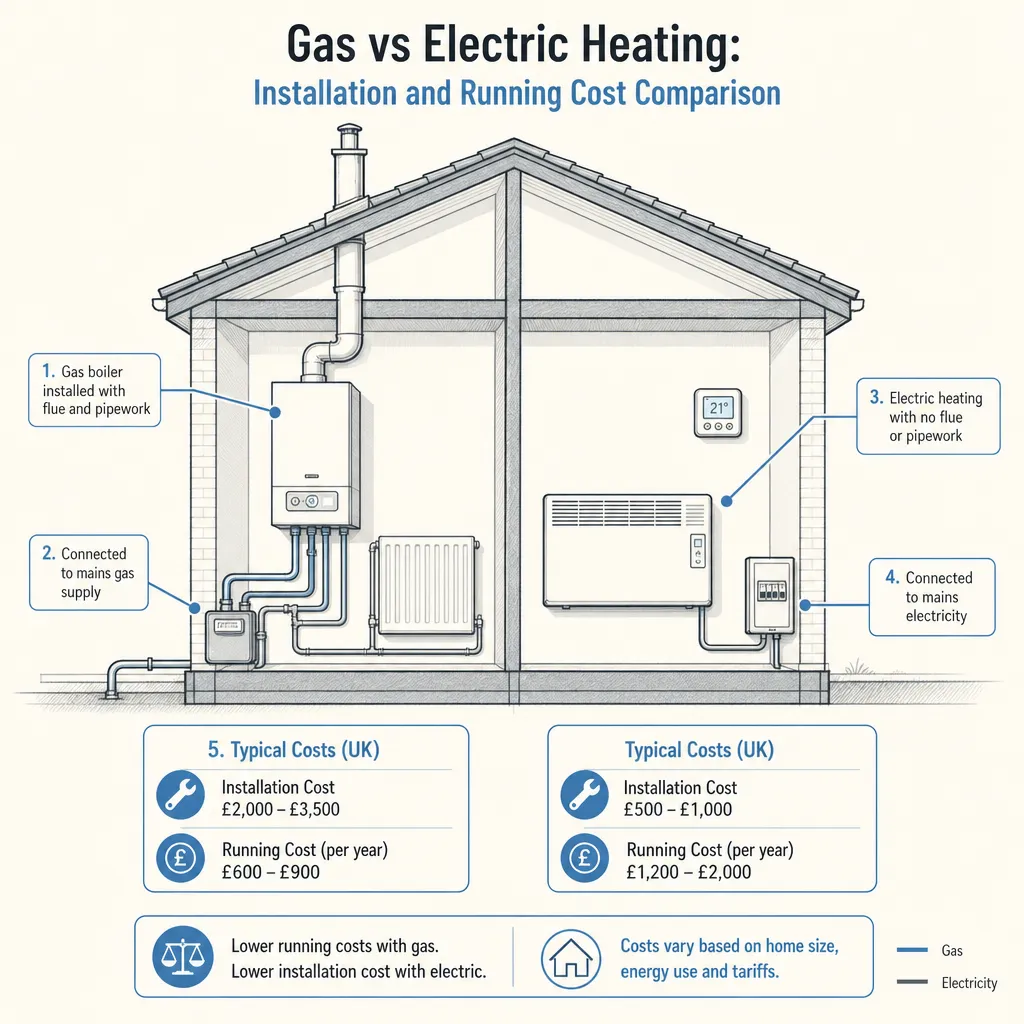
Gas vs Electric Heating: Installation and Running Cost Comparison
Gas central heating usually has lower running costs per kWh than direct electric heating in the UK, though heat pumps can change that equation.
 Energy & Retrofit
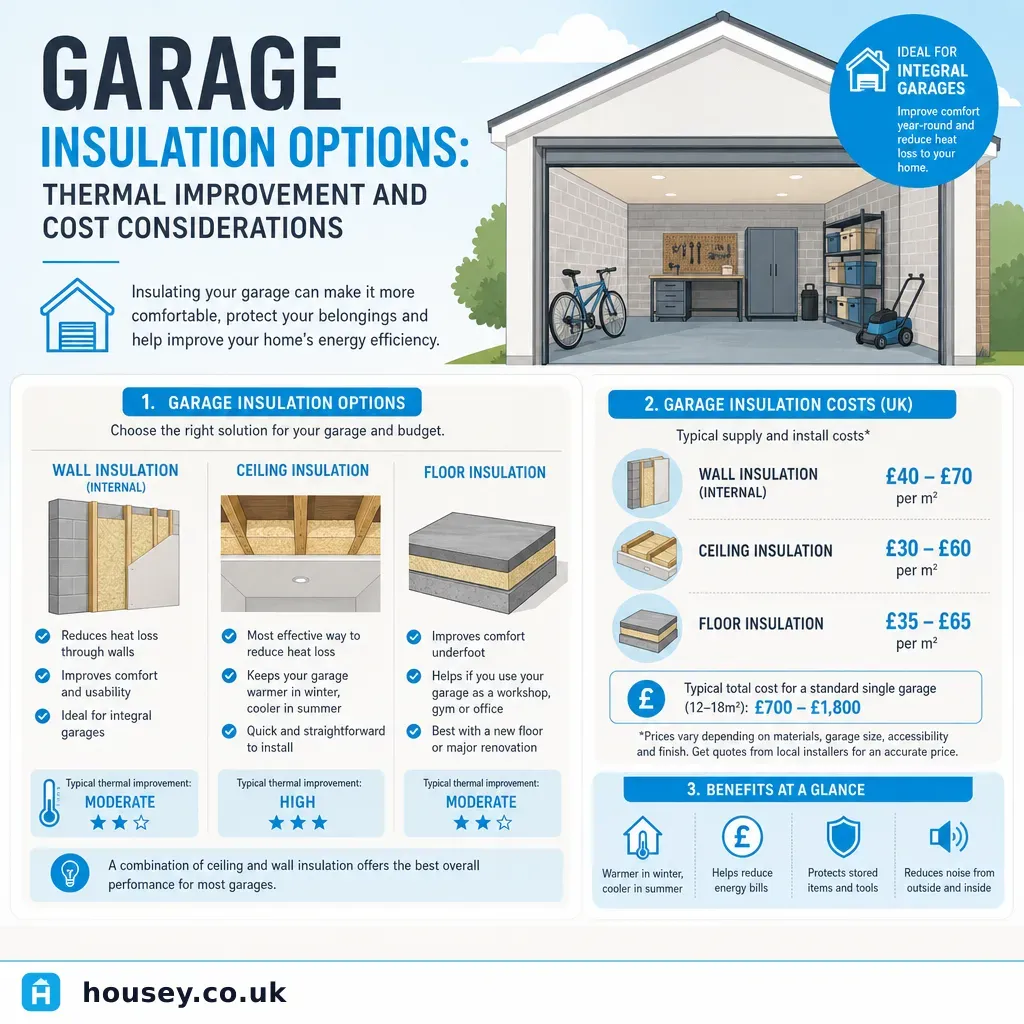
Garage Insulation Options: Thermal Improvement and Cost Considerations
Garage insulation options in the UK include mineral wool batts, rigid foam boards (PIR or EPS), and insulated garage doors.
 Energy & Retrofit
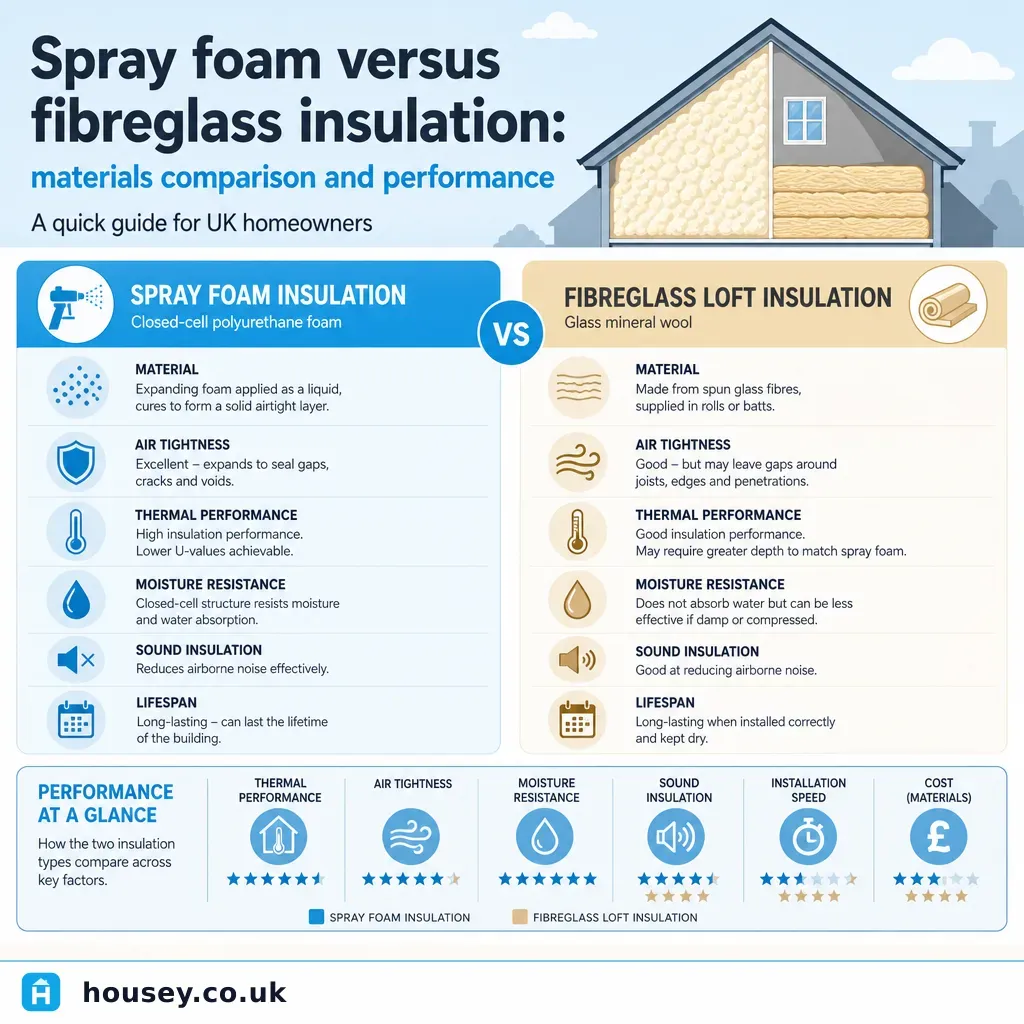
Spray foam versus fibreglass insulation: materials comparison and performance
Spray foam insulation offers higher thermal performance per centimetre than fibreglass, but in UK homes it carries significant mortgage and resale risks when applied to roof timbers.
 Energy & Retrofit
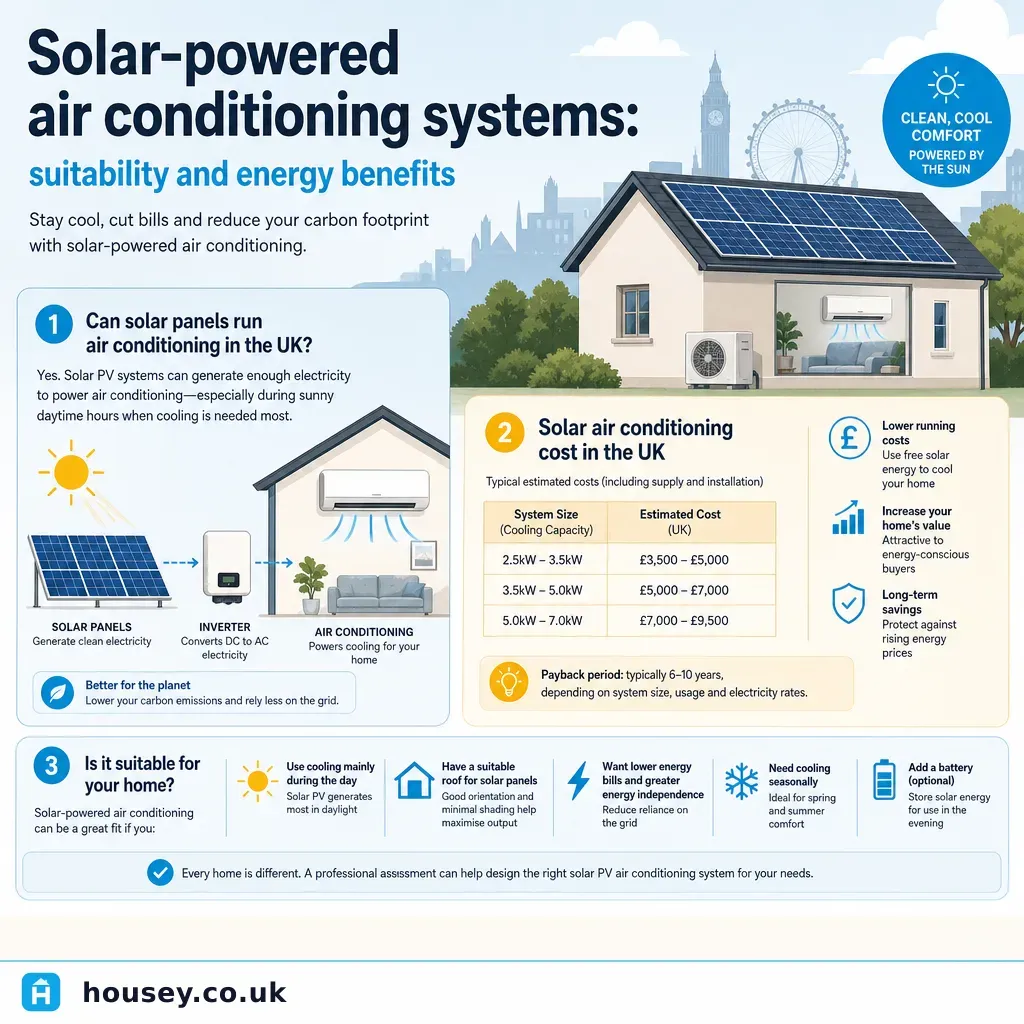
Solar-powered air conditioning systems: suitability and energy benefits
Solar-powered air conditioning pairs photovoltaic panels with an inverter-driven air conditioning unit to cool a home using renewable electricity.
 Energy & Retrofit
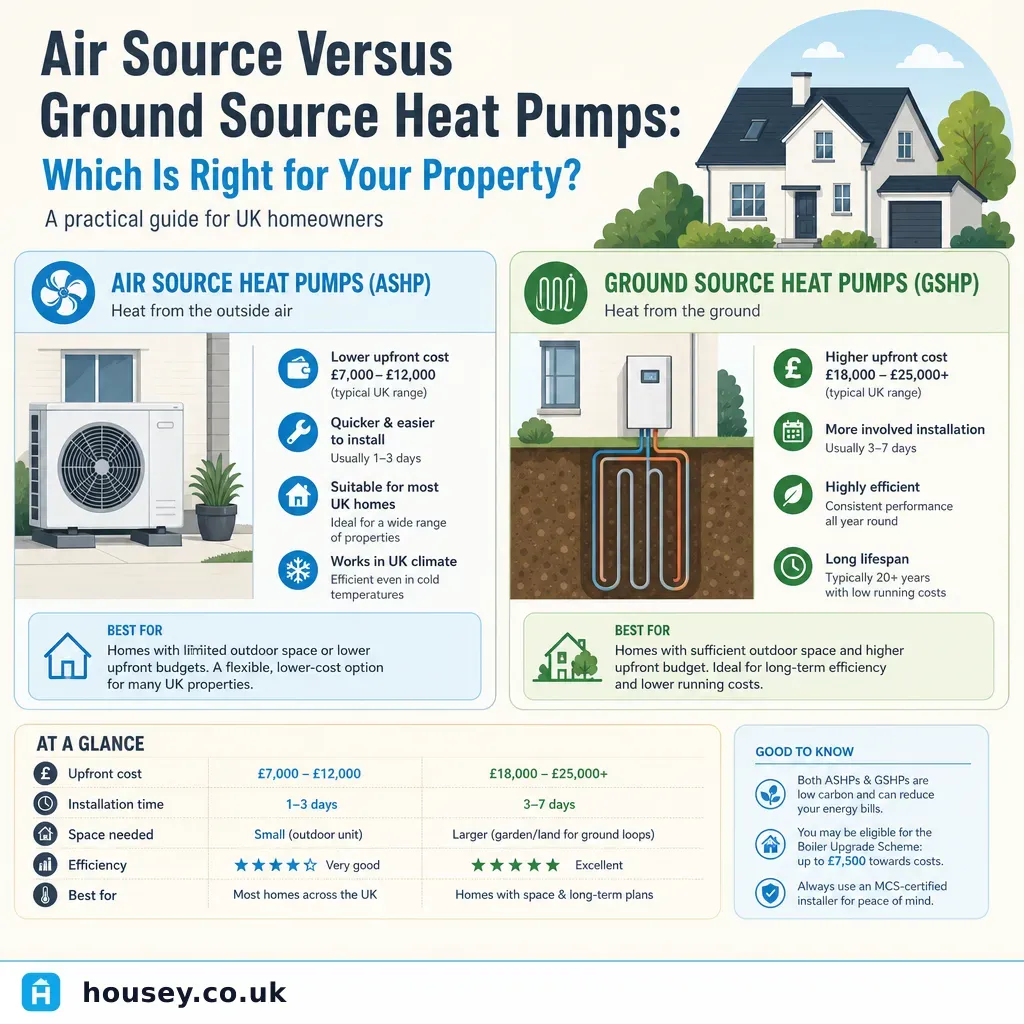
Air Source Versus Ground Source Heat Pumps: Which Is Right for Your Property?
Air source heat pumps (ASHPs) suit most UK properties with modest land requirements and faster installation, while ground source heat pumps (GSHPs) offer higher year-round efficiency but need significant land or borehole drilling and cost considerably more.