Glass Extension Structures: Design and Building Considerations
By Housey · Last reviewed 11th of May 2026
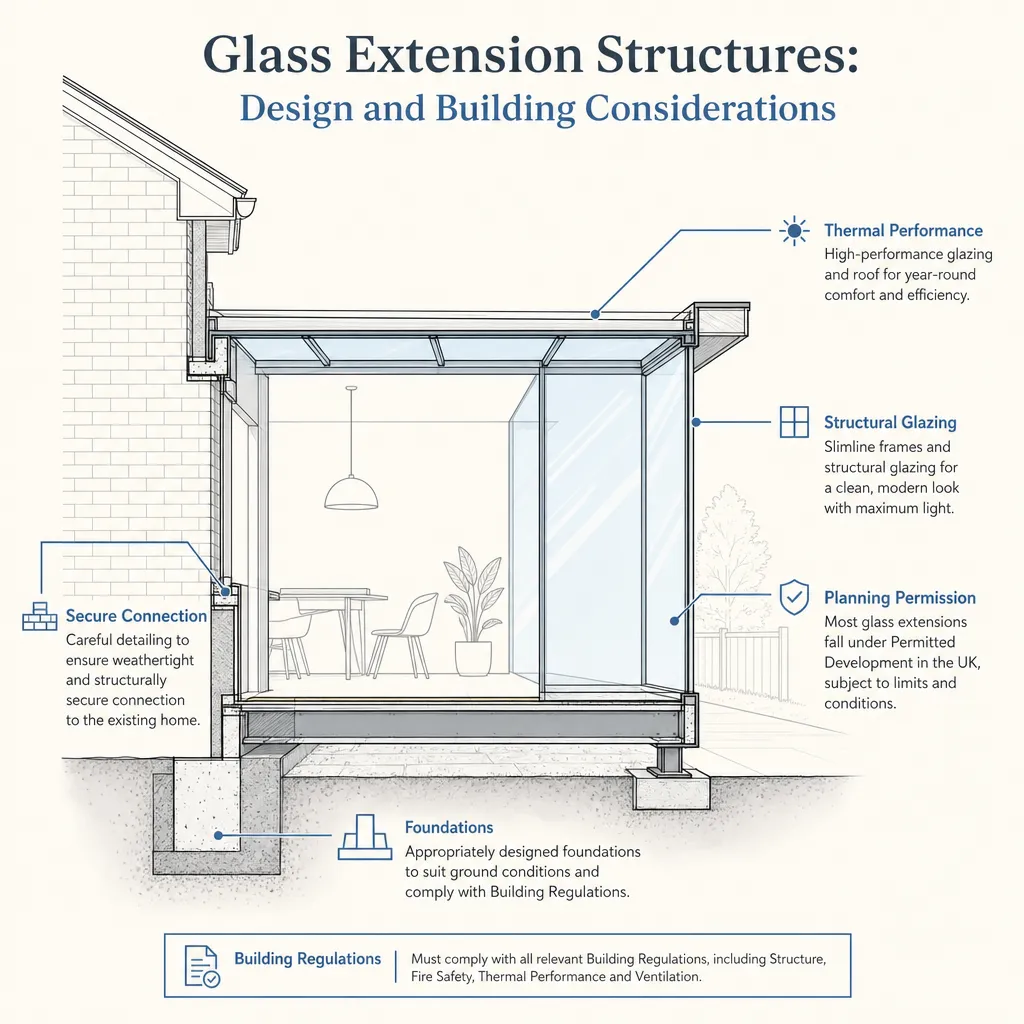
Glass Extension Structures: Design and Building Considerations
A glass extension — whether a full glass box at the rear of a period terraced house or a contemporary glazed link connecting the main home to an outbuilding — is one of the more architecturally ambitious additions a UK homeowner can make. Questions about design and planning typically arise when a homeowner wants to maximise natural light, create a strong visual connection to the garden, or add a contemporary accent to an older property. The structural and thermal demands of large-span glazing make this a more technically complex undertaking than a masonry or timber-frame extension, and the consequences of poor specification can include condensation, overheating, heat loss, or structural failure.
Key points
- Single-storey rear extensions under 4 m deep (detached houses) or 3 m (semi-detached or terraced) generally qualify as permitted development in England, but glazed structures on listed buildings and in conservation areas almost always require full planning permission.
- Building Regulations Approved Document L (2021 edition) requires new glazing to meet a maximum U-value of 1.6 W/m²K for windows and 1.8 W/m²K for rooflights; poorly specified glass units can make a glass extension thermally non-compliant.
- Structural glazed façades and glass roofs require engineer-certified calculations under BS EN 1991 (Eurocode 1) for wind and snow loading.
- Safety glass — toughened to BS EN 12150 or laminated to BS EN ISO 12543 — is mandatory for overhead glazing, glass near floor level, and doors.
- Frameless structural glazing typically uses 12–19 mm toughened or laminated glass, where the glass itself acts as part of the load-bearing structure and must be designed by a structural engineer.
What qualifies as a glass extension?
Glass extensions range from the modest to the highly engineered. Common types include:
- Glass box extension: a fully glazed room addition, often with a flat or pitched structural glass roof and frameless or slim-framed walls. Widely used on Victorian and Edwardian terrace rears.
- Glazed link: a glass corridor or covered walkway connecting the main house to a garden room, garage, or converted outbuilding.
- Orangery with glazed lantern roof: a masonry-walled structure with a central glazed roof panel — a hybrid between a traditional conservatory and a full glass extension.
- Contemporary glazed extension: designed from the outset to meet Part L thermal performance standards and function as a permanent habitable room, not a seasonal annexe.
The distinction between a conservatory and a habitable glass extension matters because the traditional Building Regulations conservatory exemption (which applied to structures separated from the main dwelling by external-quality walls and doors) does not apply to spaces intended as year-round living accommodation. Any glazed room intended for permanent occupation must meet Building Regulations in full.
Planning permission for glass extensions
In England, most single-storey rear glass extensions can be built under permitted development (PD) rights under Schedule 2, Part 1 of the Town and Country Planning (General Permitted Development) (England) Order 2015. Key conditions include:
- Maximum depth of 4 m for detached houses, 3 m for other dwellings (extendable to 8 m/6 m under the Neighbour Consultation Scheme if no objection is received)
- Maximum height of 4 m (or 3 m if within 2 m of a boundary)
- No extension beyond the principal elevation
- Materials should be of similar appearance to the existing house — a condition that can attract scrutiny when all-glass structures are proposed on traditional properties
Permitted development rights are removed or restricted in the following situations:
Situation | Planning status |
|---|---|
Listed building | Full planning permission and Listed Building Consent both required |
Conservation area | PD limited; extensions on principal and side elevations require planning permission |
Article 4 direction | PD rights removed by local authority; check with your LPA |
Flat or maisonette | No PD rights for extensions |
New-build with PD removed by planning condition | Check original planning permission conditions before proceeding |
Always verify with your local planning authority (LPA) before starting work. The Planning Portal interactive house tool is a useful first check.
Building Regulations for glass structures
Building Regulations approval is required for any glass extension intended as habitable accommodation. Key Approved Documents that apply:
- Part A (Structure): the structural frame, glass panels, and connections must be engineered to support wind, snow, self-weight, and imposed loads.
- Part L (Energy efficiency): maximum U-values for glazing — 1.6 W/m²K for walls and windows, 1.8 W/m²K for rooflights (Approved Document L 2021). Whole-dwelling energy assessment may be triggered for larger extensions.
- Part K (Protection from falling): overhead glazing and glass near floor level must use safety glass complying with BS EN 12150 or BS EN ISO 12543.
- Part B (Fire safety): glazing near a boundary may need to be fire-rated; check the 1 m distance rules in Approved Document B.
- Part O (Overheating): applies to new dwellings; for extensions, architects and Part L assessors should model solar gain, particularly for south- and west-facing glass elevations.
Building control must approve drawings before work begins, and a completion certificate is issued after sign-off. Failure to obtain a completion certificate can complicate future mortgage applications and property sales.
Structural and thermal glass specifications
The choice of glass unit significantly affects both thermal compliance and structural performance.
Glass type | Typical U-value | Best for | Key limitation |
|---|---|---|---|
Single-pane toughened | ~5.6 W/m²K | Heritage conservatories (restricted use) | Fails Part L for habitable rooms |
Standard double-glazed unit | ~2.8–3.0 W/m²K | Budget or older-style frames | Usually fails Part L for rooflights |
Low-E double-glazed unit | ~1.4–1.6 W/m²K | Vertical glazing in Part L-compliant extensions | Common in slim aluminium and timber frame systems |
Triple-glazed unit | ~0.8–1.0 W/m²K | High-performance or Passivhaus extensions | Heavier; requires stronger structural frame |
Structural laminated glass (frameless systems) | Varies by spec | Glass box extensions and structural roofs | Must be designed by a structural engineer; typically 12–19 mm |
Thermal comfort and overheating
Large areas of south- or west-facing glass can cause significant overheating in summer — a common complaint in all-glass extensions. Mitigation options include solar control glass with a low g-value (solar factor), automated internal or external blinds, external louvres, or adequate openable glazing area for cross-ventilation. These considerations should be addressed at design stage, not as an afterthought once the structure is built.
Red flags to watch for
- A quote that does not mention structural engineering calculations or Building Regulations drawings.
- Frameless glazing systems specified without a named structural engineer attached to the project.
- Any reference to "conservatory exemption" for a space intended as a habitable room.
- Glazing specified without reference to U-value — a common oversight with rooflights.
- No mention of overheating risk or Part O in south- or west-facing designs.
- Solar-control glass omitted from a fully south- or west-facing all-glass elevation.
- Quotes that do not separate structural, glazing, and building control costs.
Important limitations
This article provides general guidance on glass extension design and regulation as at May 2026. Planning rules, Building Regulations, and structural requirements depend on your specific property, local authority policies, site constraints, and construction details. Nothing here constitutes engineering, planning, or legal advice.
A structural engineer must assess any frameless or structurally glazed system before it is specified. Consult your local planning authority before relying on permitted development rights, particularly if the property is listed, in a conservation area, or on an estate where PD rights may have been removed by condition.
What to ask a qualified professional
Before appointing an architect, structural engineer, or extension builder for a glass extension, ask:
- Will you handle Building Regulations drawings and coordinate building control sign-off?
- Which structural engineer is responsible for the glass and frame specification?
- What U-values do you intend to achieve for walls, rooflights, and the floor, and how will Part L compliance be demonstrated?
- What safety glass specification will be used for overhead and low-level glazing, and how does it comply with Part K?
- How will solar gain and overheating be managed given this property's orientation?
- Is permitted development sufficient for this design, or do you recommend a pre-application discussion with the LPA?
- Are there fire-rating requirements given the proximity to the boundary or neighbouring property?
- What completion documentation will I receive, and who retains liability for the structural calculations?
When to get professional help
Always instruct a structural engineer if the glass extension involves any frameless, post-and-beam, or point-fixed glazing system — these are not standard trade skills. Contact a planning consultant or architect before proceeding if the property is listed, in a conservation area, or if there is any uncertainty about whether permitted development rights apply. Never begin groundworks or frame erection without Building Regulations approval in place.
How Housey can help
Housey can connect you with qualified practices for structural engineering specialising in glazed structures, as well as experienced extension builders with track records on contemporary glass additions to UK homes. Whether you are at the design brief stage or ready to appoint a contractor, our network includes professionals who can take a glass extension from concept through to building control sign-off.
Frequently asked questions
Do I need planning permission for a glass extension in England?
Not always. Most single-storey rear glass extensions on houses in England qualify as permitted development, subject to size and design limits. Exceptions include listed buildings, conservation areas, flats, and properties where permitted development rights have been removed by a planning condition. Always verify with your local planning authority before starting work, as enforcement action can require demolition.
Does a glass extension need Building Regulations approval?
Yes, if it is intended as a habitable room or year-round living space. The traditional conservatory exemption does not apply to spaces designed for permanent occupation. Building Regulations approval covers structural integrity, thermal performance under Part L, fire safety under Part B, and safety glazing requirements under Part K. A completion certificate is needed for future mortgage and sale purposes.
How much does a glass extension cost in the UK?
Indicative UK costs, last reviewed 2026-05-11. A single-storey glass extension typically starts at £1,500–£2,500 per m² for a framed system, rising to £3,000–£5,000+ per m² for bespoke frameless or structural glass systems. Costs vary by region, glazing specification, access constraints, and ground conditions. Always obtain at least three detailed quotes with itemised structural and glazing costs.
Can I use a conservatory company for a glass extension?
Some conservatory companies have the capability to deliver Part L-compliant glass extensions, but many specialise in traditional conservatories and may not be familiar with Building Regulations compliance for habitable rooms, structural engineering sign-off, or Part O overheating assessments. Confirm whether the company can provide Part L calculations, has a structural engineer on the project, and will obtain a building control completion certificate.
Sources and further reading
Useful next reads
 Improvement & Build
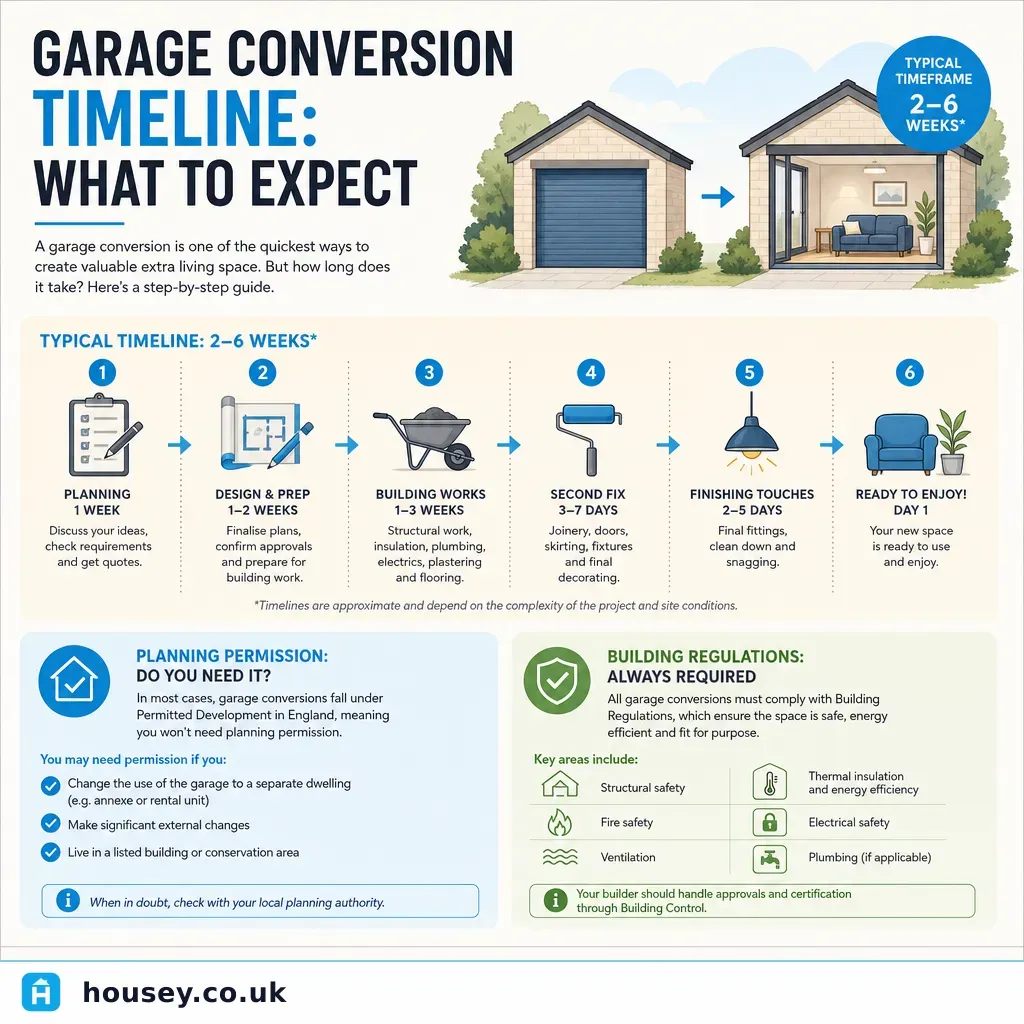
Garage Conversion Timeline: What to Expect
A straightforward attached garage conversion in England usually takes 4–8 weeks of construction, plus pre-start time for building control approval (5 working days for Full Plans).
 Improvement & Build
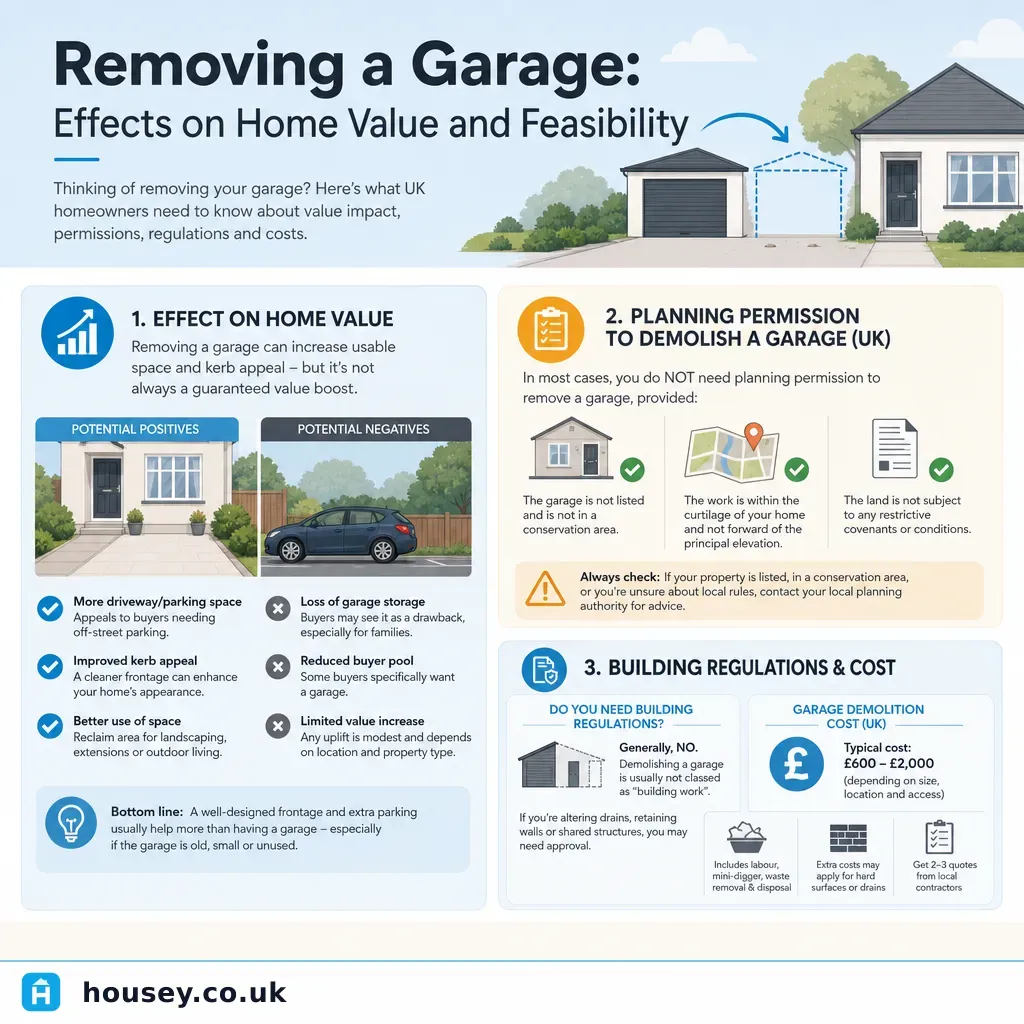
Removing a Garage: Effects on Home Value and Feasibility
Demolishing a garage in England may require prior notification to the local planning authority, and structural or building regulations assessments are often needed if the garage is attached to or integral with the house.
 Improvement & Build
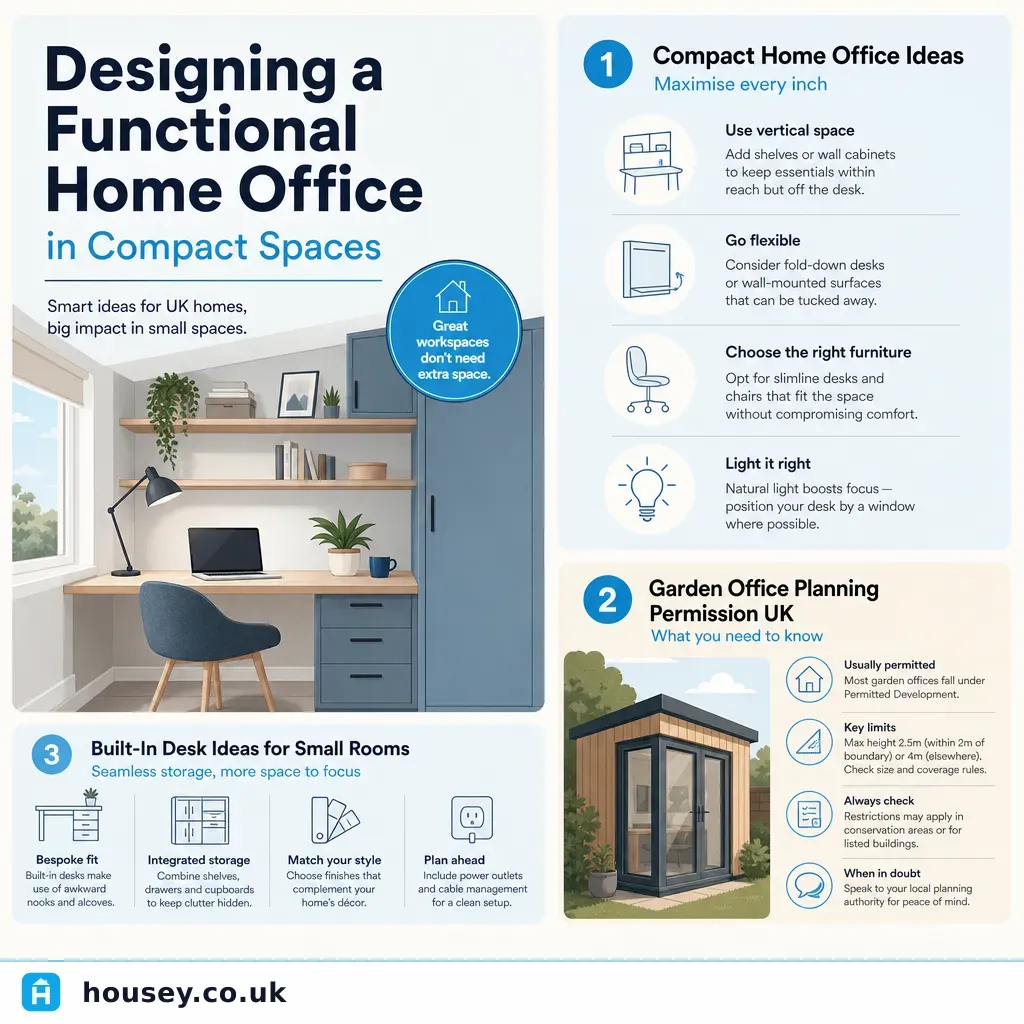
Designing a Functional Home Office in Compact Spaces
A functional compact home office needs a clearly defined workspace, ergonomic seating, and good lighting — even in a small footprint.
 Improvement & Build
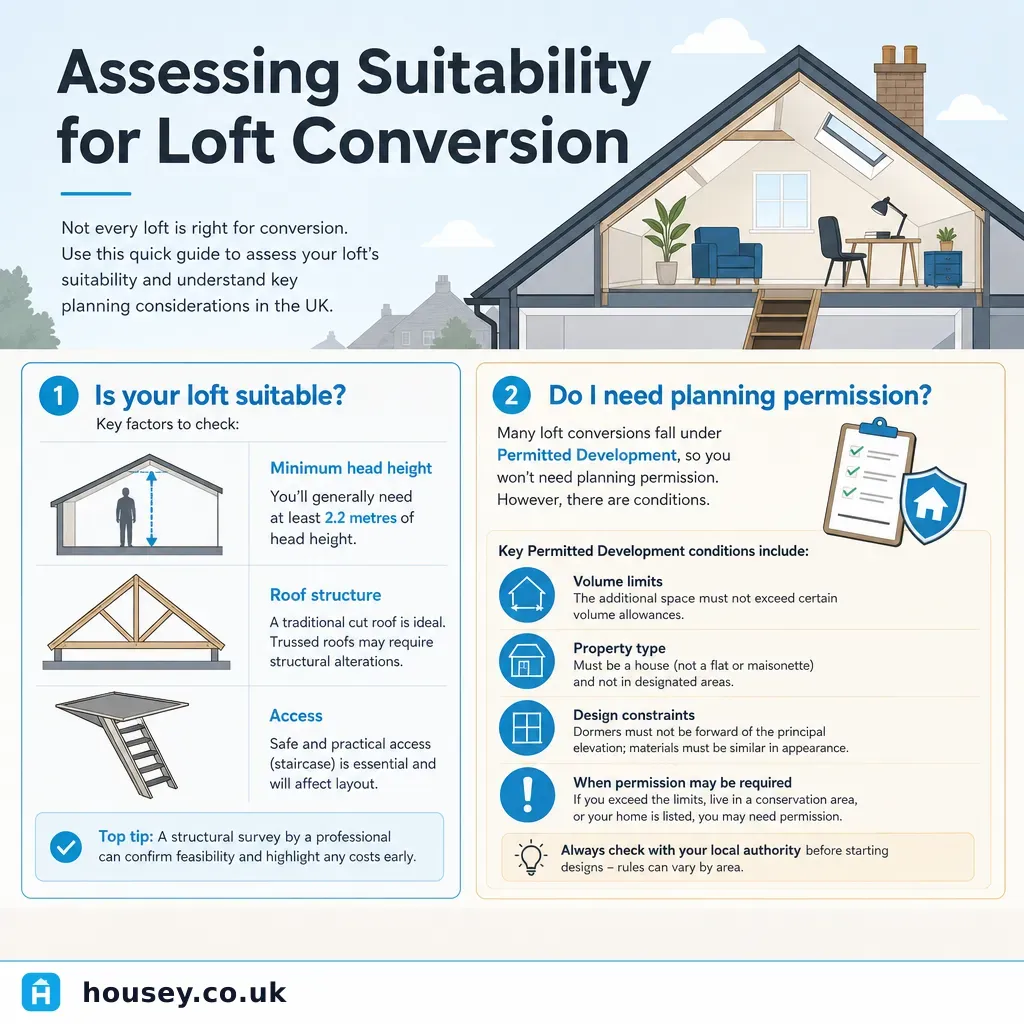
Assessing Suitability for Loft Conversion
Most loft conversions need a minimum ridge height of around 2.
 Improvement & Build
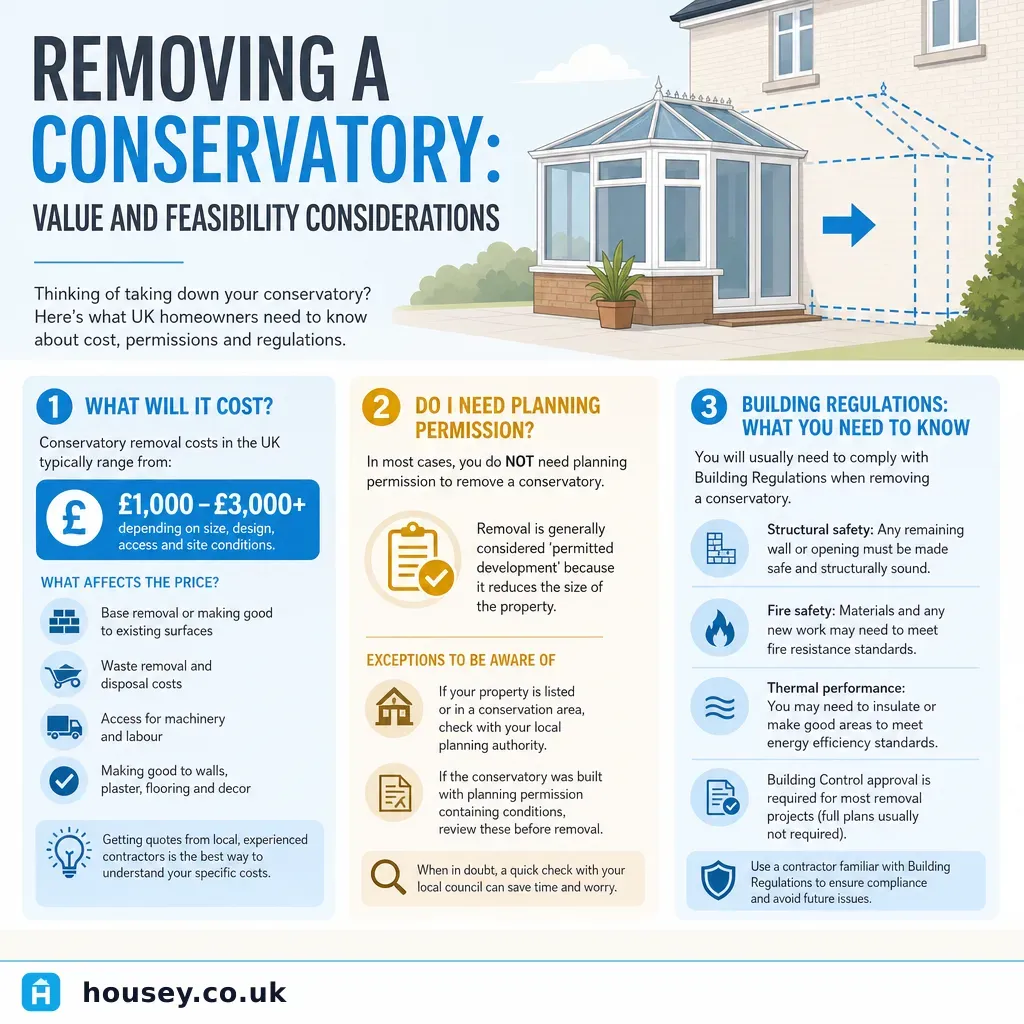
Removing a Conservatory: Value and Feasibility Considerations
Removing a conservatory in England usually does not need planning permission if the original structure was permitted development, but reinstating the original wall almost always requires a building regulations application covering structural, thermal, and moisture elements.