Green Energy Solutions for Residential Properties
By Housey · Last reviewed 11th of May 2026
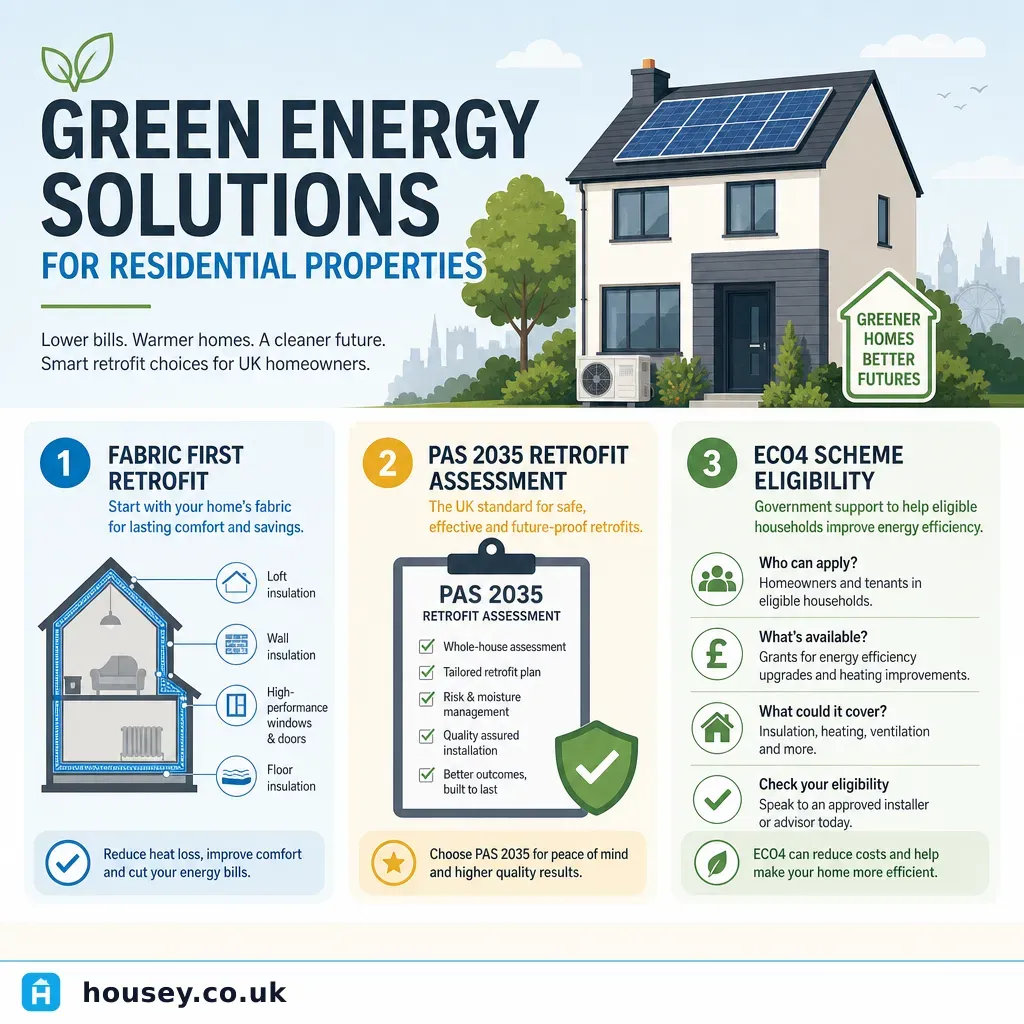
Green Energy Solutions for Residential Properties
Upgrading a home to use clean energy is rarely a single-step decision. For most UK homeowners it is a sequence of choices — insulate before adding a heat pump, check the roof before fitting solar, address ventilation before sealing gaps — that needs to be matched carefully to the property's age, construction, and existing systems. Getting the order wrong can mean a heat pump that underperforms in a poorly insulated 1930s semi, or moisture problems in a Victorian terrace that has been made too airtight without adequate ventilation. This guide sets out a practical framework for planning and sequencing green energy improvements from initial assessment through to installation.
Key points
- PAS 2035, the UK standard for domestic energy retrofit, requires a whole-dwelling assessment by a qualified Retrofit Assessor before any ECO4-funded works begin; independent assessments are strongly advisable even for privately funded projects in older or solid-wall properties.
- The ECO4 scheme (Energy Company Obligation 4) provides funding for insulation and heating upgrades for lower-income households in properties rated EPC D or below; check GOV.UK for the current funding round and any successor schemes.
- The Boiler Upgrade Scheme (BUS) offers £7,500 towards an air source or ground source heat pump for eligible properties in England and Wales, with no income test — eligibility is based on EPC status and MCS-certified installation.
- Cavity wall insulation applies to most post-1920 homes with unfilled cavities and requires a pre-installation survey to confirm the cavity is suitable; not all cavities are appropriate for filling.
- Under the Minimum Energy Efficiency Standards (MEES), privately rented properties in England and Wales must hold an EPC rating of at least E; landlords failing to comply risk civil penalties of up to £30,000 per property.
Why the whole-house approach matters
Many homeowners approach green energy as a series of isolated improvements: solar panels one year, a heat pump the next, loft insulation when a grant becomes available. Without a coordinated plan, there are real risks:
- A heat pump installed in a poorly insulated home may not achieve the efficiency ratings quoted by the installer; it will run longer and cost more to operate than projected.
- Improvements to airtightness — sealing gaps, adding internal wall insulation — without corresponding ventilation upgrades can cause moisture accumulation and condensation damage, particularly in older solid-wall properties.
- Solar PV generates most electricity in summer, when heating demand is lowest; without battery storage or a flexible time-of-use energy tariff, much of the output may be exported at a lower rate than you pay to import.
The PAS 2035 framework addresses this directly by requiring a Retrofit Assessment that identifies interactions between improvements and produces a Medium-Term Improvement Plan (MTIP), sequencing works to avoid unintended consequences. Even for privately funded projects, an independent assessment is a sound investment before committing to significant expenditure.
A practical green energy pathway for UK homes
Stage 1: Assess
Before committing to any technology:
- Obtain or update your Energy Performance Certificate (EPC) — if yours is more than five years old or significant works have been done since the last assessment, a fresh EPC gives a more accurate baseline.
- Consider a PAS 2035 Retrofit Assessment (required for ECO4; strongly advisable for any major programme) to identify the most effective and safe sequence of improvements for your specific property.
- Check current funding eligibility: ECO4, the Boiler Upgrade Scheme, the Great British Insulation Scheme (GBIS), and any local authority flex-funding available in your area.
Stage 2: Fabric improvements first
Improving the building fabric delivers durable, technology-independent energy savings and makes any subsequent heating or generation upgrade more cost-effective:
- Loft insulation: 270mm of mineral wool in an accessible cold loft is the recommended standard — one of the highest-value, lowest-cost measures available to most UK homeowners.
- Cavity wall insulation: applicable to most post-1920 homes with unfilled cavities; a pre-survey is needed to confirm the cavity is suitable — not all cavities are appropriate for filling.
- Solid wall insulation: relevant for pre-1920 solid-wall homes; available as internal wall insulation (IWI) or external wall insulation (EWI); more expensive and disruptive but can substantially reduce heat loss through walls.
- Draughtproofing: doors, windows, letterboxes, loft hatches — low cost with meaningful impact on heating bills.
- Glazing: upgrading single glazing to double or triple glazing; secondary glazing is often a practical option for listed or conservation area properties.
Stage 3: Low-carbon heating
Once the fabric has been improved, the property is better prepared for an efficient low-carbon heating system:
- Air source heat pump (ASHP): the most widely deployed low-carbon option; eligible for the £7,500 BUS grant; works best when good insulation keeps heat demand low and the distribution system runs at low flow temperatures.
- Ground source heat pump (GSHP): more efficient in very cold conditions; requires land or a borehole; higher upfront cost but the £7,500 BUS grant also applies.
- Solar PV combined with heat pump: a popular combination that uses solar electricity to offset some of the heat pump's running costs, improving the overall economics.
Stage 4: Renewable electricity generation
Solar PV is the most widely applicable domestic renewable electricity technology for UK homes. Adding battery storage maximises self-consumption and reduces grid dependence during evenings and overnight.
Stage 5: Monitor and adjust
Smart meters, home energy monitors, and heat pump data loggers allow you to track system performance and identify underperformance early. MCS-certified installers should provide full commissioning documentation and a system handover on completion.
Green energy solution comparison
Solution | Fabric improvement recommended first? | Typical grant | Best property type | Common pitfall |
|---|---|---|---|---|
Air source heat pump | Yes — EPC D+ recommended | £7,500 BUS | Semi-detached or detached, outdoor space available | Oversizing; poor fabric leads to high running costs |
Ground source heat pump | Yes — EPC D+ recommended | £7,500 BUS | Detached, rural, large plot or borehole viable | High groundwork cost; borehole survey required |
Solar PV | No (roof condition check only) | SEG export tariff | South-facing roof, 3 kWp+ available | East/west orientation reduces yield by 15–20% |
Loft insulation (270mm) | No | ECO4 / GBIS eligible | Most houses with accessible cold loft | Little further gain if already at 270mm |
Solid wall insulation | No | ECO4 eligible | Pre-1920 solid-wall homes | Ventilation risk if airtightness improvement is not matched |
Battery storage | No | None currently (England) | Homes with solar PV or flexible tariff | Payback period varies significantly by usage and tariff |
Red flags to watch for
When selecting installers or assessing quotes for green energy works, be alert to these warning signs:
- An installer who quotes for a heat pump without carrying out a heat loss calculation to BS EN 12831 — system sizing based on guesswork produces unreliable performance and may leave you without adequate heating in cold weather.
- A quote that does not confirm MCS certification — this is required for BUS grant eligibility and SEG registration; an uncertified installer cannot issue the necessary paperwork.
- An assessor who recommends major insulation works without discussing ventilation strategy — adding insulation to an already airtight home without ventilation provision can cause condensation and damp damage to the building fabric.
- A bundled package of multiple technologies proposed without a Retrofit Assessment — this may not comply with PAS 2035 if any works are ECO4-funded, and risks the problems outlined above.
- Pressure to sign quickly to secure a grant deadline — legitimate installers and grant schemes do not require immediate commitment, and high-pressure tactics are a recognised warning sign in this sector.
Important limitations
This article provides general guidance for UK homeowners considering green energy improvements. Suitability depends on property type, construction era, existing insulation and heating systems, planning constraints, and funding eligibility — all of which vary significantly between properties. Heat pump sizing and retrofit moisture risk are especially property-specific; incorrect specification can lead to poor performance, higher running costs, or structural damage to the building fabric. Always commission an independent assessment from a qualified professional before committing to major works.
What to ask a qualified professional
Before proceeding with any green energy installation or retrofit programme:
- Are you MCS-certified, and can you confirm my eligibility for the Boiler Upgrade Scheme or other current funding?
- Will you carry out a full heat loss calculation to BS EN 12831 before specifying a heat pump?
- Does this property need a PAS 2035 Retrofit Assessment before works begin, and can you recommend a qualified Retrofit Assessor?
- What ventilation strategy do you recommend alongside any insulation improvements?
- What is the projected payback period for this investment based on my current tariff and usage profile?
- Will you handle building regulations notification, and under which competent person scheme are you registered?
When to get professional help
Green energy improvements involving heating systems, electrical works, or significant changes to building fabric require qualified and accredited professionals. Do not attempt to self-install grid-connected solar PV, heat pumps, or consumer unit modifications.
Seek professional advice before starting if:
- The property is a listed building or in a conservation area — permitted development rights for renewable installations and external insulation may be restricted or absent.
- There is existing damp, condensation, or mould in the property — these should be investigated and resolved before any airtightness measures are added.
- You are a landlord — MEES compliance is a legal duty, and non-compliance carries financial penalties.
- You are considering a ground source heat pump — a ground survey is needed to confirm suitability and loop or borehole sizing.
How Housey can help
Housey connects homeowners with qualified professionals at every stage of a green energy upgrade. Start with a retrofit assessment to establish the right sequence for your property, then use Housey to find certified specialists for solar surveys and heat pump surveys. If the full picture is unclear, an energy-efficiency consultant can provide an independent view before you commit to any technology.
Frequently asked questions
What does fabric first mean in home energy retrofit?
Fabric first means improving a building's insulation, draughtproofing, and glazing before upgrading its heating technology. Reducing heat demand first makes any heating system — including a heat pump — more efficient and cost-effective to run. The approach is endorsed by PAS 2035, CIBSE, and the Energy Saving Trust as the recommended sequence for domestic retrofit.
What is ECO4 and who qualifies?
ECO4 (Energy Company Obligation 4) is a government-mandated scheme requiring larger energy suppliers to fund insulation and heating upgrades in lower-income households. Eligibility is based on household income or benefits received, and the property must typically be rated EPC D or below. Works must comply with PAS 2035. Check GOV.UK for the current scheme status and any successor funding rounds.
Do I need a Retrofit Assessment before improving my home?
A Retrofit Assessment aligned with PAS 2035 is mandatory for works funded through ECO4. For privately funded projects, it is not legally required but is strongly advisable for any significant programme — particularly in older or solid-wall properties where the interaction between insulation, airtightness, and ventilation carries moisture risk. The cost of an assessment is usually outweighed by the value of avoiding poorly sequenced or incompatible improvements.
Can I get green energy funding if I am not on benefits?
Yes. The Boiler Upgrade Scheme (£7,500 towards a heat pump) is available regardless of income to eligible homeowners in England and Wales. The Great British Insulation Scheme has broader eligibility than ECO4 and may cover some mid-income households. Local authorities also hold flex-funding that can support private homeowners in certain circumstances — check GOV.UK and your local council's website for current availability.
Sources and further reading
- Boiler Upgrade Scheme — GOV.UK
- ECO4 guidance — GOV.UK
- PAS 2035 retrofit standard — TrustMark
- Advice for homeowners on energy improvements — Energy Saving Trust
- Find an MCS-certified installer — MCS
- Great British Insulation Scheme — GOV.UK
Useful next reads
 Energy & Retrofit
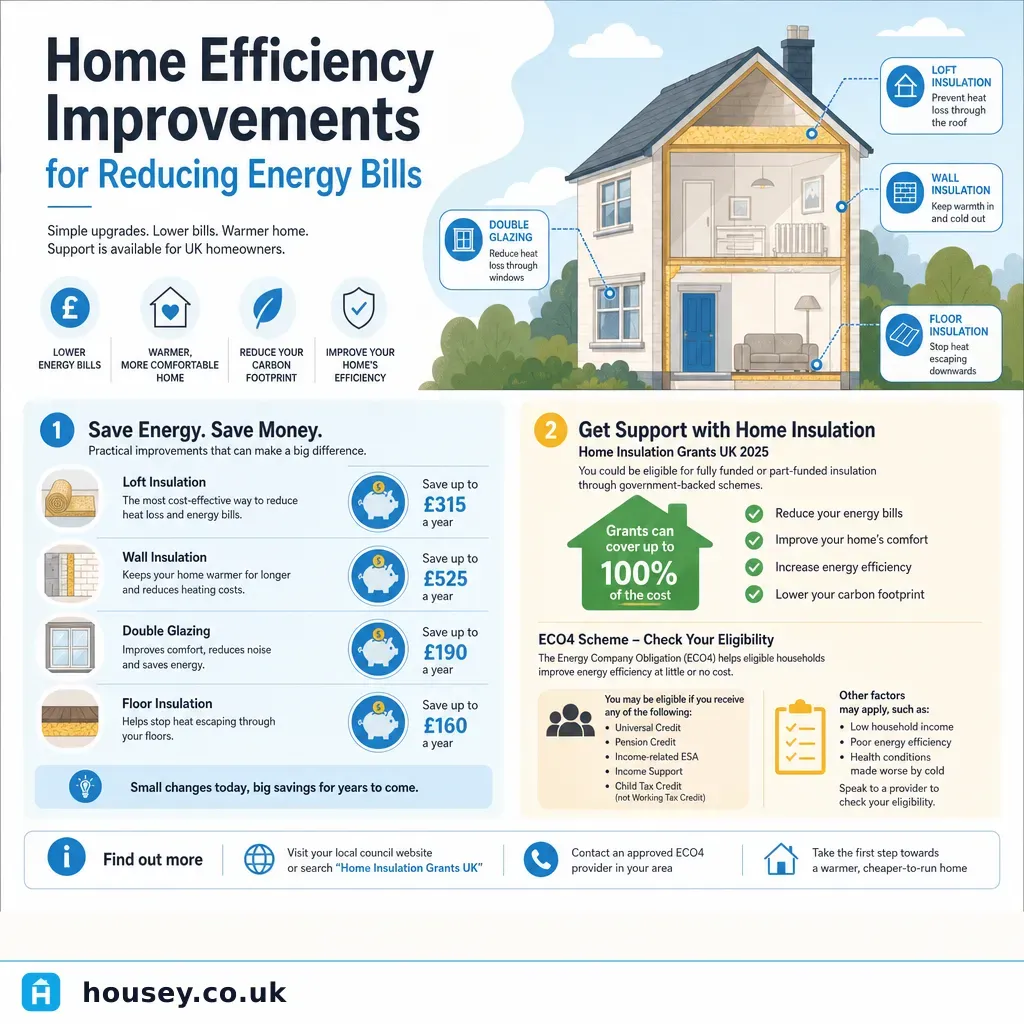
Home Efficiency Improvements for Reducing Energy Bills
The most cost-effective UK home efficiency improvements are usually loft insulation, cavity wall insulation, draught-proofing, and upgrading heating controls.
 Energy & Retrofit
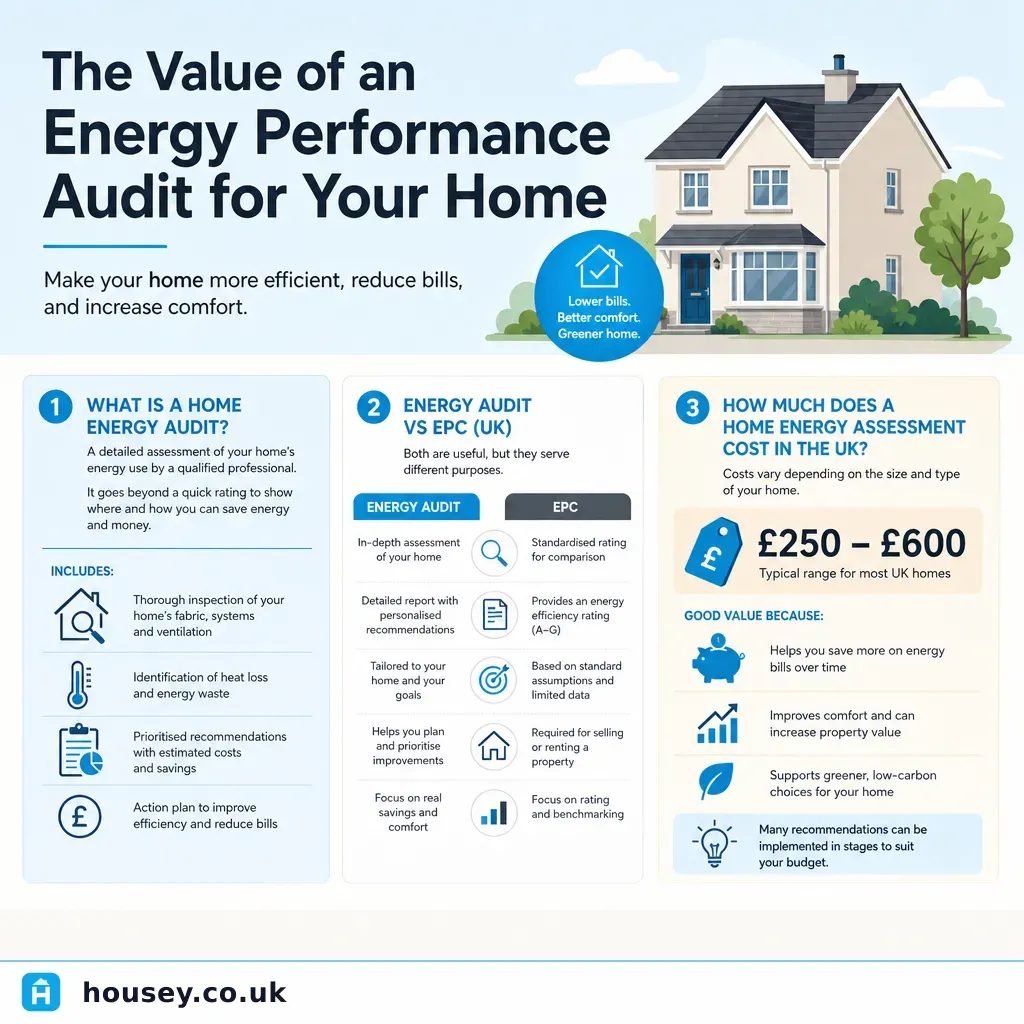
The Value of an Energy Performance Audit for Your Home
A home energy performance audit is a detailed, site-specific assessment of a property's fabric, heating, ventilation, and controls.
 Energy & Retrofit
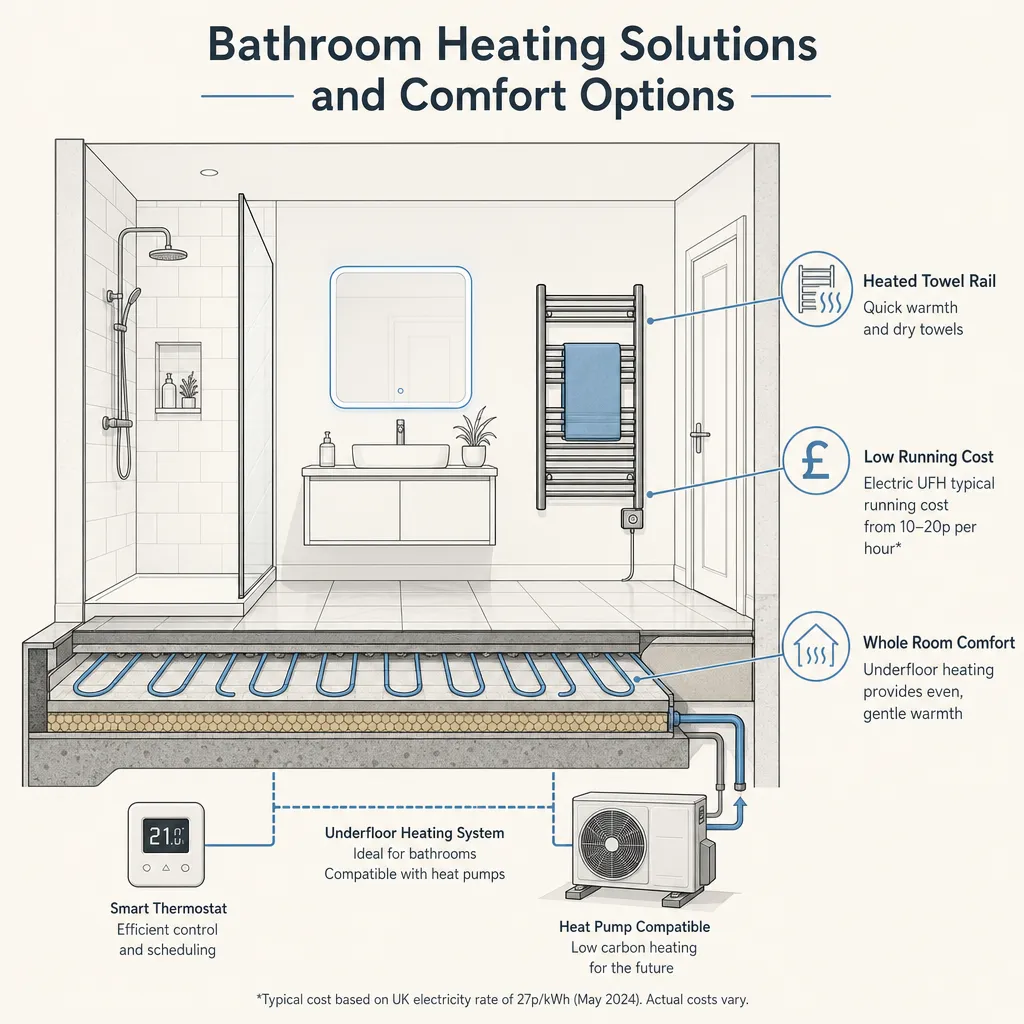
Bathroom Heating Solutions and Comfort Options
UK bathrooms can be heated using electric towel rails, wet radiators on the central heating circuit, electric or wet underfloor heating, or infrared panels.
 Energy & Retrofit
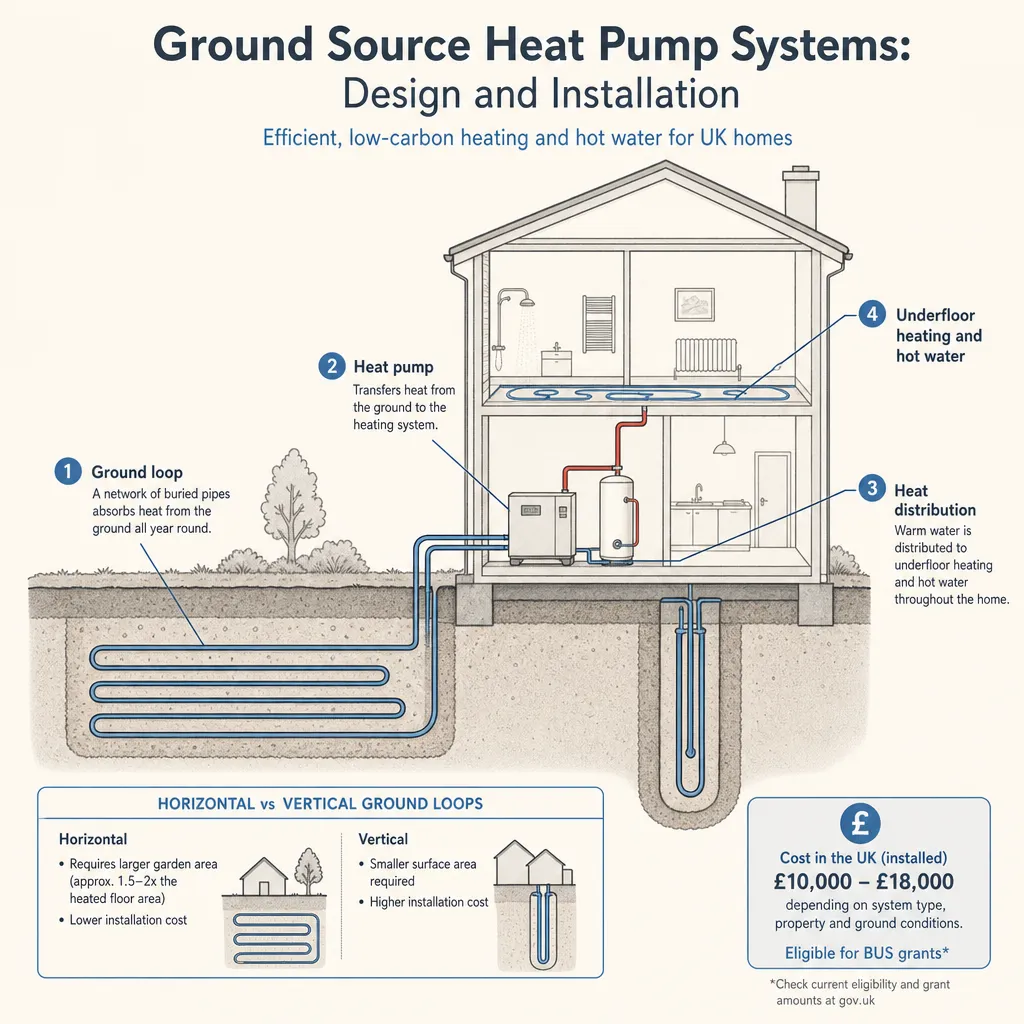
Ground Source Heat Pump Systems: Design and Installation
Ground source heat pumps extract heat from the earth through buried loops or boreholes, then upgrade it for space heating and hot water.
 Energy & Retrofit
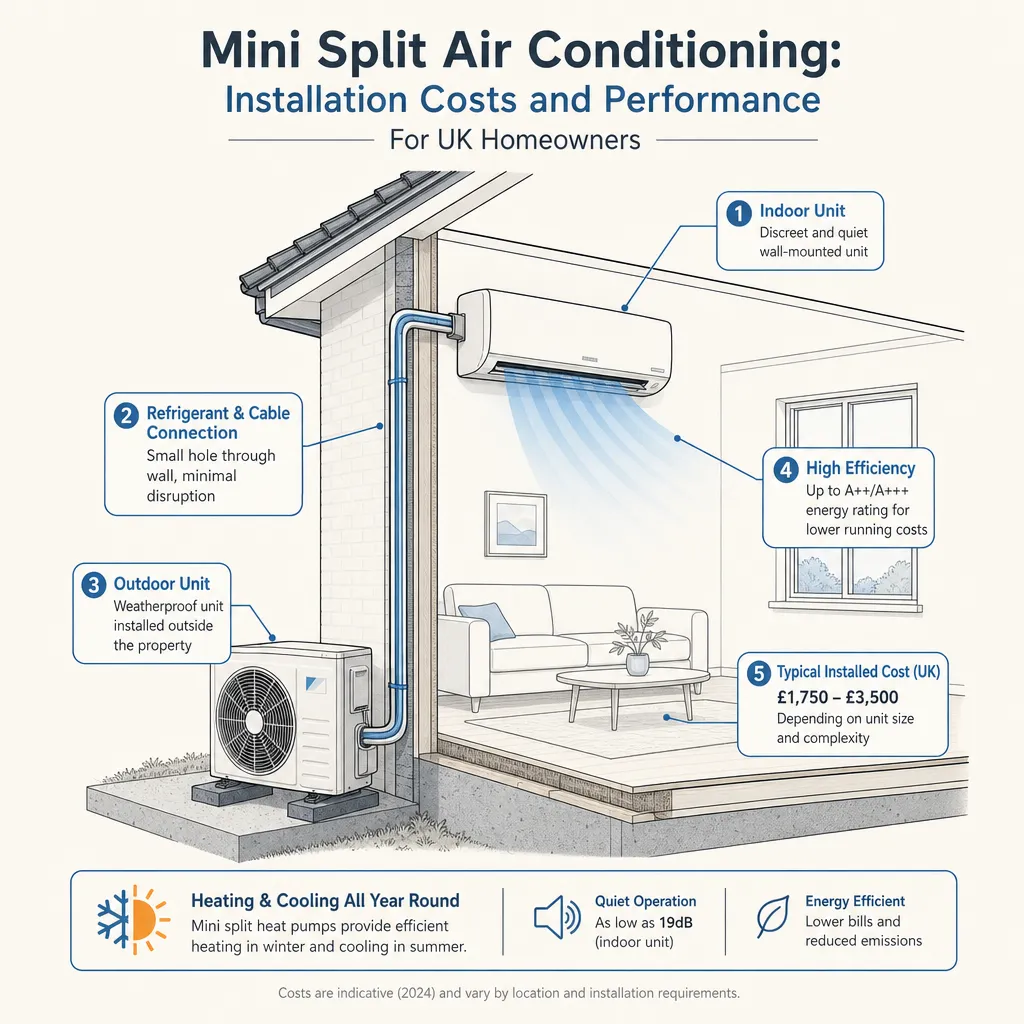
Mini Split Air Conditioning: Installation Costs and Performance
A mini-split (ductless) air conditioning unit costs roughly £1,500–£4,000 installed for a single room in the UK.