The Rise of Green-Rated Homes: Energy Efficiency, Sustainability, and Long-Term Property Value
By Housey · Last reviewed 31st of May 2026

The Rise of Green-Rated Homes: Energy Efficiency, Sustainability, and Long-Term Property Value
UK homeowners are increasingly weighing the financial case for energy improvements — not just to reduce bills, but because the property market is beginning to price energy performance directly into valuations. Buyers, lenders, and lettings regulators are all paying closer attention to the Energy Performance Certificate (EPC), creating both opportunity and obligation for homeowners across all property types, from solid-wall Victorian terraces to leasehold flats built in the 1970s.
Key points
- Properties with an EPC rating of A or B can sell for a premium of up to 10% over equivalent EPC D-rated homes in the same area, according to Nationwide Building Society analysis.
- Since April 2020, privately rented homes in England must hold a minimum EPC rating of E to be legally let; the Government has consulted on raising this to C for new tenancies by 2028.
- The ECO4 scheme funds energy improvements — including loft insulation, cavity wall insulation, and heat pumps — for eligible households, accessed through energy suppliers.
- PAS 2035 is the UK standard governing whole-house retrofit; any TrustMark-registered retrofit works must be coordinated by a qualified Retrofit Coordinator under this standard.
- Air source heat pumps must be correctly sized using approved MCS calculation methods; an undersized unit wastes energy and may not qualify for the Boiler Upgrade Scheme grant of up to £7,500.
What EPC ratings mean in practice
An Energy Performance Certificate rates a home's energy efficiency from A (most efficient) to G (least efficient), based on the building's fabric and heating systems. The rating affects running costs and, increasingly, a property's saleability, rental legality, and mortgage terms.
EPC Band | Typical SAP score | Common features | Likely buyer and lender response |
|---|---|---|---|
A (92–100) | 92+ | High insulation, heat pump or ASHP, triple glazing — typically new-build standard | Strongest demand; green mortgage rate reductions available from several lenders |
B (81–91) | 81–91 | Modern fabric, high-efficiency boiler or heat pump, good insulation levels | Broad lender appetite; preferred by energy-conscious buyers |
C (69–80) | 69–80 | Decent insulation, double glazing, modern gas boiler | Standard demand; proposed rental minimum for new tenancies from 2028 |
D (55–68) | 55–68 | Average UK home; limited insulation, older boiler | No restrictions currently; growing mortgage affordability gap versus A/B rated homes |
E (39–54) | 39–54 | Older poorly insulated stock, solid walls, single glazing | Current rental minimum in England; some lenders restrict loan-to-value ratios |
F–G (below 39) | Below 39 | Uninsulated solid walls, very inefficient heating | Cannot be legally let without exemption; some mortgage products unavailable |
A valid EPC is required whenever a property is built, sold, or let. EPCs last ten years but must be renewed before marketing if the existing certificate has expired.
Which green upgrade delivers the most value?
The right answer depends on your property's starting point. A wholesale approach risks spending on measures that do not suit your construction type — cavity wall insulation, for example, cannot be fitted to a solid-wall home. The PAS 2035 retrofit process begins with a whole-house assessment to identify the correct sequence of improvements and avoid moisture, ventilation, or structural problems.
Decision tree: where to start your green upgrade
- If your loft has less than 270mm of insulation: prioritise a loft insulation top-up — typically the lowest-cost, highest-return improvement available for most UK homes.
- If your home has unfilled cavity walls: cavity wall insulation is usually low-cost and can improve the EPC by one or two bands.
- If your home was built before 1920 with solid walls: internal or external wall insulation is needed but more disruptive and expensive; commission a retrofit assessment before any works begin to avoid moisture risk.
- If your boiler is over 15 years old: a modern condensing boiler is more efficient and may improve your EPC; heat pumps offer greater long-term gains where the fabric performance supports them.
- If your roof faces south and is largely unshaded: a solar survey can assess whether photovoltaic panels are viable and estimate your payback period.
- If you are considering a heat pump: a heat pump survey is essential before any purchase — fabric performance, room heat loads, and hot water demand must all be properly assessed first.
- If you are unsure whether your walls are solid or cavity: an insulation assessment will confirm this before you commit to any measure.
A worked example: upgrading a 1930s semi
Consider a 1930s semi-detached home in the East Midlands with an EPC rating of E (SAP score 48). The property has uninsulated cavity walls, a 2004 gas boiler, and 100mm of loft insulation.
The owner instructs a retrofit assessment under PAS 2035. The assessor recommends this sequence:
- Cavity wall insulation (indicative cost: approximately £900–£1,400; expected EPC uplift: E to D).
- Loft insulation top-up to 270mm (indicative cost: approximately £300–£500; expected EPC uplift: D to C).
- Boiler replacement at end-of-life with a high-efficiency condensing model (cost varies; modest additional EPC uplift).
The insulation measures alone — at approximately £1,200–£1,900 total — take the property above the proposed 2028 rental threshold. An estimated energy bill saving of £350–£500 per year suggests a payback period of roughly three to four years.
Indicative UK costs, last reviewed 2026-05-31. Costs vary by region, property size, and contractor. Obtain at least three quotes before commissioning any works.
Green mortgages and the financial case for retrofit
Several UK lenders — including Barclays, NatWest, and Halifax — offer green mortgage products at reduced rates for homes rated EPC A or B. The rate differential is typically 0.05–0.15% below standard products. On a £250,000 mortgage, this represents a saving of approximately £125–£375 per year.
For landlords, the financial case is more pressing. Properties rated F or G cannot currently be legally let without an exemption registered with the local authority. If the proposed 2028 EPC C threshold for new tenancies is legislated, landlords of D-rated properties will also need to plan for improvements in advance.
The Energy Saving Trust maintains a regularly updated comparison of green mortgage products available in the UK market.
When to get professional help
Always instruct a TrustMark-registered contractor for retrofit works and engage a qualified Retrofit Coordinator for whole-house projects under PAS 2035. Without proper sequencing, measures such as wall insulation can trap moisture and cause structural or health problems that are expensive to remedy.
Seek professional advice if:
- Your home is listed or in a conservation area — permitted development rights for solar panels, external insulation, and heat pumps are restricted in these settings.
- You are unsure whether your walls are solid or cavity construction.
- Your EPC is below D and you plan to sell or let within the next three years.
- You want to access ECO4 funding — applications are made through your energy supplier or an approved installer, not directly to the Government.
How Housey can help
Housey connects homeowners with qualified professionals for retrofit assessments, insulation assessments, solar surveys, and heat pump surveys — so you can understand what is right for your specific property before committing to any expenditure.
Frequently asked questions
Does a better EPC rating automatically increase my home's value?
Not automatically, but evidence consistently shows that buyers pay a premium for higher-rated homes, particularly in competitive markets. Nationwide Building Society analysis found EPC A- and B-rated properties commanded a measurable premium over equivalent D-rated homes. A higher rating may also expand the mortgage products available to buyers, potentially supporting a stronger offer. The size of any premium varies by location and property type.
How much does an EPC cost?
A domestic Energy Performance Certificate in England typically costs between £60 and £120, depending on the property's size and location. Only an accredited Domestic Energy Assessor can issue a legally valid EPC. You can verify an assessor's accreditation through the Landmark Register or the relevant accreditation scheme's public register. An EPC remains valid for ten years, after which it must be renewed before sale or let.
Can I improve my EPC rating without a large investment?
Some improvements have a significant EPC impact at modest cost — loft insulation top-ups, draught-proofing, and replacing an old boiler are typically the most cost-effective starting points. More structural changes, such as wall insulation or replacing glazing, cost considerably more but deliver greater gains. An energy assessor can identify which measures will have the most impact on your specific property's rating before you commit to any expenditure.
What is PAS 2035 and why does it matter?
PAS 2035 is the British Standard governing whole-house retrofit projects in the UK. It requires a qualified Retrofit Coordinator to assess the property and oversee the sequencing of improvements to prevent unintended consequences such as condensation or moisture damage inside the building fabric. Any TrustMark-registered retrofit project must comply with PAS 2035. It is especially important for older, solid-wall properties where poorly sequenced works can cause structural harm.
Sources and further reading
- Energy Performance Certificates: guidance — GOV.UK
- Private rented sector: minimum energy efficiency standard — GOV.UK
- ECO4: energy efficiency scheme — GOV.UK
- Green mortgages explained — Energy Saving Trust
- Nationwide House Price Index — Nationwide Building Society
- PAS 2035 retrofitting dwellings — BSI Group
Useful next reads
 Energy & Retrofit
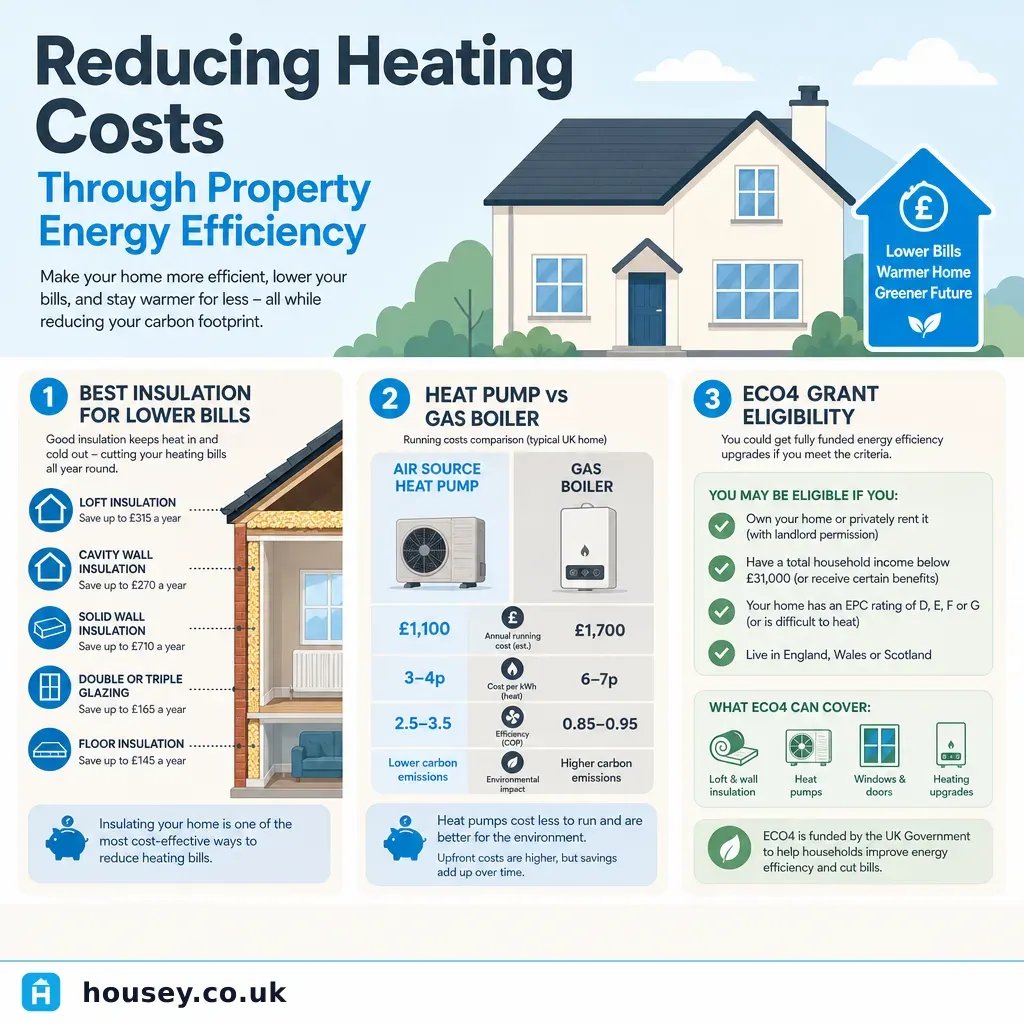
Reducing Heating Costs Through Property Energy Efficiency
Reducing heating costs starts with identifying where heat is lost — typically walls (30–35%), roof (20–25%), and windows.
 Energy & Retrofit
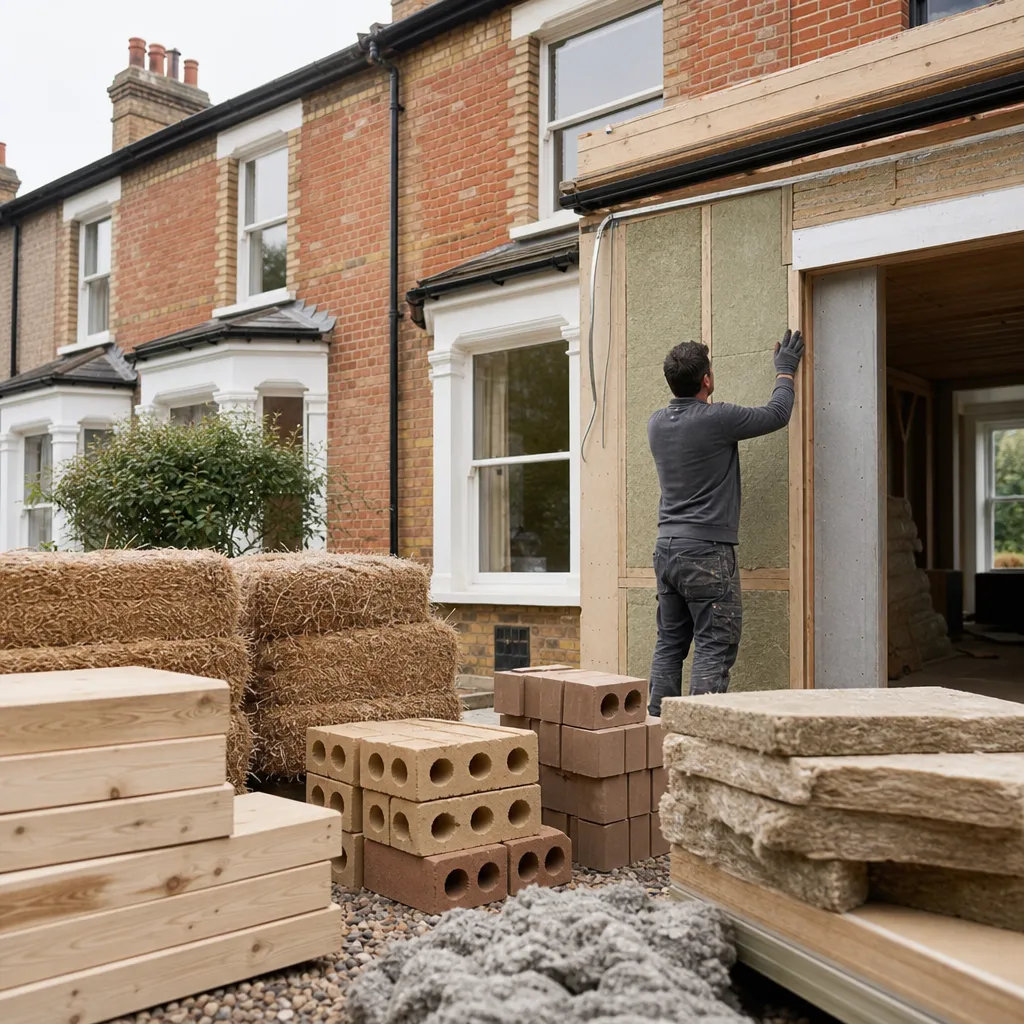
Sustainable Building Materials for Home Projects and Retrofits
Sustainable building materials for UK homes range from low-embodied-carbon insulation — wood fibre, sheep's wool, hemp — to FSC-certified structural timber and reclaimed stone or brick.
 Energy & Retrofit
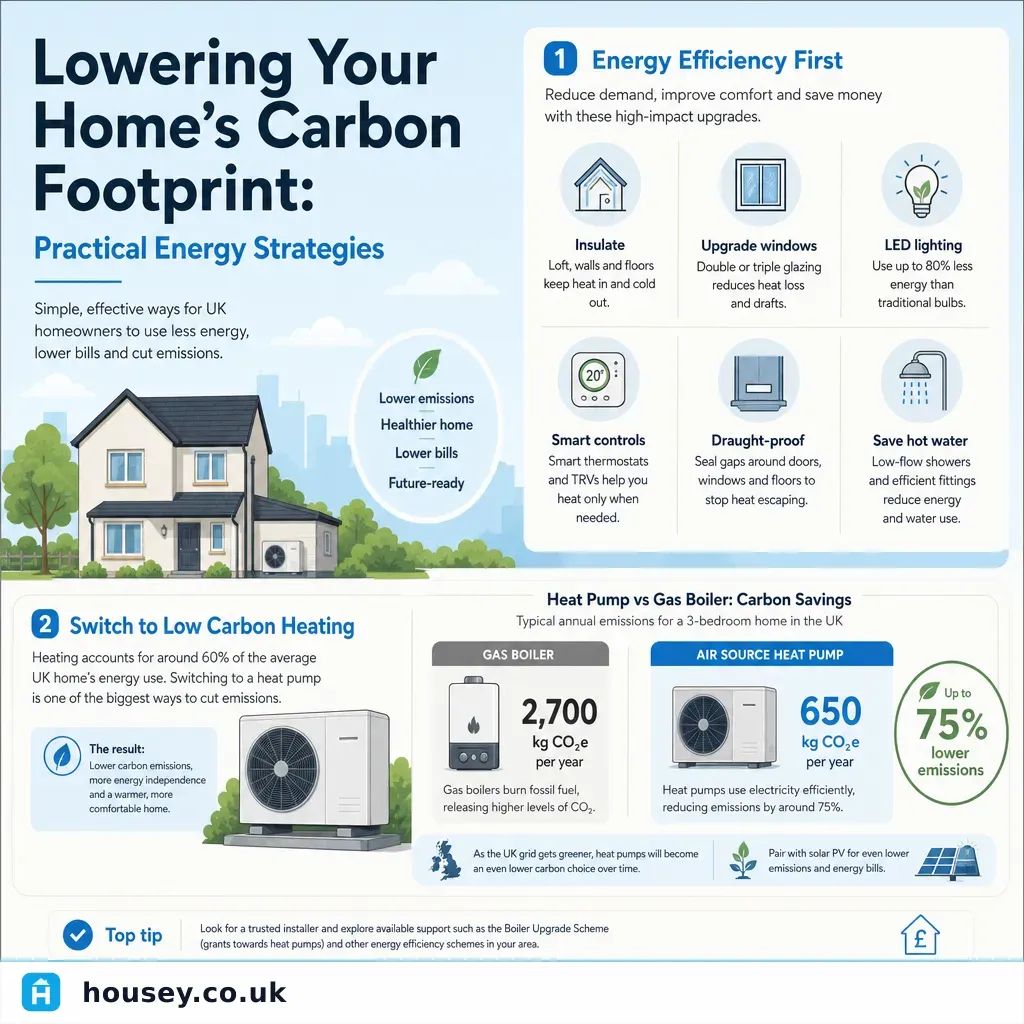
Lowering Your Home's Carbon Footprint: Practical Energy Strategies
UK homes produce around 19% of national greenhouse gas emissions, mostly from gas heating.
 Energy & Retrofit
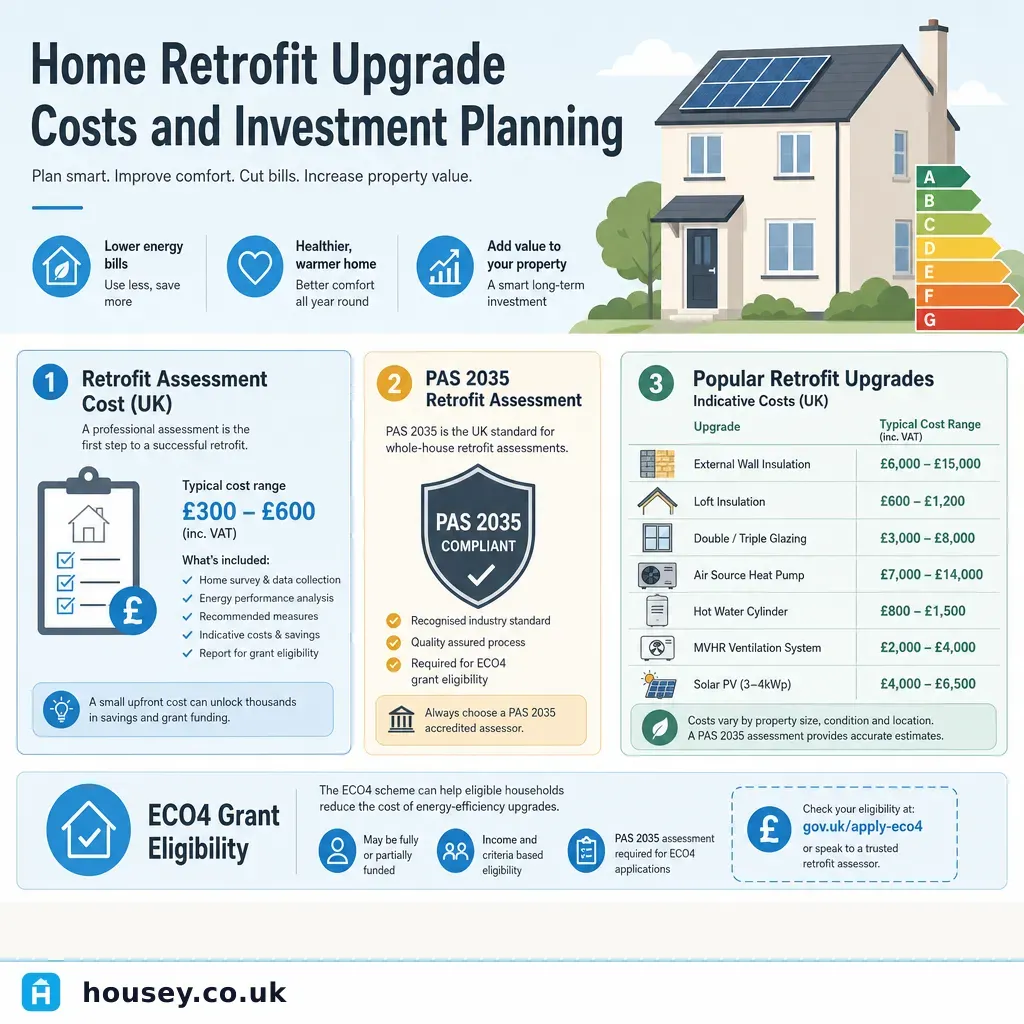
Home Retrofit Upgrade Costs and Investment Planning
Home retrofit costs in the UK vary widely by property size, construction type, and measures chosen.
 Energy & Retrofit
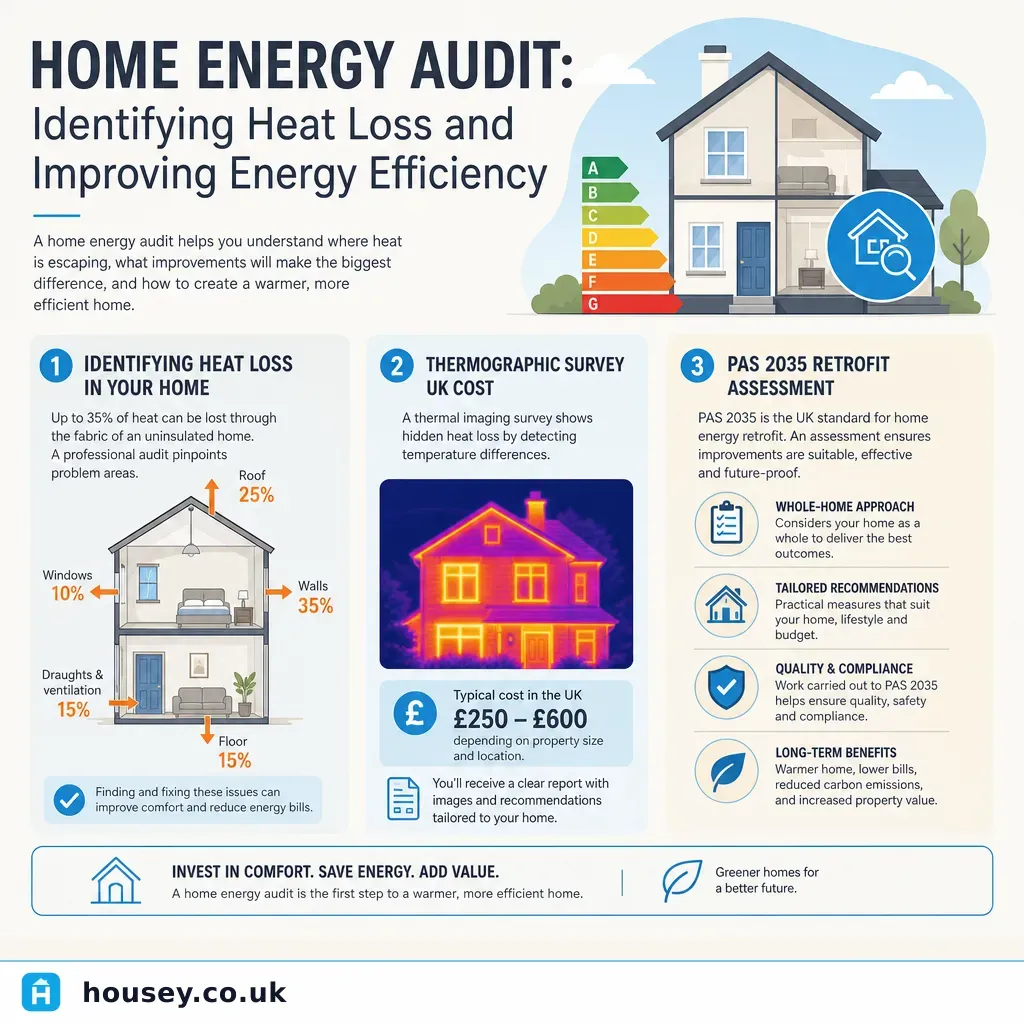
Home Energy Audit: Identifying Heat Loss and Improving Energy Efficiency
A home energy audit is a structured assessment of where your property loses heat and how efficiently it uses energy.