Lowering Your Home's Carbon Footprint: Practical Energy Strategies
By Housey · Last reviewed 18th of May 2026
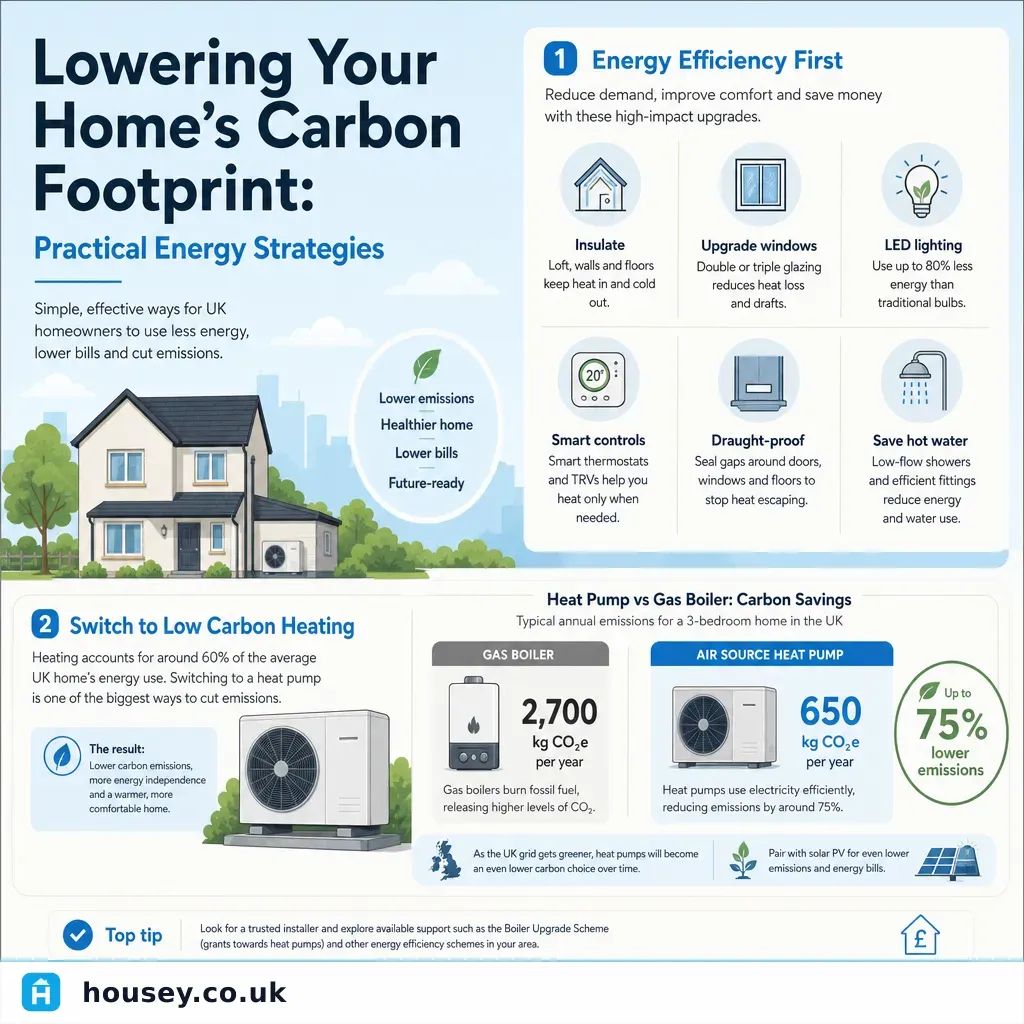
Lowering Your Home's Carbon Footprint: Practical Energy Strategies
UK homes collectively account for around 19% of the country's total greenhouse gas emissions, according to the Department for Energy Security and Net Zero (DESNZ). Most of that carbon comes from space heating — predominantly gas boilers serving a housing stock that is among the least energy-efficient in northern Europe. Whether you have recently received an Energy Performance Certificate recommendation, are planning works to a Victorian terrace or 1930s semi, or simply want to reduce your household's environmental impact over time, choosing the right improvements and sequencing them correctly makes the difference between meaningful progress and costly mistakes.
Key points
- UK residential properties produce approximately 19% of national greenhouse gas emissions, mainly through gas space and water heating (DESNZ).
- Cavity wall and loft insulation typically reduce heating energy use by 25–35% in suitable homes and are usually the most cost-effective first step.
- The Boiler Upgrade Scheme (BUS) currently offers a £7,500 grant towards an air source heat pump in England and Wales — check GOV.UK for current availability.
- ECO4 and the Great British Insulation Scheme (GBIS) provide grant-funded upgrades for eligible lower-income households; eligibility is income- and EPC-based.
- A PAS 2035-compliant whole-house retrofit assessment sequences improvements to avoid the moisture, ventilation, and condensation problems common in older UK properties.
Why UK homes have a relatively high carbon footprint
Most UK properties are heated by natural gas boilers, and a large proportion of the housing stock — Victorian terraces, 1930s semis, and pre-war solid-wall homes — was built without cavity insulation. Heat escapes rapidly through walls, roofs, floors, and gaps around windows and doors, meaning these homes require substantially more fuel to maintain comfortable temperatures than better-insulated equivalents elsewhere in northern Europe.
The national electricity grid is, however, progressively decarbonising. Electricity carbon intensity has fallen substantially over the past decade as renewables and nuclear displace gas-fired generation. Switching from gas to electricity for heating — via a heat pump — therefore produces meaningfully fewer emissions today than it did in 2015, and will produce fewer still as the grid continues to green.
Which improvements deliver the biggest carbon savings?
The table below compares common measures on typical UK homes. Savings depend heavily on your current setup, property type, and occupancy — treat these as a framework, not precise targets.
Measure | Typical CO₂ saving/yr | Indicative installed cost (2026) | Best suited for |
|---|---|---|---|
Loft insulation top-up to 270mm | 150–300 kg | £300–£700 (often grant-funded) | Homes with accessible pitched loft |
Cavity wall insulation | 200–400 kg | £500–£1,500 (often grant-funded) | 1920s–1990s homes with unfilled cavity |
External solid wall insulation | 400–800 kg | £8,000–£22,000 | Pre-1919 solid-brick or stone homes |
Air source heat pump | 1,000–2,500 kg vs gas | £8,000–£15,000 less £7,500 BUS grant | Well-insulated homes with outdoor space |
Solar PV (4kWp system) | 900–1,400 kg | £5,000–£9,000 | South-facing roofs, minimal shading |
Draught-proofing | 50–150 kg | £100–£500 | Most pre-1980 homes |
Smart heating controls | 50–200 kg | £150–£800 | Homes without modern thermostat and TRV controls |
Indicative UK costs, last reviewed 2026-05-18. Sources: Energy Saving Trust, DESNZ guidance. Actual savings and costs vary significantly by property and location.
Insulation first: the foundation of any retrofit
The Energy Saving Trust and the PAS 2035 retrofit standard both advise reducing a home's heat loss before upgrading the heating system. The logic is straightforward: a heat pump in a poorly insulated home must work harder, operates at lower efficiency, and costs more to run than the same system installed in a well-insulated building. Insulating first makes subsequent heating upgrades more effective and more affordable to operate.
Loft insulation is typically the first priority for homes with an accessible pitched loft. Current good practice is 270mm of mineral wool laid between and over the joists. Topping up from partial insulation is often grant-funded under ECO4 or GBIS and has one of the shortest payback periods of any domestic energy measure.
Cavity wall insulation suits homes built roughly between 1920 and 1990 where the cavity has not already been filled. A specialist drills small holes, injects insulation material, and plugs the holes — usually a one-day job. The cavity must be dry and free of significant water ingress or cracking before installation; an assessment beforehand is advisable.
Solid wall insulation — external cladding or internal dry-lining — is more expensive and disruptive but can significantly improve the energy performance of Victorian and Edwardian homes. External insulation changes the building's appearance and may require planning permission in conservation areas or for listed buildings. Always check with your local planning authority before specifying this work.
Low-carbon heating options
Once the building envelope is improved, replacing a gas boiler becomes more viable and more efficient to operate:
Air source heat pumps (ASHPs) extract heat from outdoor air and deliver it to the home's heating system. They perform most efficiently in well-insulated buildings and with lower-temperature heat emitters — larger radiators or underfloor heating — than a typical gas boiler uses. A heat pump survey by an MCS-accredited engineer should precede any purchase decision, covering heat loss calculations, emitter sizing, and hot water provision.
Ground source heat pumps offer higher efficiency than air source but require substantial garden space for ground loops or a borehole, making them more suited to rural or larger properties.
Hydrogen-ready boilers are available from some manufacturers, though UK government policy on hydrogen for domestic heating is still under development. GOV.UK is the authoritative source for current updates.
Renewable electricity generation
Solar PV panels convert sunlight into electricity, reducing both bills and household carbon output. A 4kWp south-facing, unshaded system in central England can generate around 3,400–4,000 kWh per year, according to the Energy Saving Trust. Paired with battery storage, a well-sited system can significantly increase self-consumption and reduce dependence on grid electricity.
A solar survey will assess your roof's orientation, shading, structural suitability, and likely generation output before you commit to a purchase.
The Smart Export Guarantee (SEG) obliges larger electricity suppliers to pay for surplus electricity exported to the grid. Rates vary by supplier, so compare tariffs before installation.
Retrofit priority checklist
Work through these before committing to any energy improvement:
Which approach should you take?
- Start with insulation if your EPC rating is D, E, F, or G, or if your home feels draughty or cold despite high heating bills.
- Consider a heat pump if insulation is already good (EPC B or C) and your gas boiler is approaching the end of its useful life.
- Commission a retrofit assessment if you are planning multiple improvements — a retrofit assessment from a PAS 2035-accredited assessor sequences work to avoid moisture and ventilation problems.
- Add solar PV once heating demand is reduced — generation delivers greater value in an efficient, well-insulated home.
- Speak to an energy-efficiency consultant if you are unsure where your property stands or what your best starting point is.
- Check grant eligibility before commissioning any work — ECO4 and GBIS can substantially reduce upfront costs for qualifying households.
When to get professional help
Some energy improvement work can introduce new problems if carried out without proper assessment — particularly moisture, ventilation, and structural issues in older properties. Seek professional advice before proceeding if:
- You are planning solid wall insulation on a pre-1919 property built with lime mortar, which behaves differently to modern cement under moisture and vapour pressure.
- You are considering a heat pump but have not had a heat loss calculation and emitter survey completed by an MCS-accredited engineer.
- You notice new condensation, damp patches, or black mould after insulation work — these can indicate inadequate ventilation resulting from reduced air infiltration.
- Your property is listed or in a conservation area, where some measures may require listed building consent or planning permission beyond standard permitted development.
- You are unsure which grant scheme applies to your situation.
A qualified energy-efficiency consultant or PAS 2035-accredited retrofit assessor can provide a whole-house view and help you avoid costly sequencing mistakes.
How Housey can help
Housey connects UK homeowners with vetted professionals across the full energy retrofit journey — from initial energy-efficiency consultants and retrofit assessments through to heat pump surveys and solar surveys. Compare quotes, check accreditations, and read reviews from homeowners in your area before committing to any work.
Frequently asked questions
How much can insulation reduce my heating bills in a UK home?
The Energy Saving Trust estimates that topping up loft insulation can save around £150–£310 per year in a typical semi-detached gas-heated home, and cavity wall insulation around £160–£390 per year. Actual savings depend on property size, current insulation levels, and your energy tariff. Carbon savings follow a similar proportion to energy savings.
Do I need planning permission for solar panels or a heat pump?
Most solar PV installations on roof slopes and air source heat pump installations fall within permitted development rights in England and do not usually require planning permission. Exceptions apply for listed buildings, conservation areas, and some flat roofs. Always check with your local planning authority before starting work.
What is a PAS 2035 retrofit assessment?
PAS 2035 is a British standard for whole-house energy retrofit. A compliant assessment involves a qualified retrofit assessor surveying your home's construction, insulation, heating, and ventilation, then producing a sequenced improvement plan. It is required for publicly funded retrofit work and recommended best practice for privately funded projects.
Is the ECO4 grant available to all UK homeowners?
No. ECO4 targets households receiving certain means-tested benefits or on low incomes, or in homes with an EPC rating of D to G. Properties must be owner-occupied or privately rented. Eligibility criteria change regularly — check Ofgem's current ECO4 guidance or contact your energy supplier directly.
Sources and further reading
- Energy Saving Trust — Insulation — Energy Saving Trust
- Boiler Upgrade Scheme — GOV.UK — Department for Energy Security and Net Zero
- Great British Insulation Scheme — GOV.UK — Department for Energy Security and Net Zero
- ECO4 — Ofgem — Ofgem
- Solar panels — Energy Saving Trust — Energy Saving Trust
Useful next reads
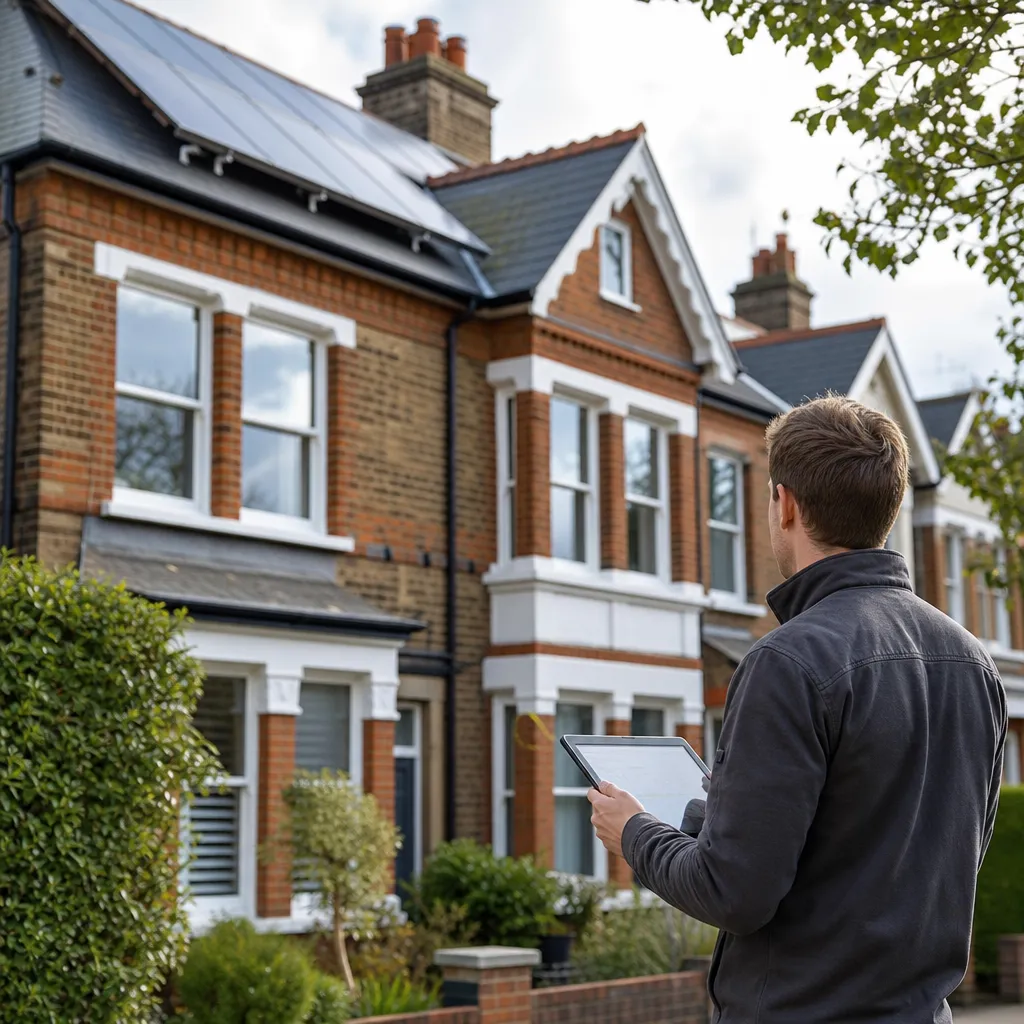 Energy & Retrofit
The Rise of Green-Rated Homes: Energy Efficiency, Sustainability, and Long-Term Property Value
Homes with higher EPC ratings typically sell faster and can command a premium of up to 10% over equivalent lower-rated properties.
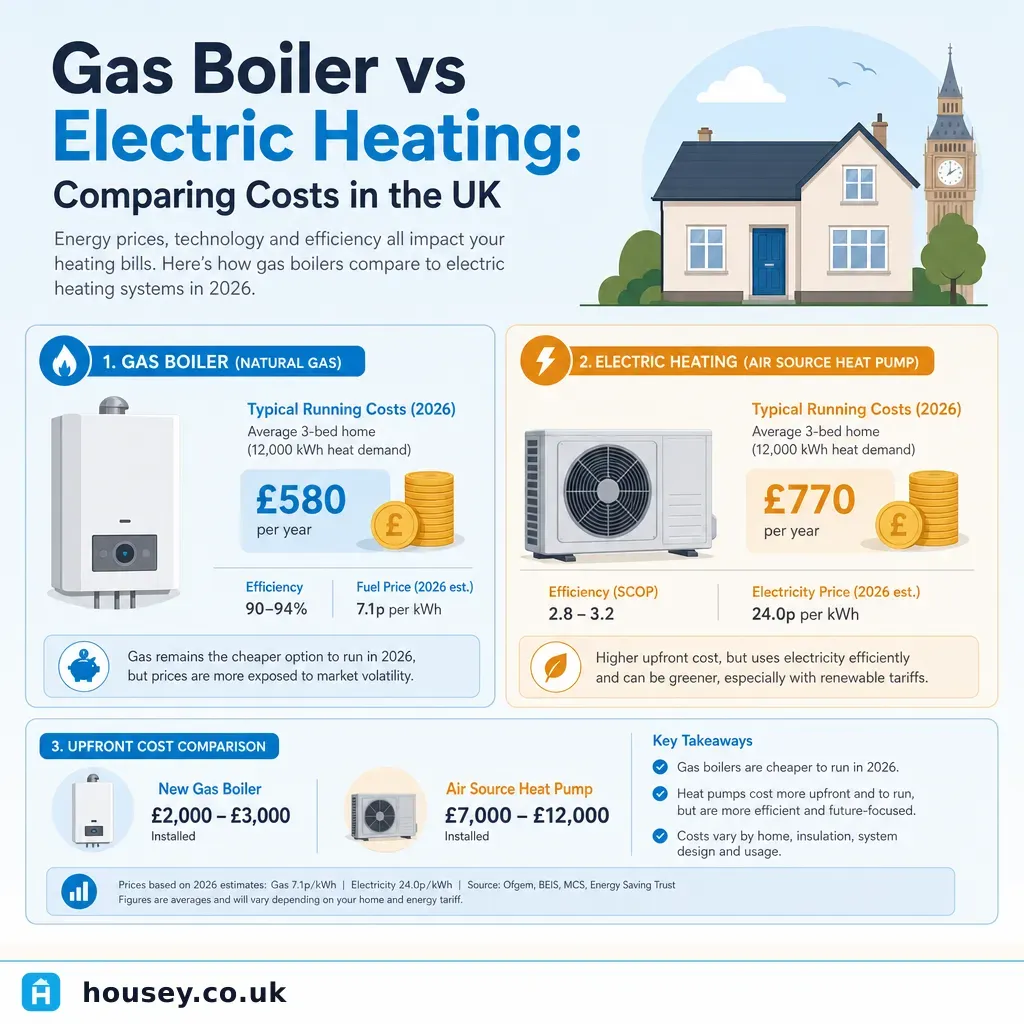 Energy & Retrofit
Gas Boiler vs Electric Heating: Comparing Costs in the UK
Gas boilers currently cost around 6.
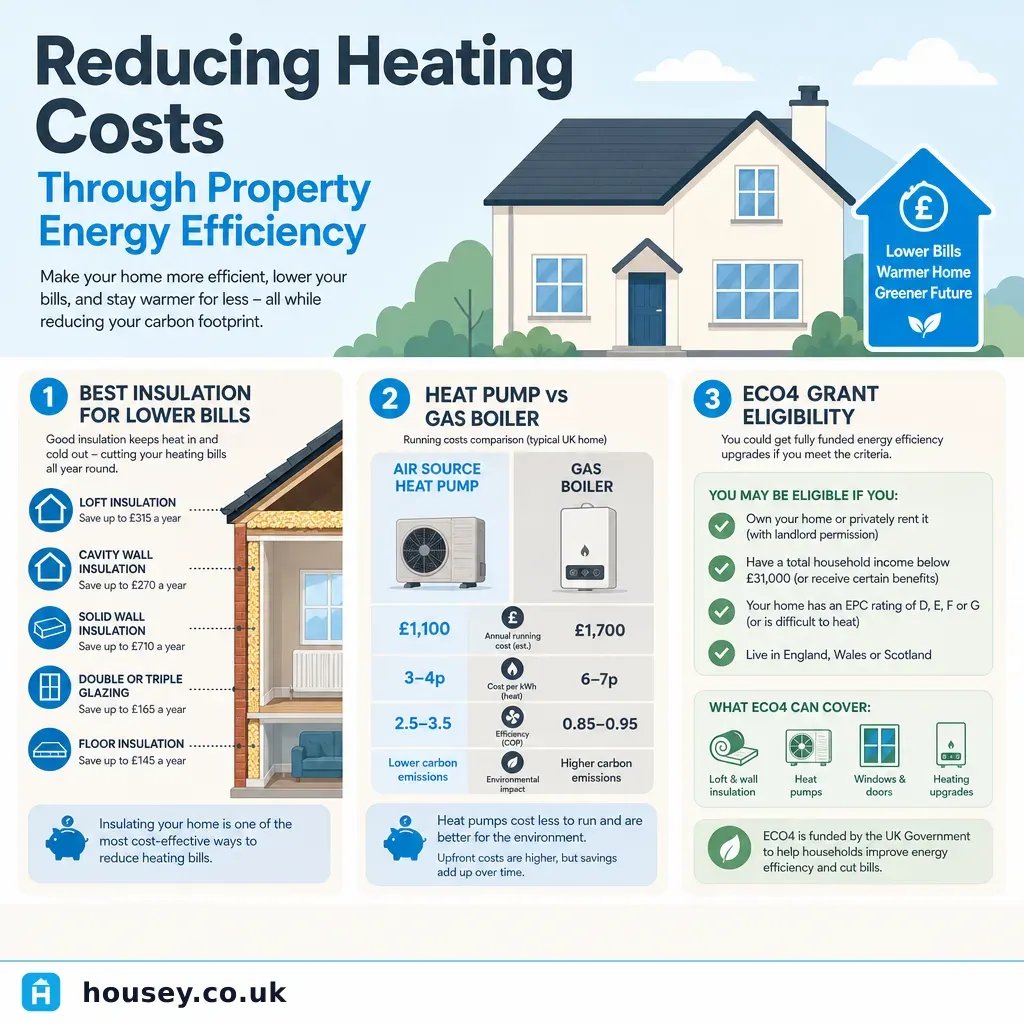 Energy & Retrofit
Reducing Heating Costs Through Property Energy Efficiency
Reducing heating costs starts with identifying where heat is lost — typically walls (30–35%), roof (20–25%), and windows.
 Energy & Retrofit
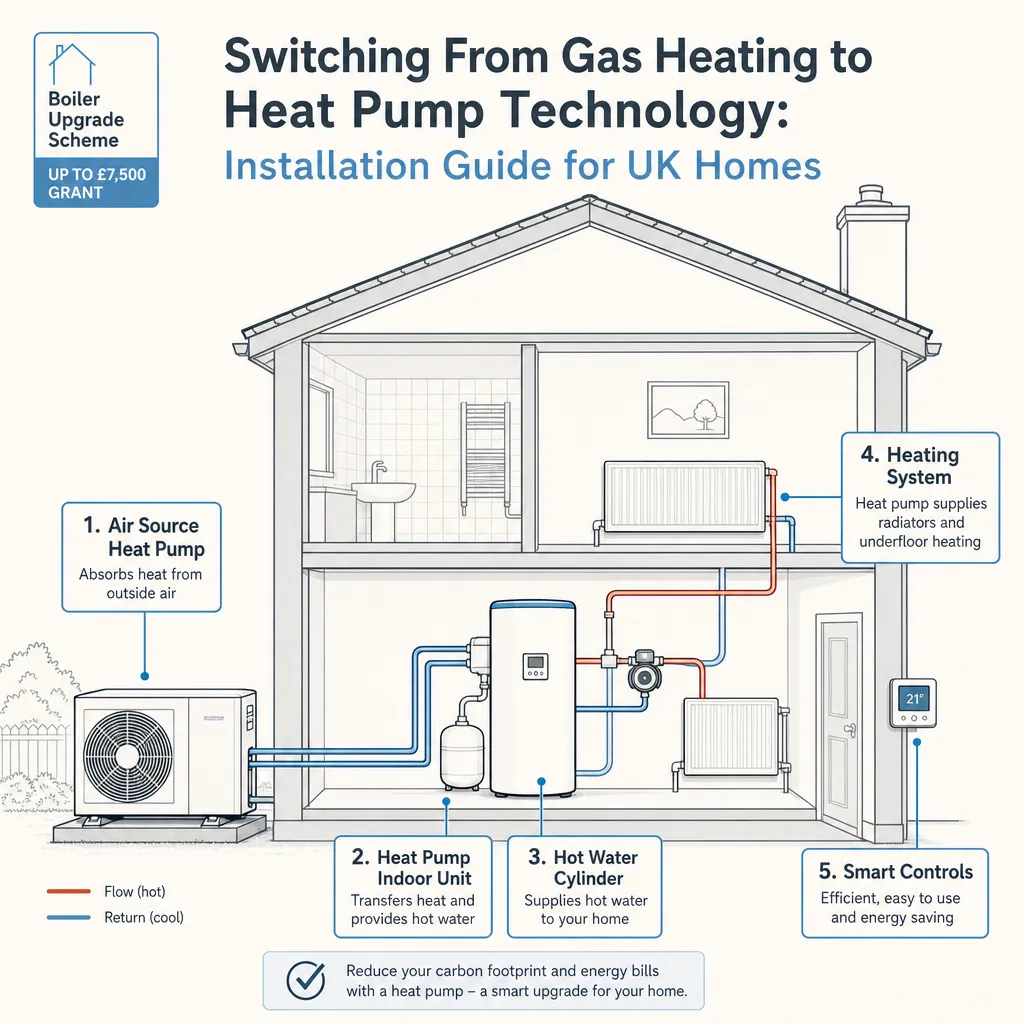
Switching From Gas Heating to Heat Pump Technology: Installation Guide
Switching from gas to a heat pump requires a heat loss calculation, correctly sized equipment, and often radiator upgrades before installation.
 Energy & Retrofit
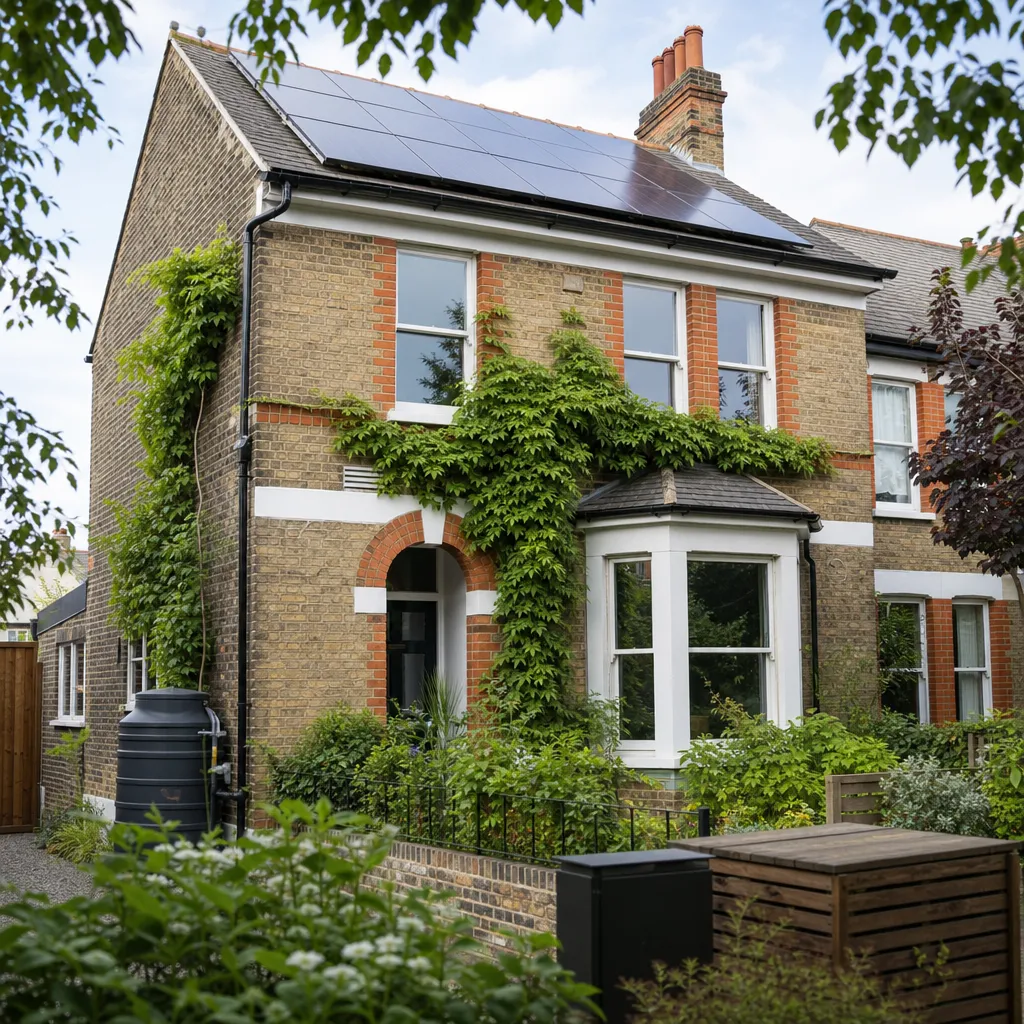
Sustainable Homes: Features That Reduce Environmental Impact
Sustainable homes reduce environmental impact through high levels of insulation, airtight construction, low-carbon heating such as heat pumps, solar energy generation, efficient water use, and responsibly sourced materials.