Green Roof Systems: Benefits and Installation
By Housey · Last reviewed 11th of May 2026
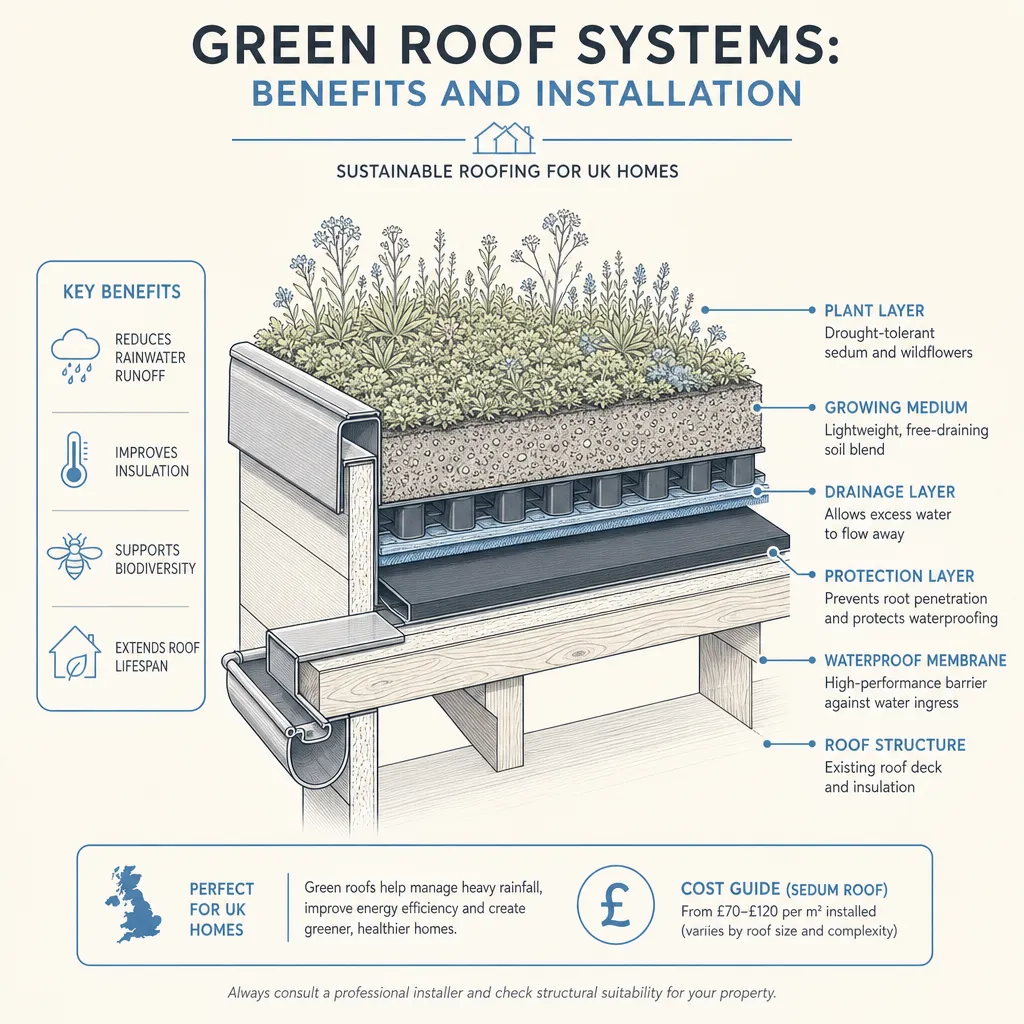
Green Roof Systems: Benefits and Installation
Green roofs — also called living roofs or vegetated roofs — have moved from niche architectural feature to mainstream consideration for UK homeowners, housing developers, and local planning authorities. Rising biodiversity net gain requirements, surface water drainage obligations under Schedule 3 of the Flood and Water Management Act 2010, and updated local planning policies have brought green roofs into scope for both new builds and renovation projects. Whether you are replacing a flat roof extension, re-roofing a garage, or designing a new outbuilding, understanding the system types and installation requirements will help you make an informed choice.
Key points
- There are three main green roof types: extensive (shallow substrate, drought-tolerant plants), semi-intensive, and intensive (deeper substrate, heavier, suited to roof gardens).
- All green roof systems add dead weight load; a structural engineer should confirm load capacity before installation, particularly on retrofit projects.
- Schedule 3 of the Flood and Water Management Act 2010 (now in force in England) requires sustainable drainage for new developments; green roofs can contribute to SuDS compliance.
- Biodiversity Net Gain (BNG), mandatory for most new planning applications in England under the Environment Act 2021, can be partially met through well-specified green roofs.
- The waterproofing membrane must be root-resistant or protected by a separate root barrier — a failure once the system is planted is expensive to remedy.
Types of green roof system
Extensive green roofs
Extensive systems use a shallow growing medium — typically 50–150 mm — and are planted with drought-tolerant species such as sedum, herbs, mosses, and native wildflowers. They are lightweight (roughly 60–150 kg/m² when saturated), low-maintenance, and suited to pitched or flat roofs without exceptional structural capacity. They are not designed for regular foot traffic, though maintenance access is needed once or twice a year. Most domestic green roofs on extensions, outbuildings, and garages are extensive systems.
Semi-intensive green roofs
Semi-intensive systems use a deeper substrate (100–250 mm), allowing a greater variety of plants — grasses, perennials, herbs — while limiting structural load and maintenance demands compared to fully intensive systems. They suit residential new builds and mixed-use schemes where some planting diversity is desirable without the full weight and upkeep of an intensive roof.
Intensive green roofs
Intensive systems use a deep substrate (150 mm to over 1,000 mm) capable of supporting shrubs, perennials, and small trees. They are significantly heavier (200–500+ kg/m² when saturated), require regular maintenance and irrigation, and are more commonly specified on commercial buildings, larger residential developments, or purpose-built accessible roof gardens than on typical domestic extensions.
Comparison table: green roof types
Type | Substrate depth | Typical saturated weight | Plant types | Maintenance | Typical domestic use |
|---|---|---|---|---|---|
Extensive | 50–150 mm | 60–150 kg/m² | Sedum, moss, herbs, wildflowers | Low (1–2 visits/year) | Garages, extensions, flat roofs |
Semi-intensive | 100–250 mm | 120–200 kg/m² | Grasses, perennials, herbs | Moderate | Residential new builds |
Intensive | 150–1,000+ mm | 200–500+ kg/m² | Shrubs, grasses, small trees | High | Roof gardens, terraces |
Benefits of green roofs in the UK context
Stormwater management. Green roofs retain 50–90% of summer rainfall and 25–40% in winter (figures vary by substrate depth and plant type), reducing peak run-off rates. This is increasingly important under Schedule 3 drainage requirements and in areas at risk of surface water flooding.
Biodiversity. Extensive sedum and wildflower roofs support pollinators, invertebrates, and nesting birds. Under the Environment Act 2021, Biodiversity Net Gain assessments may assign measurable habitat units to well-specified green roofs, helping to satisfy planning conditions.
Thermal performance. Green roofs improve thermal mass and reduce solar gain in summer, moderating indoor temperatures and potentially reducing cooling demand in upper-floor rooms.
Roof longevity. The waterproofing membrane on a green roof is protected from UV degradation and thermal cycling. Quality green roof systems can double or triple the lifespan of the underlying waterproofing compared with an exposed surface, with membrane lifespans of 40–60 years achievable.
Planning support. Planning authorities in many urban areas — including a number of London boroughs, Bristol, Manchester, and Leeds — actively encourage or require green roofs through local planning policies. A green roof can support a planning application for a flat-roof extension where visual amenity might otherwise be a concern.
Structural requirements and load checks
Before installing any green roof, particularly on an existing structure, a structural engineer or suitably qualified designer should confirm the roof can carry the additional imposed load. An extensive sedum system saturated with water may add 80–150 kg/m²; an intensive system considerably more.
For new structures designed with a green roof from the outset, the load is incorporated at design stage. For retrofit applications — adding a green roof to an existing garage, outbuilding, or extension — the existing joists, beams, walls, and foundations must be assessed. Do not assume a flat roof structure designed for maintenance access is capable of carrying even a modest extensive system without verification.
Installation: the typical layer build-up
A standard green roof build-up from structure upward comprises:
- Structural deck — timber, concrete, or metal deck, confirmed adequate by structural check.
- Vapour control layer — prevents moisture migrating into the structure from below.
- Insulation — XPS or similar rigid board to meet current Part L standards.
- Waterproofing membrane — EPDM, hot-melt, or single-ply; must be root-resistant or covered by a separate root barrier.
- Root barrier (if not integral to membrane) — prevents roots penetrating the waterproofing.
- Drainage layer — typically a geocomposite or aggregate layer to remove excess water.
- Filter membrane — prevents substrate particles migrating into the drainage layer.
- Growing medium (substrate) — lightweight, free-draining; not standard garden topsoil.
- Vegetation layer — sedum blanket, wildflower plug plants, or pre-grown mats.
The waterproofing stage is the most critical. All penetrations, upstands, and perimeter edges must be detailed correctly; a membrane failure remediated after planting is significantly more costly than one caught during installation.
Planning permission and building regulations
Planning permission. Most green roofs on domestic flat-roof extensions are permitted development under the Town and Country Planning (General Permitted Development) (England) Order 2015, provided the works do not materially alter the roof form or height. Listed buildings require listed building consent. Conservation areas and Article 4 Direction areas should always be checked with the local planning authority before work proceeds.
Building Regulations. New and replacement roofs must comply with Part L (thermal performance), Part A (structural stability), and Part C (moisture resistance). A competent contractor should ensure compliance; larger projects or those involving structural alterations will require building control approval.
What to ask before hiring a green roof contractor
- What system type do you recommend for my roof, and why?
- Can you confirm load calculations, or do I need to commission a structural engineer separately?
- What waterproofing system do you use, and is it root-resistant or protected by a root barrier?
- What is the expected maintenance schedule, and do you offer an ongoing maintenance contract?
- What is the projected lifespan of the waterproofing membrane with this system?
- Will you provide a handover pack with substrate specification, drainage layout, and plant species list?
- Is the system assessable for Biodiversity Net Gain, and can you provide habitat value information?
- What warranties are provided on both the waterproofing membrane and the vegetation layer?
When to get professional help
Always engage a roofer with demonstrable green roof experience. Involve a structural engineer before retrofitting any green roof onto an existing structure. For projects where BNG compliance is required by a planning condition, an ecologist may need to specify and sign off the habitat value of the system.
Red flags:
- A contractor quoting without mentioning structural loading checks.
- A proposal to use standard garden topsoil rather than purpose-made lightweight substrate.
- No mention of root-resistant waterproofing or a separate root barrier layer.
- A flat-price vegetation quote with no detail on species selection or maintenance access arrangements.
How Housey can help
Housey connects you with experienced roofers who specialise in green roof installation, ecological surveys to assess biodiversity value and support planning conditions, and landscapers for planting design and long-term maintenance. Get quotes from vetted professionals to find the right team for your roof and project.
Frequently asked questions
How much does a green roof cost in the UK?
Extensive green roof systems typically cost £50–£150 per m² for supply and installation, depending on system specification, access, and roof complexity. Intensive systems cost considerably more — £100–£300+ per m² — due to deeper substrate and more complex planting. These are indicative UK costs, last reviewed 2026-05-11; quotes vary significantly by location, roof size, and specification.
Do green roofs need planning permission?
In most cases adding a green roof to an existing domestic flat roof is permitted development. However, listed buildings always require listed building consent, and conservation areas may impose additional restrictions on external appearance. Always check with your local planning authority if the property is listed, in a conservation area, or subject to an Article 4 Direction.
How long does a green roof last?
The vegetation layer of an extensive green roof is largely self-sustaining once established. The limiting factor is typically the waterproofing membrane, which on a green roof is shielded from UV degradation and thermal cycling — meaning lifespans of 40–60 years are achievable with quality systems, compared to 15–25 years for an exposed membrane. Inspect membrane integrity every five years.
Can a green roof be added to an existing extension?
Yes, but the structural capacity of the existing roof must be confirmed first. Many domestic extension roofs are designed only for standard imposed loads, and even a lightweight extensive system can add 80–150 kg/m² when saturated. Commission a structural engineer's assessment before proceeding with any retrofit green roof on an existing structure.
Sources and further reading
- Biodiversity Net Gain — Environment Act 2021 guidance — GOV.UK
- Schedule 3, Flood and Water Management Act 2010 — GOV.UK
- GRO Green Roof Code of Best Practice — Green Roof Organisation
- SUDS Manual C753 — CIRIA
- Building Regulations Approved Document A (Structural safety) — GOV.UK
Useful next reads
 Improvement & Build
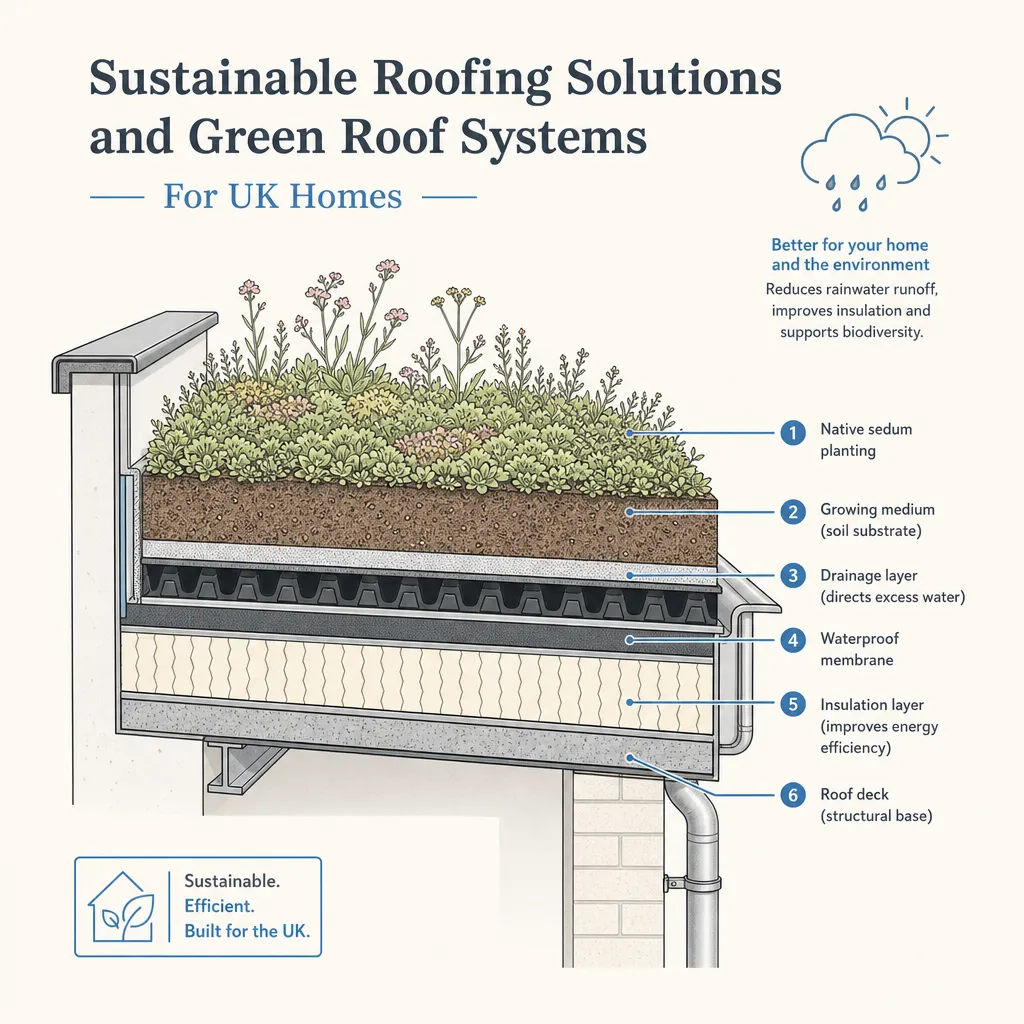
Sustainable Roofing Solutions and Green Roof Systems
Sustainable roofing in the UK covers several options: sedum or living roofs, recycled-content tiles, reclaimed slate, and solar-integrated roofing.
 Improvement & Build
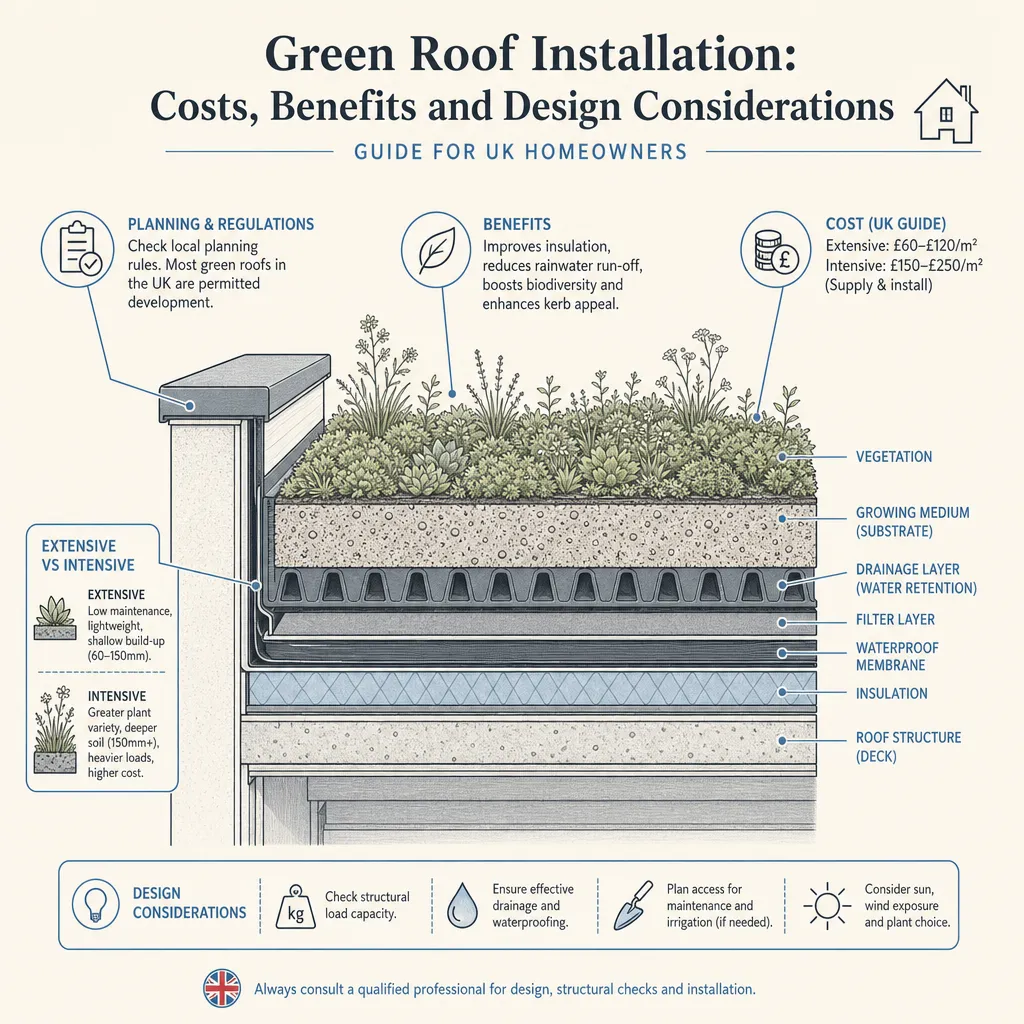
Green Roof Installation: Costs, Benefits and Design Considerations
A green roof costs roughly £50–£150 per m² installed for a shallow extensive system, or £100–£500+ per m² for a deeper intensive planted roof.
 Improvement & Build
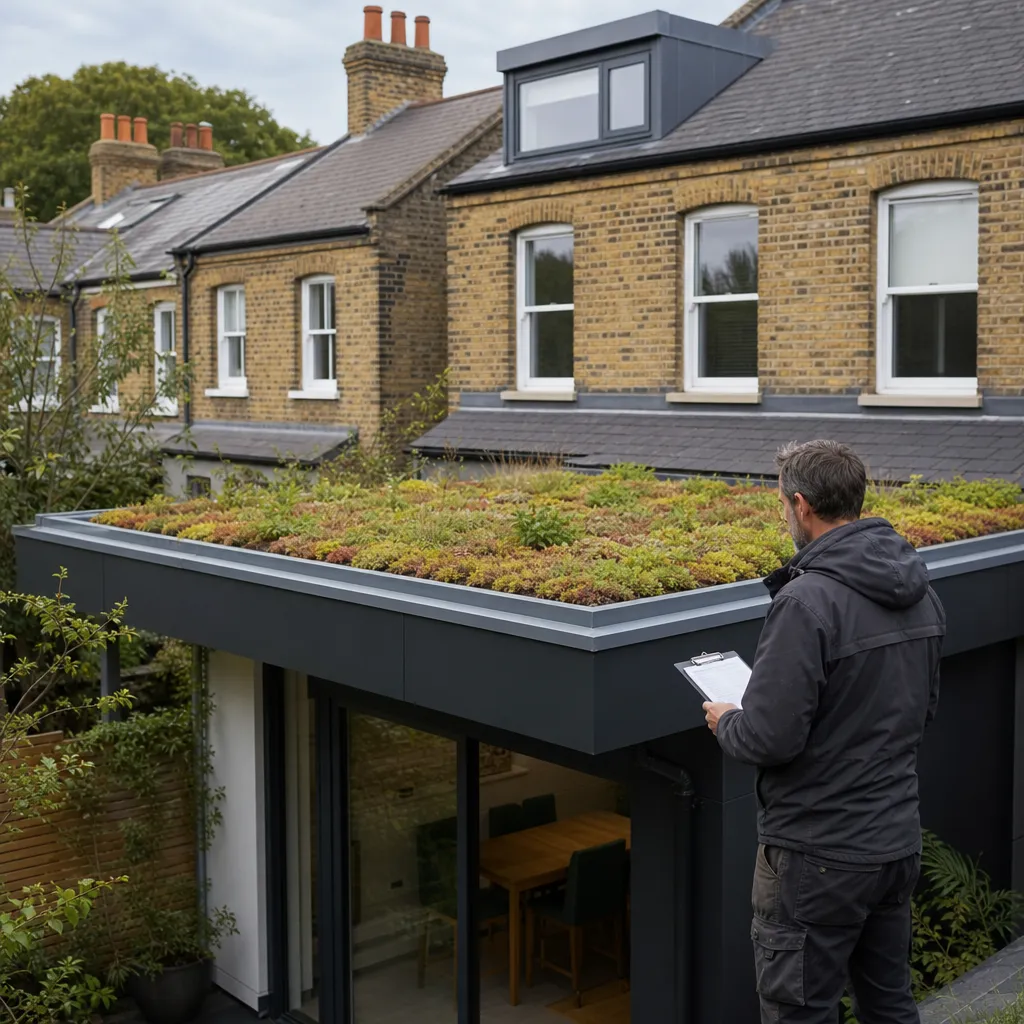
Exterior Colour Schemes for Green Roofs: Design Coordination
Warm greys, earth tones, natural timber, and dark charcoals tend to work best with green or living roofs, complementing the seasonal shift from vivid green in summer to bronze and straw in autumn and winter.
 Improvement & Build
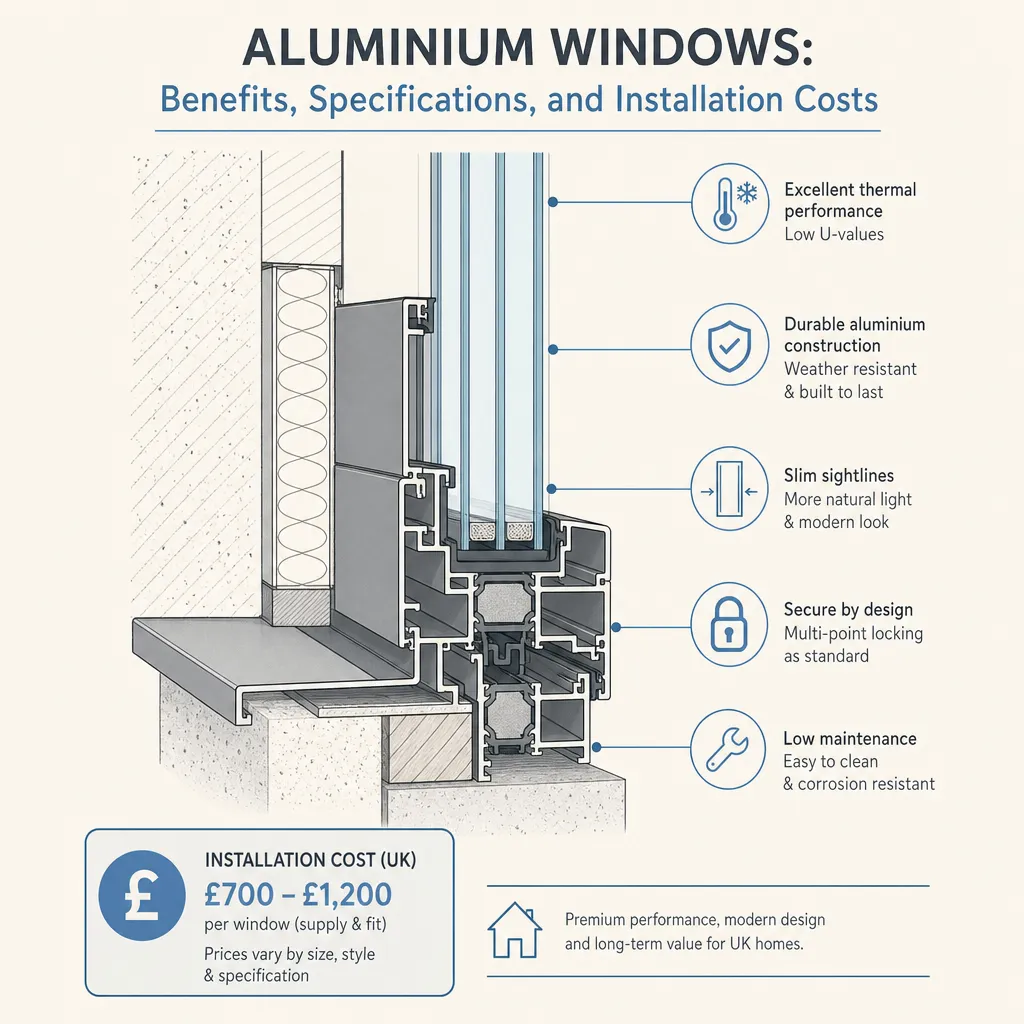
Aluminium Windows: Benefits, Specifications, and Installation Costs
Aluminium windows typically cost £600–£1,800 per window installed in the UK, depending on size and specification.
 Improvement & Build
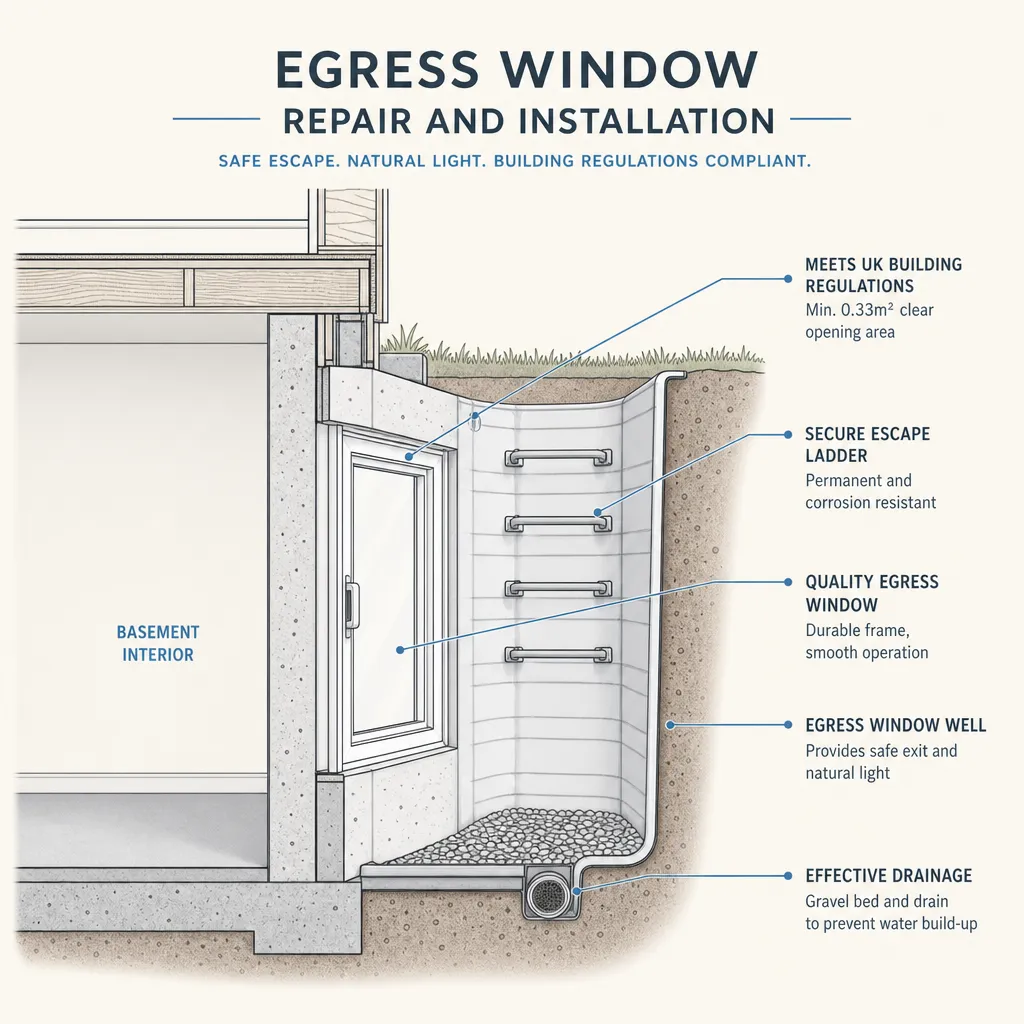
Egress Window Repair and Installation
An egress window is a window large enough to serve as an emergency escape route from a habitable room.