Rainwater Harvesting Systems: Installation Costs and Benefits
By Housey · Last reviewed 7th of May 2026
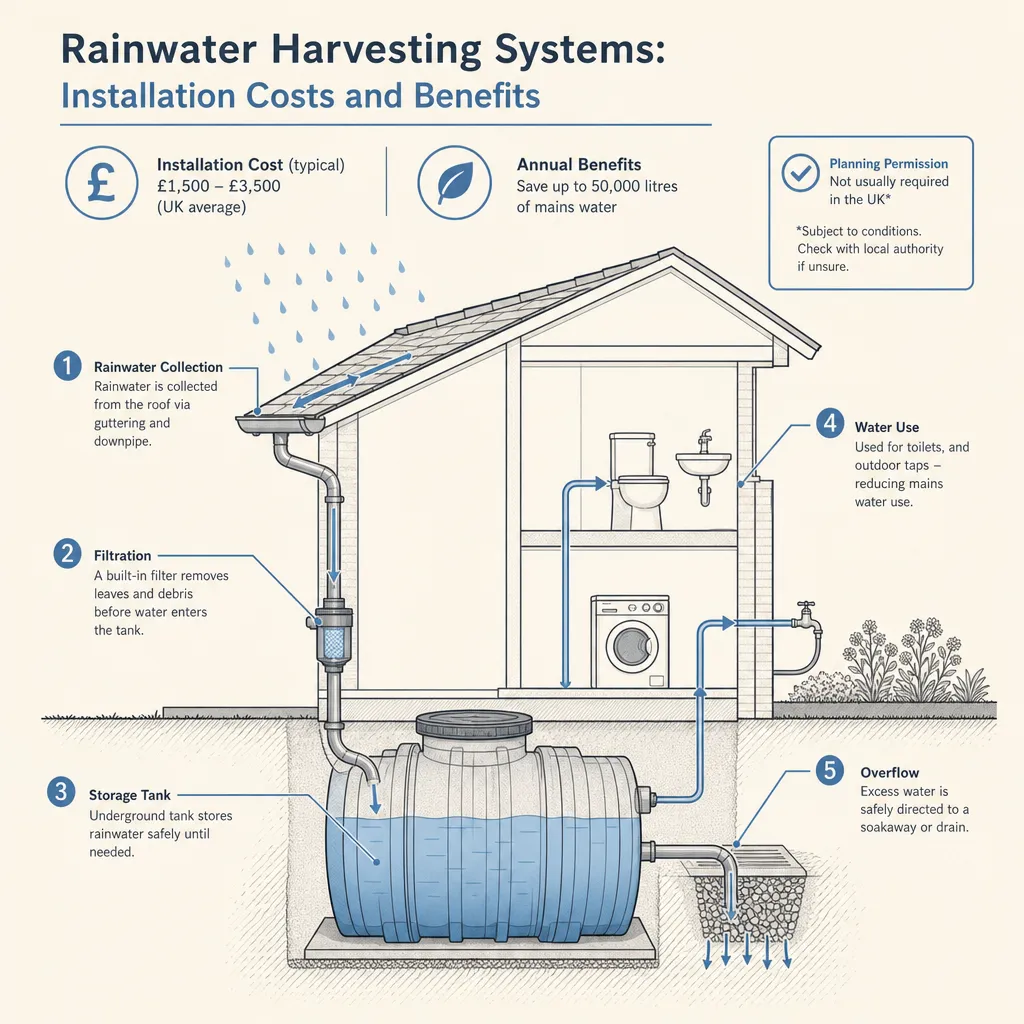
Rainwater Harvesting Systems: Installation Costs and Benefits
Rainwater harvesting is gaining traction across the UK as water metering spreads, sustainability targets tighten, and self-build and retrofit projects increasingly consider water efficiency alongside insulation and heating. The range of available systems — from a simple garden butt to a pressurised underground tank — means the right choice varies considerably by property, budget, and intended use.
Key points
- A fully installed underground direct-fed rainwater harvesting system typically costs £2,500–£7,000; above-ground water butt systems start from around £200–£600 installed (indicative UK costs, last reviewed 2026-05-07).
- Any system connected to the mains water supply must comply with WRAS (Water Regulations Advisory Scheme) backflow prevention standards to protect the public supply from cross-contamination.
- The average UK roof yields approximately 0.8 litres of usable water per square metre of roof area per millimetre of rainfall, enabling straightforward pre-installation yield estimates.
- Building Regulations Approved Document G covers water efficiency in new-build homes; rainwater recycling can contribute toward meeting the 125 litre/person/day water consumption target.
- Most domestic rainwater harvesting installations are permitted development, but conservation areas, listed buildings, and Article 4 Directions may require planning permission.
What is a rainwater harvesting system?
A rainwater harvesting system collects roof runoff, filters out debris, and stores the water for non-potable uses — toilet flushing, garden irrigation, laundry, and car washing. The collected water is not suitable for drinking or cooking unless treated to a standard well beyond standard domestic equipment.
Systems range from a single garden water butt to an underground tank complete with pump, first-flush diverter, float valve, and mains backup. The right type depends on how much water you want to offset, available space, ground conditions, and your budget.
Types of system compared
System type | Best for | Typical installed cost | Maintenance | Main limitation |
|---|---|---|---|---|
Above-ground water butt | Garden irrigation only | £200–£600 | Minimal | Small storage; no toilet or laundry supply |
Gravity-fed indirect (loft tank) | Retrofit where excavation is difficult | £1,500–£3,500 | Annual pump check | Roof void space needed; toilet pressure can be low |
Underground direct-fed (pressurised) | Full household non-potable supply | £2,500–£7,000 | Annual service and filter cleaning | Excavation required; higher upfront cost |
Communal or large-scale system | New-build developments, self-build plots | £4,000–£12,000+ | Professional servicing contract | Only cost-effective at scale |
Indicative UK costs, last reviewed 2026-05-07. Costs vary by ground conditions, access, tank size, and installer.
Which system should you choose?
- Choose a water butt if your main goal is garden watering and you want a low-cost, low-effort starting point.
- Choose a gravity-fed indirect system if you are retrofitting a house with a usable loft void and want to supply toilets without garden excavation.
- Choose an underground direct-fed system if you want to maximise water savings for toilets, laundry, and outdoor taps in an existing or new-build home.
- Ask a specialist installer if your roof catchment area is below 50 m² or your local annual rainfall is well below the UK average — payback periods can be very long in these cases.
- Check with your local planning authority before specifying any underground tank if the property is listed or in a conservation area.
How much water can a UK roof actually harvest?
The calculation is straightforward:
Annual yield (litres) = Roof catchment area (m²) × Annual rainfall (mm) × Runoff coefficient × Filter efficiency
A typical runoff coefficient for a tiled roof is 0.8–0.9. Filter efficiency (accounting for first-flush diversion and filter losses) is typically 0.85–0.90.
Worked example — 1970s semi-detached in the East Midlands:
- Roof catchment area: 70 m²
- Annual rainfall: approximately 650 mm (East Midlands average)
- Usable yield: 70 × 650 × 0.85 × 0.85 ≈ 33,000 litres/year
Toilet flushing accounts for roughly 30% of household water use. For a four-person household using around 150 litres/person/day, toilet flushing alone demands approximately 65,000 litres/year — meaning this system could cover around half of toilet demand, with mains backup covering the remainder during dry periods.
The Energy Saving Trust notes that metered households can achieve meaningful bill reductions with a well-sized system, though exact savings depend on local water tariffs and household occupancy.
Installation requirements and regulations
WRAS compliance
Any system that connects to the mains supply for automatic top-up during dry periods must prevent cross-contamination of the public water supply. WRAS Type AA or AB air gaps are typically required between the mains backup and the harvested water circuit. Your installer should provide written WRAS compliance documentation on completion of the installation.
Building Regulations
- Approved Document G (Water efficiency): Applies to new dwellings and some material changes of use. Rainwater recycling can contribute toward meeting the 125 litre/person/day water consumption target under Part G.
- Approved Document H (Drainage): Overflow arrangements from rainwater tanks must discharge safely without causing flooding or nuisance to neighbouring land or adopted drains.
Planning permission
Most standard domestic installations fall under permitted development rights in the Town and Country Planning (General Permitted Development) Order. However:
- Listed buildings: Any alteration, including underground tank installation, may require Listed Building Consent.
- Conservation areas: Surface-visible components such as overflow pipes and inspection covers may require consent from the local planning authority.
- Article 4 Directions: Some local authorities restrict permitted development rights; always check with your LPA before starting work.
Costs, grants, and payback
Indicative UK costs, last reviewed 2026-05-07.
Cost element | Typical range |
|---|---|
Underground tank (1,500–5,000 litre) | £600–£2,000 supply cost |
Pump and controls | £400–£900 |
Filter and first-flush diverter | £150–£400 |
Installation labour and excavation | £800–£2,500 |
Mains top-up valve and WRAS compliance work | £150–£300 |
Annual maintenance | £80–£200 |
Grants: As of May 2026, there is no dedicated national grant for domestic rainwater harvesting in England. Some water companies — notably Anglian Water and Thames Water — have historically offered rebates or subsidised water butts; check your supplier's current scheme. Wales and Scotland have separate water efficiency programmes; contact your devolved authority for current offers.
Payback period: For an underground system costing £4,000–£6,000, payback on water bill savings alone is typically 25–40 years for a metered household. The financial case therefore rests primarily on environmental goals, new-build compliance requirements, or unusually high local water tariffs, rather than on short-term bill savings.
Red flags when choosing an installer
- No mention of WRAS compliance or backflow prevention — do not proceed without this being addressed in writing.
- Quote does not specify tank material, capacity, or warranty period.
- Installer cannot confirm whether planning permission is required for your specific property.
- No provision for overflow drainage or mains top-up during dry spells.
- No annual servicing option offered — filters and first-flush systems need regular maintenance or water quality will degrade over time.
- Very low quotes that exclude excavation, connection to existing drainage, or commissioning costs.
Homeowner checklist before installation
When to get professional help
Most rainwater harvesting installations require a qualified plumber or specialist installer, particularly where mains connection and WRAS compliance are involved. You should always involve a professional if:
- The system connects to the mains supply in any way.
- Excavation is needed close to existing drainage runs, foundations, or buried utilities.
- The property is listed or in a conservation area.
- The system will serve washing machines or toilet cisterns, where backflow risk requires verified controls.
- You are unsure whether a Building Regulations application or notification is needed for your specific project.
How Housey can help
If you are assessing water efficiency as part of a broader home improvement plan, a retrofit assessment can help you prioritise measures — including water recycling — alongside insulation, heating, and ventilation. For projects that need to demonstrate broader sustainability compliance, Housey can connect you with specialists in energy and sustainability compliance.
Frequently asked questions
Is rainwater harvesting legal in the UK?
Yes. Collecting and using rainwater from your own roof is entirely legal in the UK. The key requirement is that any system connected to the mains water supply must comply with WRAS backflow prevention standards to protect the public water supply from cross-contamination. Your installer should provide compliance documentation on completion.
Does rainwater harvesting need planning permission?
Most domestic installations are permitted development and do not require planning permission. Exceptions include listed buildings, which may need Listed Building Consent, and properties in conservation areas or subject to Article 4 Directions. Always check with your local planning authority before starting work if you are unsure about your property's status.
Can I drink harvested rainwater?
No. Harvested rainwater is suitable only for non-potable uses such as toilet flushing, garden irrigation, laundry, and car washing. Making it safe to drink requires treatment well beyond the scope of standard domestic systems. Continue using mains water for drinking, cooking, and personal hygiene.
How long does rainwater harvesting installation take?
An underground system typically takes two to three days to install, including excavation, tank placement, pipework, and pump commissioning. Above-ground water butt systems can usually be installed in a few hours and do not require specialist contractors or any notification to your local authority.
Will a rainwater harvesting system increase my home's value?
There is limited evidence that domestic rainwater harvesting adds measurable value at resale in the current UK market. Its primary value is environmental and, for metered households, a modest long-term contribution to running cost reductions. New-build compliance contexts may make it more commercially relevant.
Sources and further reading
- Water Regulations Advisory Scheme (WRAS) — WRAS: backflow prevention and mains-connection compliance requirements
- Building Regulations Approved Document G — GOV.UK: water efficiency standards for new dwellings
- Water efficiency guidance — Energy Saving Trust: household water-saving measures
- UK climate averages — Met Office: rainfall data for system sizing calculations
Useful next reads
 Energy & Retrofit
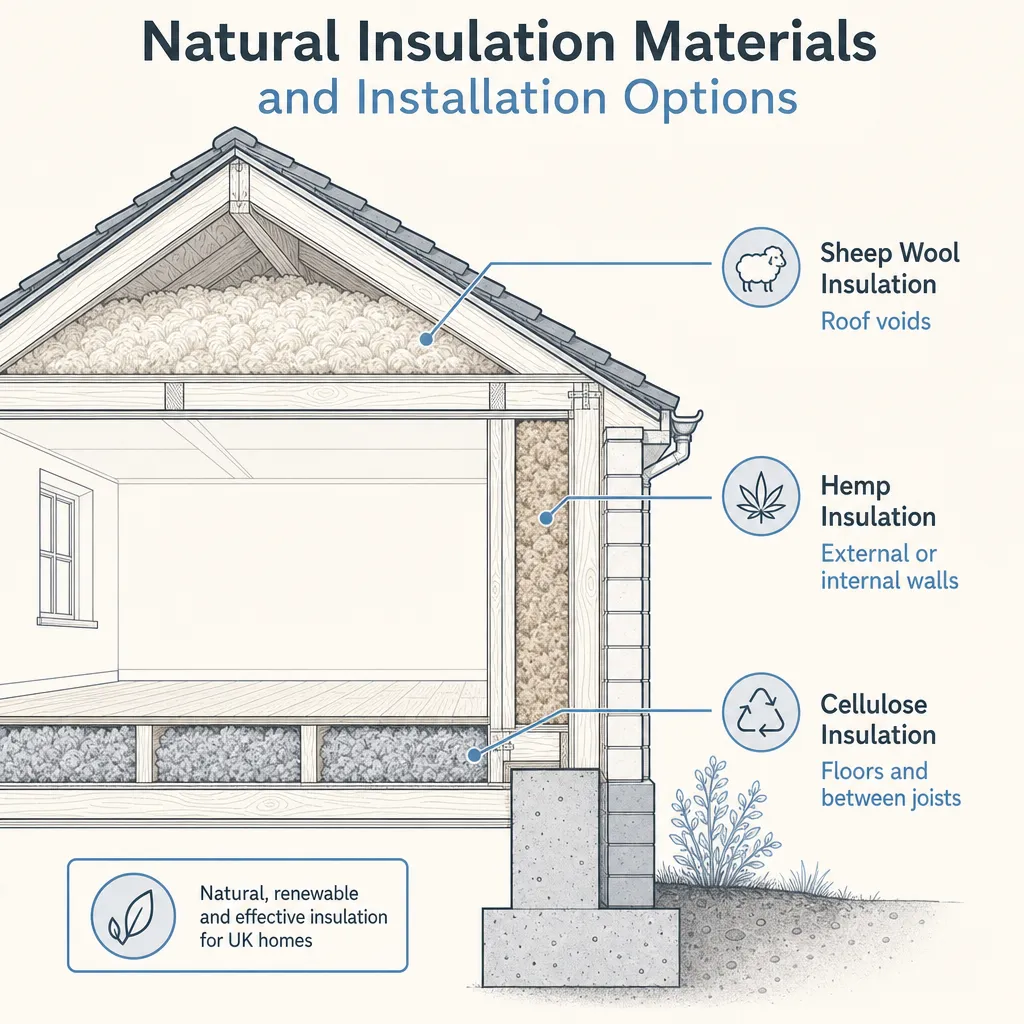
Natural Insulation Materials and Installation Options
Natural insulation materials such as sheep wool, hemp, cellulose, wood fibre, and cork can match mineral wool for thermal performance and offer additional benefits including moisture buffering and lower embodied carbon.
 Energy & Retrofit
Climate-Ready Home Improvements for the Future
Climate-ready home improvements tackle four main risks for UK properties: overheating, increased rainfall and flooding, storm damage, and energy cost volatility.
 Energy & Retrofit
Reducing Heating Costs Through Property Energy Efficiency
Reducing heating costs starts with identifying where heat is lost — typically walls (30–35%), roof (20–25%), and windows.
 Energy & Retrofit
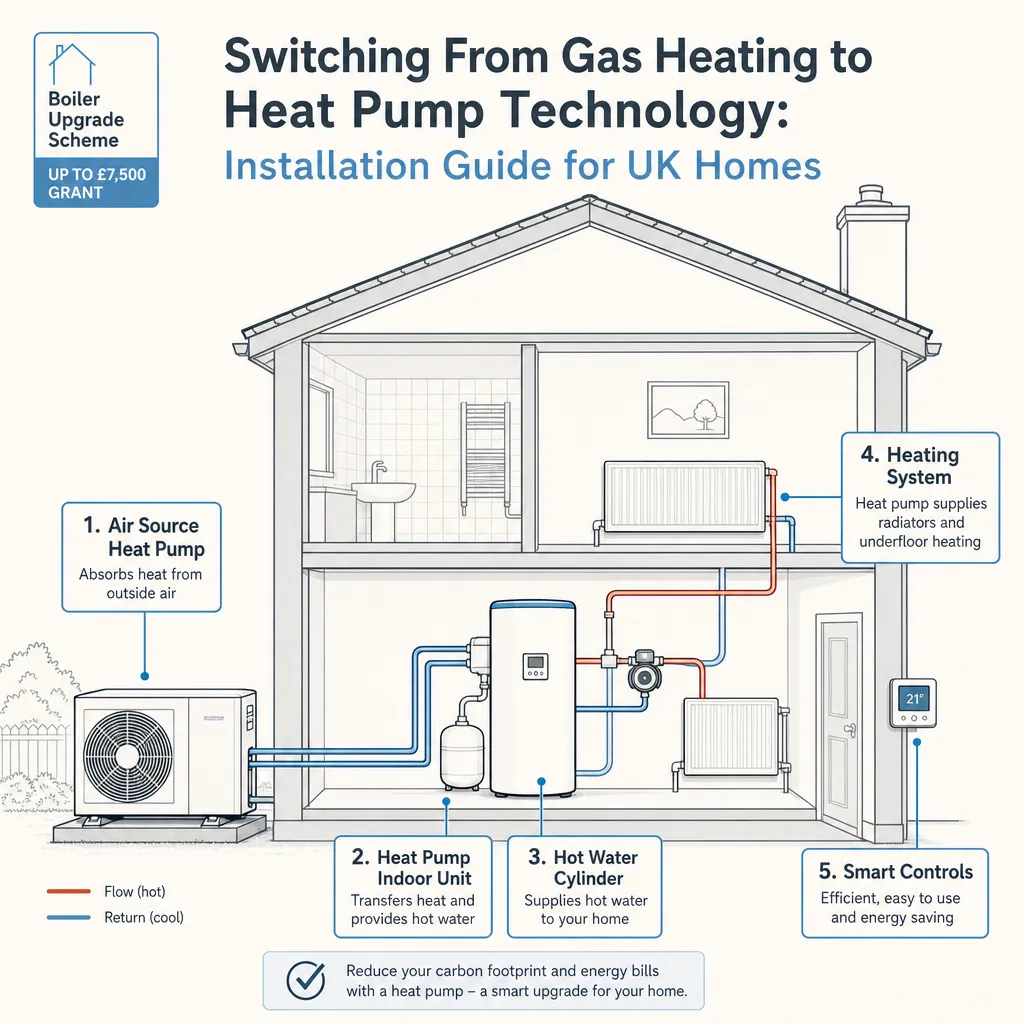
Switching From Gas Heating to Heat Pump Technology: Installation Guide
Switching from gas to a heat pump requires a heat loss calculation, correctly sized equipment, and often radiator upgrades before installation.
 Energy & Retrofit
Green Roofs: Environmental Benefits and Installation Considerations
A green roof supports vegetation on a waterproof membrane above your building.