Grey uPVC Windows: Specification, Selection and Installation Cost
By Housey · Last reviewed 7th of May 2026
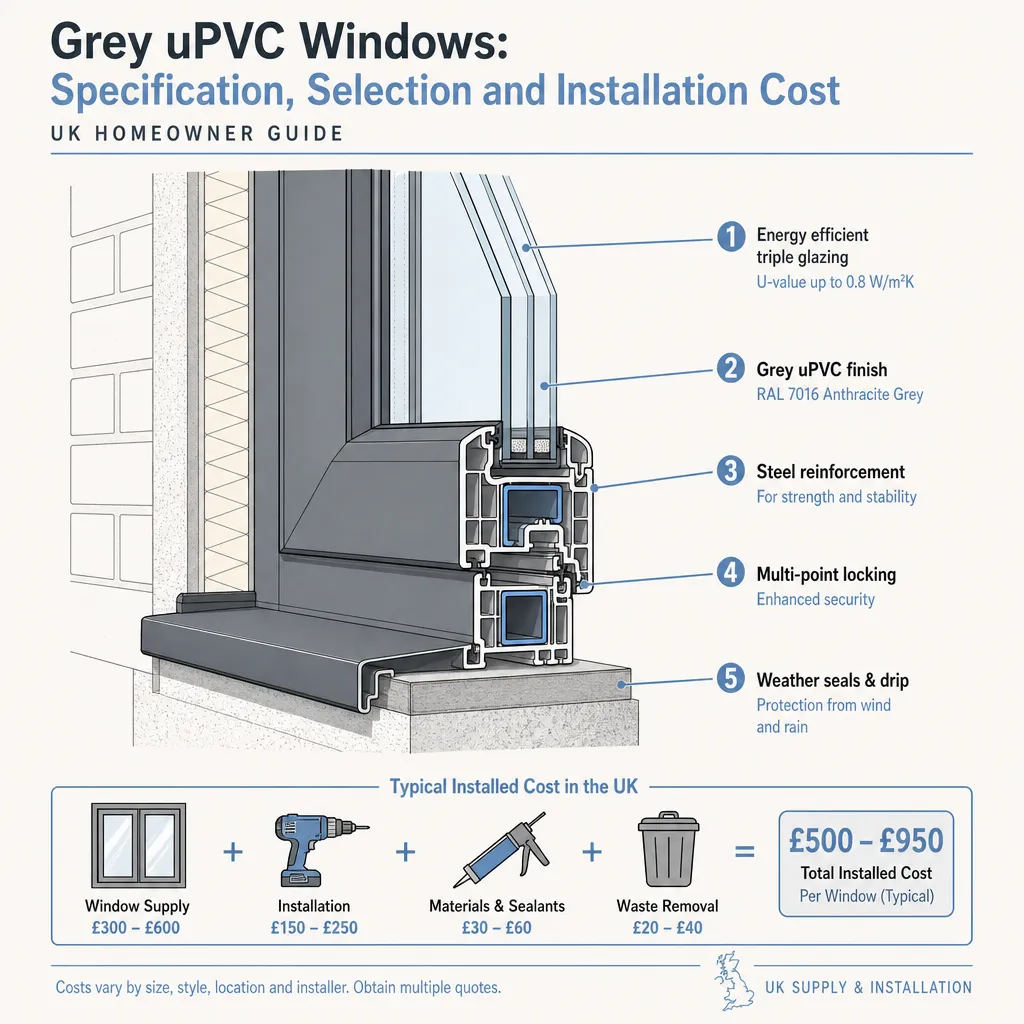
Grey uPVC Windows: Specification, Selection and Installation Cost
Grey uPVC windows have become one of the most requested window upgrades in the UK, with anthracite grey and slate grey finishes appearing on properties ranging from new-build estates to Victorian terraces. The decision involves more than shade preference — profile system, glazing performance, compliance with Building Regulations, and installer accreditation all affect long-term satisfaction and your position when you come to sell the property.
Key points
- Grey uPVC windows typically cost £300–£900 per window installed for a standard casement or tilt-and-turn unit, depending on size, glazing specification, and profile (Indicative UK costs, last reviewed 2026-05-07).
- Anthracite grey (RAL 7016) is the most commonly specified grey for uPVC windows in the UK; other popular shades include Basalt Grey (RAL 7012), Agate Grey (RAL 7038), and Slate Grey (RAL 7015).
- All replacement windows must comply with Building Regulations Part L; the maximum whole-window U-value for replacement windows in England is 1.4 W/m²K under the 2022 Approved Document L.
- Installers registered with FENSA or CERTASS can self-certify compliance and issue a certificate on completion — conveyancers require this document when you sell the property.
Grey shade options: a comparison
Grey covers a wide spectrum of tones. The most common options for UK residential windows are:
Shade | RAL reference | Character | Common use |
|---|---|---|---|
Anthracite Grey | RAL 7016 | Dark, near-charcoal | Contemporary, new-build, extensions |
Basalt Grey | RAL 7012 | Medium-dark warm grey | Traditional and modern mix |
Agate Grey | RAL 7038 | Light/mid cool grey | Render-clad properties, softer aesthetic |
Slate Grey | RAL 7015 | Dark blue-grey | Period and urban properties |
Pebble Grey | RAL 7032 | Warm beige-grey | Cotswold stone, rural settings |
Darker shades such as RAL 7016 absorb more solar heat, causing greater thermal expansion of the profile than lighter colours. Reputable manufacturers use heat-stabilised grey uPVC compounds to manage this — confirm the profile specification with your installer.
Profile systems
The three most widely used uPVC profile systems in UK residential installations are Rehau (70 mm and 86 mm depths), Veka (good foil adhesion on grey finishes), and Deceuninck (strong sustainability credentials; 75 mm and 82 mm systems). The profile system affects sightlines, thermal performance, and hardware compatibility. Ask your installer to specify which system they use and its rated whole-window U-value.
Dual-colour vs single-colour
Dual-colour (grey outside, white inside) windows reduce the visual weight of dark frames on interior surfaces and suit properties where interior decor is neutral or traditional. This option typically costs 10–15% more than single-colour grey.
How much do grey uPVC windows cost in the UK?
Window type | Typical installed cost |
|---|---|
Small casement (approx. 600 × 900 mm) | £250–£500 |
Standard casement (approx. 1,200 × 1,050 mm) | £350–£700 |
Large casement or tilt-and-turn | £500–£900 |
Bay window (3-section) | £1,200–£3,000 |
uPVC sliding sash | £700–£1,500 |
Indicative UK costs, last reviewed 2026-05-07. Prices vary by region, access, glazing specification, and installer.
Glazing upgrades that affect cost: triple glazing adds £50–£150+ per window and improves the whole-window U-value from approximately 1.2 W/m²K to 0.7–0.8 W/m²K. Acoustic laminated glass adds approximately £30–£80 per window and is useful near roads or railways.
Building regulations and FENSA
Replacement windows are notifiable under Building Regulations in England and Wales and must meet the thermal performance standards in Approved Document L, which sets a maximum whole-window U-value of 1.4 W/m²K for replacement windows. Installers can self-certify compliance in two ways:
- FENSA registration: the Fenestration Self-Assessment Scheme allows registered installers to self-certify without a separate local authority building control application. They issue a FENSA certificate on completion — keep this document safely, as conveyancers require it when you sell.
- CERTASS: an alternative competent person scheme; certificates are equivalent to FENSA for conveyancing purposes.
If your installer is not registered with either scheme, they must submit a building regulations application to your local authority building control body, adding cost and time. Always ask which scheme your installer uses and confirm they will provide a certificate on completion.
Planning permission
For most houses, replacing windows with grey uPVC frames falls within permitted development rights and does not require a planning application. Check before proceeding if the property is a listed building (listed building consent is required), in a conservation area (grey uPVC is typically not acceptable — timber or aluminium frames are usually required), or subject to an Article 4 direction. Your local planning authority can advise on your specific property.
Specification checklist: before ordering grey uPVC windows
What to ask installers before accepting a quote
- What profile system and manufacturer will you use, and what is the rated whole-window U-value?
- Is the quoted price for the exact RAL shade I have specified?
- Is this dual-colour (grey outside, white inside) or single-colour?
- Are you FENSA or CERTASS registered, and will you issue a certificate on completion?
- What does the installation price include — removal of old frames, disposal, making good around the reveals?
- Is VAT included in the quoted price?
- What is the lead time from order to installation?
- What manufacturer warranty applies to the profile, and who handles claims?
- Can you provide references from completed grey uPVC installations?
When to get professional help
For straightforward like-for-like replacements, a FENSA-registered installer handles specification, installation, and compliance certification without additional professional involvement. Seek further advice if:
- The property is listed or in a conservation area — consult your local planning authority before ordering.
- The work involves new openings, changes to structural lintels, or anything beyond a direct like-for-like replacement.
- You are buying a property where existing windows lack FENSA or building regulations certificates — a RICS surveyor or conveyancer should advise on whether retrospective regularisation is needed.
How Housey can help
Housey connects UK homeowners with experienced, vetted window and door professionals. You can find a window and door installer on Housey to request quotes for grey uPVC window installation, compare specifications and prices, and verify FENSA or CERTASS registration before committing.
Frequently asked questions
Do grey uPVC windows need planning permission?
For most houses, replacing windows with grey uPVC frames is permitted development and does not require a planning application. The main exceptions are listed buildings, conservation areas, and properties subject to Article 4 directions. In conservation areas, grey uPVC is typically not acceptable and timber or aluminium is usually required instead. Always check with your local planning authority if in doubt.
What is the most popular grey shade for uPVC windows?
Anthracite Grey (RAL 7016) is by far the most widely specified grey for uPVC windows in the UK as of 2026. It has a near-charcoal, contemporary appearance used extensively on new-build homes and extensions. Basalt Grey (RAL 7012) and Slate Grey (RAL 7015) are also common where a slightly softer or more traditional tone is preferred.
How long do grey uPVC windows last?
Quality uPVC windows typically last 20–35 years before degradation of seals, hardware, or frame profiles necessitates replacement. Grey foiled or co-extruded profiles are as durable as white uPVC provided stabilised compounds are used. Darker shades experience greater thermal cycling, which can accelerate hardware wear — good-quality hinges and locking mechanisms help mitigate this.
Are grey uPVC windows more expensive than white?
Yes, typically by 10–20%. The grey finish requires foiling, co-extrusion, or dual-colour lamination during manufacture. Dual-colour configurations — grey outside, white inside — cost slightly more than single-colour grey but are popular because they avoid the visual weight of grey frames on interior surfaces.
Sources and further reading
- FENSA: replacement windows and doors — FENSA
- Approved Document L: Conservation of fuel and power — GOV.UK
- Permitted development rights for householders: technical guidance — GOV.UK
- Windows and energy efficiency — Energy Saving Trust
- CERTASS Trade Association — CERTASS
Useful next reads
 Improvement & Build
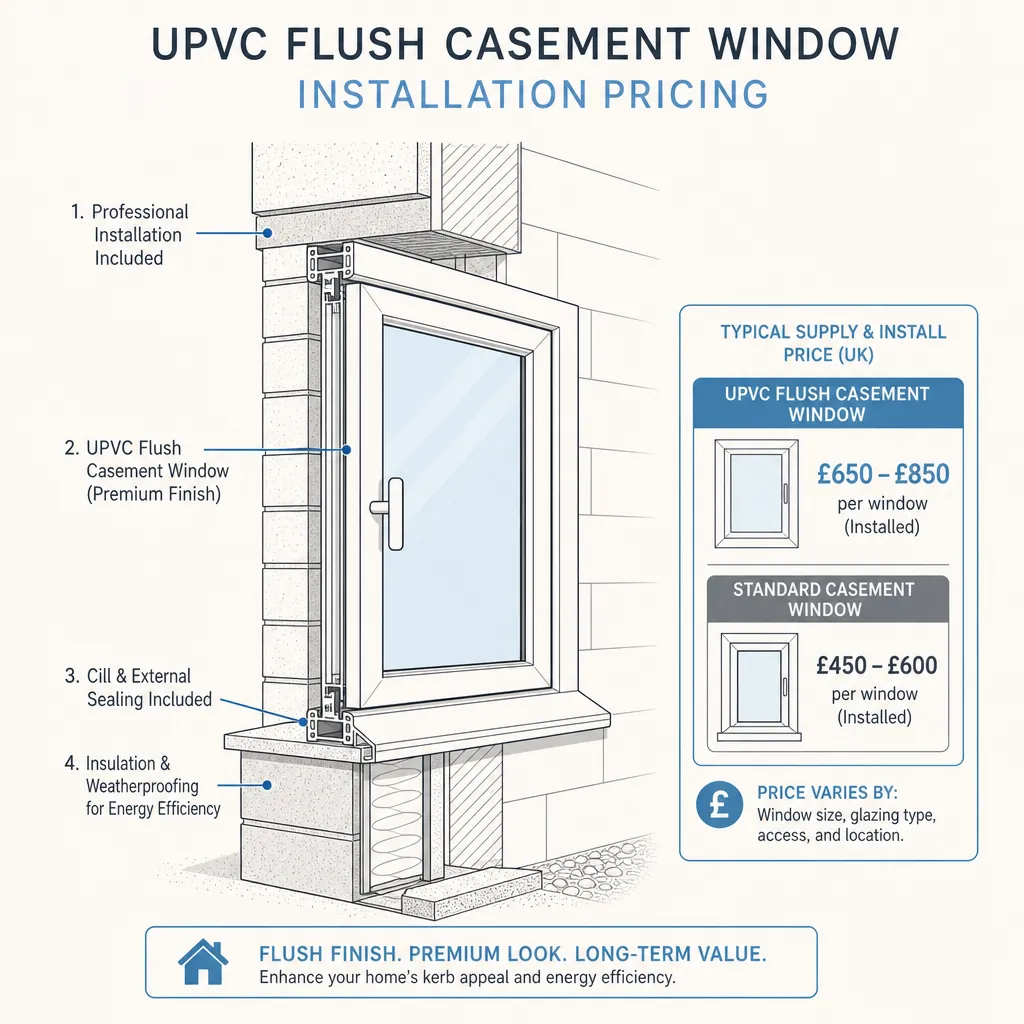
UPVC Flush Casement Window Installation Pricing
UPVC flush casement windows typically cost £400–£900 per window supplied and fitted in the UK, depending on size, glazing specification, and finish.
 Improvement & Build
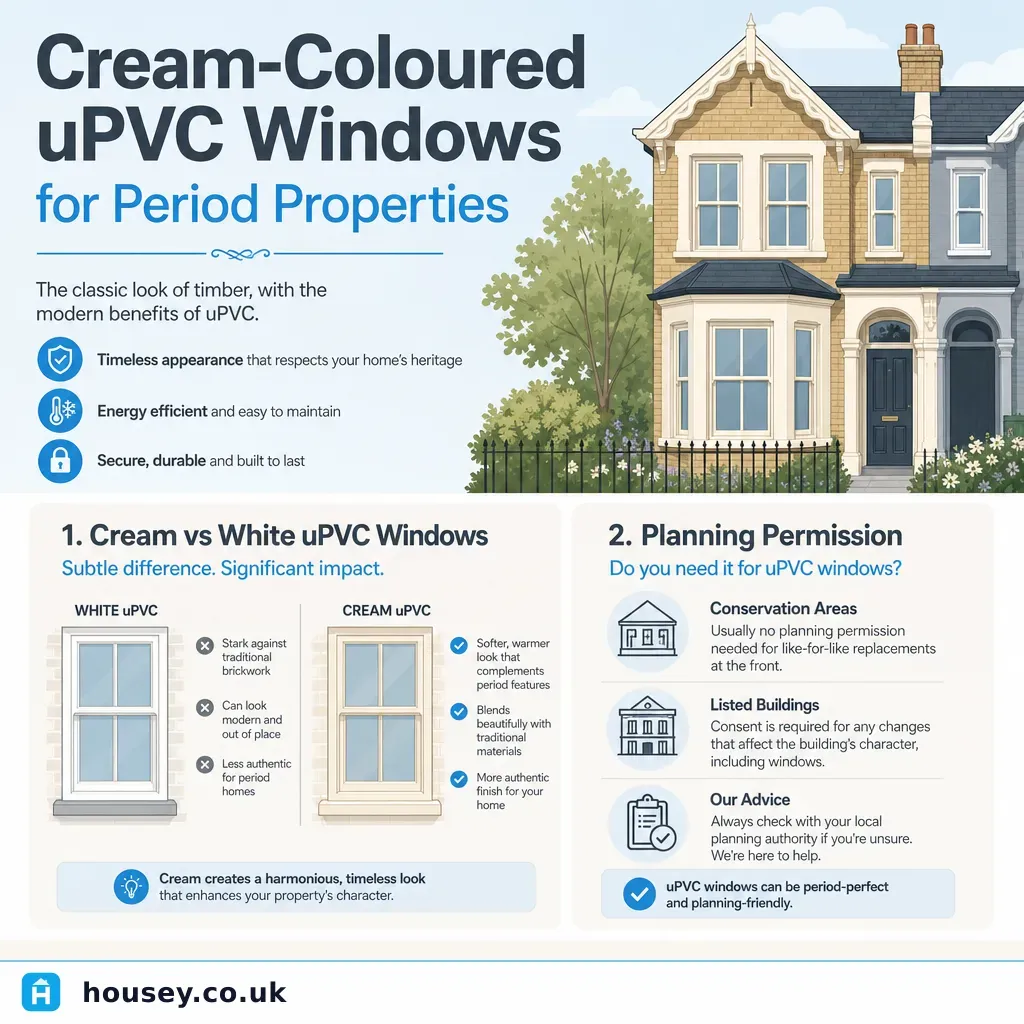
Cream-Coloured uPVC Windows for Period Properties
Cream uPVC windows are a popular choice for period properties because their warmer tone sits more sympathetically with aged brick and stonework than stark white.
 Improvement & Build
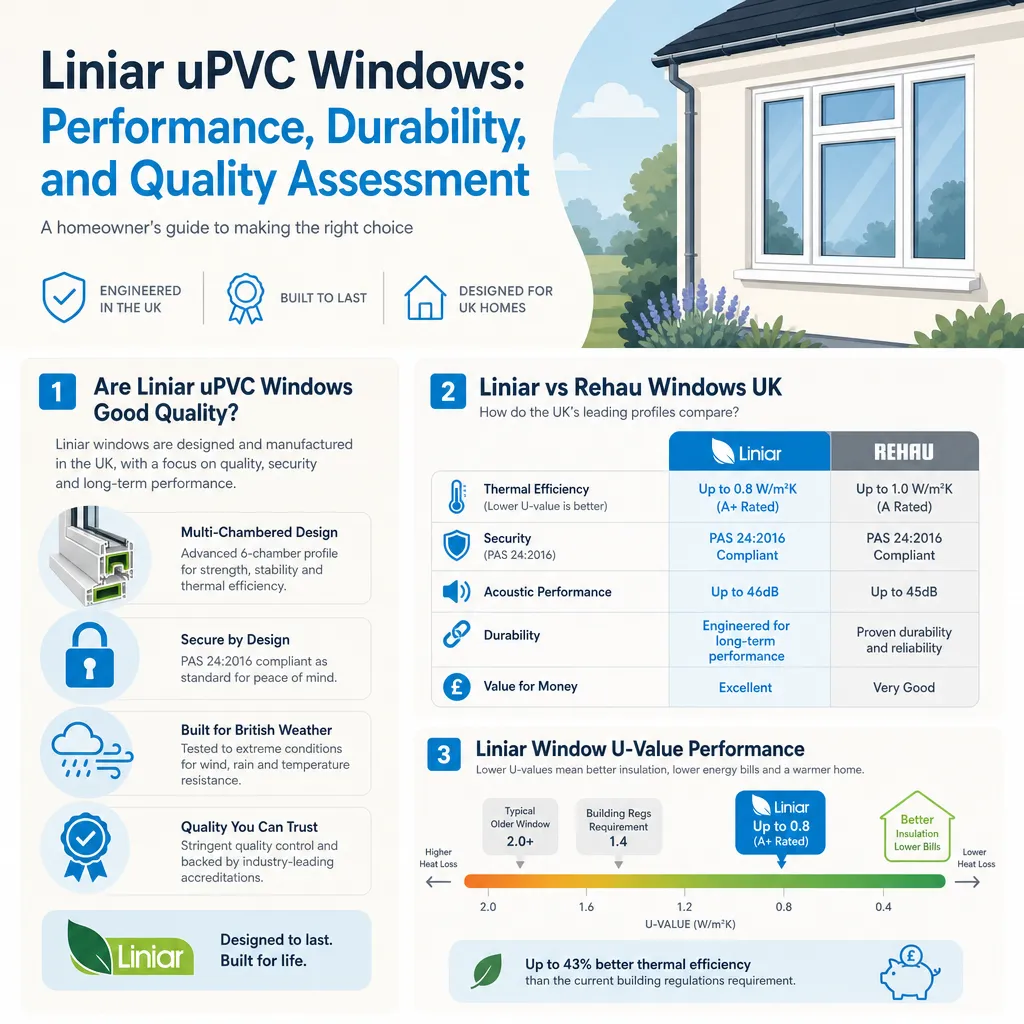
Liniar uPVC Windows: Performance, Durability, and Quality Assessment
Liniar uPVC window profiles are manufactured in the UK using multi-chambered, foamed frames.
 Improvement & Build
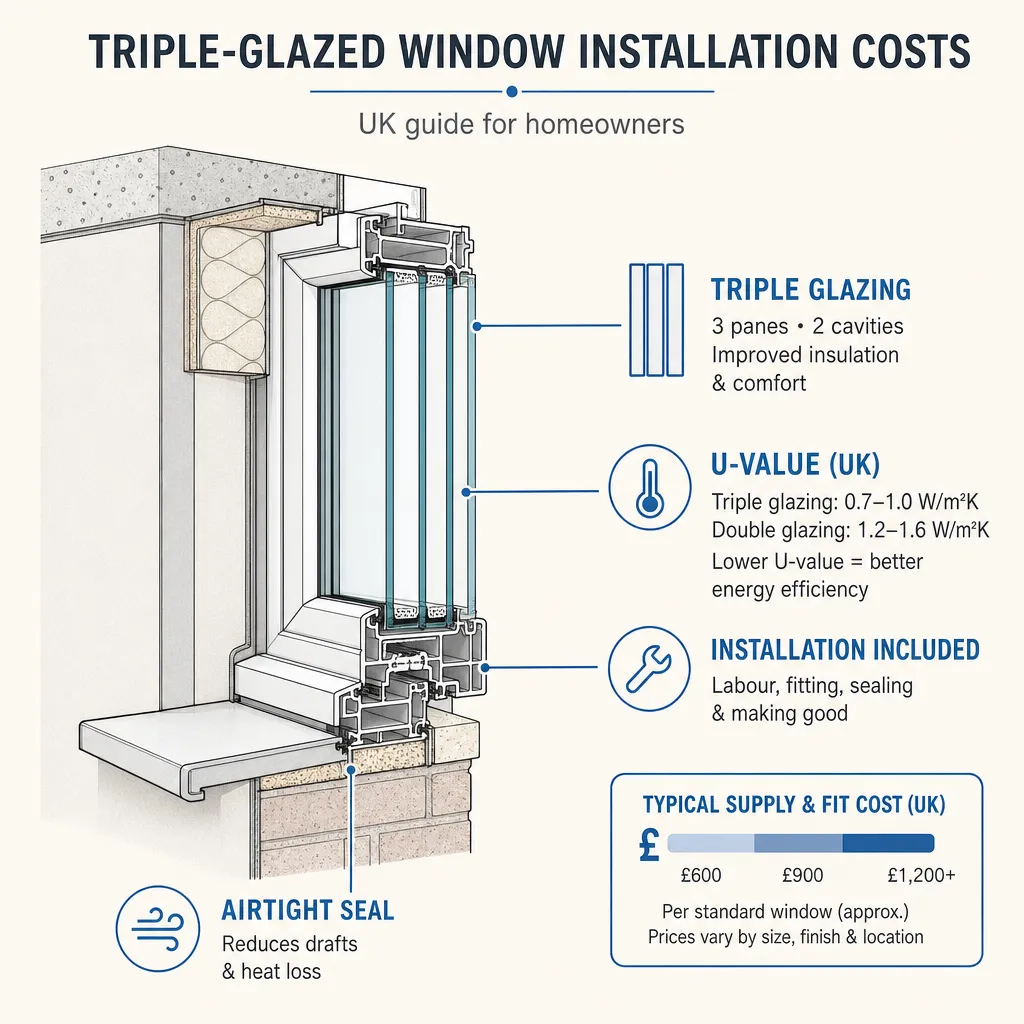
Triple-Glazed Window Installation Costs
Triple-glazed window installation in the UK typically costs £800–£1,800 per window, depending on size, frame material, and glazing specification.
 Improvement & Build
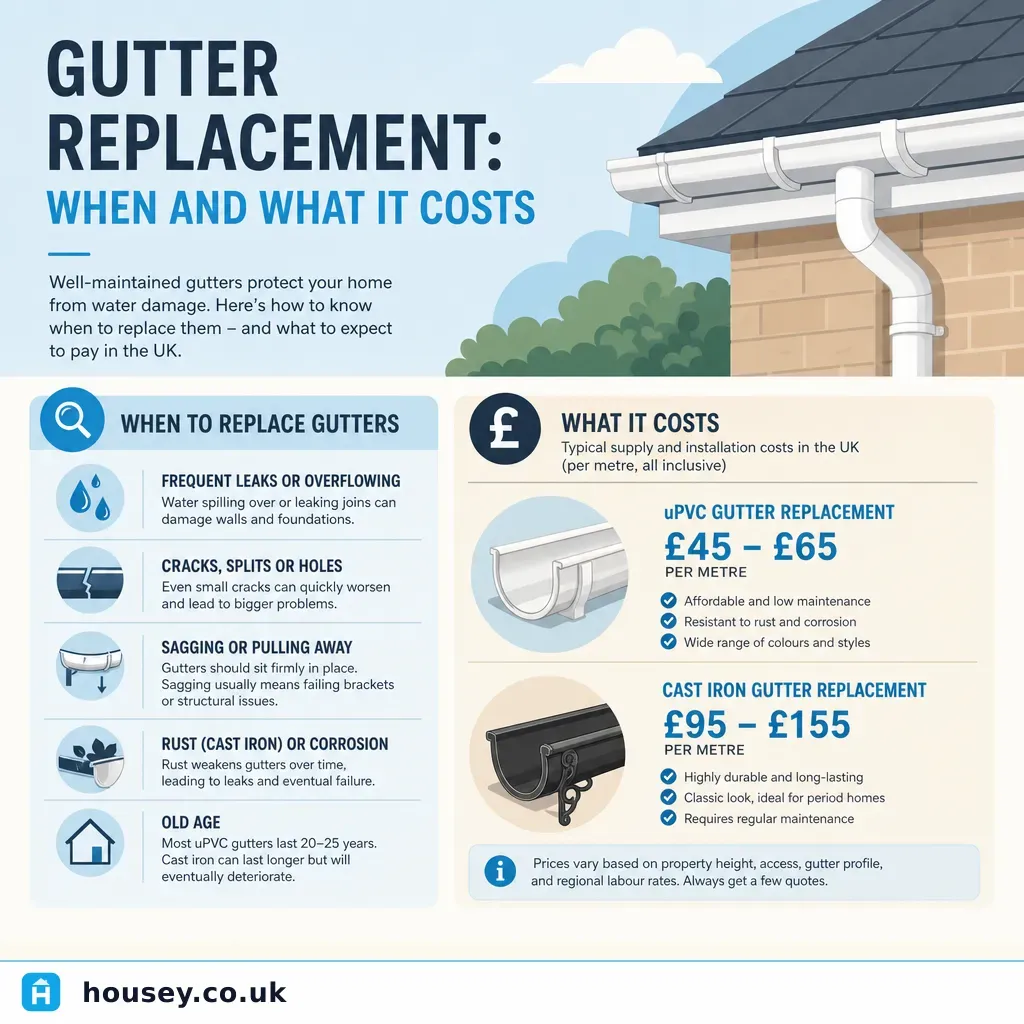
Gutter Replacement: When and What It Costs
Full gutter replacement on a typical UK semi-detached house costs £400–£900 for uPVC, rising to £1,000–£1,800 for seamless aluminium and £2,000–£4,000 or more for cast iron.