Gutter Replacement: When and What It Costs
By Housey · Last reviewed 7th of May 2026
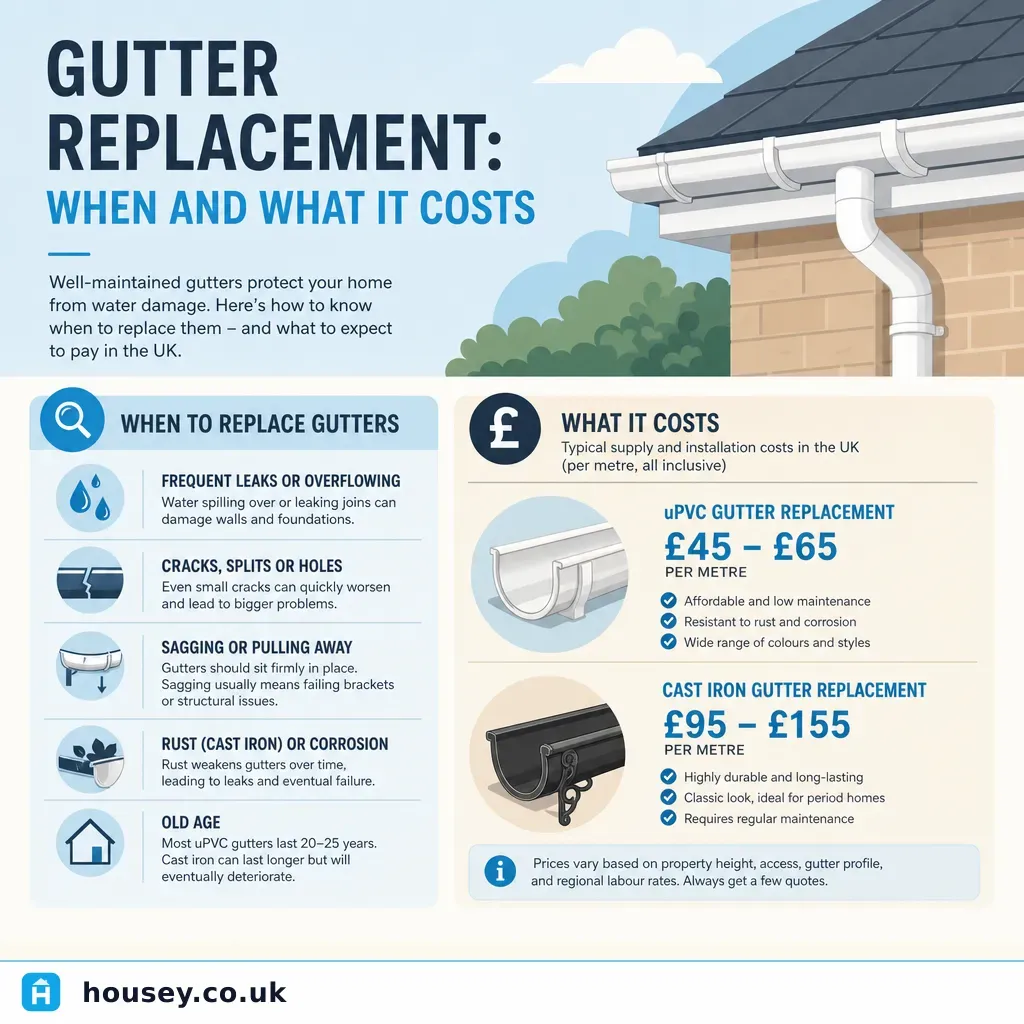
Gutter Replacement: When and What It Costs
Knowing when to replace rather than repair your gutters can save you from an endless cycle of patchy fixes — and from the damp damage that follows when a failing system is kept on life support for too long. For UK homeowners, the decision typically arises when a roof is being re-covered, when multiple sections are failing simultaneously, or when ageing cast iron guttering becomes impractical to maintain. Getting the material choice and capacity specification right at the outset affects both the upfront cost and how long the new system will serve you.
Key points
- A full uPVC gutter replacement on a standard UK semi-detached house typically costs £400–£900 including labour and removal of old materials, rising significantly where scaffold access is required on a two-storey property.
- The four main gutter materials used in UK residential properties are uPVC, aluminium, cast iron, and galvanised steel — each with different cost profiles, lifespans, and suitability for different property types.
- Like-for-like gutter replacement does not normally require planning permission in England and Wales, but replacing cast iron or period-profile guttering on a listed building or in a conservation area may require Listed Building Consent from the local planning authority.
- The most cost-effective time to replace guttering is when scaffold is already erected for roof or fascia work — combining jobs can reduce overall access costs by £300–£600.
- uPVC gutters typically carry a 10-year manufacturer guarantee from reputable suppliers; seamless aluminium systems often carry 25-year guarantees against corrosion failure.
When should you replace rather than repair?
Repair is almost always cheaper than replacement in the short term, but there are situations where continuing to repair becomes poor value for money.
Replace rather than repair if:
- More than one-third of the gutter run has cracked, deformed, or has repeatedly failing joints.
- The fascia boards need full replacement — if the support structure is being renewed, replacing the gutters at the same time avoids a second scaffold hire later.
- Cast iron guttering is extensively corroded and specialist repair costs are approaching or exceeding the cost of a new aluminium or uPVC run.
- You are upgrading the full roofline — new fascia, soffit, and bargeboards — as part of a wider renovation project.
- The existing system is noticeably undersized: if gutters overflow in moderate rain despite being clear and well-pitched, a larger-capacity profile may be needed.
Continue to repair if:
- Only one or two joints or sections have failed on an otherwise sound system.
- The gutters are cast iron in good structural condition on a listed or period property where character is a priority.
- The system is less than 10 years old and failure is isolated to a single point.
Decision tree: repair or replace?
- Replace if the system is over 20 years old and more than 30% of joints or sections are failing.
- Replace if scaffold is already being hired for roof or fascia work — combining jobs reduces access costs significantly.
- Replace if cast iron gutters show through-rust or cracking on more than two sections.
- Repair if fewer than two joints or one section are affected and the rest of the run is in sound condition.
- Ask a roofer to assess if you are unsure whether failure is isolated or systemic — a brief inspection will clarify the situation.
- Check with your local planning authority if your property is listed or in a conservation area before replacing cast iron or period-profile guttering with a different material.
What do different gutter materials cost?
Indicative UK costs, last reviewed 2026-05-07. Costs vary by region, property size, roof pitch, access difficulty, and contractor. Obtain at least three written quotes before instructing.
Material | Typical cost per metre (supply and fit) | Lifespan | Best for | Not ideal for |
|---|---|---|---|---|
uPVC | £15–£35/m | 20–30 years | Standard UK housing, cost-conscious replacement | Listed or conservation area properties; where cast iron profile match is required |
Aluminium (seamless) | £30–£55/m | 30–40+ years | Modern properties, larger runs, lower long-term maintenance | Higher upfront cost may not suit tight renovation budgets |
Cast iron | £60–£120/m | 50–100+ years | Period and listed properties, authentic character match | Heavy (requires strong fascia), needs periodic repainting, specialist fitting required |
Galvanised steel | £35–£60/m | 20–30 years | Wider colour range; some commercial or industrial aesthetics | Prone to corrosion if paint coat is damaged or scratched |
For a typical semi-detached house with approximately 20–25 metres of gutter run and two downpipes, total installed costs will typically fall in the following ranges:
- uPVC, single-storey: £400–£700
- uPVC, two-storey (with scaffold): £700–£1,300
- Seamless aluminium, two-storey: £1,000–£1,800
- Cast iron, two-storey: £2,000–£4,000+
Scaffold hire for a two-storey house typically adds £400–£800 depending on duration and configuration. Always confirm in writing whether scaffold is included in a quoted price.
Gutter profiles and capacity
The most common gutter profiles found in UK residential properties are:
- Half-round: Traditional shape, widely used on pre-war and period properties. Available in all materials including cast iron, aluminium, and uPVC.
- Square or box: Popular on post-1970s housing estates. Higher flow capacity than an equivalent half-round profile.
- Ogee (K-style): Decorative profile common on Victorian and Edwardian properties; cast iron ogee originals are frequent on pre-1920 stock. uPVC ogee is available but conservation areas may specify a closer material match.
- Deep-flow: Larger-capacity variant of square gutter, recommended for large roof catchment areas or steep pitches that generate high water volumes.
When replacing, it is worth confirming that the existing profile is adequately sized for your roof. A roofer can calculate the catchment area and recommend the correct profile and downpipe diameter for the property.
What to ask before accepting a quote
Before instructing a contractor, confirm the following in writing:
- What material, profile, and manufacturer will be used, and what product guarantee applies?
- Is scaffold or tower hire included in the quoted price, and for how long?
- Is removal and disposal of the old guttering included?
- Will fascia and soffit boards be inspected, and is any repair or replacement included in scope if rot is found?
- Will downpipes be replaced at the same time or retained?
- Is VAT included in the quoted price?
- What workmanship warranty does the contractor provide, separately from the product guarantee?
- Does the contractor carry public liability insurance and have verified experience working at height?
Planning permission and building regulations
Like-for-like gutter replacement does not normally require planning permission in England and Wales under permitted development rights. There are important exceptions:
- Listed buildings: Any alteration to the external appearance — including replacing the guttering material or profile — requires Listed Building Consent from your local planning authority.
- Conservation areas: Replacing cast iron or traditional-profile guttering with uPVC may need prior approval, particularly if the change affects the character of the streetscape. Check before instructing any contractor.
- Building Regulations: Replacement guttering typically does not require Building Regulations notification. However, if associated fascia and soffit work forms part of a wider building envelope project, your contractor should advise on any applicable notifications.
Historic England publishes guidance on maintaining traditional rainwater goods, which is useful for anyone managing a period or listed property.
When to get professional help
Gutter replacement is not a safe DIY task for two-storey or higher properties — working at height above 2m requires appropriate access equipment and ideally a second person on site. Use a professional contractor when:
- The property is two storeys or above and scaffold is required.
- The fascia or soffit needs replacement alongside the gutters.
- The property is listed or in a conservation area.
- Cast iron guttering is being removed — sections are heavy and can be fragile with age.
- The replacement is part of a wider roofline or roof-covering project.
How Housey can help
If you are ready to get quotes for gutter replacement, Housey makes it straightforward to find a local roofer for gutter replacement and compare prices from local contractors before instructing.
Frequently asked questions
How long does gutter replacement take?
A full uPVC replacement on a semi-detached house typically takes one to two days, including scaffold erection and strike where needed. Larger properties or those requiring cast iron installation may take two to four days. Seamless aluminium gutters are formed on-site and fitted in a single visit once the material is ready.
Do I need to replace downpipes at the same time as gutters?
Not always, but it is often sensible if your downpipes are the same age and material as the gutters being replaced. Mixing uPVC from different manufacturers can create joint compatibility problems. A contractor replacing gutters will usually inspect the condition of the downpipes and advise on whether simultaneous replacement is worthwhile.
Can uPVC gutters be painted to resemble cast iron?
Yes. Several manufacturers produce uPVC systems in textured black or dark grey finishes that approximate the appearance of cast iron at significantly lower cost and weight. These are often acceptable in conservation areas, but check with your local planning authority before assuming they will be approved.
Is it worth retaining cast iron gutters rather than switching to uPVC?
For period and listed properties, retaining cast iron in reasonable structural condition is often preferable — both for planning reasons and for building character. If the gutters are structurally sound, specialist repair with a protective paint system is usually more cost-effective than full replacement. For standard housing, uPVC is practical and cost-effective.
What is a seamless aluminium gutter and is it worth the extra cost?
Seamless aluminium gutters are extruded on-site to the exact length required, eliminating the joints that cause most uPVC failures over time. They cost more upfront but require significantly less maintenance. They are well suited to larger properties, new builds, and homeowners seeking a lower-maintenance long-term solution.
Sources and further reading
- Historic England: Rainwater Goods Guidance — Historic England
- Planning Portal: Guttering and Drains — Planning Portal
- Working at Height: A Brief Guide (INDG401) — Health and Safety Executive
- Gutter Replacement Cost Guide — Checkatrade
Useful next reads
 Improvement & Build
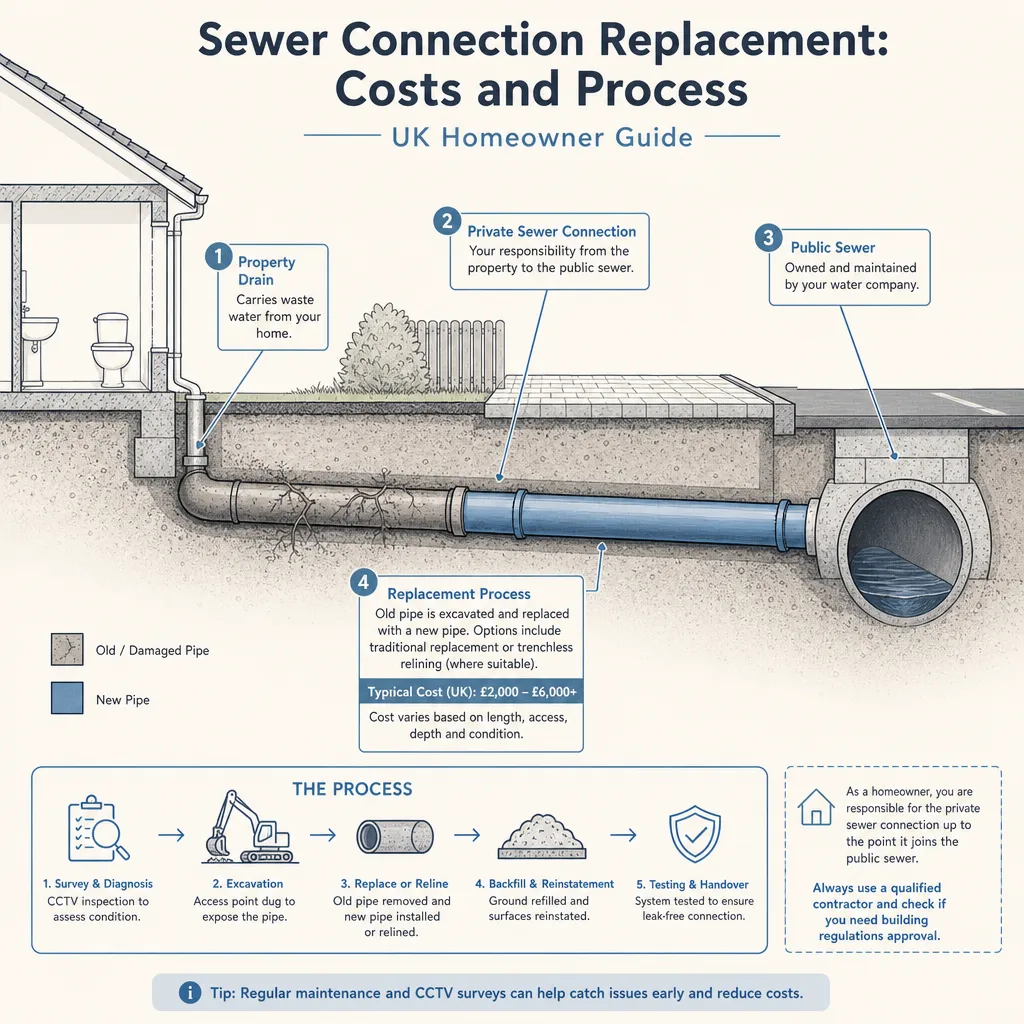
Sewer Connection Replacement: Costs and Process
Replacing a sewer connection typically costs £3,000–£20,000 in the UK depending on pipe length, depth, and access.
 Improvement & Build
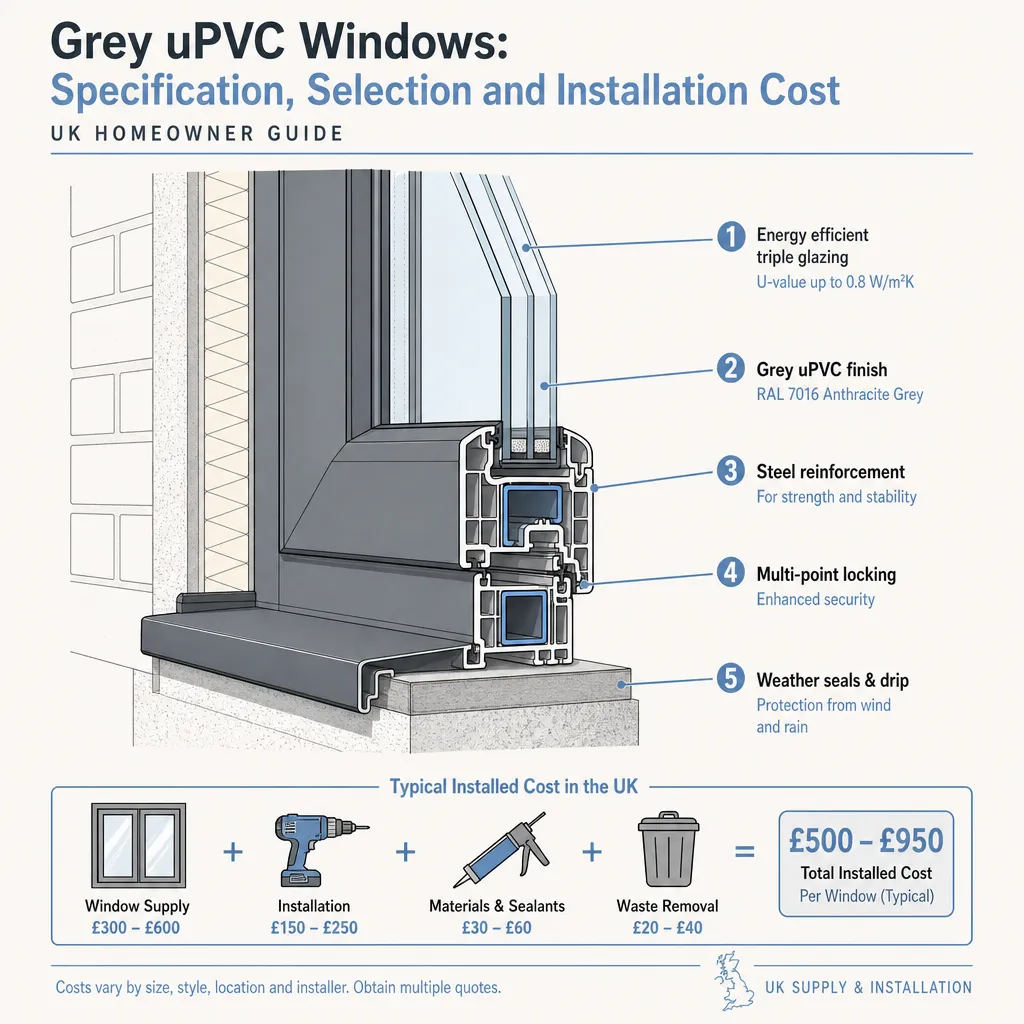
Grey uPVC Windows: Specification, Selection and Installation Cost
Grey uPVC windows typically cost £300–£900 per window installed, depending on size, profile, and glazing specification.
 Improvement & Build
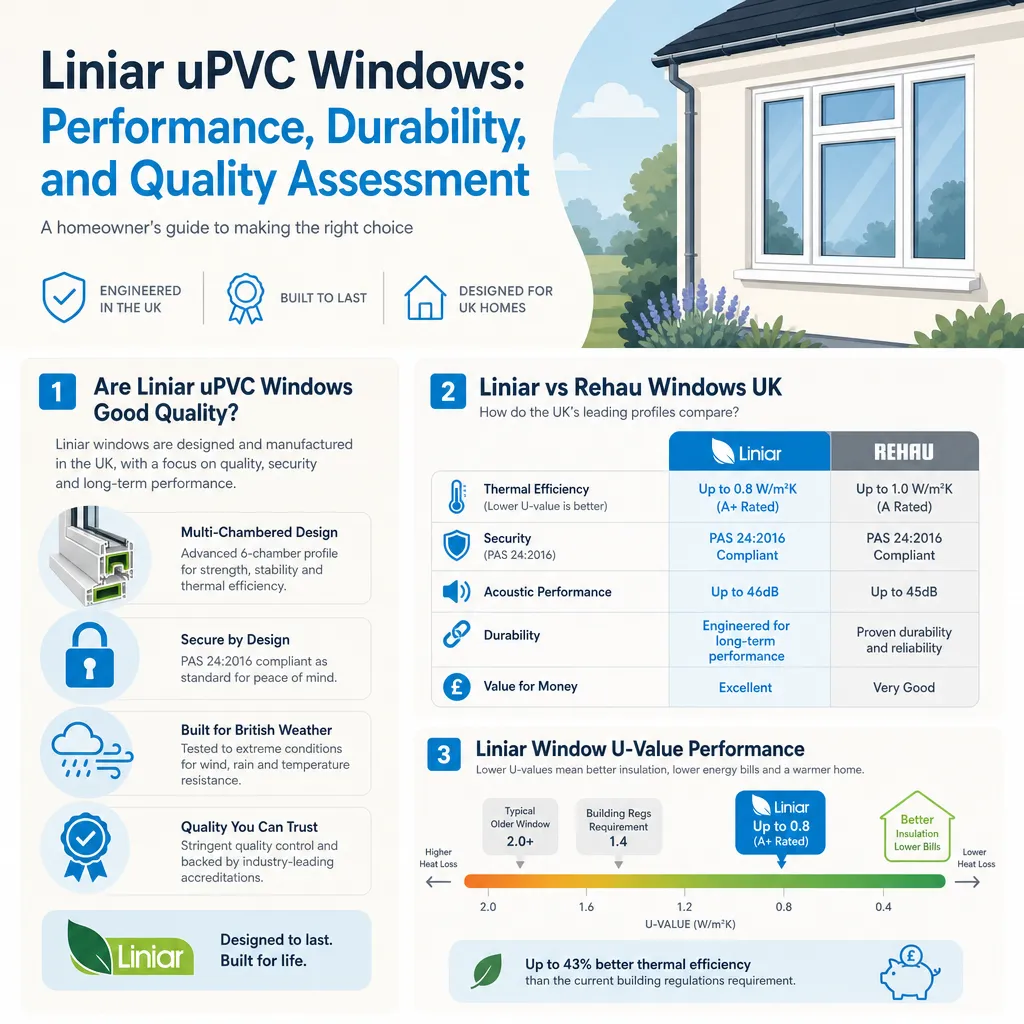
Liniar uPVC Windows: Performance, Durability, and Quality Assessment
Liniar uPVC window profiles are manufactured in the UK using multi-chambered, foamed frames.
 Improvement & Build
Garden Tap Installation with Hot and Cold Water: Plumbing Options
Adding a cold garden tap is a common DIY project, but routing hot water outdoors requires a plumber to connect to your domestic hot water system and comply with the Water Supply (Water Fittings) Regulations 1999.
 Improvement & Build
Sealing and Maintaining Historic Leaded Glass Windows: Preservation and Performance
Leaded glass windows are maintained using traditional linseed oil cement — not silicone or modern sealants, which prevent natural movement in the lead came.