UPVC Flush Casement Window Installation Pricing
By Housey · Last reviewed 11th of May 2026
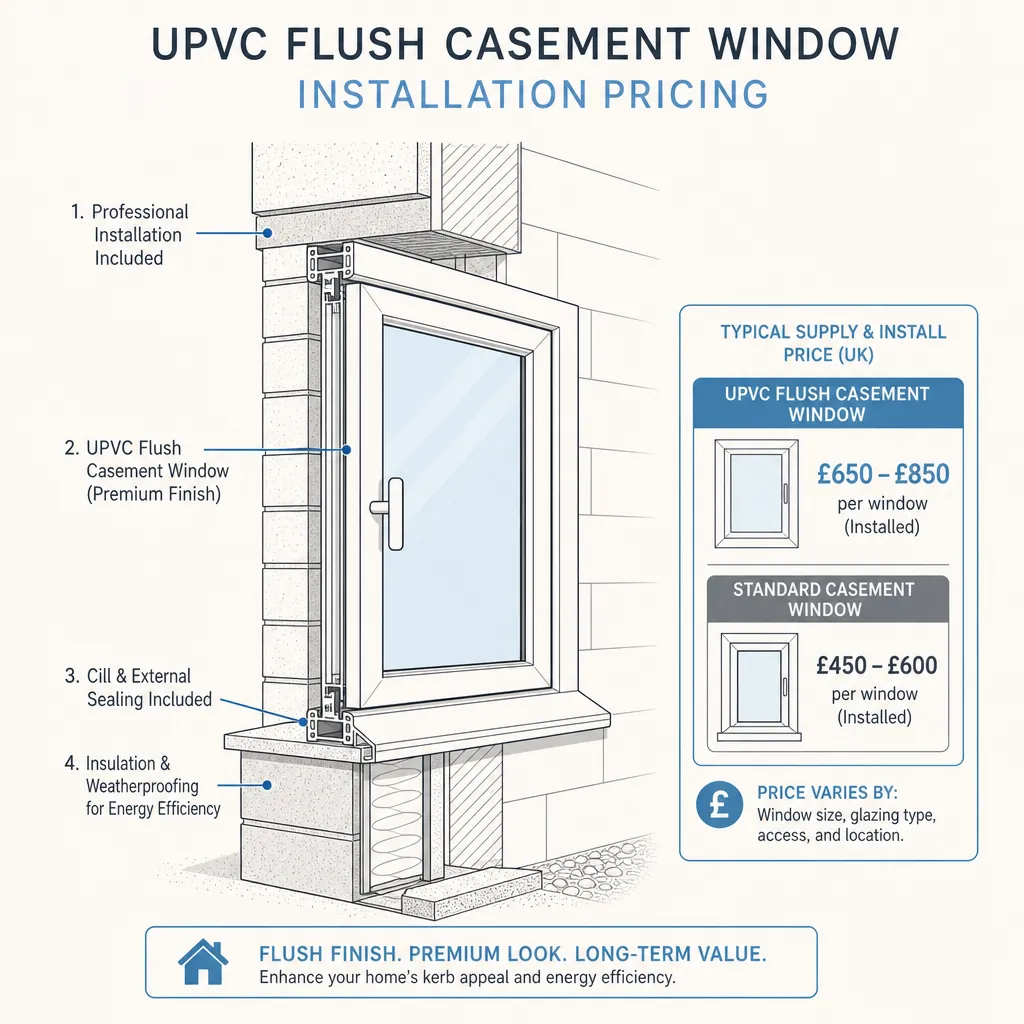
UPVC Flush Casement Window Installation Pricing
The flush casement window has become one of the most specified UPVC window styles in UK new builds and renovation projects over the past decade, valued for its clean, flat profile that suits contemporary extensions and traditional streetscapes alike. Homeowners planning a window replacement or a self-build often encounter flush casements as an upgrade option alongside standard casement windows, and want to understand the cost difference, the compliance requirements, and whether the premium is justified. Prices vary considerably by glazing specification, finish, and installer, so understanding what drives costs is the key to comparing quotes meaningfully.
Key points
- UPVC flush casement windows typically cost £400–£900 per window supplied and fitted, depending on size, glazing, and finish (Indicative UK costs, last reviewed 2026-05-11).
- Replacement windows must comply with Building Regulations Part L (thermal performance) — using a FENSA or CERTASS registered installer provides automatic self-certification.
- The defining difference from a standard casement is that the sash closes level with the outer frame face, giving a flat, uninterrupted profile rather than projecting forward.
- Foiled finishes such as anthracite grey or Irish oak typically add 10–20% to the price of a white equivalent.
- Conservation areas and listed buildings may restrict window style or colour — always check with your local planning authority (LPA) before ordering.
What is a UPVC flush casement window?
A flush casement window has a sash (the opening portion) that closes flush with the outer face of the fixed frame, creating a flat, smooth elevation when viewed from outside. In a standard casement, the sash overlaps the outer frame and projects outward by 20–30 mm. The flush design originated in traditional timber joinery and the UPVC version closely replicates this aesthetic, particularly in chamfered-profile variants with sculptured glazing beads.
Flush casements are well suited to:
- Contemporary self-builds and extensions where a minimalist facade is desired
- Period properties — particularly in woodgrain or cream foil finishes — where planning guidance favours slim-profiled, flat-faced windows
- Some conservation areas where LPAs accept flush-profile UPVC more readily than standard casement in period streetscapes
Always confirm acceptability with your LPA before ordering, as requirements vary significantly across England, Scotland, Wales, and Northern Ireland.
UPVC flush casement window installation costs
Window size (approx.) | Standard Low-E double glazing | Argon-filled premium unit | Triple glazing |
|---|---|---|---|
Small (600 x 900 mm) | £400–£550 | £460–£640 | £540–£720 |
Medium (1,200 x 1,200 mm) | £550–£750 | £630–£840 | £720–£940 |
Large (1,800 x 1,200 mm) | £720–£970 | £800–£1,080 | £900–£1,180 |
Bay window (three-section) | £1,200–£2,500 | £1,400–£2,800 | £1,700–£3,100 |
Indicative UK costs, last reviewed 2026-05-11. Prices are for supply and installation including VAT from a FENSA-registered installer. Regional variation is significant — expect higher costs in London and the South East. Always obtain at least three quotes.
Flush casement versus standard casement: which is right for you?
Feature | Flush casement | Standard casement |
|---|---|---|
Sash profile | Sits level with the outer frame | Projects proud of the outer frame |
Appearance from outside | Flat, uninterrupted elevation | Slight step between sash and frame |
Best suited to | Contemporary homes, period style, heritage settings | Everyday replacements; budget-led projects |
Typical cost premium | 10–25% above equivalent standard casement | Baseline |
Conservation area acceptance | Often more sympathetic in appropriate colour | Less sympathetic in some heritage settings |
Thermal performance | Equivalent for the same glazing specification | Equivalent |
Finish range | Wide range including dual-colour and premium foils | Typically white or standard woodgrain foil |
What drives the cost of UPVC flush casement installation?
Several factors affect the final quoted price:
Profile brand and specification — Premium systems such as Rehau, Deceuninck Flush Sash, or Spectus Elite carry higher material costs than budget-tier alternatives. The tighter manufacturing tolerances required for a true flush fit add to the profile cost.
Glazing unit — Standard 4-16-4 double glazing meets the Part L minimum requirement. Upgraded argon-filled Low-E units improve U-values further. Triple glazing (typically achieving 0.7–0.9 W/m²K) adds cost but is worth considering in exposed locations or high-specification projects.
Colour and finish — Foiled finishes (anthracite grey, chartwell green, cream, light oak) cost 10–20% more than standard white. Dual-colour options — white internally, colour externally — carry a further premium.
Number of windows ordered — Installers typically offer a per-window discount on orders of four or more, so a whole-house replacement often provides better value than individual window orders.
Access requirements — First or second-floor windows may require a scaffold tower, typically adding £150–£400 to the overall project cost.
Condition of reveals and lintels — If brickwork, lintels, or internal plasterwork need making good after installation, expect additional cost beyond the window price itself.
Building regulations and FENSA certification
Replacement windows in England, Scotland, Wales, and Northern Ireland must comply with Building Regulations Part L (energy efficiency) and Part K (safety glazing in critical locations). Using a FENSA or CERTASS registered installer means they self-certify compliance and issue a completion certificate. This certificate is required during property conveyancing — missing it can delay or complicate a sale.
If you use an unregistered installer, you must apply to your local building control authority separately and pay an inspection fee. Using a FENSA-registered installer is strongly advisable for straightforward replacement work.
Homeowner checklist before getting quotes
What to ask before accepting a quote
- What profile system is being used and is it a recognised UK brand?
- What is the glazing specification — unit construction, gas fill, Low-E coating, and achieved U-value?
- Is the installer FENSA or CERTASS registered and will a certificate be issued on completion?
- Is scaffolding or access equipment included in the quoted price?
- Is any making-good of reveals, lintels, or internal plasterwork included or excluded?
- Is VAT included in the total?
- What guarantee is provided on frames, sealed units, and hardware, and is it backed by an insurance-backed warranty?
When to get professional help
UPVC window installation should always be carried out by a registered, insured specialist — it involves compliance with Building Regulations and, for upper-floor work, safe working at height. Arrange a professional assessment promptly if:
- An existing window is no longer weathertight and the property is suffering damp ingress
- A window frame is cracked, bowed, or has failed seals causing condensation inside the room
- Safety glazing in a staircase, low-level, or bathroom location is cracked or broken
How Housey can help
Housey connects UK homeowners with vetted window and door installers who can supply and fit UPVC flush casement windows to Building Regulations standard. Get multiple quotes from local specialists to compare profiles, glazing specifications, warranties, and prices in one place.
Frequently asked questions
Are UPVC flush casement windows more expensive than standard casements?
Yes, usually by around 10–25%. The additional cost reflects the tighter profile engineering required for a flush sash fit and the popularity of premium foiled finishes commonly ordered alongside flush casements. When replacing several windows at once, the per-window price gap often narrows, so a combined quote is worth requesting.
Do flush casement windows require planning permission?
Not usually — replacing windows like-for-like is permitted development in England, Scotland, and Wales for most houses. However, properties in conservation areas, listed buildings, or areas covered by an Article 4 Direction may require planning consent for changes to window appearance. Always check with your local planning authority before ordering if your property has any heritage designations.
What is the best glazing specification for a UPVC flush casement window in the UK?
For most UK homes, an argon-filled Low-E double-glazed unit (typically achieving a U-value of 1.2–1.4 W/m²K) meets current Part L requirements and balances cost against thermal performance. Triple glazing (U-value around 0.7–0.9 W/m²K) is worth considering for exposed locations, rooms with large glazed areas, or projects targeting high energy efficiency standards such as EnerPHit.
How long does flush casement window installation take?
A single window replacement typically takes one to two hours. A full house of eight to twelve windows is usually completed in one to two days by an experienced crew. Allow additional time if reveals, lintels, or internal plasterwork need making good after the frames are fitted.
Sources and further reading
- GOV.UK — building regulations approval: windows — GOV.UK
- FENSA — find a registered installer — FENSA
- Glass and Glazing Federation — specification and installer guidance — Glass and Glazing Federation
- Historic England — windows in historic buildings — Historic England
Useful next reads
 Improvement & Build
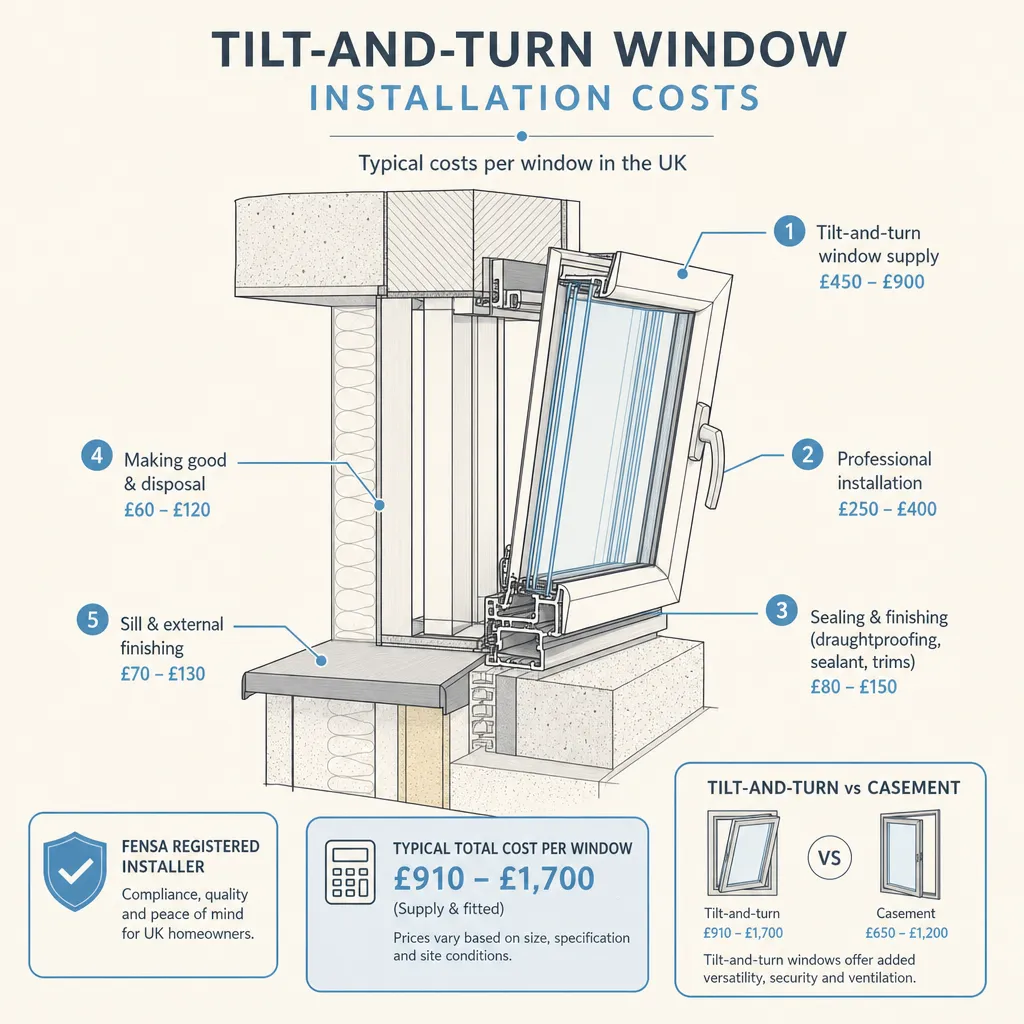
Tilt-and-Turn Window Installation Costs
Tilt-and-turn windows typically cost £400–£900 per window supply and fit in uPVC, rising to £600–£1,300 in aluminium and £700–£1,400 in timber.
 Improvement & Build
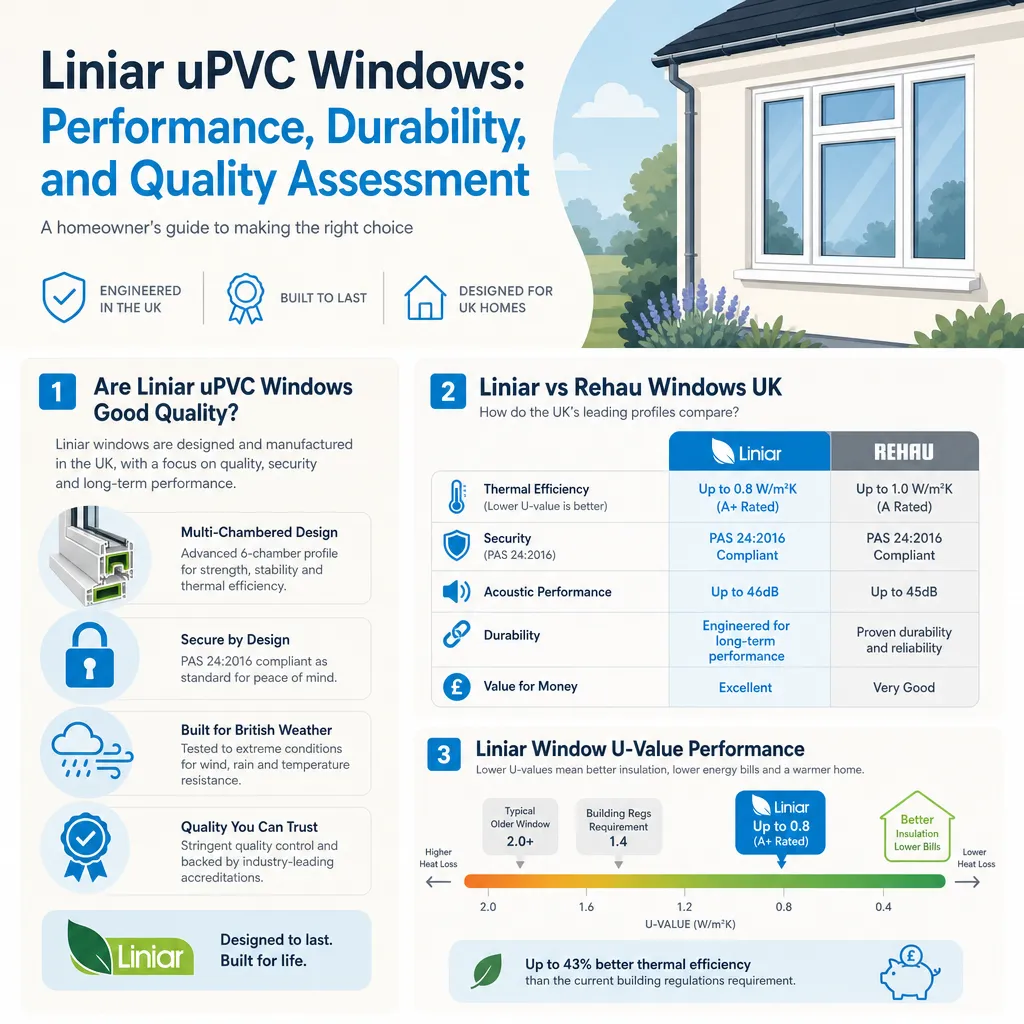
Liniar uPVC Windows: Performance, Durability, and Quality Assessment
Liniar uPVC window profiles are manufactured in the UK using multi-chambered, foamed frames.
 Improvement & Build
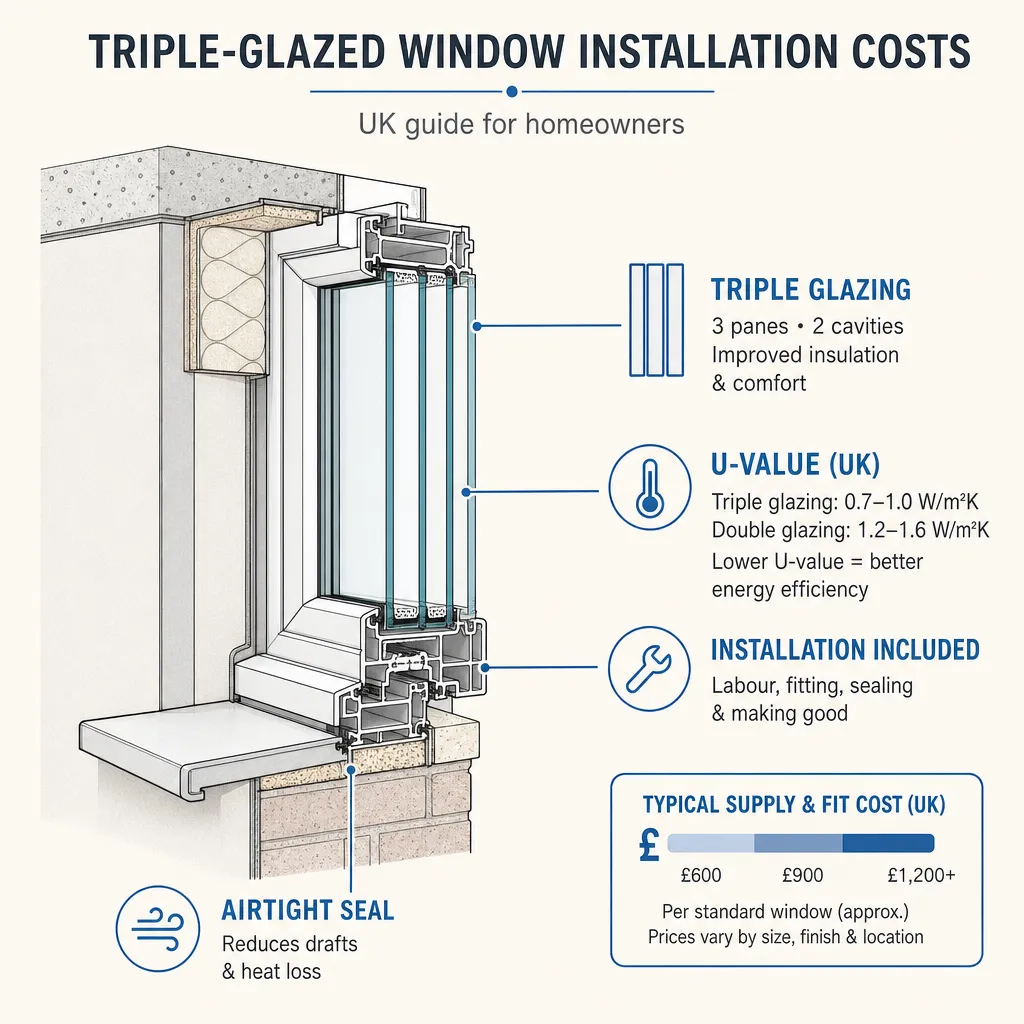
Triple-Glazed Window Installation Costs
Triple-glazed window installation in the UK typically costs £800–£1,800 per window, depending on size, frame material, and glazing specification.
 Improvement & Build
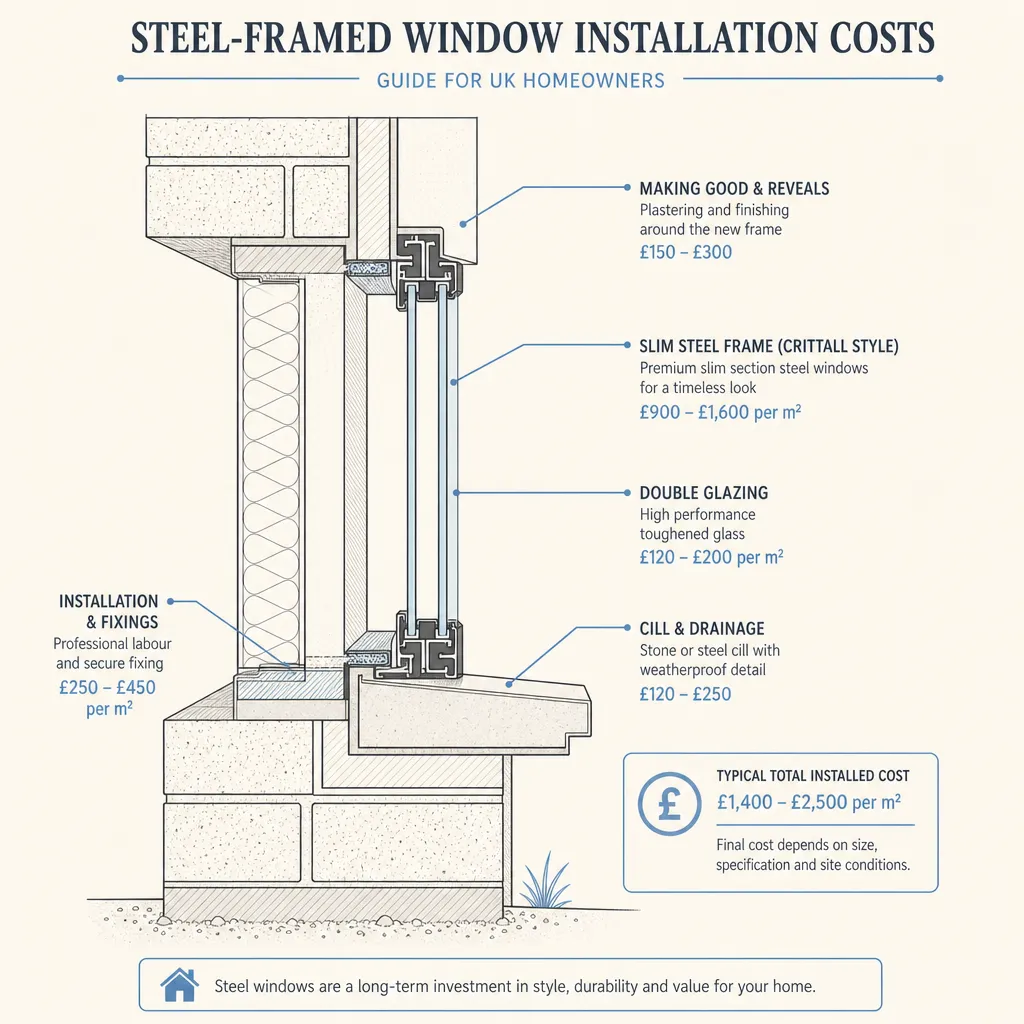
Steel-Framed Window Installation Costs
Steel-framed windows cost between £800 and £3,500 or more per window installed in the UK, depending on size, profile type, glazing specification, and whether old frames need removing.
 Improvement & Build
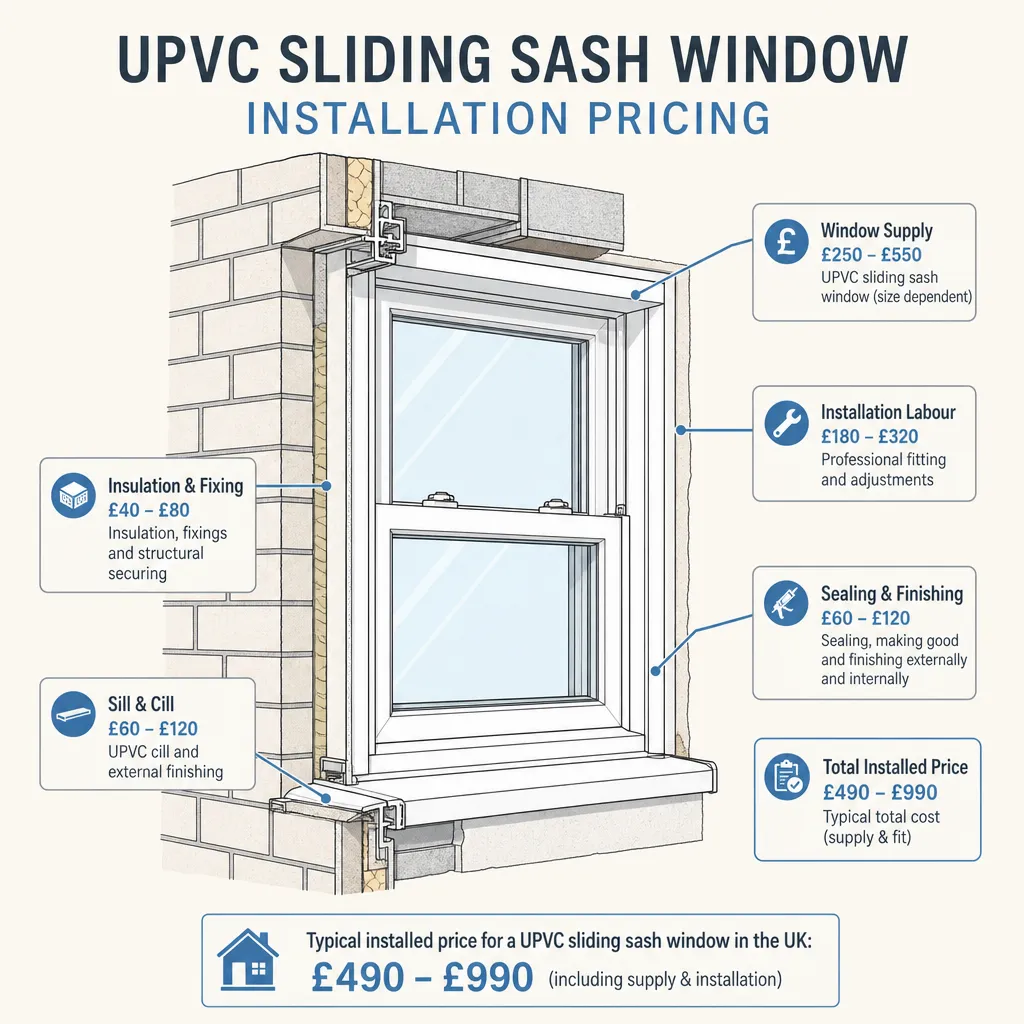
UPVC Sliding Sash Window Installation Pricing
UPVC sliding sash windows are priced by size, glazing specification, balance system, finish, and access requirements.