Growing bamboo in your garden: planning and management
By Housey · Last reviewed 11th of May 2026
Growing bamboo in your garden: planning and management
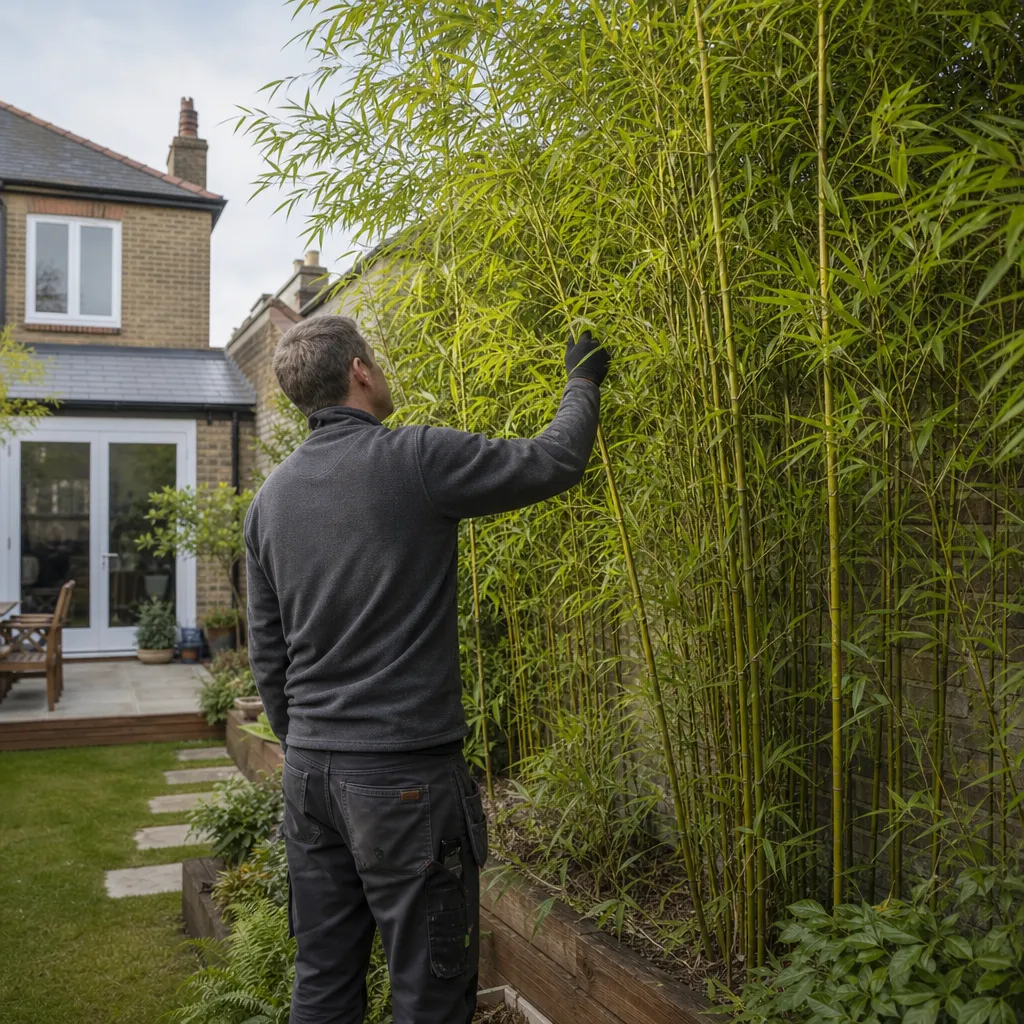
Bamboo has become an increasingly popular choice for UK gardens — offering rapid screening, architectural structure, and a lush year-round backdrop that suits both contemporary and naturalistic planting schemes. The decision to plant it tends to surface alongside a practical question that shapes everything else: which type of bamboo, and what happens once it is established? The choice between a vigorous running species and a well-behaved clumping variety can determine whether your garden gains a low-maintenance feature or creates an ongoing management challenge — and potentially a dispute with a neighbour.
Key points
- Bamboo divides broadly into running types (Phyllostachys, Pseudosasa) which spread via horizontal underground rhizomes, and clumping types (Fargesia, Thamnocalamus) which expand slowly outward from a central root mass.
- Bamboo is not listed as an invasive non-native species under Schedule 9 of the Wildlife and Countryside Act 1981 in England — unlike Japanese knotweed, there is no legal prohibition on planting it.
- Running bamboo that spreads onto a neighbouring property can constitute a private nuisance under common law, potentially exposing the originating landowner to civil liability for remediation costs.
- HDPE (high-density polyethylene) root barriers of at least 60 cm depth are the most widely recommended physical containment method for running varieties; solid sheet HDPE — not geotextile fabric — is required.
- No planning permission is required to plant bamboo in a private garden in England, Wales, Scotland, or Northern Ireland.
Running vs clumping bamboo: choosing the right type
Characteristic | Running bamboo (e.g., Phyllostachys, Pseudosasa) | Clumping bamboo (e.g., Fargesia, Thamnocalamus) |
|---|---|---|
Spread method | Horizontal underground rhizomes — can travel 1–3 m per growing season | Slowly expanding clump from a central root mass |
Containment difficulty | High — root barriers or regular rhizome pruning essential | Low — rarely needs active containment |
Typical UK height range | 2–8 m depending on species and growing conditions | 1.5–4 m depending on species |
UK hardiness (RHS scale) | Generally H5–H6 for most garden species | Generally H6–H7 for Fargesia — very reliable in most UK climates |
Risk to neighbouring land | Significant if uncontained | Minimal |
Best garden fit | Large gardens, shaded screens, containers with barriers | Small to medium gardens, urban plots, near boundaries |
Evergreen? | Yes | Yes |
The Royal Horticultural Society (RHS) recommends Fargesia murieliae (Umbrella bamboo) and Fargesia nitida as reliable, non-invasive choices for most UK gardens. Phyllostachys aurea (Golden bamboo) is widely available but requires dependable root containment to prevent boundary problems.
Installing a root barrier: what you need to know
If you plant a running bamboo variety, a correctly installed root barrier is the single most important step to preventing spread. Key considerations:
- Material: Use a solid HDPE root barrier rated for root resistance. Geotextile or woven fabric membranes will eventually be penetrated by strong rhizomes and should not be used for bamboo containment.
- Depth: A minimum of 60 cm below ground level. For vigorous Phyllostachys species, 70–80 cm is advisable.
- Overlap and sealing: Join barrier sections with at least 15 cm of overlap, secured with heavy-duty cable ties or stainless-steel clips. Gaps allow rhizomes to escape, often undetected for a full growing season.
- Above-ground edge: Leave 5–8 cm of barrier above the finished soil level so rhizomes attempting to escape over the top are visible and can be cut back promptly each spring.
- Annual inspection: In late spring, walk the perimeter of the barrier and sever any rhizomes attempting to escape at or above ground level using a sharp spade or mattock.
A poorly installed root barrier provides false security. If containment fails and bamboo spreads to a neighbour's land, remediation — which may involve excavation on their side of the boundary — can be costly and contentious.
Legal considerations: can bamboo cause you problems?
Bamboo is not subject to the same legal restrictions as Japanese knotweed. It is absent from Schedule 9 of the Wildlife and Countryside Act 1981, so there is no duty to prevent its spread under invasive species legislation. However, UK property and nuisance law still applies.
If running bamboo rhizomes cross a property boundary and cause damage — to lawns, borders, paths, or drainage — the affected neighbour may have grounds for a private nuisance claim. Courts have found in favour of claimants where spreading plants caused measurable damage after the originating owner was notified and failed to take reasonable steps to remedy the problem.
Practical steps to reduce legal exposure:
- Plant running varieties at least 2 m from any boundary fence or wall, even where a root barrier is installed.
- Notify neighbours if planting a vigorous running species near a shared boundary — early cooperation avoids disputes later.
- Document your containment measures with dated photographs and installation records in case a dispute arises.
Bamboo management checklist
When to get professional help
Most bamboo planting decisions are within the competence of an informed homeowner or experienced garden designer. Consider seeking professional advice if:
- You want to plant a vigorous running species on a small or boundary-adjacent plot and are unsure how to contain it reliably.
- You are buying a property with existing bamboo and want to understand the containment status and potential liability before exchange.
- Bamboo from your garden has already spread into a neighbouring property — early professional advice may prevent or limit legal liability.
- You need to remove an established running bamboo — this is physically demanding work requiring appropriate tools, and professional landscapers have the equipment and disposal routes to manage it efficiently.
How Housey can help
If you would like help designing a garden scheme that incorporates bamboo safely, or need an established stand managed or removed, Housey can connect you with experienced garden designers and landscapers who understand the practical challenges of growing bamboo in UK residential settings.
Frequently asked questions
Is bamboo classed as an invasive species in the UK?
Bamboo is not listed as an invasive non-native species under Schedule 9 of the Wildlife and Countryside Act 1981 in England. You can plant bamboo legally without restriction. However, if a running variety spreads to a neighbouring property and causes damage, you may face civil liability under private nuisance law — even though no criminal or regulatory offence has been committed.
Can bamboo damage my foundations or fence?
Running bamboo rhizomes rarely cause structural damage to concrete or masonry foundations directly. However, they readily penetrate the bases of timber fence posts, lift paving slabs, block drainage channels, and spread into neighbouring beds within a few seasons. A vigorous Phyllostachys left uncontained near a timber fence line will typically breach it within three to five years.
What root barrier depth do I need for running bamboo?
A minimum of 60 cm depth is widely recommended. For particularly vigorous species — such as Phyllostachys bissettii, P. vivax, or P. bambusoides — 70–80 cm is advisable. The barrier must use solid HDPE sheet material, not geotextile fabric. All sections must be properly overlapped and secured to prevent the gaps through which rhizomes will escape.
Can my neighbour take legal action if my bamboo spreads?
Yes. If running bamboo crosses a property boundary and causes measurable damage or loss of amenity, the affected neighbour may bring a private nuisance claim. They would generally need to have notified you of the problem and given reasonable time to remedy it. Proactive containment, good neighbourly communication, and written records of your management measures are the most effective practical protection.
Sources and further reading
- RHS: Bamboo — Royal Horticultural Society
- Wildlife and Countryside Act 1981 — Schedule 9 — legislation.gov.uk
- GOV.UK: Invasive non-native species — GOV.UK
- RHS: Hardiness ratings explained — Royal Horticultural Society
Useful next reads
 Improvement & Build
Creating a New Garden Design for Your Property
Creating a new garden design involves assessing your space, setting a realistic budget, deciding on hard and soft landscaping, and choosing a planting scheme suited to your soil and aspect.
 Improvement & Build
Garden Design and Landscaping Inspiration
Effective garden design starts with assessing your aspect, soil type, and existing features before commissioning any planting or hard landscaping.
 Improvement & Build
Engaging a Landscape Designer: Key Reasons and Benefits
A landscape designer assesses your site's drainage, aspect, levels, and intended use before producing drawings and specifications for a landscaper to build from.
 Improvement & Build
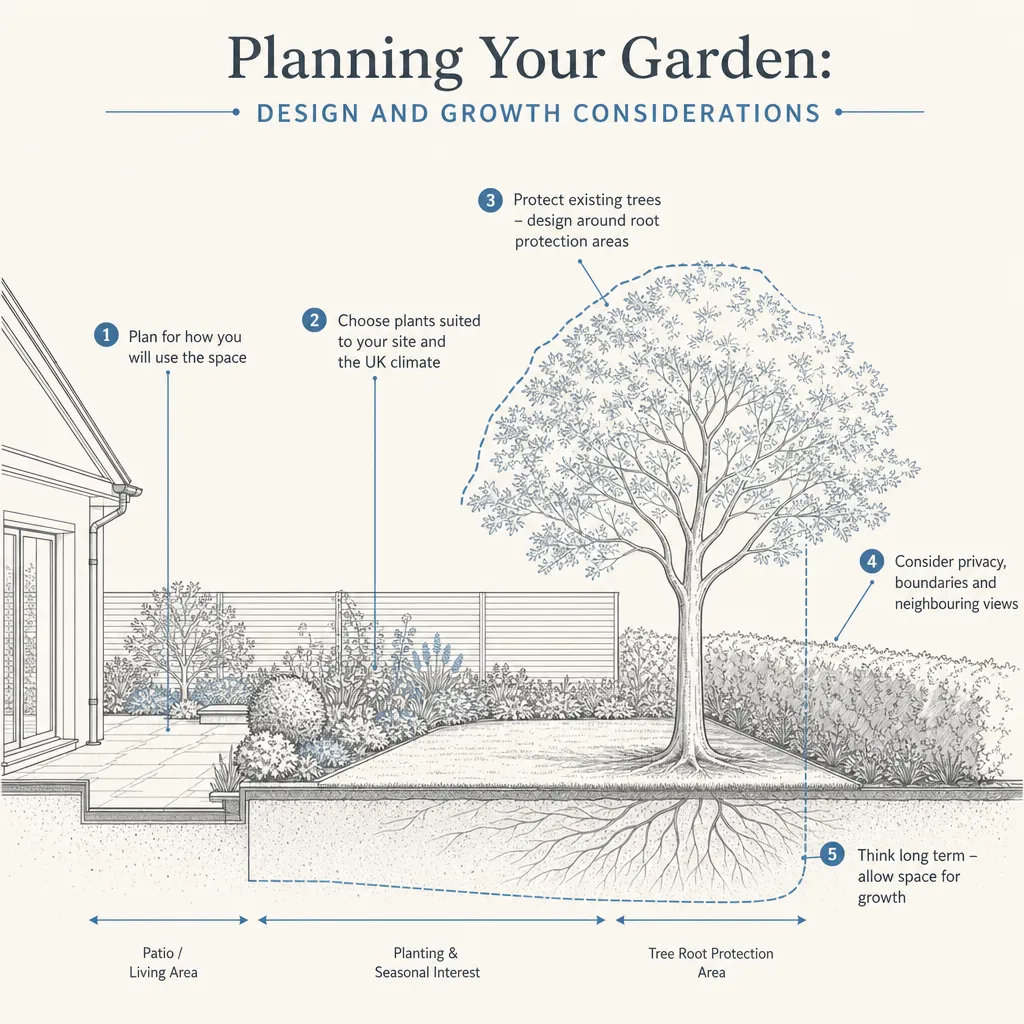
Planning Your Garden: Design and Growth Considerations
Effective garden planning starts with assessing soil type, pH, and sun exposure before choosing plants or hard landscaping.
 Improvement & Build
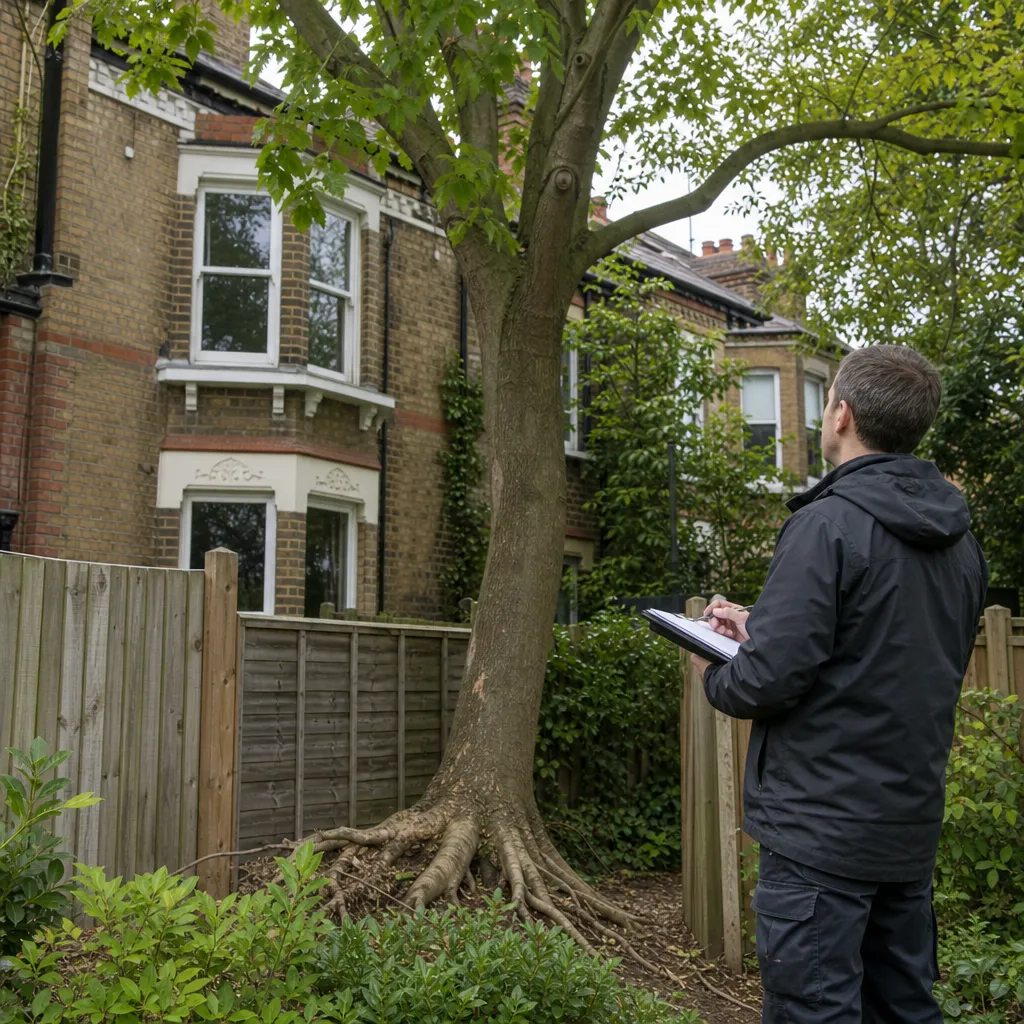
Selecting Appropriate Tree Species: Avoiding Problem Trees in Your Garden
Trees to avoid near buildings include willow, poplar, oak, and leylandii, which have aggressive or deep root systems capable of causing foundation subsidence and drain damage.