Growing Cut Flowers In Your Garden
By Housey · Last reviewed 30th of May 2026
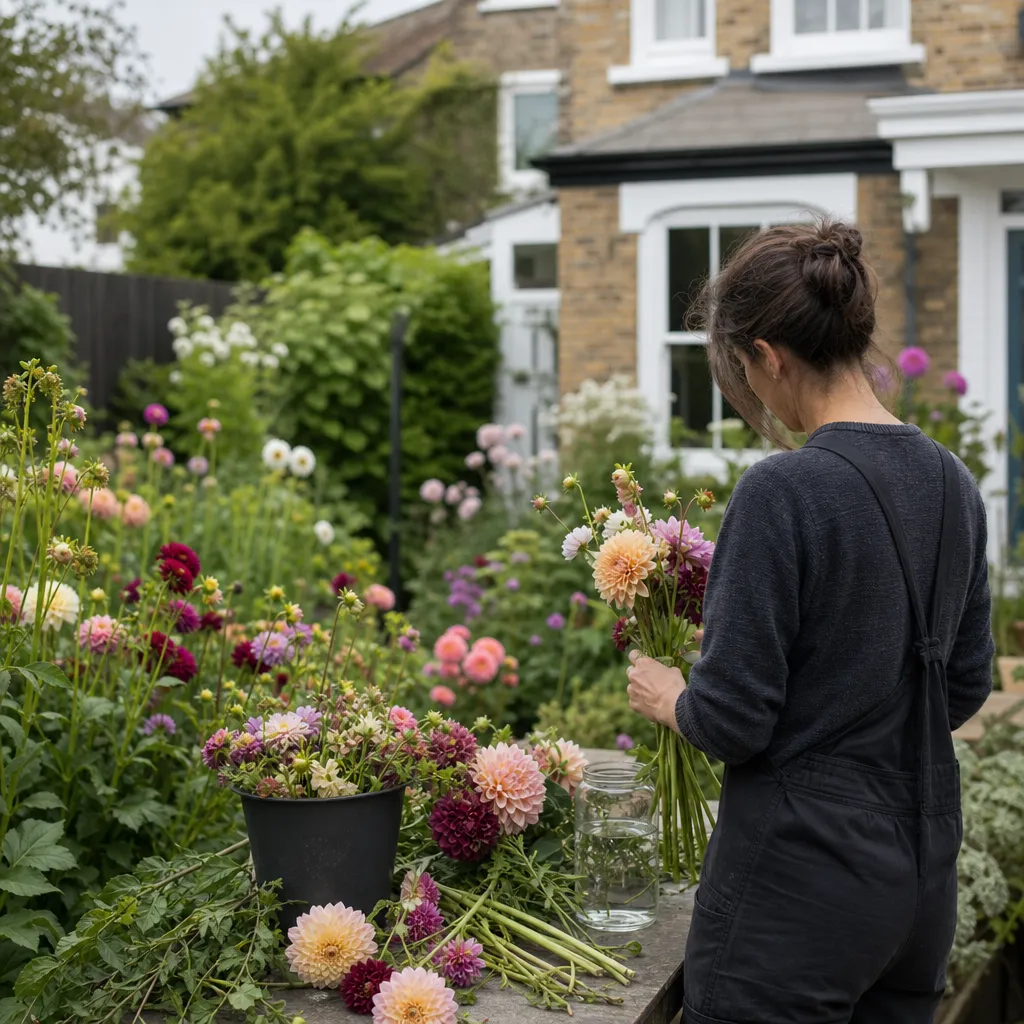
Growing Cut Flowers In Your Garden
Whether you are planning a dedicated cutting bed or weaving flowering stems through an existing border, growing flowers for the vase transforms how you use your outdoor space. The question usually arises when homeowners move to a property with more growing room, embark on a garden redesign, or simply want more from the ornamental beds they already tend.
Key points
- Succession planting every 2–3 weeks from late February through July extends your cutting season from late spring well into autumn.
- Hardy annuals — sweet peas (Lathyrus odoratus), cornflowers (Centaurea cyanus), and larkspur (Consolida) — can be sown direct into prepared ground from late February in southern England and from March–April further north.
- Cutting stems in the early morning, when temperatures are lowest and stems fully hydrated, significantly extends vase life compared with harvesting in afternoon heat.
- Pinching out the growing tip of young plants when they reach 10–15 cm encourages branching and produces multiple cutting stems per plant rather than a single main spike.
- A dedicated cutting bed of at least 1.2 m wide, accessible from both sides, allows harvesting without compacting the soil around roots.
Which flowers are best for cutting?
Not every garden flower makes a useful cut stem. The best choices hold up after harvesting, produce long stems, and flower over an extended period rather than one brief flush.
Flower | Type | Best UK season | Vase life | UK sowing time |
|---|---|---|---|---|
Sweet pea (Lathyrus odoratus) | Hardy annual | May–August | 5–7 days | Oct–Nov under glass, or Feb–Mar |
Cornflower (Centaurea cyanus) | Hardy annual | June–September | 7–10 days | Feb–Apr direct |
Ammi majus | Hardy annual | June–August | 7–10 days | March–April |
Snapdragon (Antirrhinum) | Half-hardy annual | June–October | 7–14 days | Jan–Feb under glass |
Dahlia | Tender perennial | July–October | 5–8 days | Apr–May (tubers in pots) |
Larkspur (Consolida) | Hardy annual | June–August | 5–7 days | Feb–Apr direct |
Rudbeckia | Half-hardy annual/perennial | August–October | 10–14 days | Feb–Mar under glass |
Scabious (Scabiosa) | Annual or perennial | June–September | 7–10 days | March–April |
Choosing the right spot and approach
Most cut flowers need a minimum of six hours of direct sunlight per day. South- or west-facing beds produce the longest stems and strongest colour in annual and half-hardy varieties across most of the UK.
Soil preparation matters: flowers grown for cutting benefit from ground enriched with well-rotted organic matter dug in during autumn. Raised beds can help on heavy clay soils common in many parts of the Midlands and northern England, improving drainage and warming earlier in spring.
Which approach suits your situation?
- Choose a formal cutting bed if you want productive rows, easy harvesting, and the flexibility to change varieties each year without affecting a permanent border display.
- Choose interplanting in borders if space is limited — weave cornflowers, cosmos, and sweet peas between shrubs and perennials where gaps allow.
- Choose containers for sweet peas on a sunny patio — a deep pot of at least 40 cm with a frame or obelisk works well for a small-space cutting supply.
- Ask a garden designer if you want the cutting area to form part of a wider landscape plan with year-round structural planting.
- Ask a landscaper if you need beds levelled, raised bed construction, or hard-landscaping to define a dedicated cutting garden area.
Succession planting for a long harvest
A single sowing of most hardy annuals exhausts itself in six to eight weeks. Succession planting — small batches every two to three weeks — prevents boom-and-bust and keeps vases filled from late May through to October.
Succession planting checklist:
Harvesting and conditioning
How you cut and handle stems has as much impact on vase life as variety choice.
- Cut stems early morning using clean, sharp scissors or snips. Bring a bucket of cool water to the bed and plunge stems in immediately.
- Strip all foliage that would fall below the waterline to prevent bacterial growth.
- Condition overnight: leave freshly cut stems in deep, cool water for at least four hours — ideally overnight — in a cool, dark space before arranging.
- Change vase water every two days and recut stems at an angle each time.
- Dahlias benefit from a brief stem-end dip in boiling water (around 20–30 seconds) immediately after cutting before plunging into cold water — this prevents the latex-like sap from sealing the stem and blocking water uptake.
Red flags: when your cut flowers are not performing
- Stems are short and weak: usually caused by overcrowding, insufficient light, or over-feeding with nitrogen-rich fertiliser — thin plants and reduce general-purpose feeds.
- Flowers drop petals quickly in the vase: often harvested too late; cut when buds are just starting to open, not already fully open.
- Plants run to seed quickly: not cutting often enough — leaving stems on the plant signals it to stop producing flowers; cut at least every two to three days at peak season.
- Slug and snail damage on young seedlings: use wildlife-friendly deterrents (copper tape, horticultural grit, wool pellets) and check beds at dusk in spring when young plants are most vulnerable.
When to get professional help
Most cut flower growing is well within reach of an enthusiastic amateur. Consider professional help when:
- You are laying out a dedicated cutting garden as part of a wider renovation and need levels, raised bed construction, or irrigation — a landscaper can plan and build the infrastructure.
- You want the cutting garden to integrate with a wider planting scheme, orchard, or kitchen garden — a garden designer can produce drawings that balance year-round interest with productive planting.
- The soil on your plot has a history of contamination (for example, a former orchard with persistent pesticide residue) — a professional soil assessment before planting is sensible.
How Housey can help
If your cut flower ambitions are part of a broader garden project, Housey connects you with local landscapers and garden designers who can handle everything from raised bed construction to full planting-scheme design. Compare quotes from up to four local specialists in one place.
Frequently asked questions
What are the easiest cut flowers to grow for beginners in the UK?
Sweet peas, cornflowers, and cosmos are widely regarded as the most forgiving choices for first-time growers. All three produce long stems over many weeks and respond well to regular cutting. Sow sweet peas in October or February, cornflowers direct from February, and cosmos from April once the last hard frost risk passes.
Do I need a separate bed for cut flowers or can I grow them in borders?
A separate bed makes harvesting easier and lets you grow in productive rows, but it is not essential. Many gardeners weave cutting varieties — cosmos, nigella, rudbeckia — through existing borders, accepting that the display will look patchy after heavy cutting. Both approaches work well depending on space.
How do I stop sweet peas from going over quickly?
Pick flowers before any seed pods form — even one or two missed pods signals the plant to stop flowering. Cut every two to three days at peak season, remove dead flowers promptly, and ensure plants have adequate water during dry spells. A shaded root run also extends their season in warmer parts of the UK.
Can I grow dahlias in a container for cutting?
Compact dahlia varieties — the Gallery series or ball types under 90 cm tall — grow well in large containers of at least 40 cm diameter and depth. Taller dinner-plate dahlias need a garden bed with adequate staking. Feed weekly with a high-potash liquid fertiliser once buds appear.
Sources and further reading
- RHS: Growing sweet peas — Royal Horticultural Society
- RHS: Dahlias growing guide — Royal Horticultural Society
- RHS: Successional sowing — Royal Horticultural Society
- RHS: Cut flowers from the garden — Royal Horticultural Society
Useful next reads
 Improvement & Build
Garden and Landscape Services for Your Property
Garden designers and landscapers both improve outdoor spaces but offer different services.
 Improvement & Build
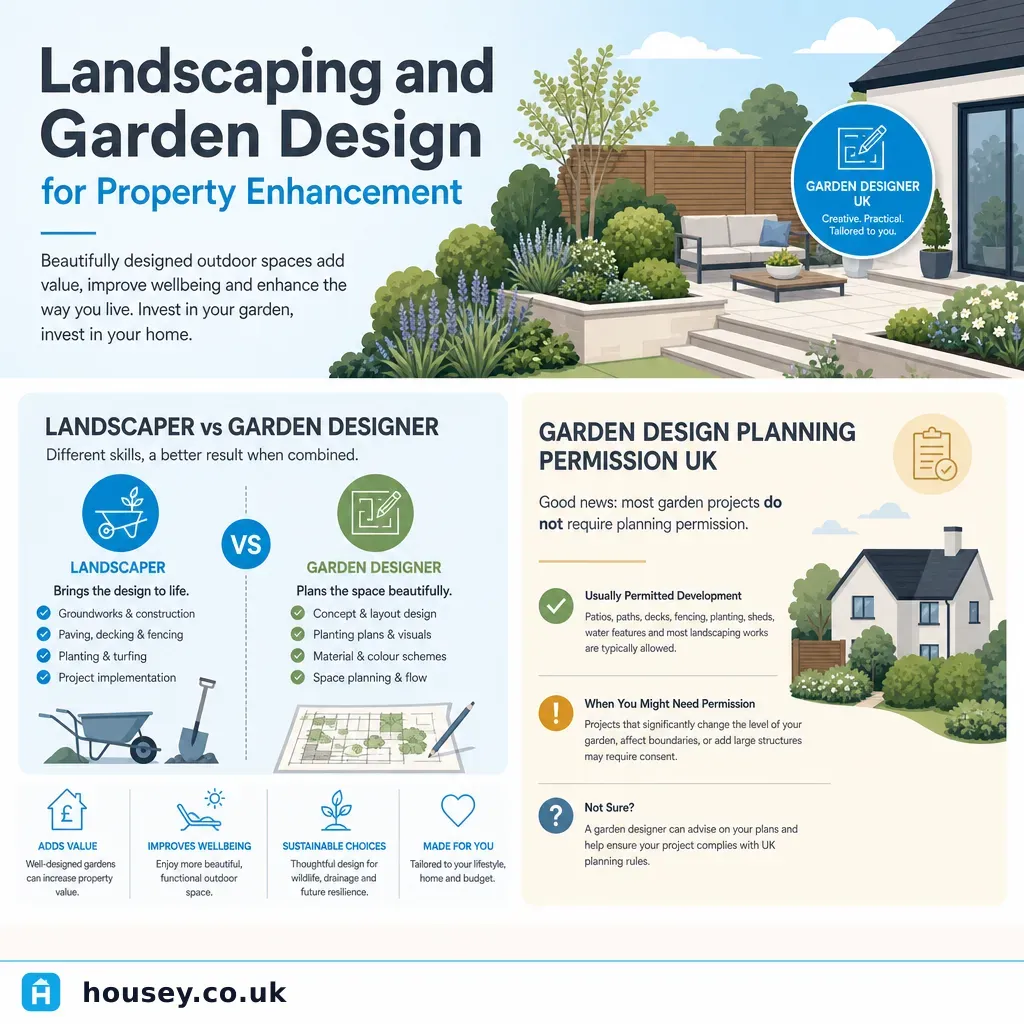
Landscaping and Garden Design for Property Enhancement
Landscaping and garden design involve planning and building outdoor spaces — from patios and raised beds to planting schemes and drainage.
 Improvement & Build
Hiring A Garden Designer For Your Outdoor Space
A garden designer creates a detailed plan — including layout, planting schemes, and hard landscaping specifications — tailored to your outdoor space and budget.
 Improvement & Build
Installing a Fire Pit: Garden Features and Outdoor Space Design
Installing a garden fire pit in the UK is generally permitted, but Smoke Control Area rules prohibit open wood-burning in most towns and cities.
 Improvement & Build
Seasonal Garden Transformations and Outdoor Design Ideas
A successful garden transformation in the UK works with the seasons rather than against them — establishing structure and hard landscaping in autumn or winter, planting in spring, and enjoying the results through summer.