Growing Demand for Home Improvement Projects: What Homeowners Plan to Undertake
By Housey · Last reviewed 31st of May 2026
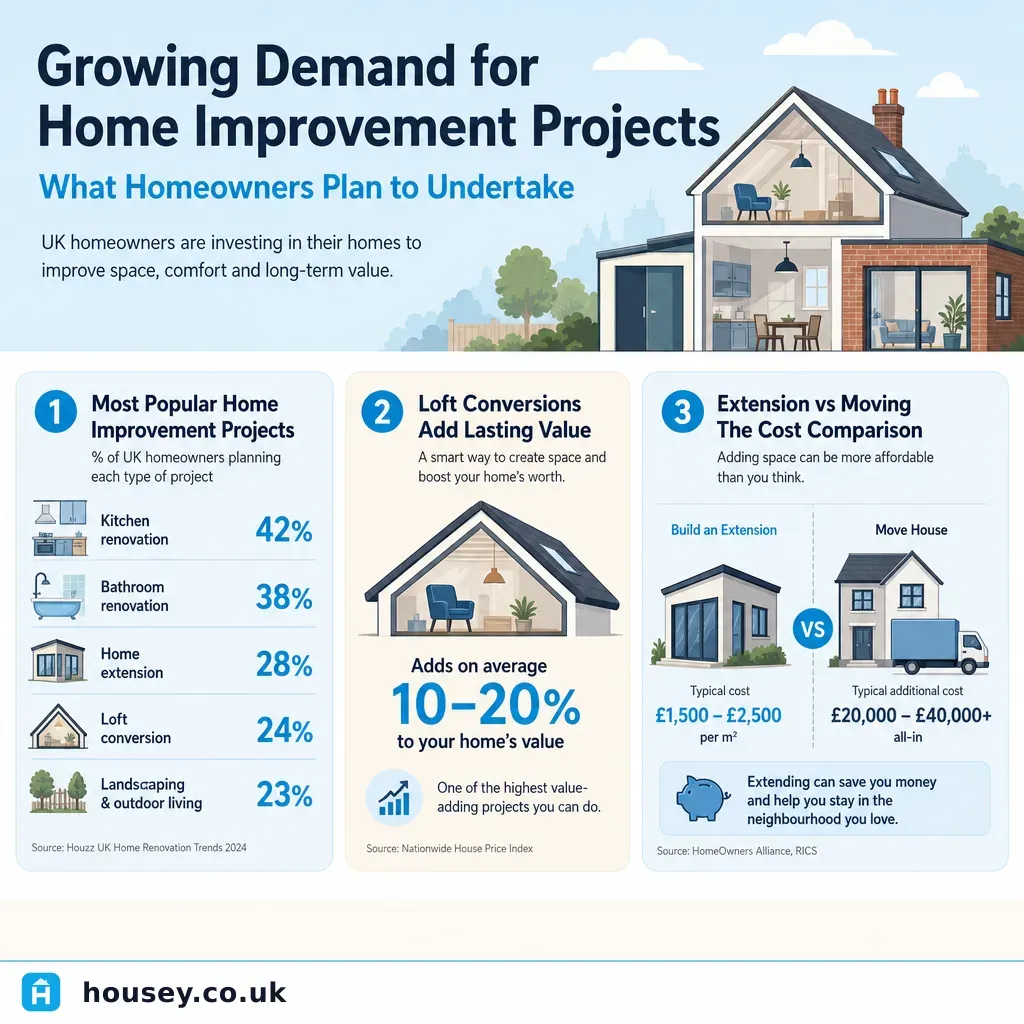
Growing Demand for Home Improvement Projects: What Homeowners Plan to Undertake
The calculus for many UK homeowners has shifted: with stamp duty costs, estate agent fees, and limited housing stock making relocation expensive, improving an existing home increasingly makes financial and practical sense. Loft conversions, kitchen extensions, and bathroom upgrades sit at the top of most wish lists — but the gap between what people plan and what they successfully deliver often comes down to how thoroughly a project was scoped, funded, and procured before anyone broke ground.
Key points
- Stamp Duty Land Tax thresholds in England returned to pre-2022 levels from 1 April 2025, increasing the cost of moving and reinforcing the financial case for improving in place rather than upsizing.
- A loft conversion that creates a habitable bedroom typically adds 10–20% to a property's value according to RICS guidance, though the uplift varies significantly by location, property type, and quality of finish.
- Most single-storey rear extensions up to 4 m deep (semi-detached or terraced) or 6 m deep (detached) can be built under permitted development rights in England without a full planning application.
- The Party Wall etc. Act 1996 requires written notice to be served on adjoining owners before loft conversions, extensions, or excavations near a shared boundary — a step many homeowners overlook until it causes delay.
- Front gardens larger than 5 m² may not be surfaced with an impermeable material in England without planning permission; permeable alternatives such as gravel or permeable block paving do not require consent.
What UK homeowners are planning — and why
Several structural factors are driving the current home-improvement cycle. Rising mortgage rates and house-price softness in many regions have made moving less attractive, while remote working has sustained demand for dedicated home-office space. Older housing stock — much of England's housing dates from before 1960 — also has significant headroom for both spatial and thermal improvement.
The result is a sustained pipeline of projects across several categories, with the Federation of Master Builders' State of Trade Survey consistently recording strong demand for extensions, kitchen renovations, and loft conversions.
Most-planned residential projects in 2025–2026
Project type | Primary driver | Typical planning position | Usually adds value? |
|---|---|---|---|
Single-storey rear extension | More kitchen-living space | Usually permitted development; check conservation area status | Yes, especially in family-home markets |
Loft conversion | Extra bedroom or home office | Permitted development for most types; dormer to front may need planning | Yes — bedroom count drives value |
Bathroom renovation | Quality, energy efficiency, condition | Usually no planning; Building Regulations Parts P and G apply | Moderate — condition matters more than size |
Garden room or outbuilding | Home office, studio, gym | Usually permitted development if under 15 m² and not forward of the principal elevation | Increasingly yes, particularly in commuter areas |
Kitchen refurbishment | Lifestyle and open-plan living | Usually no planning; Building Regulations apply if structural changes made | Yes, when proportionate to property value |
Roof replacement or repair | Condition and energy performance | Usually no planning permission needed | Preserves value; poor condition actively depresses it |
How to move from plan to brief
The most common reason home improvement projects overrun or disappoint is insufficient planning before anyone is appointed. A clear brief — specifying what you need rather than just what you want — protects both you and your contractor.
Homeowner project planning checklist
Before approaching any builder or designer:
The loft conversion: a closer look at your options
Loft conversions are among the most commonly commissioned major home improvements in the UK — efficient because they add usable floor space without reducing garden area, typically less disruptive than a ground-floor extension, and often offer a clear value uplift in markets where bedroom count drives pricing.
There are four main conversion types, and the right choice depends on your roof structure, budget, and planning context:
Conversion type | Best for | Typical planning position | Relative cost |
|---|---|---|---|
Velux (rooflight) | Trussed roofs, tight budgets | Usually permitted development | Lowest |
Dormer | Most roof types; maximises usable headroom | Permitted development to rear; planning often needed at front | Mid-range |
Hip-to-gable | Semi-detached or detached with hipped roof | Usually permitted development on rear elevation | Mid-range |
Mansard | Victorian and Edwardian terraces | Typically requires a planning application | Highest |
Indicative UK costs range from approximately £20,000–£65,000+ depending on conversion type, size, specification, and region. Indicative UK costs, last reviewed 2026-05-31. Always obtain at least three quotes — costs vary significantly by location and specification.
Worked UK property scenario: improving rather than moving
A couple in Coventry own a 1960s three-bedroom semi-detached with an unused cold-roof loft. They want a fourth bedroom for a growing family. Moving to a comparable four-bedroom house locally would cost approximately £30,000–£40,000 in stamp duty, legal fees, estate agency, and removal costs — before any price premium on the larger property.
Instead, they commission a dormer loft conversion with a rooflight to the front and a new staircase rising from the first-floor landing. The project requires a planning application for the dormer, building control approval throughout the build, and a party wall agreement with one neighbour. They obtain three quotes from loft conversion companies and appoint a local firm with verifiable recent work on similar properties in their street. Total project cost: approximately £42,000 including VAT — considerably less than the cost of moving, and they remain in their preferred neighbourhood and school catchment area.
Key risks homeowners commonly underestimate
- Structural surprises in older properties. Pre-1960 roofs with traditional cut rafters can conceal rotten timbers, inadequate purlins, or past insect infestation. A RICS Level 3 building survey before planning any loft work is advisable on older stock.
- Party wall obligations. Extensions and loft conversions on semi-detached and terraced homes regularly trigger the Party Wall etc. Act 1996. Failing to serve the required notice can lead to an injunction and liability for the neighbour's surveying costs.
- VAT treatment. Most residential renovation and improvement work attracts 20% VAT. Some projects qualify for a 5% reduced rate — for example, converting a non-residential building to residential use. Confirm the VAT position in your written contract before work starts.
- Building control completion certificate. Lenders and solicitors require this document at remortgage and resale. If a contractor suggests skipping final inspections to save time, treat it as a serious warning sign.
When to get professional help
If your project involves structural alterations, a loft conversion, a full extension, or any change to load-bearing walls or drainage, professional design input is essential for both regulatory compliance and a safe result.
Take independent professional advice before appointing a contractor if:
- You are unsure whether your project requires planning permission or permitted development prior approval.
- Your property shares a wall, floor, or boundary with a neighbour.
- The property was built before 1930 or has had significant previous alterations.
- You have received very different scope descriptions or widely varying cost estimates from different contractors.
How Housey can help
Housey connects UK homeowners with vetted extension builders, loft conversion companies, and roofers who can turn plans into properly scoped, compliant, and competitively priced projects. Submit a brief to compare quotes from local professionals.
Frequently asked questions
Does a loft conversion always add value to a house?
A loft conversion that creates a habitable room — with adequate headroom, natural light, and a proper fixed staircase — generally adds value, particularly where bedroom count drives pricing. RICS guidance suggests an indicative range of 10–20% value uplift, but the actual figure depends heavily on location, quality of finish, and how the project cost compares to the property's existing value. Over-improving relative to the street average may not recover the full investment.
Do I need planning permission for a single-storey rear extension in England?
Many single-storey rear extensions fall within permitted development and do not require a planning application, provided they meet criteria in the Town and Country Planning (General Permitted Development) (England) Order 2015: typically 4 m depth for attached homes and 6 m for detached. Restrictions apply in conservation areas, for listed buildings, and where previous extensions have been added. A Lawful Development Certificate provides documented confirmation without being legally mandatory.
What is the Party Wall etc. Act 1996?
The Party Wall etc. Act 1996 requires homeowners in England and Wales to serve written notice on adjoining owners before carrying out certain works — including extensions to a shared wall, loft conversions, and excavations within 3 m of a neighbouring foundation. The adjacent owner has 14 days to consent or dissent; dissent triggers a formal procedure involving a surveyor. Failing to serve notice can lead to an injunction and liability for the neighbour's costs.
How should I finance a home improvement project?
Common options include remortgaging to release equity, a further advance from your existing lender, an unsecured personal loan, or savings. Secured borrowing typically offers lower interest rates but involves arrangement fees and extends your mortgage term. Always obtain independent advice from a regulated mortgage adviser before making a decision, as the most suitable route depends on your individual financial position.
Sources and further reading
- Planning Portal — Extensions and loft conversions — Planning Portal
- Party Wall etc. Act 1996 — GOV.UK guidance — GOV.UK
- Federation of Master Builders — State of Trade Survey — Federation of Master Builders
- Stamp Duty Land Tax — GOV.UK / HMRC
- RICS — Residential surveys and valuations — Royal Institution of Chartered Surveyors
Useful next reads
 Improvement & Build
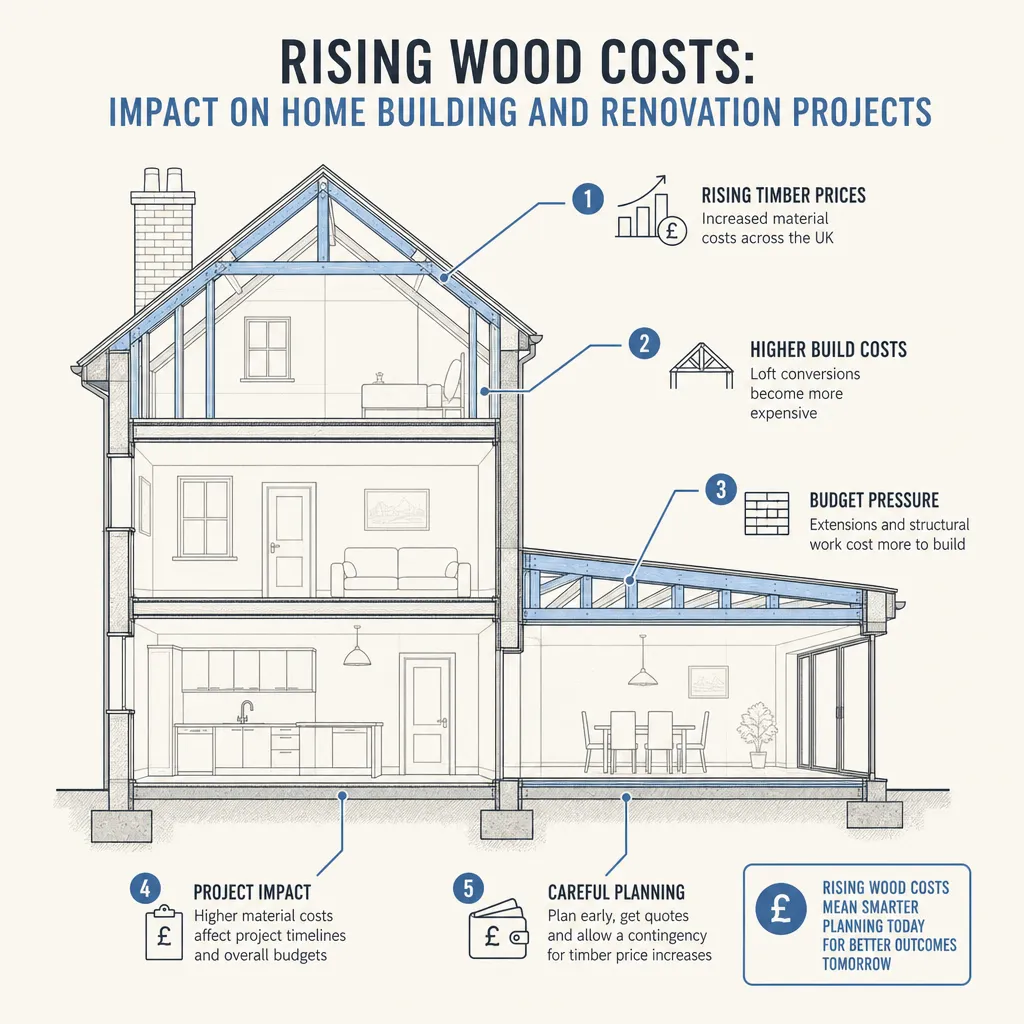
Rising Wood Costs: Impact on Home Building and Renovation Projects
Rising timber prices affect UK home renovation budgets most on timber-frame extensions, loft conversions, and self-builds, where structural wood can account for 15–25% of material costs.
 Improvement & Build
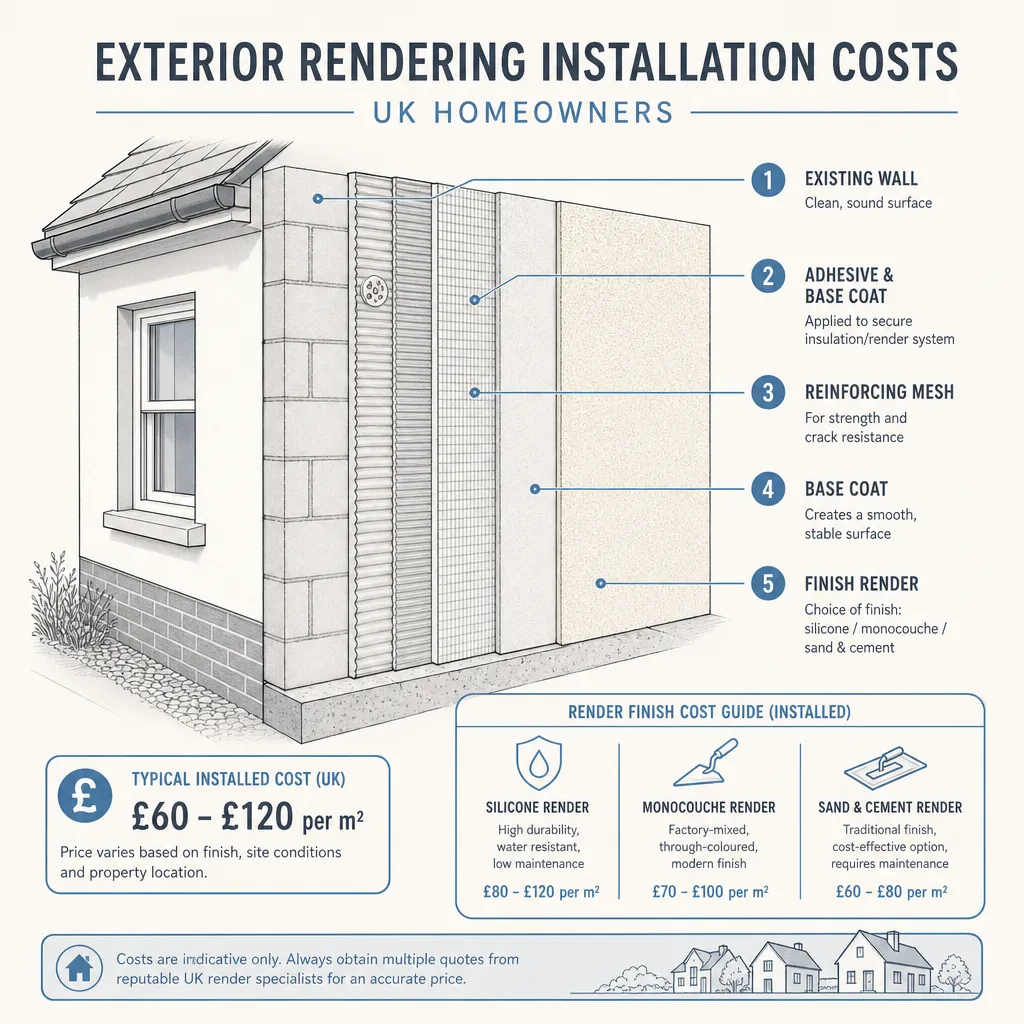
Exterior Rendering Installation Costs
Exterior rendering in the UK typically costs £20–£60 per square metre for standard render systems, or £80–£150 per square metre for External Wall Insulation with a render finish.
 Improvement & Build
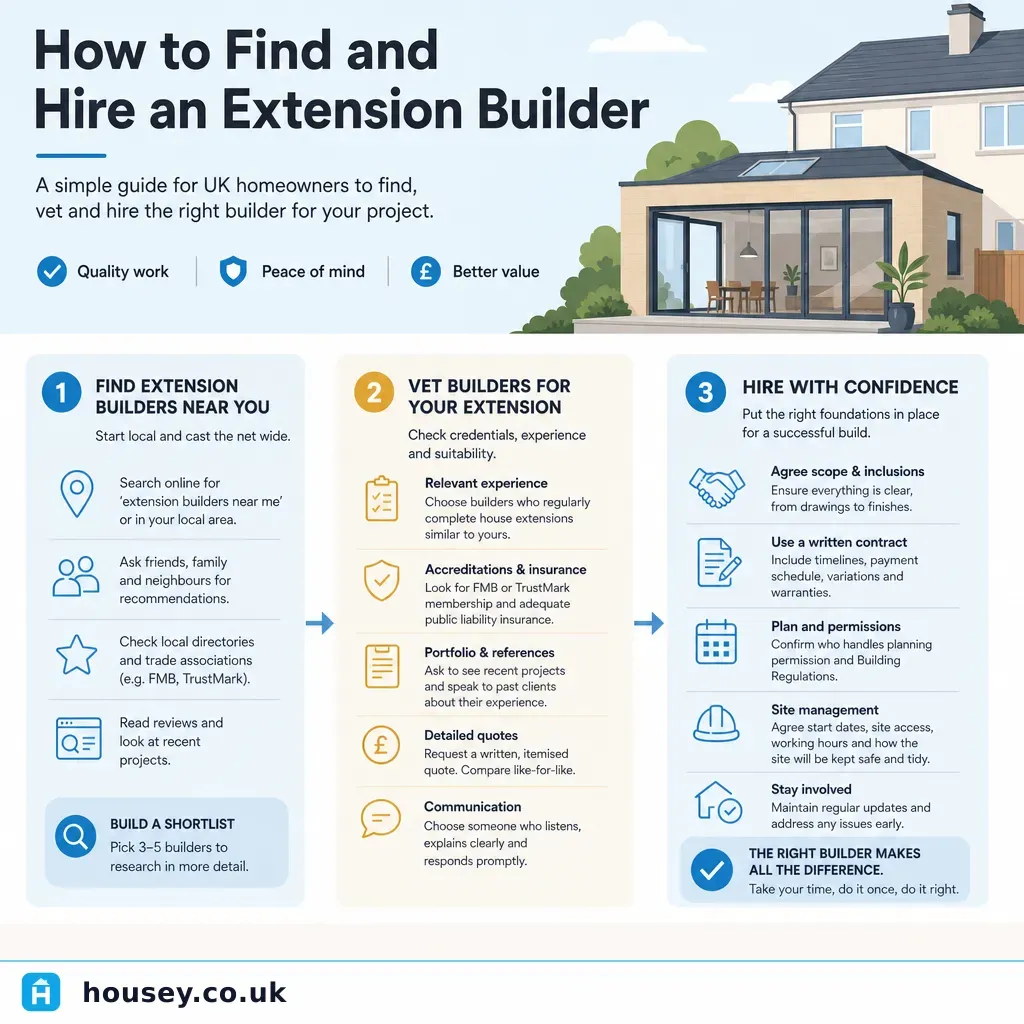
How to Find and Hire an Extension Builder
To hire a reliable extension builder, get at least three detailed written quotes from contractors with documented experience of similar projects.
 Improvement & Build
Designing an outdoor kitchen for entertaining and garden living
An outdoor kitchen in a UK garden needs a stable, level base — typically a concrete slab or quality paving — with weather-rated materials such as stainless steel grade 316 or frost-rated porcelain.
 Improvement & Build
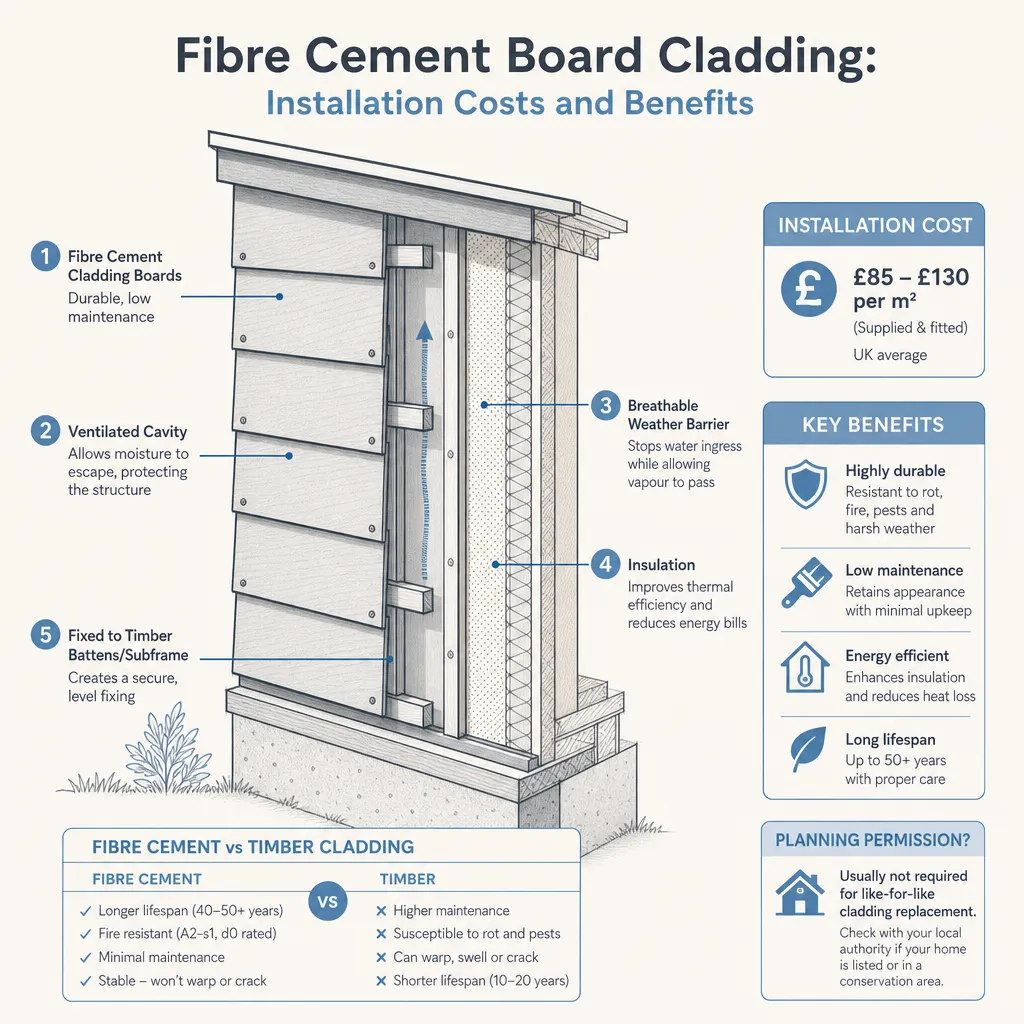
Fibre Cement Board Cladding: Installation Costs and Benefits
Fibre cement board cladding typically costs £80–£180 per m² installed in the UK, including boards, battens, breather membrane, and labour.