Guide to Garden Irrigation and Watering System Design
By Housey · Last reviewed 30th of May 2026
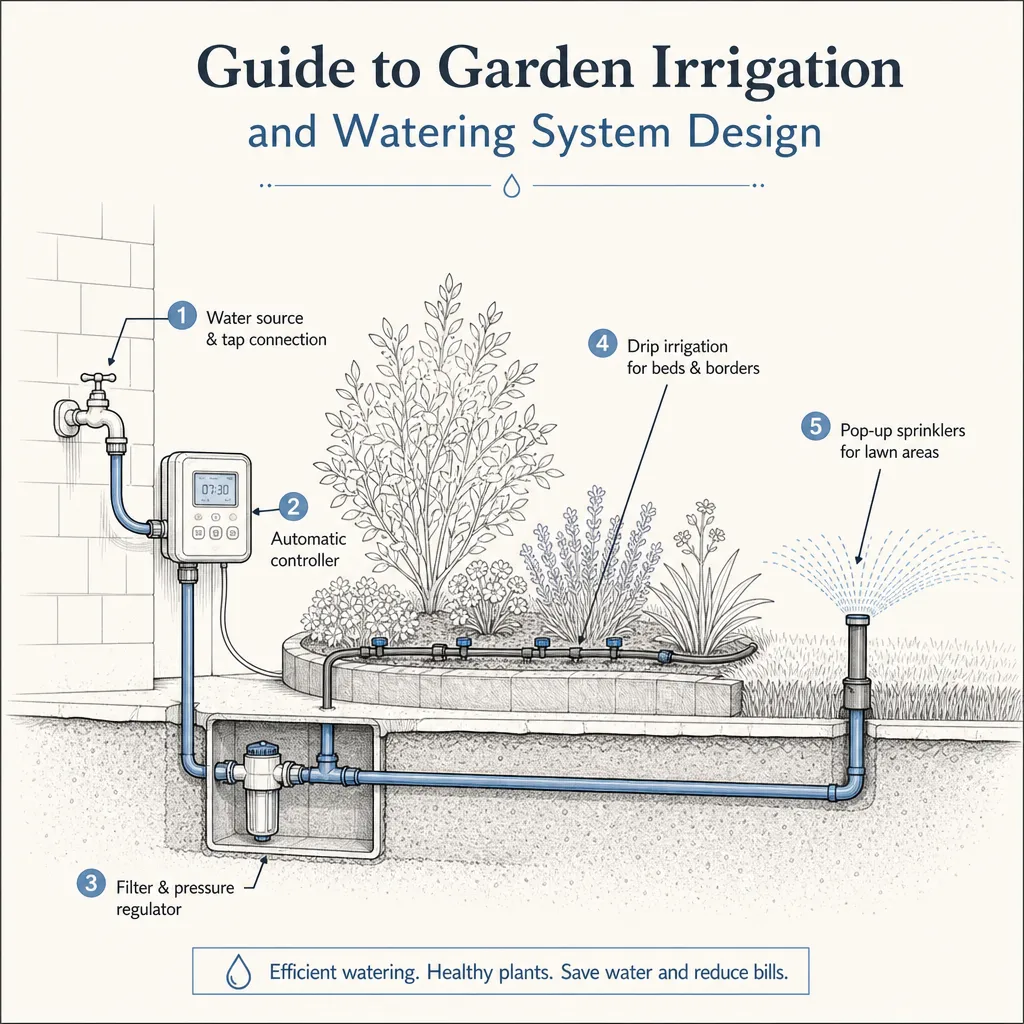
Guide to Garden Irrigation and Watering System Design
Planning a garden irrigation system tends to come up at one of two points: during a new landscaping project when underground supply lines can be laid before paving goes down, or after a summer of daily hosepipe sessions across an established garden. The right approach depends on the size and layout of your plot, the types of planting you are watering, your mains water pressure, and whether your area is subject to hosepipe restrictions. Getting the design right before installation avoids costly adjustments once paving or planting is in place.
Key points
- The Water Supply (Water Fittings) Regulations 1999 require a WRAS-approved backflow prevention device at any point where an irrigation system connects to the mains cold-water supply — failure to fit one is a regulatory offence and risks contaminating the supply.
- Drip irrigation and micro-irrigation systems typically use 30–50% less water than equivalent overhead sprinkler coverage, making them the preferred choice for planted beds and borders in drought-prone regions.
- Hosepipe ban powers under the Water Industry Act 1991 extend to automatic irrigation systems connected to the mains — systems fed entirely from a harvested rainwater supply are generally unaffected.
- Smart irrigation controllers with rain sensor overrides can reduce system run-time by up to 40% compared with fixed-schedule timers, according to Waterwise guidance on garden water efficiency.
- Measuring your mains dynamic pressure and flow rate at the outdoor tap is the essential first step before specifying any zone layout — many older UK properties have mains pressure below the 2 bar minimum typically required by pop-up sprinkler heads.
Types of irrigation system
Choosing the right system starts with understanding the main technologies and where each works best in a UK garden context.
System type | Best for | Not ideal for | Water use | Key advantage |
|---|---|---|---|---|
Drip or micro-irrigation | Beds, borders, vegetable plots, containers | Large open lawn areas | Low | Targeted delivery; reduces weed germination |
Pop-up rotary sprinkler | Maintained lawns, open areas | Dense planting, steep slopes | Medium to high | Even coverage over large areas |
Soaker hose | Hedges, rows of vegetables, borders | Pots and containers | Low to medium | Simple; no controller required |
Overhead oscillating sprinkler | Large lawns, temporary coverage | Windy sites; restricted-water areas | High | Inexpensive; easy to reposition |
Subsurface drip irrigation (SDI) | Premium lawns, sensitive planting areas | DIY installation (specialist kit needed) | Very low | No surface evaporation; no disruption to the surface |
Most domestic UK gardens use a combination: drip or soaker lines for planted beds and borders, with pop-up heads for lawn zones.
Planning your system: the key design decisions
Water source
Most domestic systems connect to the mains cold-water supply. Under the Water Supply (Water Fittings) Regulations 1999, a backflow prevention device must be fitted at the mains connection point to prevent contaminated garden water from re-entering the supply. A WRAS-approved double check valve or vacuum breaker is typically used. Your plumber or irrigation installer should specify the correct device for the system pressure and pipe configuration.
Rainwater harvesting using a water butt or underground tank is an increasingly popular alternative for beds and borders. Gravity-fed systems suit drip lines; pump-fed systems from a larger tank can drive sprinkler zones. Harvested rainwater used for irrigation is generally not subject to hosepipe ban restrictions.
Greywater from baths and showers can be used for sub-surface or below-canopy irrigation but requires careful design to avoid pathogen risk, particularly near edible crops. Environment Agency and WRAS guidance should be followed if you are considering a greywater system.
Water pressure and flow rate
Irrigation systems need adequate pressure — typically 2–4 bar for drip systems and pop-up heads. Before designing a system, test your dynamic water pressure with a gauge from a plumbers merchant, and measure flow rate by timing how long it takes to fill a 10-litre bucket from the outdoor tap.
Properties with low mains pressure (common in older terraced houses and properties at the end of supply runs) may need a pressure booster pump or a header tank to achieve consistent zone performance.
Zone design
Divide the garden into irrigation zones based on:
- Plant water requirements (a lawn needs more water than drought-tolerant perennial beds).
- Sun exposure and aspect (south-facing beds dry faster than north-facing borders).
- Physical separation (front and rear gardens, vegetable beds, containerised planting).
- Controller capacity (a basic two-zone controller typically handles two independent programmes).
Each zone runs on an independent timer and duration, preventing over- or under-watering of different plant types simultaneously.
Controllers and automation
A solenoid valve controller automates watering by time of day and duration. Basic two-zone controllers cost from approximately £30–£80. Smart controllers with Wi-Fi connectivity and weather-based adjustments typically cost £100–£250 and can pause automatically based on local rainfall data. Indicative UK costs, last reviewed 2026-05-30.
A rain sensor prevents the system running during or immediately after rainfall. These cost approximately £20–£40 and are a worthwhile addition to any automated system.
Hosepipe bans and UK irrigation rules
Water companies in England and Wales hold powers under the Water Industry Act 1991 to impose temporary use restrictions on hosepipes and irrigation systems connected to the mains supply. These bans are most common in southern and eastern England during prolonged dry periods.
Under a hosepipe ban, automatic mains-fed irrigation systems are typically restricted in the same way as hand-held hosepipes. Systems fed entirely from a water butt, rainwater harvesting tank, or greywater supply are generally unaffected.
If your garden includes commercially grown produce or a market garden, you may qualify for an exemption — contact your water company to confirm before assuming the restriction applies to your use.
Which system should I choose?
- Choose drip or micro-irrigation if your garden is primarily planted beds, borders, or a vegetable plot, and water efficiency is a priority.
- Choose pop-up rotary sprinklers if you have an established lawn or open areas requiring consistent, even coverage.
- Choose a soaker hose if you want a low-cost, controller-free solution for rows of planting or a hedge line.
- Choose a rainwater harvesting supply if you want to irrigate freely during hosepipe ban periods and reduce metered water costs.
- Ask a landscaper or irrigation specialist if your garden has multiple zones, significant changes in level, low mains pressure, or you want a smart-controller installation.
- Check with your water company if you are planning a large commercial or semi-commercial system and want to confirm supply capacity and restriction terms.
DIY or professional installation?
Simple drip systems and soaker hoses are within the capabilities of a confident DIY gardener. The main risks in a DIY installation are:
- Incorrect or absent backflow prevention — a regulatory compliance issue and a potential risk to mains water quality.
- Undersized supply pipes causing pressure drop across zones and poor head performance.
- Damage to existing underground cables or drainage when trenching (check for services before any trench deeper than 150mm).
Professional installation is advisable for:
- Any new connection to the mains supply.
- Multi-zone systems with smart controllers.
- Subsurface drip systems.
- Systems incorporating a booster pump, header tank, or underground rainwater storage tank.
A professional landscaper or irrigation specialist should provide a zone-by-zone design drawing, a supply pipe specification, and a maintenance schedule.
Pre-installation checklist
When to get professional help
Consult a professional landscaper or irrigation specialist if:
- You want to connect to the mains supply and are uncertain whether the backflow preventer is correctly specified for your system pressure and configuration.
- Your garden has multiple zones across separate areas or significant changes in level that affect head spacing and pressure requirements.
- You are installing a booster pump, header tank, or underground storage tank — these require plumbing and electrical knowledge.
- Existing hard landscaping such as paving or a patio would need to be lifted to run underground supply lines.
- You want a smart controller integrated with a weather station or wider home automation system.
How Housey can help
Whether you are planning irrigation as part of a wider landscaping project or want a standalone watering system for an existing garden, landscapers can design and install a system suited to your plot, planting, and water supply. For a complete garden redesign that incorporates watering requirements from the outset, garden designers can integrate irrigation into the overall planting plan.
Frequently asked questions
How much does a garden irrigation system cost to install in the UK?
Costs vary by garden size, system type, and complexity. A simple drip system for a small to medium garden with one zone and a basic timer typically costs £300–£800 installed. A multi-zone pop-up sprinkler system for a larger garden with a smart controller is more likely to cost £1,500–£5,000 or more. Indicative UK costs, last reviewed 2026-05-30. Obtain at least three written quotes, as pricing varies significantly by region and contractor.
Will an automatic irrigation system work during a hosepipe ban?
If the system connects to the mains water supply, it is usually subject to the same restrictions as a hosepipe during a ban imposed under the Water Industry Act 1991. A system fed entirely from a rainwater harvesting tank or water butt is generally unaffected. Check your water company's specific terms whenever a ban is in force.
Do I need planning permission for garden irrigation?
No planning permission is required for installing a garden irrigation system in the UK. The main regulatory requirement is compliance with the Water Supply (Water Fittings) Regulations 1999 if making a new connection to the mains supply — specifically the requirement for a WRAS-approved backflow prevention device at the connection point.
How often should I service an irrigation system?
Most systems benefit from an annual service at the start of the growing season: checking and adjusting heads, replacing worn drip emitters, flushing filters, and testing the controller and rain sensor. Systems should be drained or blown out before the first frost to prevent pipe and fitting damage.
Sources and further reading
- Water Supply (Water Fittings) Regulations 1999 — legislation.gov.uk
- Water efficiency in the home — Energy Saving Trust
- Water Industry Act 1991 — legislation.gov.uk
- Waterwise: garden water efficiency guidance — Waterwise
- Ofwat: household water use and restrictions — Ofwat
Useful next reads
 Improvement & Build
Installing a Fire Pit: Garden Features and Outdoor Space Design
Installing a garden fire pit in the UK is generally permitted, but Smoke Control Area rules prohibit open wood-burning in most towns and cities.
 Improvement & Build
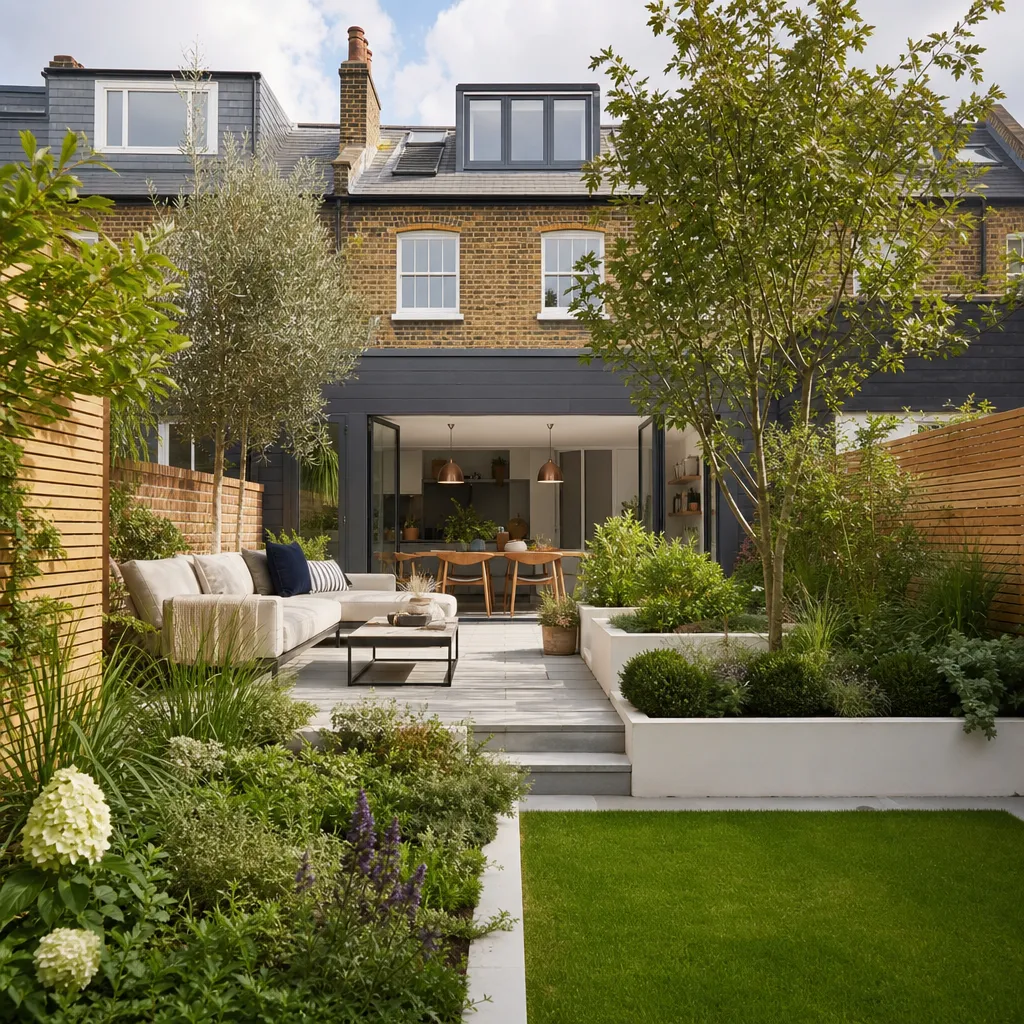
Seasonal Garden Transformations and Outdoor Design Ideas
A successful garden transformation in the UK works with the seasons rather than against them — establishing structure and hard landscaping in autumn or winter, planting in spring, and enjoying the results through summer.
 Improvement & Build
Designing an outdoor kitchen for entertaining and garden living
An outdoor kitchen in a UK garden needs a stable, level base — typically a concrete slab or quality paving — with weather-rated materials such as stainless steel grade 316 or frost-rated porcelain.
 Improvement & Build
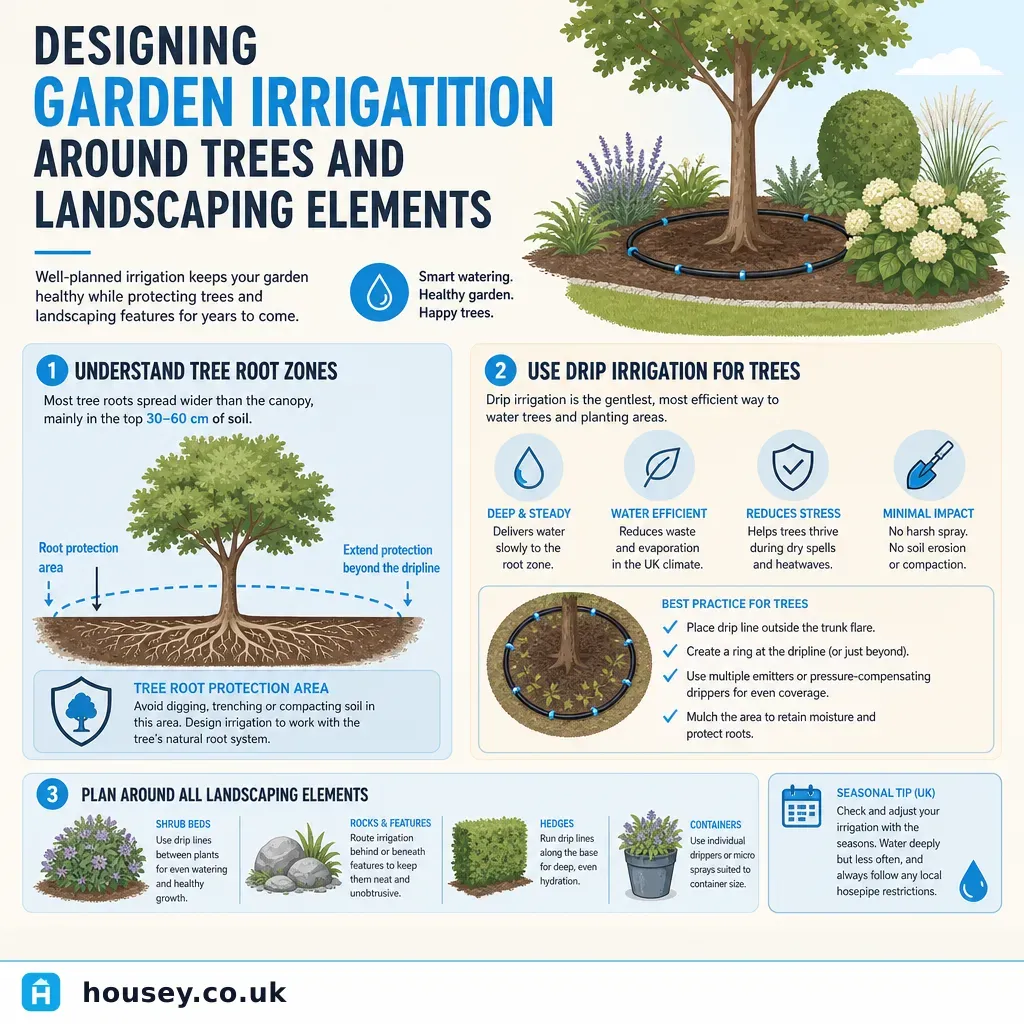
Designing Garden Irrigation Around Trees and Landscaping Elements
Design irrigation around trees by respecting the root protection area defined under BS 5837:2012, using drip or leaky pipe delivery rather than spray heads, and putting the tree zone on its own circuit.
 Improvement & Build
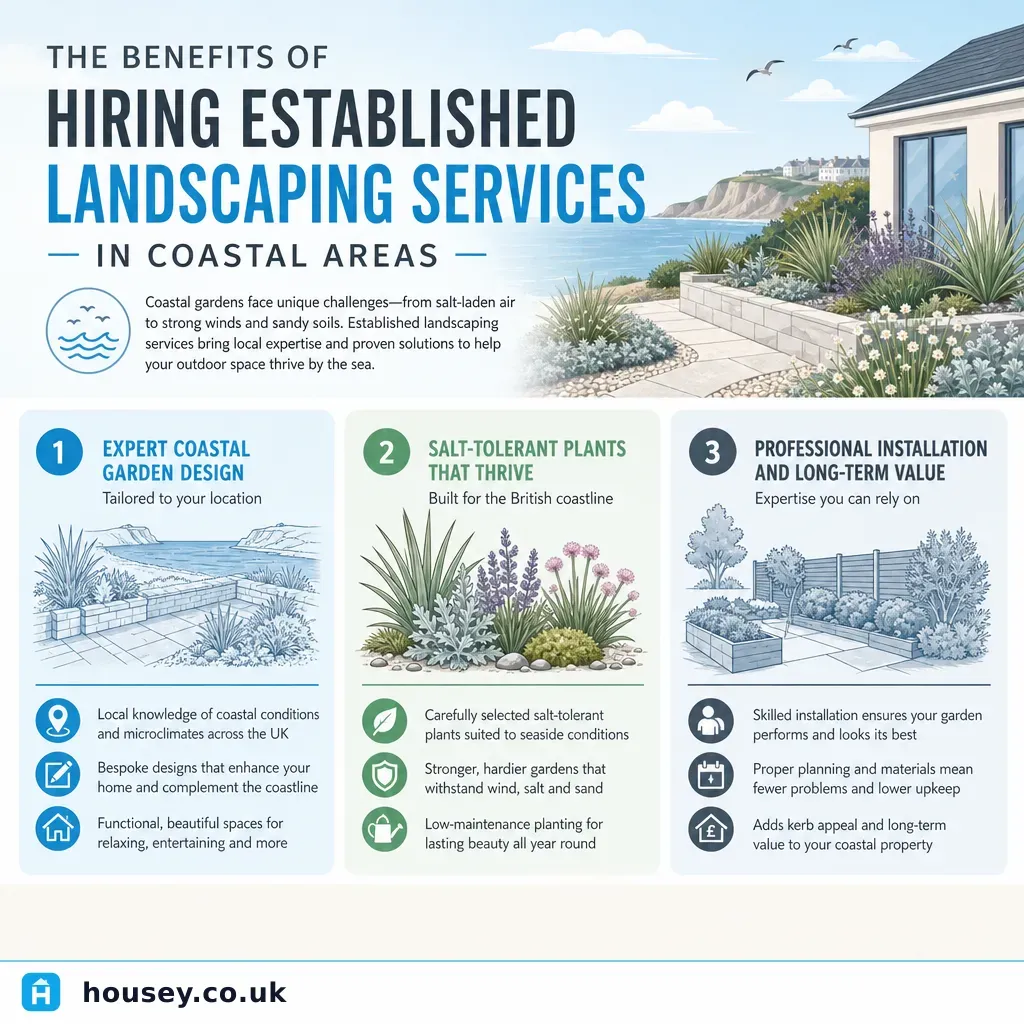
Benefits of Hiring Established Landscaping Services in Coastal Areas
Established landscaping contractors in coastal areas understand salt spray exposure, prevailing wind patterns, and local planning restrictions that inland firms often overlook.